
Plant Library · Vegetables
🥦 How to Grow Broccoli
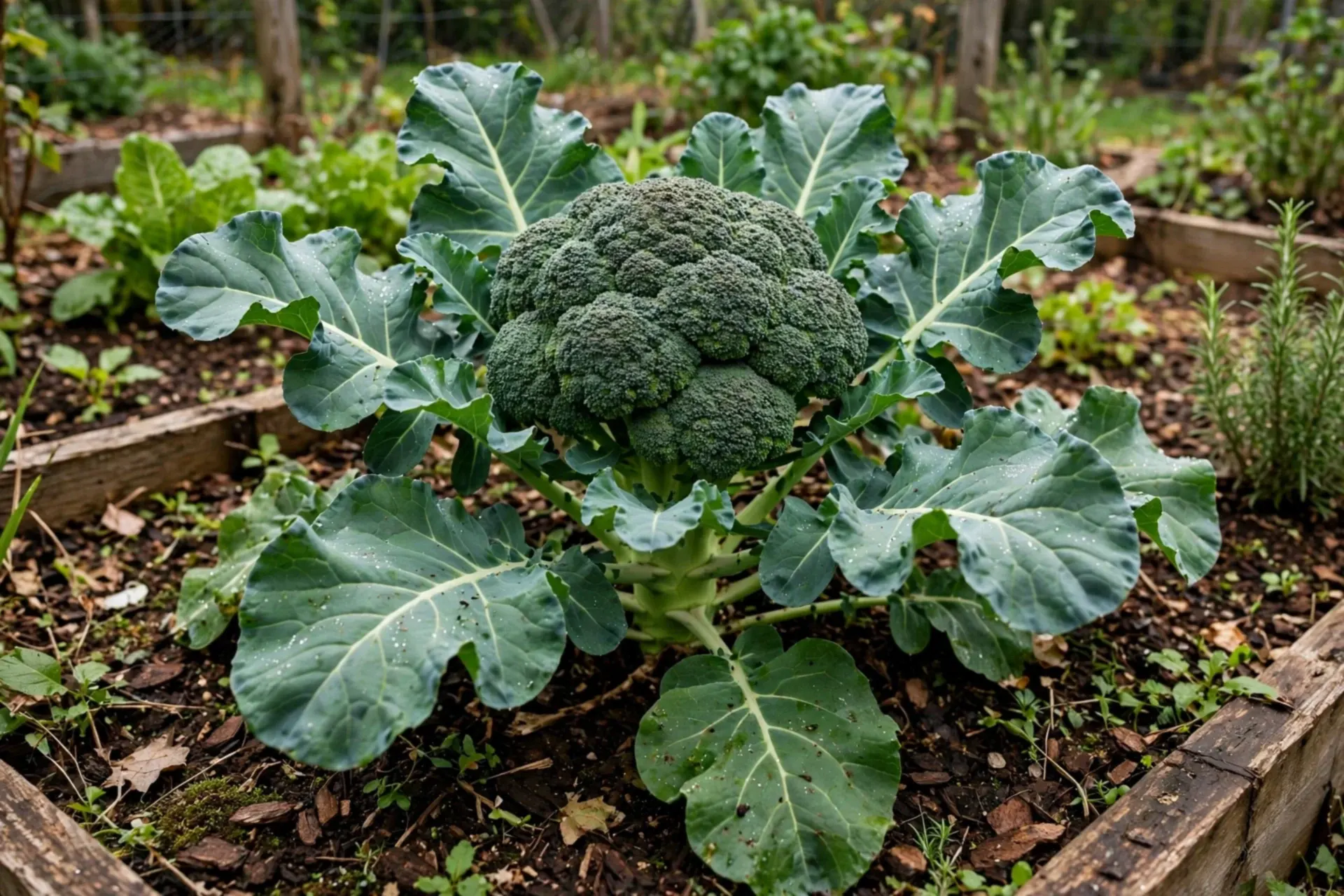
Handles light frost — one of the hardiest starts. Broccoli is a cool-season crop: start indoors about 7 weeks before your last frost and transplant about a week before it — it handles light frost well.
Grow Broccoli with us — step by step
Everything for this plant is written step by step below — what to do, and exactly when. Read it through first if you like: you can grow it entirely on your own with that guide. Or start with us here — tell us your planting day and we lay out your personal schedule on this page, every next step on its own day, counted from your planting date. No guessing, no forgetting.
Step 1 — today: Plant out your young Broccoli plants today (hardened off first), spaced 18 in apart, and water them in deeply. Starting from seed instead? Sow indoors now, 1/4 in deep, and this same schedule counts from transplant day.
Broccoli at a glance
Sow indoors: 7 weeks before last frost
Move outside: 1 week before last frost
Spacing: 18 in · Seed depth: 1/4 in
Sun: Full sun
Water: Regular and even
Harvest: 60–80 days after transplant
Timing counts from your average last spring frost — get your own dates in the Planting Calendar. Guidance follows standard extension-service practice for Canada and the US.
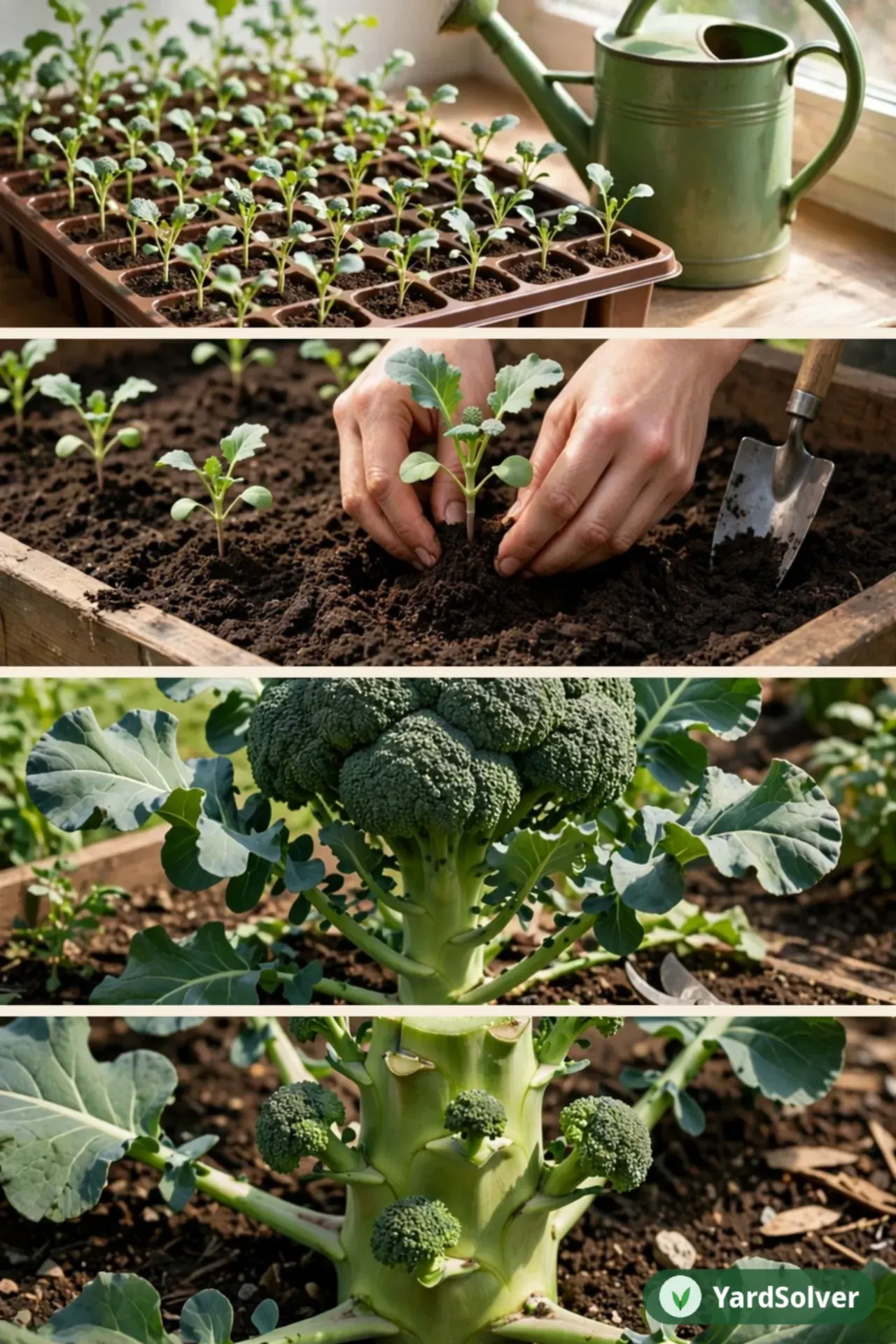
How to plant and grow broccoli, step by step
Step 1 — Time it right
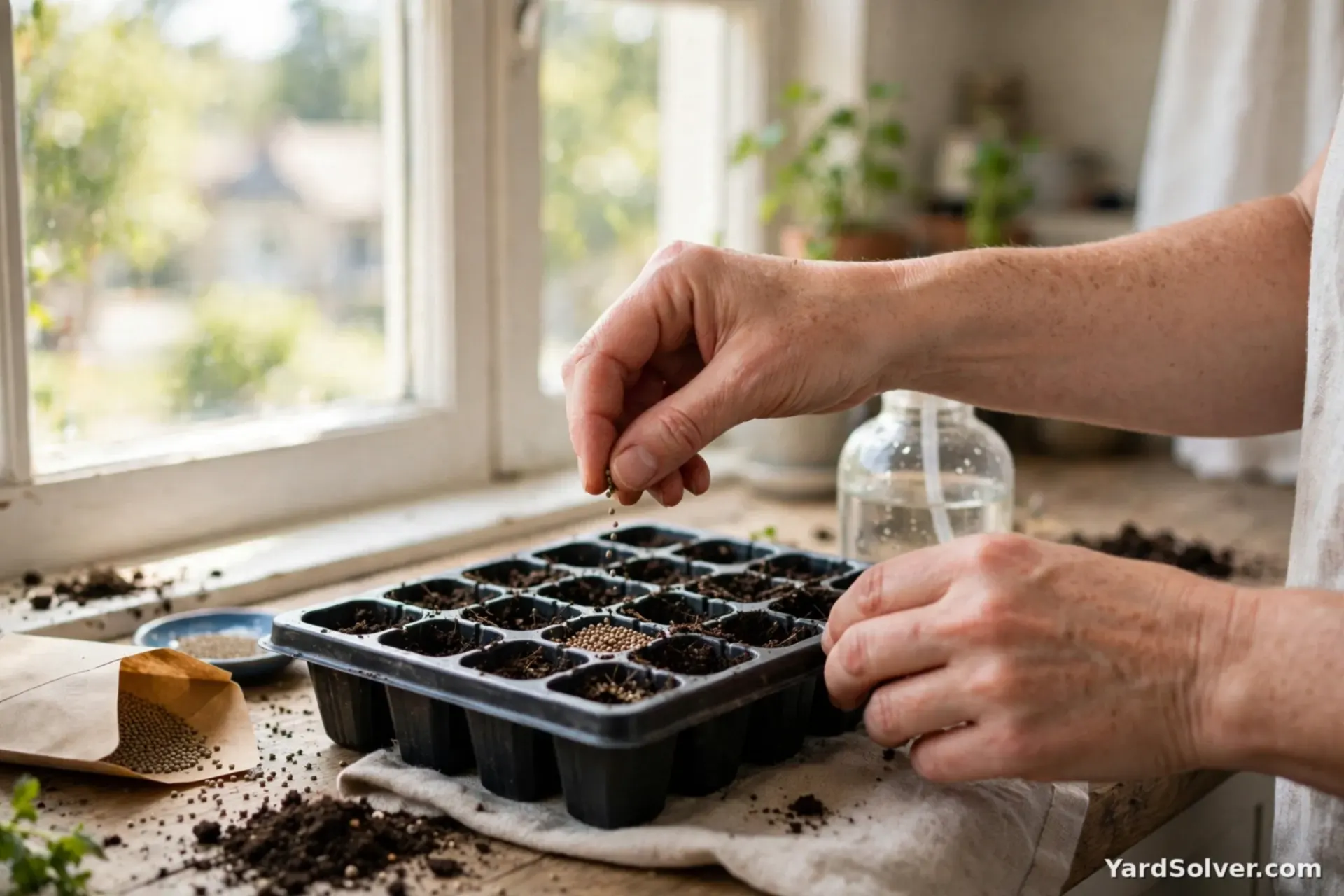
Sow indoors: 7 weeks before last frost; Move outside: 1 week before last frost. All dates count from your average last spring frost — the Planting Calendar turns them into real dates for your garden. Broccoli is a cool-season crop: start indoors about 7 weeks before your last frost and transplant about a week before it — it handles light frost well.
Step 2 — Prepare the spot
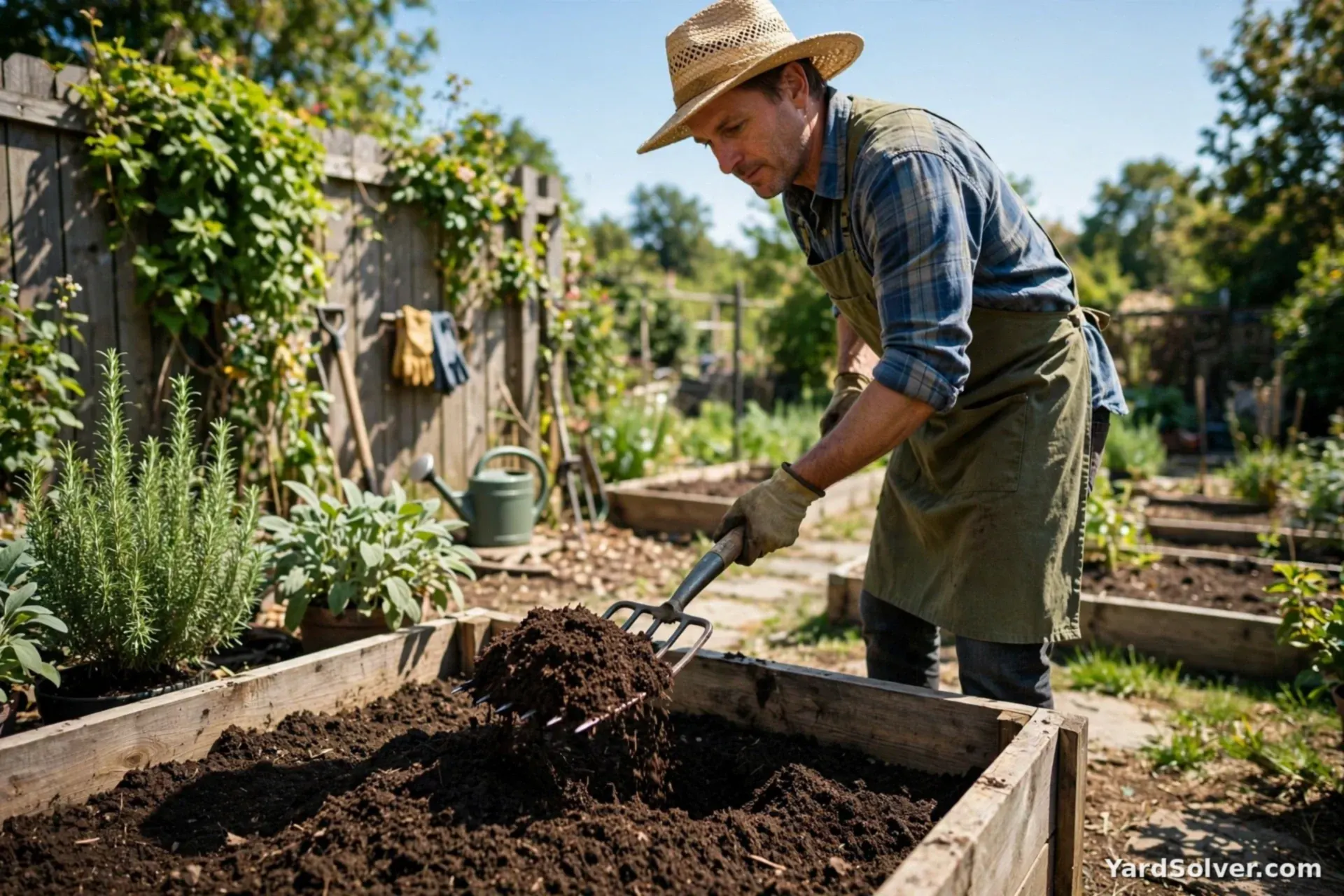
Sun: Full sun. Firm, rich soil with plenty of compost worked in before planting. Brassicas are hungry: a bed that grew legumes or was manured last season suits them well. Work out how much you need with the Garden Mix Calculator or the Raised Bed Soil Calculator.
Step 3 — Sow and plant out
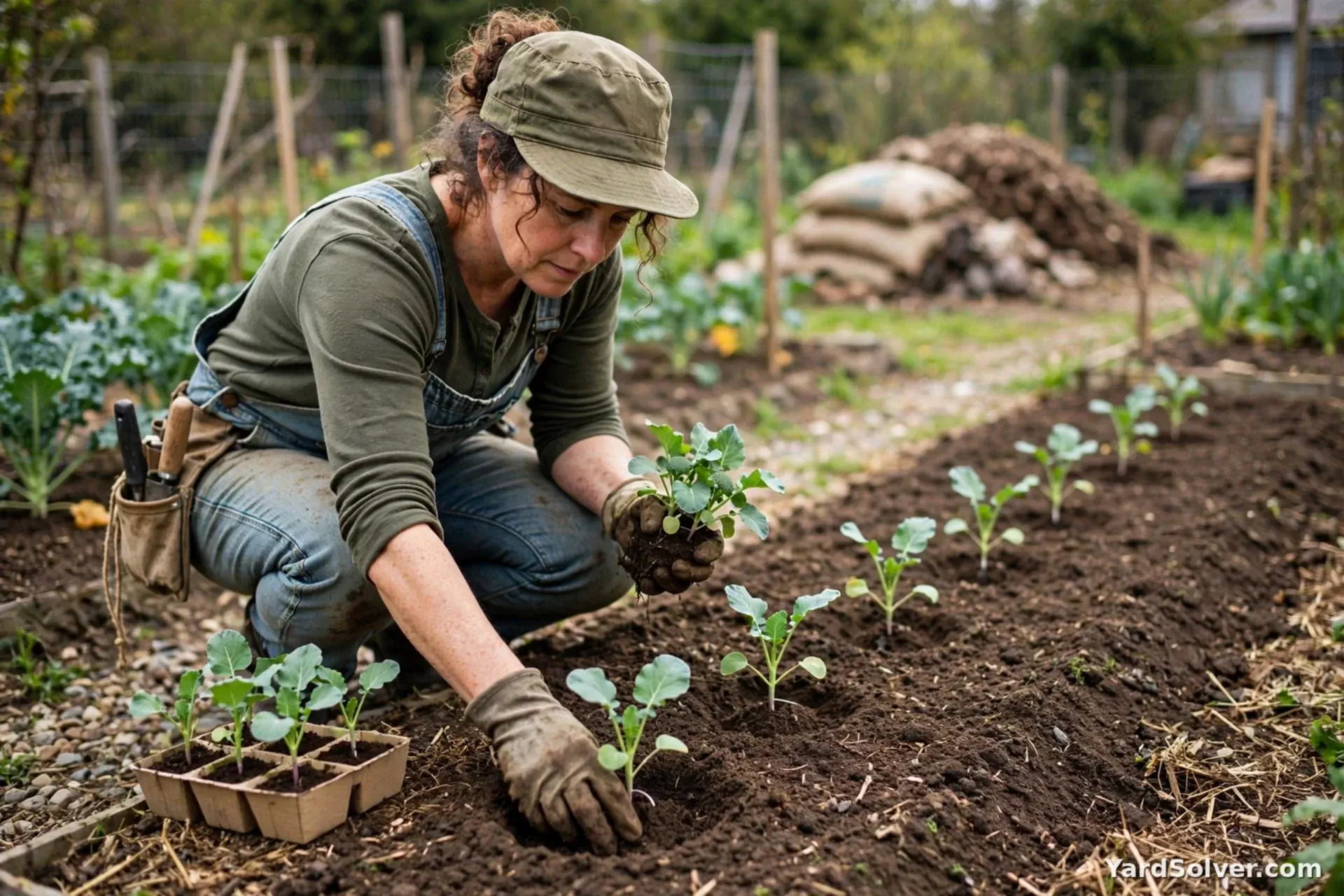
Start seed indoors 7 weeks before last frost, sowing 1/4 in deep. Grow seedlings on in strong light, then harden them off over 7–10 days (see How to Harden Off Seedlings) and move them outside 1 week before last frost, spaced 18 in apart. The Plant Spacing Calculator turns that spacing into plants-per-bed.
Step 4 — Water and feed
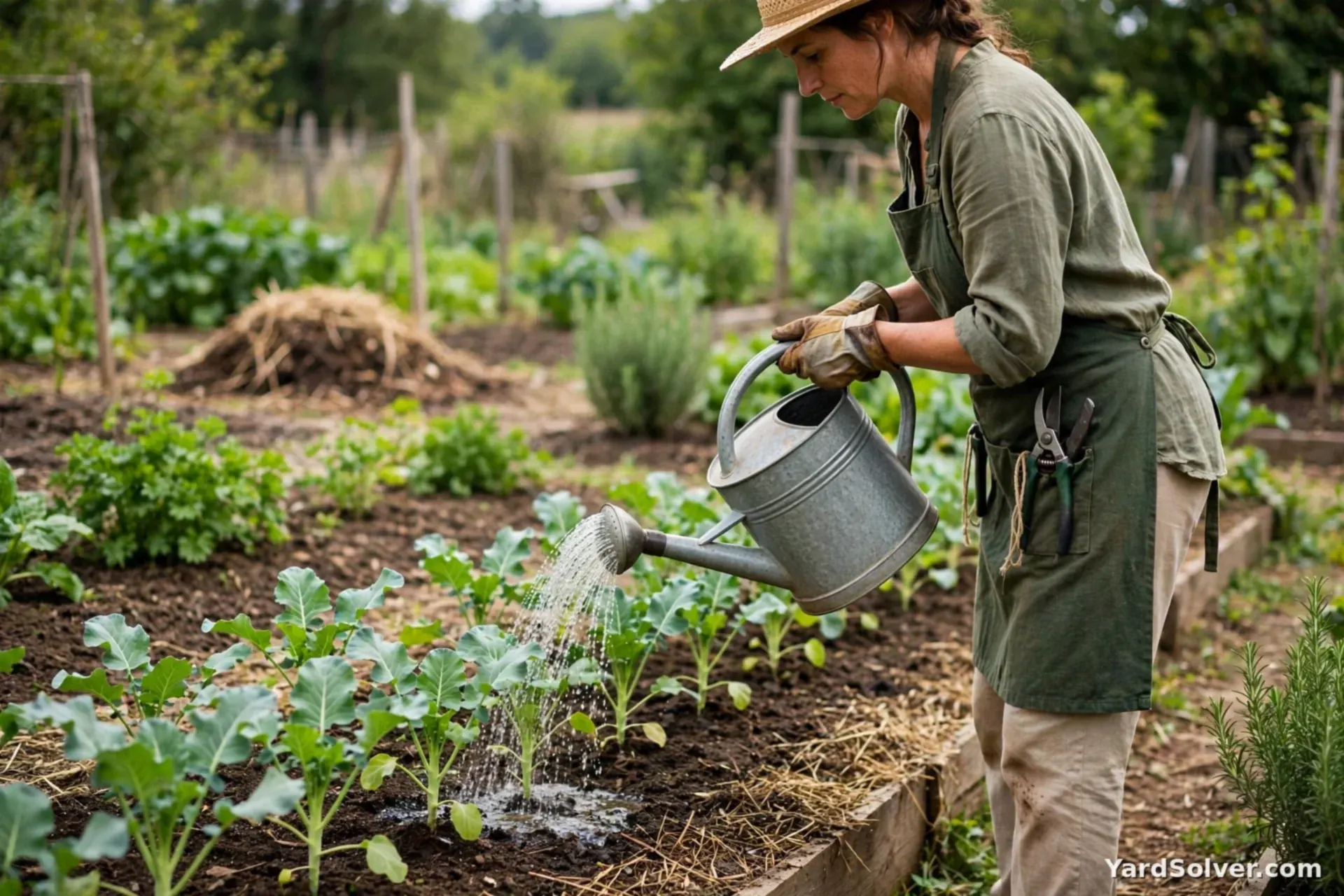
Water: Regular and even. First feed: around day 21 — Broccoli is a hungry plant — feed about three weeks after transplanting to push a big central head. The Fertilizer Calculator turns a bed size into the right amount.
Step 5 — Care and the problems to watch for
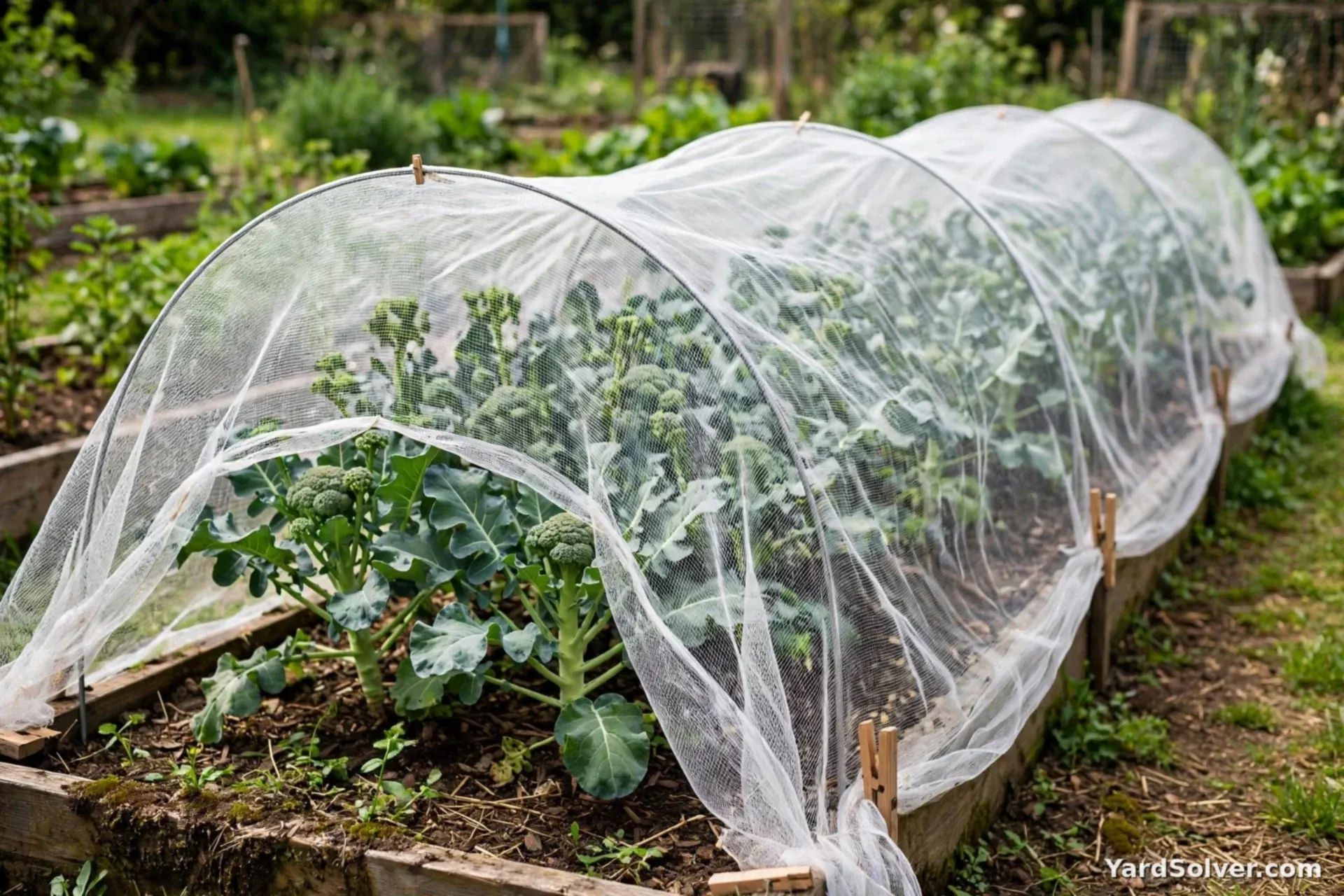
- Cabbage white caterpillars — they can strip leaves fast; netting from day one is the easy fix.
- Aphids in the head — soak heads in salted water before cooking.
- Buttoning — tiny heads from stressed, checked seedlings; keep transplants growing steadily.
Take care: Broccoli can cause gas or bloating in some people, especially eaten raw in large amounts. Some people taking blood-thinning medicine are told to keep vitamin K foods steady in their diet.
Step 6 — Harvest
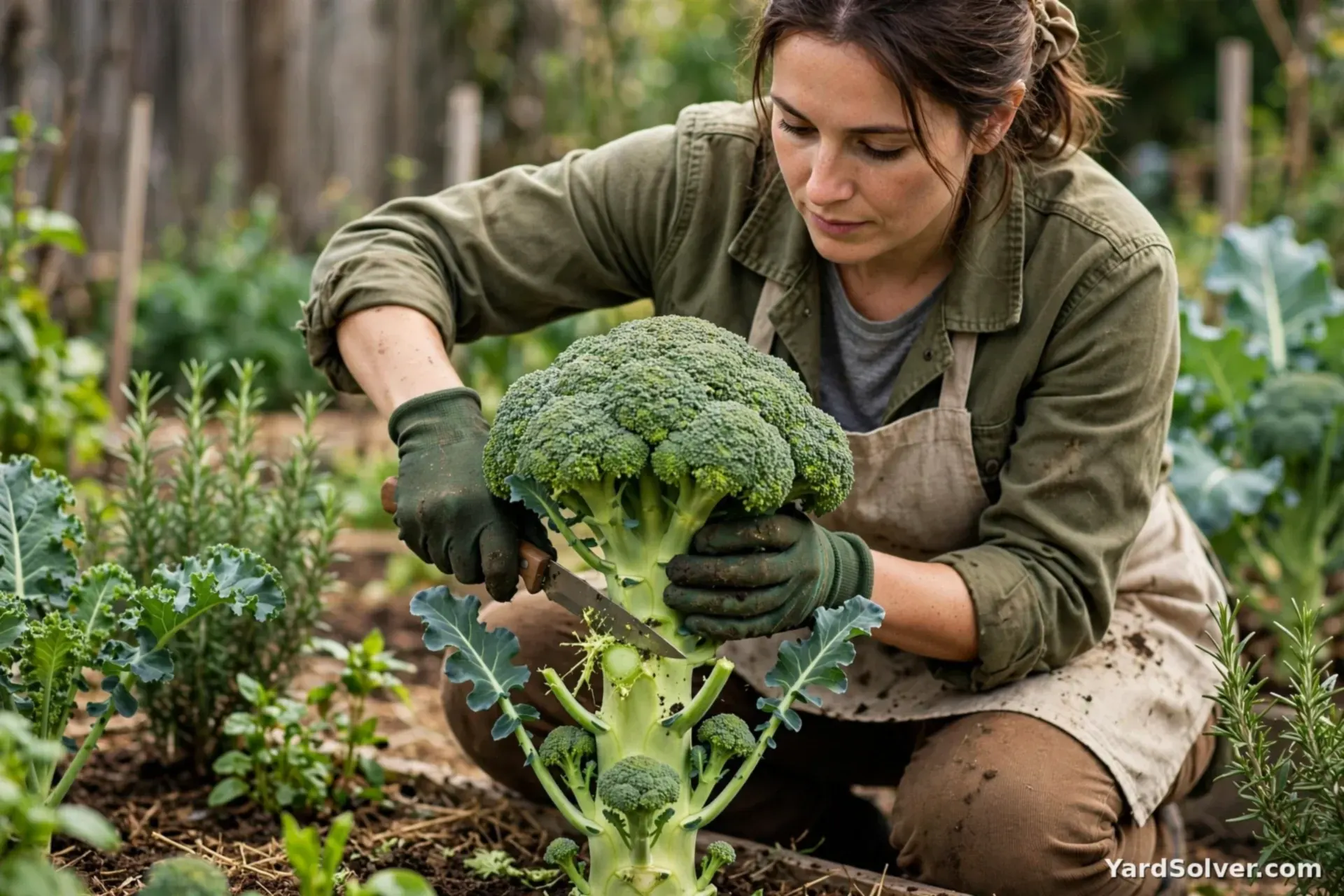
Ready in: 60–80 days after transplant. Harvest runs from about day 60 to 80 after transplant — cut the main head while the buds are still tight, and side shoots will follow.
📅 Your personal Broccoli schedule
Counted from your planting day — not a generic calendar. Day 0 is the day the seed went in the ground or the young plant went out.
Varieties worth growing
| Variety | Colour | Why gardeners like it |
|---|---|---|
| Calabrese | Blue-green | The original Italian heirloom, famous for lots of tasty side shoots |
| Green Magic | Green | A reliable hybrid that makes a tight main head even in warmer spells |
| Belstar | Green | A sturdy hybrid that does well planted for spring or fall |
| Purple Sprouting | Purple | Extremely hardy — overwintered plants give many small purple spears in early spring |
Good for you — and take care
Benefits
- Very high in vitamin C — a serving can cover a day's needs
- Provides vitamin K and folate
- Good source of fibre for digestion
- Provides potassium and vitamin A
- Contains natural plant compounds that nutrition scientists continue to study
Take care
- Broccoli can cause gas or bloating in some people, especially eaten raw in large amounts
- Some people taking blood-thinning medicine are told to keep vitamin K foods steady in their diet
A little history — and one good fact
Broccoli was bred in Italy from wild cabbage over many centuries, going back to Roman times. Its name comes from the Italian word 'broccolo', meaning a little sprout or shoot. It stayed mostly an Italian favourite for centuries and only became a common sight in North American gardens in the last hundred years.
Fun fact: Cutting the main head is not the end — most broccoli plants keep producing small side shoots for weeks afterwards.
Keep going
Guides: When to Start Seeds Indoors · How to Prepare Garden Soil in Spring · How to Harden Off Seedlings
Calculators: Plant Spacing Calculator · Seed Calculator · Garden Mix Calculator
More vegetables: Tomato · Pepper · Cucumber
← Back to the Plant Library · Get your personal planting dates
Questions people ask
When do I plant broccoli?
Count from your average last spring frost: sow indoors 7 weeks before last frost; move outside 1 week before last frost. Broccoli is a cool-season crop: start indoors about 7 weeks before your last frost and transplant about a week before it — it handles light frost well.
How far apart do I space broccoli?
Space plants 18 in apart, with seed sown 1/4 in deep. Sun: full sun.
When is broccoli ready to harvest?
60–80 days after transplant. Handles light frost — one of the hardiest starts.