
Plant Library · Vegetables
🌿 How to Grow Celeriac
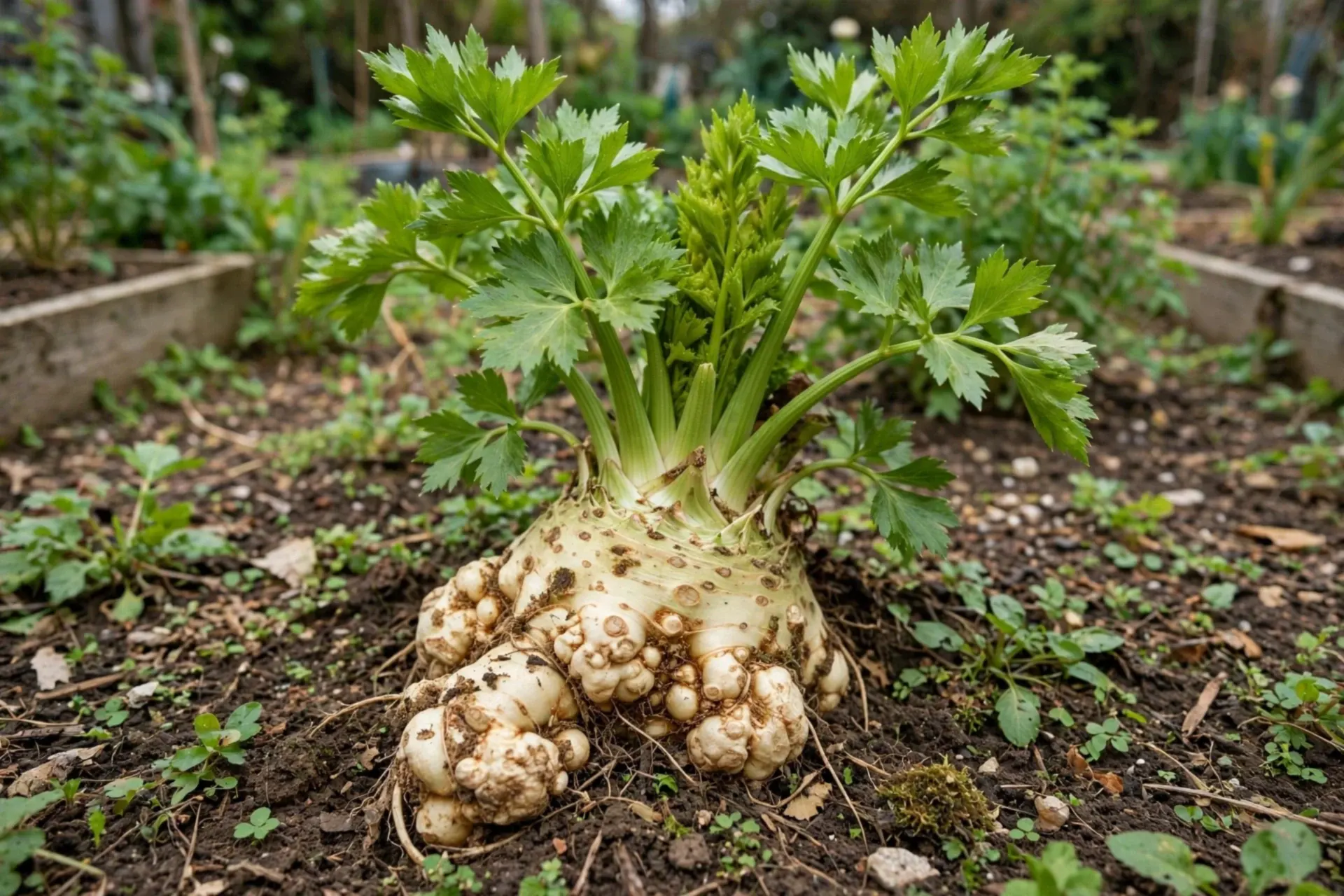
Grown for its knobbly, celery-flavoured root rather than stalks: it needs the longest, steadiest season in the garden — an early indoor start and soil that never dries out. Celeriac is celery's root-forming cousin: instead of stalks, the plant swells a round, knobbly root at the base. It is slow in everything — slow to sprout, slow to grow — so start seed indoors about 10 weeks before your last frost and never let the plants check or dry out.
Grow Celeriac with us — step by step
Everything for this plant is written step by step below — what to do, and exactly when. Read it through first if you like: you can grow it entirely on your own with that guide. Or start with us here — tell us your planting day and we lay out your personal schedule on this page, every next step on its own day, counted from your planting date. No guessing, no forgetting.
Step 1 — today: Plant out your young Celeriac plants today, spaced 6–8 in apart, with the crown sitting right at soil level — burying it deeper makes misshapen roots. Water in well and mulch straight away.
Celeriac at a glance
Sow indoors: 10 weeks before last frost
Move outside: 1 week after last frost
Spacing: 6–8 in · Seed depth: 1/4 in
Sun: Full sun
Water: Never let it dry out — a thirsty crop, like its cousin celery
Harvest: 100–120 days after transplant
Timing counts from your average last spring frost — get your own dates in the Planting Calendar. Guidance follows standard extension-service practice for Canada and the US.
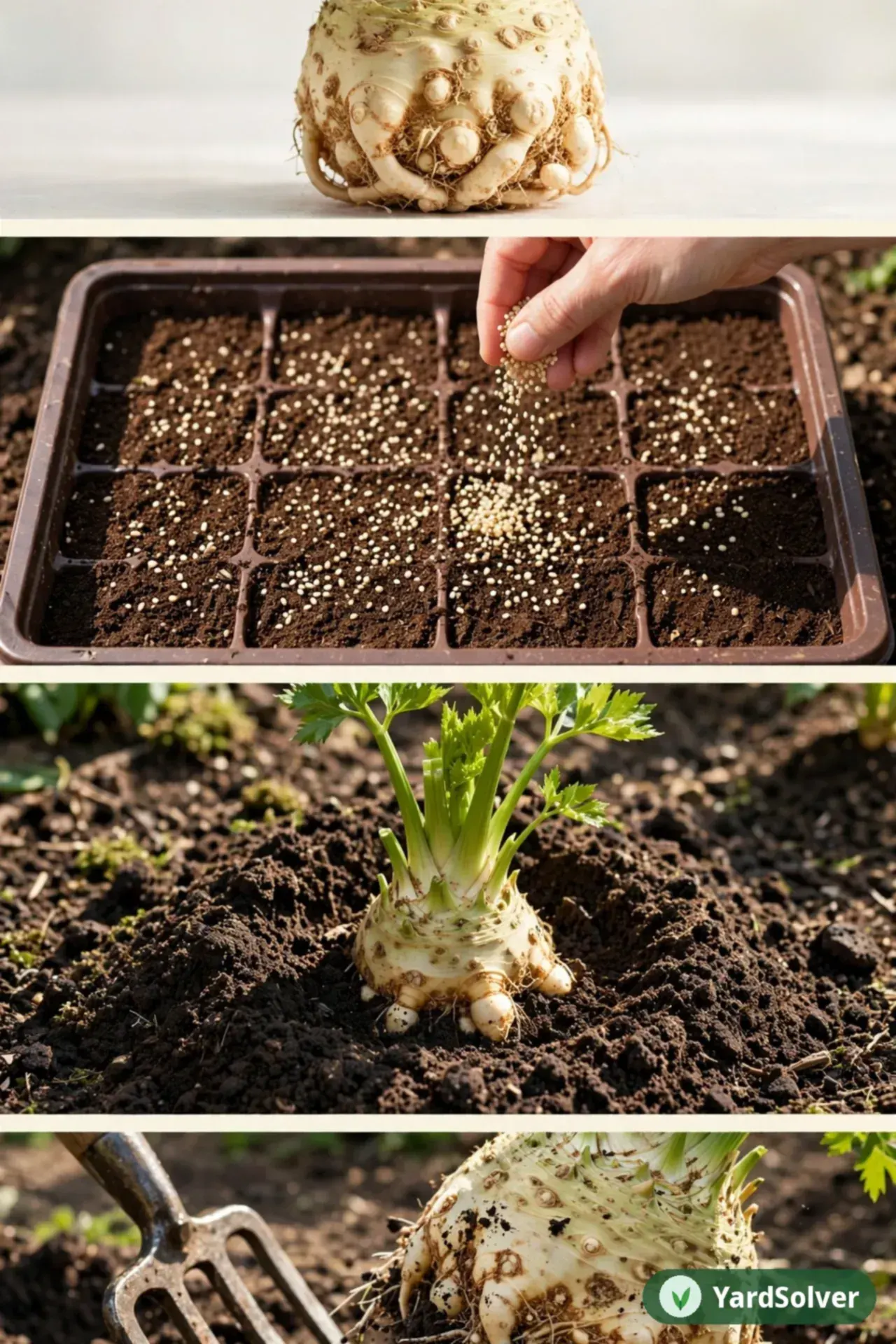
How to plant and grow celeriac, step by step
Step 1 — Time it right
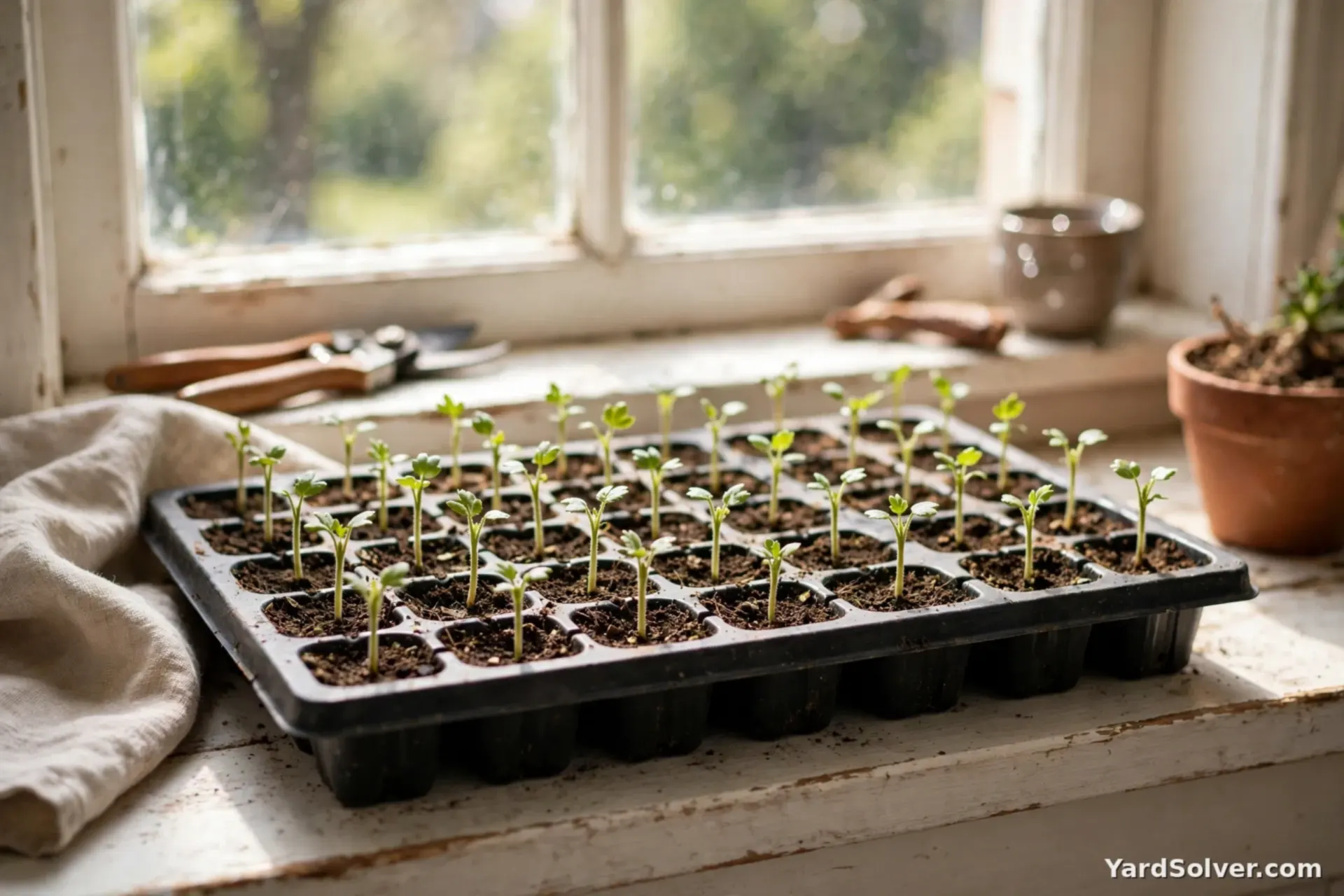
Sow indoors: 10 weeks before last frost; Move outside: 1 week after last frost. All dates count from your average last spring frost — the Planting Calendar turns them into real dates for your garden. Celeriac is celery's root-forming cousin: instead of stalks, the plant swells a round, knobbly root at the base. It is slow in everything — slow to sprout, slow to grow — so start seed indoors about 10 weeks before your last frost and never let the plants check or dry out.
Step 2 — Prepare the spot
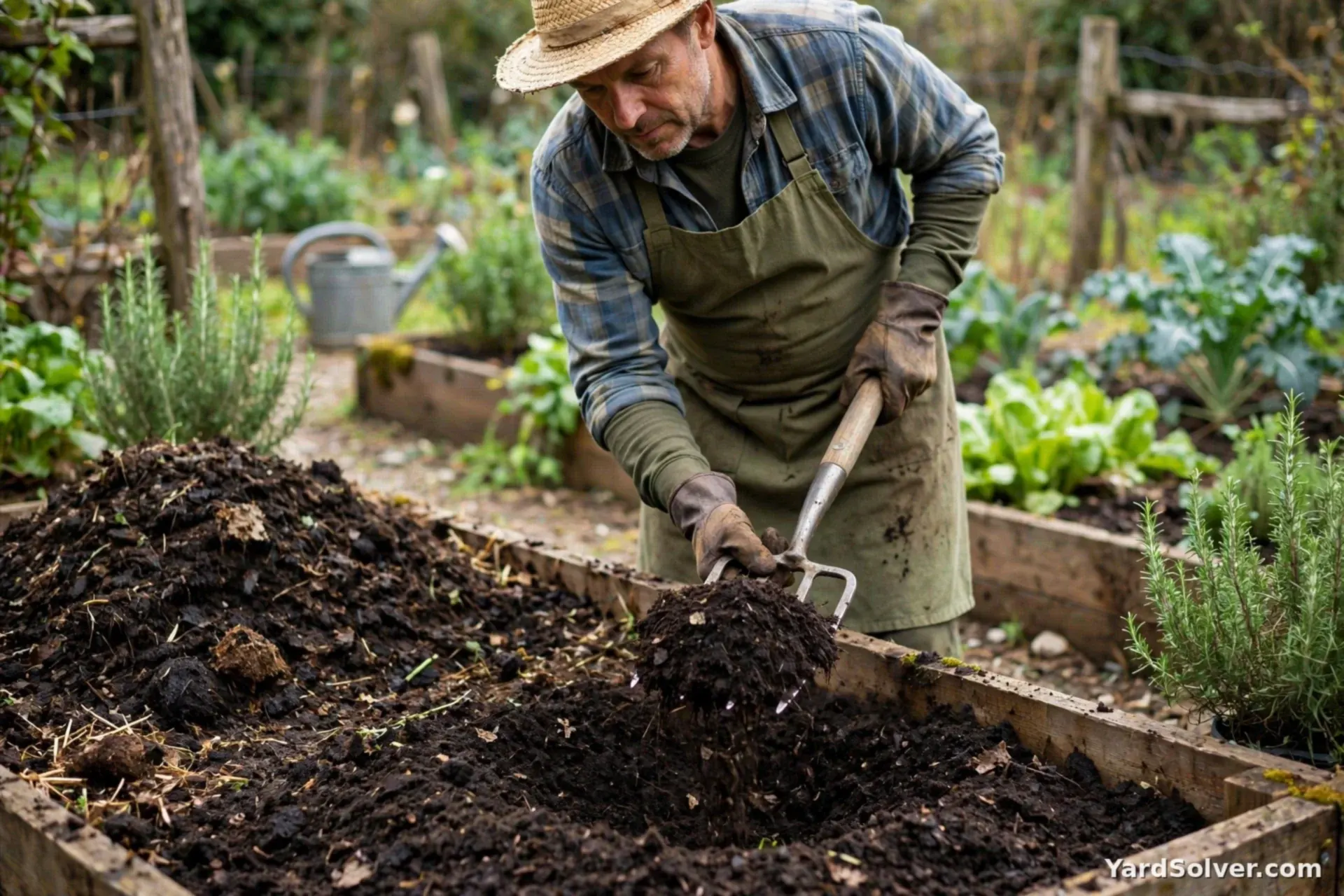
Sun: Full sun. Deep, rich soil that holds moisture without staying soggy — celeriac grows best where the ground stays evenly damp all season, so work in plenty of compost before planting. Work out how much you need with the Garden Mix Calculator or the Raised Bed Soil Calculator.
Step 3 — Sow and plant out
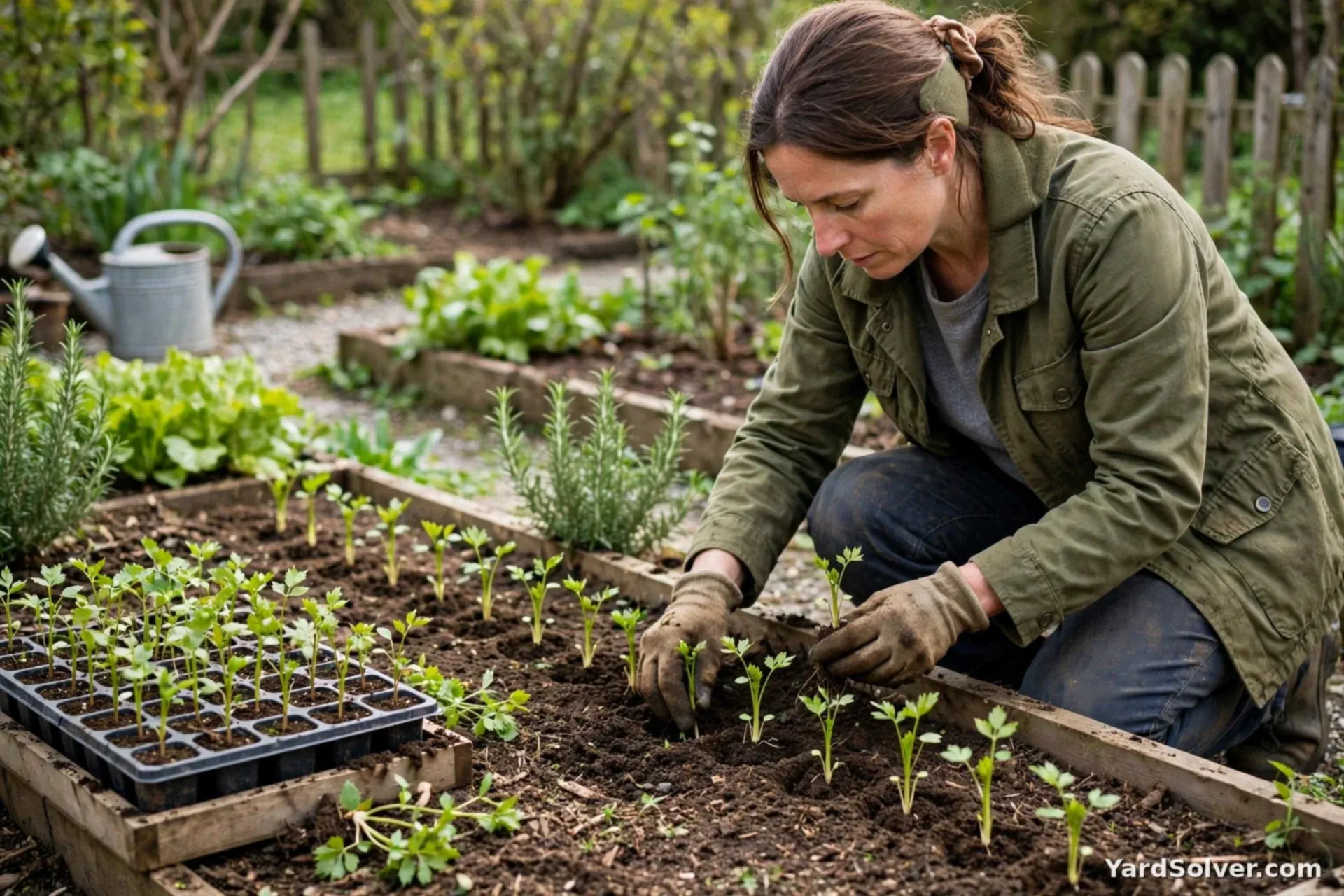
Start seed indoors 10 weeks before last frost, sowing 1/4 in deep — seed is slow and patchy, taking 2–3 weeks to sprout in warm conditions. Grow seedlings on without any check, harden them off over 7–10 days (see How to Harden Off Seedlings) and move them outside 1 week after last frost, spaced 6–8 in apart with the crown exactly at soil level. The Plant Spacing Calculator turns that spacing into plants-per-bed.
Step 4 — Water and feed
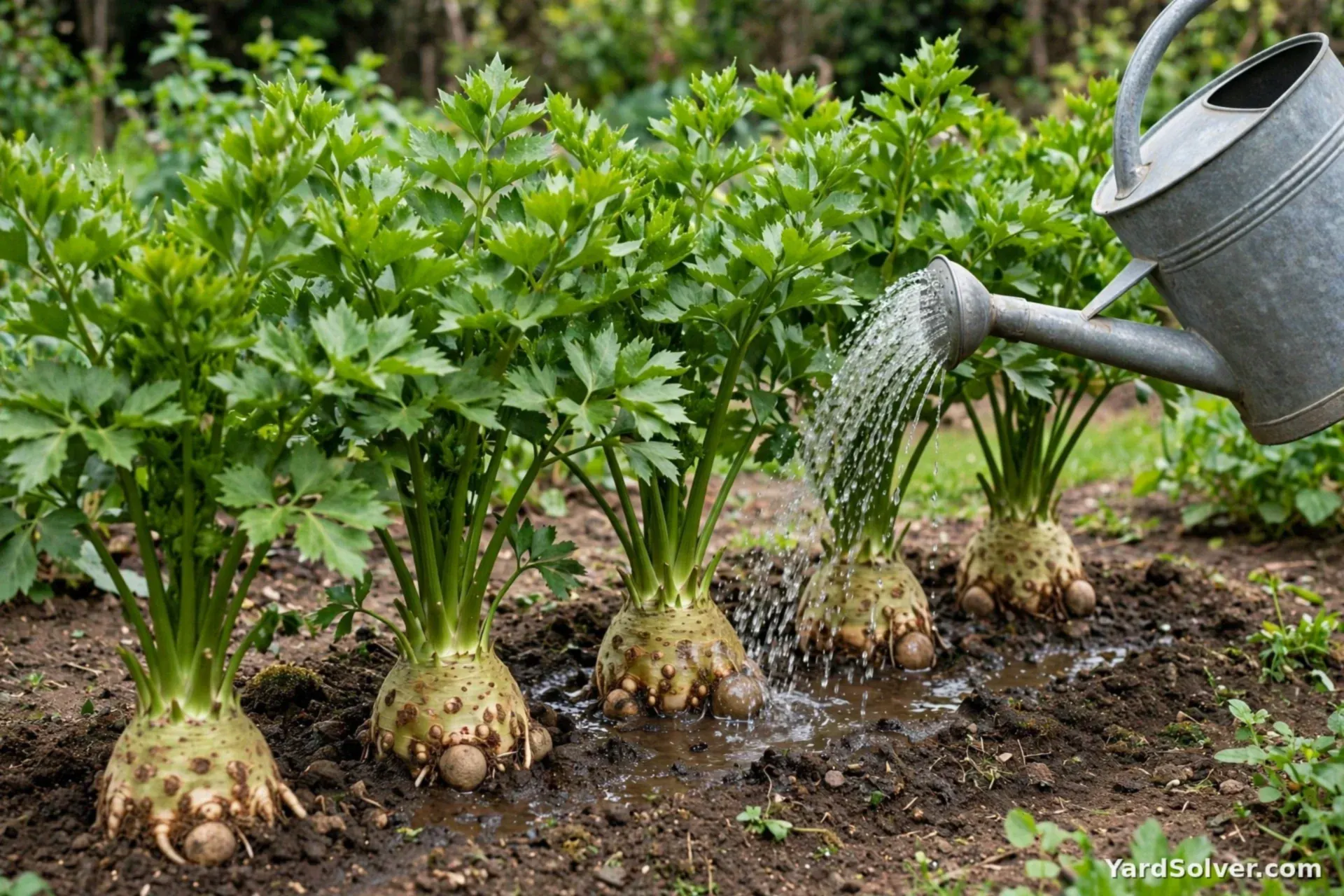
Water: Never let it dry out — a thirsty crop, like its cousin celery. First feed: around day 35 — Feed about five weeks after transplanting and top up the mulch — steady food and water are what swell a big, smooth root. The Fertilizer Calculator turns a bed size into the right amount.
Step 5 — Care and the problems to watch for
- Small, hairy roots — the plants checked, crowded or dried out at some point; steady water and space are the whole secret.
- Hollow or spongy roots — often linked to boron shortage in very light soils; compost-rich soil and even moisture prevent most cases.
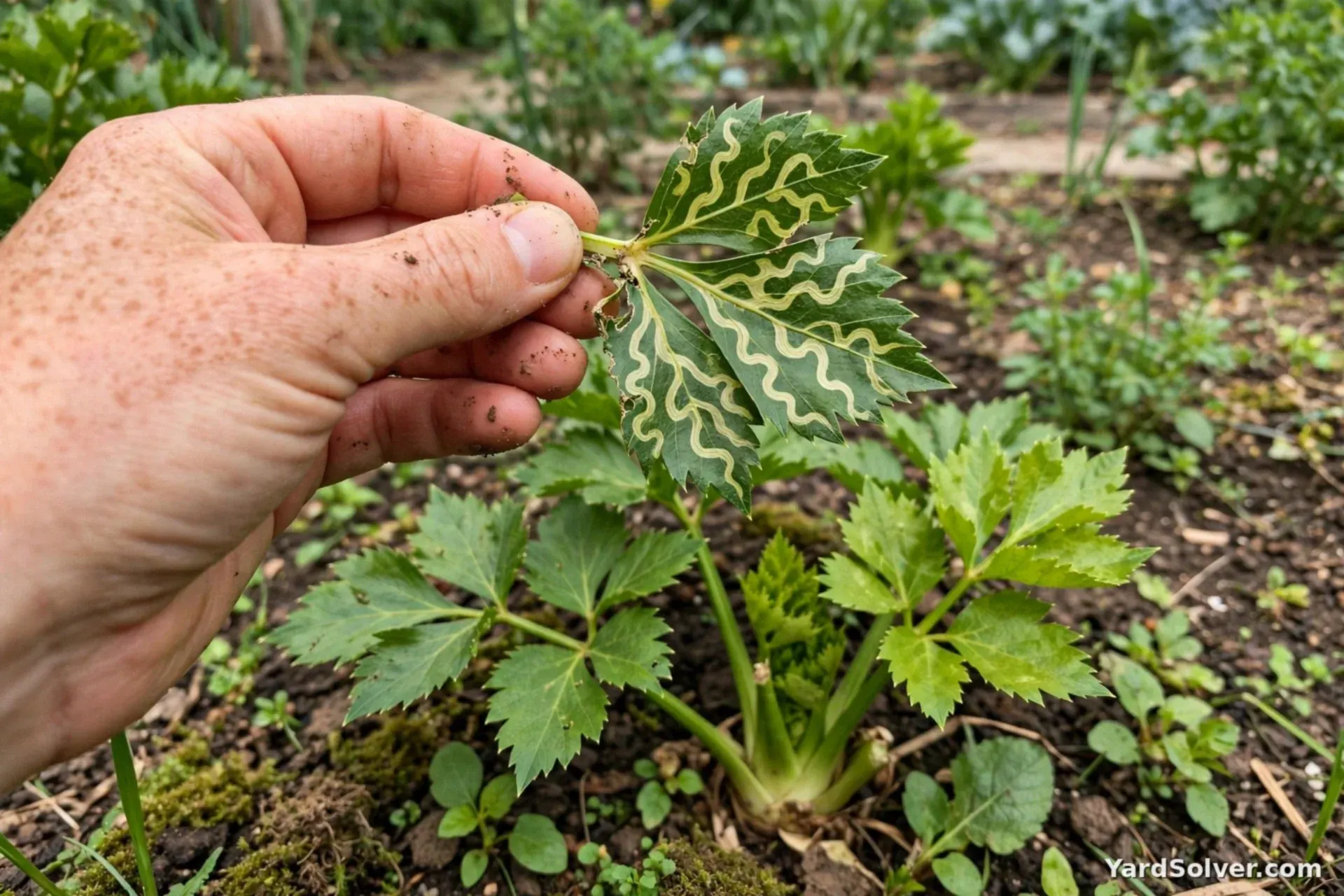
- Celery leaf miner and aphids — small blotches or clusters on the leaves; remove badly marked leaves and blast aphids off with water.
Take care: Scrub celeriac really well before cooking — soil hides in the knobbly skin — and peel it thickly to get to the clean, white flesh.
Step 6 — Harvest
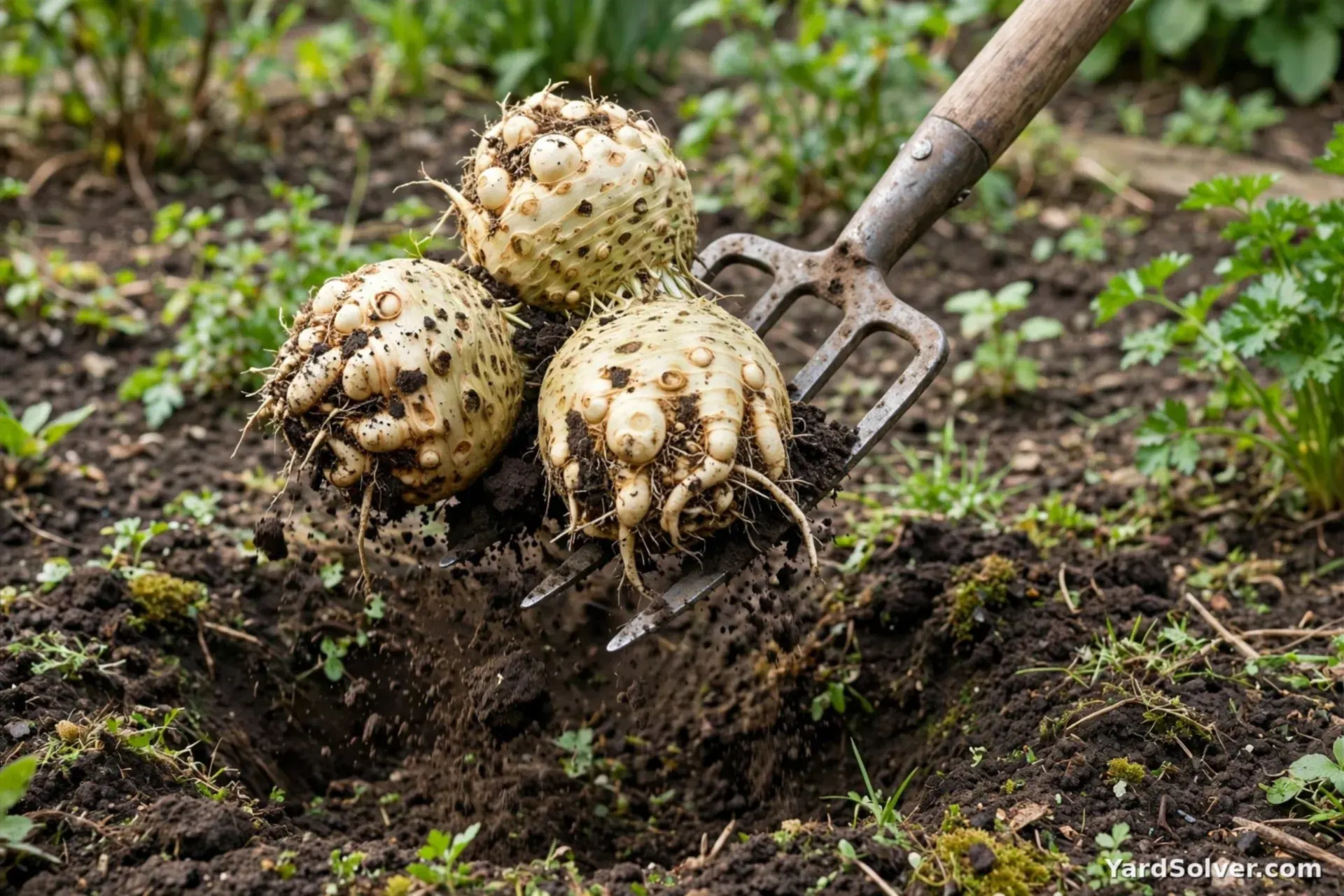
Ready in: 100–120 days after transplant. Lift roots from about day 100 once they are 3–4 in across; in mild gardens they can stay in the ground under a thick mulch and be dug as needed into winter.
📅 Your personal Celeriac schedule
Counted from your planting day — not a generic calendar. Day 0 is the day the seed went in the ground or the young plant went out.
Varieties worth growing
| Variety | Colour | Why gardeners like it |
|---|---|---|
| Prague Giant | Creamy white | A large, smooth-rooted classic — the one most seed catalogues lead with |
| Mars | White | Uniform, round roots that size up a little earlier than most |
| Diamant | White | Smooth skin and dense flesh that keeps its colour well after peeling |
| Brilliant | White | Bred for smooth, easy-to-clean roots with few side roots |
| Monarch | White | A reliable, heavy-rooting variety long grown for winter storage |
Good for you — and take care
Benefits
- Provides vitamin K and a useful amount of vitamin C
- A source of fibre that supports good digestion
- Gives celery flavour for far fewer calories than creamy stalk-celery dishes
- Contains potassium, which helps maintain normal blood pressure
- Low in calories for its size
Take care
- People allergic to celery are usually allergic to celeriac too — it is the same species
- Peel thickly and scrub well; soil lodges in every knobble
- People who take blood thinners: celeriac contains vitamin K, so keep servings steady rather than suddenly large
A little history — and one good fact
Celeriac was bred from wild celery around the Mediterranean, where growers selected plants that swelled a fat root instead of thin stalks. It has been a winter staple of French and central European kitchens for centuries — the root behind céleri rémoulade — yet stayed a curiosity in North America until recently.
Fun fact: Mature celeriac roots store for months in cold, damp conditions — traditional gardeners buried them in sand boxes in the cellar.
Keep going
Guides: When to Start Seeds Indoors · How to Harden Off Seedlings · How to Test Your Garden Soil
Calculators: Plant Spacing Calculator · Seed Calculator · Fertilizer Calculator · Garden Mix Calculator
More vegetables: Celery · Carrot · Parsnip
← Back to the Plant Library · Get your personal planting dates
Questions people ask
When do I plant celeriac?
Count from your average last spring frost: sow indoors 10 weeks before last frost; move outside 1 week after last frost. Celeriac is celery's root-forming cousin: instead of stalks, the plant swells a round, knobbly root at the base. It is slow in everything — slow to sprout, slow to grow — so start seed indoors about 10 weeks before your last frost and never let the plants check or dry out.
How far apart do I space celeriac?
Space plants 6–8 in apart, with seed sown 1/4 in deep. Sun: full sun.
When is celeriac ready to harvest?
100–120 days after transplant. Grown for its knobbly, celery-flavoured root rather than stalks: it needs the longest, steadiest season in the garden — an early indoor start and soil that never dries out.