
Plant Library · Vegetables
🌶️ How to Grow Chilli Pepper
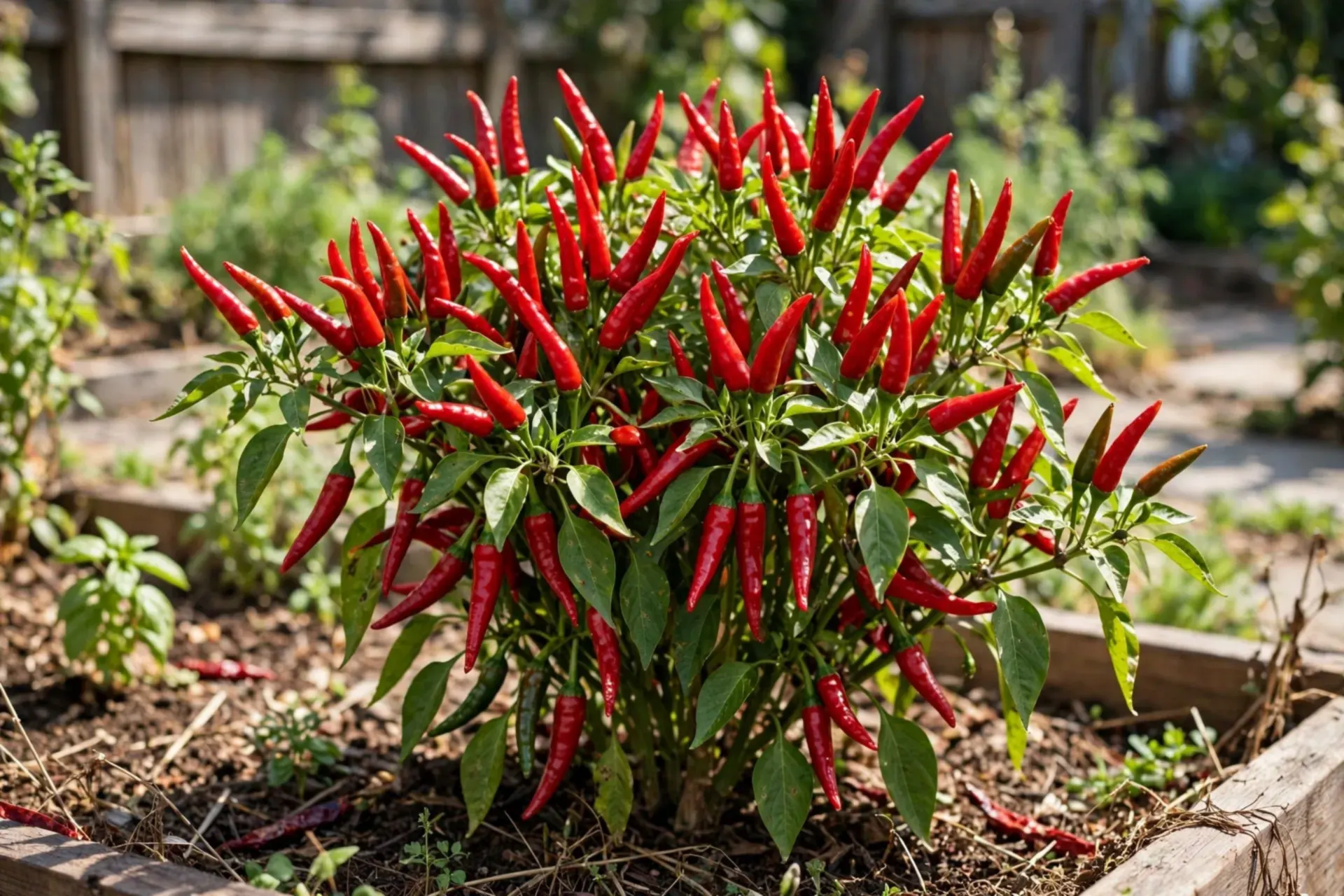
The slowest seed of all — sow early and keep it warm. Chillies ask for the longest season of any vegetable on this site: seed sown indoors 10 weeks before your last frost, in real warmth, and plants that only go outside once nights are warm — repaid with pods from midsummer until frost, and plants you can overwinter for a head start next year.
Grow Chilli Pepper with us — step by step
Everything for this plant is written step by step below — what to do, and exactly when. Read it through first if you like: you can grow it entirely on your own with that guide. Or start with us here — tell us your planting day and we lay out your personal schedule on this page, every next step on its own day, counted from your planting date. No guessing, no forgetting.
Step 1 — today: Plant out your young Chilli Pepper plants today (hardened off first), spaced 18 in apart in the sunniest, warmest spot, and water them in deeply. Starting from seed instead? Sow indoors now, 1/4 in deep in real warmth, and this same schedule counts from transplant day.
Chilli Pepper at a glance
Sow indoors: 10 weeks before last frost
Move outside: 3 weeks after last frost
Spacing: 18 in · Seed depth: 1/4 in
Sun: Full sun
Water: Regular; mulch to hold moisture
Harvest: Pods from 60–90 days after transplant; pick often to keep them coming
Timing counts from your average last spring frost — get your own dates in the Planting Calendar. Guidance follows standard extension-service practice for Canada and the US.
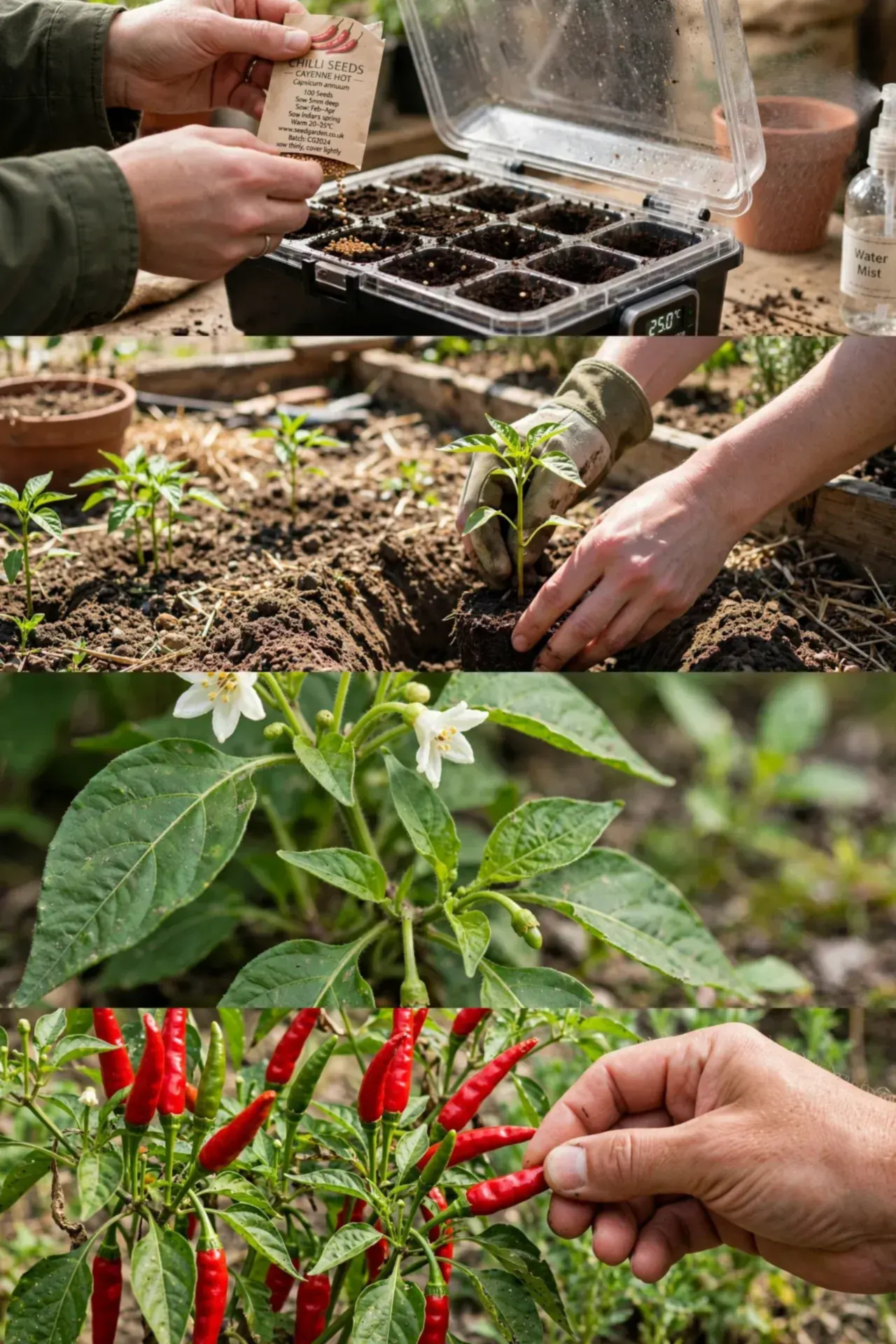
How to plant and grow chilli pepper, step by step
Step 1 — Time it right — sow early, keep it warm
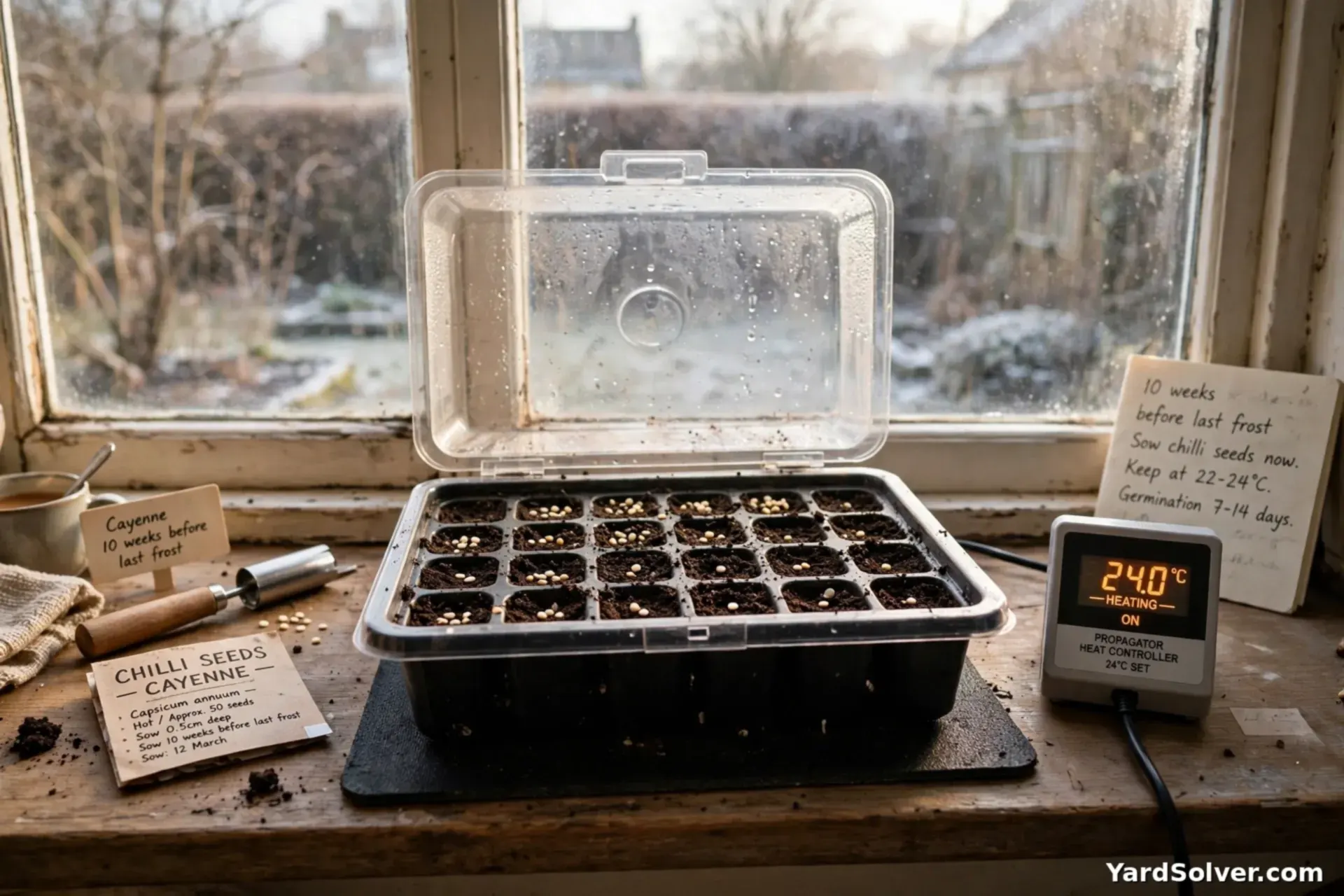
Sow indoors: 10 weeks before last frost; Move outside: 3 weeks after last frost. All dates count from your average last spring frost — the Planting Calendar turns them into real dates for your garden. Chilli seed is famously slow and needs real warmth to sprout well — around 25°C in a heated propagator or on top of a warm appliance; in a cool room it can sit for a month and still sulk. The hot types (habanero and its relatives) are slower still, so sow them first. A late-sown chilli is a green-pod plant by frost; an early one crops for months.
Step 2 — Prepare the spot
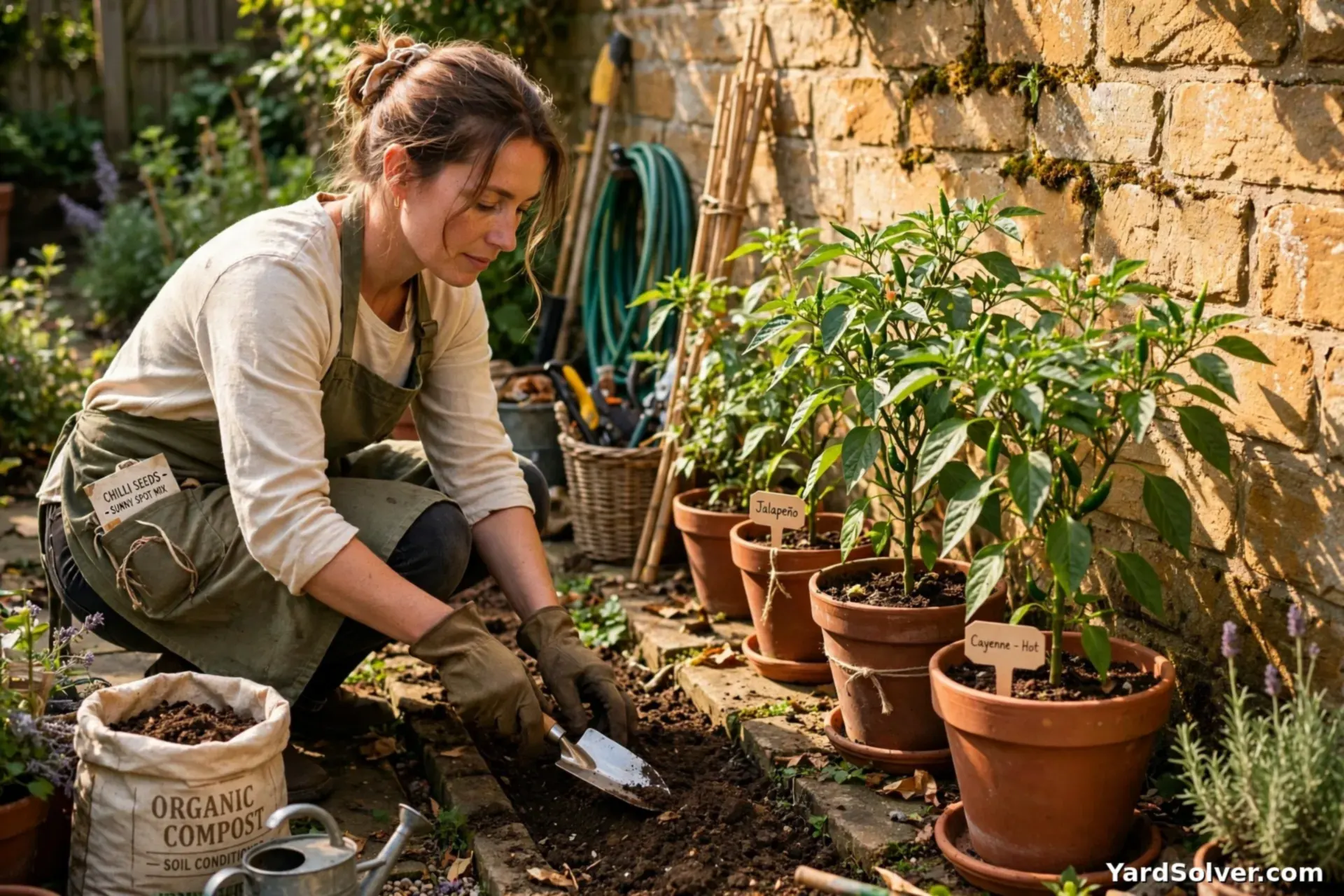
Sun: Full sun — the sunniest, warmest, most sheltered spot you own. Chillies excel in pots: a pot against a sun-facing wall warms the roots, can be moved under cover in a cold snap, and comes indoors for overwintering in autumn. In beds, work compost into the soil before planting and mulch once plants are growing to hold moisture and warmth. For these hungry, thirsty crops, steady moisture matters more than anything else. Work out how much you need with the Garden Mix Calculator or the Raised Bed Soil Calculator.
Step 3 — Sow and plant out
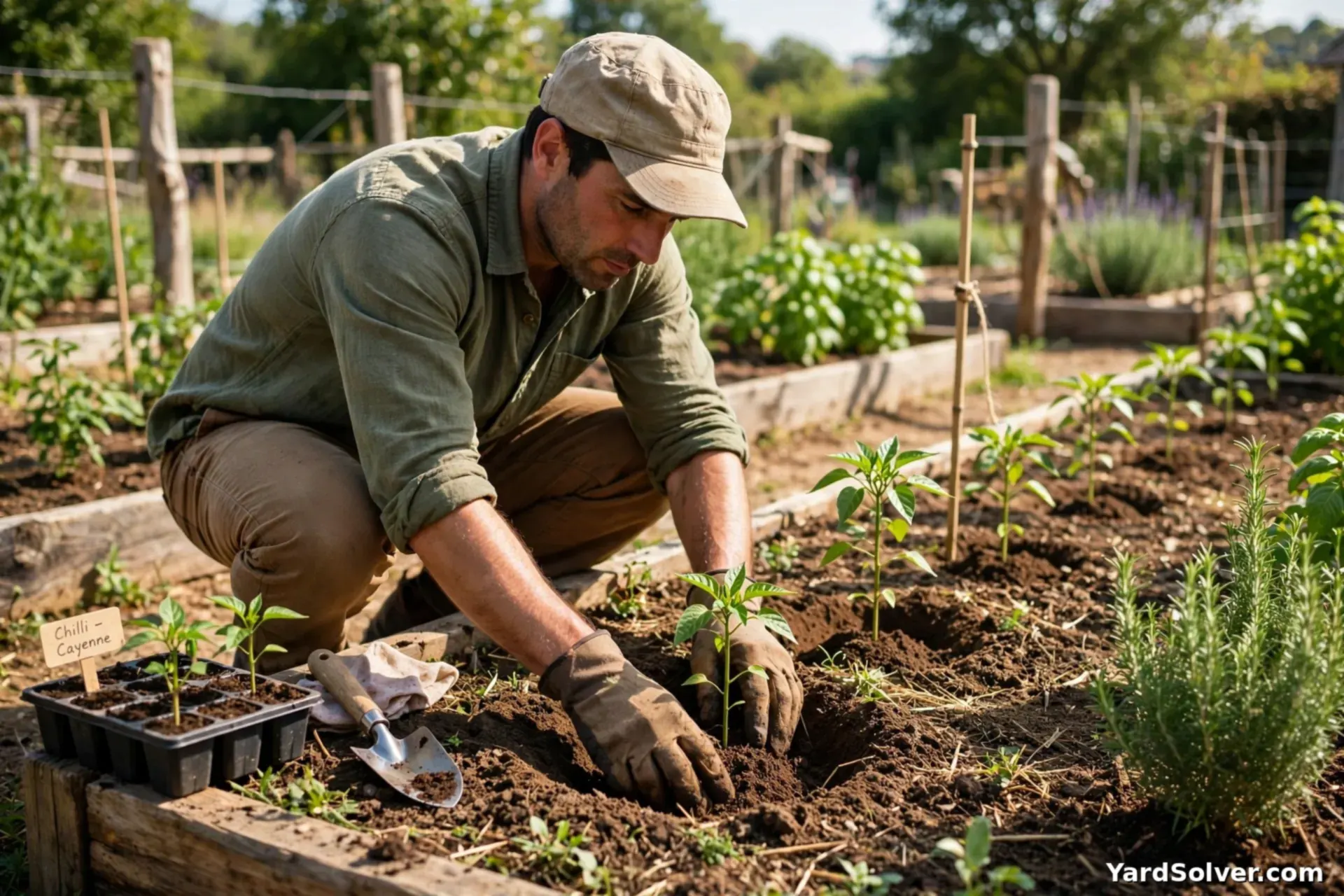
Start seed indoors 10 weeks before last frost, sowing 1/4 in deep in warmth, and pot seedlings on as they grow — chillies may need two pot sizes before planting day. Harden them off over 7–10 days (see How to Harden Off Seedlings) and move them outside 3 weeks after last frost, only once nights stay reliably above about 10°C, spaced 18 in apart. A plant chilled in cold soil can sulk for weeks and never quite catch up, which is why this date, not the calendar, decides the crop. The Plant Spacing Calculator turns that spacing into plants-per-bed.
Step 4 — Water and feed
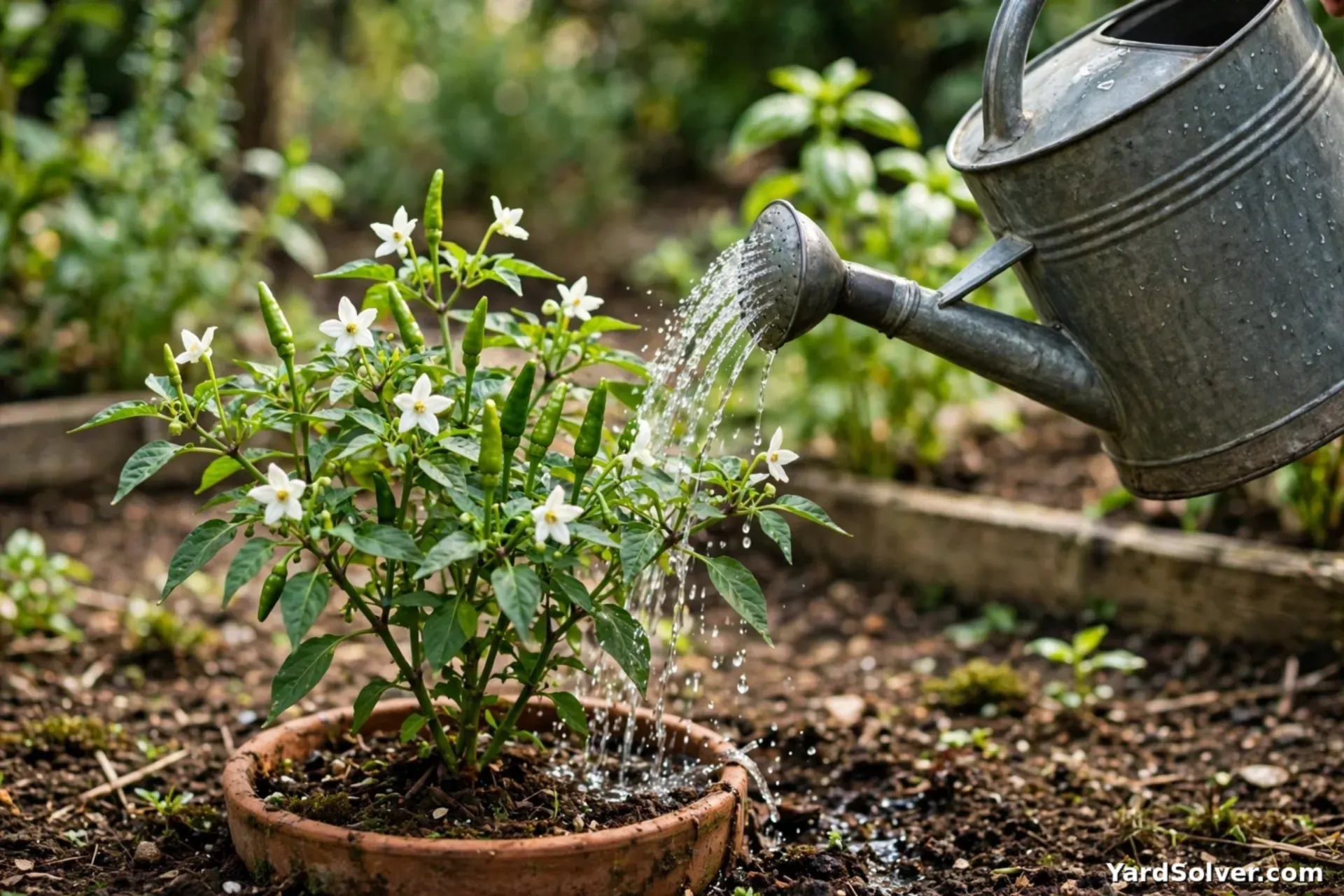
Water: Regular; mulch to hold moisture. Water at the base and keep moisture even — swings between dry and soaked are what crack pods and trigger blossom end rot. First feed: a balanced feed while plants are growing leaves, then switch at first flowers (around day 35) to a potash-rich tomato feed, which pushes flowers and pods instead of more leaf. The Fertilizer Calculator turns a bed size into the right amount.
Step 5 — Care and the problems to watch for
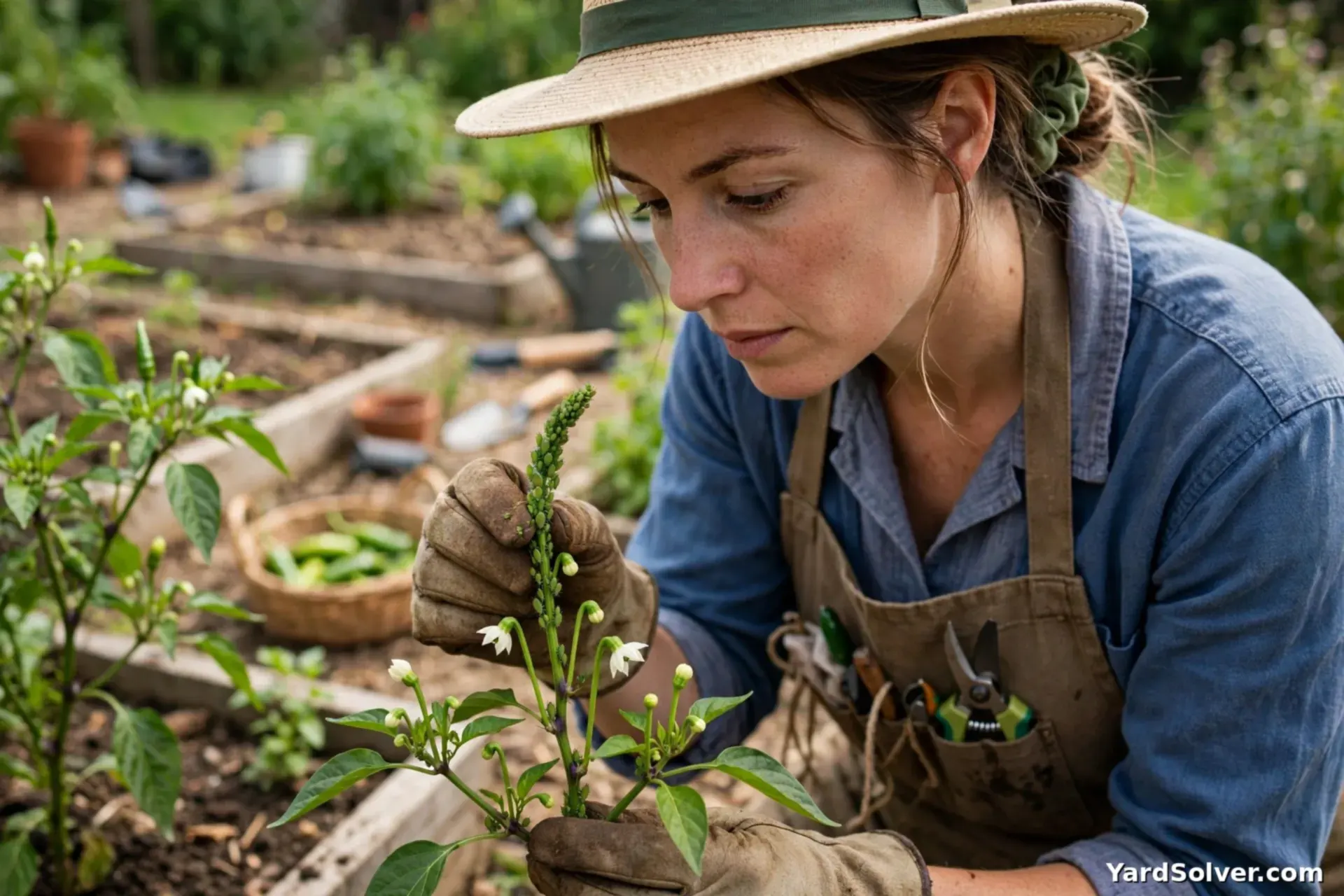
- Aphids — colonies on the soft shoot tips; blast off with water or follow the aphid guide below before they stunt the growing points.
- Flower drop — flowers fall without setting in heat waves and cold nights alike; it settles when temperatures steady, and misting flowers in hot dry weather helps set.
- Blossom end rot — dark patches on pod tips from uneven watering; keep moisture steady and mulch.
Take care: Chilli heat is capsaicin oil that stays on skin — wear gloves when cutting hot pods, wash hands well, and never touch your eyes after handling them.
Step 6 — Harvest — and overwinter the best plant
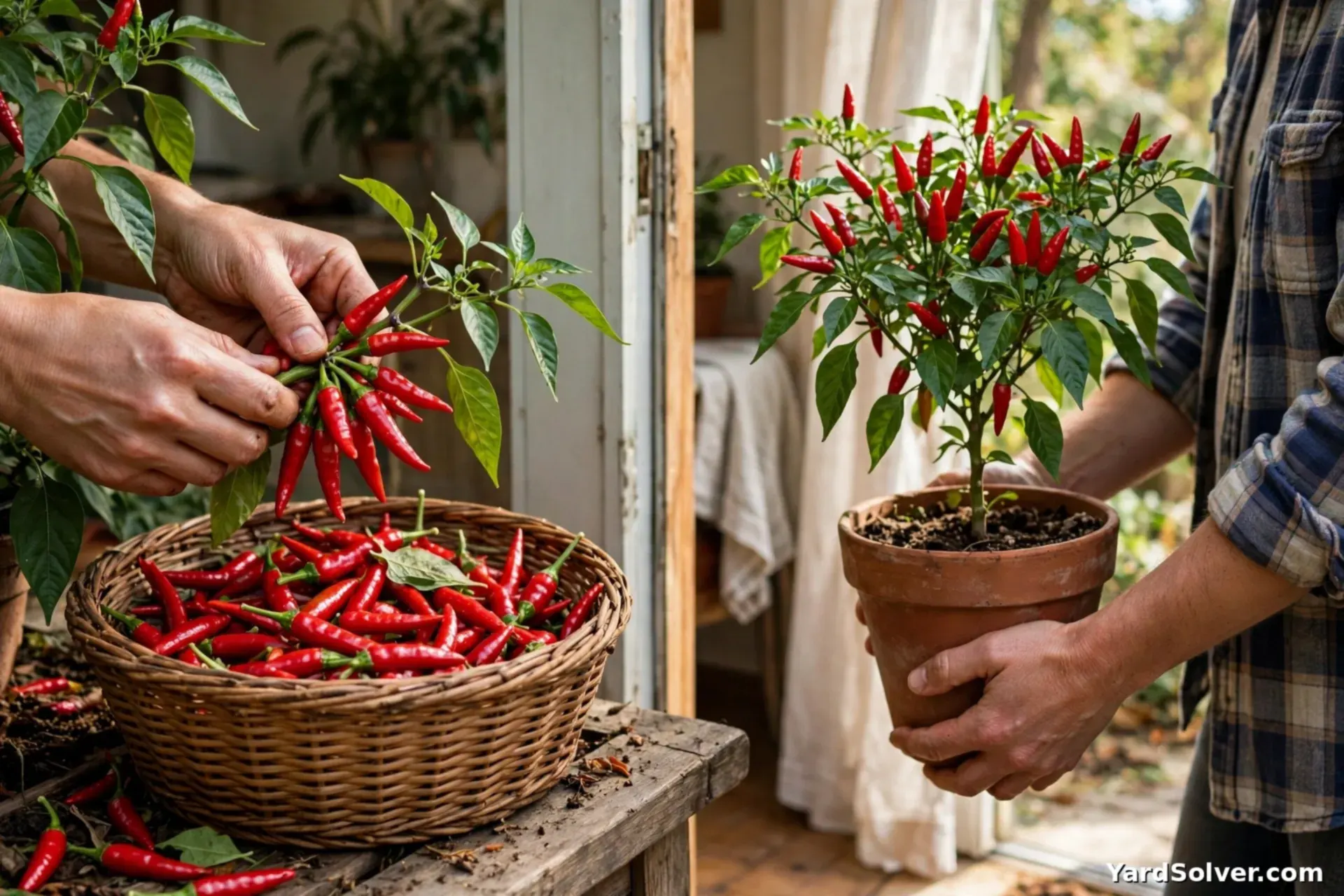
Ready in: Pods from 60–90 days after transplant; pick often to keep them coming. Harvest runs from about day 60 onward — pick pods green or at full colour depending on the type, and pick often: a plant carrying ripe pods slows down, a picked plant keeps flowering. Before the first frost, lift your best plant into a pot, trim it back, and overwinter it indoors on a bright sill — an overwintered plant fruits weeks earlier next year than any seedling. The full method is in the How to Overwinter Pepper Plants guide.
Problems, pests & diseases — diagnosis and fixes
- Clusters of green or black insects on shoot tips and flower buds: aphids — the chilli's number-one pest, indoors and out. Fix: blast them off with a jet of water, squash colonies by hand, and follow the How to Get Rid of Aphids guide if they return; check overwintered plants weekly, when aphids explode unnoticed.
- Dark, sunken patches on the tips of pods: blossom end rot, from uneven watering interrupting calcium flow. Fix: keep moisture even with mulch and regular deep watering; damaged pods will not heal, but later pods on a steadied plant set clean.
- Flowers dropping off without setting fruit: temperature — nights below about 12°C or heatwaves above 32°C both make chillies drop flowers. Fix: patience first (setting resumes when temperatures steady); move pots to shade in extreme heat and mist flowers in hot, dry spells.
- Pale or white blistered patches on pods facing the sun: sunscald, usually after leaves are lost to pests or pruning exposes the fruit. Fix: keep the leaf canopy intact over ripening pods; a light shade cloth helps in heatwaves. Scalded pods are still usable if trimmed.
- Plants stunted, barely growing, weeks after planting out: cold — chillies planted into cold soil or cold nights sulk and can take weeks to restart. Fix: wait for warm nights before planting out (Step 3), warm the soil with mulch or cloches, and grow in pots you can shelter.
- Tiny white flies puffing up from indoor and overwintered plants: whitefly, the overwintering pest. Fix: shake plants over a vacuum hose or sticky cards, wipe leaf undersides weekly, and inspect any plant before it comes indoors for winter.
📅 Your personal Chilli Pepper schedule
Counted from your planting day — not a generic calendar. Day 0 is the day the seed went in the ground or the young plant went out.
Varieties worth growing
| Variety | Heat | Why gardeners like it |
|---|---|---|
| 'Jalapeño' | Medium | The thick-walled green-to-red classic — picked green for nachos and pickles, red for a sweeter heat |
| 'Cayenne' | Hot | Long thin pods that dry into flakes and powder — the drying chilli for the store cupboard |
| 'Habanero' | Very hot | Fruity, lantern-shaped and seriously hot — the slowest to sprout and ripen, so sow it first of all |
| 'Padron' | Mild (mostly) | The tapas chilli, picked small and green and blistered in a pan — famously, about one in ten is hot |
| 'Hungarian Hot Wax' | Medium | Early and reliable in cooler summers — pale yellow pods that crop where habaneros give up |
Good for you — and take care
Benefits
- Rich in vitamin C — a single chilli can rival an orange, gram for gram
- A good source of vitamin A, especially in fully ripe red pods
- Capsaicin, the heat compound, is what makes chillies a preserving-friendly, appetite-waking staple across hot cuisines
- One plant crops for months, and overwintered plants fruit earlier each year — the gift that keeps giving
Take care
- Capsaicin burns: wear gloves for hot types, wash hands after handling pods, and keep cut chillies away from eyes and small children
- Start mild if you are new to heat — a habanero is not a training chilli, and the plant does not care about your pride
- Chillies are tender perennials killed by frost: outdoors they live as annuals unless you overwinter them under cover
A little history — and one good fact
Chillies were domesticated in Central and South America thousands of years ago — among the oldest cultivated crops in the Americas — and stayed there until the Columbus voyages carried them to Europe at the end of the 1400s. Portuguese traders then spread them along their sea routes so fast that within fifty years chillies were transforming the cooking of India, Thailand, Korea and Sichuan — cuisines now unthinkable without a plant their ancestors never saw before 1500.
Fun fact: Birds cannot taste capsaicin at all — the heat that stops mammals eating the pods does not register for birds, which eat them freely and spread the seed in their droppings, exactly as the plant intended.
Keep going
Guides: How to Overwinter Pepper Plants · How to Harden Off Seedlings · How to Get Rid of Aphids
Calculators: Plant Spacing Calculator · Seed Calculator · Fertilizer Calculator
More vegetables: Pepper · Tomato · Eggplant
← Back to the Plant Library · Get your personal planting dates
Questions people ask
When do I plant chilli pepper?
Count from your average last spring frost: sow indoors 10 weeks before last frost; move outside 3 weeks after last frost. The slowest seed of all — sow early and keep it warm.
How far apart do I space chilli pepper?
Space plants 18 in apart, with seed sown 1/4 in deep. Sun: full sun.
When is chilli pepper ready to harvest?
Pods from 60–90 days after transplant; pick often to keep them coming. The slowest seed of all — sow early and keep it warm.