
Plant Library · Vegetables
🍈 How to Grow Honeydew Melon
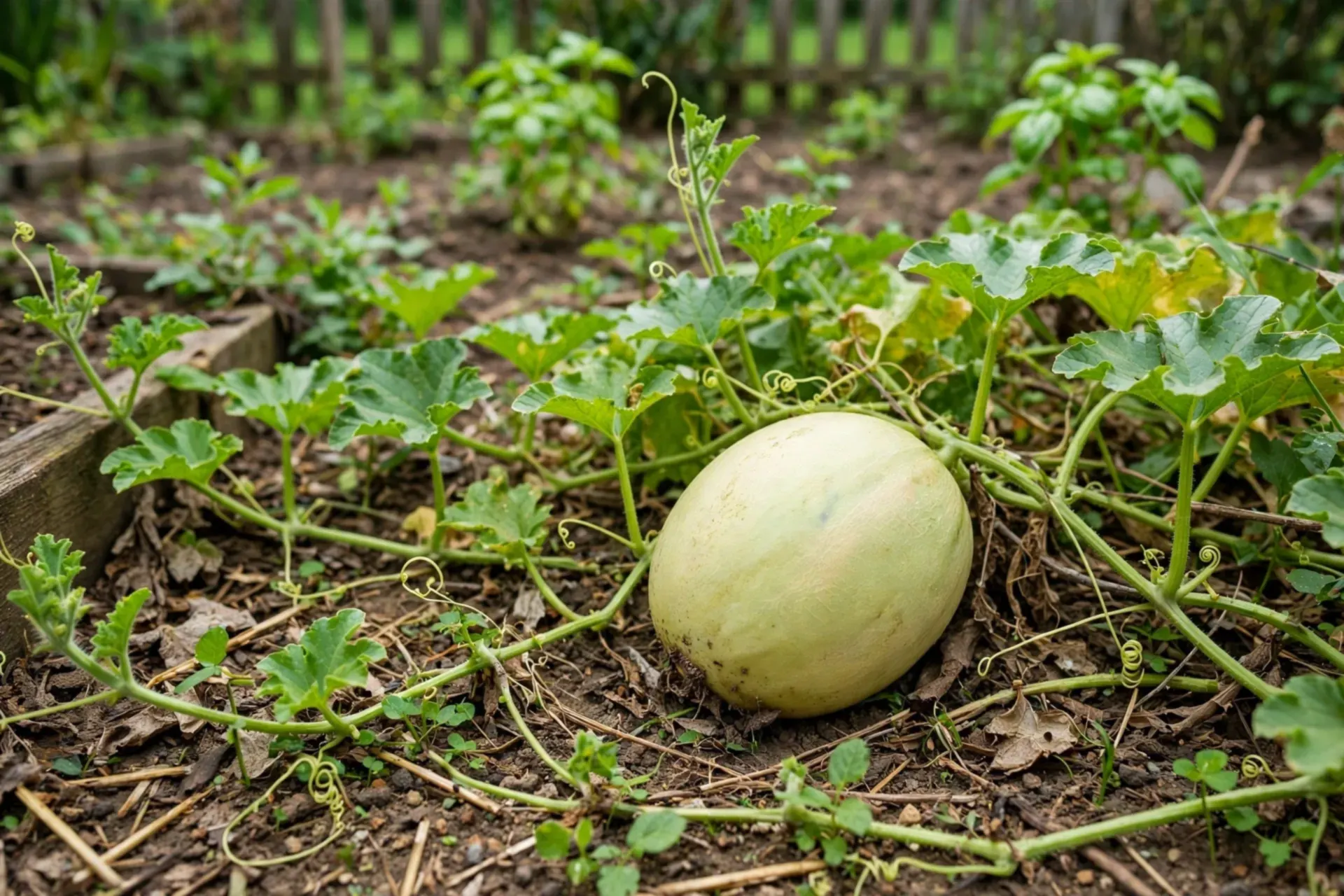
Needs a long, hot summer — start indoors where summers are short. Honeydew is the smooth, pale melon whose green flesh turns honey-sweet only with real heat and sun, so timing and warmth are the whole crop: start seed indoors 3 weeks before your last frost, or sow outdoors a week after it, once the soil is properly warm.
Grow Honeydew Melon with us — step by step
Everything for this plant is written step by step below — what to do, and exactly when. Read it through first if you like: you can grow it entirely on your own with that guide. Or start with us here — tell us your planting day and we lay out your personal schedule on this page, every next step on its own day, counted from your planting date. No guessing, no forgetting.
Step 1 — today: Plant out your young Honeydew Melon plants today (hardened off first), spaced 36–48 in apart on mounded hills, and water them in deeply. Starting from seed instead? Sow now, 1/2 in deep in warm soil, and this same schedule counts from planting day.
Honeydew Melon at a glance
Sow indoors: 3 weeks before last frost
Sow outdoors: 1 week after last frost
Spacing: 36–48 in · Seed depth: 1/2 in
Sun: Full sun
Water: Plenty while fruit grows; ease off as melons ripen
Harvest: Melons in 70–90 days — ripe when the rind turns creamy and the blossom end gives slightly
Timing counts from your average last spring frost — get your own dates in the Planting Calendar. Guidance follows standard extension-service practice for Canada and the US.
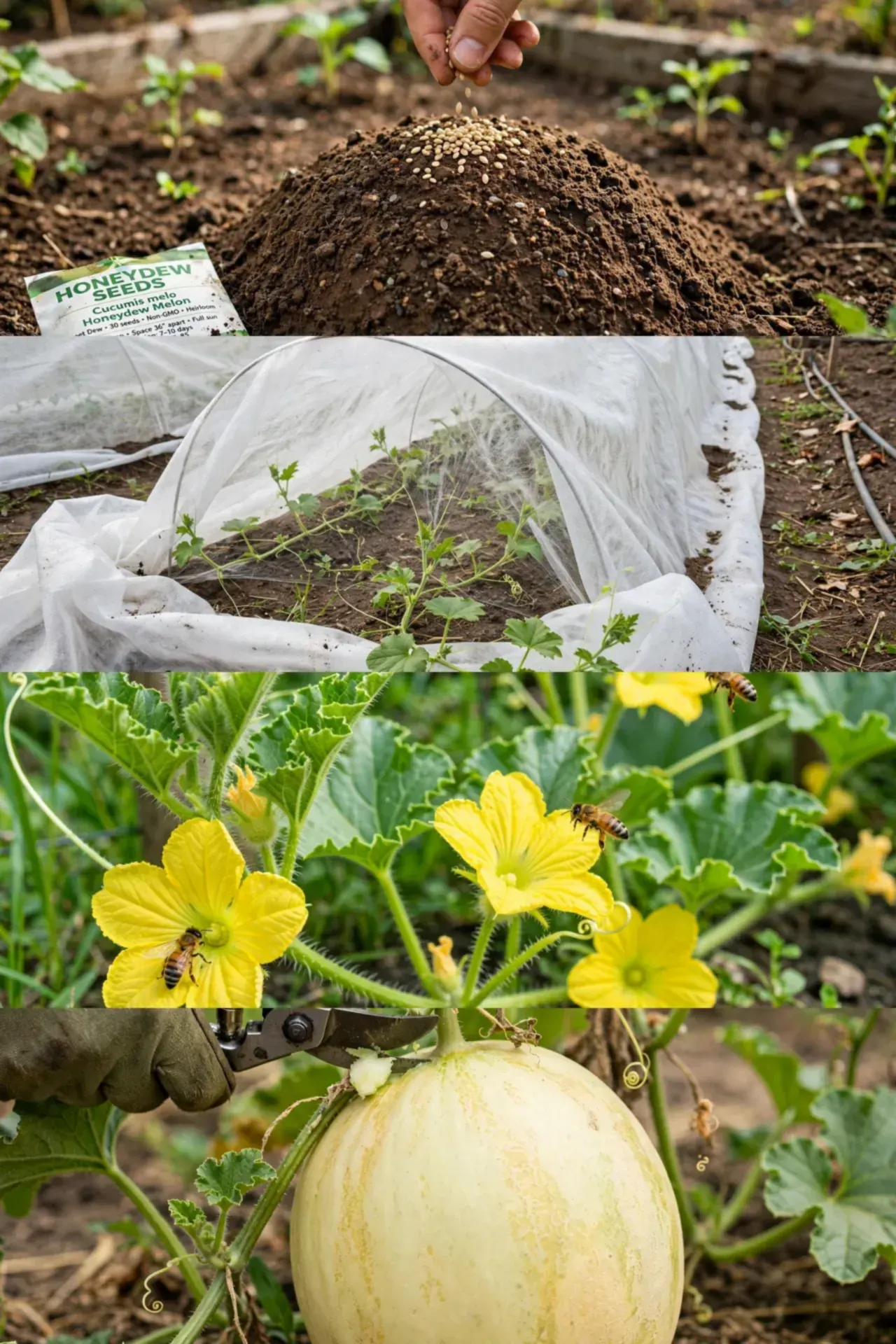
How to plant and grow honeydew melon, step by step
Step 1 — Time it right — warmth above all
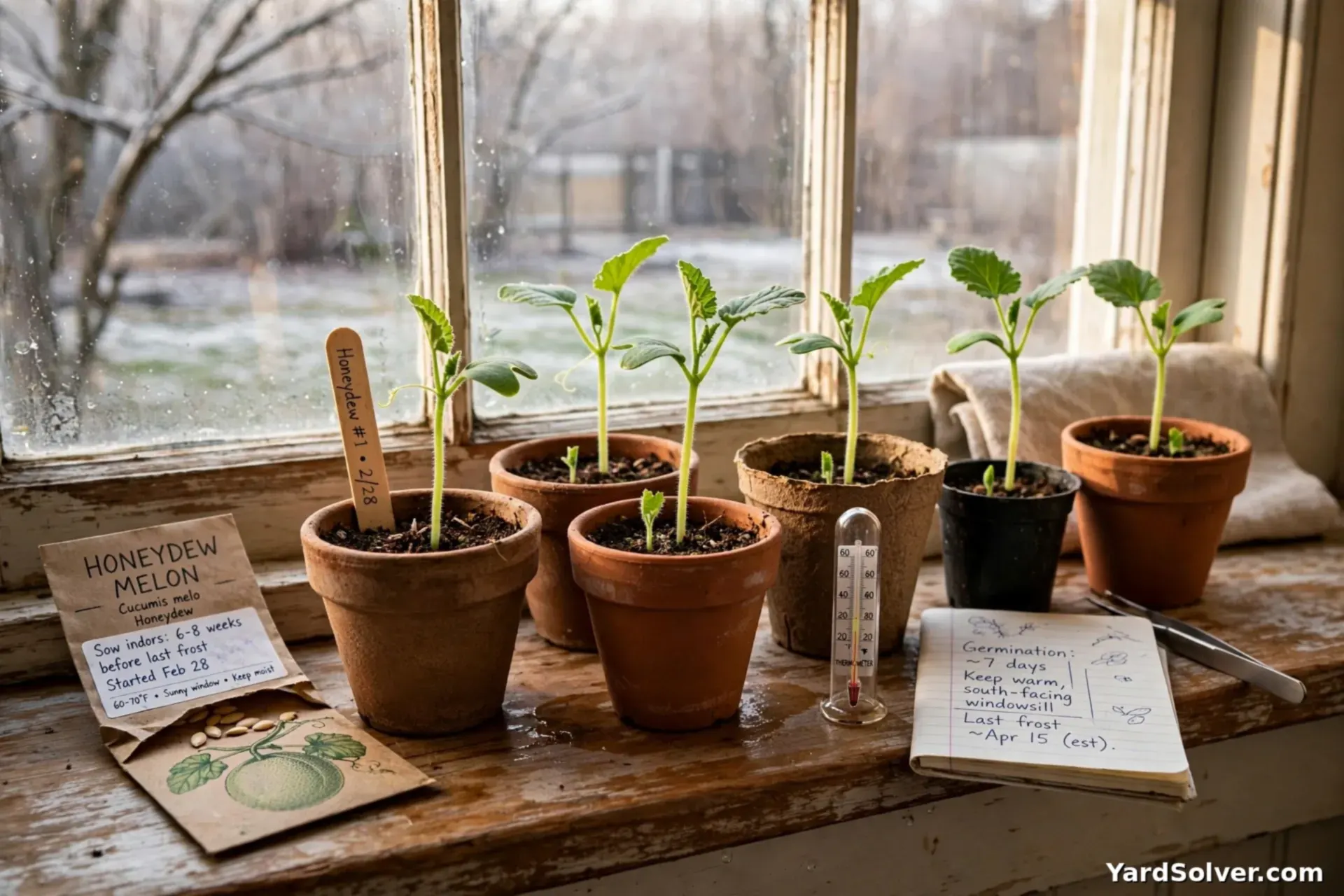
Sow indoors: 3 weeks before last frost; Sow outdoors: 1 week after last frost. All dates count from your average last spring frost — the Planting Calendar turns them into real dates for your garden. Honeydew seed will not even sprout until soil reaches about 18°C (65°F), and the plants sulk below 15°C nights — so in short-summer regions the indoor start is not a refinement, it is the crop. Give it your longest, hottest season: 70–90 warm days from planting to ripe fruit.
Step 2 — Prepare the spot
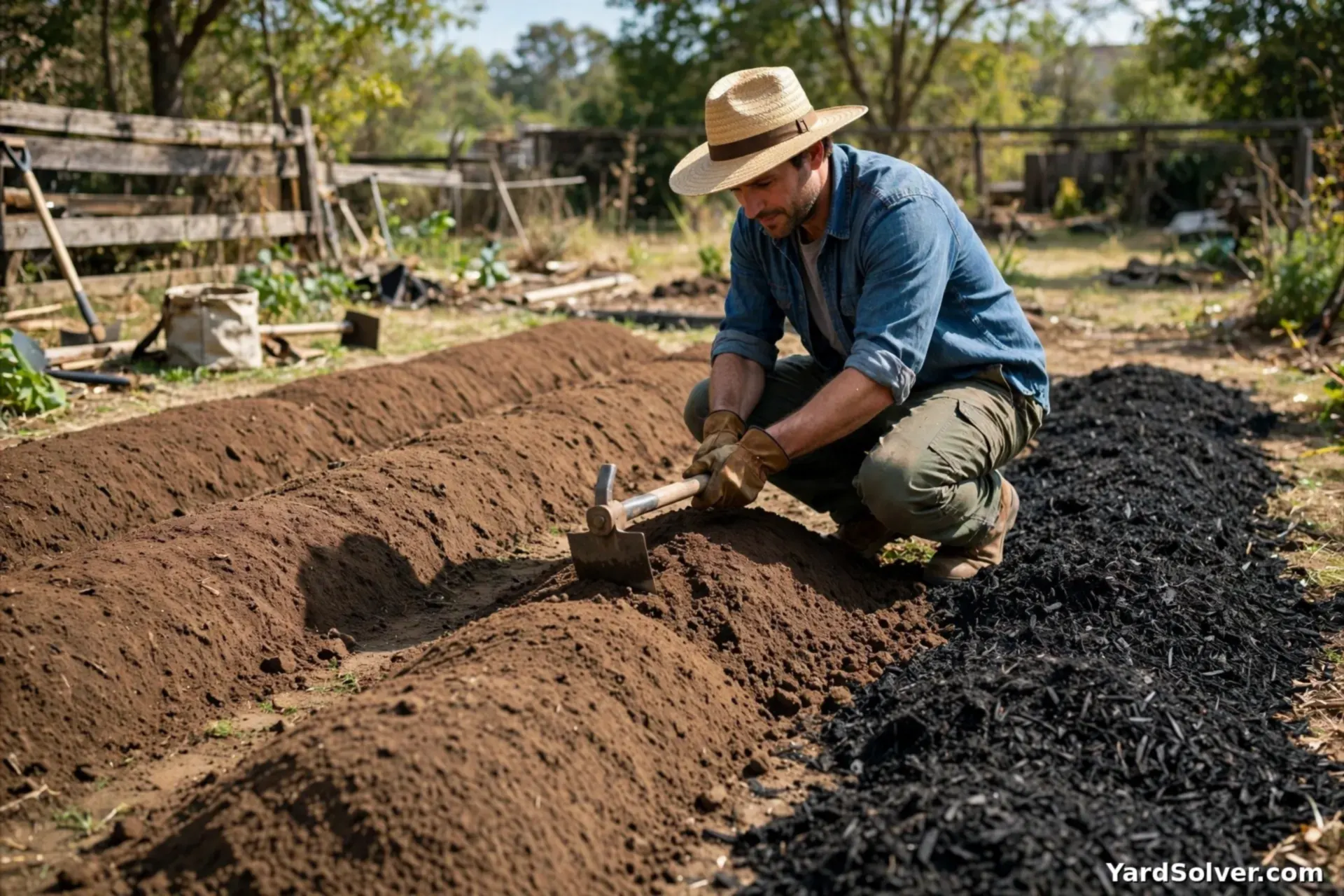
Sun: Full sun — the sunniest ground you have. Melons are heavy feeders in a hurry: work plenty of compost into the soil and shape it into low mounded hills, which warm up faster in spring and shed excess water away from the stems. Black plastic or dark mulch over the bed is the northern grower's best trick — it holds soil heat, keeps fruit off damp ground and smothers weeds. These vines sprawl for metres, so clear real space or plan to trail them along a bed edge. Work out how much you need with the Garden Mix Calculator or the Raised Bed Soil Calculator.
Step 3 — Sow and plant out
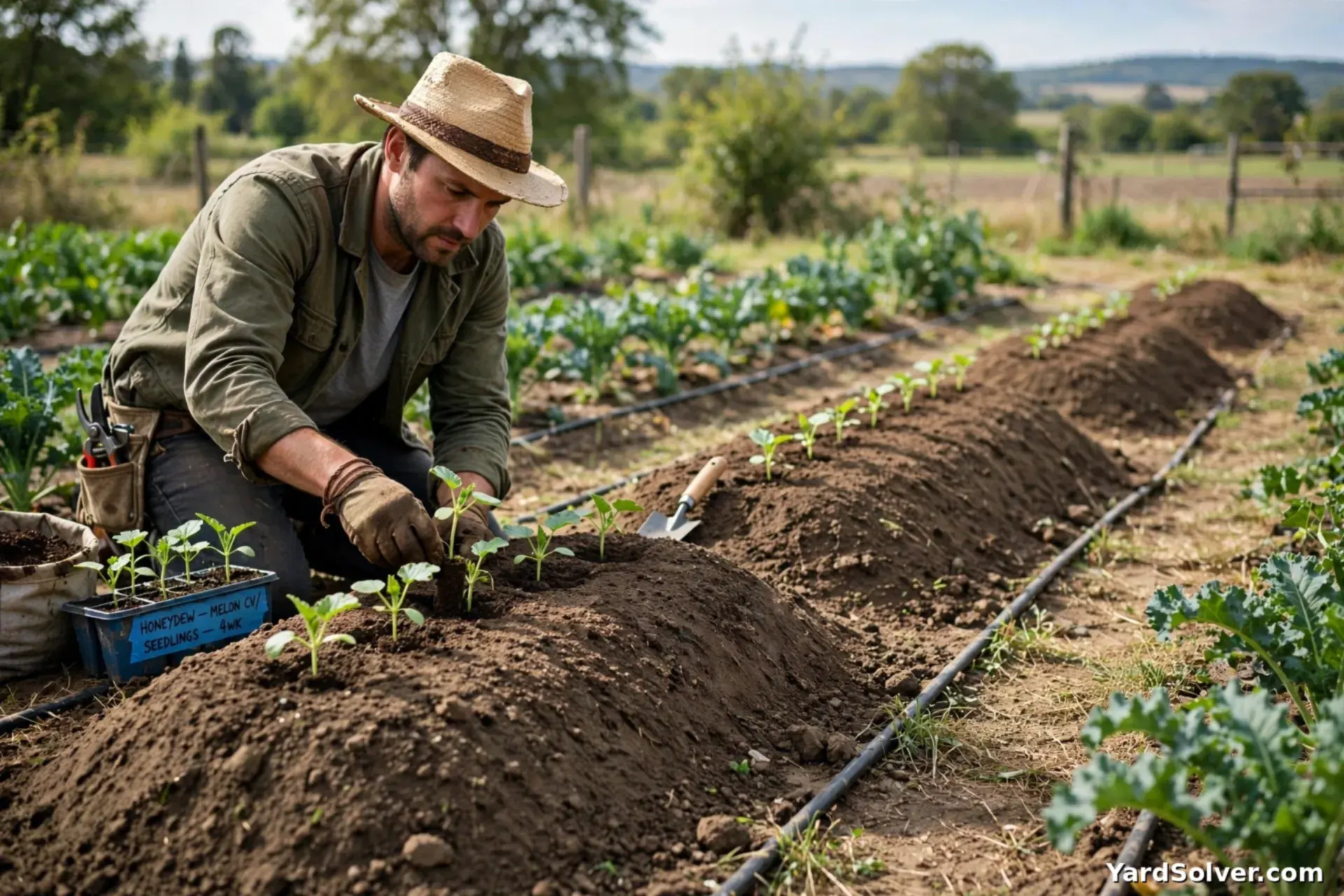
Sow 2–3 seeds per hill, 1/2 in deep, hills spaced 36–48 in apart, and thin to the strongest plant or two once they are growing. Melons dislike root disturbance, so indoor-started plants should be sown in peat or coir pots that plant out whole; harden them off over 7–10 days (see How to Harden Off Seedlings) and move them out only when nights are reliably warm. The Plant Spacing Calculator turns that spacing into plants-per-bed.
Step 4 — Water and feed
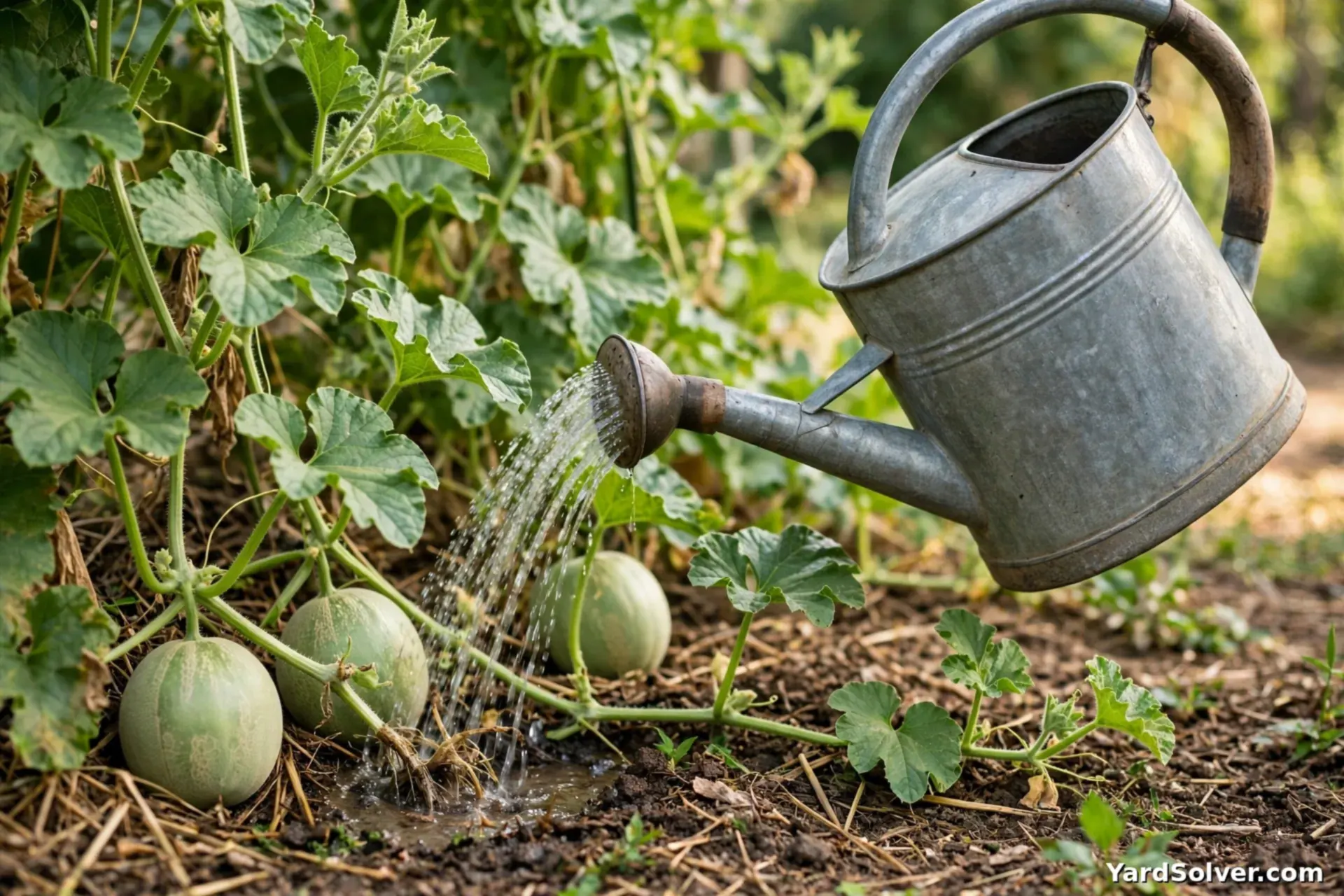
Water: Plenty while fruit grows; ease off as melons ripen. Water deeply at the base, keeping leaves as dry as you can — wet foliage is an open door to powdery mildew. A balanced feed at planting and again when the vines start to run keeps growth moving; the Fertilizer Calculator turns a bed size into the right amount. In the last week or two before harvest, cut the water back: the plant pours its sugars into the fruit instead of diluting them, and the flavour difference is the whole point of growing your own.
Step 5 — Care and the problems to watch for
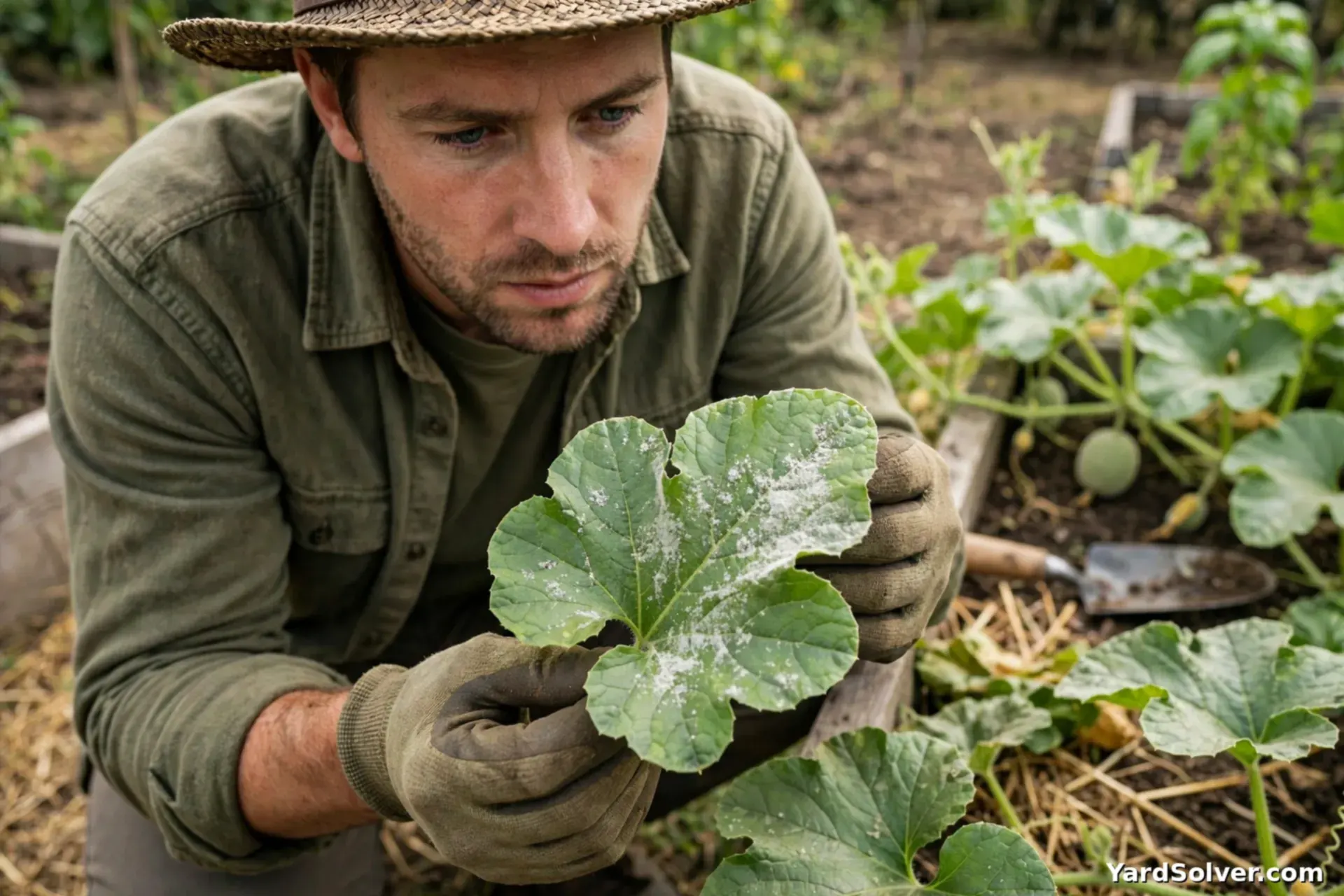
- Powdery mildew — white dusty patches on leaves from midsummer; space for airflow, water at the base, and treat early (see the guide below).
- Cucumber beetles — striped beetles that chew seedlings and spread bacterial wilt; row cover until the flowers open.
- Poor fruit set — flowers but no melons usually means poor pollination: hand-pollinate on still, wet mornings when bees stay home.
Take care: Only the ripe flesh is eaten — rind and seeds are discarded, and an unripe honeydew is bland and crunchy rather than sweet, so patience at harvest is part of the recipe.
Step 6 — Harvest — judge it by eye, nose and thumb
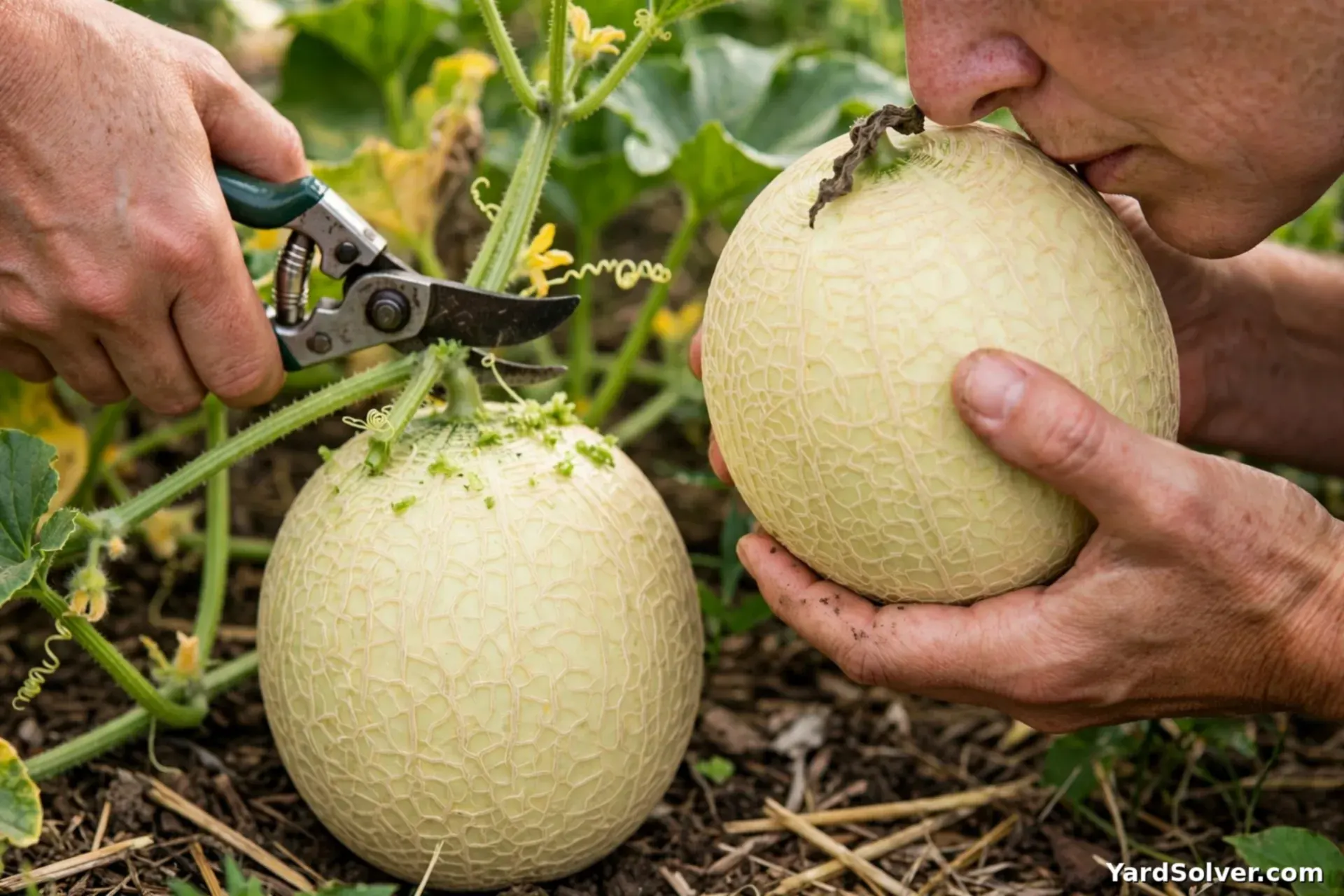
Ready in: Melons in 70–90 days — ripe when the rind turns creamy and the blossom end gives slightly. Here is the honest key fact: unlike cantaloupe, honeydew does NOT slip from the vine when ripe — the stem stays firmly attached, so ripeness is yours to judge. Look for the rind turning from green-white to creamy ivory, smell the blossom end for sweetness, and press it gently — a ripe blossom end gives slightly. Cut the melon from the vine with a knife. Picked at that point it keeps a week in the fridge; picked green, it never sweetens, because honeydew does not ripen further off the vine.
Problems, pests & diseases — diagnosis and fixes
- White powdery patches spreading over leaves: powdery mildew, the melon's main disease in warm, humid weather. Fix: water at the base, space for airflow, remove the worst leaves, and follow the How to Get Rid of Powdery Mildew guide — early treatment saves the crop, late treatment only slows it.
- Striped or spotted beetles chewing leaves, seedlings wilting suddenly: cucumber beetles — and the wilt they spread is bacterial and incurable. Fix: row cover young plants until flowering, remove beetles by hand, and pull wilted plants so beetles do not spread the bacteria further.
- Plenty of flowers but no fruit setting: pollination failure — cold, wet or windy weather keeps bees home, and early flowers are mostly male anyway. Fix: hand-pollinate: brush pollen from a male flower into a female flower (the one with a tiny melon behind it) on a dry morning.
- Dark sunken patch on the blossom end of young fruit: blossom end rot, from uneven watering interrupting calcium movement. Fix: keep soil moisture even with mulch and deep watering; affected fruit will not heal, but later fruit on the same vine usually sets clean.
- Ripe-looking melons that taste bland and watery: too much water late, shade, or fruit picked before the rind creamed. Fix: ease off watering as melons size up, keep vines in full sun, and harvest on the Step 6 signs — rind colour, smell and give together.
- Clusters of small green or black insects on shoot tips and leaf undersides: aphids, which also spread virus between plants. Fix: blast them off with water, encourage ladybirds, and follow the How to Get Rid of Aphids guide if numbers build.
📅 Your personal Honeydew Melon schedule
Counted from your planting day — not a generic calendar. Day 0 is the day the seed went in the ground or the young plant went out.
Varieties worth growing
| Variety | Colour | Why gardeners like it |
|---|---|---|
| 'Honeydew Green Flesh' | Pale green flesh | The standard supermarket honeydew, grown properly — smooth creamy rind and sweet green flesh when vine-ripened |
| 'Orange Flesh' honeydew | Orange flesh | A honeydew with cantaloupe-coloured flesh — the smooth rind and keeping quality of honeydew with a richer colour |
| 'Lambkin' | Pale green flesh | A small, earlier personal-size melon — the reliable choice where summers are shorter |
| 'Diplomat' | Pale green flesh | An early type bred for northern and shorter-season gardens — set it where the season is tightest |
| 'Snow Leopard' | White flesh, variegated rind | A novelty with a white rind splashed with green — small fruit, grown as much for looks as flavour |
Good for you — and take care
Benefits
- A good source of vitamin C and potassium
- High water content — one of the most hydrating of all fruits on a hot day
- Provides folate and small amounts of B vitamins
- Vine-ripened fruit is dramatically sweeter than shop melons, which are picked under-ripe to survive shipping
Take care
- It needs a genuinely long, hot summer: where summers are short, start indoors and choose early varieties, or the fruit will not ripen
- The vines sprawl for metres — give each plant its 36–48 inches or the tangle shades fruit and invites mildew
- Honeydew does not ripen after picking and does not slip from the vine: harvest is a judgement call, and a green-picked melon stays green inside
A little history — and one good fact
Honeydew descends from melons grown around the Middle East and Persia for thousands of years; the smooth white type was refined in southern France, where it was known as the White Antibes melon, and it crossed to North America in the early 1900s, where it was renamed for the honey-sweet dew of its ripe flesh. It has always been the connoisseur's melon — harder to judge ripe than a cantaloupe, and better when you get it right.
Fun fact: A honeydew tells you almost nothing at harvest on purpose: the stem never slips, the rind barely blushes — generations of growers learned to read the creamy colour, the sweet smell and the slight give at the blossom end instead.
Keep going
Guides: How to Harden Off Seedlings · Companion Planting Chart · How to Get Rid of Powdery Mildew
Calculators: Plant Spacing Calculator · Seed Calculator · Fertilizer Calculator · Garden Mix Calculator
More vegetables: Muskmelon (Cantaloupe) · Watermelon · Cucumber
← Back to the Plant Library · Get your personal planting dates
Questions people ask
When do I plant honeydew melon?
Count from your average last spring frost: sow indoors 3 weeks before last frost; sow outdoors 1 week after last frost. Needs a long, hot summer — start indoors where summers are short.
How far apart do I space honeydew melon?
Space plants 36–48 in apart, with seed sown 1/2 in deep. Sun: full sun.
When is honeydew melon ready to harvest?
Melons in 70–90 days — ripe when the rind turns creamy and the blossom end gives slightly. Needs a long, hot summer — start indoors where summers are short.