
Plant Library · Vegetables
🫛 How to Grow Okra
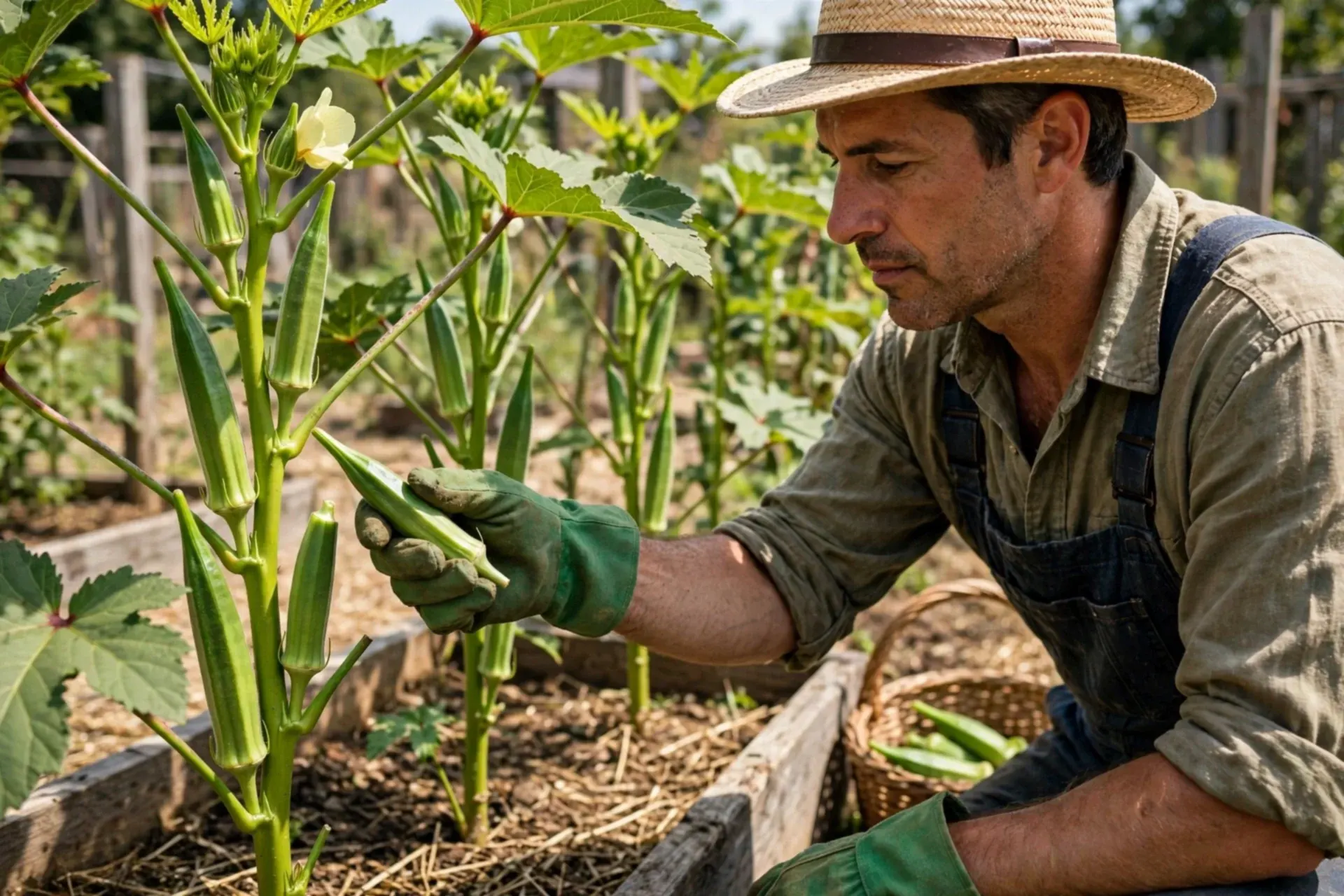
A true heat lover for warm gardens; pick pods young, every day or two. Okra is a true heat lover: start indoors about 4 weeks before your last frost and transplant about 3 weeks after it, or direct sow about 2 weeks after — then pick the pods young, every day or two, before they turn tough.
Grow Okra with us — step by step
Everything for this plant is written step by step below — what to do, and exactly when. Read it through first if you like: you can grow it entirely on your own with that guide. Or start with us here — tell us your planting day and we lay out your personal schedule on this page, every next step on its own day, counted from your planting date. No guessing, no forgetting.
Step 1 — today: Plant out your young Okra plants today (hardened off first), spaced 12–18 in apart, and water them in deeply. Starting from seed instead? Sow indoors now, 1/2 in deep, and this same schedule counts from transplant day.
Okra at a glance
Sow indoors: 4 weeks before last frost
Move outside: 3 weeks after last frost
Sow outdoors: 2 weeks after last frost
Spacing: 12–18 in · Seed depth: 1/2 in
Sun: Full sun
Water: Regular in dry spells
Harvest: 50–65 days
Timing counts from your average last spring frost — get your own dates in the Planting Calendar. Guidance follows standard extension-service practice for Canada and the US.
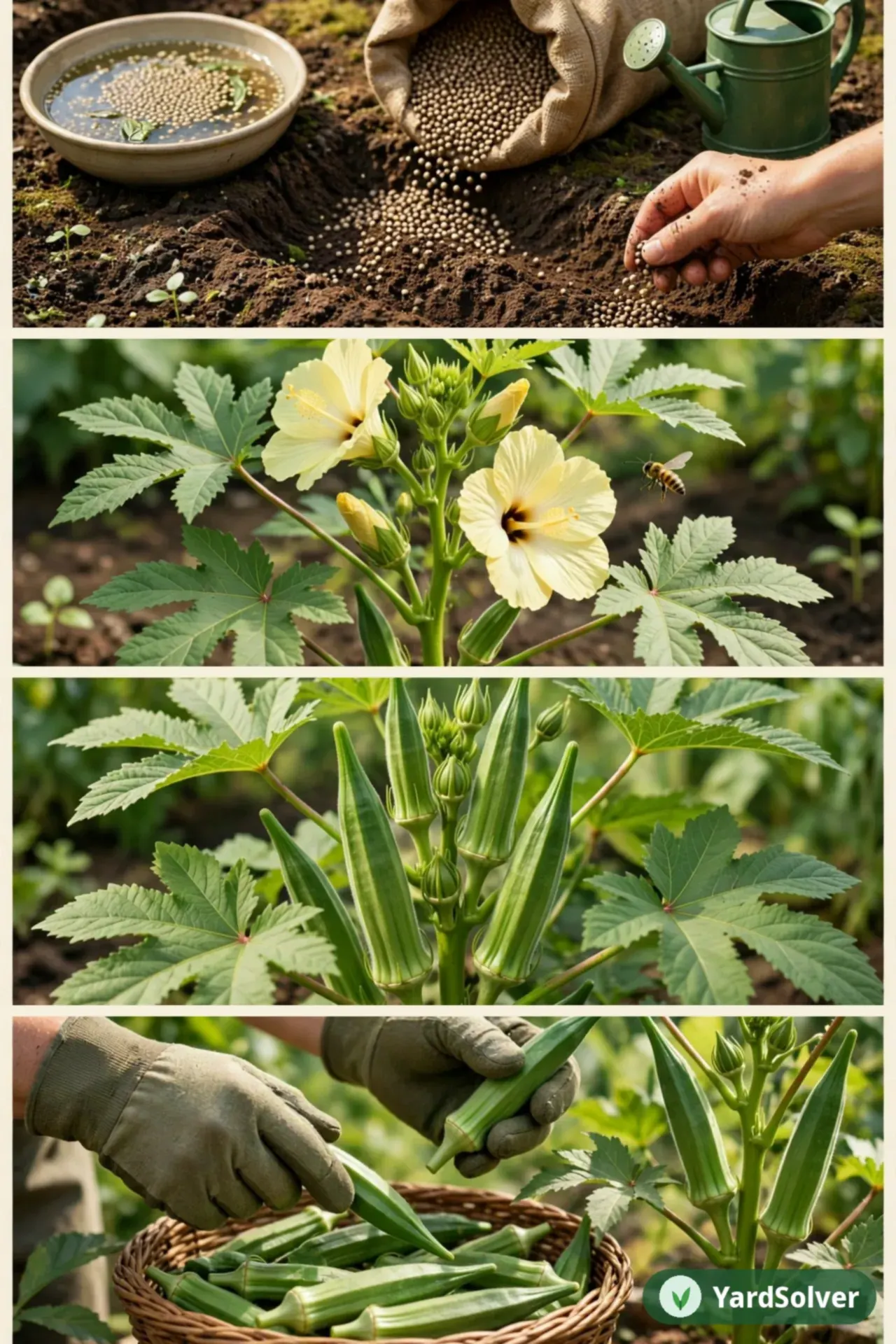
How to plant and grow okra, step by step
Step 1 — Time it right
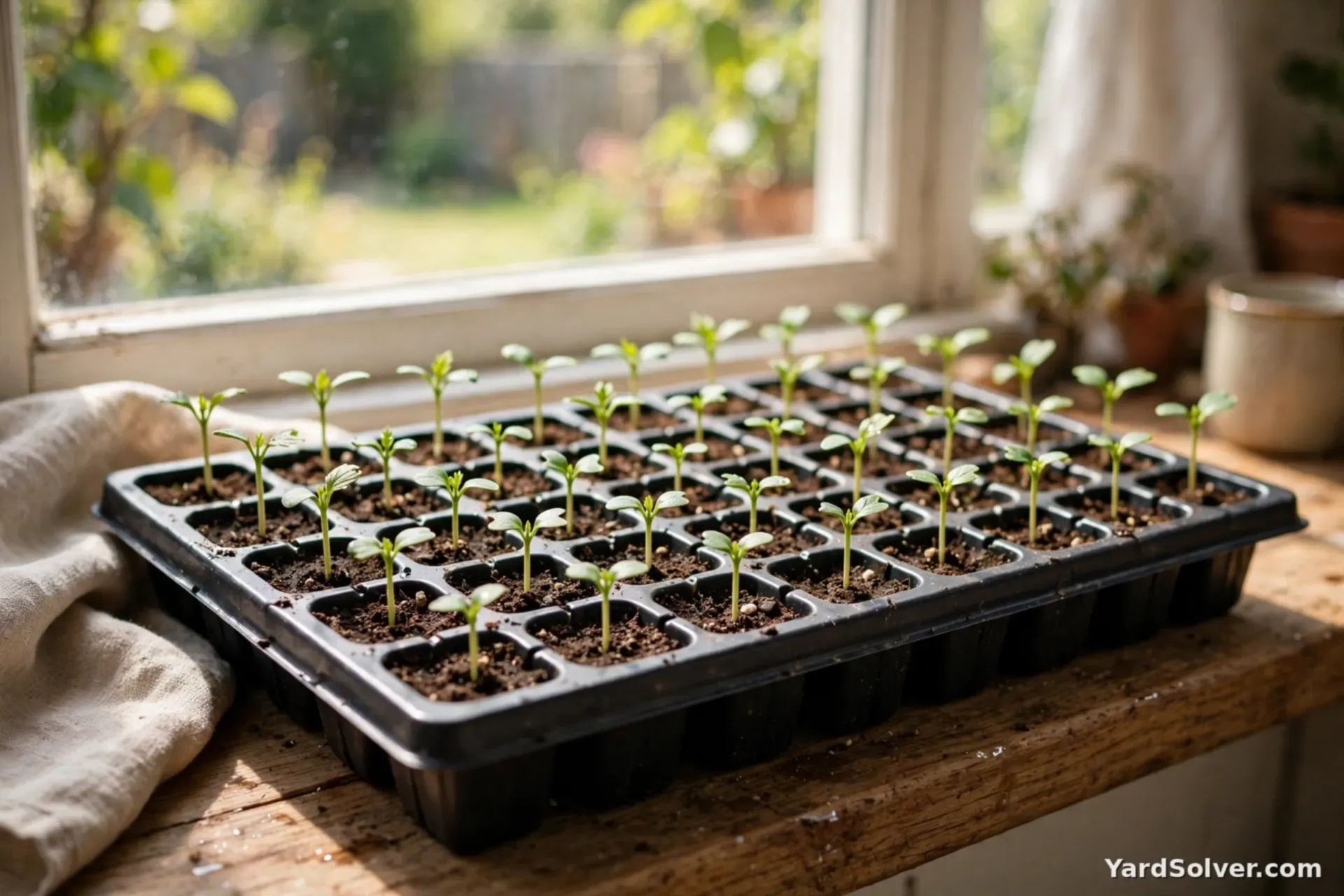
Sow indoors: 4 weeks before last frost; Move outside: 3 weeks after last frost; Sow outdoors: 2 weeks after last frost. All dates count from your average last spring frost — the Planting Calendar turns them into real dates for your garden. Okra is a true heat lover: start indoors about 4 weeks before your last frost and transplant about 3 weeks after it, or direct sow about 2 weeks after — then pick the pods young, every day or two, before they turn tough.
Step 2 — Prepare the spot
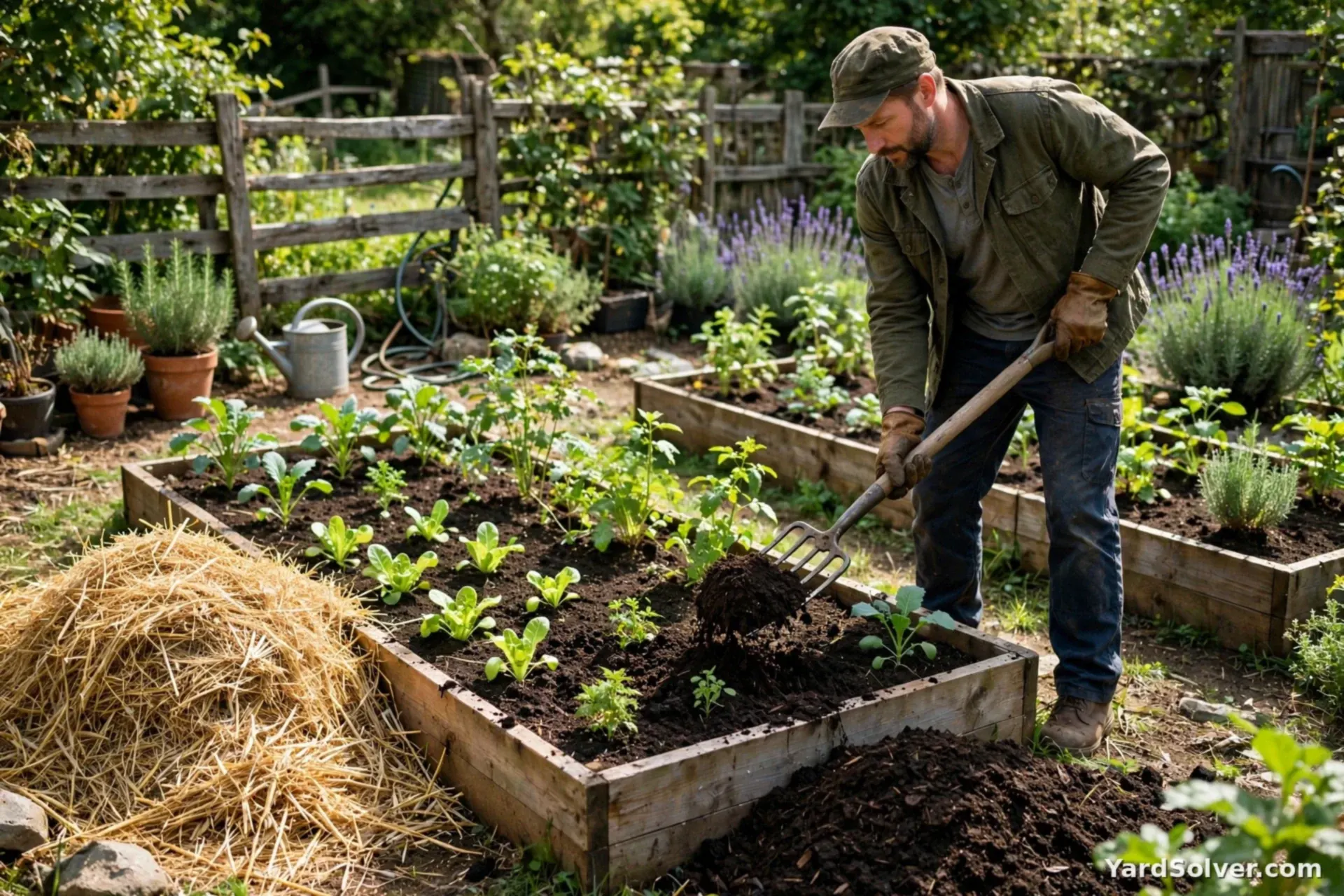
Sun: Full sun. Rich soil with compost worked in before planting, and a mulch on top once plants are growing. For these hungry, thirsty crops, steady moisture matters more than anything else. Work out how much you need with the Garden Mix Calculator or the Raised Bed Soil Calculator.
Step 3 — Sow and plant out
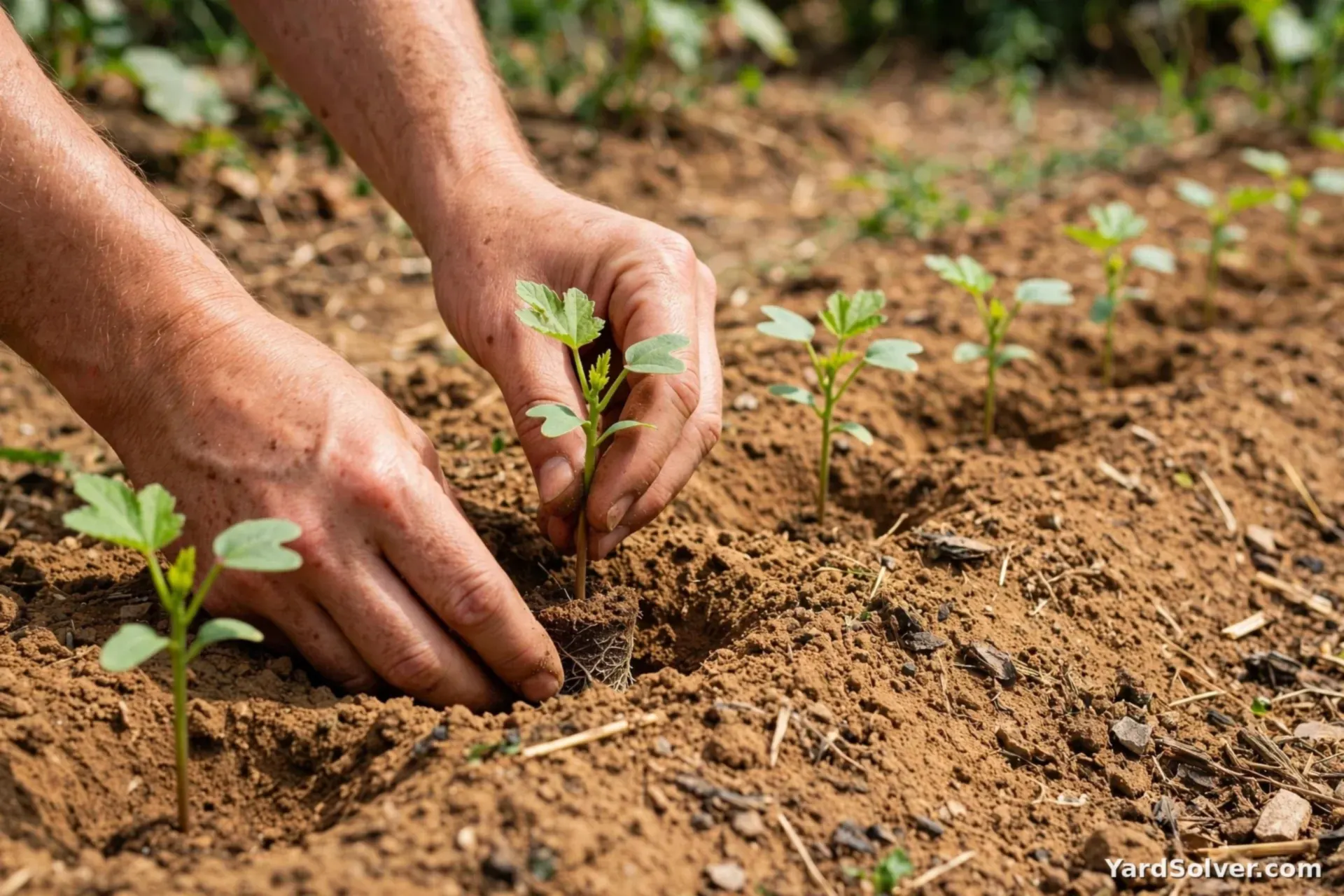
Start indoors 4 weeks before last frost at 1/2 in deep, or sow outdoors 2 weeks after last frost; plants finish spaced 12–18 in apart. Harden off indoor-started plants before they move out for good.
Step 4 — Water and feed
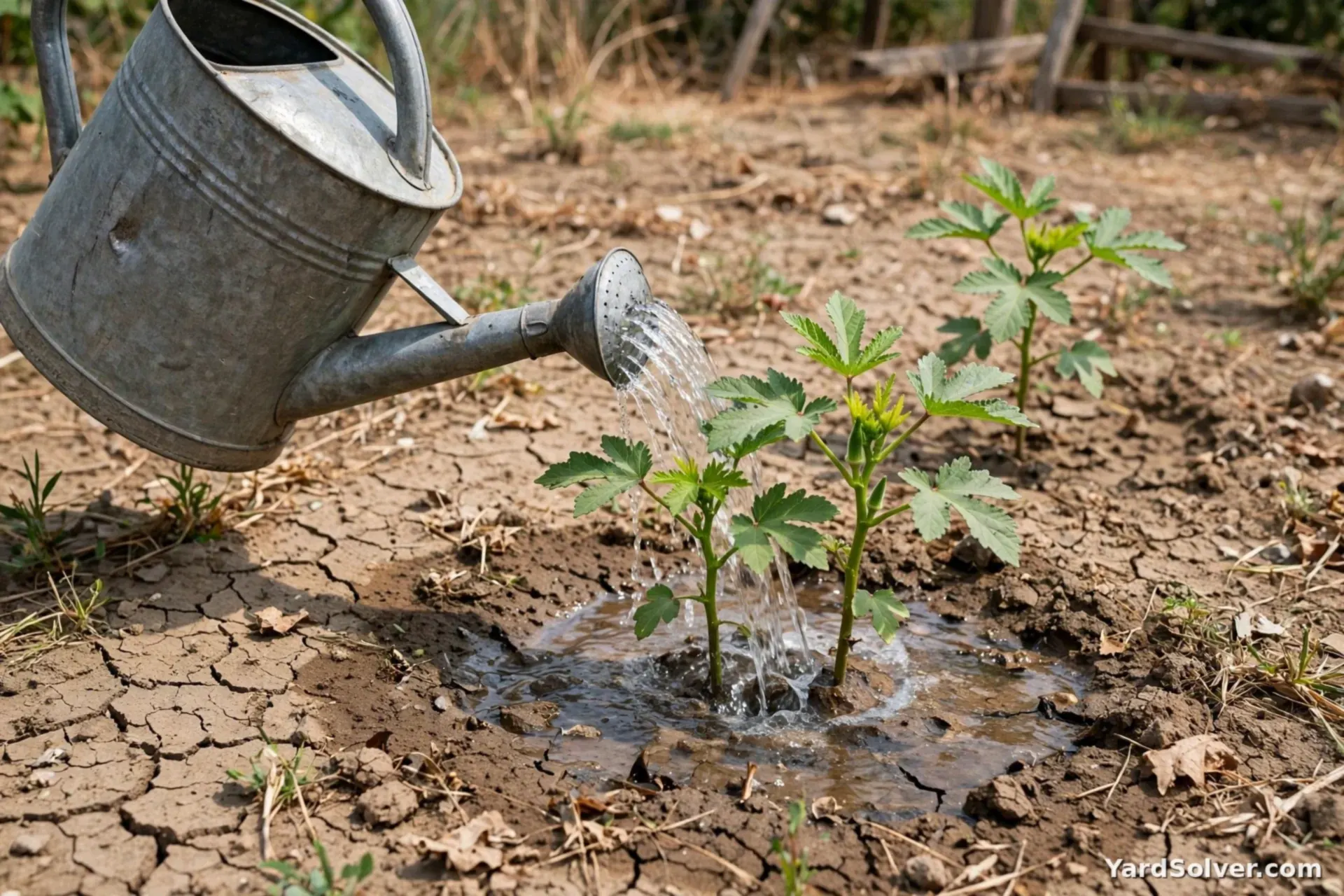
Water: Regular in dry spells. The Fertilizer Calculator turns a bed size into the right amount.
Step 5 — Care and the problems to watch for
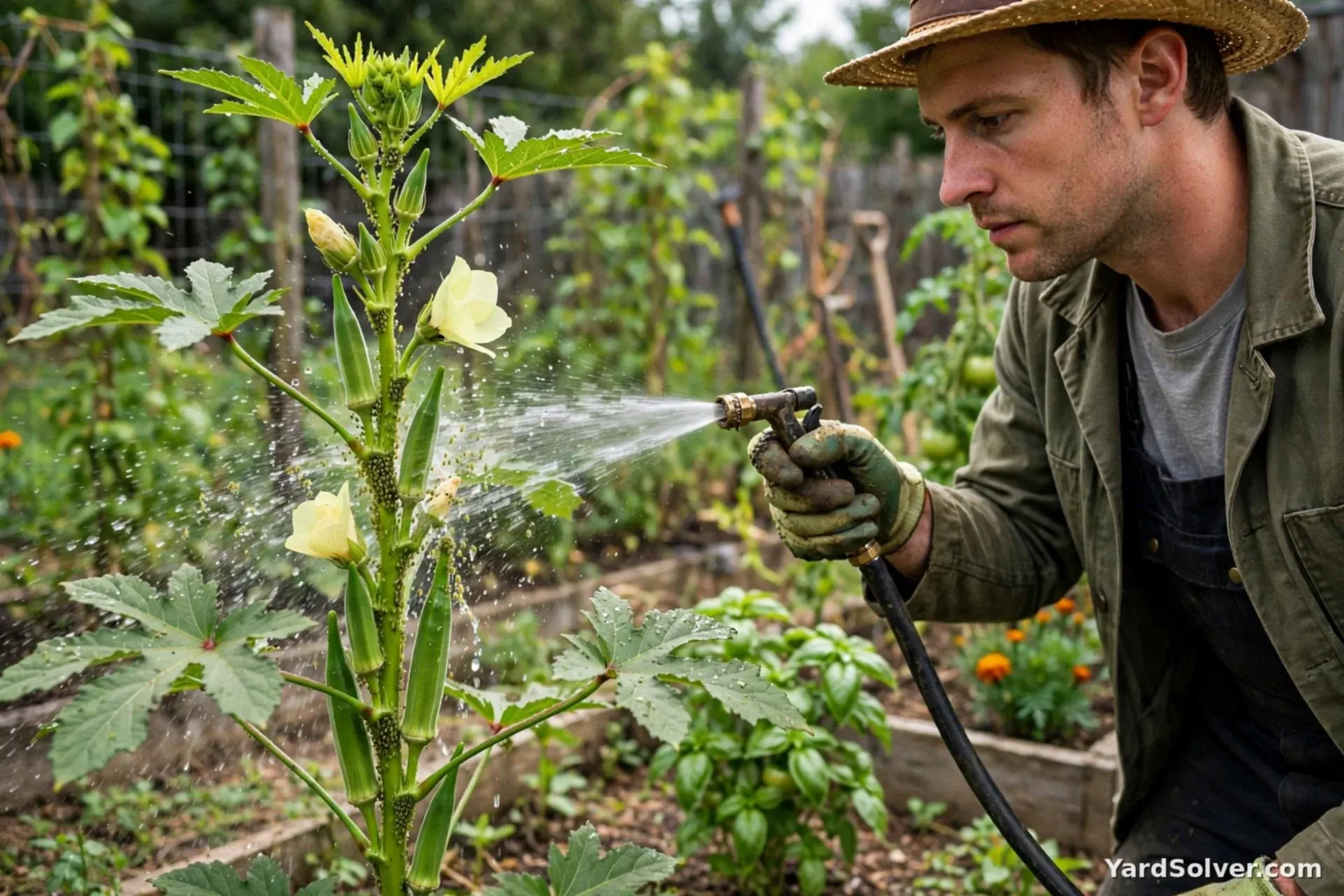
- Aphids on flower buds — spray off with water.
- Stink bugs — they dimple pods; pick them off.
- Tough pods — okra toughens fast; pick every 2 days once it starts.
Take care: Okra contains oxalates, so people who are prone to kidney stones are often advised to eat it in moderation. A few people are allergic to okra — as with any food, stop eating it if it makes you unwell.
Step 6 — Harvest
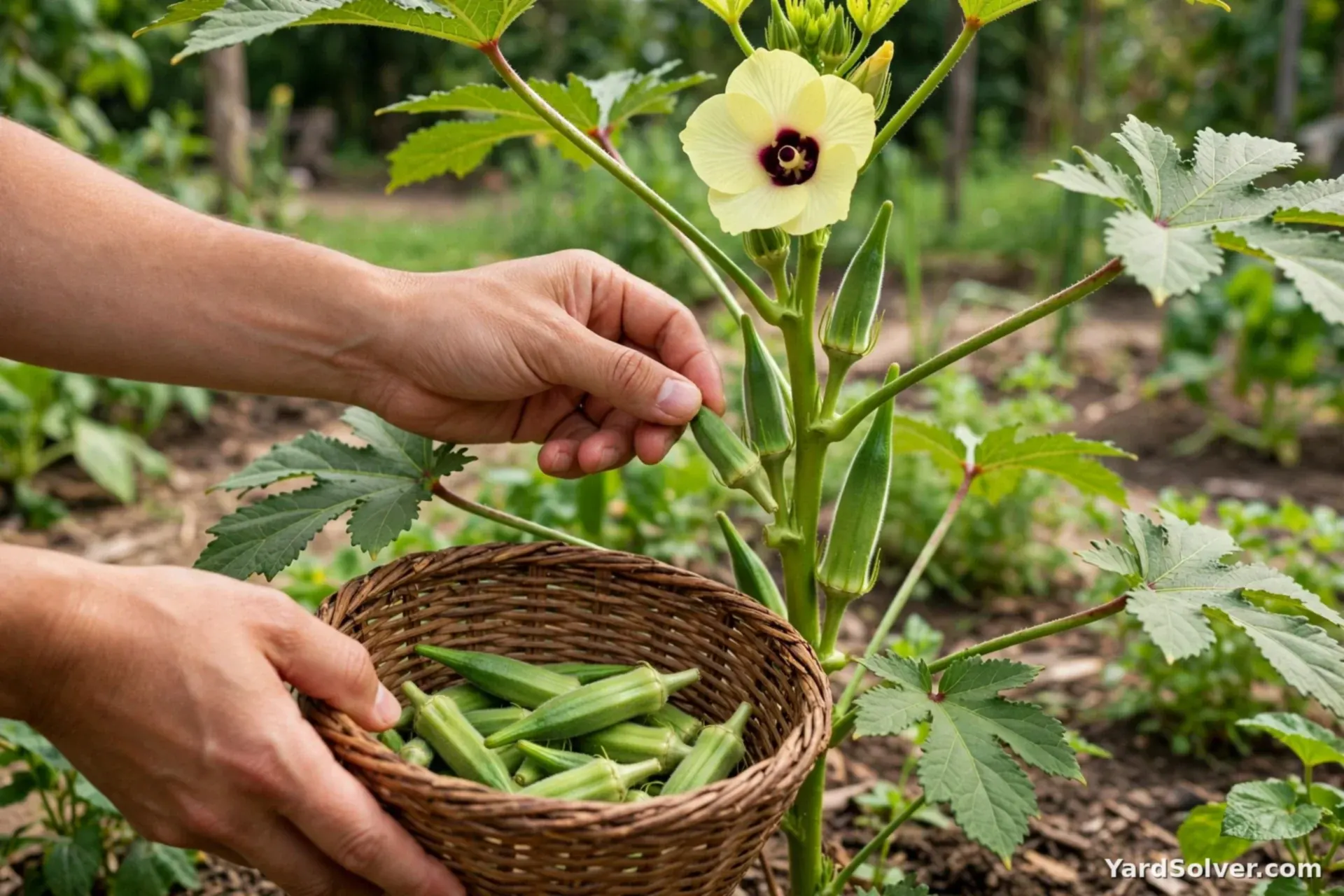
Ready in: 50–65 days. Harvest runs from about day 50 to 65 onwards — pick pods young and small, as they toughen fast.
📅 Your personal Okra schedule
Counted from your planting day — not a generic calendar. Day 0 is the day the seed went in the ground or the young plant went out.
Varieties worth growing
| Variety | Colour | Why gardeners like it |
|---|---|---|
| Clemson Spineless | Green | The standard — smooth, spineless pods on reliable plants |
| Burgundy | Deep red | Beautiful red pods that turn green in the cooking pot |
| Hill Country Red | Red | A Texas heirloom with thick, flavourful red pods |
| Jambalaya | Green | An early hybrid made for shorter seasons and heavy yields |
| Emerald | Light green | Smooth, round, dark-green pods that stay tender |
Good for you — and take care
Benefits
- Provides vitamin C and vitamin K
- Provides folate, important for growing bodies
- A good source of fibre — its famous sliminess is gentle soluble fibre
- Provides magnesium and potassium
- Low in calories
Take care
- Okra contains oxalates, so people who are prone to kidney stones are often advised to eat it in moderation
- A few people are allergic to okra — as with any food, stop eating it if it makes you unwell
A little history — and one good fact
Okra comes from Africa, most likely the Ethiopian highlands, and has been grown there and across the Middle East and Asia for centuries — it is a staple from Indian bhindi to Middle Eastern stews. It travelled to the Americas a few hundred years ago and became a signature ingredient of Southern cooking, thickening gumbos in Louisiana.
Fun fact: Okra belongs to the hibiscus family — look closely and its pale yellow flowers could pass for a hibiscus bloom in the garden.
Keep going
Guides: When to Start Seeds Indoors · How to Prepare Garden Soil in Spring · How to Harden Off Seedlings
Calculators: Plant Spacing Calculator · Seed Calculator · Garden Mix Calculator
More vegetables: Tomato · Pepper · Cucumber
← Back to the Plant Library · Get your personal planting dates
Questions people ask
When do I plant okra?
Count from your average last spring frost: sow indoors 4 weeks before last frost; move outside 3 weeks after last frost; sow outdoors 2 weeks after last frost. Okra is a true heat lover: start indoors about 4 weeks before your last frost and transplant about 3 weeks after it, or direct sow about 2 weeks after — then pick the pods young, every day or two, before they turn tough.
How far apart do I space okra?
Space plants 12–18 in apart, with seed sown 1/2 in deep. Sun: full sun.
When is okra ready to harvest?
50–65 days. A true heat lover for warm gardens; pick pods young, every day or two.