
Plant Library · Vegetables
🫛 How to Grow Peas
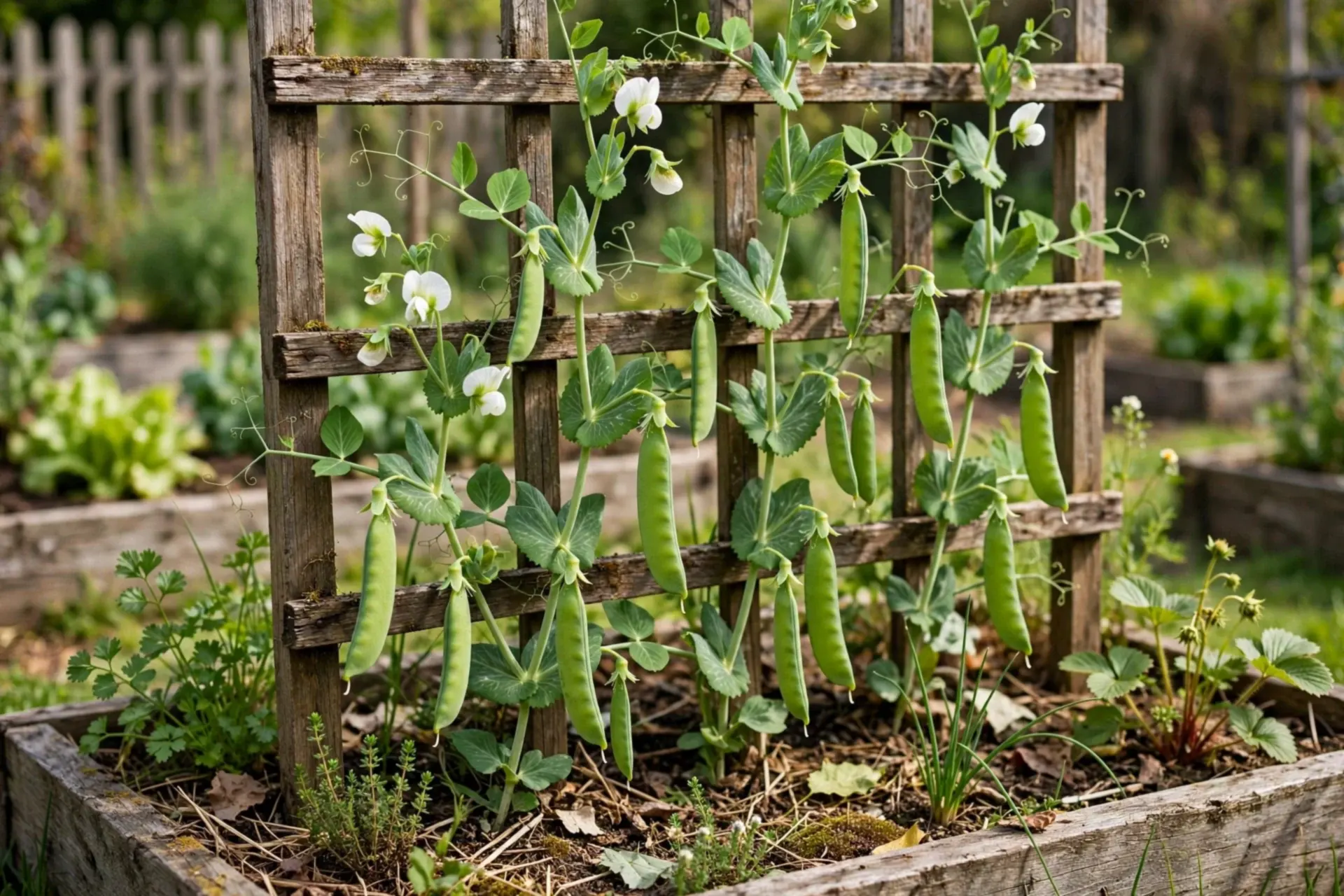
A cold-season crop — sow as soon as soil can be worked. Peas are a cold-season crop: sow about 4 weeks before your last frost, as soon as the soil can be worked, and give the vines netting or sticks to climb.
Grow Peas with us — step by step
Everything for this plant is written step by step below — what to do, and exactly when. Read it through first if you like: you can grow it entirely on your own with that guide. Or start with us here — tell us your planting day and we lay out your personal schedule on this page, every next step on its own day, counted from your planting date. No guessing, no forgetting.
Step 1 — today: Sow your Peas seeds today: 1 in deep, spaced 2 in apart, in full sun to part shade. Water the row in well and keep it moist while seeds sprout.
Peas at a glance
Sow outdoors: 4 weeks before last frost
Spacing: 2 in · Seed depth: 1 in
Sun: Full sun to part shade
Water: Regular while flowering
Harvest: 60–70 days
Timing counts from your average last spring frost — get your own dates in the Planting Calendar. Guidance follows standard extension-service practice for Canada and the US.
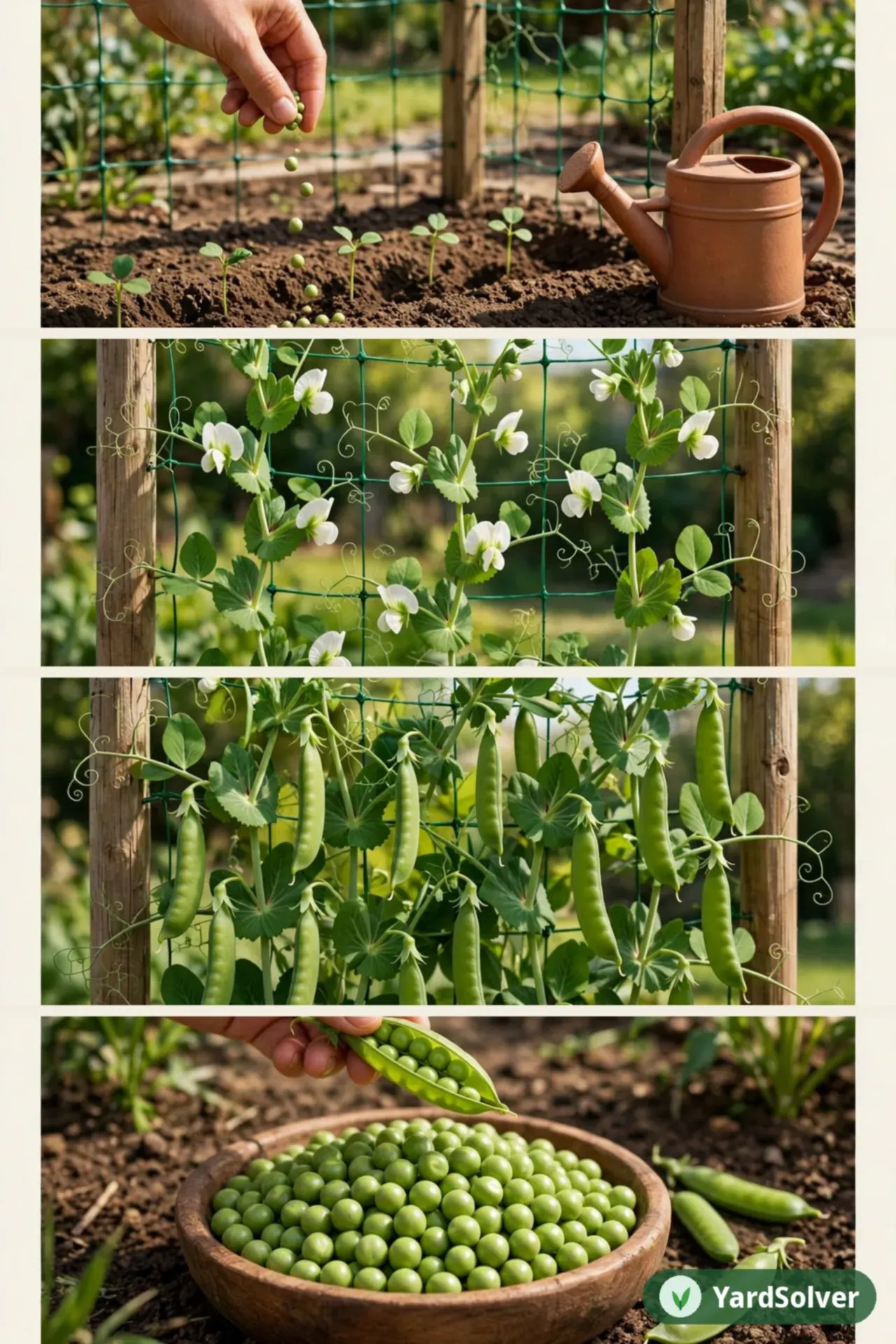
How to plant and grow peas, step by step
Step 1 — Time it right
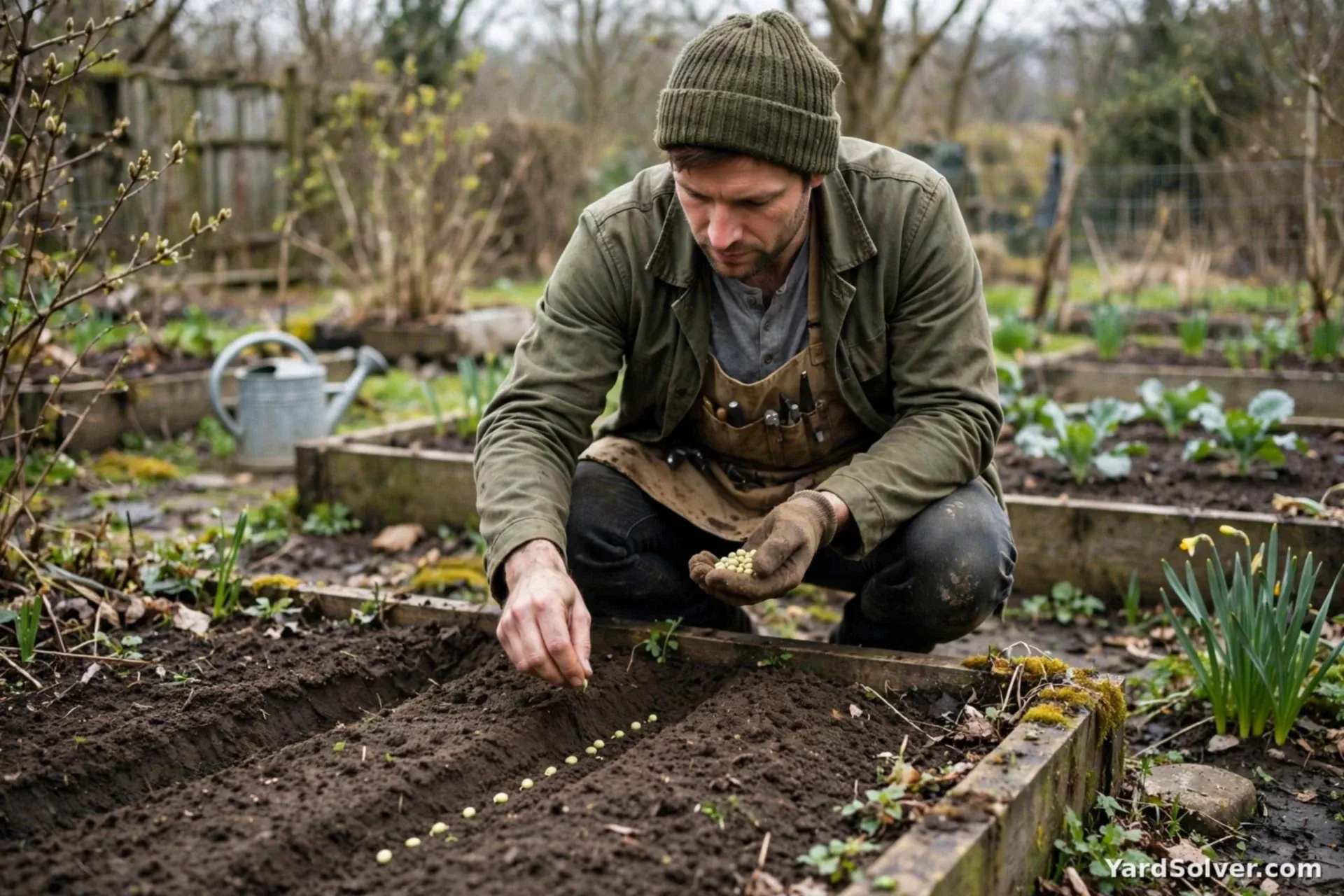
Sow outdoors: 4 weeks before last frost. All dates count from your average last spring frost — the Planting Calendar turns them into real dates for your garden. Peas are a cold-season crop: sow about 4 weeks before your last frost, as soon as the soil can be worked, and give the vines netting or sticks to climb.
Step 2 — Prepare the spot
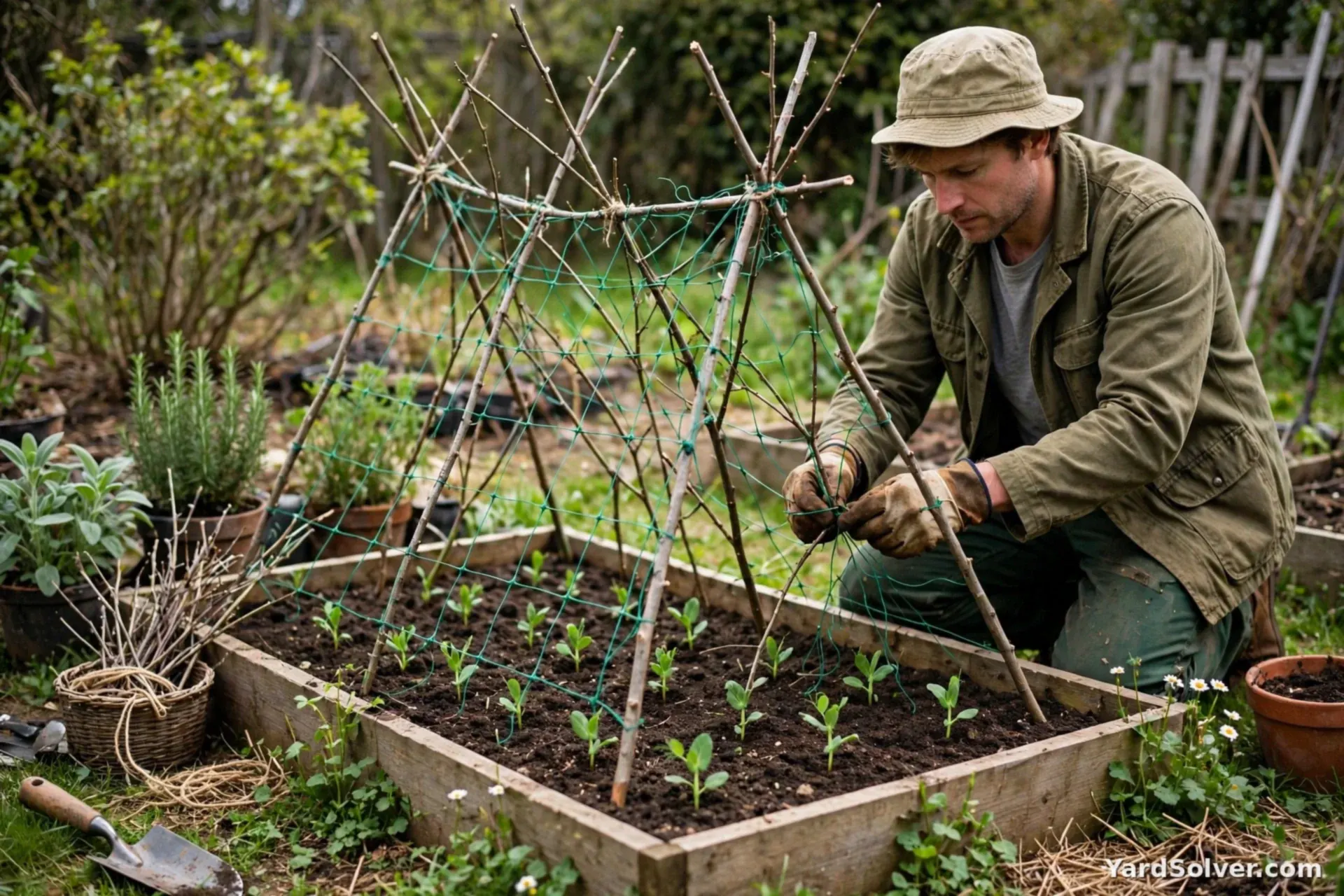
Sun: Full sun to part shade. Average soil is genuinely fine — beans and peas make much of their own nitrogen with their roots. Too much fertilizer grows leaves instead of pods. Work out how much you need with the Garden Mix Calculator or the Raised Bed Soil Calculator.
Step 3 — Sow and plant out
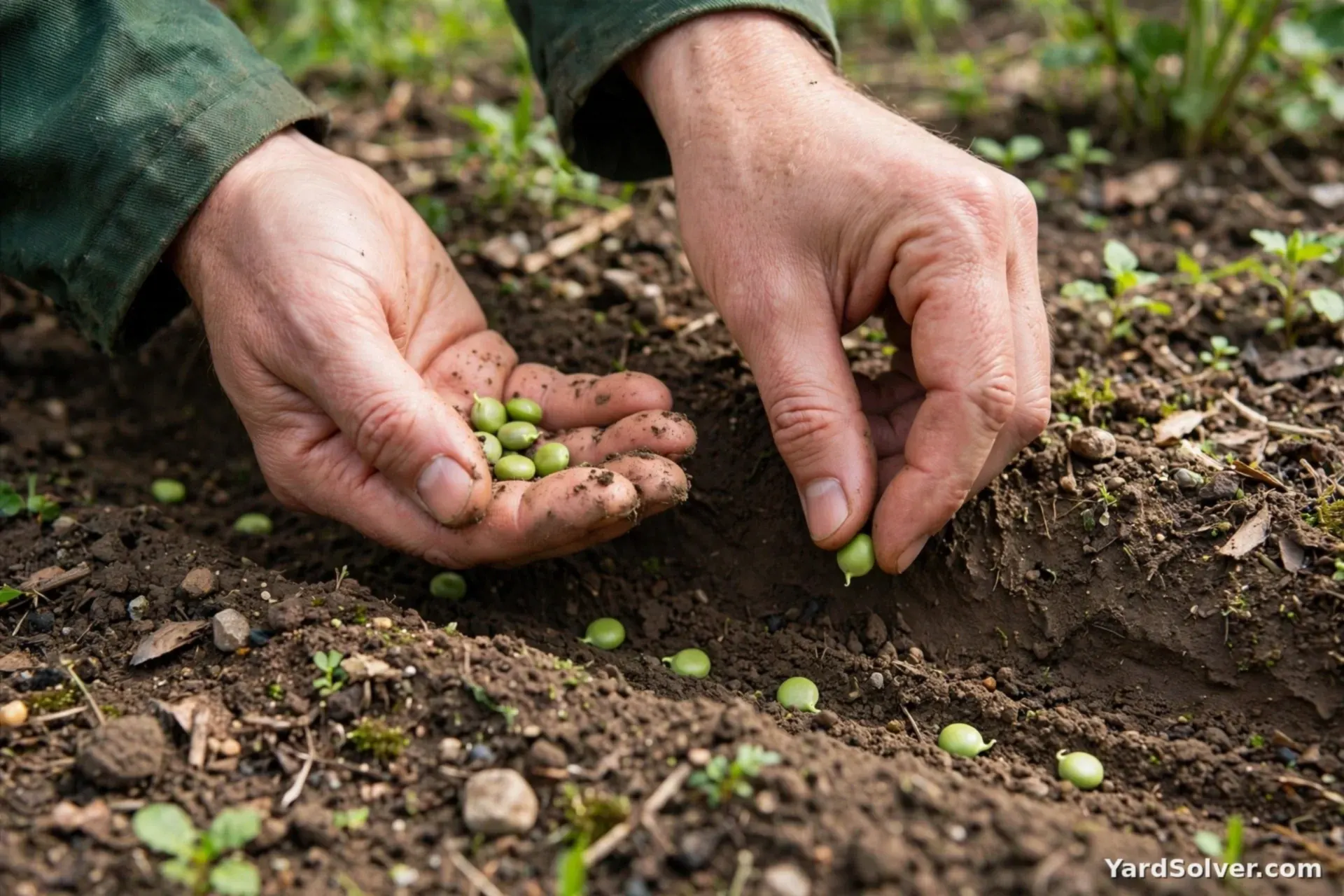
Sow directly where they will grow, 4 weeks before last frost, 1 in deep and 2 in apart (thin seedlings to that spacing once they are up). The Seed Calculator works out how much seed a bed needs.
Step 4 — Water and feed
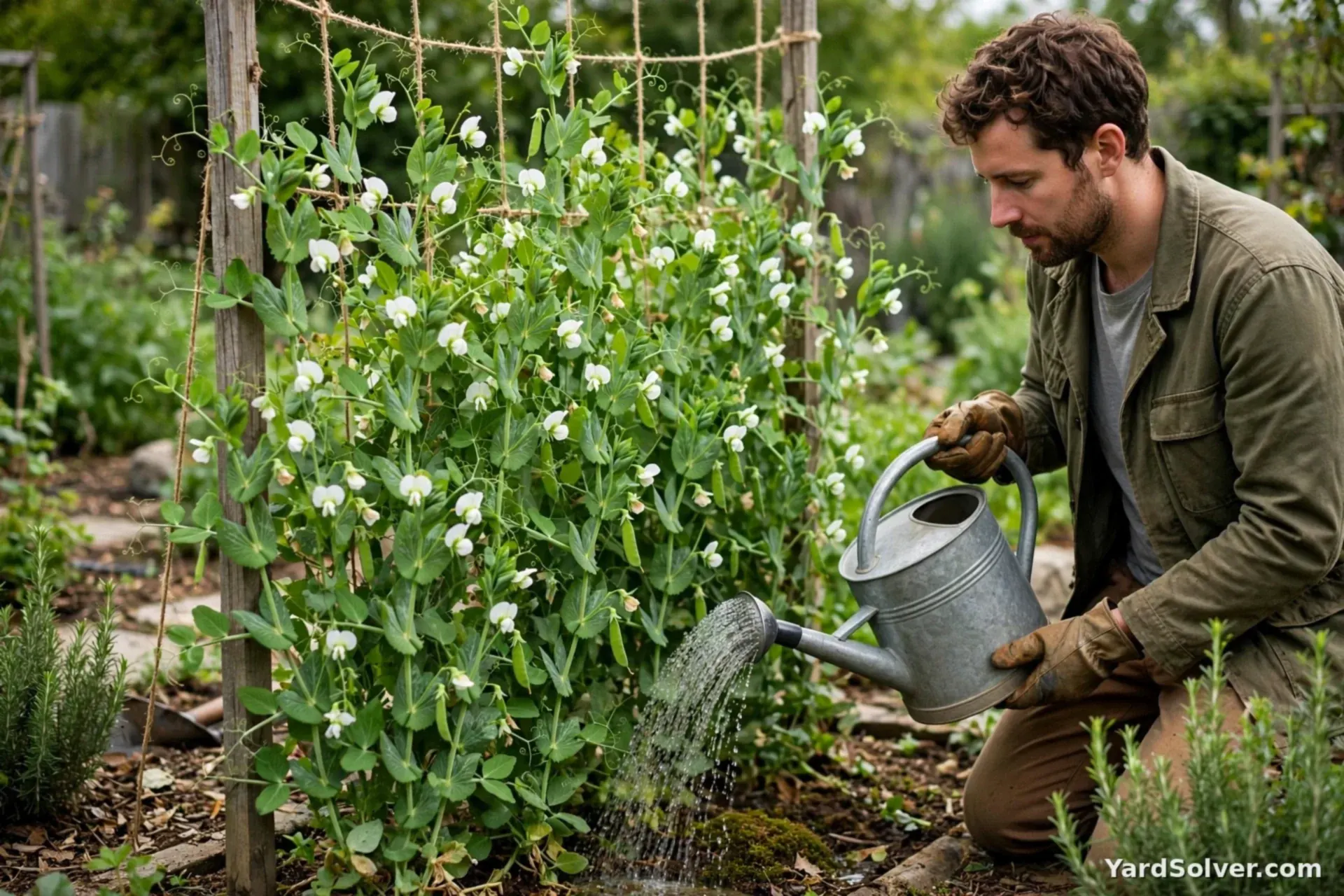
Water: Regular while flowering. The Fertilizer Calculator turns a bed size into the right amount.
Step 5 — Care and the problems to watch for
- Powdery mildew late in the season — choose resistant varieties and give airflow.
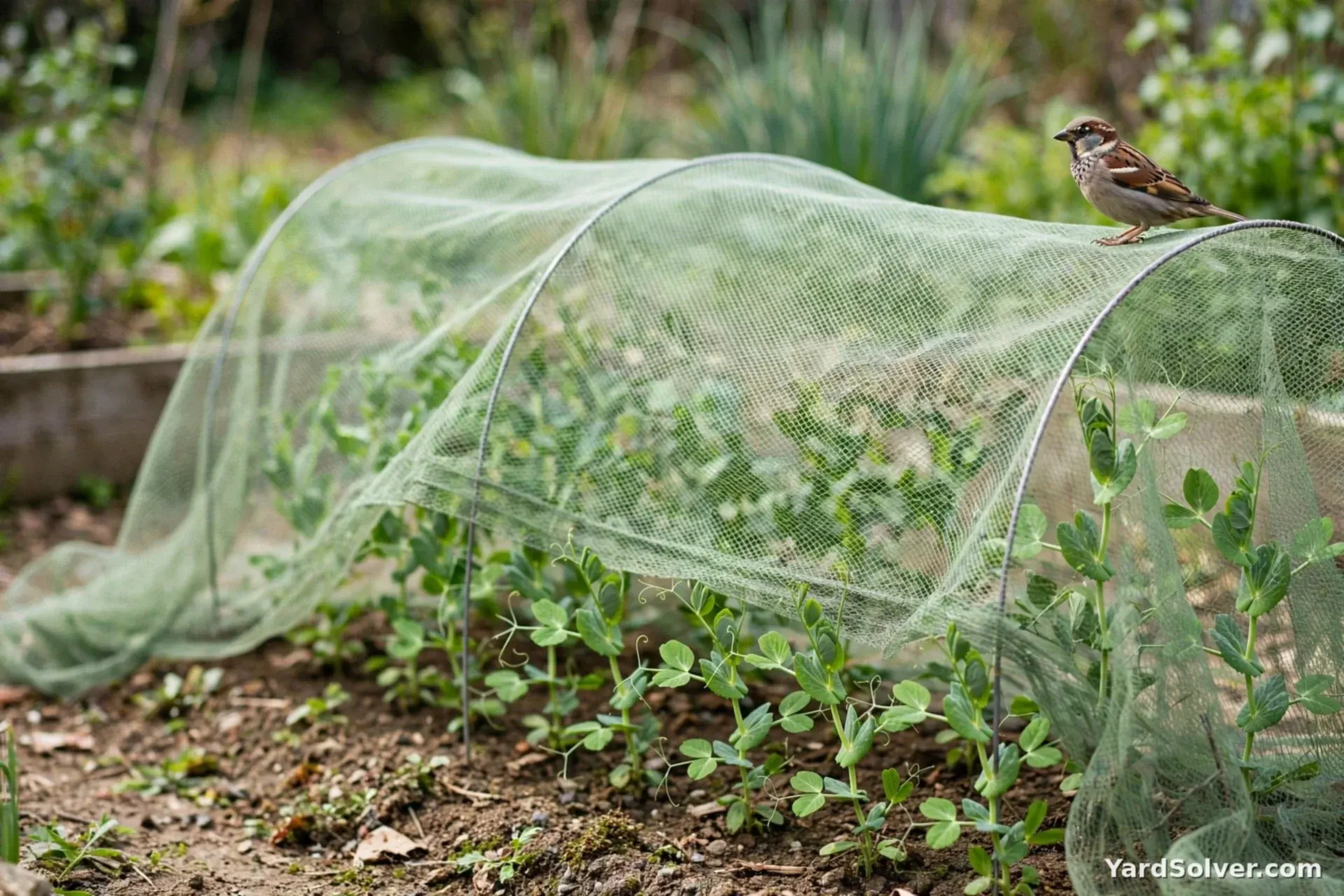
- Pea moth — maggots inside pods; netting over the crop prevents it.
- Birds pulling up seedlings — cover rows with netting until plants are up.
Take care: Some people who must watch purines because of gout are advised to go easy on peas. A few people are allergic to peas — as with any food, stop eating them if they make you unwell.
Step 6 — Harvest
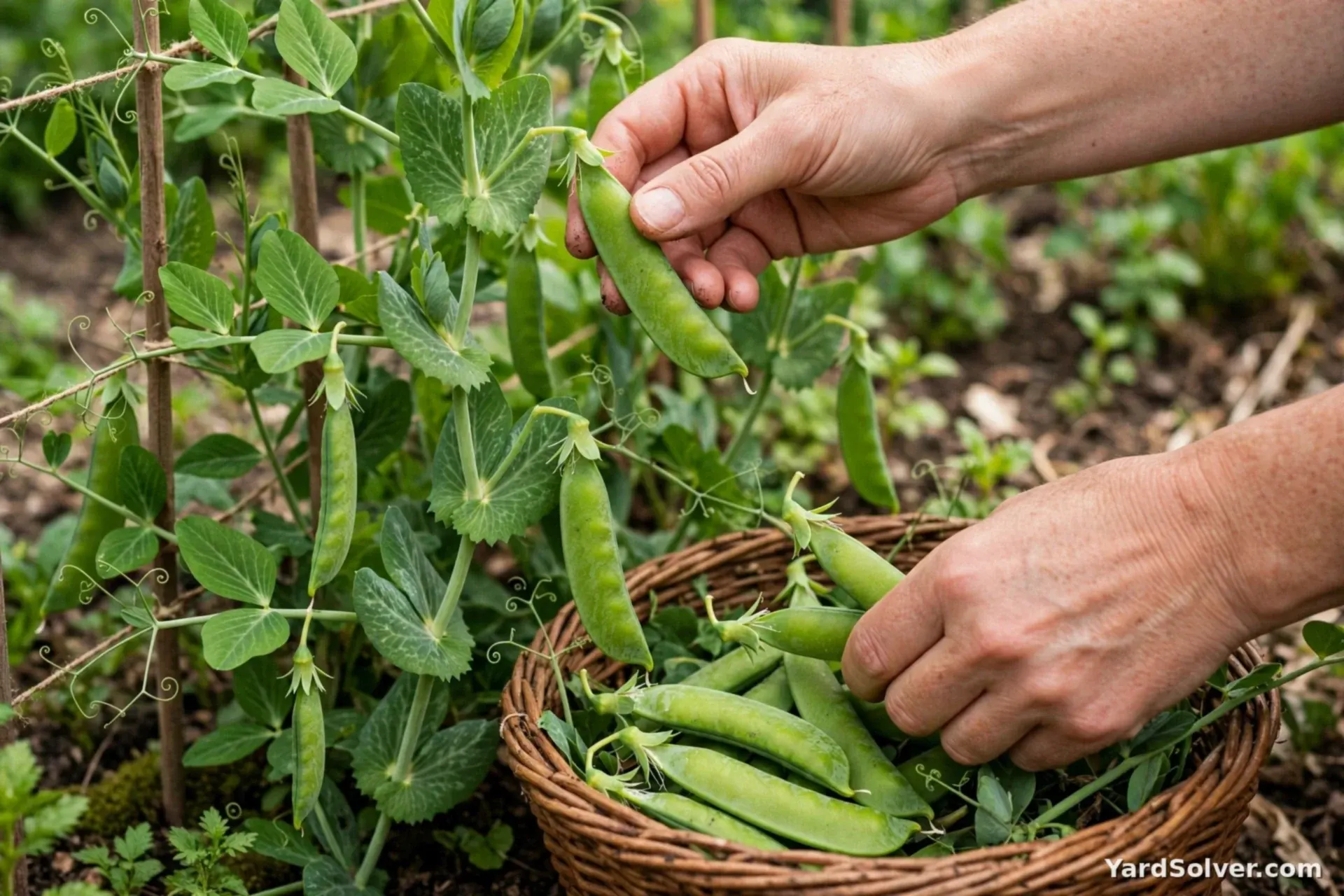
Ready in: 60–70 days. Harvest runs from about day 60 to 70 — pick pods while they are plump and bright green.
📅 Your personal Peas schedule
Counted from your planting day — not a generic calendar. Day 0 is the day the seed went in the ground or the young plant went out.
Varieties worth growing
| Variety | Colour | Why gardeners like it |
|---|---|---|
| Sugar Snap | Green | Sweet, crunchy edible pods eaten whole — the garden snack favourite |
| Oregon Sugar Pod | Green | Flat snow-pea pods for stir-fries, on sturdy short vines |
| Little Marvel | Green | A compact dwarf shelling pea, good for small gardens and pots |
| Lincoln | Green | A classic shelling pea with an excellent sweet flavour |
| Alaska | Green | One of the earliest and hardiest peas — good for cold springs |
Good for you — and take care
Benefits
- One of the best vegetable sources of plant protein
- High in fibre for good digestion
- Provides vitamin C and vitamin K
- Provides folate and some iron
- Naturally sweet, so kids often eat them straight from the pod
Take care
- Some people who must watch purines because of gout are advised to go easy on peas
- A few people are allergic to peas — as with any food, stop eating them if they make you unwell
A little history — and one good fact
Peas are one of the oldest farmed vegetables in the world, grown around the Mediterranean and the Near East for thousands of years. For most of history people ate them dried, as a storing food for winter. Eating peas fresh and green only became fashionable in Europe a few hundred years ago — and gardeners have chased that just-picked sweetness ever since.
Fun fact: Peas taste sweetest within hours of picking — their sugars start turning to starch the moment the pod leaves the plant.
Keep going
Guides: When to Start Seeds Indoors · How to Prepare Garden Soil in Spring · How to Harden Off Seedlings
Calculators: Plant Spacing Calculator · Seed Calculator · Garden Mix Calculator
More vegetables: Tomato · Pepper · Cucumber
← Back to the Plant Library · Get your personal planting dates
Quick answers
How to grow peas
Peas are a cold-season crop: sow the seed directly where it will grow, 1 in deep and 2 in apart, in full sun to part shade. Put netting or twiggy sticks in place so the vines have something to climb. Pick the pods while they are plump and bright green, about 60 to 70 days after sowing.
How far apart do I space peas?
Sow peas 2 in apart and 1 in deep, in a row along their support. If the seedlings come up crowded, thin them to that 2 in spacing once they are up. Average soil is genuinely fine — peas make much of their own nitrogen, and too much fertilizer grows leaves instead of pods.
How often do I water peas?
Water the row in well at sowing and keep it moist while the seeds sprout. The watering that really matters comes later: water regularly while the vines are flowering, because that is when the pods are filling. Plants left dry at flowering give empty, disappointing pods.
Questions people ask
When do I plant peas?
Count from your average last spring frost: sow outdoors 4 weeks before last frost. Peas are a cold-season crop: sow about 4 weeks before your last frost, as soon as the soil can be worked, and give the vines netting or sticks to climb.
How far apart do I space peas?
Space plants 2 in apart, with seed sown 1 in deep. Sun: full sun to part shade.
When is peas ready to harvest?
60–70 days. A cold-season crop — sow as soon as soil can be worked.