
Plant Library · Houseplants
🪴 How to Grow Philodendron
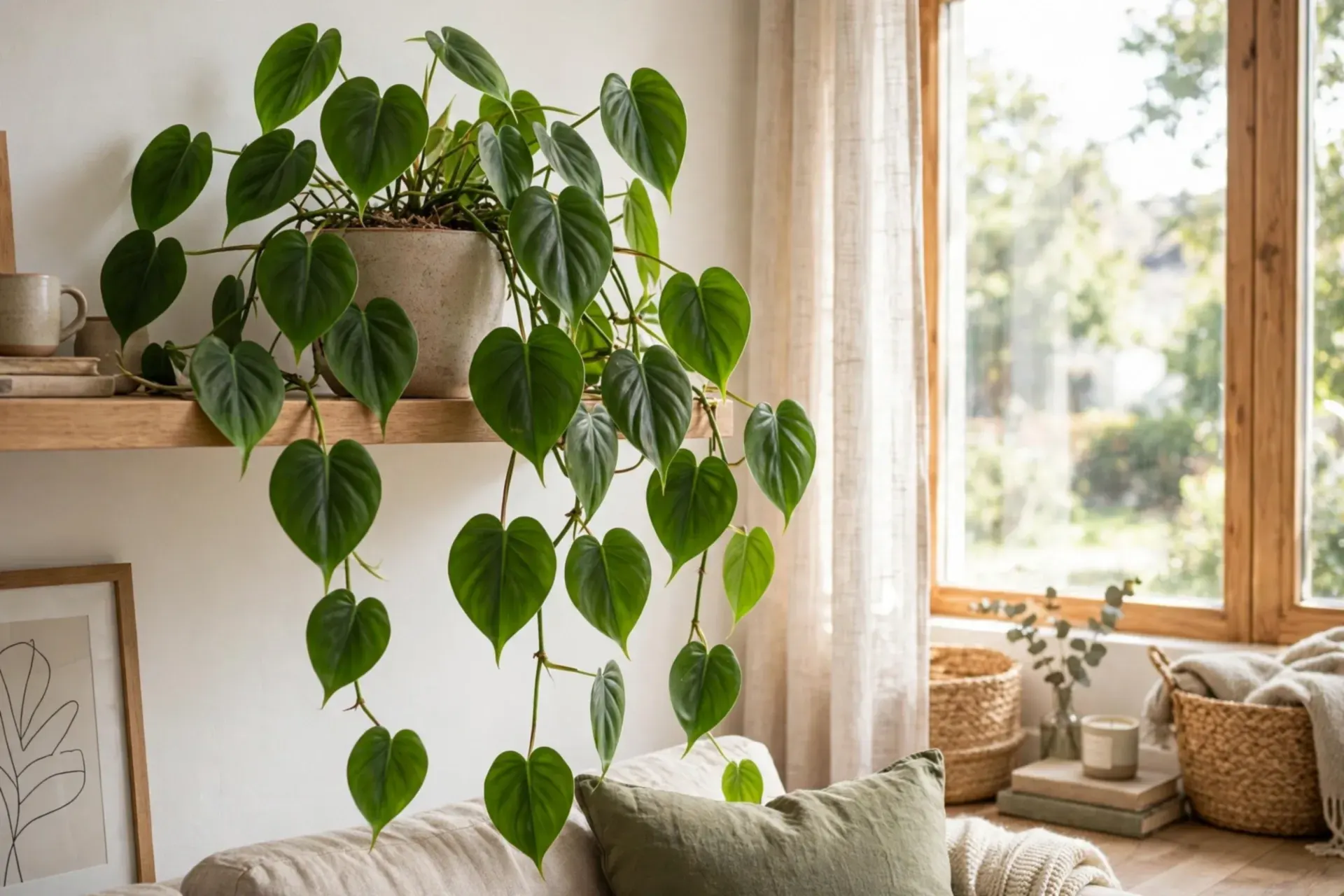
One name, two habits: philodendrons are either trailers that spill over shelves and baskets, or self-heading and climbing types that grow upright and reward a moss pole with much bigger leaves. Both are rainforest plants that ask for the same simple rhythm indoors — bright to medium indirect light, a chunky free-draining mix, and water when the top of the mix has dried.
Grow Philodendron with us — step by step
Everything for this plant is written step by step below — what to do, and exactly when. Read it through first if you like: you can grow it entirely on your own with that guide. Or start with us here — tell us your planting day and we lay out your personal schedule on this page, every next step on its own day, counted from your planting date. No guessing, no forgetting.
Step 1 — today: Settle your Philodendron into its spot today: bright to medium indirect light, a pot with drainage, and one good watering to settle the mix around the roots — and note whether yours is a trailer or a climber, because that decides its support.
Philodendron at a glance
Spacing: — (pot) · Propagation: Stem cuttings, not seed
Sun: Bright to medium indirect light
Water: When the top 1–2 inches of mix are dry
Harvest: Grown for foliage — no harvest
Timing counts from your average last spring frost — get your own dates in the Planting Calendar. Guidance follows standard extension-service practice for Canada and the US.
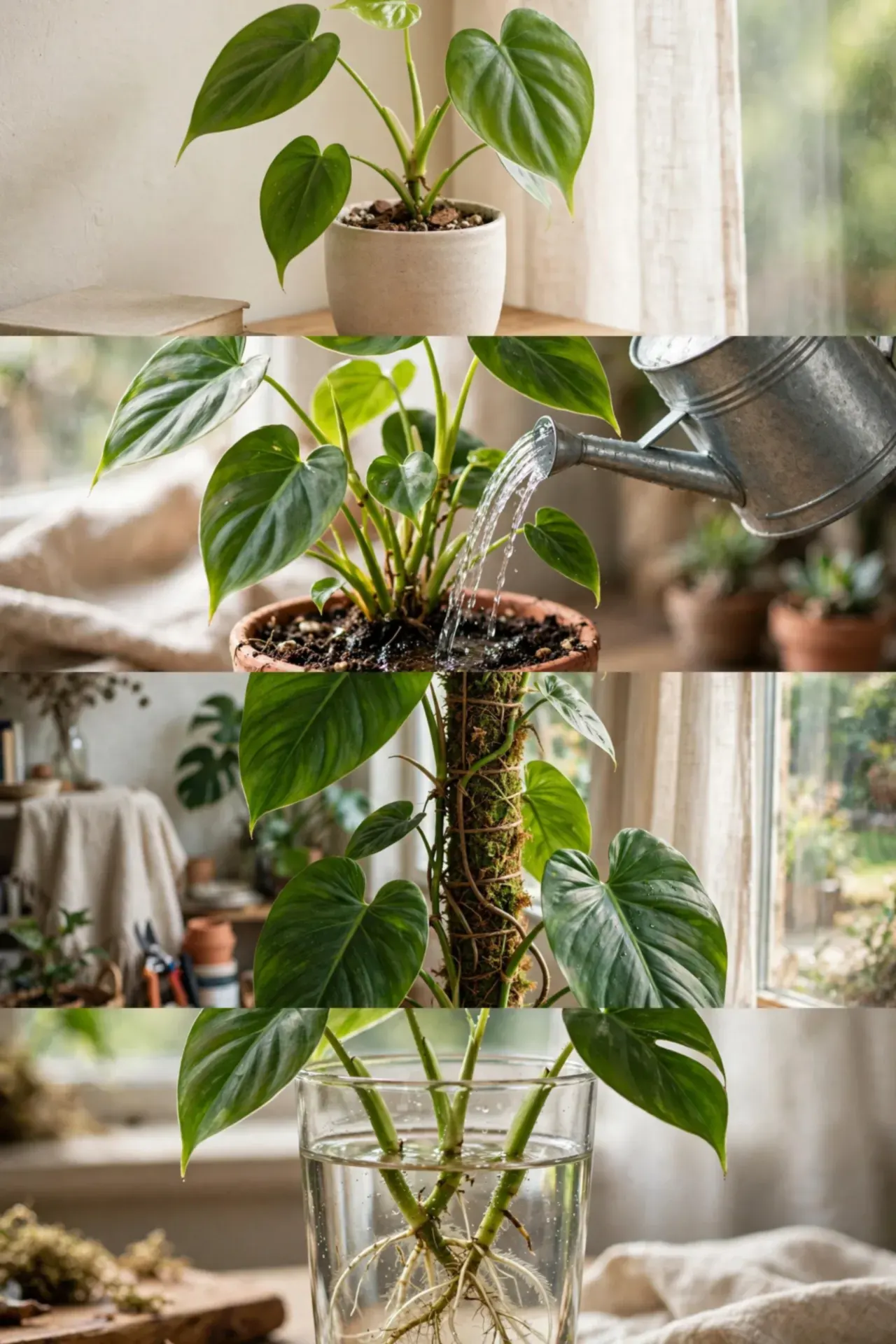
How to plant and grow philodendron, step by step
Step 1 — Choose its spot — and know your type
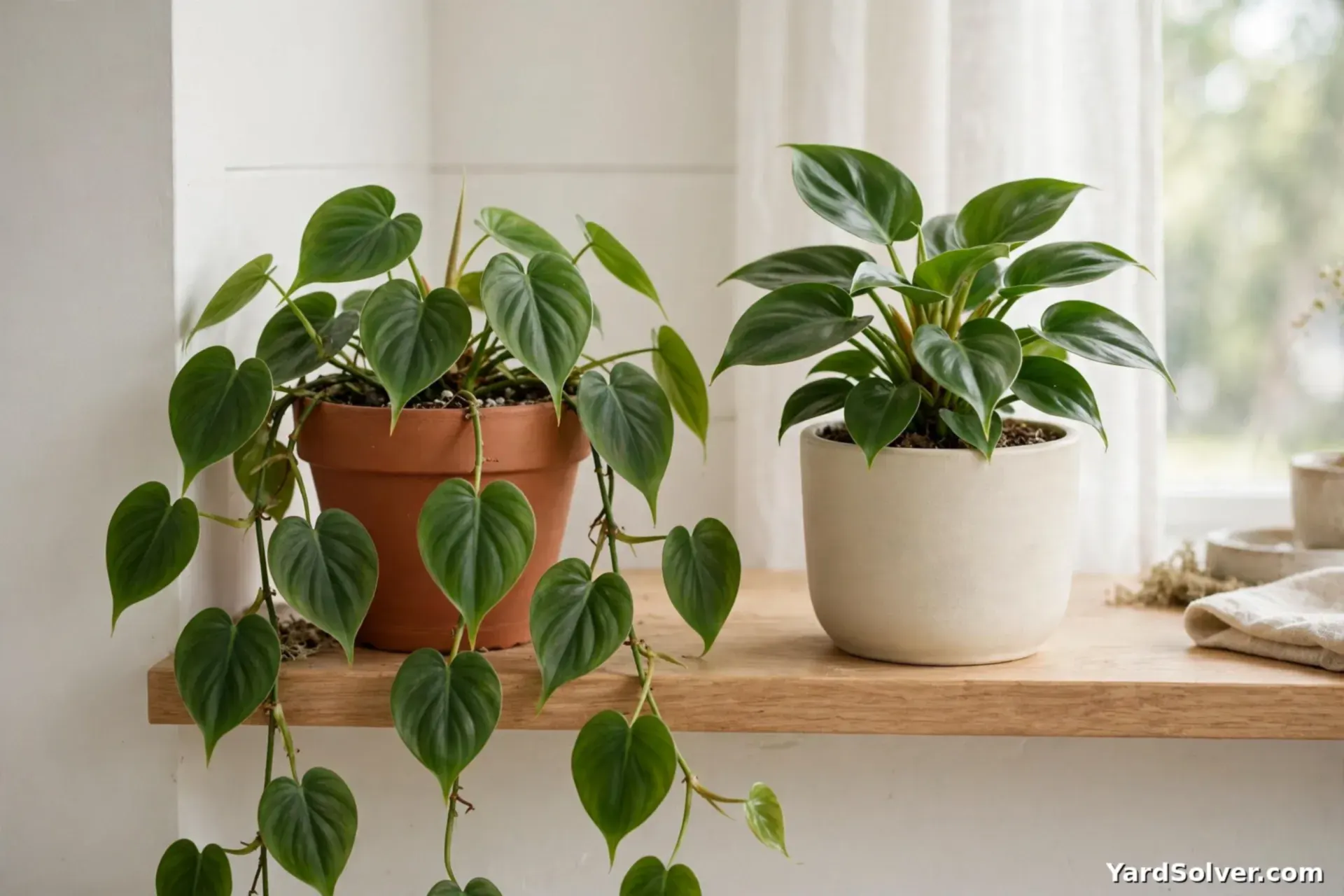
First, know which philodendron you own. Heartleaf types (Philodendron hederaceum and its forms like 'Brasil') are trailers and climbers with small heart-shaped leaves. Self-heading types like 'Birkin' grow as an upright rosette and never trail. True climbers like 'Gloriosum' (a velvet-leaved crawler) and the big split-leaf forms want support to size up. All of them want bright to medium indirect light: trailers tolerate medium light but stretch and go sparse in the dim, and variegated forms like 'Pink Princess' fade toward plain green without good light. Keep direct midday sun off the leaves — it scorches pale patches that never heal.
Step 2 — Pot it in a chunky aroid mix
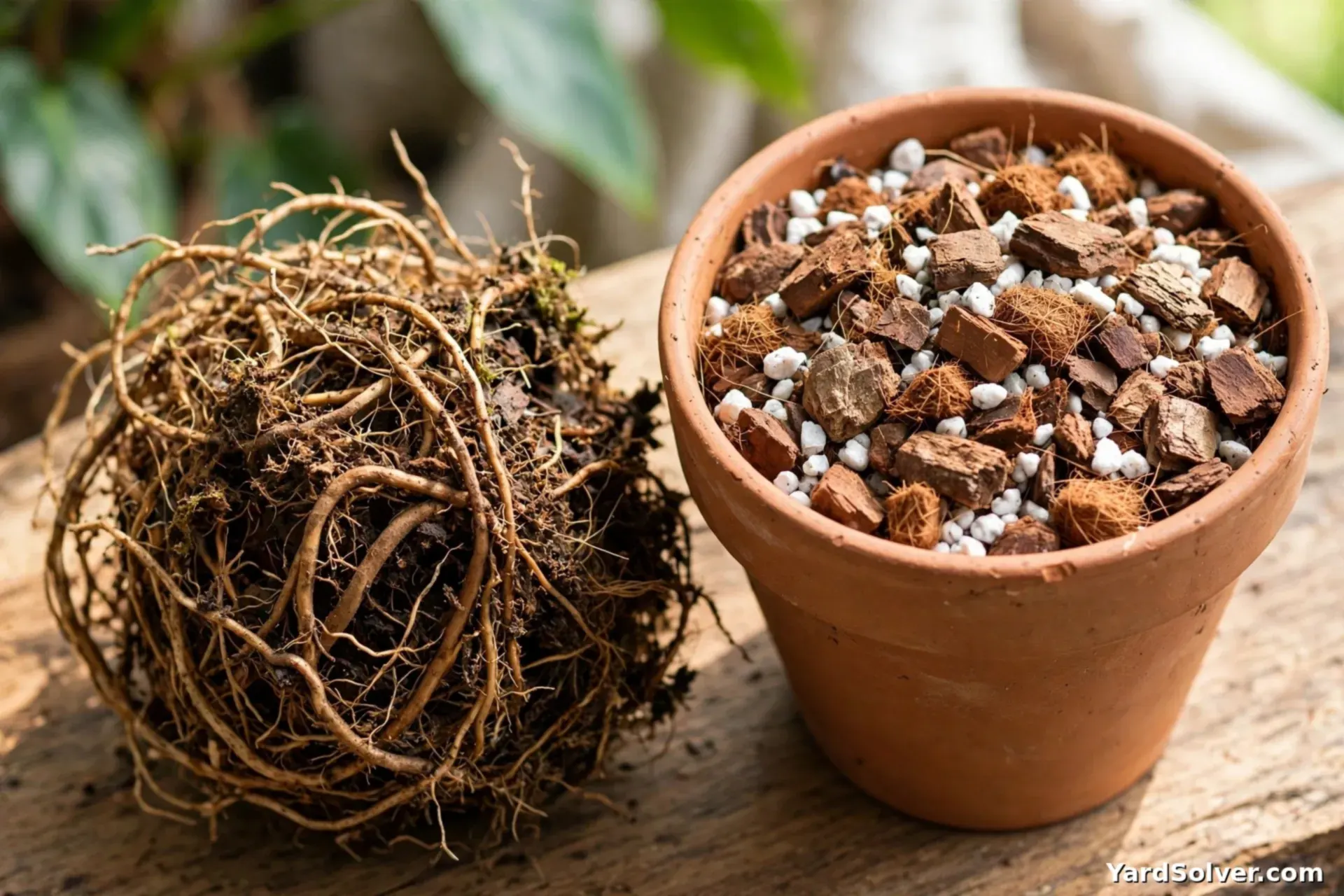
In the rainforest these plants root in bark, leaf litter and the crooks of trees, not dense soil — so pot in a chunky, open aroid mix: ordinary potting mix with roughly a third bark chunks and a good handful of perlite or coco coir stirred through. A pot with drainage holes, only 1–2 inches wider than the root ball, completes the setup; dense soggy mix in an oversized pot is the root-rot recipe. Repot in spring when roots circle the bottom, and fit the moss pole for climbers at repotting time, while the roots are undisturbed afterwards.
Step 3 — Water when the top dries
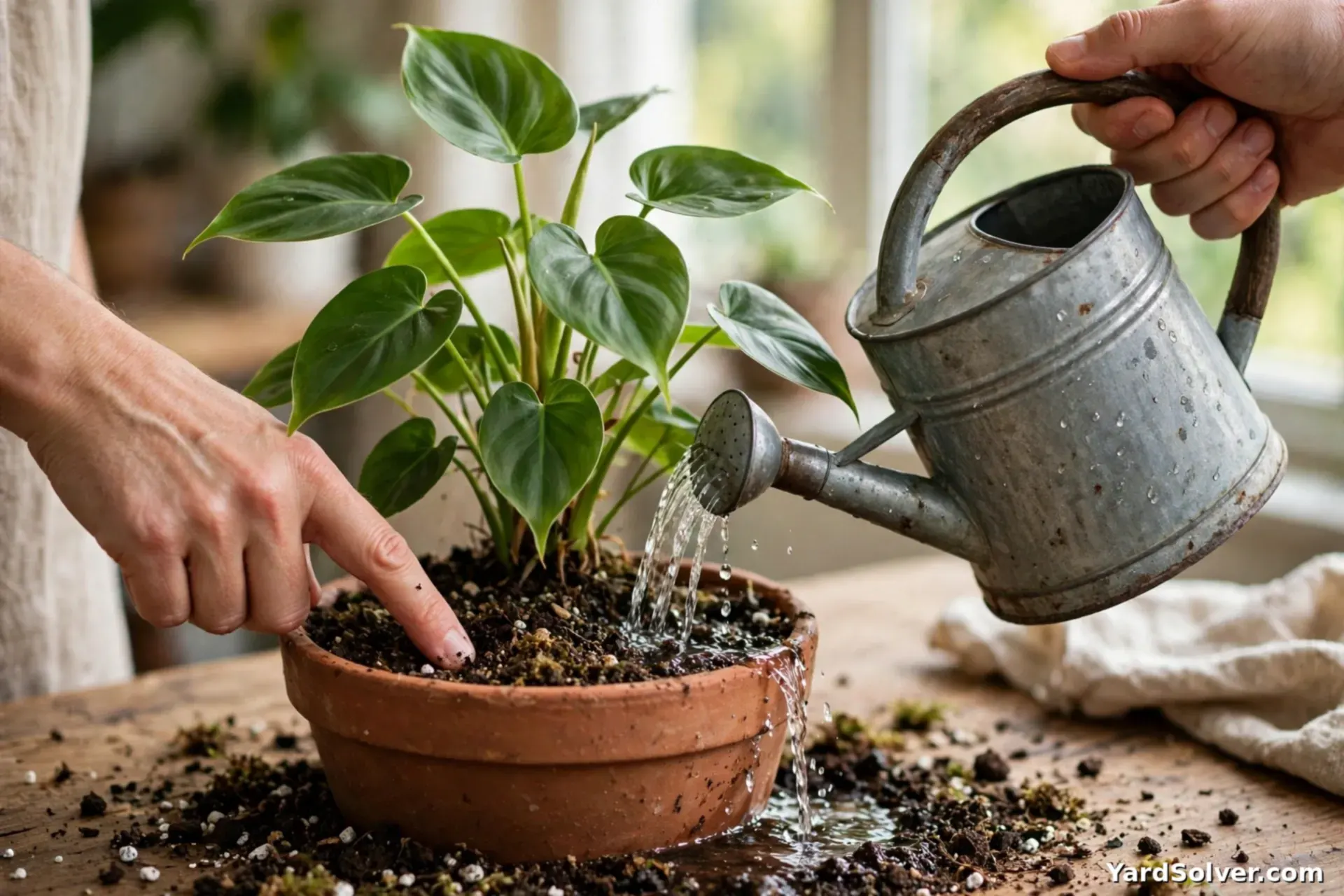
Push a finger into the mix: if the top 1–2 inches are dry, water thoroughly until it runs from the drainage holes, then empty the saucer. In practice that is every 1–2 weeks in most rooms — faster in bright summer light, slower in winter. Yellowing leaves are the confusing symptom, because both overwatering and underwatering can cause them; the mix tells you which — several inches dry means water deeply, wet and sour-smelling means hold off and check the roots (see the diagnosis list below).
Step 4 — Feed monthly in the growing season
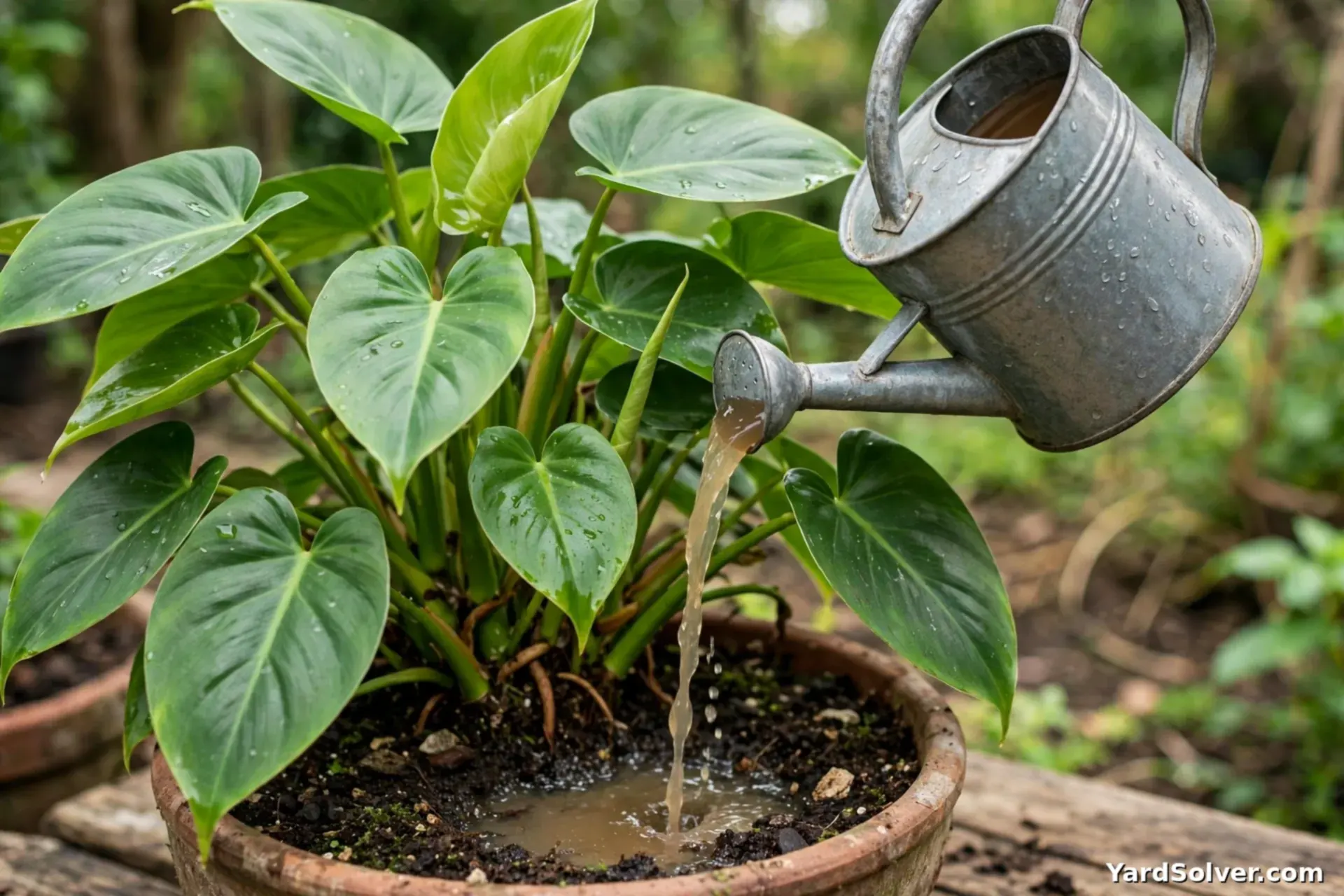
A philodendron pushing out new leaves all spring and summer is a hungry plant: give a balanced houseplant feed once a month through the growing season, at the diluted strength the label gives for houseplants, and stop over winter when growth rests. Guessing the dose is how leaves get fertiliser burn — the Fertilizer Calculator works out amounts by the NPK method. Pale, small new leaves in the growing season usually mean feed or light; brown crispy edges after feeding usually mean too much of it — flush with plain water and resume at half strength.
Step 5 — Trail, climb or prune — and propagate
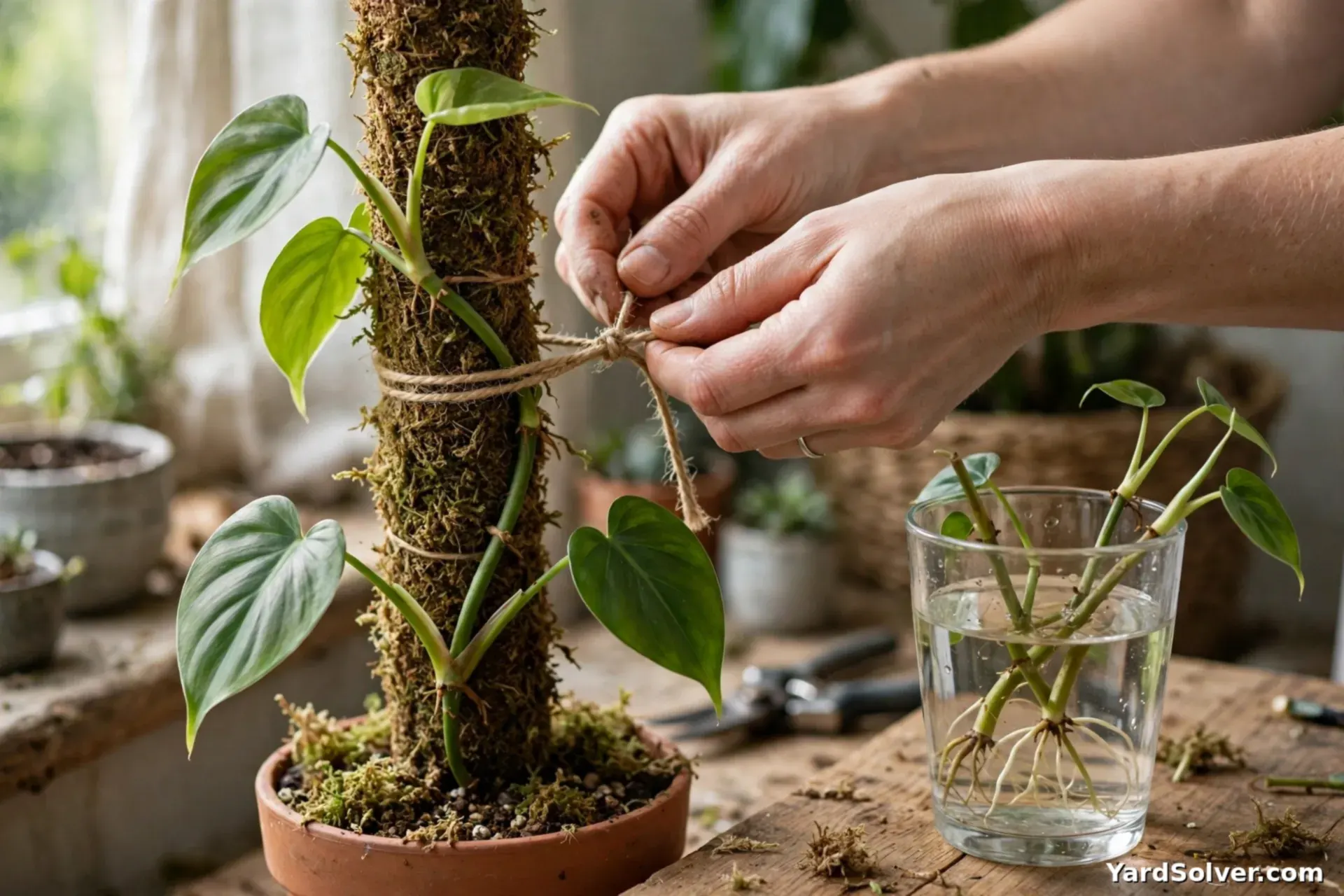
Shape follows habit. Trailers: let them spill, and when a vine goes bare and leggy, cut it back — each cutting with a node roots in a glass of water within a few weeks, and the mother stem branches where it was cut. Climbers: tie stems loosely to a moss pole with aerial roots pointed at the pole; leaves size up dramatically once the plant believes it is climbing a tree, and stay small on a plant left to sprawl. Self-heading types: no support and no pruning beyond removing dead leaves — just a quarter turn of the pot every week or two for even growth.
Step 6 — Watch for the usual problems
- Yellowing leaves — check the mix first: wet-all-the-time points to root rot, bone-dry points to thirst.
- Leggy, sparse vines — light first; prune back and propagate the cuttings.
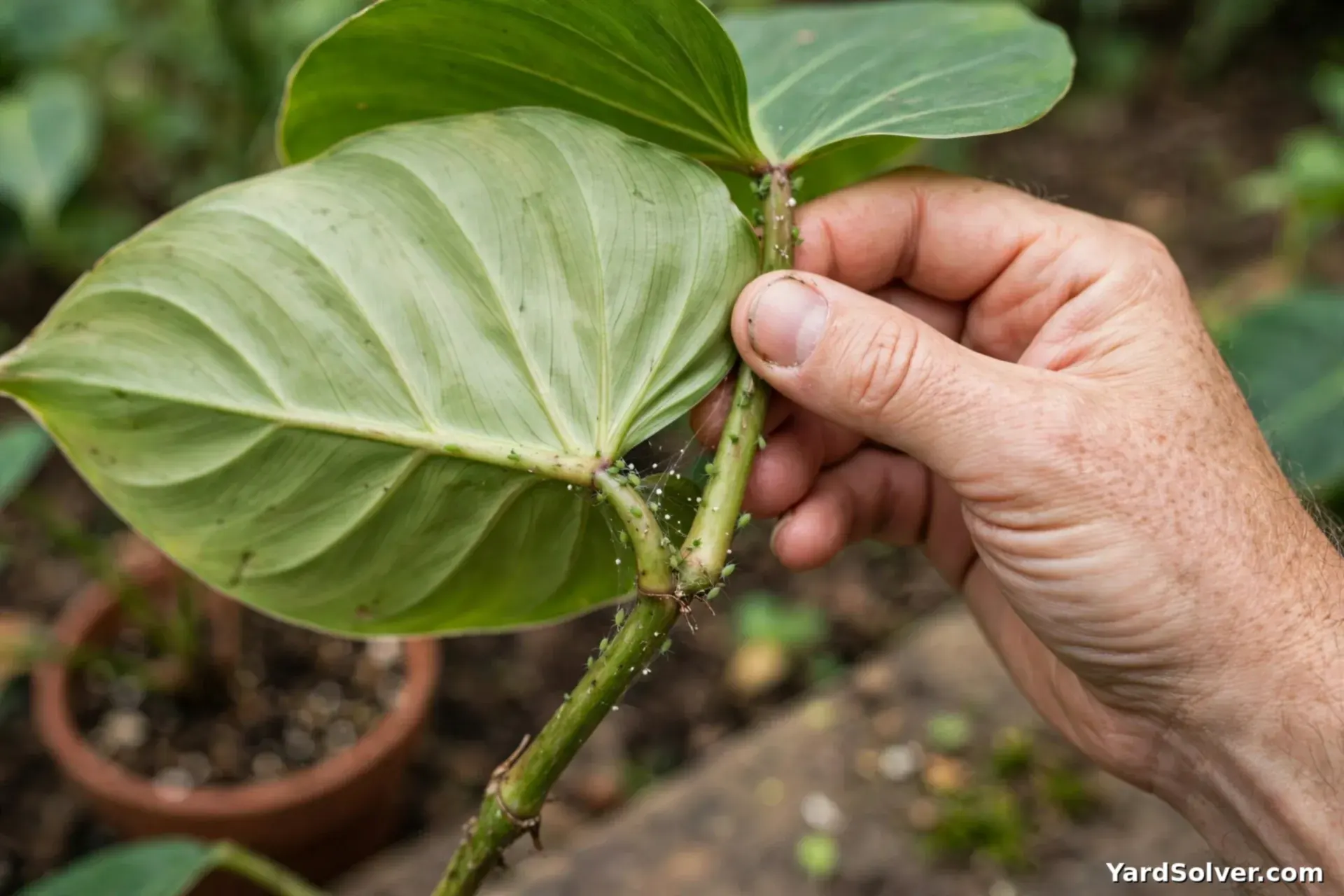
- Mealybug and scale — white fluff and brown bumps in the leaf joints; the full diagnosis list follows.
Problems, pests & diseases — diagnosis and fixes
- Lower leaves yellowing one by one, stems soft at the base, mix smelling sour: root rot from chronically wet mix. Fix: unpot, cut roots back to firm white tissue, repot into fresh chunky mix in a pot with drainage, and water once lightly — the general protocol is in the Overwatered Plant Rescue guide.
- One or two oldest leaves yellow and drop while the rest looks healthy: normal ageing, not a problem. Fix: none needed — remove the spent leaf. Widespread yellowing is the warning sign; a single old leaf is housekeeping.
- Long bare stems, wide gaps between small leaves: light starvation — the plant is stretching toward the window. Fix: move gradually into brighter indirect light, prune the bare vines back, and root the cuttings in water to replant a fuller pot.
- White cottony clusters in leaf joints and on stems: mealybugs. Fix: dab each cluster with rubbing alcohol on a cotton bud, wipe clean, and isolate the plant from other houseplants until clear; check weekly — they hide in the newest growth.
- Hard brown bumps along stems, sticky residue on leaves: scale insects. Fix: scrape the bumps off, wipe the spots with rubbing alcohol, and repeat weekly until no new bumps appear.
- Small leaves on a climber that never sizes up: it has nothing to climb. Fix: give it a moss pole, tie the stems in loosely, and point the aerial roots at the pole — leaf size follows within a few new leaves.
- Brown, crispy leaf edges on an otherwise firm plant: low humidity or underwatering, often both in heated winter rooms. Fix: water deeply on the Step 3 rhythm, group plants together to raise local humidity, and keep the pot away from radiators and heating vents.
📅 Your personal Philodendron schedule
Stay with us — we'll remind you. The procedure is the button above: press "🌱 Start Philodendron with me", set your start date and, if you like, add your email. Your plant and its start date are saved on this device straight away, the schedule below is yours to print or download as calendar reminders (.ics), and email reminders switch on with the new YardSolver accounts — the email you save today is first in line, and from your start date the reminders follow your plant's own schedule. Free, no account needed today; your email is for your plant reminders only, with an easy stop in every message.
Philodendron is a houseplant that lives indoors year-round, and it comes in two habits — trailers that spill from a shelf, and self-heading or climbing types that grow upright and want a pole. Both run on rhythm, not dates: water when the top of the mix has dried, feed in the growing season, so it gets care tips instead of date reminders.
Varieties worth growing
| Variety | Colour | Why gardeners like it |
|---|---|---|
| Heartleaf (hederaceum) | Green | The classic trailer — forgiving, fast, and roots from a cutting in a glass of water |
| 'Brasil' | Green with a lime-yellow stripe | A heartleaf form with a bold chartreuse stripe down each leaf — colour holds best in bright light |
| 'Birkin' | Green with white pinstripes | A self-heading rosette with creamy pinstriped leaves; upright, compact, never trails |
| 'Pink Princess' | Green splashed with pink | The collector's form — pink variegation that needs bright light and a willingness to prune out plain-green reversions |
| 'Gloriosum' | Velvet green with white veins | A crawling (not climbing) velvet-leaved form grown along the surface — the connoisseur's philodendron |
Good for you — and take care
Benefits
- Two habits in one family — trail it from a shelf or climb it up a pole, so it fits almost any room
- Among the easiest houseplants to propagate: a stem cutting with a node roots in water in a few weeks
- Forgiving of ordinary rooms — normal humidity and temperatures suit most types
- Huge range of leaf shapes and colours from one genus, from pocket-sized trailers to statement climbers
Take care
- Poisonous if eaten by pets — the leaves contain calcium oxalate crystals that irritate the mouth and stomach; keep leaves out of chewing reach
- Sap can irritate skin when pruning — wear gloves for big cutback jobs and wash hands afterwards
- Variegated forms fade toward plain green in low light — the colour you paid for needs the bright spot
A little history — and one good fact
Philodendrons climb, trail and crawl through the rainforests of Central and South America; the name itself is Greek for “tree lover” (philo, loving, and dendron, tree), earned by the climbers that haul themselves up trunks toward the light. Victorian collectors brought the hardy heartleaf types indoors first, and the genus has since become one of the largest and most collected in the whole houseplant trade.
Fun fact: A climbing philodendron's leaves change as it climbs — small and heart-shaped low down, larger and often lobed higher up — because the plant is built to start in shade and finish in the canopy light.
Keep going
Guides: How to Propagate Pothos · Overwatered Plant Rescue · How to Get Rid of Fungus Gnats
Calculators: Fertilizer Calculator · All calculators
More houseplants: Peace Lily · Rubber Plant · Pothos
← Back to the Plant Library · Get your personal planting dates
Questions people ask
How often do I water a philodendron?
When the top 1–2 inches of mix have dried — typically every 1–2 weeks indoors, faster in bright summer light, slower in winter. Push a finger into the mix rather than following a calendar: water thoroughly until it drains, empty the saucer, and never leave the pot standing in water, because wet-all-the-time mix is the main cause of philodendron root rot.
Why is my philodendron leggy?
Almost always light, plus time. In dim light the stems stretch, the gaps between leaves widen and new leaves come out small. Move the plant gradually into brighter indirect light, then prune the bare stems back — the cut tips root easily in water, so a leggy vine becomes several new plants and the mother plant branches out fuller.
Is philodendron poisonous to pets?
Yes. Philodendron leaves contain calcium oxalate crystals that irritate the mouth and stomach if chewed. Keep trailers hanging or shelved where cats and dogs cannot reach the leaves, and put floor-standing climbers where pets cannot chew them.