
Plant Library · Houseplants
🪴 How to Grow Rubber Plant
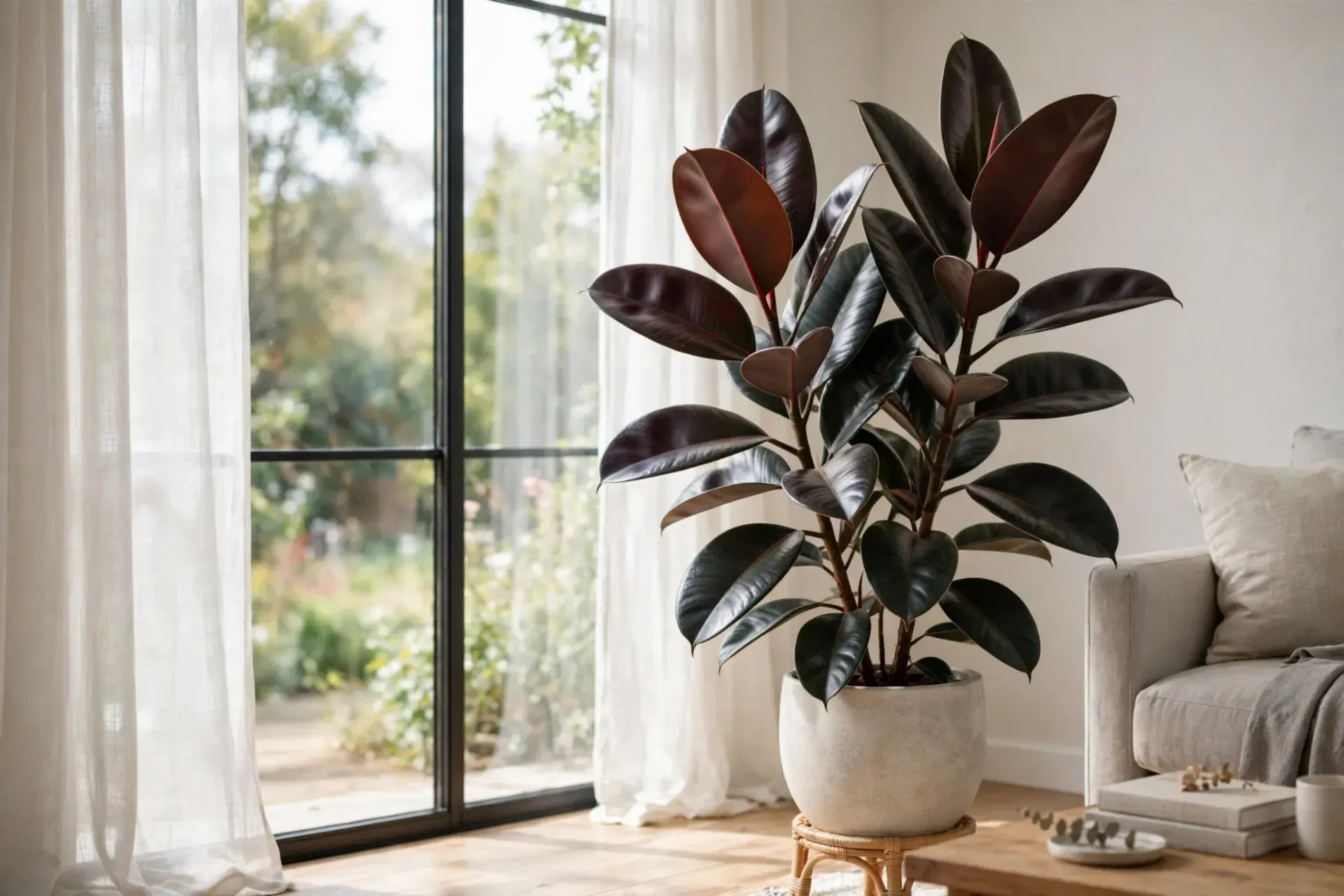
A rubber plant is a small indoor tree with dinner-plate ambitions — broad, glossy leaves on a stem that wants to grow straight up until you teach it to branch. It runs on rhythm rather than a calendar: bright indirect light, water when the top of the mix dries, and leaves wiped clean so the plant can breathe.
Grow Rubber Plant with us — step by step
Everything for this plant is written step by step below — what to do, and exactly when. Read it through first if you like: you can grow it entirely on your own with that guide. Or start with us here — tell us your planting day and we lay out your personal schedule on this page, every next step on its own day, counted from your planting date. No guessing, no forgetting.
Step 1 — today: Settle your Rubber Plant into its spot today: a pot with drainage, bright indirect light, and one good watering to settle the mix around the roots.
Rubber Plant at a glance
Spacing: — (pot) · Propagation: Stem cuttings, not seed
Sun: Bright indirect light; burgundy types colour best with more
Water: When the top 2 inches of mix are dry
Harvest: Grown for foliage — no harvest
Timing counts from your average last spring frost — get your own dates in the Planting Calendar. Guidance follows standard extension-service practice for Canada and the US.
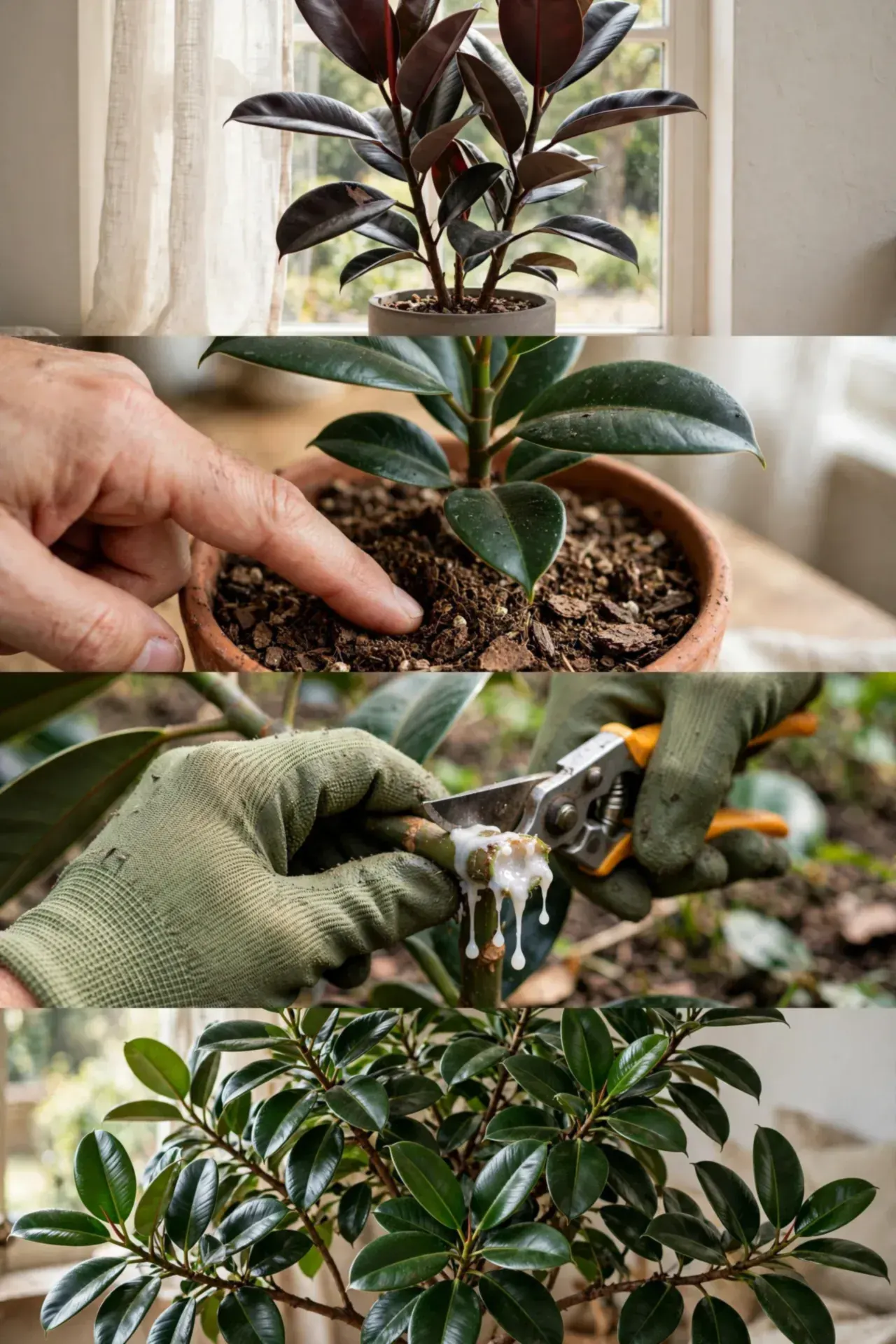
How to plant and grow rubber plant, step by step
Step 1 — Choose its spot
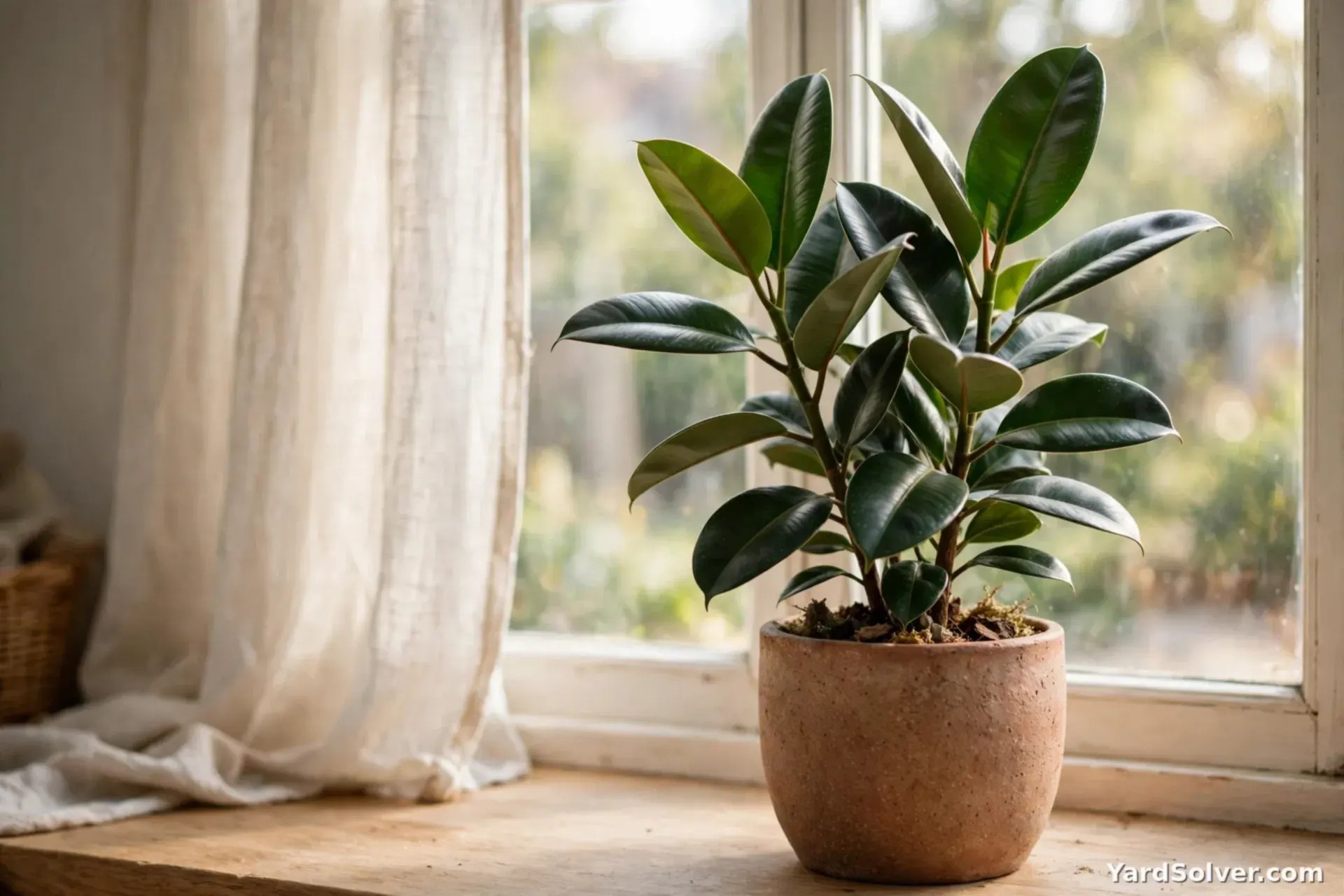
Bright indirect light is the spot: close to a bright window, with harsh midday sun softened by a sheer curtain or a step back from the glass. Green forms tolerate a little less; the burgundy types colour best with more light, fading toward green in a dim room. Rubber plants dislike change almost as much as darkness — a plant moved suddenly, or parked in a cold draught by a door, answers with dropped leaves (see the diagnosis list) — so choose the spot once, choose it well, and rotate the pot a quarter turn every week or two for even growth.
Step 2 — Pot it in free-draining mix
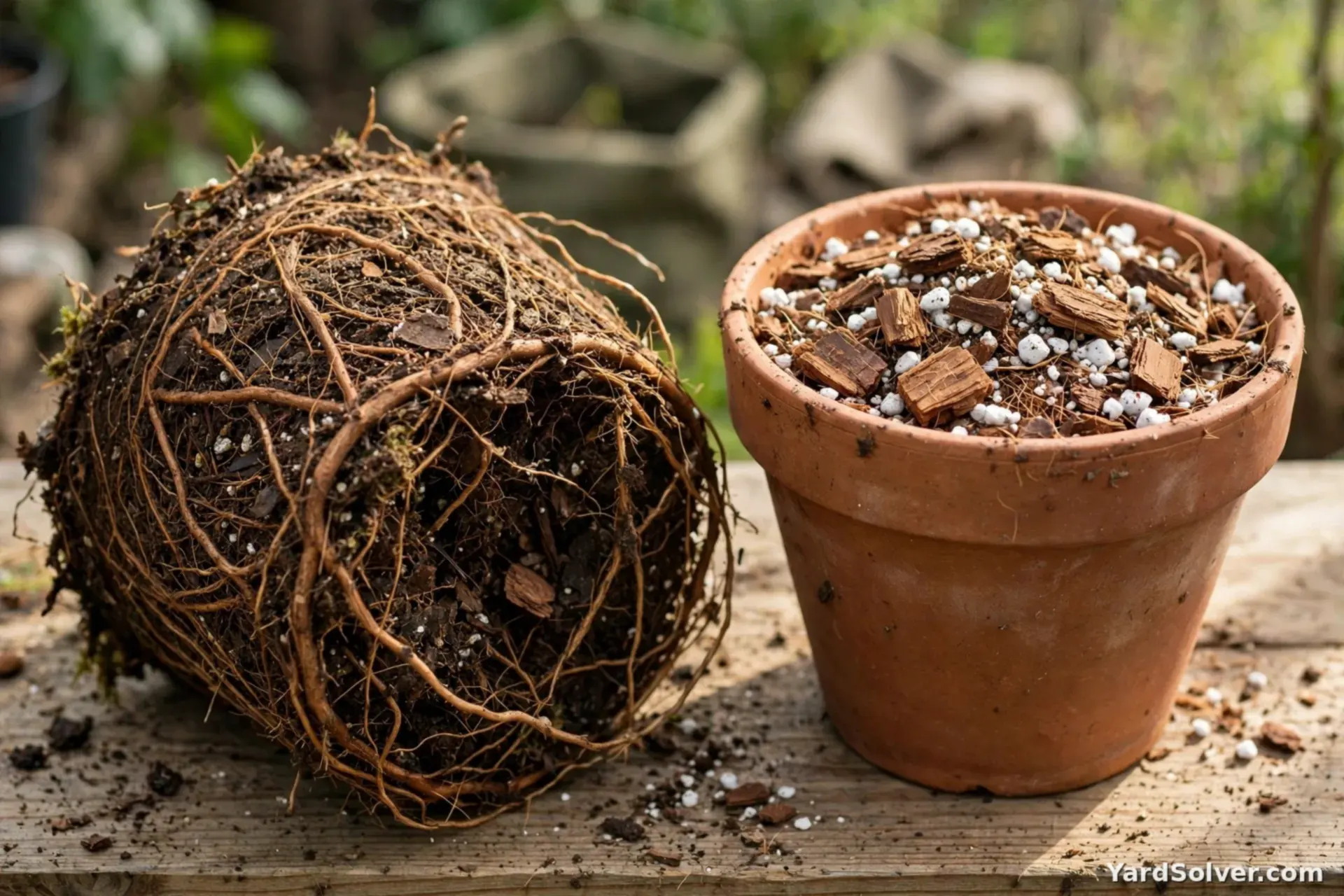
Pot into ordinary potting mix lightened with a handful of bark and perlite, in a pot with drainage holes only 1–2 in wider than the root ball. A rubber plant is a tree in waiting: it grows steadily upward and its roots fill a pot every year or two, so repot in spring when roots circle the bottom. The pot needs weight or a sturdy stand as the plant gains height — a tall rubber plant in a feather-light pot is a plant planning to fall over.
Step 3 — Water when the top dries
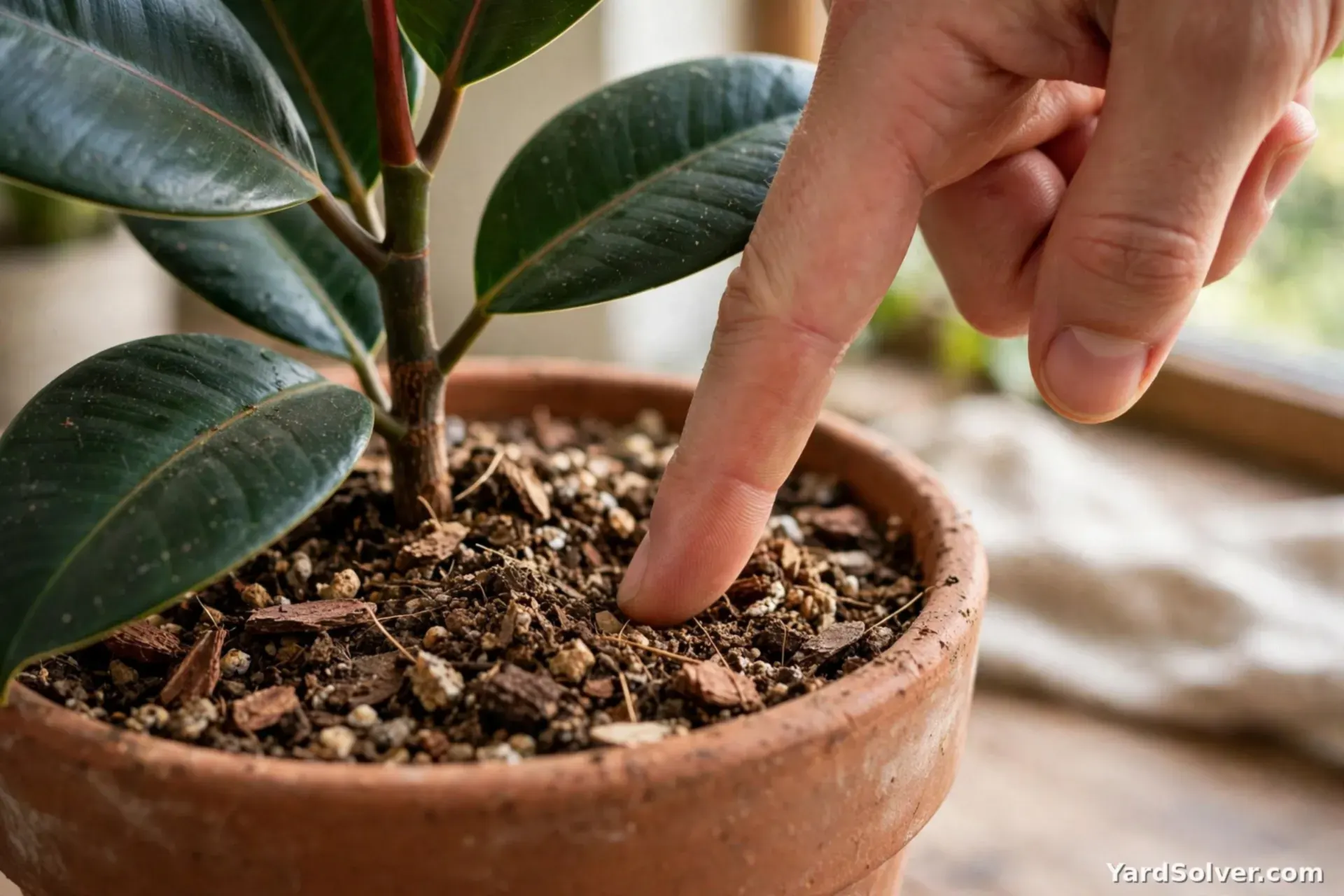
Water: when the top 2 inches of mix are dry. Push a finger in: dry to the second knuckle means water — thoroughly, until it drains — then empty the saucer. Steady is the word: a rubber plant watered in swings (flooded one week, forgotten the next) drops leaves in protest, while a plant on an even rhythm keeps them for years. Winter growth is slower and the mix dries slower, so the finger test matters more than any calendar — the same rhythm-first logic as How Often to Water a Snake Plant, with a thirstier plant.
Step 4 — Feed monthly in summer
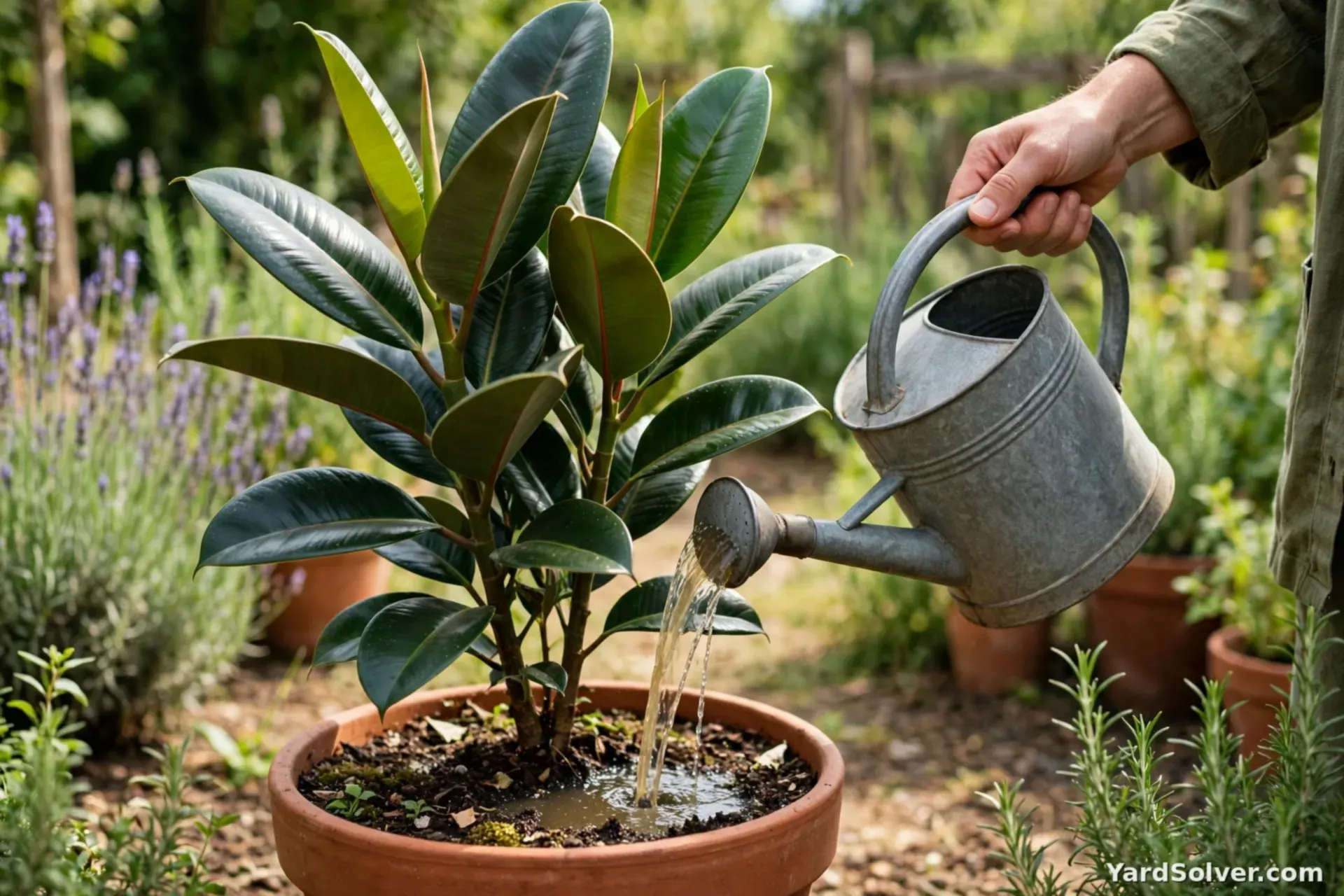
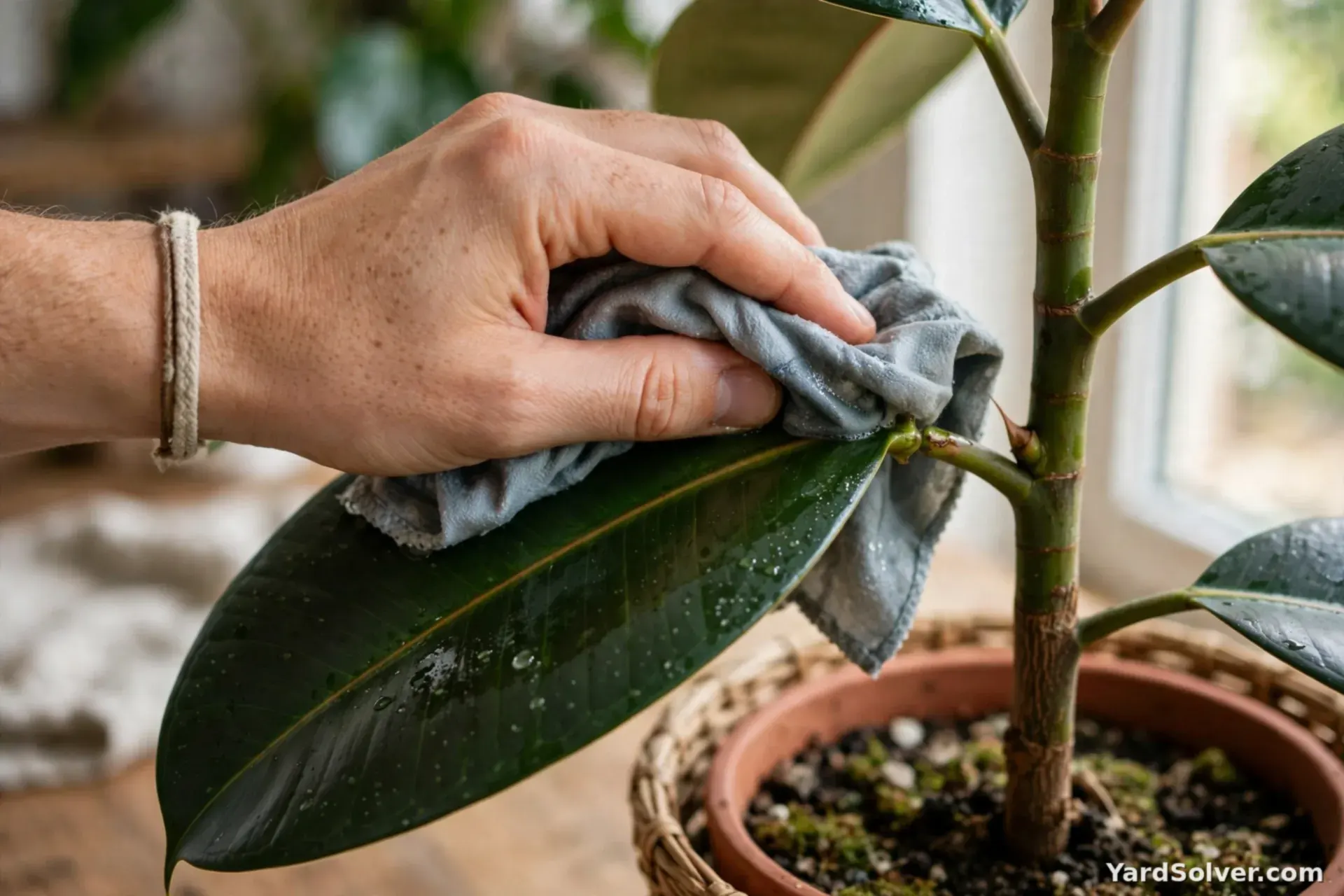
Big leaves are built from feed: give a balanced houseplant feed once a month through spring and summer, at the diluted strength the label gives, and stop over winter while growth rests. Measure rather than guess — the Fertilizer Calculator works out amounts by the NPK method. And add one chore no fertilizer replaces: wipe the leaves with a damp cloth every month or so. Those broad leaves gather dust, and a dusty leaf photosynthesises poorly — keep them clean and the plant quite literally breathes easier.
Step 5 — Prune and notch for branches
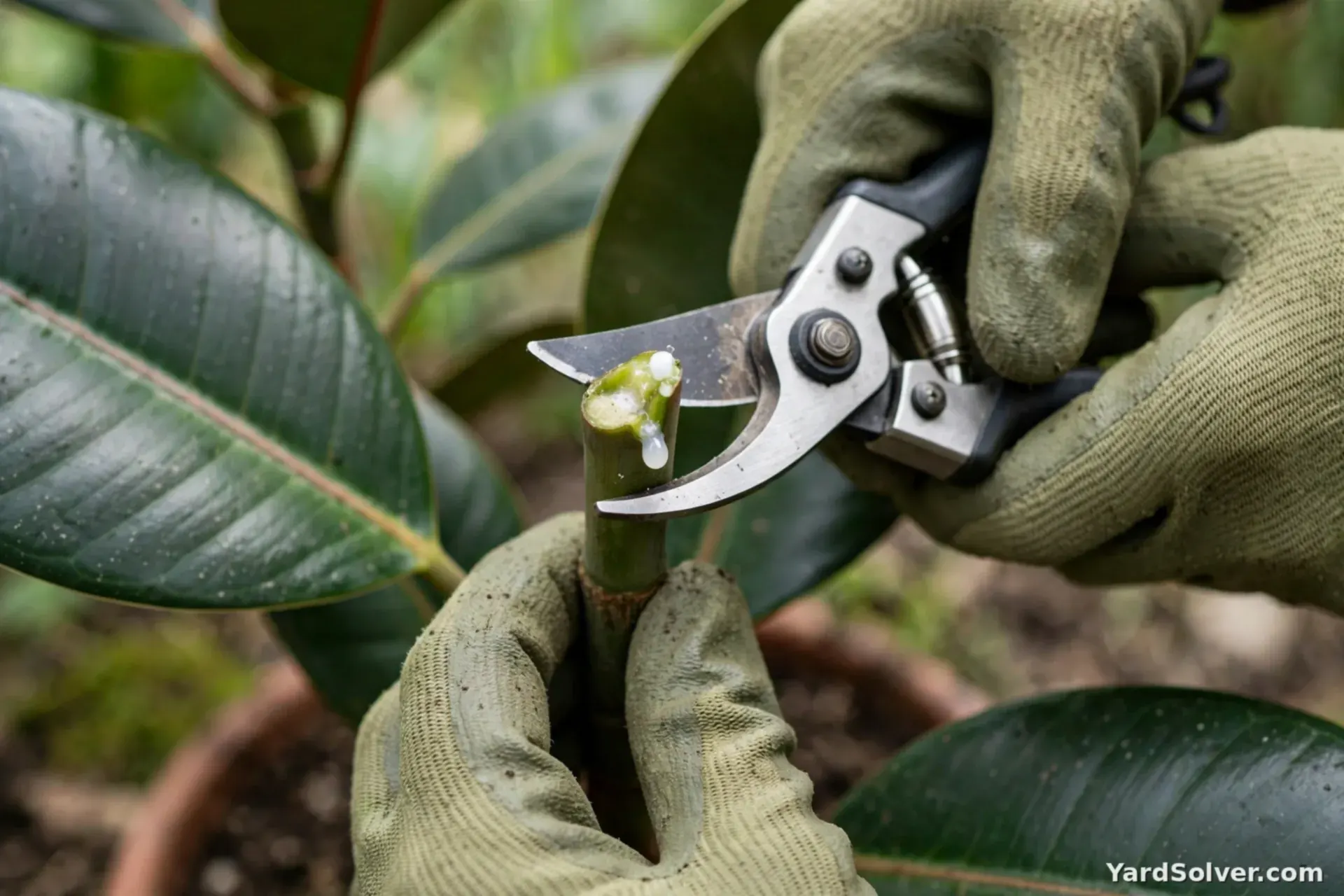
Left alone, a rubber plant grows one straight stem to the ceiling. To make it branch, prune the growing tip: the plant pushes out side shoots below the cut. Wear gloves — the cut bleeds a milky sap that irritates skin and stains cloth — and dab the cut with a damp cloth to slow the flow. For a bare lower stem, notching can wake a sleeping bud: make a shallow cut just above a leaf node, and a branch often starts there. Prune in spring, when the plant has the light and energy to answer; prunings with several leaves root in water or mix as new plants, the same trick as in How to Propagate Pothos.
Step 6 — Watch for problems
- Leaf drop — a move, a draught, or watering swings; settle the plant and steady the rhythm.
- Mealybugs and scale — white fluff or brown bumps in the leaf joints and along stems.
- Dusty leaves — slow growth in disguise; wipe them clean as you check the plant.
Problems, pests & diseases — diagnosis and fixes
- Leaves dropping, sometimes several in a week, plant otherwise sound: the rubber plant’s signature protest — a recent move, a cold draught, or watering that swung between soggy and bone dry. Fix: settle it in bright indirect light away from doors and radiators, water when the top 2 inches are dry, and leave it alone; settled plants usually re-leaf from the same stems.
- Lower leaves yellowing, stems soft at the base, mix sour-smelling: root rot from chronically wet mix. Fix: unpot, cut roots back to firm white tissue, repot into fresh free-draining mix with drainage, and water once lightly — the protocol is in the Overwatered Plant Rescue guide.
- White cottony clusters in leaf joints and along the midrib: mealybugs. Fix: alcohol-dab each cluster, wipe the leaves clean, and isolate the plant until a weekly check comes up empty twice running.
- Hard brown bumps along stems and leaf veins, sticky leaves: scale insects. Fix: scrape the bumps off, wipe the spots with rubbing alcohol, and repeat weekly — scale shelters where leaves meet stems.
- Leaves dull and dusty, growth slow despite feeding: a dust film throttling photosynthesis — broad leaves are dust shelves. Fix: wipe every leaf top and underside with a damp cloth, support the leaf from below as you wipe, and repeat monthly.
- One tall bare stem, leaves only at the top, plant leaning to the light: legginess from low light and no pruning. Fix: move gradually into brighter indirect light, rotate the pot weekly, and prune the tip or notch above a node to start branches (Step 5).
- Brown, crispy leaf edges, white crust on the mix surface: fertilizer salts or chronically low humidity. Fix: flush the pot with plain water, resume feeding at half strength, and move the plant away from heating vents.
📅 Your personal Rubber Plant schedule
Stay with us — we'll remind you. The procedure is the button above: press "🌱 Start Rubber Plant with me", set your start date and, if you like, add your email. Your plant and its start date are saved on this device straight away, the schedule below is yours to print or download as calendar reminders (.ics), and email reminders switch on with the new YardSolver accounts — the email you save today is first in line, and from your start date the reminders follow your plant's own schedule. Free, no account needed today; your email is for your plant reminders only, with an easy stop in every message.
This plant runs on rhythm and season rather than a day count — here is the honest version of its schedule.
Varieties worth growing
| Variety | Colour | Why gardeners like it |
|---|---|---|
| Burgundy (Abidjan) | Deep burgundy-green | The dramatic dark form — almost black-red leaves that colour best in bright light |
| Tineke | Green and cream | Cream-and-green variegated leaves with a pink blush on new growth |
| Ruby | Pink, cream and green | The brightest variegation — pink new leaves that need good light to hold their colour |
| Decora | Deep green | The classic green form, with bronze tones on its new leaves |
| Robusta | Glossy green | A compact, sturdy selection that branches more freely than most |
Good for you — and take care
Benefits
- Bold, architectural leaves — one plant fills a corner like a piece of furniture
- Fast, satisfying growth in good light, with a new leaf every few weeks in summer
- A genuinely long-lived indoor tree that improves for decades with basic care
- Responds to pruning, so you shape it — tall and tree-like, or short and bushy
- Easy to propagate from prunings, so one plant becomes gifts
Take care
- The milky sap irritates skin — wear gloves when pruning, and wash sap off promptly
- Toxic to pets if eaten; keep the plant and its prunings out of chewing reach
- A mature plant is heavy and top-heavy — give it a sturdy, weighty pot before it needs one urgently
A little history — and one good fact
The rubber plant, Ficus elastica, comes from the rainforests of north-east India and northern South-East Asia, where it grows into a giant tree. Its common name is a job description: the milky latex was an early source of rubber before the Pará rubber tree proved far more productive and took the industry over. Demoted from plantation to parlour, it became a Victorian conservatory favourite and has been a houseplant staple ever since.
Fun fact: In the wild a rubber plant can start life perched in another tree’s branches, send roots down to the ground, and end as a 30 m tree — the dignified plant in the corner is the same species, on a very short leash.
Keep going
Guides: Overwatered Plant Rescue · How to Propagate Pothos · How to Get Rid of Fungus Gnats
Calculators: Fertilizer Calculator · All calculators
More houseplants: ZZ Plant · Jade Plant · Snake Plant
← Back to the Plant Library · Get your personal planting dates
Questions people ask
Why is my rubber plant dropping leaves?
Leaf drop is the rubber plant’s protest — usually a move to a new spot, a cold draught, or watering that swung from soggy to bone dry. Settle it in bright indirect light away from doors and radiators, water when the top 2 inches are dry, and it normally re-leafs from the same stems.
How do I make a rubber plant bushier?
Prune the growing tip and the plant pushes out side branches below the cut — wear gloves, as the milky sap irritates skin. Notching a bare stem just above a leaf node can also wake a bud. Bright light keeps the new growth compact instead of leggy.
Is a rubber plant poisonous to pets?
Yes — the leaves and milky sap are toxic if eaten and irritate skin and stomachs. Keep it out of chewing reach of cats and dogs.