
Plant Library · Vegetables
🥔 How to Grow Potato
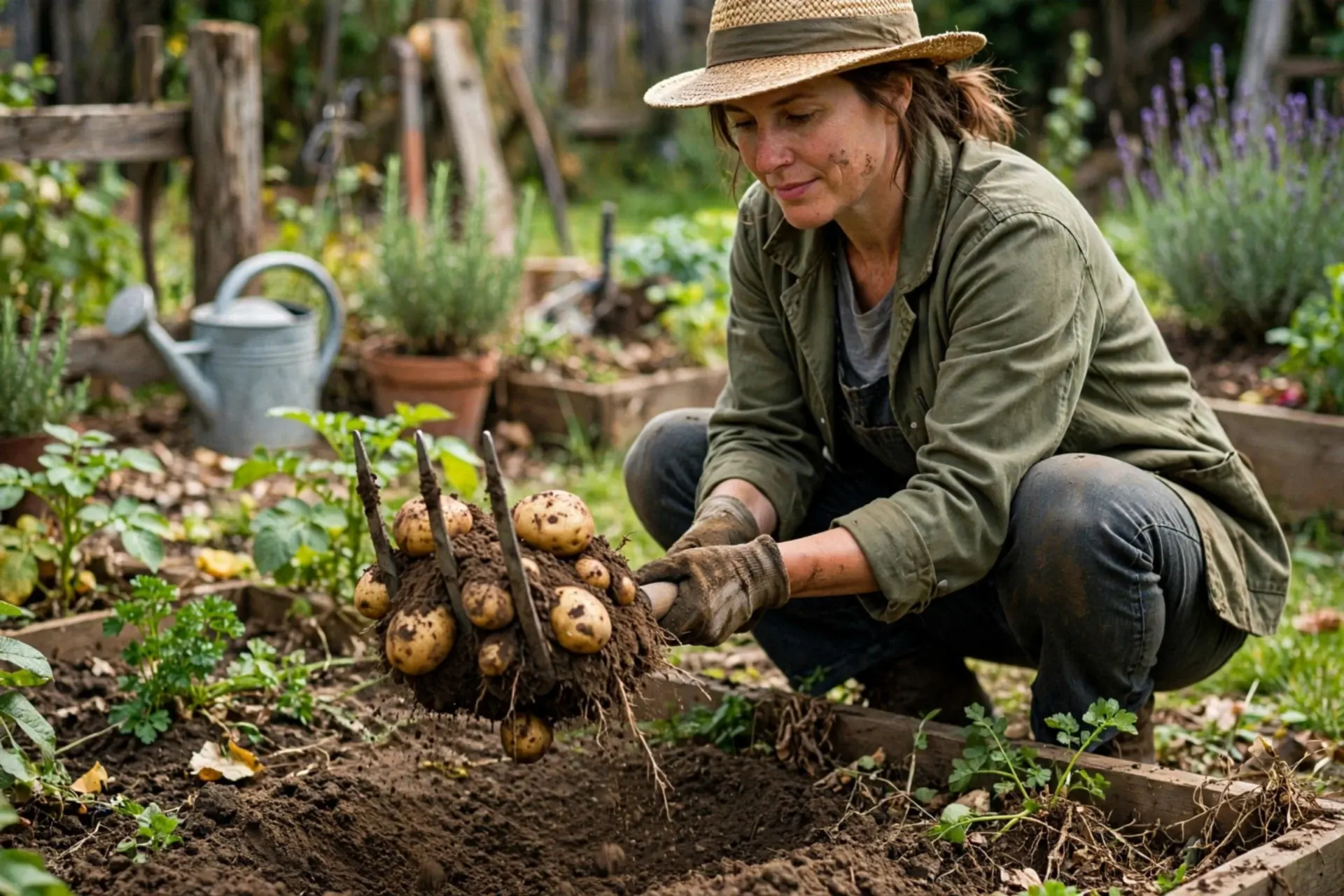
Planted as seed potatoes (tuber pieces), not true seed; hill soil up as stems grow. Potatoes are planted as seed potatoes — tuber pieces, not true seed: set them about 2 weeks before your last frost, about 4 inches deep, and hill soil up around the stems as they grow; most crops are ready in 70 to 100 days.
Grow Potato with us — step by step
Everything for this plant is written step by step below — what to do, and exactly when. Read it through first if you like: you can grow it entirely on your own with that guide. Or start with us here — tell us your planting day and we lay out your personal schedule on this page, every next step on its own day, counted from your planting date. No guessing, no forgetting.
Step 1 — today: Sow your Potato seeds today: 4 in deep, spaced 12 in apart, in full sun. Water the row in well and keep it moist while seeds sprout.
Potato at a glance
Sow outdoors: 2 weeks before last frost
Spacing: 12 in · Seed depth: 4 in
Sun: Full sun
Water: Regular while tubers swell
Harvest: 70–100 days
Timing counts from your average last spring frost — get your own dates in the Planting Calendar. Guidance follows standard extension-service practice for Canada and the US.
Chitting: sprout seed potatoes in a bright, cool spot for 2–4 weeks before planting, then plant the pieces 4 in deep and 12 in apart — lay a whole bed out first with the Plant Spacing Calculator.
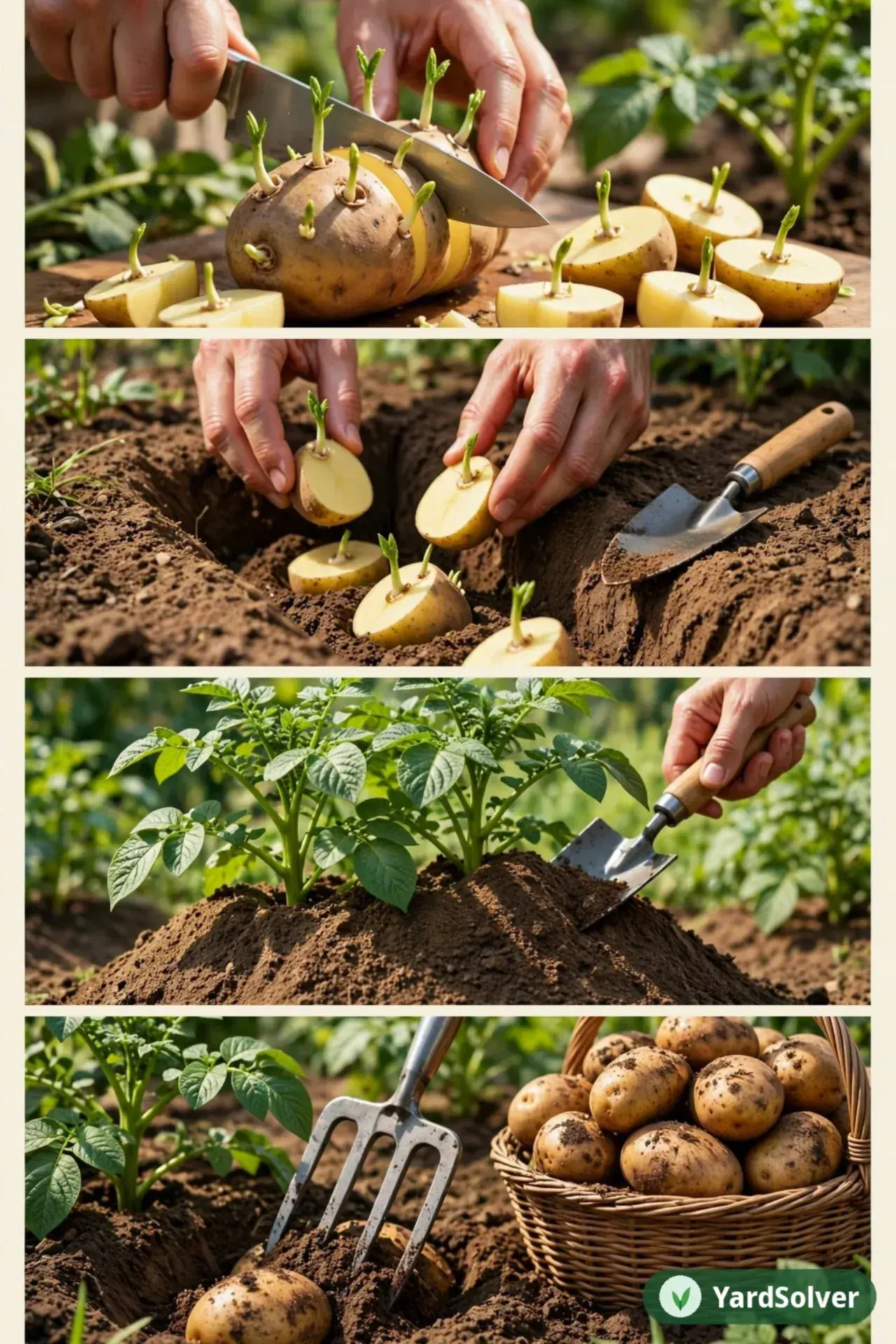
How to plant and grow potato, step by step
Step 1 — Time it right
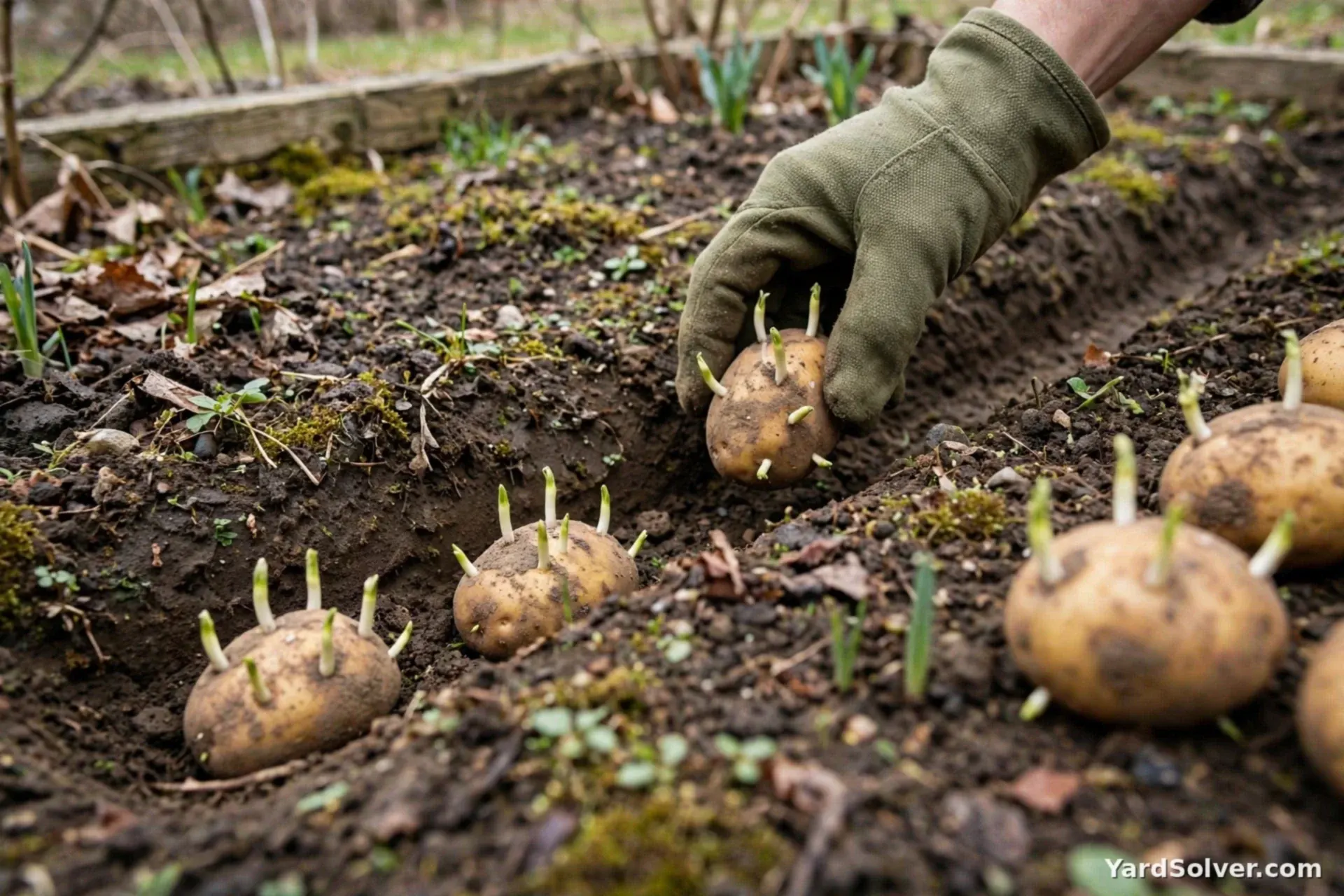
Sow outdoors: 2 weeks before last frost. All dates count from your average last spring frost — the Planting Calendar turns them into real dates for your garden. Potatoes are planted as seed potatoes — tuber pieces, not true seed: set them about 2 weeks before your last frost, about 4 inches deep, and hill soil up around the stems as they grow; most crops are ready in 70 to 100 days.
Step 2 — Prepare the spot
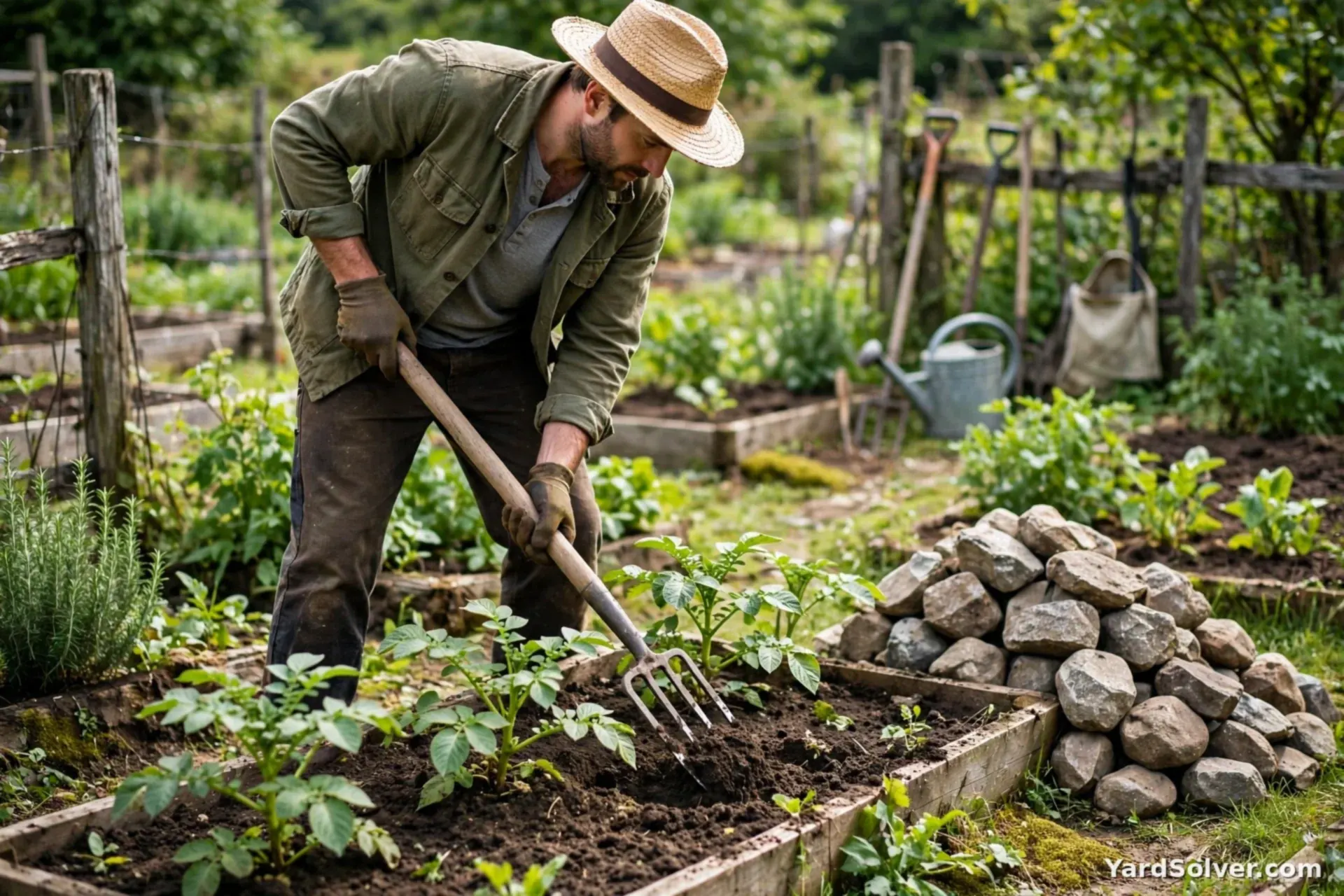
Sun: Full sun. Loose, stone-free soil is the whole secret for root crops — dig it over, pick out stones, and work in compost (never fresh manure, which forks roots). Depth and drainage matter more than feeding. Work out how much you need with the Garden Mix Calculator or the Raised Bed Soil Calculator.
Step 3 — Sow and plant out
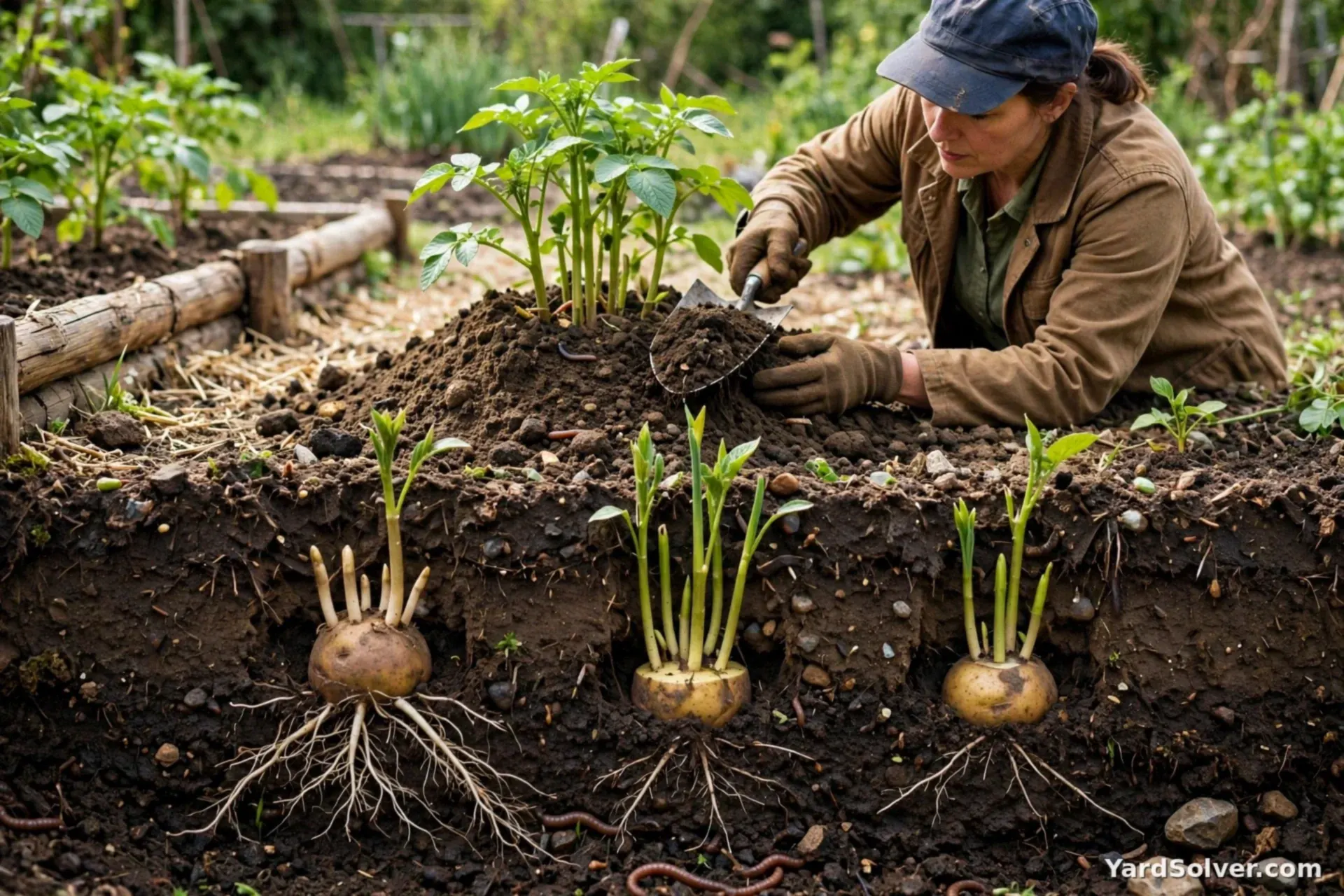
Plant seed potatoes (or pieces with at least two eyes) about 4 in deep and 12 in apart in a trench or, simplest of all, in bags — see How to Grow Potatoes in Bags. Earth up soil around the stems as they grow to keep tubers in the dark.
Step 4 — Water and feed
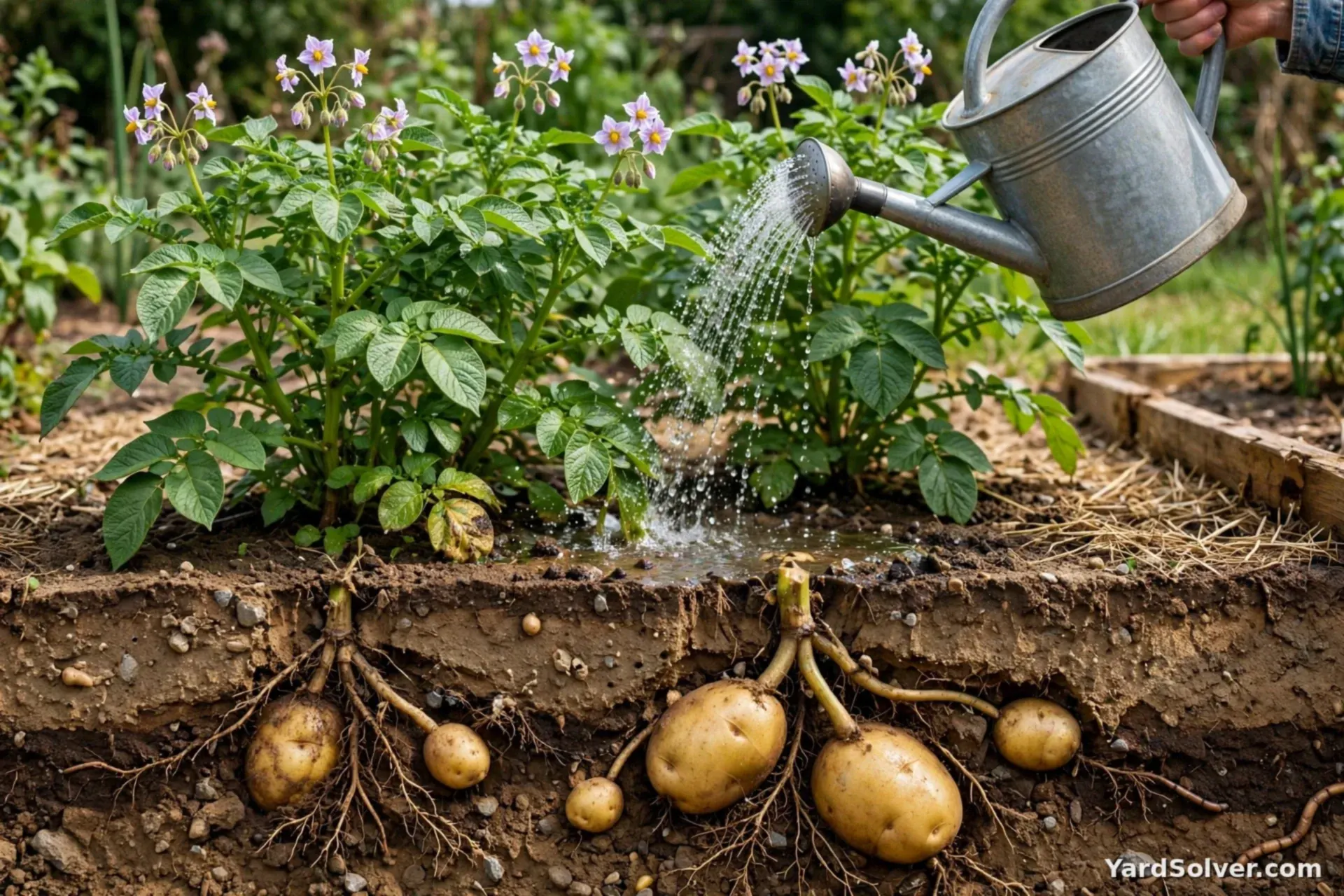
Water: Regular while tubers swell. The Fertilizer Calculator turns a bed size into the right amount.
Step 5 — Care and the problems to watch for
- Potato blight — dark blotches on leaves in wet summers; choose resistant varieties and destroy badly hit foliage, never compost it.
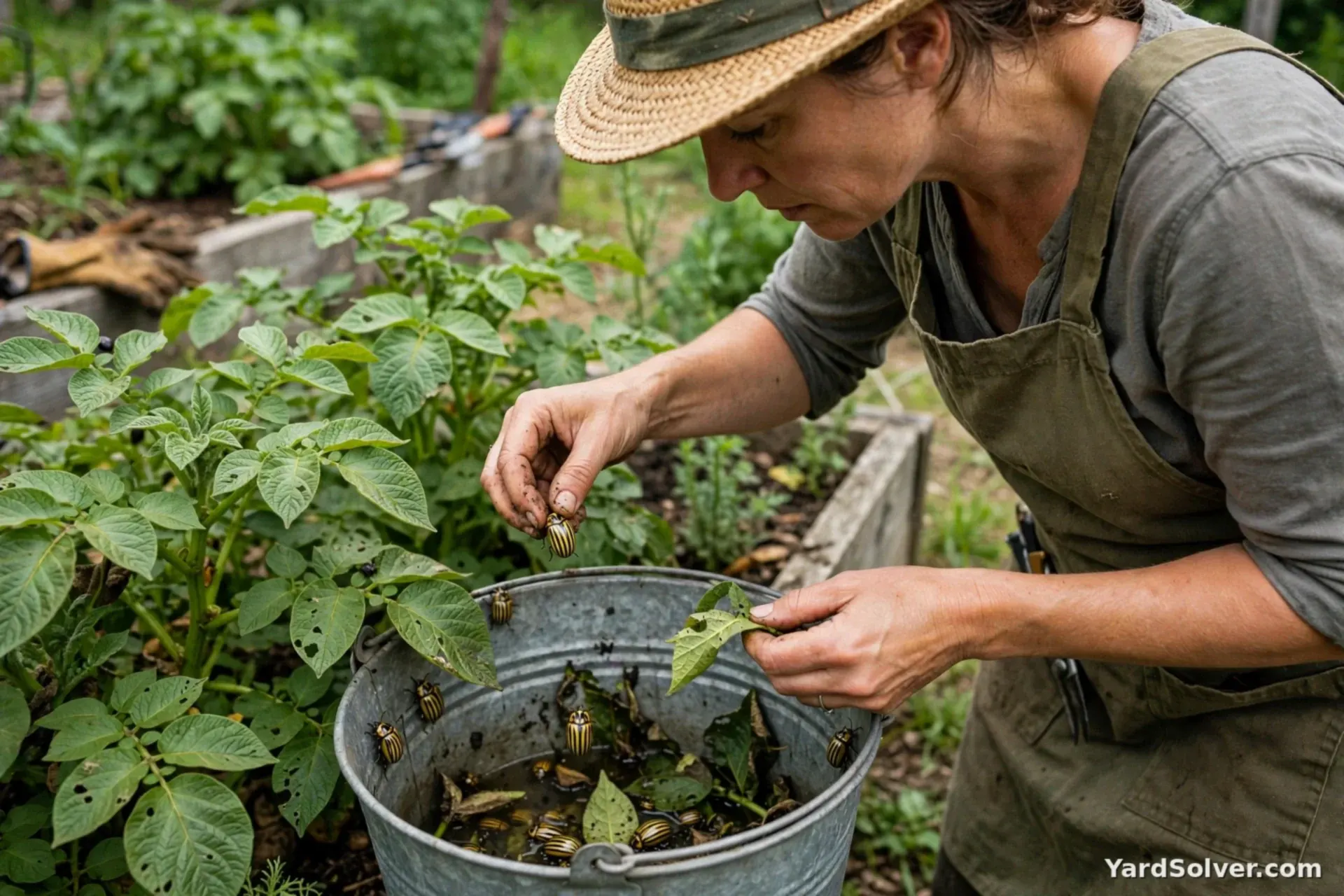
- Colorado potato beetles — orange eggs under leaves; pick beetles and eggs off by hand.
- Green tubers — light turns exposed potatoes green and bitter; earth up well.
Take care: Green patches and sprouts on a potato contain a natural toxin — cut green parts away generously or throw that potato out, and store potatoes in the dark. The leaves, stems and any little green fruits are not edible — only the tubers are eaten.
Step 6 — Harvest
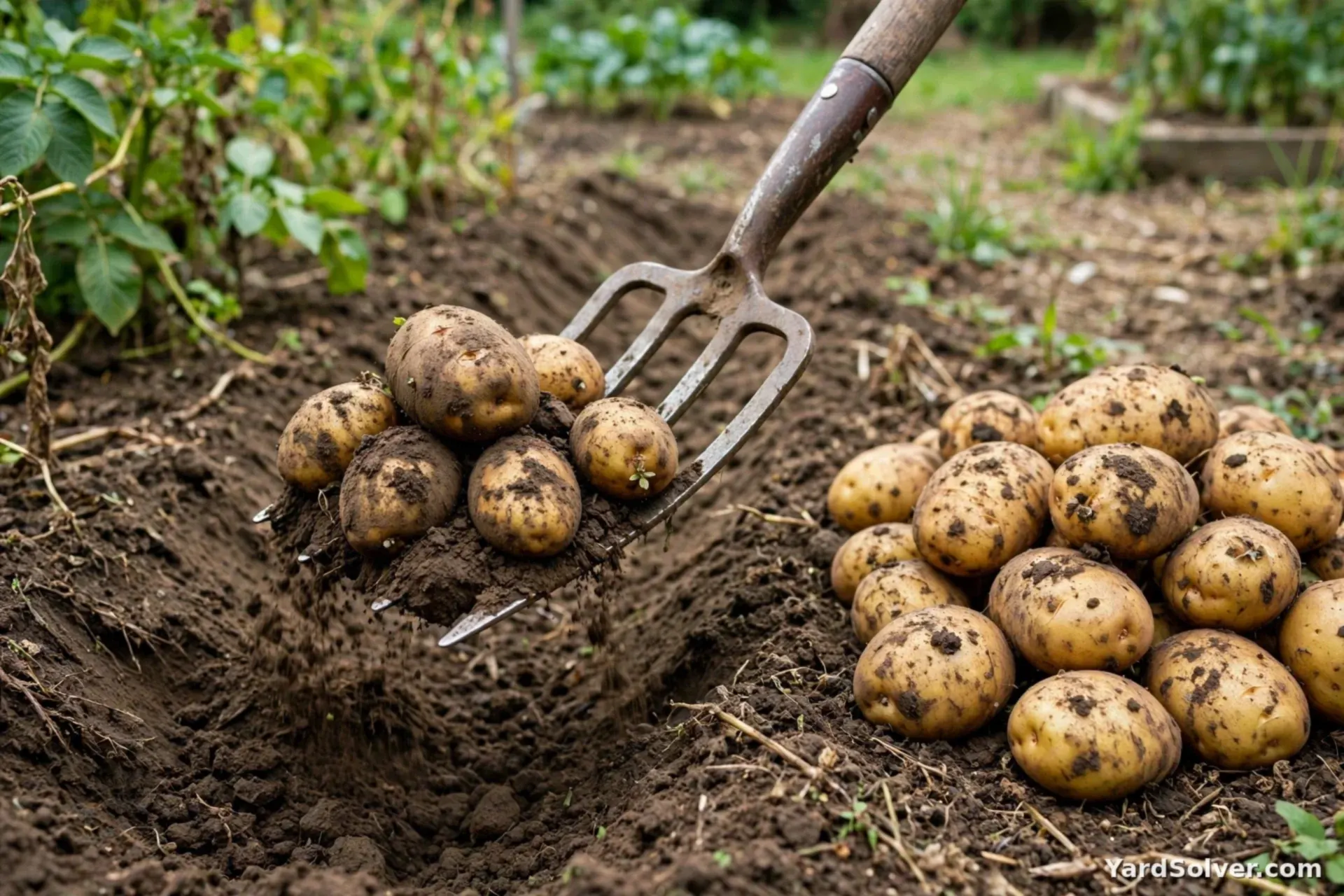
Ready in: 70–100 days. Harvest runs from about day 70 to 100 — scrabble gently at the edge of one plant to check tuber size.
📅 Your personal Potato schedule
Counted from your planting day — not a generic calendar. Day 0 is the day the seed went in the ground or the young plant went out.
Varieties worth growing
| Variety | Colour | Why gardeners like it |
|---|---|---|
| Yukon Gold | Tan skin, yellow flesh | Buttery yellow flesh — the all-purpose favourite for mashing and roasting |
| Russet Burbank | Brown skin, white flesh | The classic baking potato — fluffy inside with thick skin |
| Red Norland | Red skin, white flesh | An early type, dug young as tender new potatoes |
| Kennebec | Buff skin, white flesh | A reliable all-rounder, famous for chips and fries |
| German Butterball | Tan skin, deep yellow flesh | Rich, waxy and buttery — a gourmet favourite for roasting |
Good for you — and take care
Benefits
- A good source of potassium — an important mineral for normal blood pressure as part of a balanced diet
- Provides vitamin C and vitamin B6
- Provides fibre, especially when eaten with the skin on
- Filling, steady energy from natural starches
- Naturally fat-free and gluten-free
Take care
- Green patches and sprouts on a potato contain a natural toxin — cut green parts away generously or throw that potato out, and store potatoes in the dark
- The leaves, stems and any little green fruits are not edible — only the tubers are eaten
A little history — and one good fact
Potatoes come from the high Andes mountains of South America, in present-day Peru and Bolivia, where farmers have grown them for thousands of years and bred thousands of colourful kinds. Spanish ships carried them to Europe in the 1500s, where they slowly became the staple that fed whole nations. Every potato plant in a garden starts not from seed but from a piece of last year's tuber.
Fun fact: Potatoes were the first vegetable grown in space — astronauts grew them aboard a space shuttle mission in 1995 to test feeding crews on long journeys.
Keep going
Guides: How to Grow Potatoes in Bags · How to Prepare Garden Soil in Spring · Putting Your Garden to Bed
Calculators: Plant Spacing Calculator · Seed Calculator · Garden Mix Calculator
More vegetables: Tomato · Pepper · Cucumber
← Back to the Plant Library · Get your personal planting dates
Quick answers
How to grow potatoes
Potatoes are grown from seed potatoes — tuber pieces with at least two eyes — not from true seed. Set them 4 in deep and 12 in apart in loose, stone-free soil in full sun, then earth soil up around the stems as they grow to keep the tubers in the dark. Most crops are ready to dig in 70 to 100 days.
How to plant potatoes
Chit seed potatoes in a bright, cool spot for 2–4 weeks first if you can, then plant the pieces about 4 in deep and 12 in apart, about 2 weeks before your last frost. They grow just as well in a trench, in open ground, or in bags. Earth up around the stems as they grow.
When are potatoes ready to harvest?
Most potatoes are ready 70 to 100 days after planting. Scrabble gently at the edge of one plant to check the tuber size before you commit to digging the whole row. Dig them young and tender as new potatoes, or wait for the tops to die back for maincrop potatoes that store.
Questions people ask
When do I plant potato?
Count from your average last spring frost: sow outdoors 2 weeks before last frost. Potatoes are planted as seed potatoes — tuber pieces, not true seed: set them about 2 weeks before your last frost, about 4 inches deep, and hill soil up around the stems as they grow; most crops are ready in 70 to 100 days.
How far apart do I space potato?
Space plants 12 in apart, with seed sown 4 in deep. Sun: full sun.
When is potato ready to harvest?
70–100 days. Planted as seed potatoes (tuber pieces), not true seed; hill soil up as stems grow.