
Plant Library · Vegetables
🎃 How to Grow Pumpkin
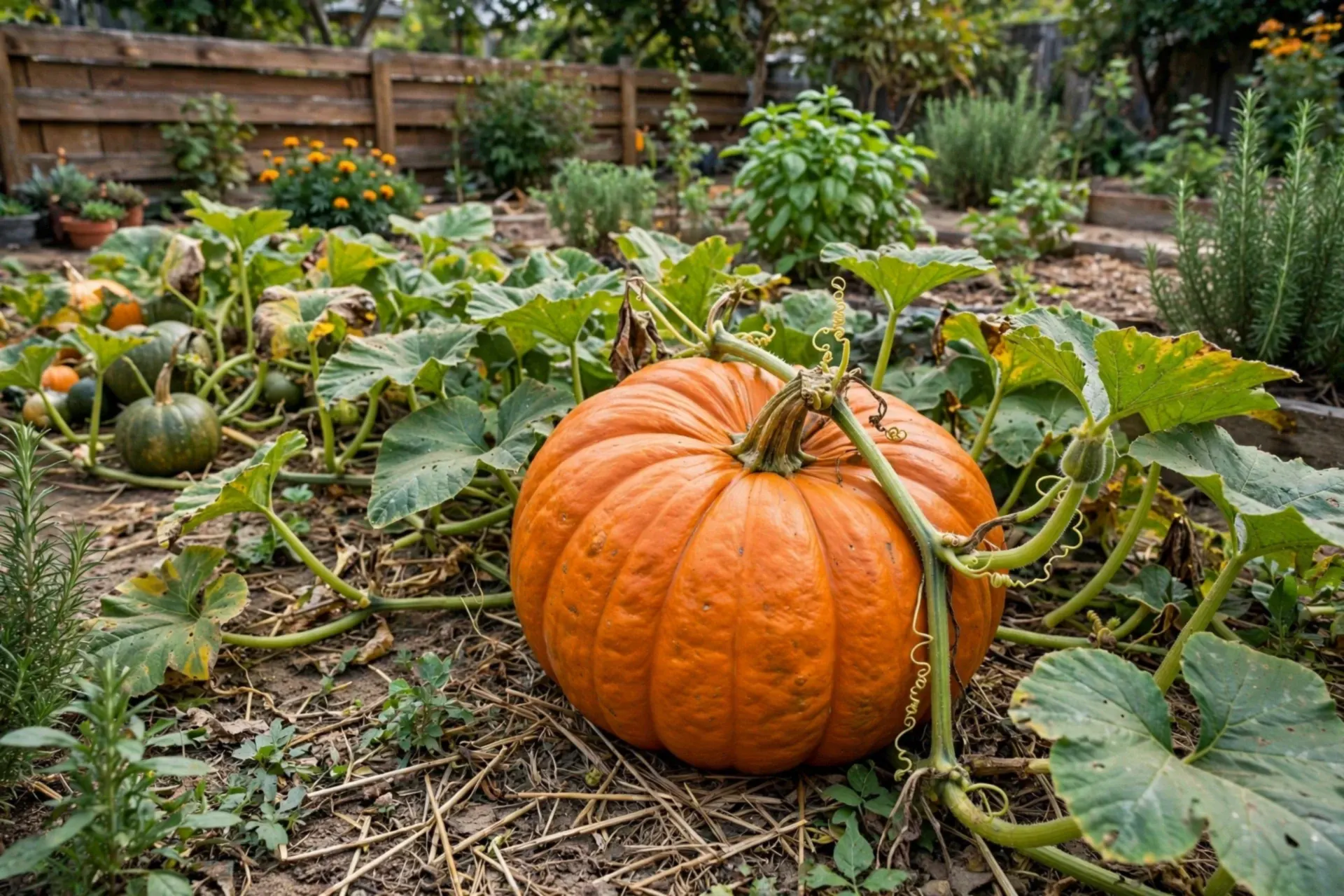
Vines roam far — give them the edge of the garden. Time sowing so fruit ripens by fall. Pumpkins are a warm-season, long-season crop: sow indoors about 3 weeks before your last frost or direct sow about a week after it, timing the fruit to ripen by fall.
Grow Pumpkin with us — step by step
Everything for this plant is written step by step below — what to do, and exactly when. Read it through first if you like: you can grow it entirely on your own with that guide. Or start with us here — tell us your planting day and we lay out your personal schedule on this page, every next step on its own day, counted from your planting date. No guessing, no forgetting.
Step 1 — today: Sow your Pumpkin seeds today: 1 in deep, spaced 36–60 in apart, in full sun. Water the row in well and keep it moist while seeds sprout.
Pumpkin at a glance
Sow indoors: 3 weeks before last frost
Sow outdoors: 1 week after last frost
Spacing: 36–60 in · Seed depth: 1 in
Sun: Full sun
Water: Deep weekly watering at the base
Harvest: 90–120 days
Timing counts from your average last spring frost — get your own dates in the Planting Calendar. Guidance follows standard extension-service practice for Canada and the US.
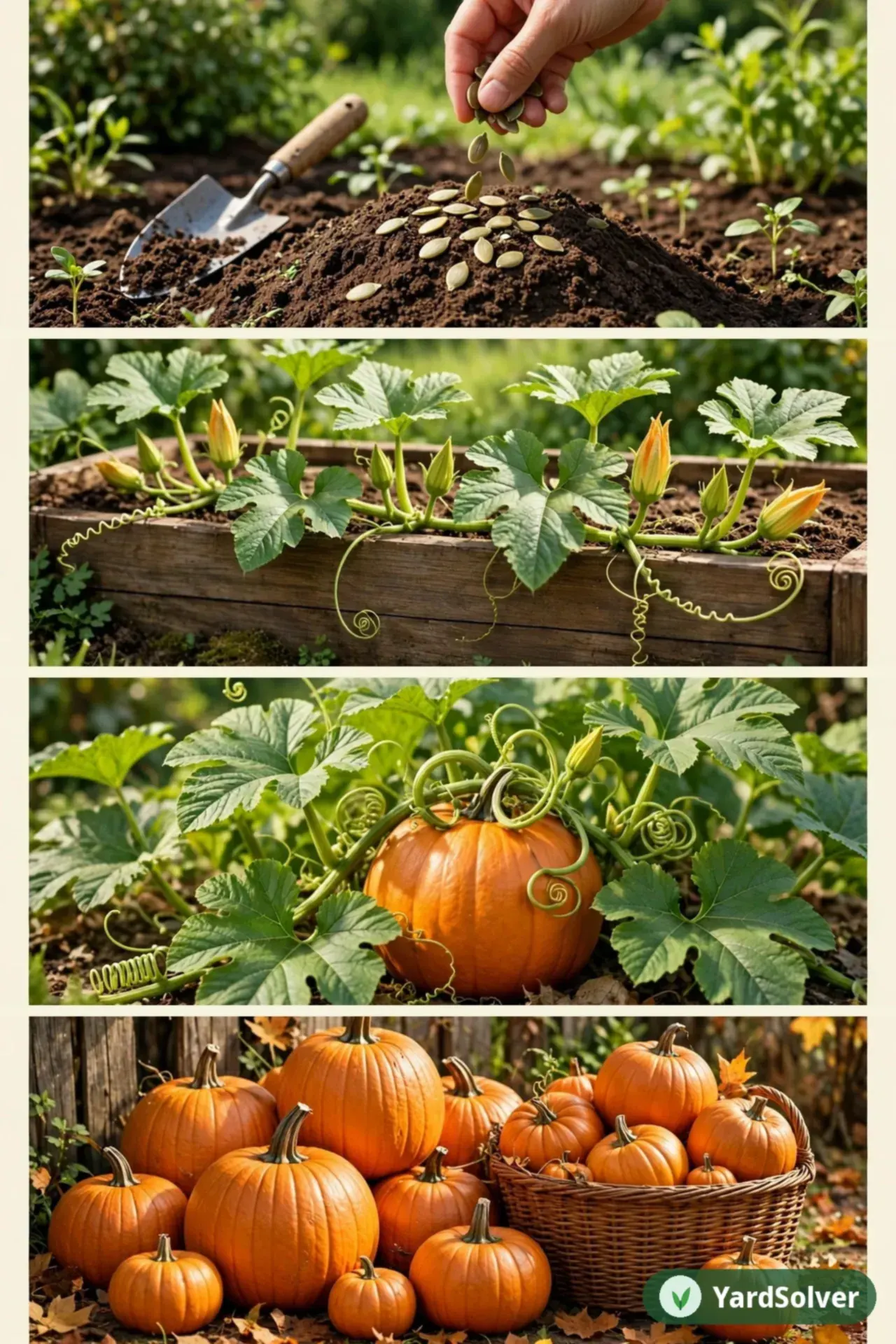
How to plant and grow pumpkin, step by step
Step 1 — Time it right
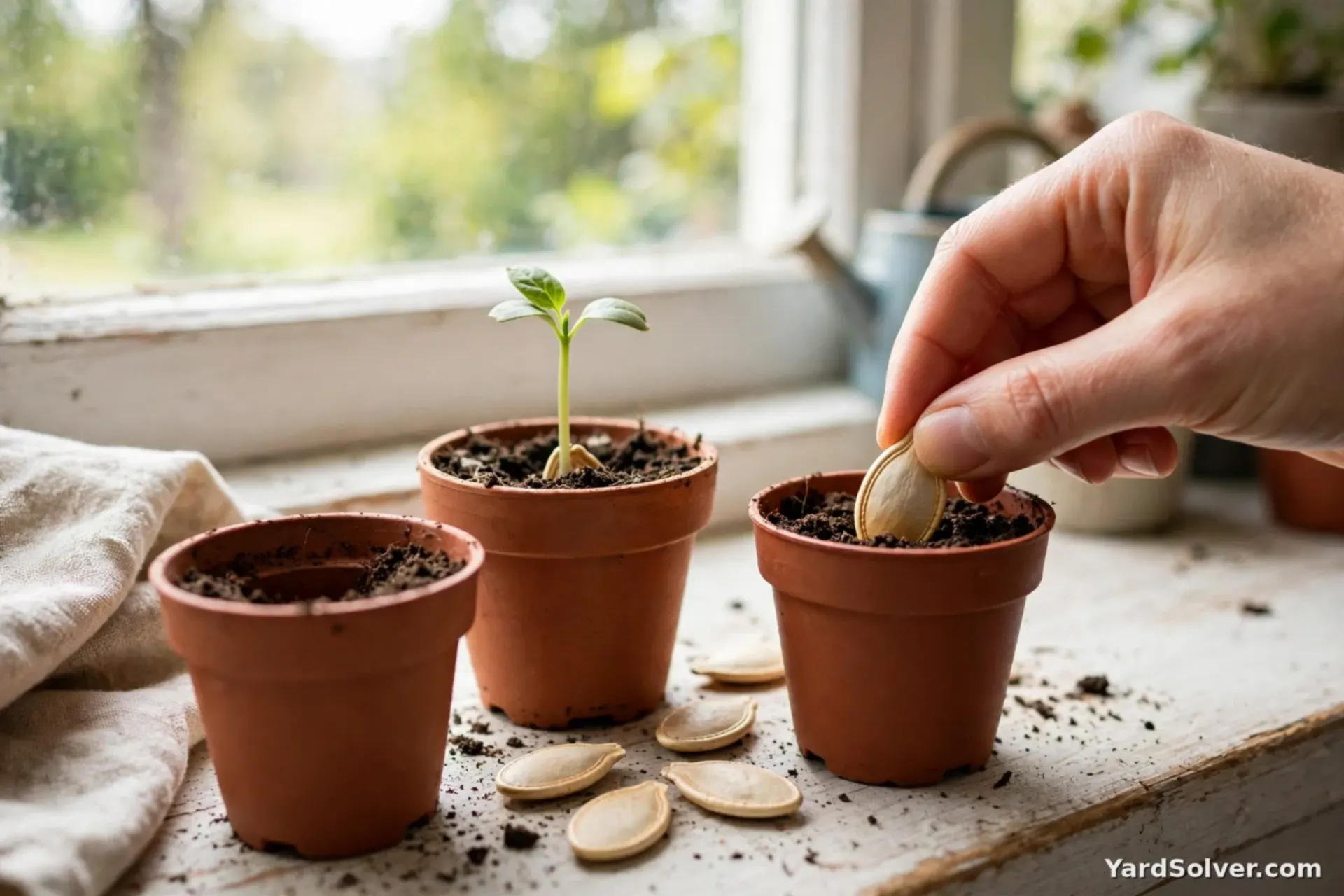
Sow indoors: 3 weeks before last frost; Sow outdoors: 1 week after last frost. All dates count from your average last spring frost — the Planting Calendar turns them into real dates for your garden. Pumpkins are a warm-season, long-season crop: sow indoors about 3 weeks before your last frost or direct sow about a week after it, timing the fruit to ripen by fall.
Step 2 — Prepare the spot
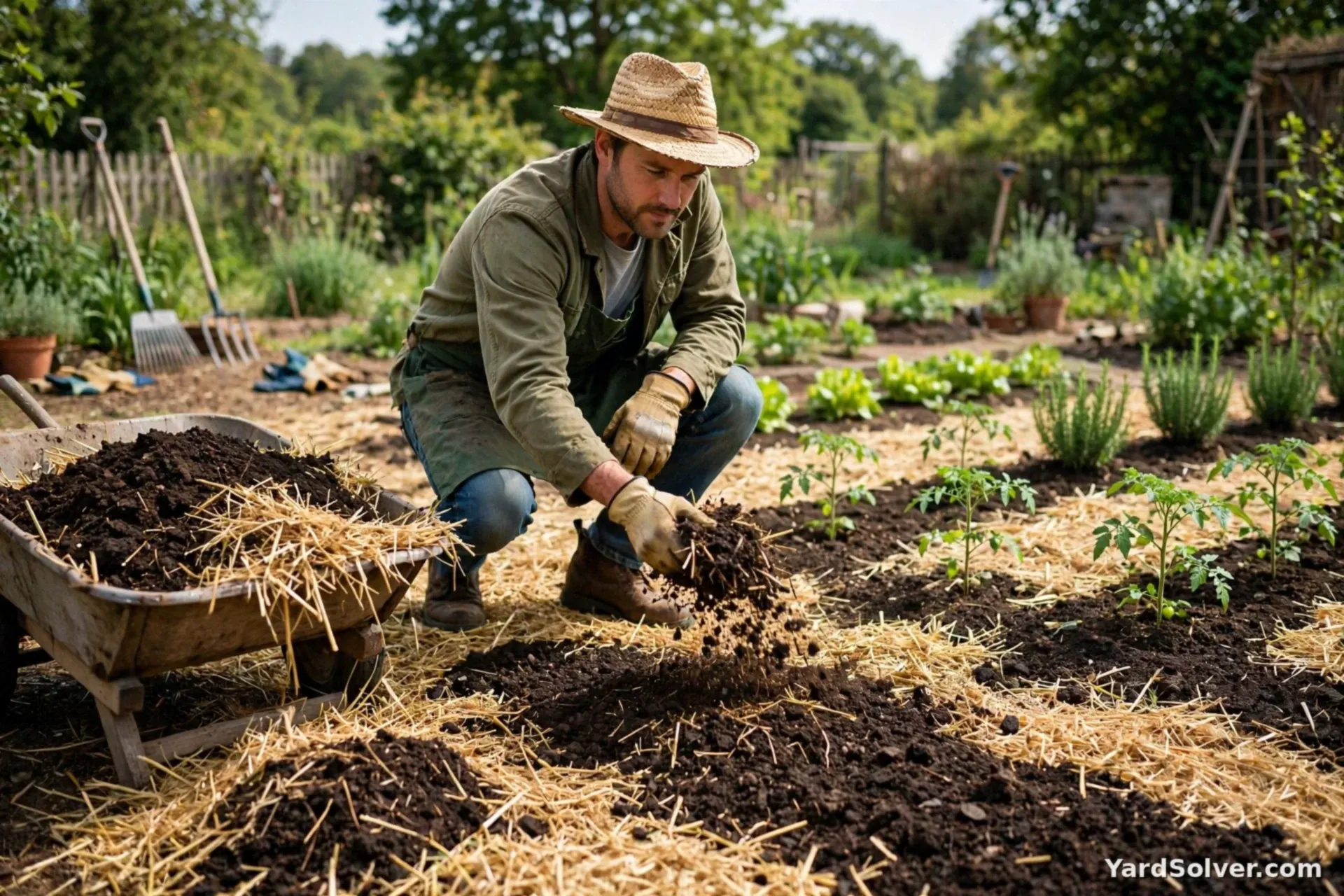
Sun: Full sun. Rich soil with compost worked in before planting, and a mulch on top once plants are growing. For these hungry, thirsty crops, steady moisture matters more than anything else. Work out how much you need with the Garden Mix Calculator or the Raised Bed Soil Calculator.
Step 3 — Sow and plant out
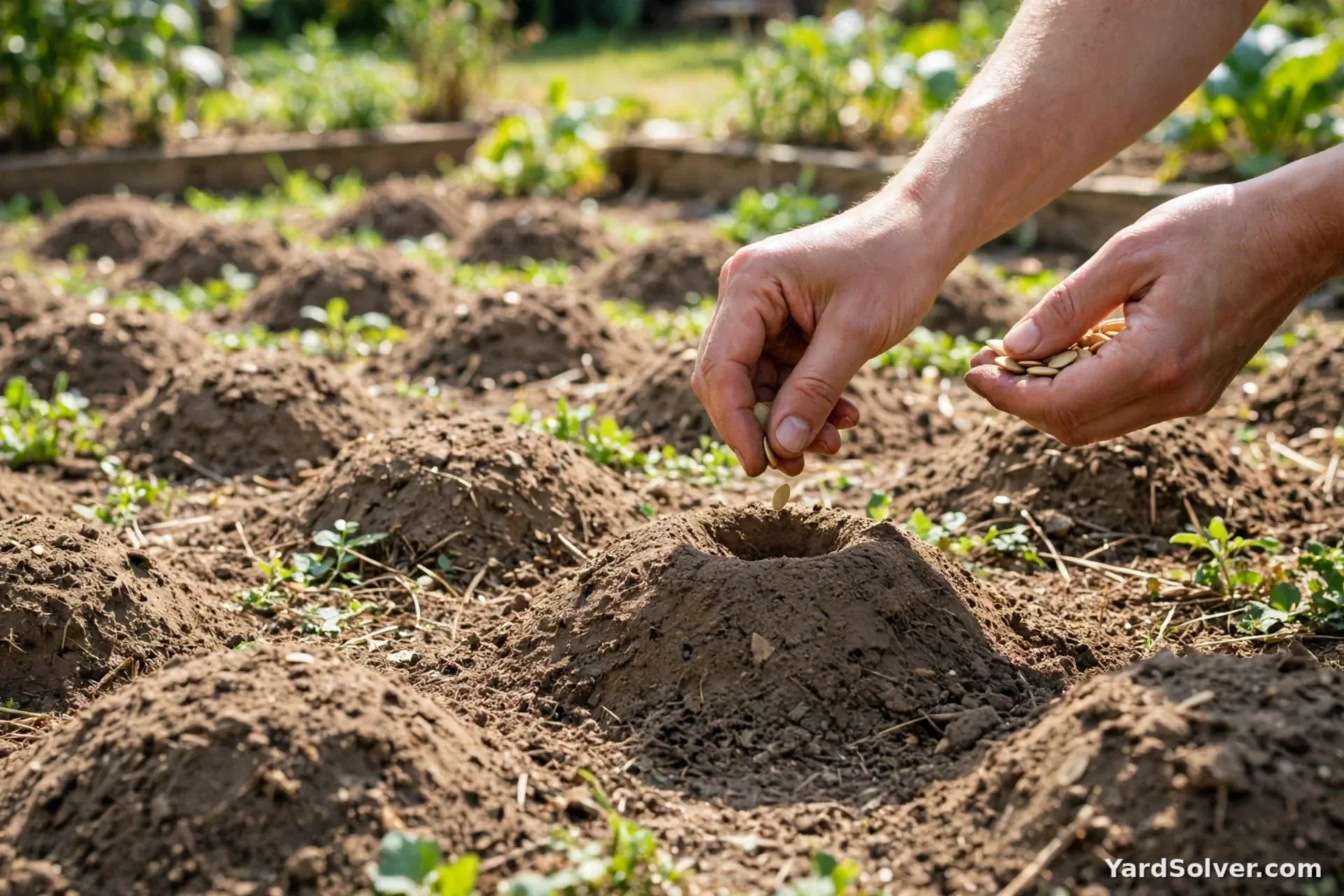
Start indoors 3 weeks before last frost at 1 in deep, or sow outdoors 1 week after last frost; plants finish spaced 36–60 in apart. Harden off indoor-started plants before they move out for good.
Step 4 — Water and feed
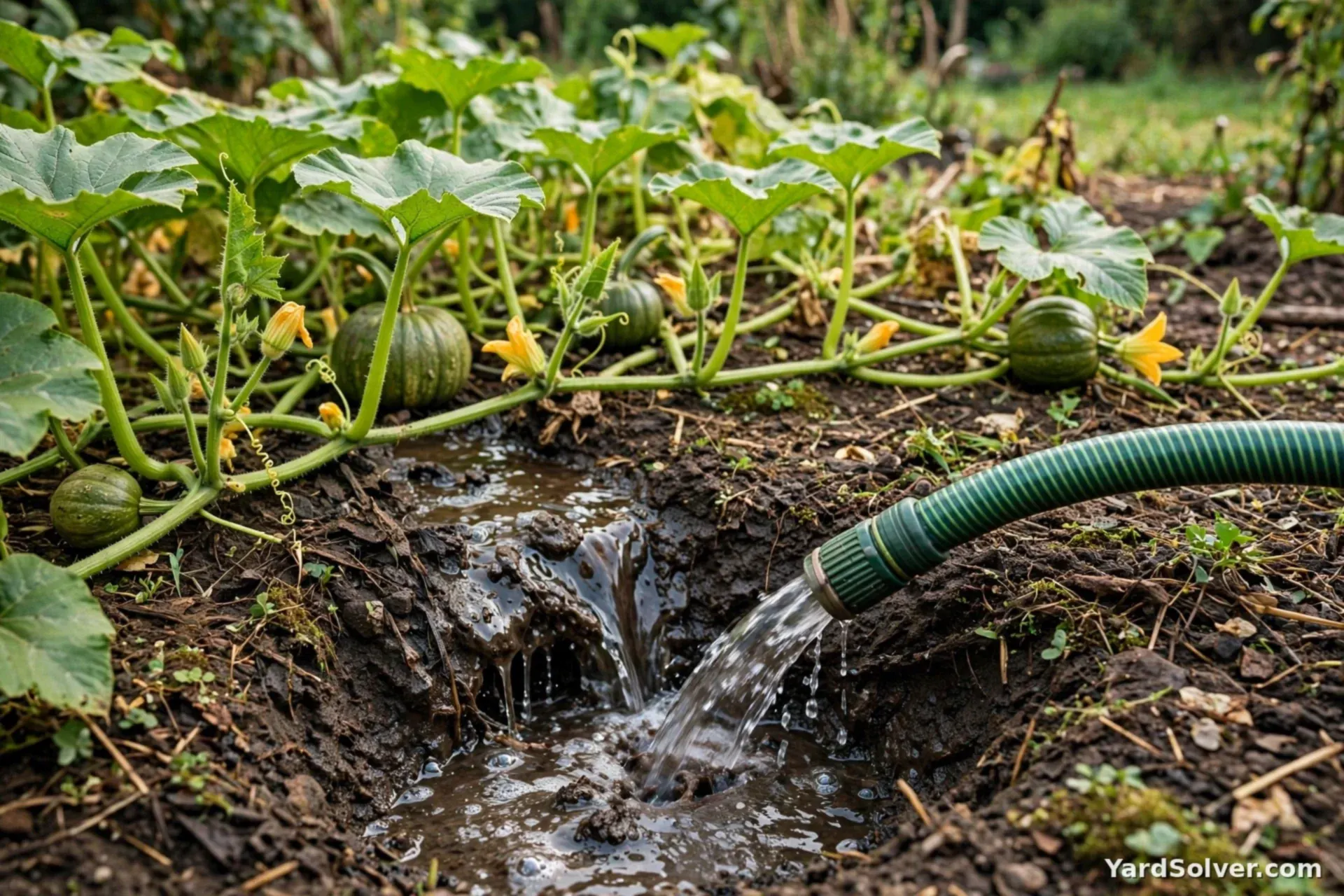
Water: Deep weekly watering at the base. First feed: around day 30 — Feed as the vines start to run, and point them toward the space you have set aside for them. The Fertilizer Calculator turns a bed size into the right amount.
Step 5 — Care and the problems to watch for
- Powdery mildew — space widely and water at the base.
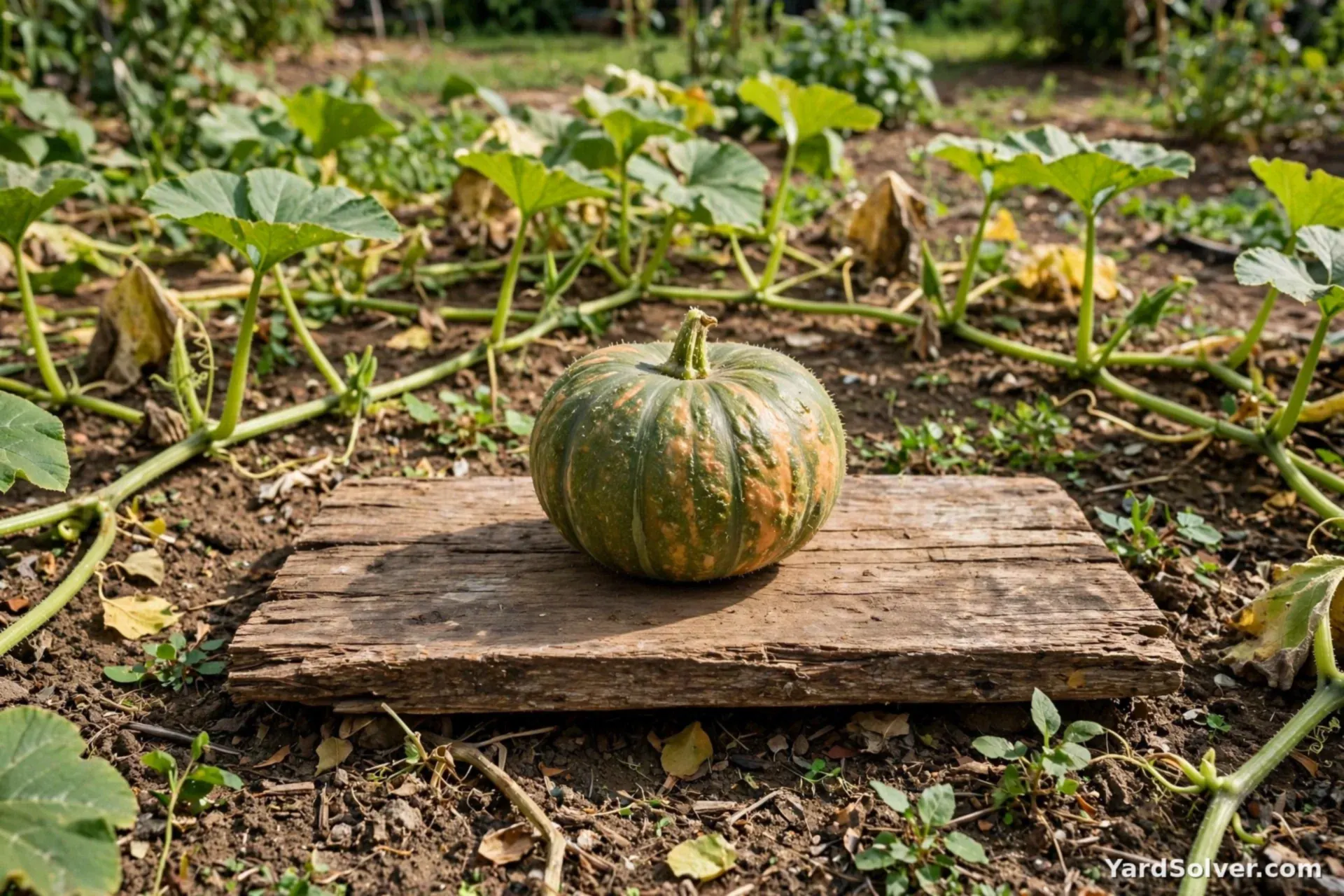
- Fruit rot on wet soil — set pumpkins on boards.
- Too many male flowers at first — female flowers follow; patience.
Take care: A pumpkin or squash that tastes very bitter is best not eaten — bitterness is the squash family's natural warning sign. Carving pumpkins are bred for size and looks, not flavour — choose a pie type if you plan to eat it.
Step 6 — Harvest
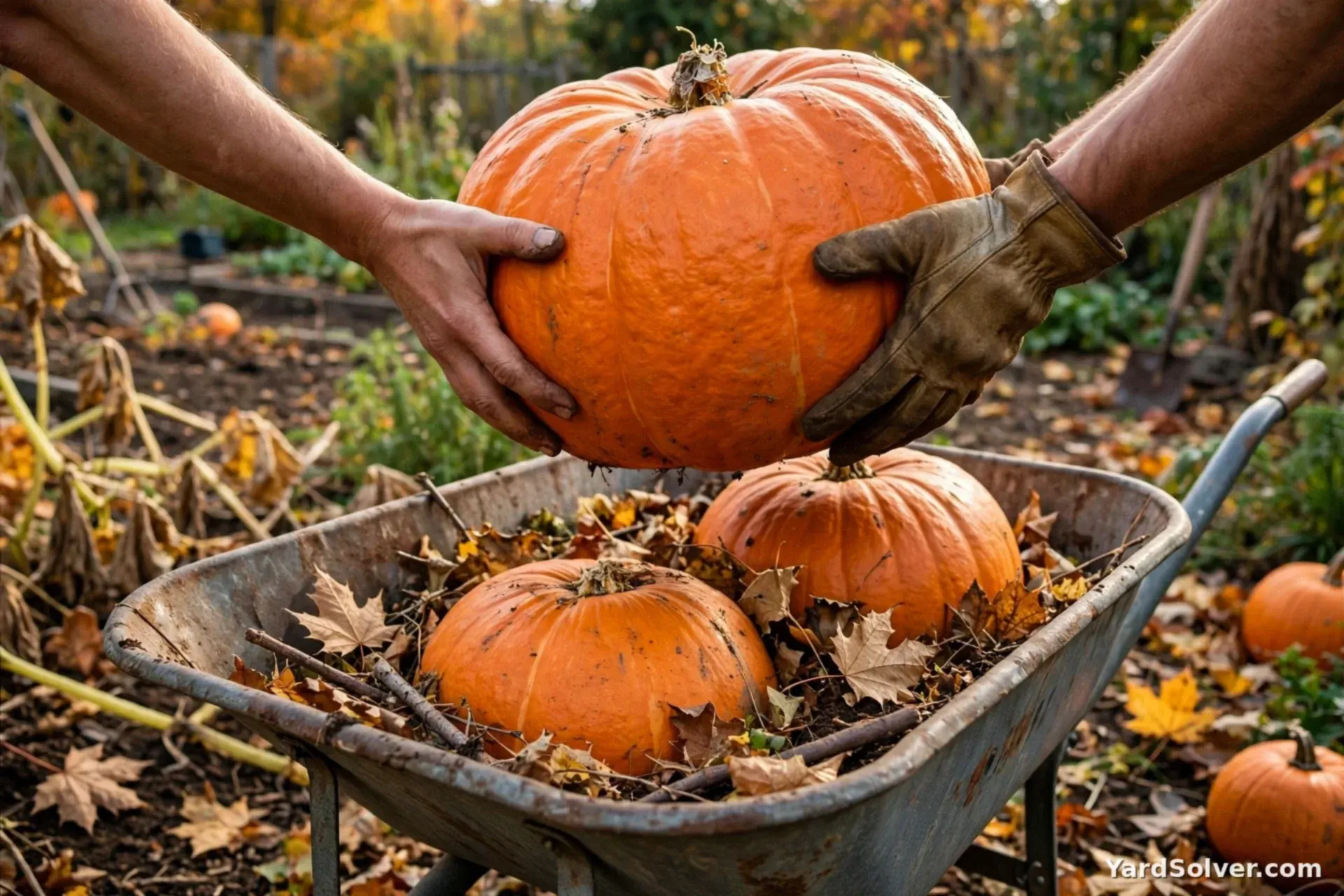
Ready in: 90–120 days. Harvest runs from about day 90 to 120 — pick when the rind is hard and fully coloured, before hard frost.
📅 Your personal Pumpkin schedule
Counted from your planting day — not a generic calendar. Day 0 is the day the seed went in the ground or the young plant went out.
Varieties worth growing
| Variety | Colour | Why gardeners like it |
|---|---|---|
| Sugar Pie (New England Pie) | Deep orange | The classic small pie pumpkin — sweet, dense flesh for baking |
| Howden | Orange | The standard field pumpkin for carving, with a sturdy stem |
| Jack Be Little | Orange | A miniature pumpkin that fits in a child's hand — for decoration |
| Rouge Vif d'Étampes (Cinderella) | Red-orange | A squat, deeply ribbed French heirloom that also eats well |
| Atlantic Giant | Pale orange | The record-breaking giant type — needs huge space and a long season |
Good for you — and take care
Benefits
- Very high in vitamin A, from the deep orange flesh
- Provides vitamin C and potassium
- Provides fibre for good digestion
- The roasted seeds provide protein, fibre and minerals like magnesium and zinc
- Filling and satisfying for its calories
Take care
- A pumpkin or squash that tastes very bitter is best not eaten — bitterness is the squash family's natural warning sign
- Carving pumpkins are bred for size and looks, not flavour — choose a pie type if you plan to eat it
A little history — and one good fact
Pumpkins are among the oldest farmed plants in the Americas, grown by Indigenous farmers together with corn and beans thousands of years ago. Their seeds travelled to Europe in the 1500s and pumpkins spread around the world. In North America the big orange pumpkin became a fall tradition, though most of the world grows pumpkins mainly for the kitchen.
Fun fact: Champion giant pumpkins have grown heavier than a small car — the world record is well over a thousand kilos.
Keep going
Guides: Companion Planting Basics · How to Prepare Garden Soil in Spring · How to Protect Plants from Frost
Calculators: Plant Spacing Calculator · Seed Calculator · Fertilizer Calculator · Garden Mix Calculator
More vegetables: Tomato · Pepper · Cucumber
← Back to the Plant Library · Get your personal planting dates
Questions people ask
When do I plant pumpkin?
Count from your average last spring frost: sow indoors 3 weeks before last frost; sow outdoors 1 week after last frost. Pumpkins are a warm-season, long-season crop: sow indoors about 3 weeks before your last frost or direct sow about a week after it, timing the fruit to ripen by fall.
How far apart do I space pumpkin?
Space plants 36–60 in apart, with seed sown 1 in deep. Sun: full sun.
When is pumpkin ready to harvest?
90–120 days. Vines roam far — give them the edge of the garden. Time sowing so fruit ripens by fall.