
Plant Library · Vegetables
🌱 How to Grow Radish
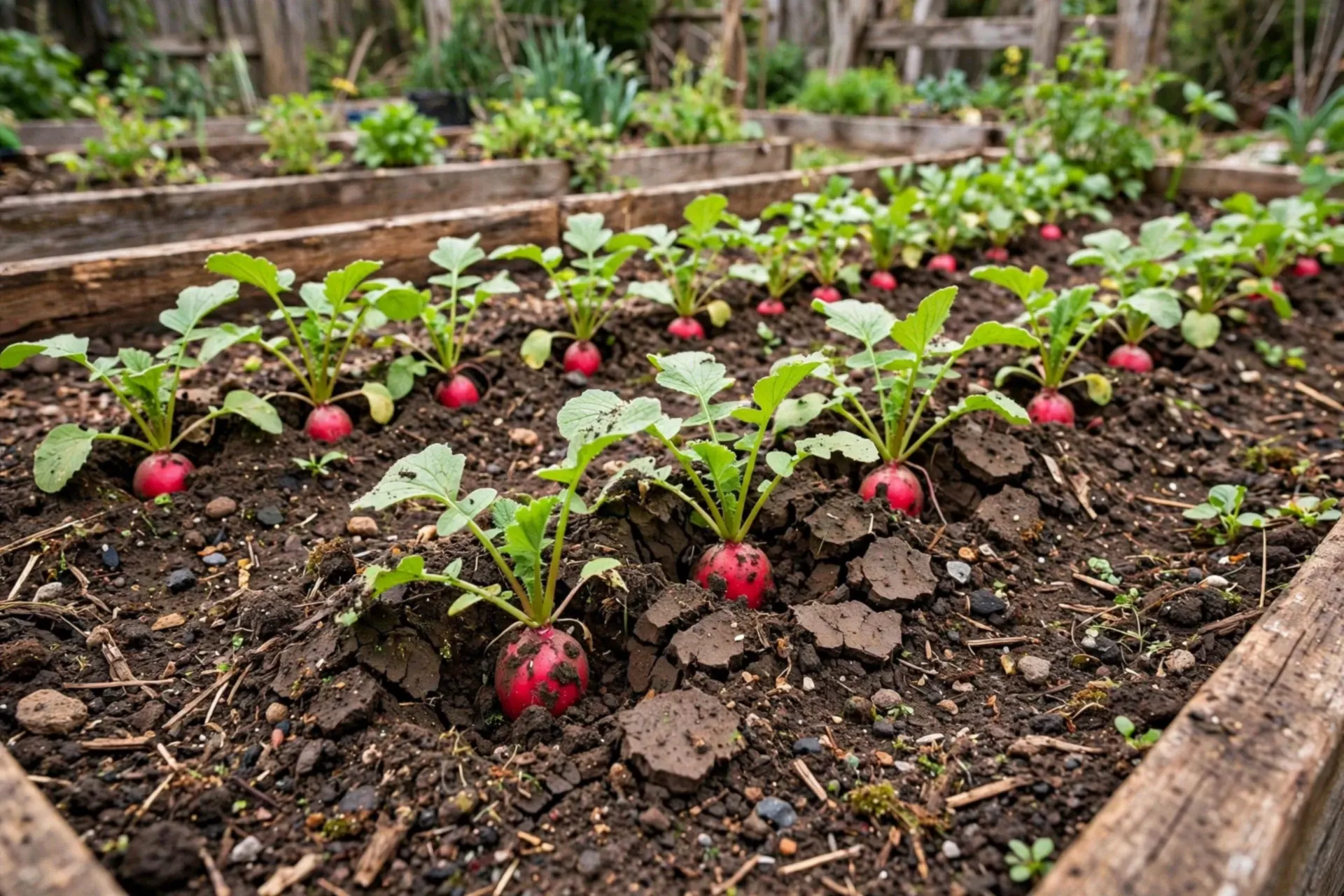
The fastest crop in the garden — sow a little every week. Radishes are the fastest crop in the garden: direct sow about 4 weeks before your last frost, keep the soil evenly moist, and sow a little every week — most types are ready in just 25 to 35 days.
Grow Radish with us — step by step
Everything for this plant is written step by step below — what to do, and exactly when. Read it through first if you like: you can grow it entirely on your own with that guide. Or start with us here — tell us your planting day and we lay out your personal schedule on this page, every next step on its own day, counted from your planting date. No guessing, no forgetting.
Step 1 — today: Sow your Radish seeds today: 1/2 in deep, spaced 1–2 in apart, in full sun. Water the row in well and keep it moist while seeds sprout.
Radish at a glance
Sow outdoors: 4 weeks before last frost
Spacing: 1–2 in · Seed depth: 1/2 in
Sun: Full sun
Water: Keep evenly moist
Harvest: 25–35 days
Timing counts from your average last spring frost — get your own dates in the Planting Calendar. Guidance follows standard extension-service practice for Canada and the US.
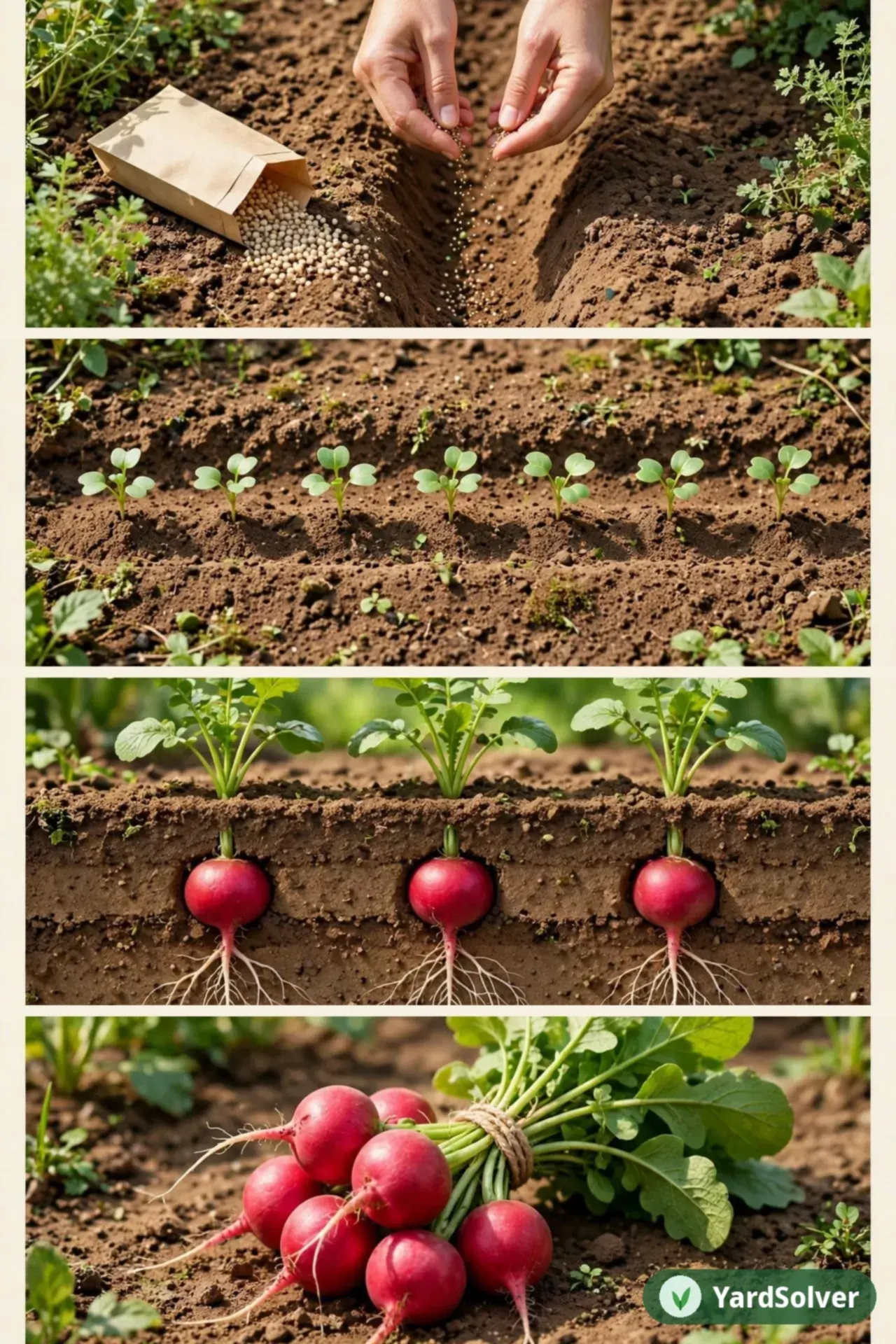
How to plant and grow radish, step by step
Step 1 — Time it right
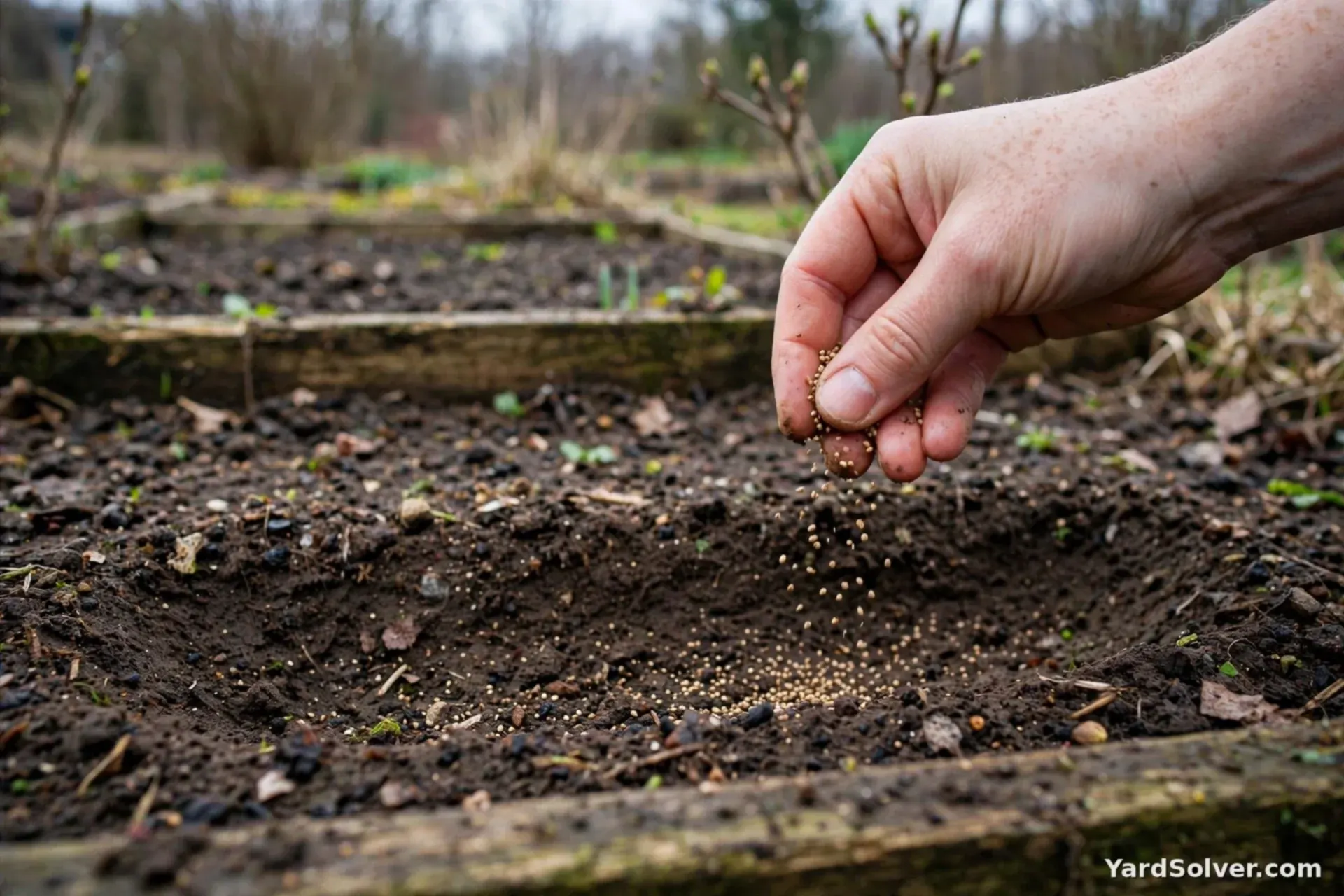
Sow outdoors: 4 weeks before last frost. All dates count from your average last spring frost — the Planting Calendar turns them into real dates for your garden. Radishes are the fastest crop in the garden: direct sow about 4 weeks before your last frost, keep the soil evenly moist, and sow a little every week — most types are ready in just 25 to 35 days.
Step 2 — Prepare the spot
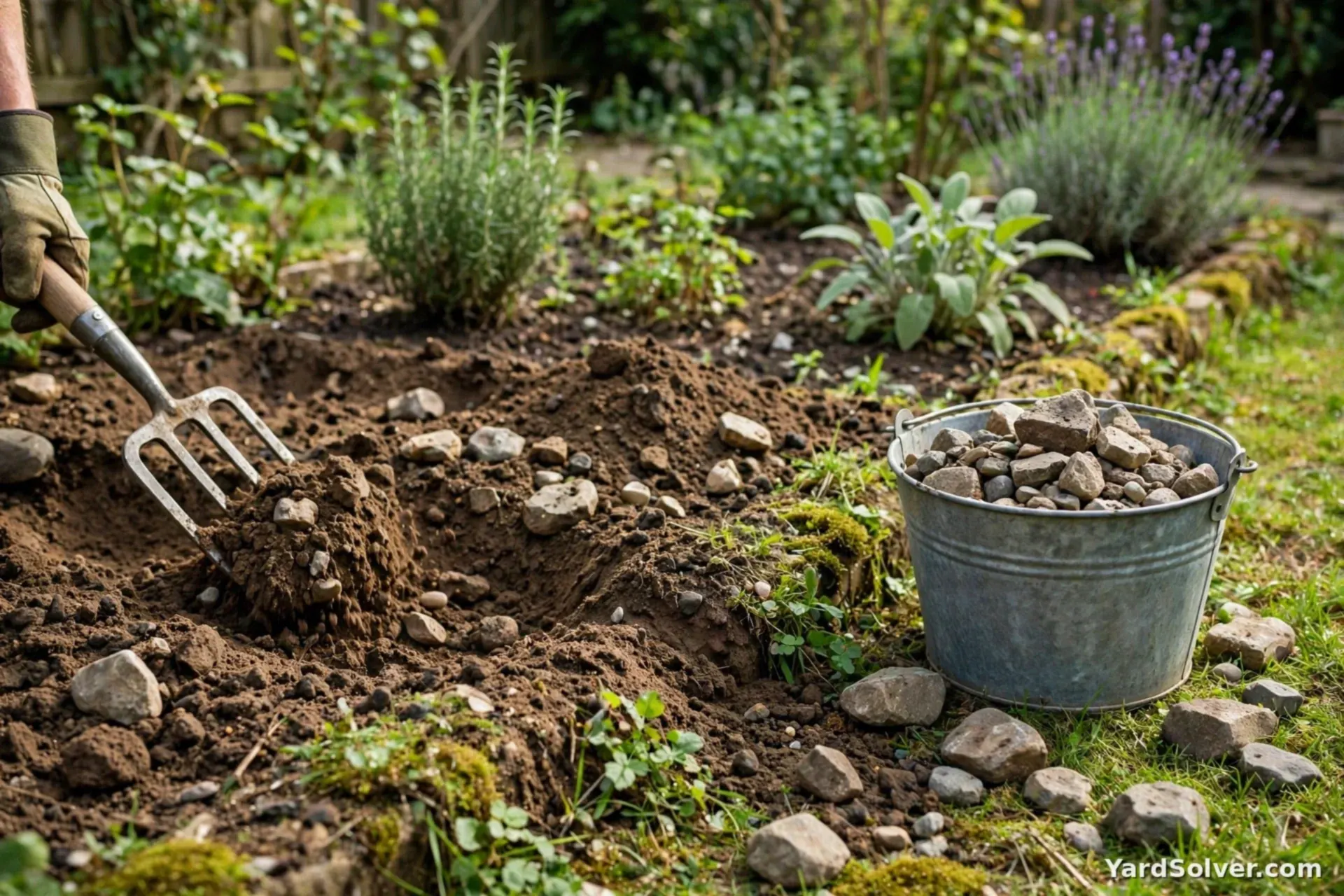
Sun: Full sun. Loose, stone-free soil is the whole secret for root crops — dig it over, pick out stones, and work in compost (never fresh manure, which forks roots). Depth and drainage matter more than feeding. Work out how much you need with the Garden Mix Calculator or the Raised Bed Soil Calculator.
Step 3 — Sow and plant out
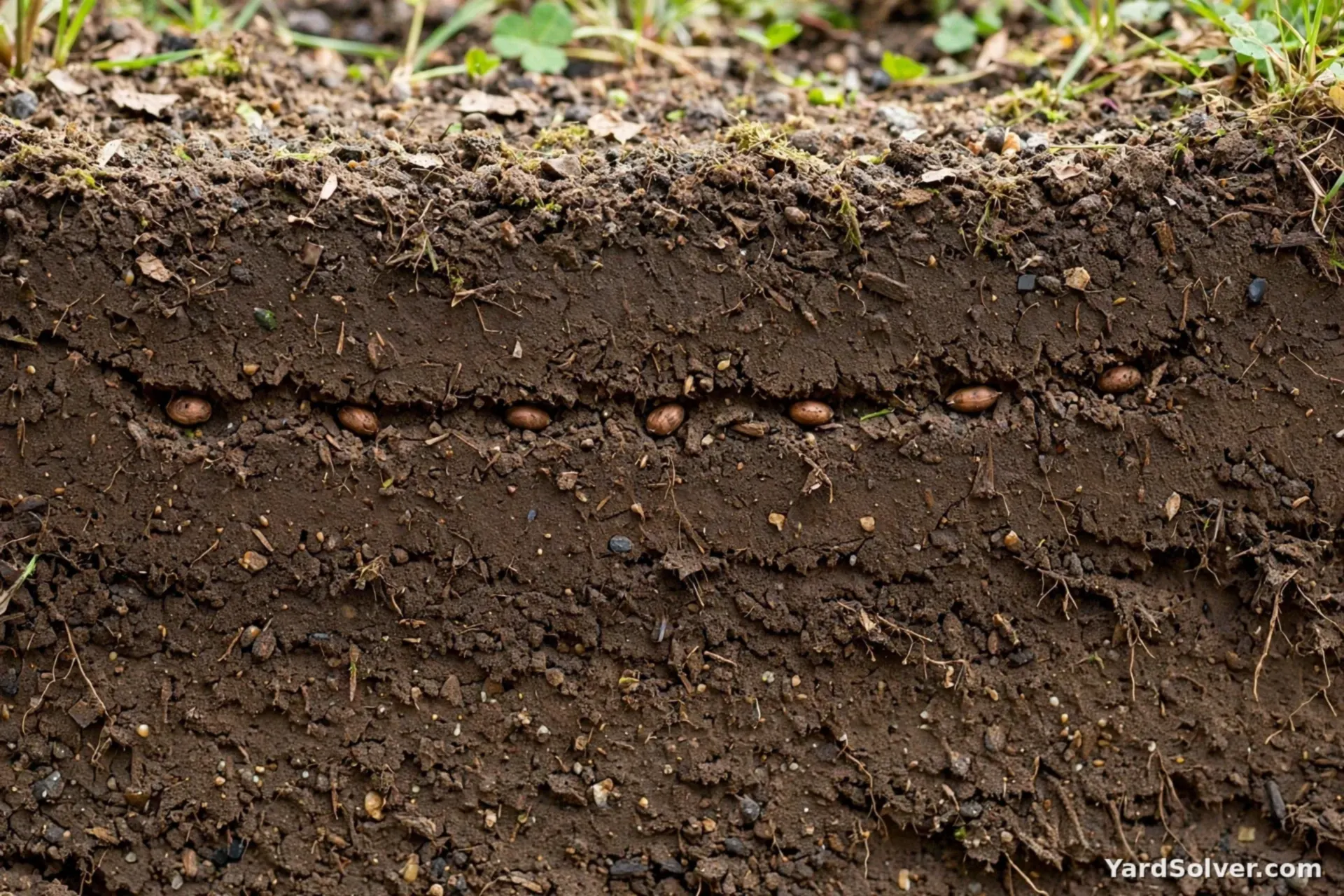
Sow directly where they will grow, 4 weeks before last frost, 1/2 in deep and 1–2 in apart (thin seedlings to that spacing once they are up). The Seed Calculator works out how much seed a bed needs.
Step 4 — Water and feed
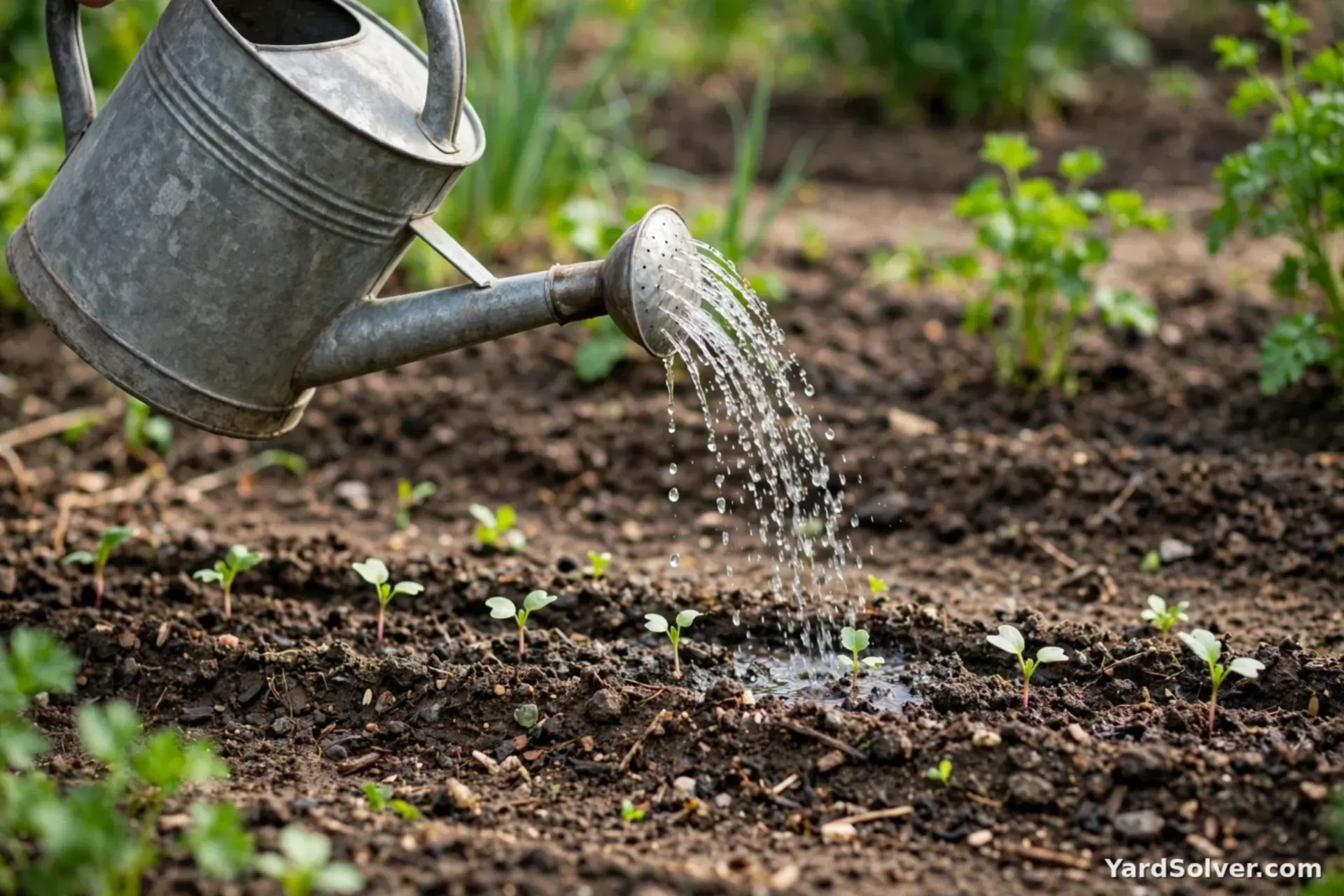
Water: Keep evenly moist. The Fertilizer Calculator turns a bed size into the right amount.
Step 5 — Care and the problems to watch for
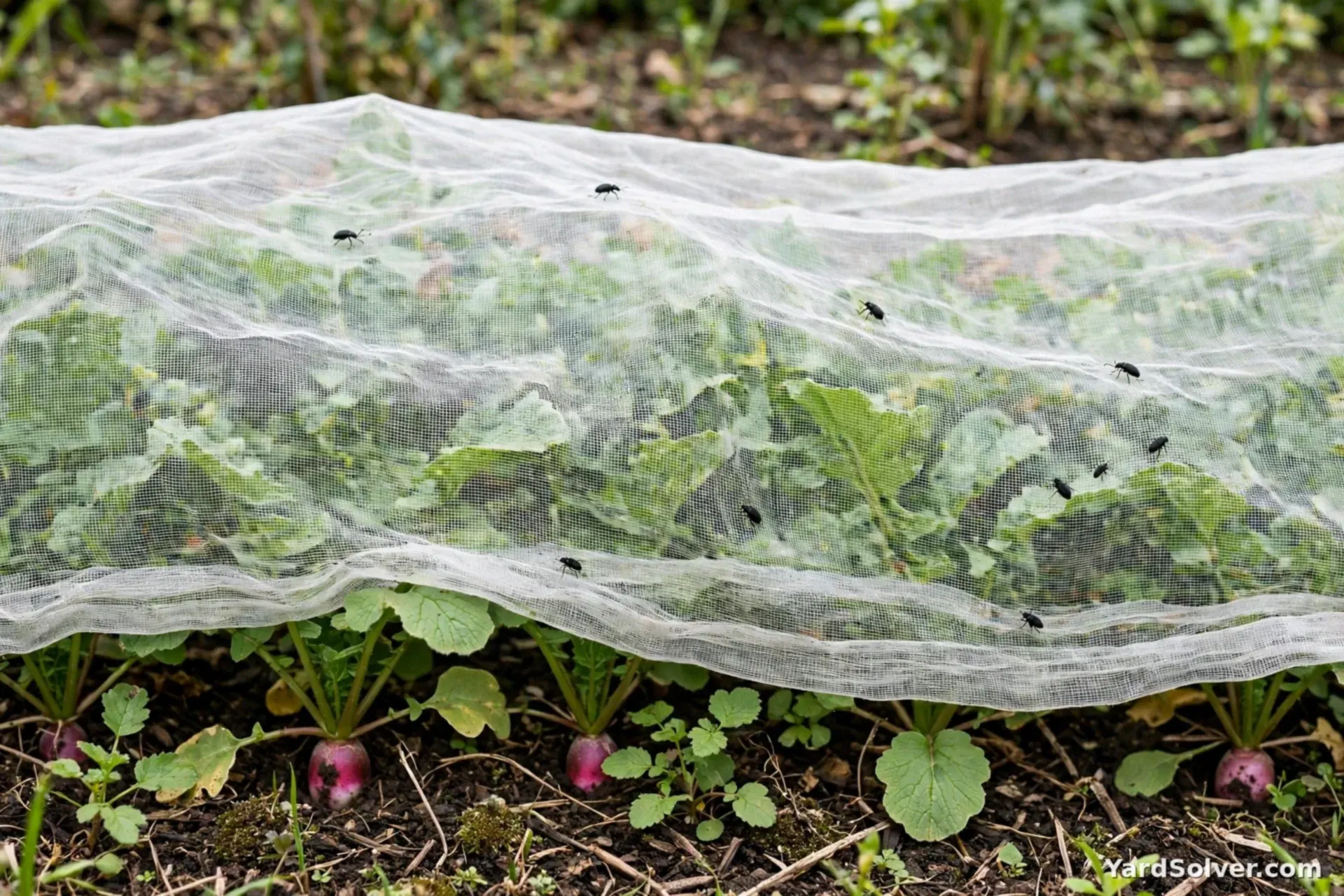
- Flea beetles — tiny shot-holes in leaves; mesh cover keeps them off.
- Woody, hot roots — radishes left too long or too dry; pick young and water steadily.
- Splitting after rain — harvest promptly.
Take care: Radishes can cause gas or bloating in some people. Some people find raw radishes sharp on an empty stomach — they are gentler eaten with other food.
Step 6 — Harvest
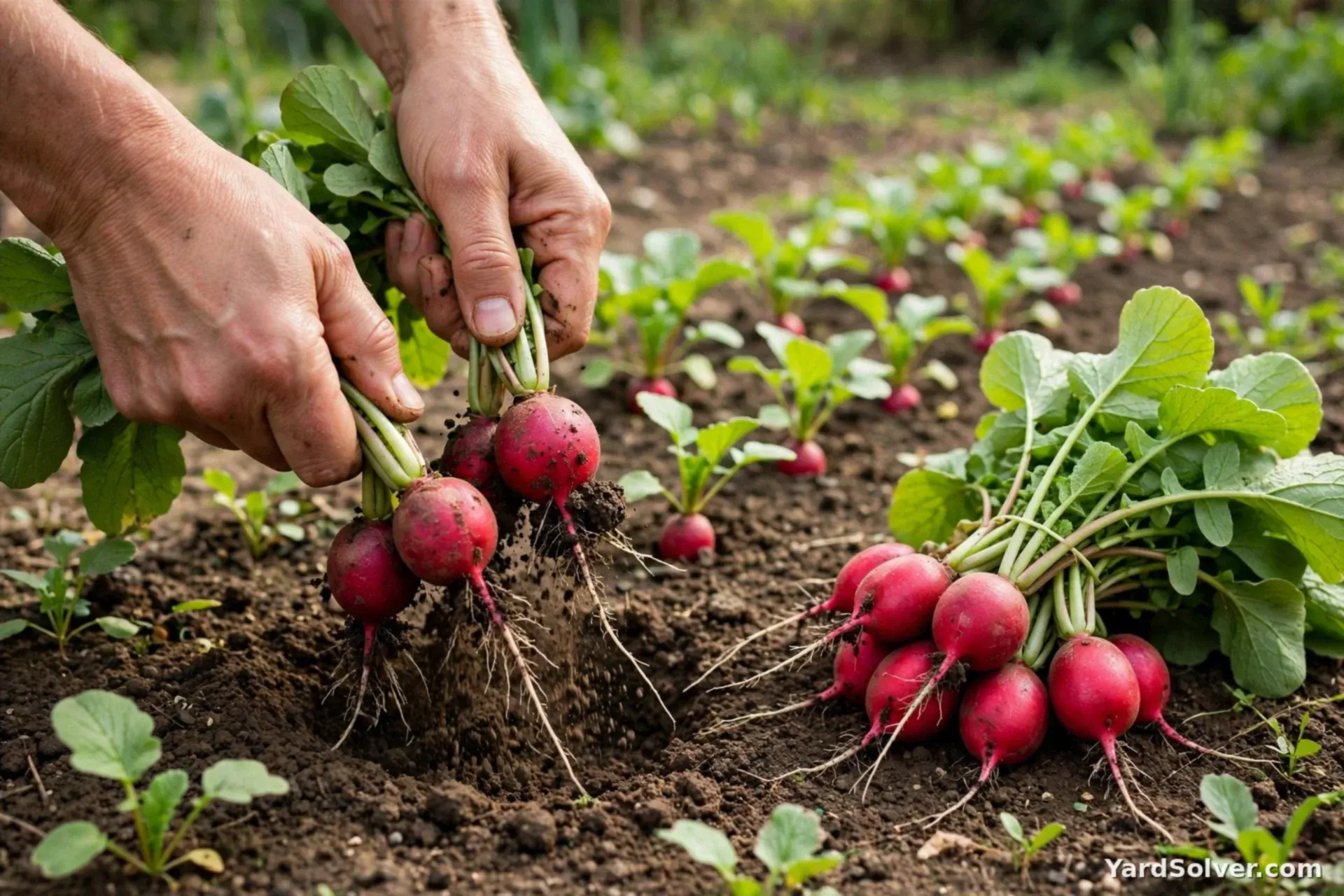
Ready in: 25–35 days. Harvest runs from about day 25 to 35 — pull them young, as old radishes turn woody and fiery, and sow another short row.
📅 Your personal Radish schedule
Counted from your planting day — not a generic calendar. Day 0 is the day the seed went in the ground or the young plant went out.
Varieties worth growing
| Variety | Colour | Why gardeners like it |
|---|---|---|
| Cherry Belle | Bright red | The classic round red radish — fast, crisp and mild |
| French Breakfast | Red with white tips | An oblong, mild type eaten for breakfast in France with butter and salt |
| Easter Egg | Mixed red, white, pink and purple | A cheerful mix of colours from one packet |
| White Icicle | White | Long, white and mild, like a small icicle |
| Daikon (Minowase) | White | The big Asian radish for pickles, soups and grating |
Good for you — and take care
Benefits
- A good source of vitamin C for the immune system
- Provides fibre and potassium
- Very low in calories with a satisfying crunch
- Mostly water, so it helps you stay hydrated
- Provides small amounts of folate and vitamin B6
Take care
- Radishes can cause gas or bloating in some people
- Some people find raw radishes sharp on an empty stomach — they are gentler eaten with other food
A little history — and one good fact
Radishes are among the oldest garden vegetables, grown in Asia and around the Mediterranean for thousands of years. They were eaten in ancient Egypt and Greece, and because they sprout and mature so fast, they were often the very first crop new gardeners — and new civilizations — relied on. The long white daikon types were bred in Asia, the small round red types in Europe.
Fun fact: One Japanese daikon type, the Sakurajima radish, can grow into a giant weighing more than a small child — over 30 kg in record cases.
Keep going
Guides: When to Start Seeds Indoors · How to Prepare Garden Soil in Spring · How to Harden Off Seedlings
Calculators: Plant Spacing Calculator · Seed Calculator · Garden Mix Calculator
More vegetables: Daikon · Pepper · Cucumber
← Back to the Plant Library · Get your personal planting dates
Questions people ask
When do I plant radish?
Count from your average last spring frost: sow outdoors 4 weeks before last frost. Radishes are the fastest crop in the garden: direct sow about 4 weeks before your last frost, keep the soil evenly moist, and sow a little every week — most types are ready in just 25 to 35 days.
How far apart do I space radish?
Space plants 1–2 in apart, with seed sown 1/2 in deep. Sun: full sun.
When is radish ready to harvest?
25–35 days. The fastest crop in the garden — sow a little every week.