
Plant Library · Vegetables
🌱 How to Grow Daikon
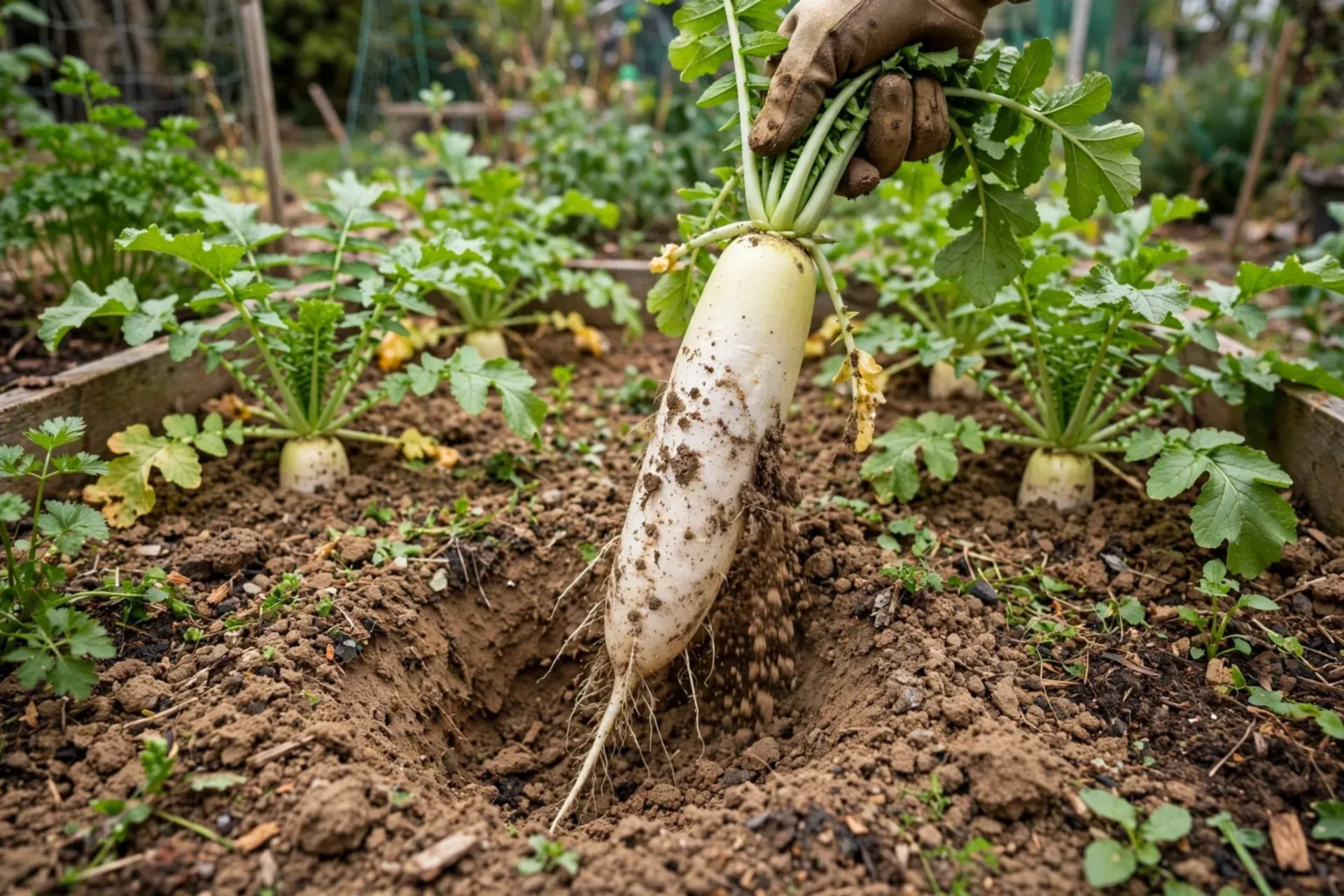
The big white radish — deep, loose soil is the whole secret. Daikon grows a long, mild, crisp root that pickles, salads and soups across Asia are built on, and it grows fast: sow outdoors 3 weeks before your last spring frost, or again in late summer for the fall crop that many growers call the sweetest of the year.
Grow Daikon with us — step by step
Everything for this plant is written step by step below — what to do, and exactly when. Read it through first if you like: you can grow it entirely on your own with that guide. Or start with us here — tell us your planting day and we lay out your personal schedule on this page, every next step on its own day, counted from your planting date. No guessing, no forgetting.
Step 1 — today: Sow your Daikon seed today, 1/2 in deep and spaced 4–6 in apart in deep, loose, stone-free soil, and water the row in well. This same schedule counts from sowing day.
Daikon at a glance
Sow outdoors: 3 weeks before last frost
Spacing: 4–6 in · Seed depth: 1/2 in
Sun: Full sun
Water: Even moisture — dry spells make woody, hot roots
Harvest: Roots ready in 50–70 days
Timing counts from your average last spring frost — get your own dates in the Planting Calendar. Guidance follows standard extension-service practice for Canada and the US.
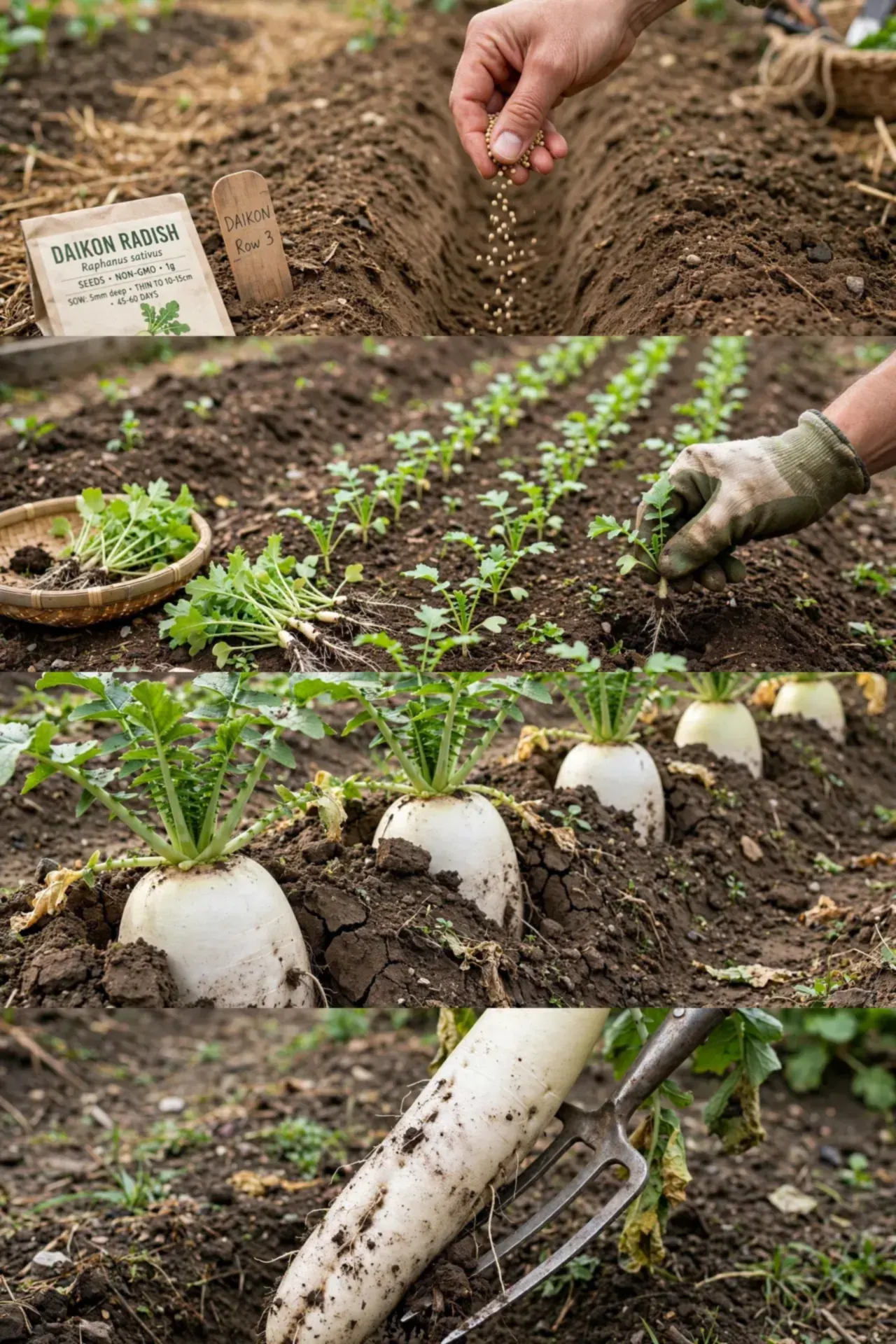
How to plant and grow daikon, step by step
Step 1 — Time it right
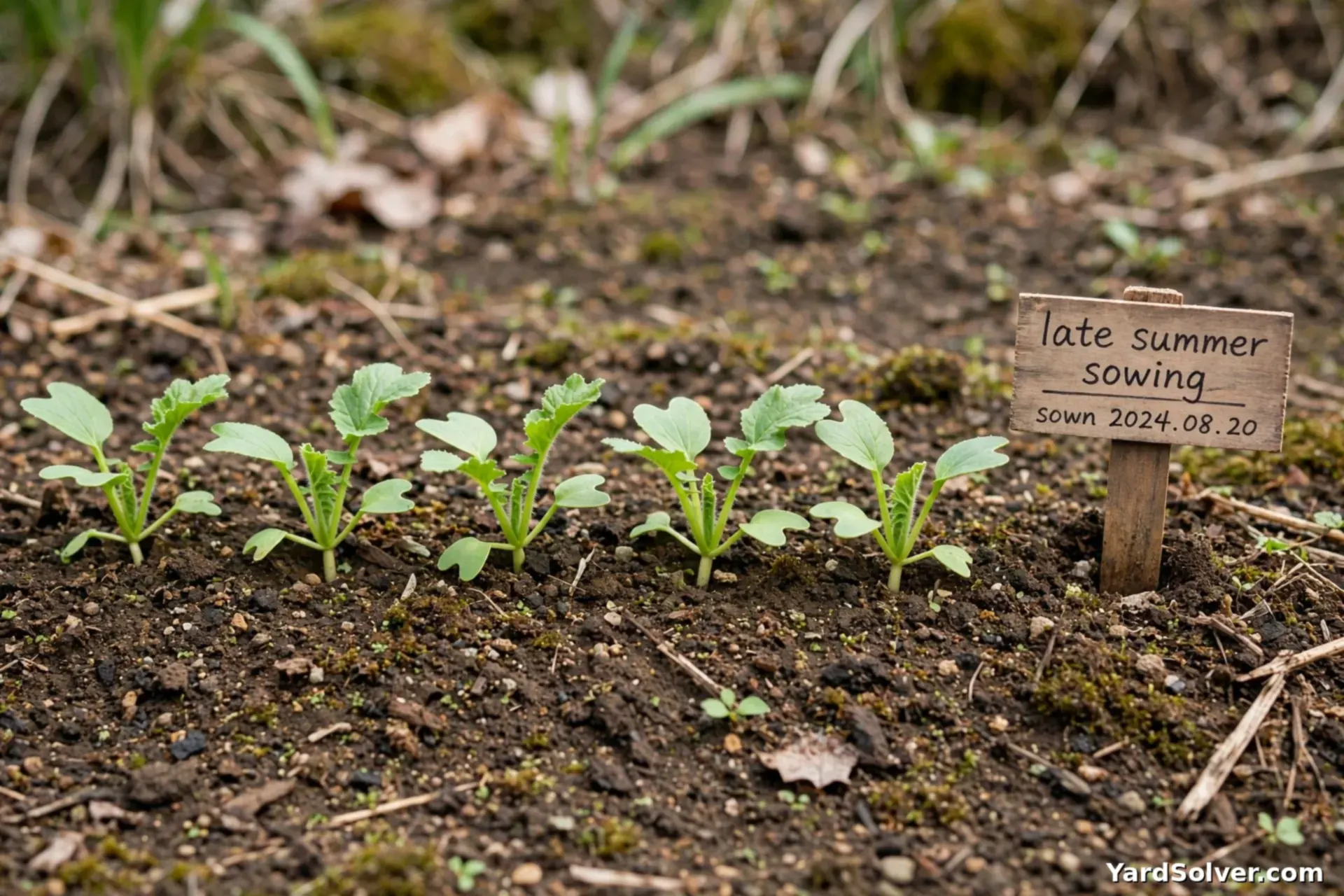
Sow outdoors: 3 weeks before last frost. All dates count from your average last spring frost — the Planting Calendar turns them into real dates for your garden. Daikon is a cool-season root: the spring crop races the warming weather, and a second sowing in late summer gives fall roots that sweeten as nights cool. What it will not forgive is a midsummer sowing — heat and long days push it to bolt (flower) instead of rooting, so keep sowings to spring and late summer.
Step 2 — Prepare the spot
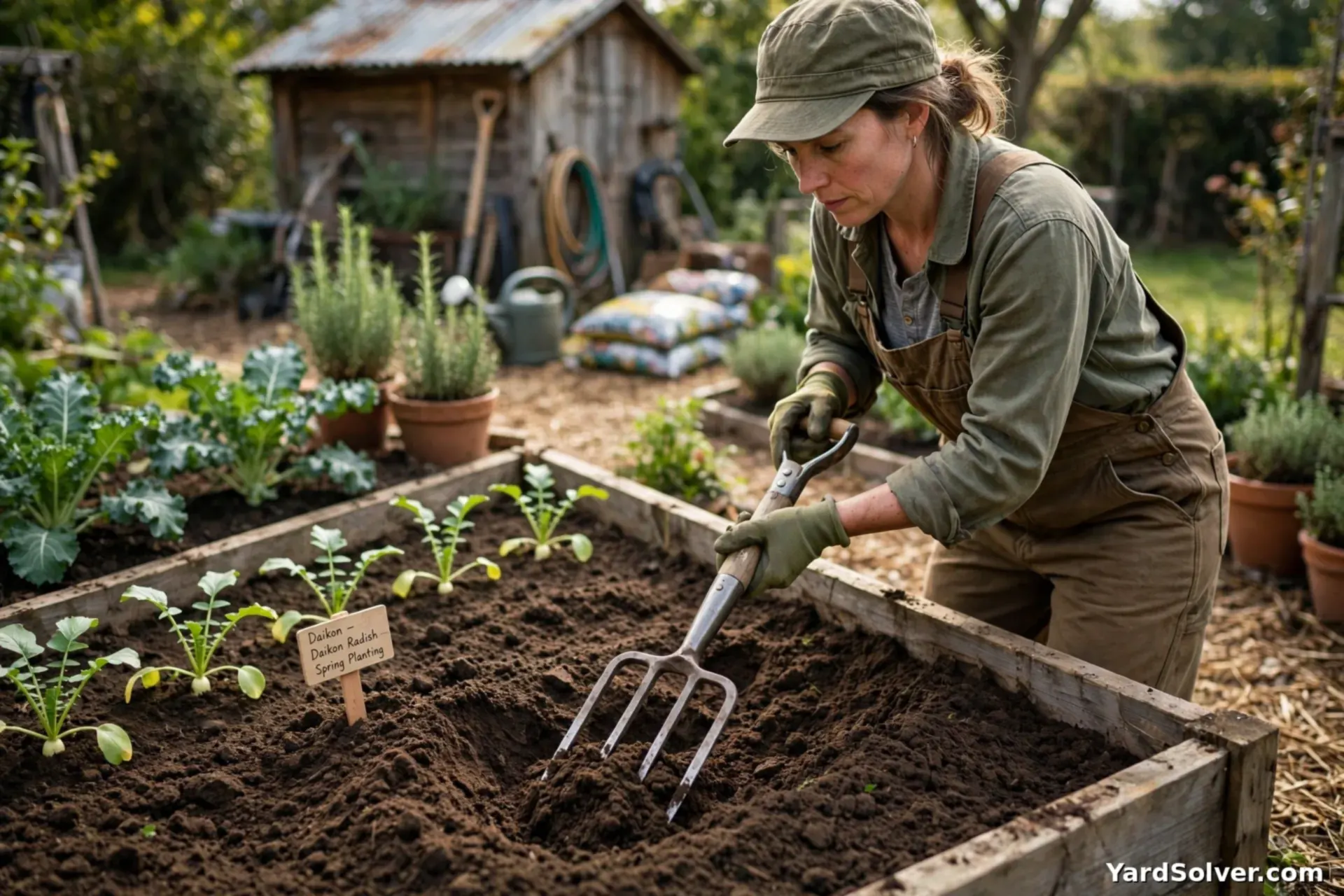
Sun: Full sun. A daikon root wants to run 12 inches or more straight down, so fork the bed deeply and pick out stones, clods and old roots as you go — every obstruction is a forked root in the making. Work compost into the top few inches, but skip fresh manure, which forks roots too. Heavy clay can still grow daikon if it is forked loose and topped with compost; a deep container (12 inches plus) works as well. Work out how much mix you need with the Garden Mix Calculator or the Raised Bed Soil Calculator.
Step 3 — Sow
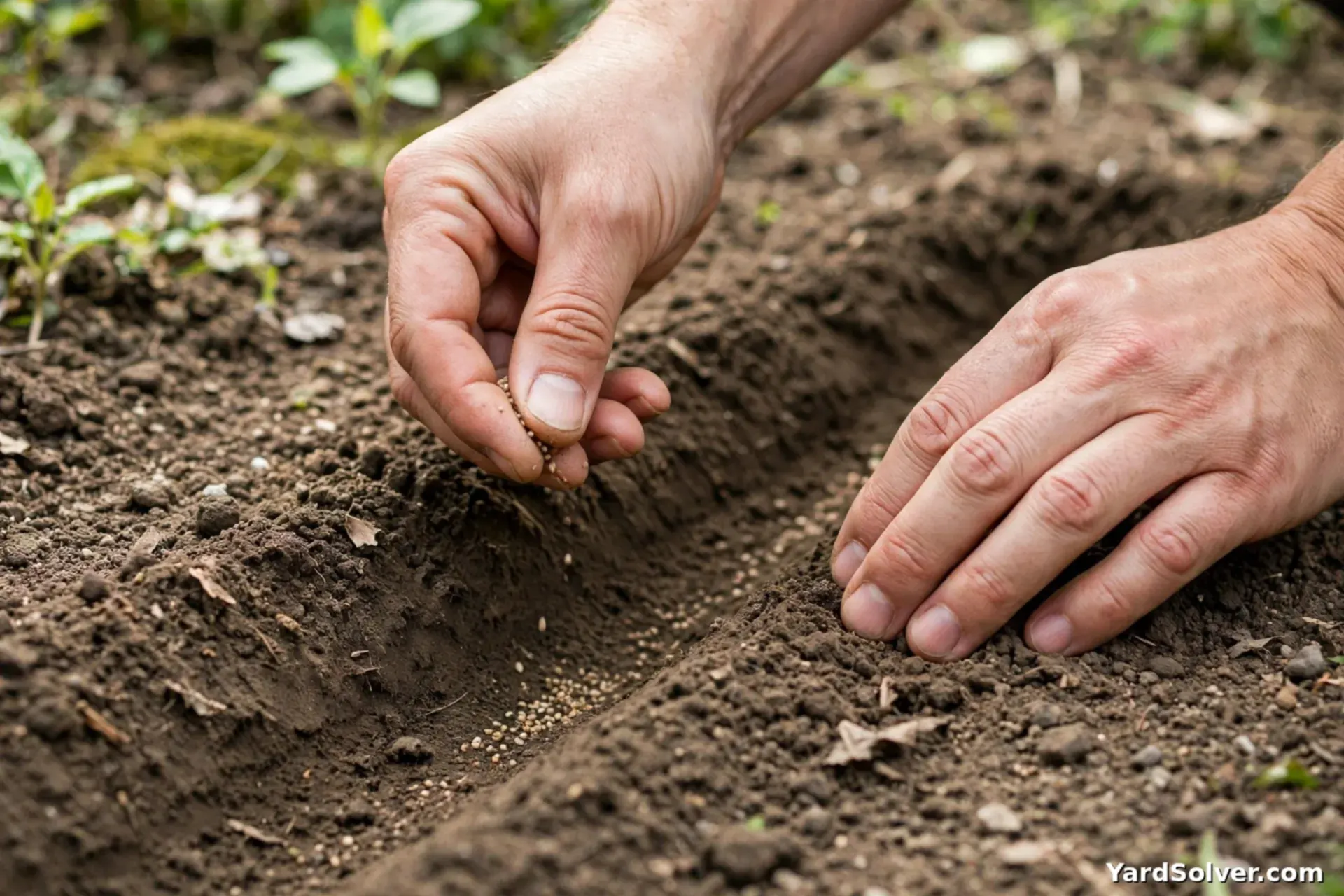
Sow seed 1/2 in deep in rows, a couple of seeds per inch, and water the row in. Daikon is always direct-sown — it hates transplanting, because a disturbed taproot forks. Seedlings appear within a week; thin them to about 2 in apart at day 7, then to the final 4–6 in spacing at about three weeks. Thinning feels wasteful and is non-negotiable: crowded daikon stay as thin as pencils. The Plant Spacing Calculator turns that spacing into plants-per-bed, and the thinnings are good eating — the young leaves go straight into salads.
Step 4 — Water and feed
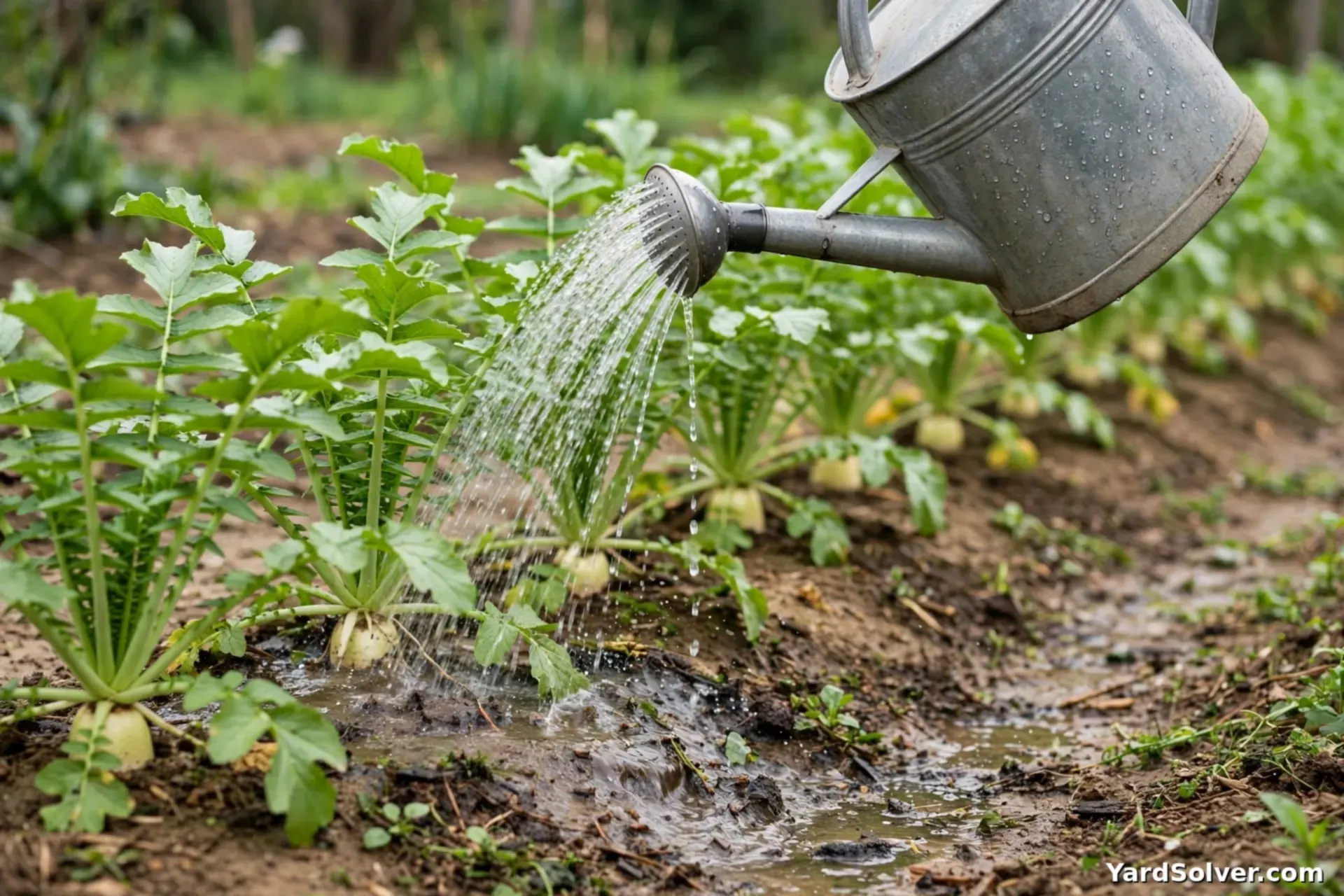
Water: Even moisture — dry spells make woody, hot roots. Keep the bed steadily moist from sowing to harvest; a mulch once the tops are up holds that moisture and keeps the shoulders cool. First feed: around day 21, at the final thinning — a light balanced feed is plenty, because daikon is a fast, light feeder and rich feeding grows tops at the expense of roots. The Fertilizer Calculator turns a bed size into the right amount.
Step 5 — Care and the problems to watch for
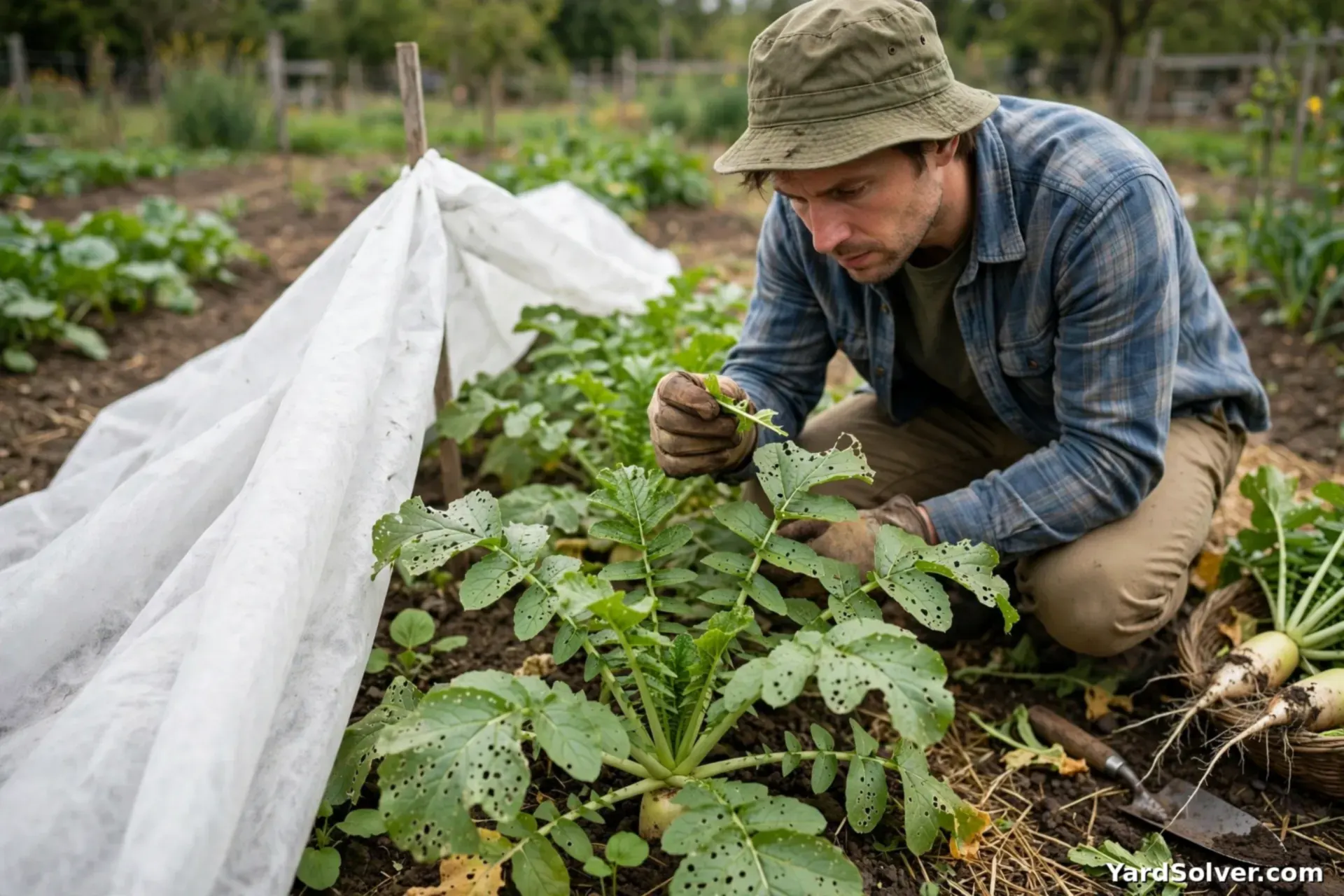
- Flea beetles — tiny shot-holes in the first leaves; a floating row cover from sowing day keeps them off entirely.
- Forked roots — stones, clods or compacted soil in the root's path; the fix is next bed's preparation, not this crop's.
- Bolting — a flower stem instead of a root, from heat and long days; sow in spring or late summer, never midsummer.
Step 6 — Harvest
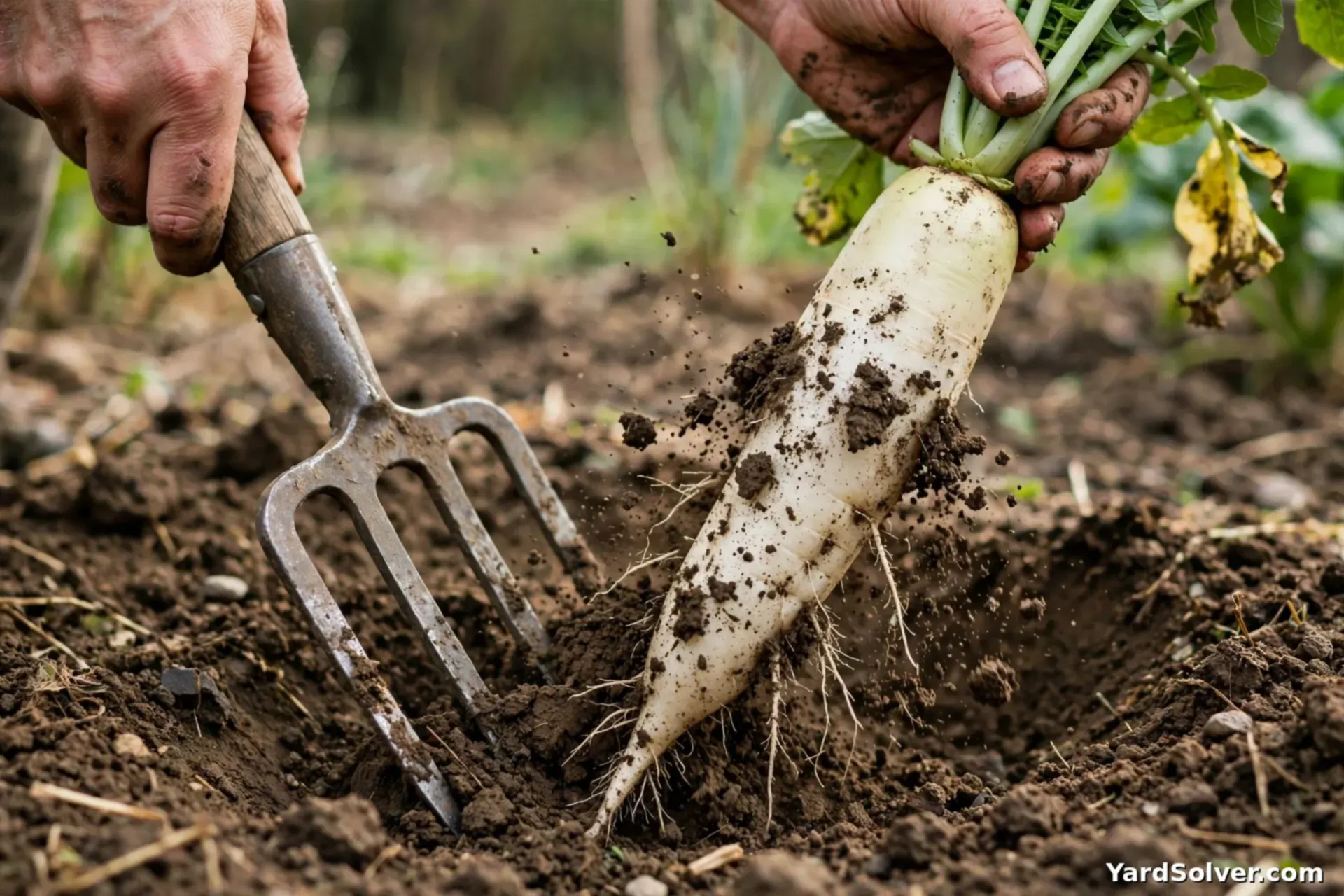
Ready in: Roots ready in 50–70 days. Harvest runs from about day 50 to 70 — loosen each root with a fork pushed in beside it, then pull steadily by the tops; a long daikon pulled from tight soil snaps in half. Shoulders pushing up out of the soil are normal and a useful gauge: harvest at the size the variety promises, because roots left too long turn woody and fiercely hot. The greens are edible too — cook them like turnip tops. Fall roots hold in the ground longest; lift the rest before hard freezes.
Problems, pests & diseases — diagnosis and fixes
- Forked, stunted or hairy roots: stones, clods, fresh manure or a compacted layer in the root's path — the root splits around every obstacle. Fix: nothing rescues this crop's shape; fork the next bed 12 inches deep, stone-free, and keep fresh manure out of it.
- Tiny round shot-holes in the seedling leaves: flea beetles, worst on young plants in warm spells. Fix: cover new sowings with floating row cover from day one; established plants usually outgrow the damage.
- Tunnels and brown scarring in the root, small white maggots: root maggots (cabbage root fly), a brassica-family pest. Fix: row cover from sowing, rotate daikon and other brassicas to fresh ground each year, and remove infested roots rather than composting them.
- A flower stem shoots up instead of a root swelling: bolting, triggered by heat and long summer days. Fix: pull bolted plants (the root is already woody) and re-sow in late summer for the fall crop this plant prefers.
- Roots woody, pithy and fiercely hot: left in the ground too long, or grown through dry spells. Fix: harvest in the 50–70 day window and keep moisture even; fall-grown roots sweeten as nights cool.
- Swollen, distorted roots and stunted, wilting tops: clubroot, a soil disease of the brassica family that persists for years. Fix: remove infected plants with their soil, lime acid beds toward pH 7, and keep all brassicas — daikon, radish, cabbage, turnip — off that ground for several years.
- Holes in leaves with green caterpillars beneath: cabbage white caterpillars, which treat daikon tops like any brassica leaf. Fix: pick them off by hand, or net the row; the root below is unharmed.
📅 Your personal Daikon schedule
Counted from your planting day — not a generic calendar. Day 0 is the day the seed went in the ground or the young plant went out.
Varieties worth growing
| Variety | Colour | Why gardeners like it |
|---|---|---|
| 'Minowase' | White | The classic long daikon — roots to 16 inches or more, mild and crisp, the pickling and soup standard |
| 'Miyashige' | White | A thick, blunt-ended type that stores well and suits the fall sowing best |
| Watermelon radish (daikon type) | Green-white skin, pink-red flesh | A round daikon type that cuts open to a watermelon-pink centre — the salad showpiece |
| 'Taichung' | White | A tropical, heat-tolerant type bred for warm climates where Japanese types bolt |
| Korean short-round types | White | Short, round, dense roots in the Korean style (the mu of kimchi and soups) — choose where soil is shallower |
Good for you — and take care
Benefits
- A good source of vitamin C, especially eaten raw in salads and pickles
- Provides fibre and is very low in calories for its size
- Both root and greens are edible — two crops from one sowing
- The deep taproot breaks up and aerates heavy soil as it grows, leaving the bed looser for the next crop
- Fast and generous: 50–70 days from sowing to a root that can feed a family meal
Take care
- Rotate the ground: daikon is a brassica, and clubroot and root maggots build up where brassicas repeat — give the bed a break between brassica crops
- Roots left too long turn woody and hot — harvest inside the window, not after it
- Rich fresh manure forks the roots: feed the bed with compost, and keep manure for other crops
A little history — and one good fact
Daikon — Japanese for “big root” — was bred in Japan from radishes that arrived from China over a thousand years ago, and became a foundation vegetable across East and South Asia: grated raw, simmered in soups, fermented into pickles like takuan and the mu of Korean kimchi. It reached Western gardens late compared with the small salad radish, but growers who try it rarely go back — nothing else gives so much crisp root from so little bed.
Fun fact: A daikon can be genuinely enormous: the Sakurajima type grown on the volcanic soil of Kagoshima is one of the largest radishes in the world, with round roots that can outweigh a small child.
Keep going
Guides: Companion Planting Chart · How to Get Rid of Aphids · Container Gardening for Beginners
Calculators: Plant Spacing Calculator · Seed Calculator · Fertilizer Calculator
More vegetables: Rutabaga · Radish · Turnip
← Back to the Plant Library · Get your personal planting dates
Questions people ask
When do I plant daikon?
Count from your average last spring frost: sow outdoors 3 weeks before last frost. The big white radish — deep, loose soil is the whole secret. Sow a second crop in late summer for fall roots, which are often the sweetest of the year.
How far apart do I space daikon?
Space plants 4–6 in apart, with seed sown 1/2 in deep. Sun: full sun.
When is daikon ready to harvest?
Roots ready in 50–70 days. The big white radish — deep, loose soil is the whole secret.