
Plant Library · Vegetables
🌱 How to Grow Rhubarb
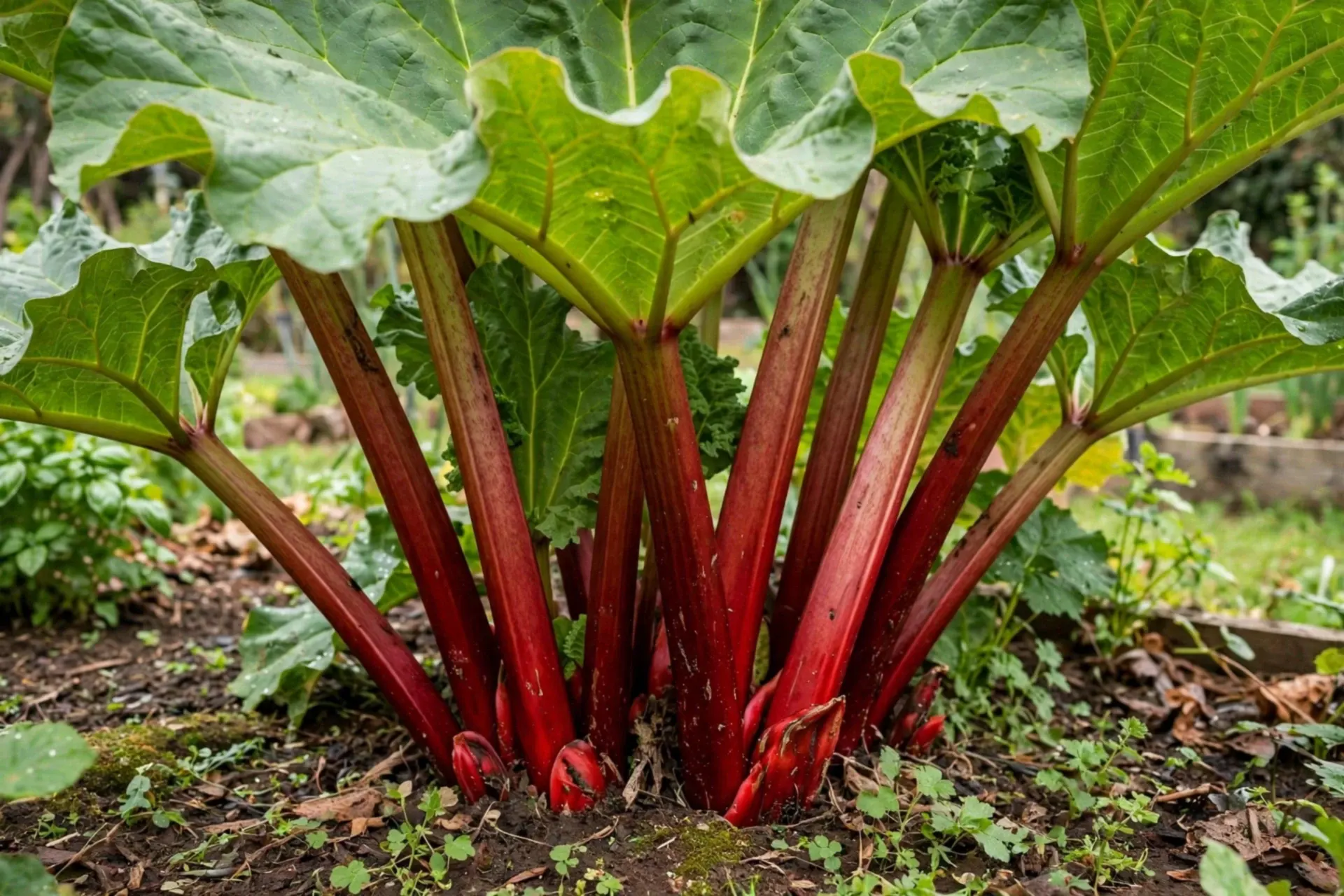
A hardy perennial grown for its tart stalks: plant crowns in spring, leave the first year's stalks alone, and pull — never cut — from year two. Only the stalks are eaten; the leaves are poisonous. Rhubarb is a hardy perennial grown from crowns (root divisions), planted in early spring about 3 weeks before your last frost, as soon as the soil can be worked. Pick a permanent corner — a single crown can crop for a decade or more.
Grow Rhubarb with us — step by step
Everything for this plant is written step by step below — what to do, and exactly when. Read it through first if you like: you can grow it entirely on your own with that guide. Or start with us here — tell us your planting day and we lay out your personal schedule on this page, every next step on its own day, counted from your planting date. No guessing, no forgetting.
Step 1 — today: Plant your Rhubarb crown today: set it with the buds about 2 in below the surface, spaced 36 in apart, and water in deeply. Leave every stalk standing this first year so the crown builds strength.
Rhubarb at a glance
Sow outdoors: 3 weeks before last frost
Spacing: 36 in · Seed depth: 2 (crowns) in
Sun: Full sun
Water: Regular and deep in dry spells
Harvest: Stalks from the second spring onward
Timing counts from your average last spring frost — get your own dates in the Planting Calendar. Guidance follows standard extension-service practice for Canada and the US.
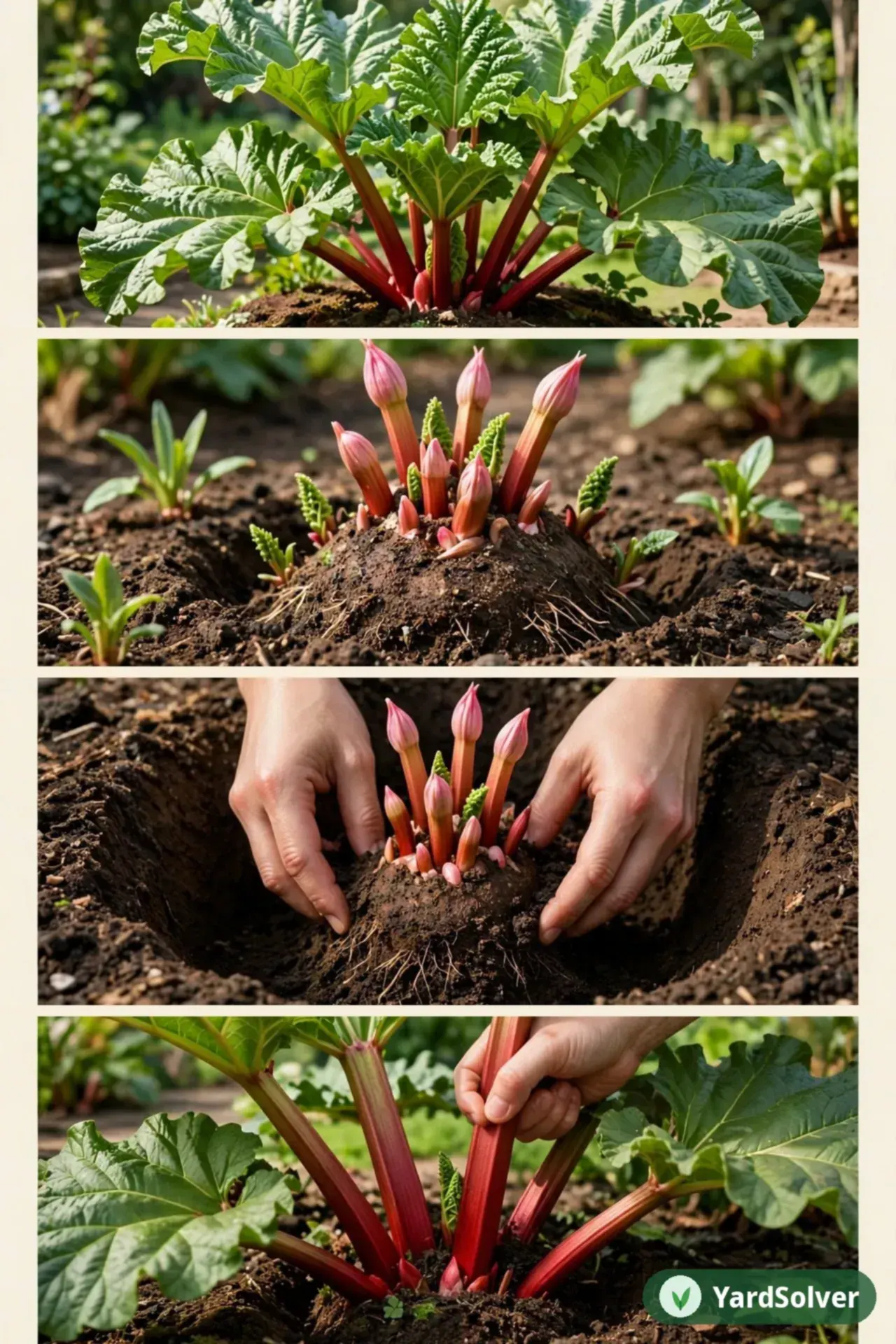
How to plant and grow rhubarb, step by step
Step 1 — Time it right
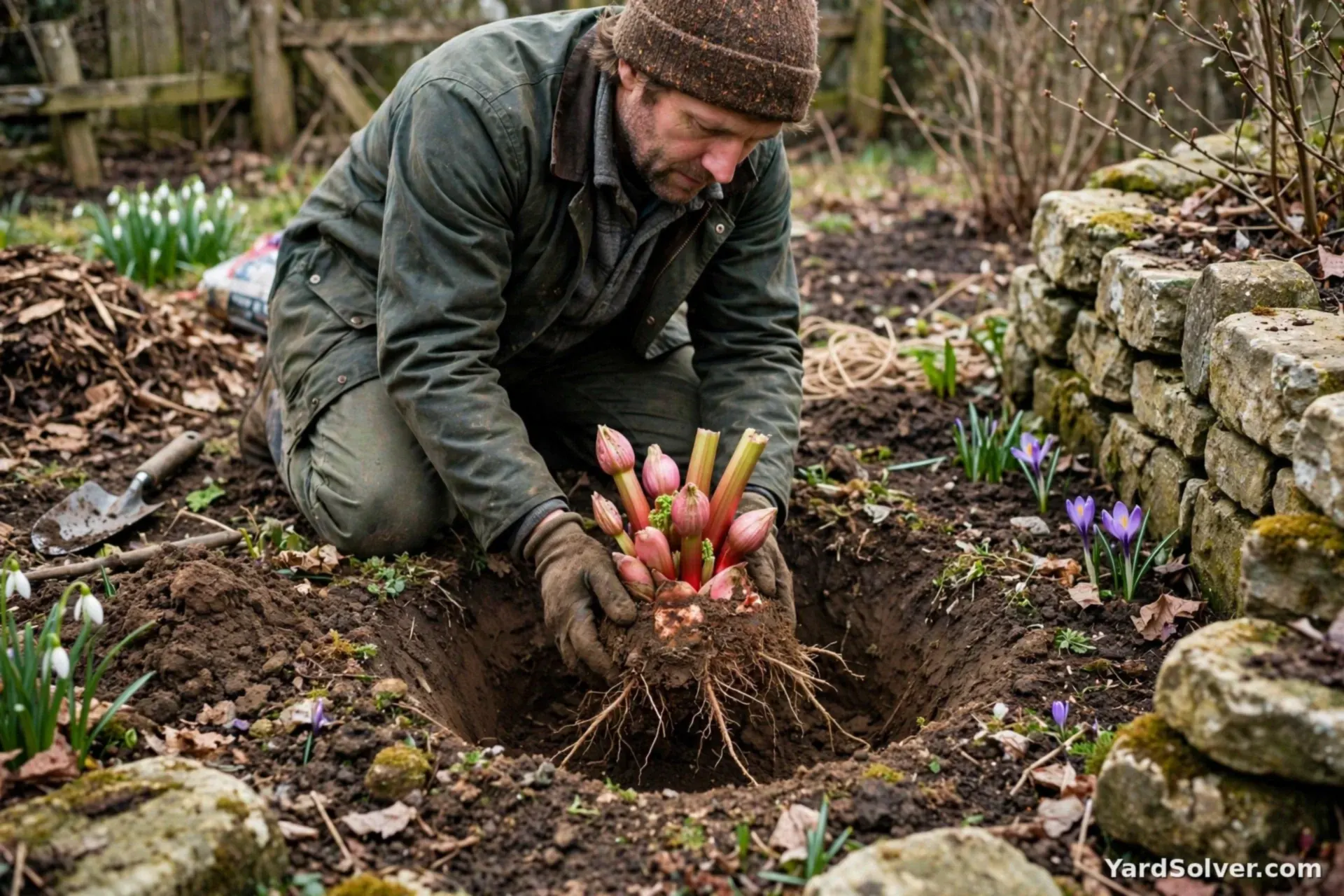
Sow outdoors: 3 weeks before last frost. All dates count from your average last spring frost — the Planting Calendar turns them into real dates for your garden. Rhubarb is a hardy perennial grown from crowns (root divisions), planted in early spring about 3 weeks before your last frost, as soon as the soil can be worked. Pick a permanent corner — a single crown can crop for a decade or more.
Step 2 — Prepare the spot
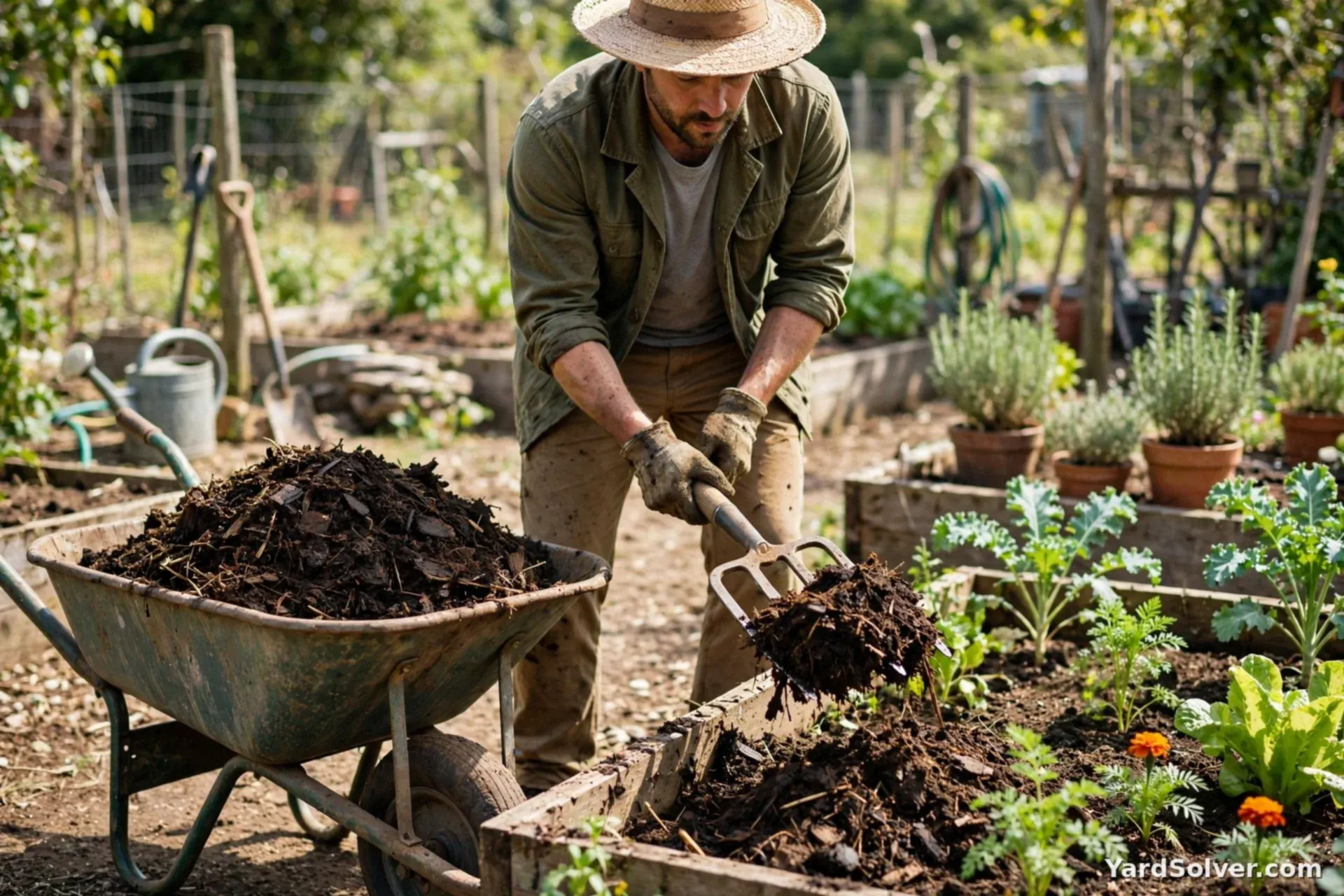
Sun: Full sun. Rich, moisture-holding soil with plenty of compost or well-rotted manure — rhubarb is a heavy feeder that will sit in this spot for years, so choose the spot once and choose it well. It dislikes waterlogged ground in winter. Work out how much you need with the Garden Mix Calculator or the Raised Bed Soil Calculator.
Step 3 — Sow and plant out
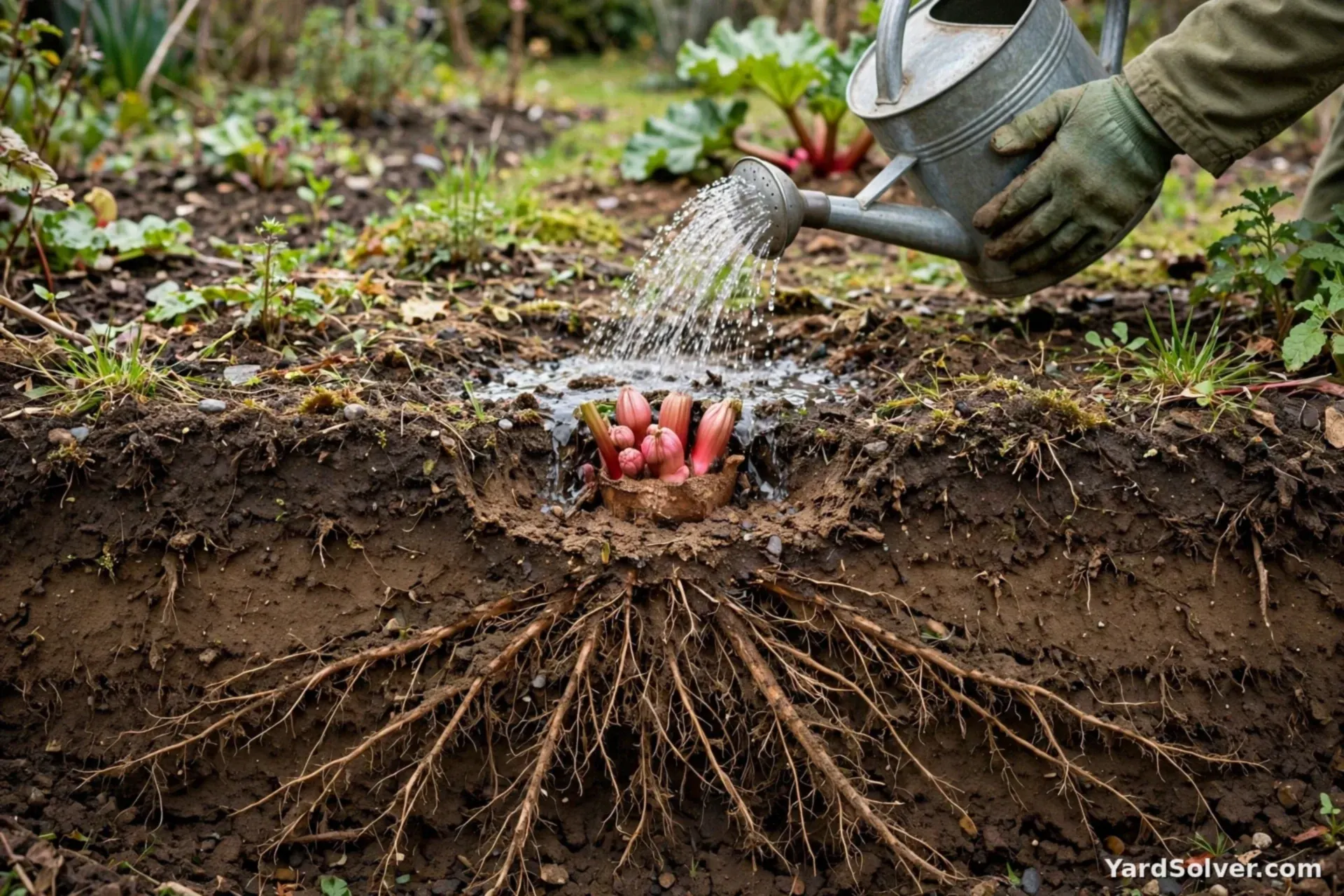
Plant crowns in early spring, about 3 weeks before last frost, as soon as the soil can be worked. Dig a generous hole, mix compost into the soil, and set the crown so its buds sit about 2 in below the surface, spaced 36 in apart. Water in well.
Step 4 — Water and feed
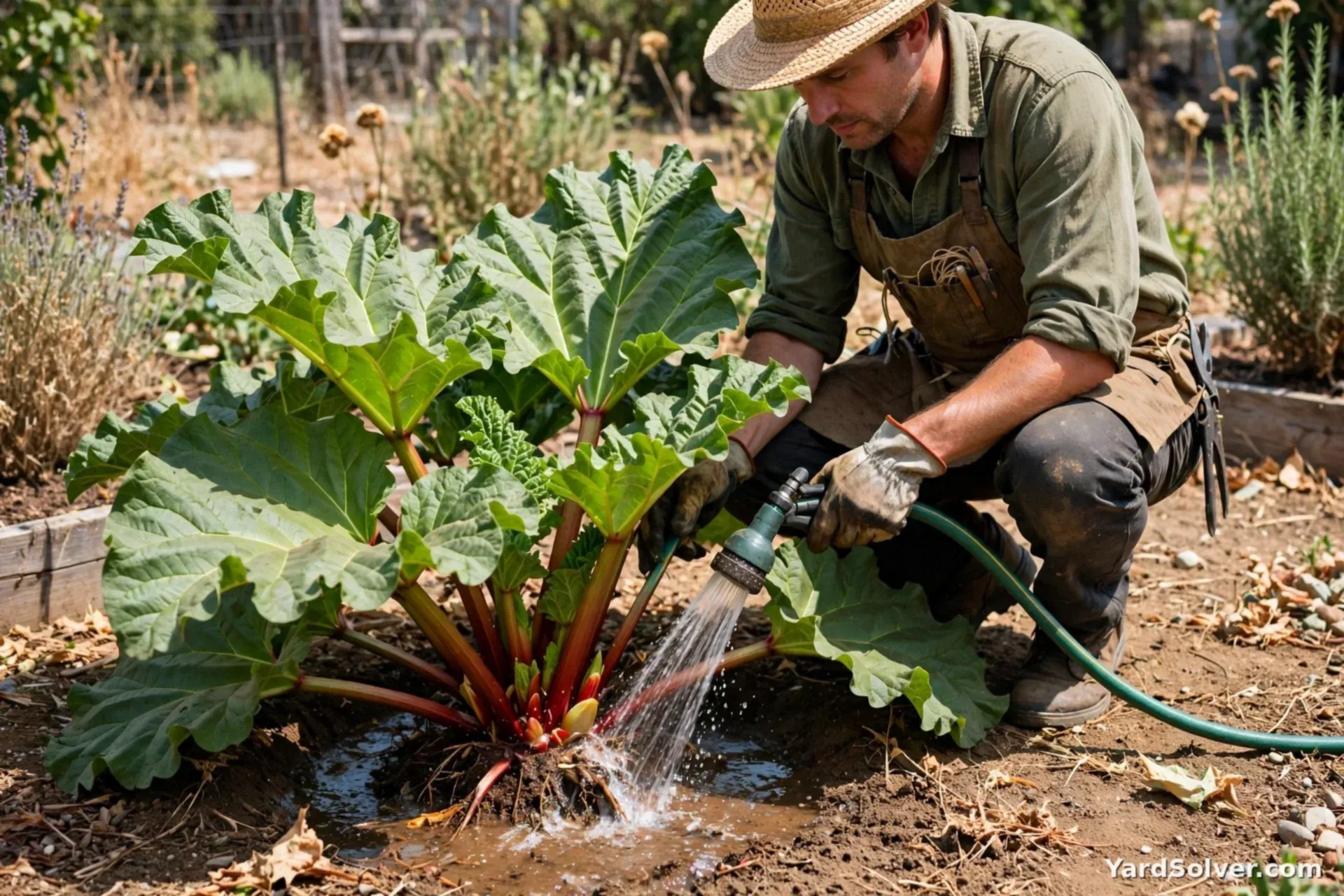
Water: Regular and deep in dry spells. The Fertilizer Calculator turns a bed size into the right amount.
Step 5 — Care and the problems to watch for
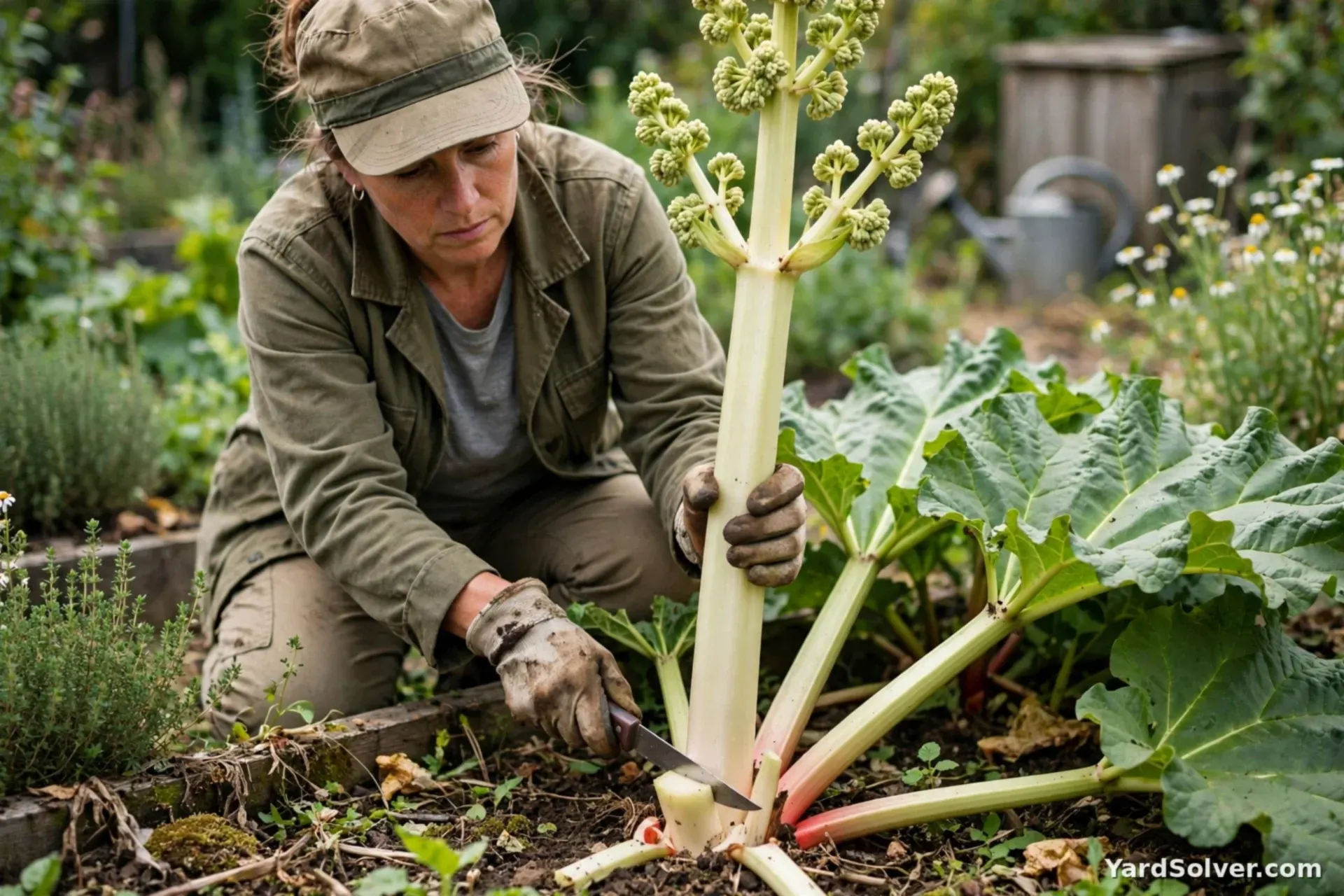
- Flower stalks — thick stems that shoot up to bloom; cut them out at the base as soon as you see them, or stalk production stops.
- Thin, weak stalks — the crown is hungry or has been over-picked; feed it, water it, and give it a rest year.
- Crown rot — crowns soften in soil that stays wet all winter; plant in ground that drains.
Take care: Never eat rhubarb leaves — they are poisonous. Only the stalks are food.
Step 6 — Harvest
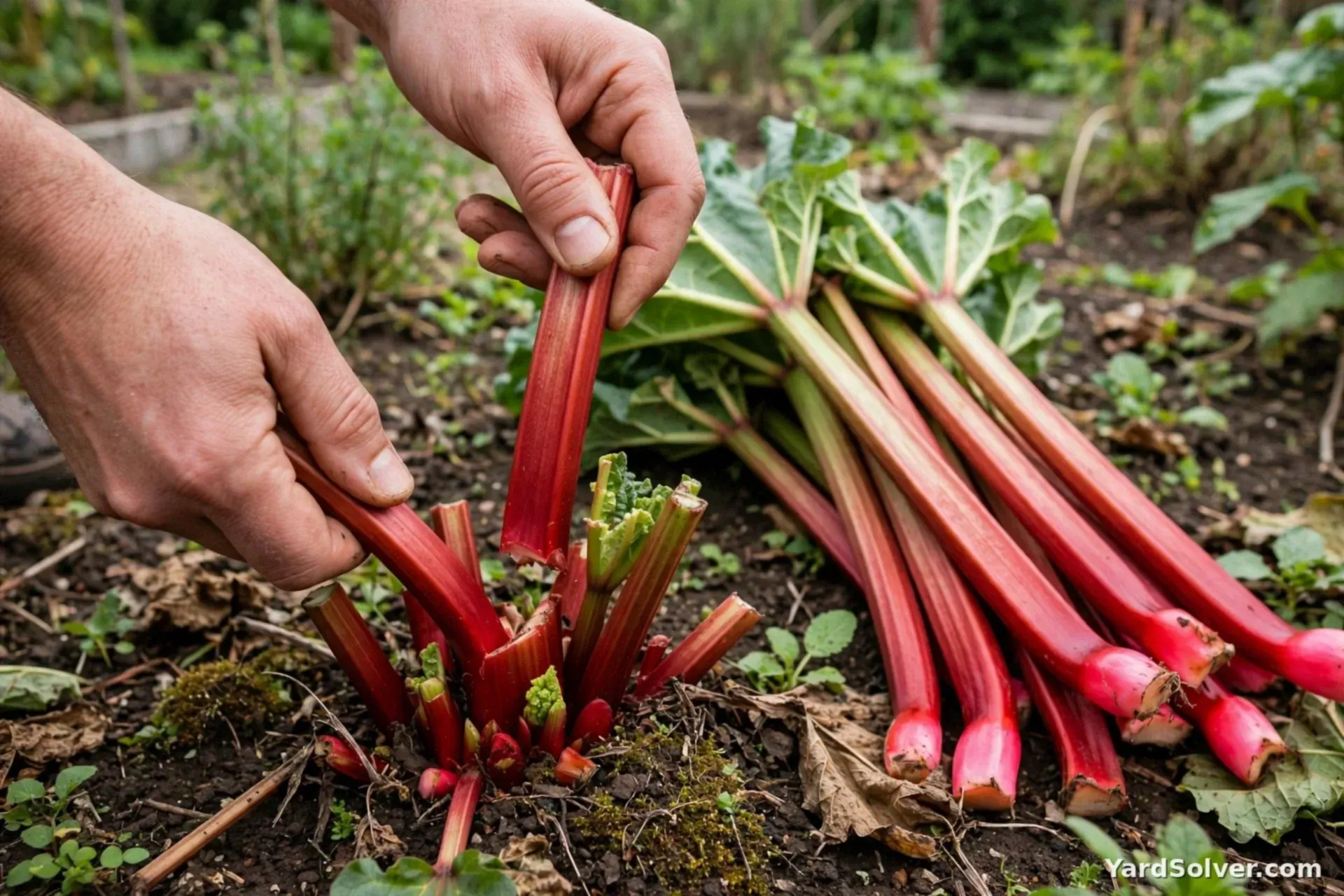
Ready in: Stalks from the second spring onward. Stop pulling stalks by midsummer in an established bed, and let the leaves feed the crown into fall — after the foliage dies back, a mulch of compost sets it up for spring.
📅 Your personal Rhubarb schedule
Counted from your planting day — not a generic calendar. Day 0 is the day the seed went in the ground or the young plant went out.
Varieties worth growing
| Variety | Colour | Why gardeners like it |
|---|---|---|
| Victoria | Green-red | The oldest classic — big, tart stalks, often raised from seed or crowns |
| Canada Red | Bright red | Sweet, tender stalks that need less sugar — a favourite for pies |
| Glaskin's Perpetual | Green-red | Bred so it can be picked lightly even in its first year, and late into the season |
| German Wine | Deep red | Dark red stalks with a mild flavour, named for the colour it gives drinks and desserts |
| Crimson Red | Deep red | Thick, tender, richly coloured stalks that hold their colour when cooked |
Good for you — and take care
Benefits
- Provides vitamin K and vitamin C
- A source of calcium and potassium
- Provides fibre that supports good digestion
- Low in calories
- Its sharp flavour means a little goes a long way in desserts
Take care
- Never eat the leaves — they are poisonous; compost or bin them
- People who take blood thinners: rhubarb stalks contain vitamin K, so keep servings steady
- Very tart — cook with a little sweetener, and avoid eating large amounts raw
A little history — and one good fact
Rhubarb came from Asia, where its roots were used as a medicine in China for thousands of years; the plant travelled to Europe and North America, and only in the 1800s — when sugar became cheap — did the tart stalks turn into a favourite pie filling.
Fun fact: Botanically rhubarb is a vegetable, but a New York customs court ruled it a fruit in 1947 — for tariff purposes — and most cooks have treated it as one ever since.
Keep going
Guides: How to Prepare Garden Soil in Spring · How to Start Composting for Beginners · Putting Your Garden to Bed
Calculators: Plant Spacing Calculator · Seed Calculator · Fertilizer Calculator · Garden Mix Calculator
More vegetables: Strawberry · Celery · Asparagus
← Back to the Plant Library · Get your personal planting dates
Questions people ask
When do I plant rhubarb?
Count from your average last spring frost: sow outdoors 3 weeks before last frost. Rhubarb is a hardy perennial grown from crowns (root divisions), planted in early spring about 3 weeks before your last frost, as soon as the soil can be worked. Pick a permanent corner — a single crown can crop for a decade or more.
How far apart do I space rhubarb?
Space plants 36 in apart, with seed sown 2 (crowns) in deep. Sun: full sun.
When is rhubarb ready to harvest?
Stalks from the second spring onward. A hardy perennial grown for its tart stalks: plant crowns in spring, leave the first year's stalks alone, and pull — never cut — from year two. Only the stalks are eaten; the leaves are poisonous.