
Plant Library · Vegetables
🌽 How to Grow Sweet Corn
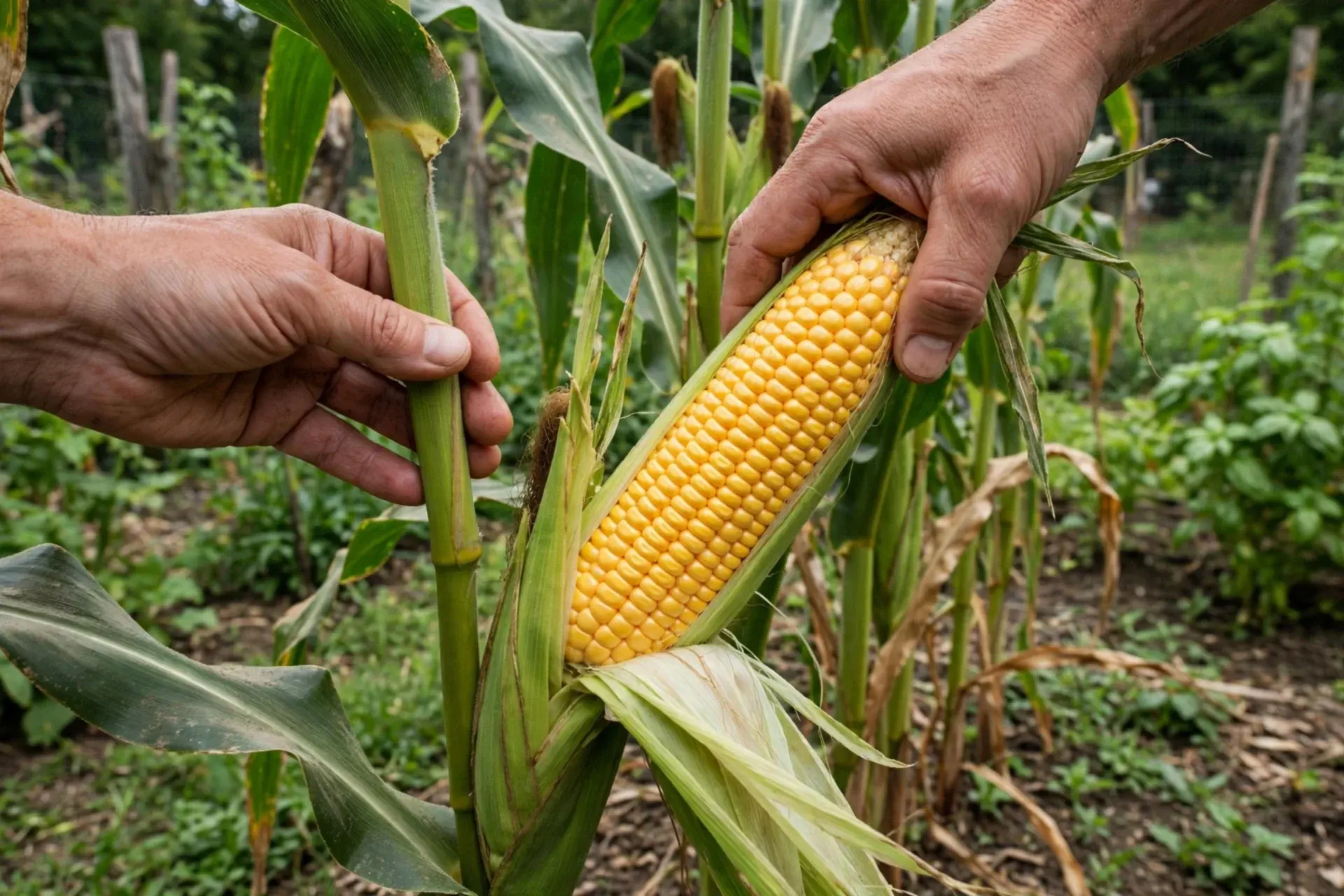
Plant in blocks of short rows, not one long line — wind pollinates it. Sweet corn is a warm-season crop: direct sow about a week after your last frost, and always plant in blocks of short rows rather than one long line, because the wind carries its pollen from plant to plant.
Grow Sweet Corn with us — step by step
Everything for this plant is written step by step below — what to do, and exactly when. Read it through first if you like: you can grow it entirely on your own with that guide. Or start with us here — tell us your planting day and we lay out your personal schedule on this page, every next step on its own day, counted from your planting date. No guessing, no forgetting.
Step 1 — today: Sow your Sweet Corn seeds today: 1 in deep, spaced 12 in apart, in full sun. Water the row in well and keep it moist while seeds sprout.
Sweet Corn at a glance
Sow outdoors: 1 week after last frost
Spacing: 12 in · Seed depth: 1 in
Sun: Full sun
Water: Deep and regular, especially at tasselling
Harvest: 60–90 days
Timing counts from your average last spring frost — get your own dates in the Planting Calendar. Guidance follows standard extension-service practice for Canada and the US.
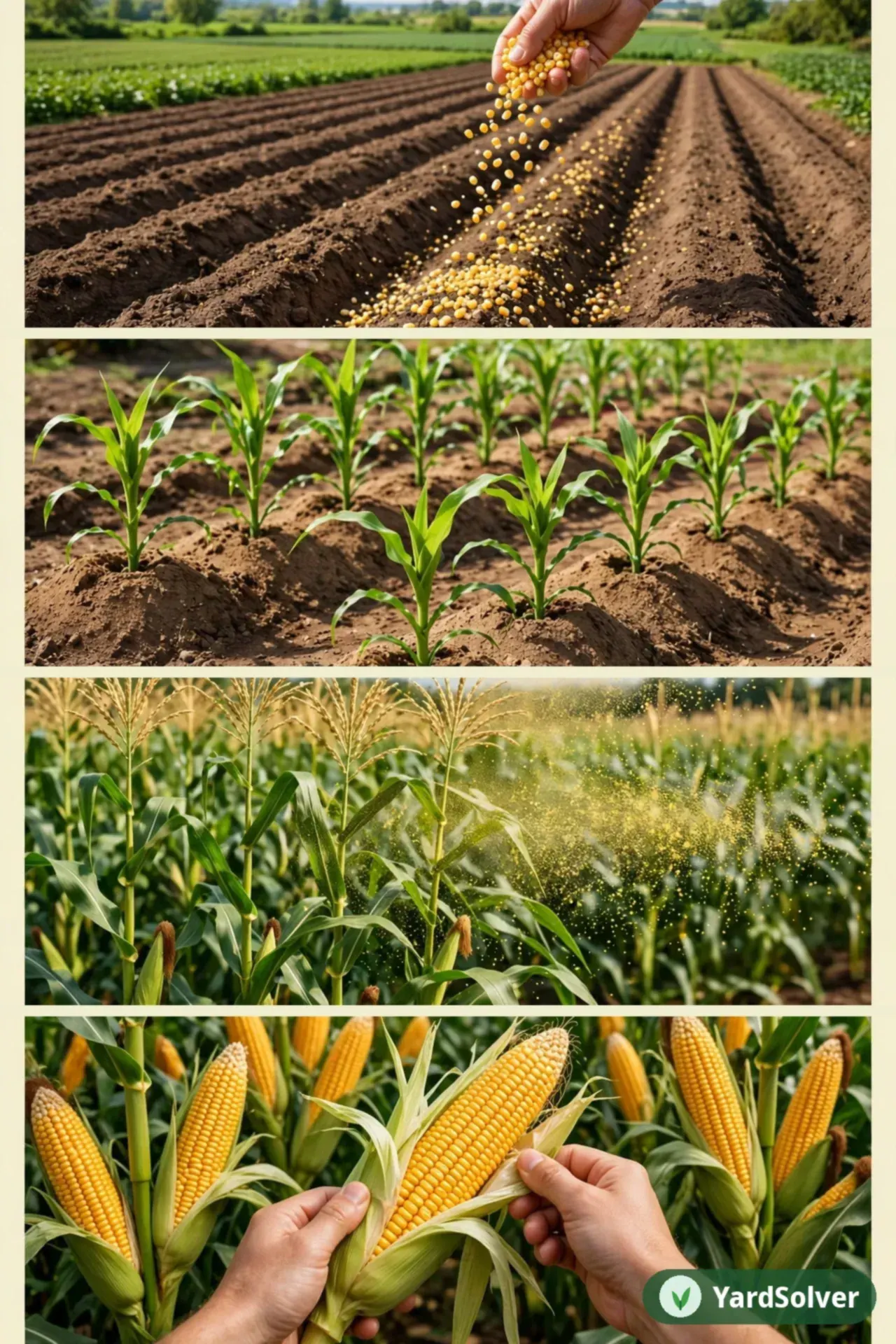
How to plant and grow sweet corn, step by step
Step 1 — Time it right
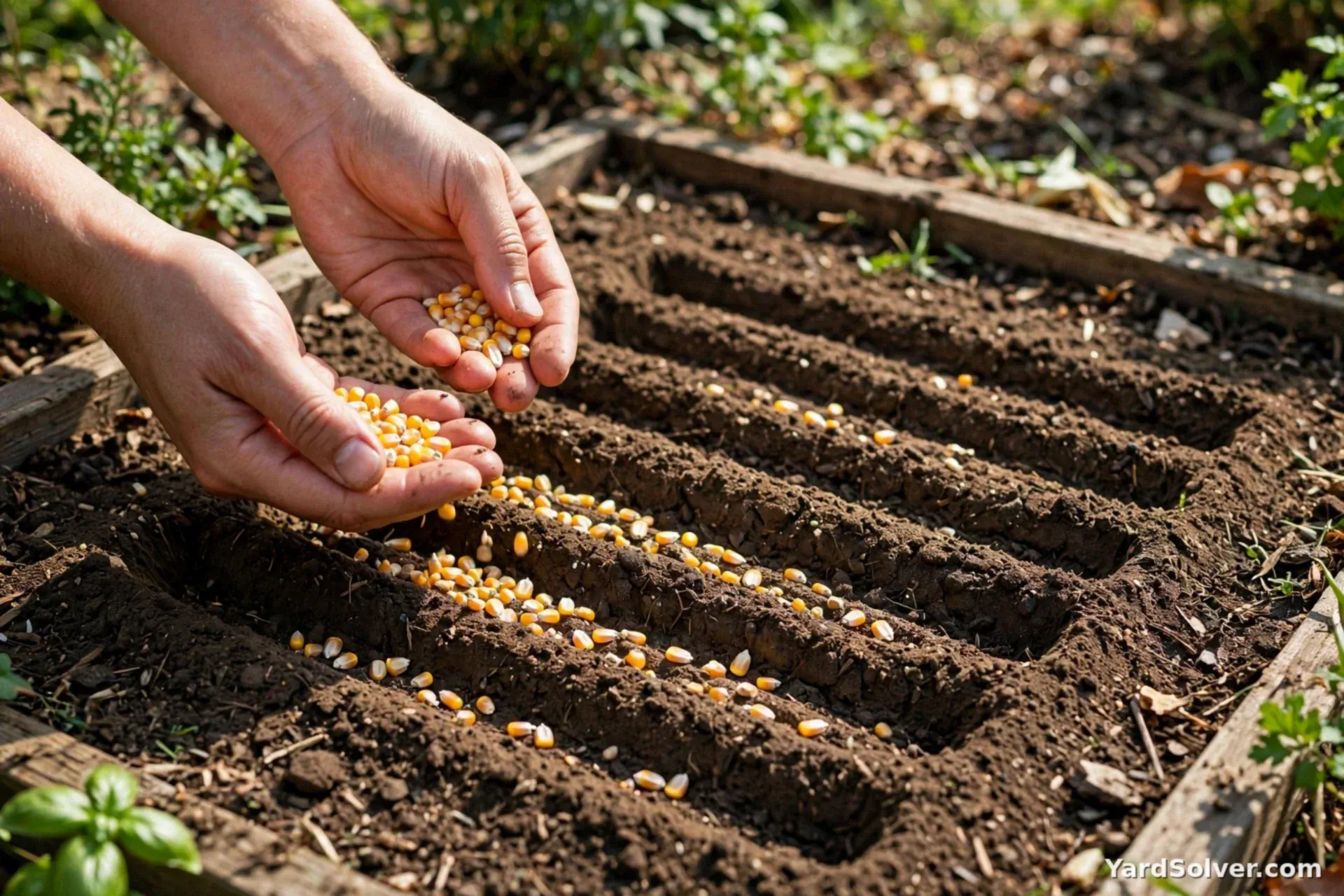
Sow outdoors: 1 week after last frost. All dates count from your average last spring frost — the Planting Calendar turns them into real dates for your garden. Sweet corn is a warm-season crop: direct sow about a week after your last frost, and always plant in blocks of short rows rather than one long line, because the wind carries its pollen from plant to plant.
Step 2 — Prepare the spot

Sun: Full sun. Rich soil with compost worked in before planting, and a mulch on top once plants are growing. For these hungry, thirsty crops, steady moisture matters more than anything else. Work out how much you need with the Garden Mix Calculator or the Raised Bed Soil Calculator.
Step 3 — Sow and plant out

Sow directly where they will grow, 1 week after last frost, 1 in deep and 12 in apart (thin seedlings to that spacing once they are up). The Seed Calculator works out how much seed a bed needs.
Step 4 — Water and feed
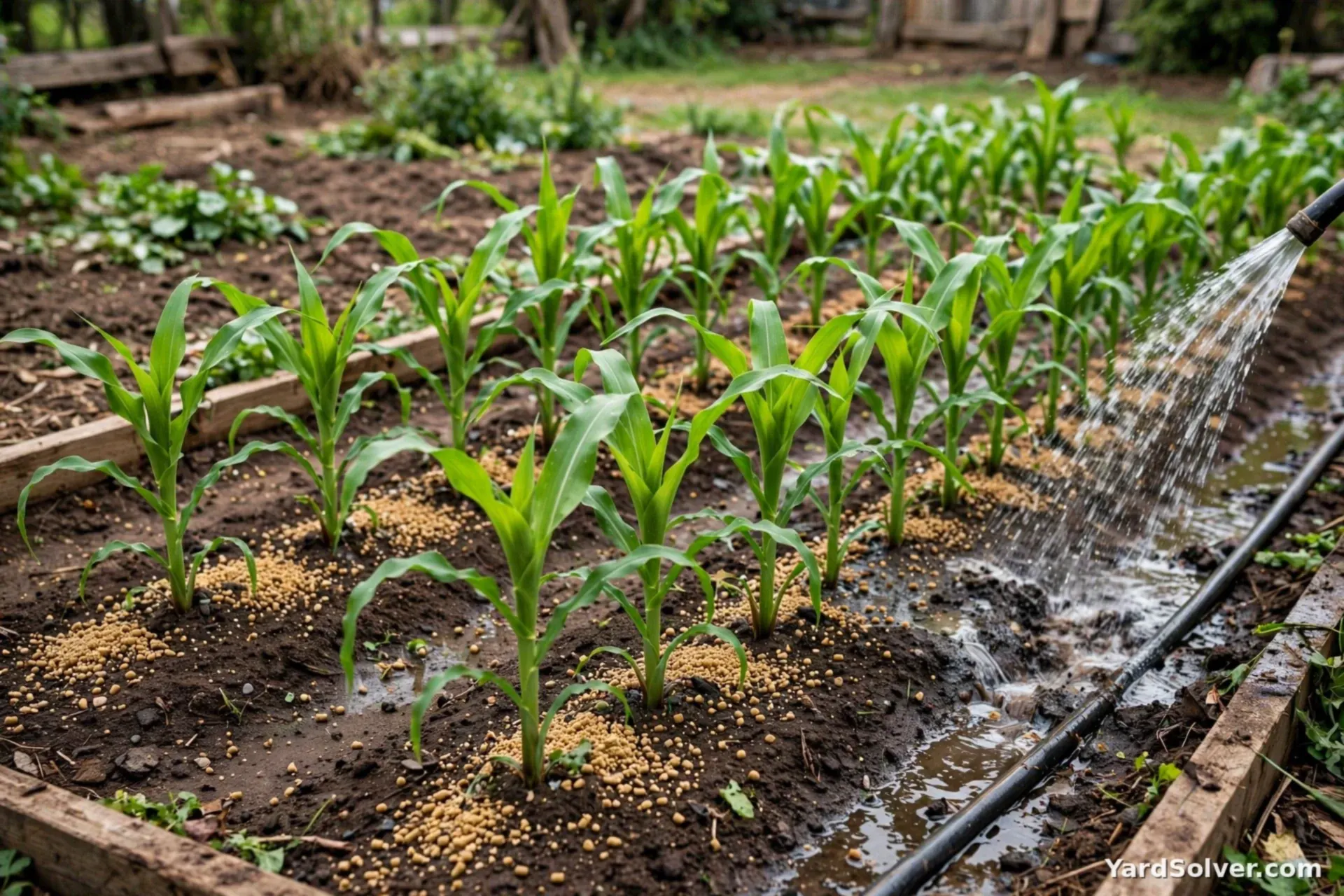
Water: Deep and regular, especially at tasselling. First feed: around day 28 — Corn is a hungry crop — feed when the plants are about knee-high, roughly four weeks in. The Fertilizer Calculator turns a bed size into the right amount.
Step 5 — Care and the problems to watch for
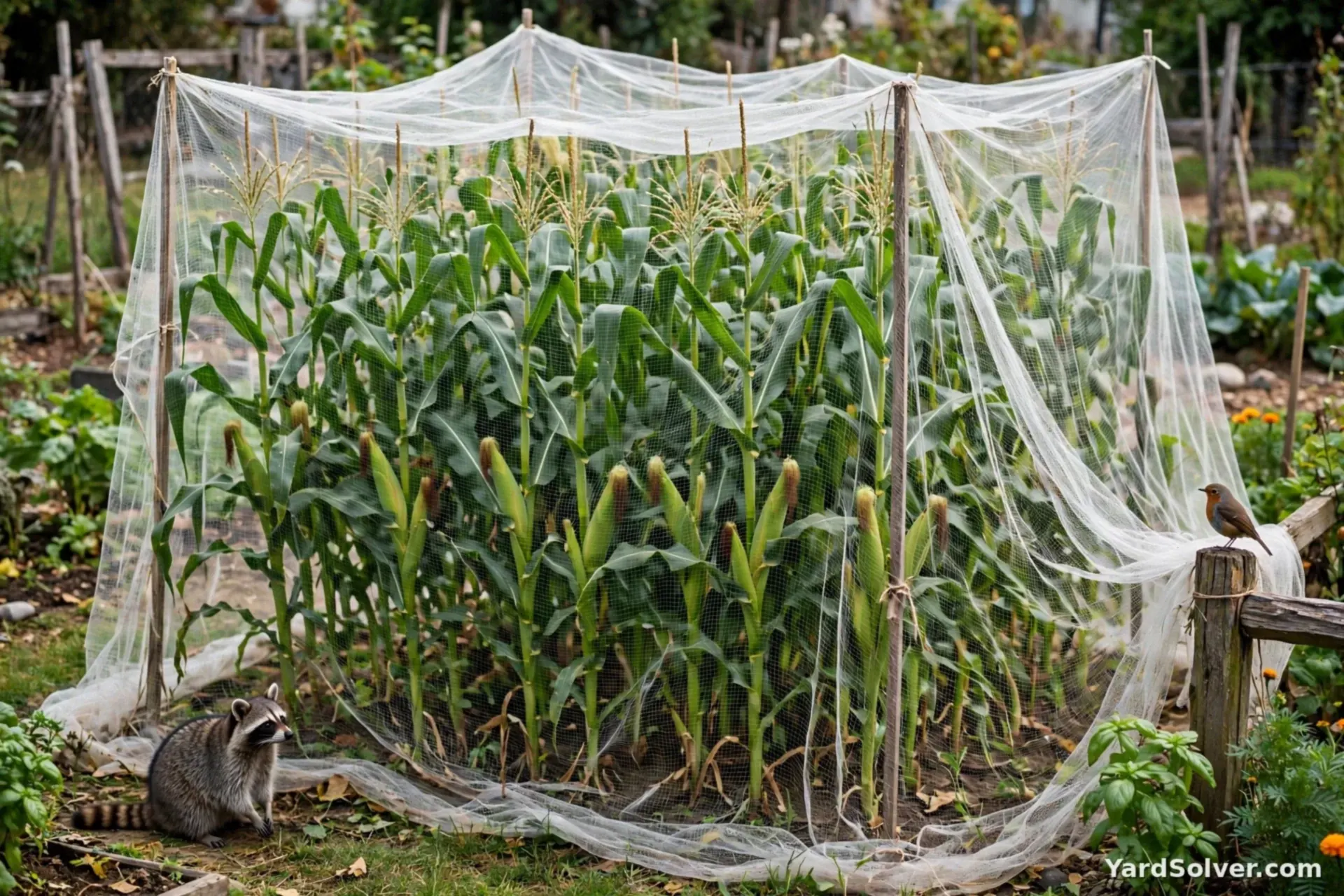
- Raccoons and birds just before harvest — pick promptly when silks brown; netting helps.
- Poor pollination (patchy kernels) — always plant corn in blocks, not single rows.
- Corn earworm — a caterpillar at the tip; snip off the tip when shucking.
Take care: Sweet corn is higher in natural sugars and starch than most vegetables, so people watching blood sugar count it as a starchy food. Corn eaten on the cob can be tough on loose teeth and braces — cut the kernels off to be safe.
Step 6 — Harvest
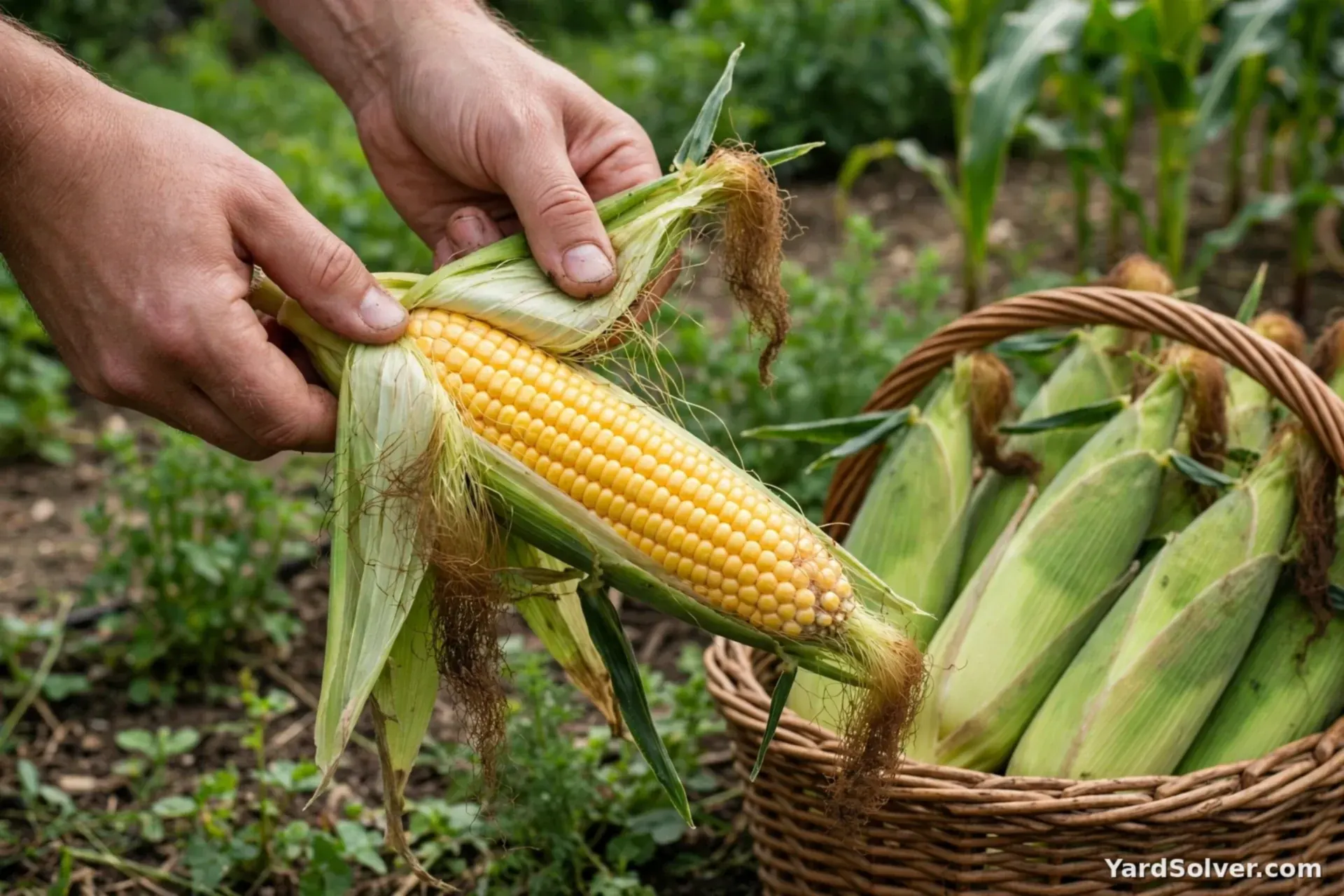
Ready in: 60–90 days. Harvest runs from about day 60 to 90 — cobs are ready when the silks turn brown and a squeezed kernel gives milky juice.
📅 Your personal Sweet Corn schedule
Counted from your planting day — not a generic calendar. Day 0 is the day the seed went in the ground or the young plant went out.
Varieties worth growing
| Variety | Colour | Why gardeners like it |
|---|---|---|
| Golden Bantam | Yellow | The heirloom that made sweet corn famous — small ears, old-fashioned flavour |
| Peaches and Cream | Yellow and white | A popular bicolour — sweet, tender kernels of both colours |
| Silver Queen | White | A classic white corn, long the standard for late summer |
| Honey and Cream | Yellow and white | A dependable bicolour for home gardens and freezing |
| Ambrosia | Yellow and white | A sweet bicolour that holds its sweetness well after picking |
Good for you — and take care
Benefits
- Provides fibre for good digestion
- Provides B vitamins and vitamin C
- Provides potassium and magnesium
- Contains lutein, a natural pigment linked with normal eye health
- Filling, energy-giving food straight off the cob
Take care
- Sweet corn is higher in natural sugars and starch than most vegetables, so people watching blood sugar count it as a starchy food
- Corn eaten on the cob can be tough on loose teeth and braces — cut the kernels off to be safe
A little history — and one good fact
Sweet corn descends from maize, a giant grass domesticated in Mexico thousands of years ago from a wild plant called teosinte. Ordinary maize stores its sugar as starch, but sweet corn comes from natural mutations that keep the kernels sugary — Native American farmers grew such types, and named sweet varieties spread through North America in the 1800s. The catch is speed: the sugar starts turning to starch the moment an ear is picked.
Fun fact: Count the rows of kernels on an ear of corn and you will almost always get an even number — usually 16 — because the kernels grow in pairs.
Keep going
Guides: When to Start Seeds Indoors · How to Prepare Garden Soil in Spring · How to Harden Off Seedlings
Calculators: Plant Spacing Calculator · Seed Calculator · Fertilizer Calculator · Garden Mix Calculator
More vegetables: Tomato · Pepper · Cucumber
← Back to the Plant Library · Get your personal planting dates
Questions people ask
When do I plant sweet corn?
Count from your average last spring frost: sow outdoors 1 week after last frost. Sweet corn is a warm-season crop: direct sow about a week after your last frost, and always plant in blocks of short rows rather than one long line, because the wind carries its pollen from plant to plant.
How far apart do I space sweet corn?
Space plants 12 in apart, with seed sown 1 in deep. Sun: full sun.
When is sweet corn ready to harvest?
60–90 days. Plant in blocks of short rows, not one long line — wind pollinates it.