
Plant Library · Vegetables
🍠 How to Grow Sweet Potato
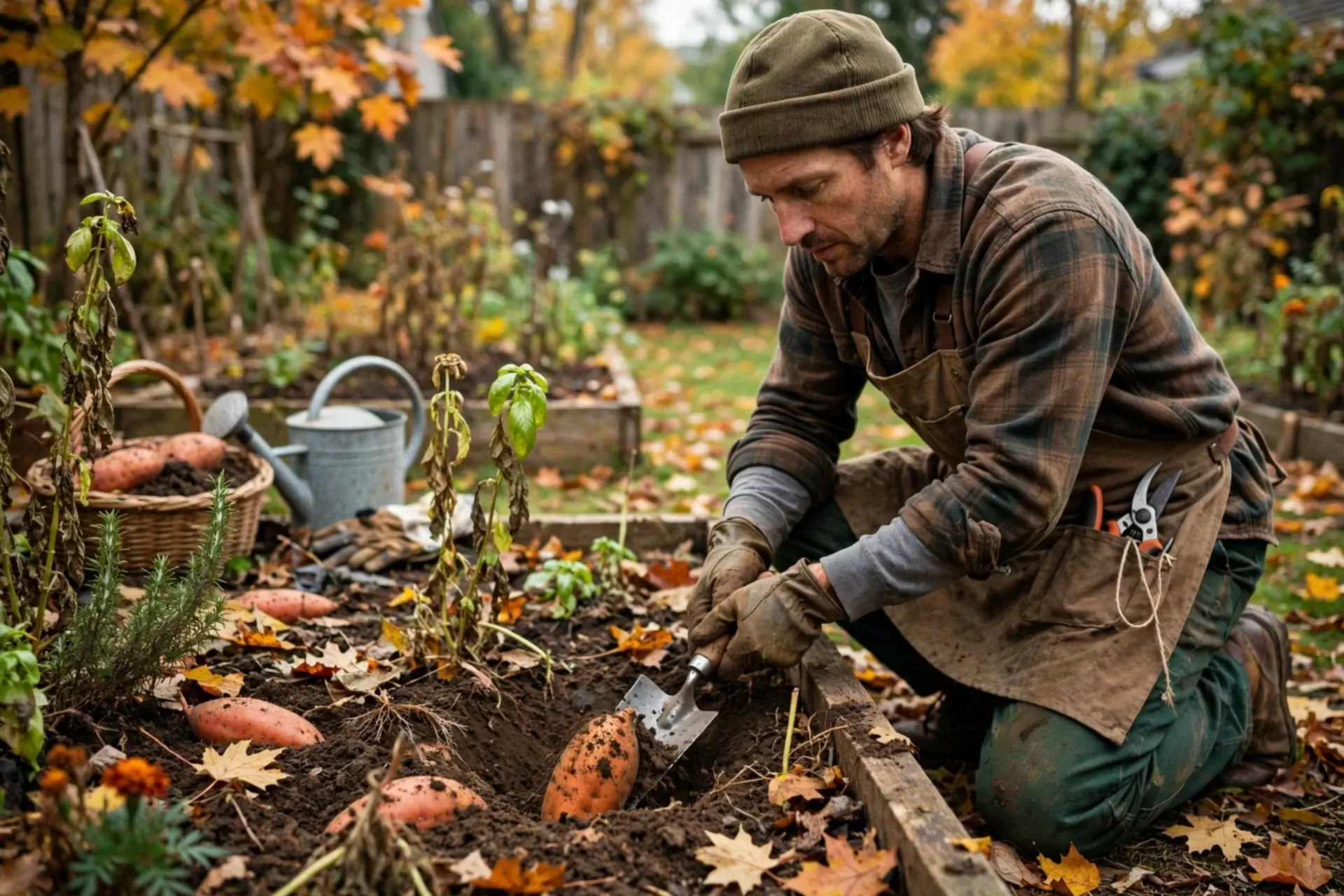
Grown from slips (rooted cuttings), planted only after all frost danger and into warm soil. Sweet potatoes are grown from slips — rooted cuttings, not seed: plant them about 3 weeks after your last frost, only into warm soil with all frost danger past, and dig the roots 90 to 120 days later.
Grow Sweet Potato with us — step by step
Everything for this plant is written step by step below — what to do, and exactly when. Read it through first if you like: you can grow it entirely on your own with that guide. Or start with us here — tell us your planting day and we lay out your personal schedule on this page, every next step on its own day, counted from your planting date. No guessing, no forgetting.
Step 1 — today: Plant out your young Sweet Potato plants today (hardened off first), spaced 12–18 in apart, and water them in deeply. Starting from seed instead? Sow indoors now, 3–4 (slips) in deep, and this same schedule counts from transplant day.
Sweet Potato at a glance
Move outside: 3 weeks after last frost
Spacing: 12–18 in · Seed depth: 3–4 (slips) in
Sun: Full sun
Water: Regular at first, then deep weekly
Harvest: 90–120 days after transplant
Timing counts from your average last spring frost — get your own dates in the Planting Calendar. Guidance follows standard extension-service practice for Canada and the US.
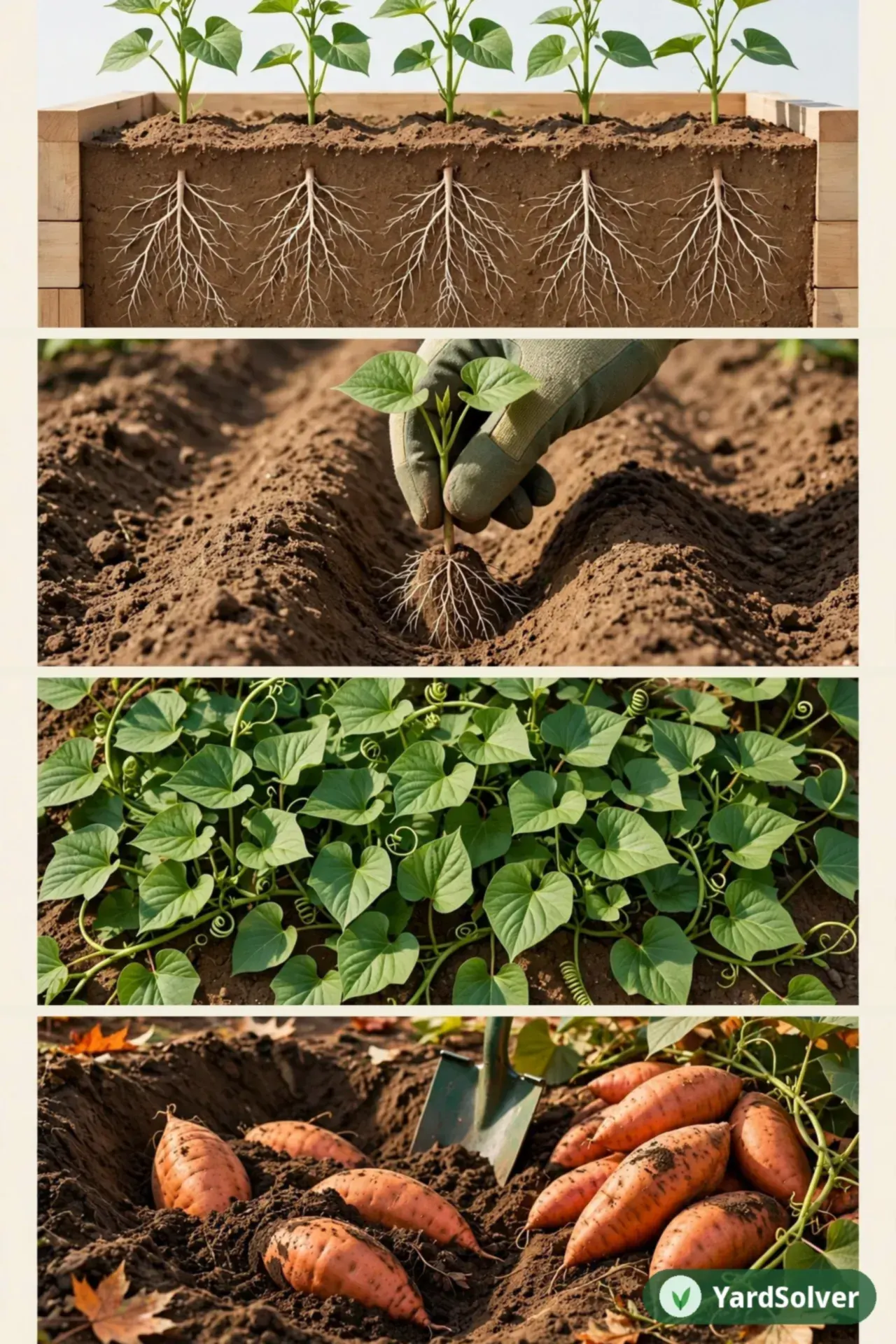
How to plant and grow sweet potato, step by step
Step 1 — Time it right
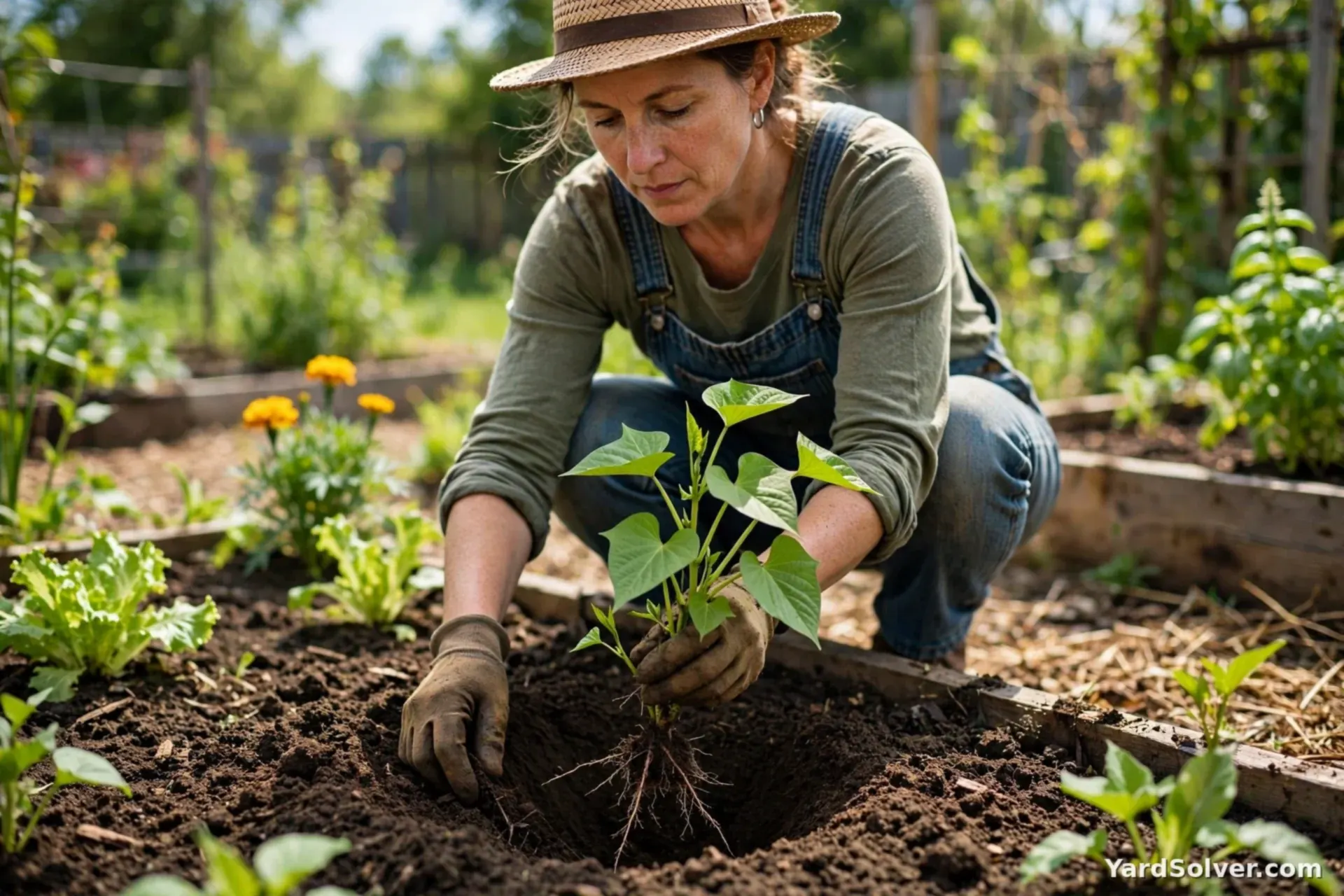
Move outside: 3 weeks after last frost. All dates count from your average last spring frost — the Planting Calendar turns them into real dates for your garden. Sweet potatoes are grown from slips — rooted cuttings, not seed: plant them about 3 weeks after your last frost, only into warm soil with all frost danger past, and dig the roots 90 to 120 days later.
Step 2 — Prepare the spot
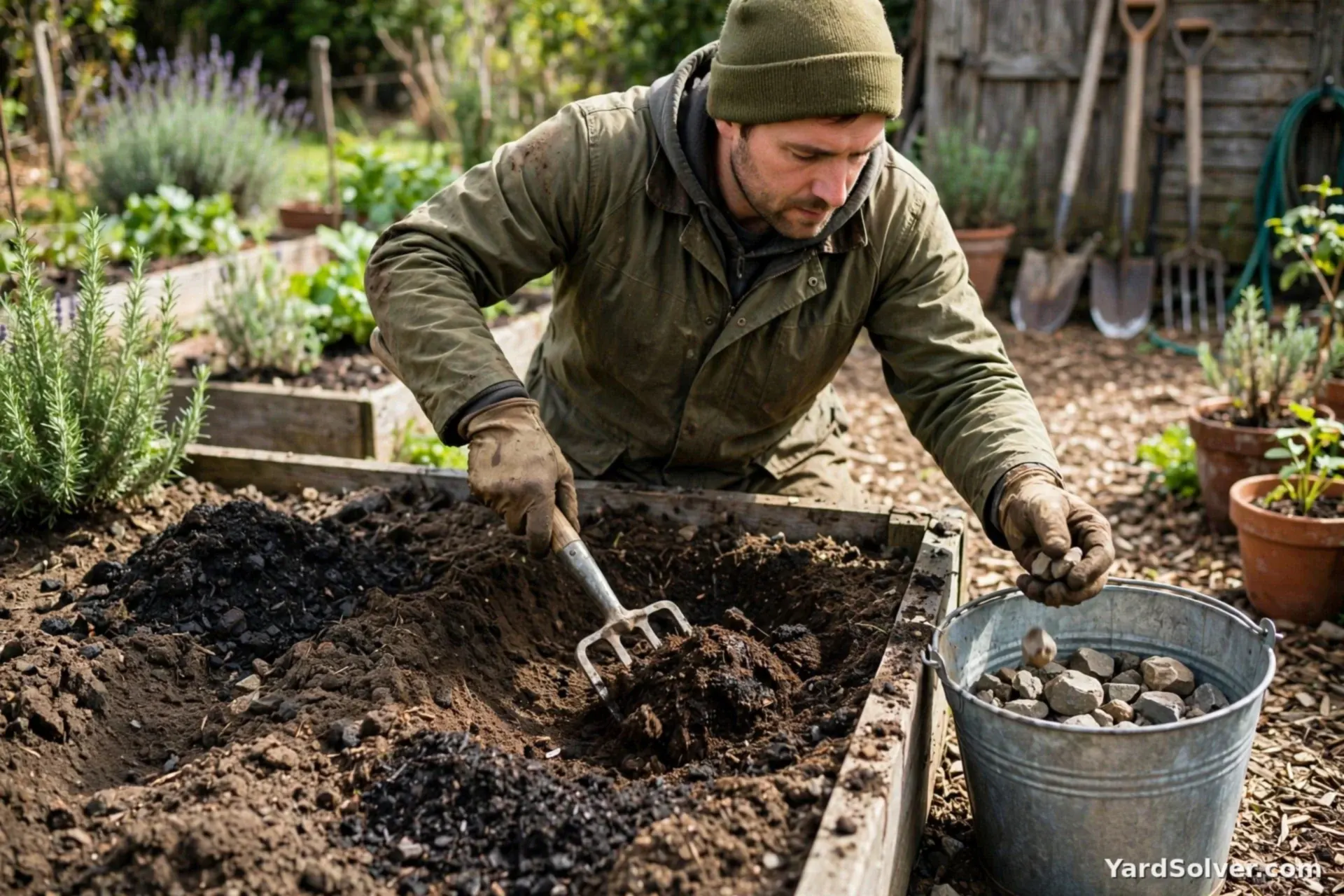
Sun: Full sun. Loose, stone-free soil is the whole secret for root crops — dig it over, pick out stones, and work in compost (never fresh manure, which forks roots). Depth and drainage matter more than feeding. Work out how much you need with the Garden Mix Calculator or the Raised Bed Soil Calculator.
Step 3 — Sow and plant out
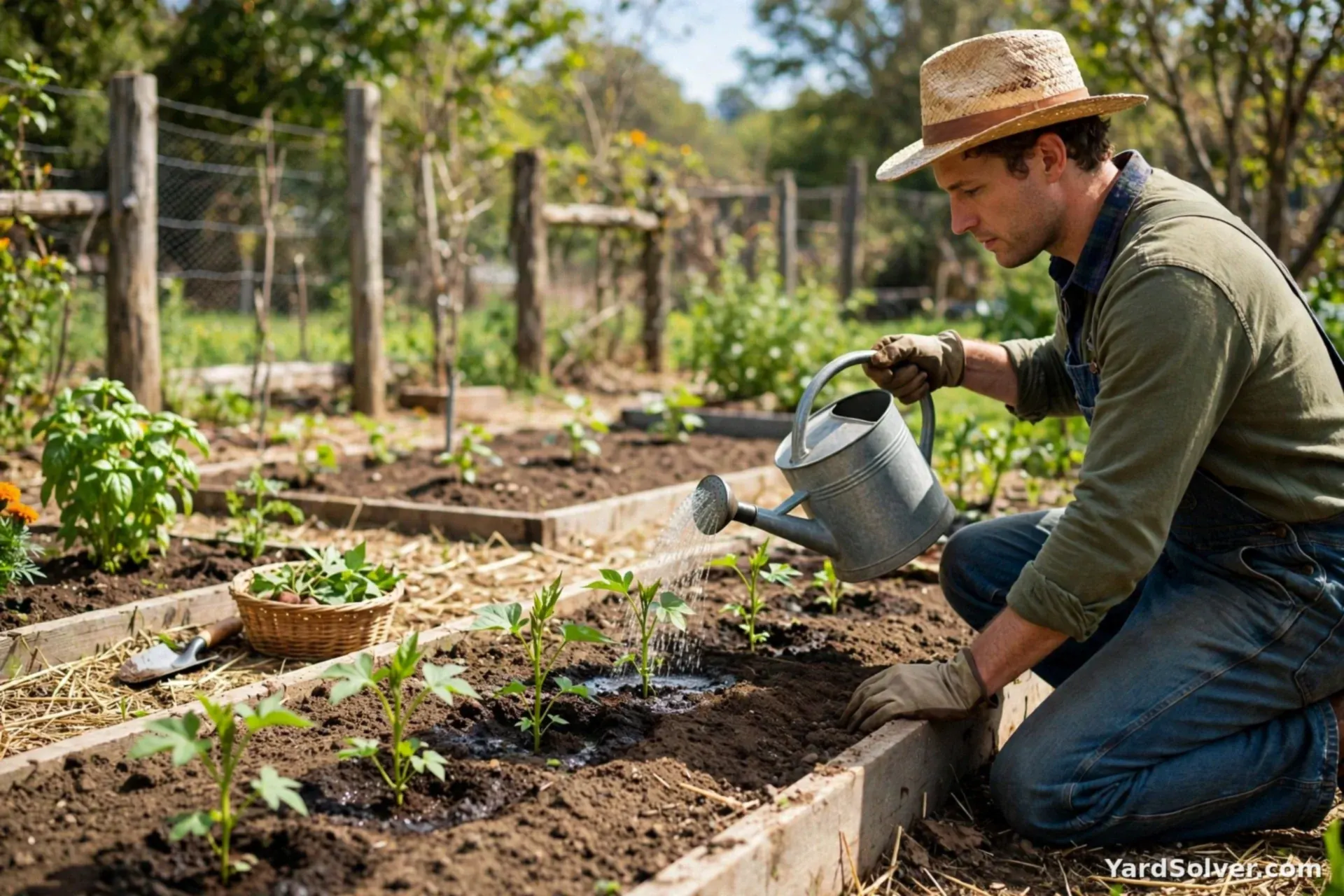
Start seed indoors None, sowing 3–4 (slips) in deep. Grow seedlings on in strong light, then harden them off over 7–10 days (see How to Harden Off Seedlings) and move them outside 3 weeks after last frost, spaced 12–18 in apart. The Plant Spacing Calculator turns that spacing into plants-per-bed.
Step 4 — Water and feed
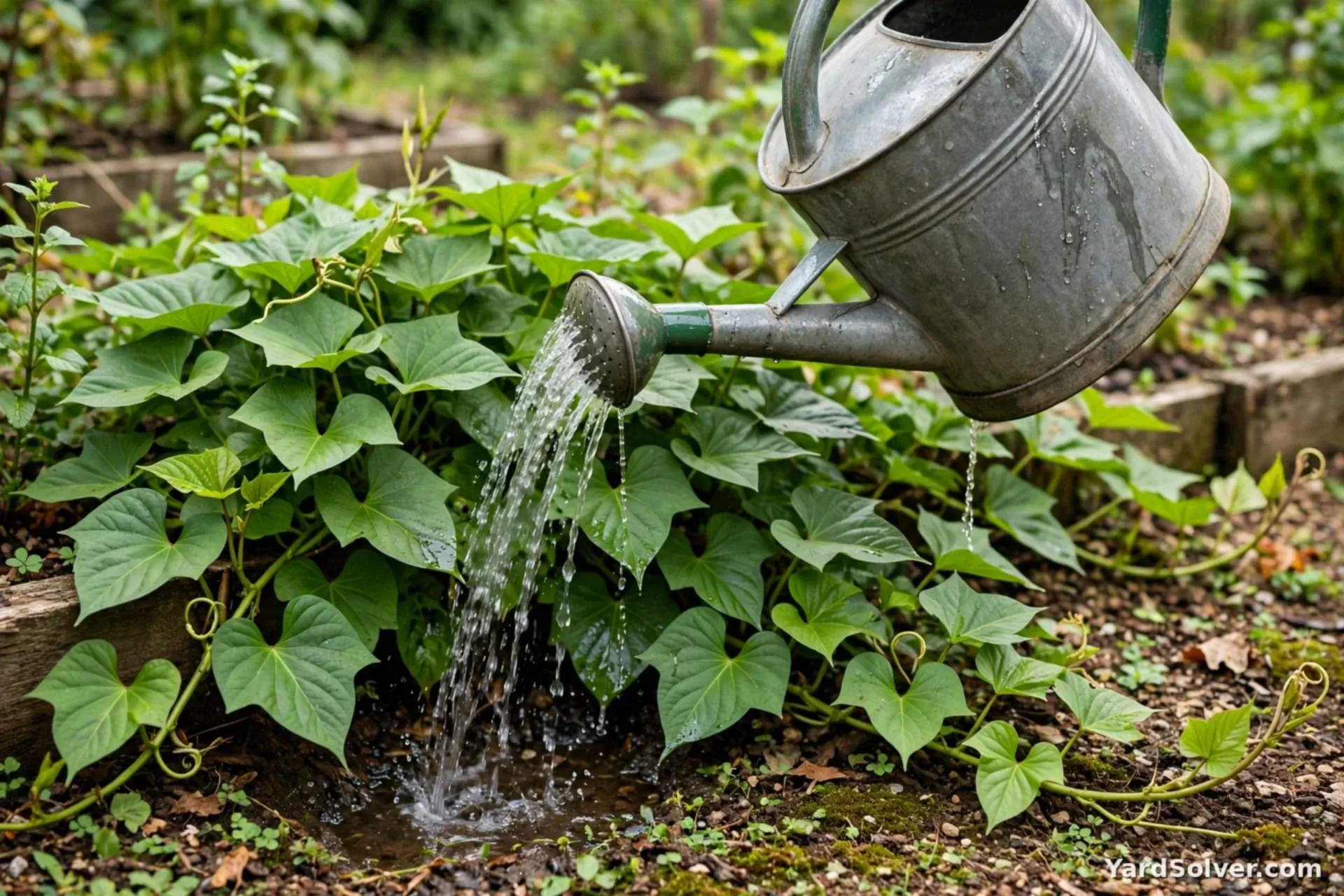
Water: Regular at first, then deep weekly. The Fertilizer Calculator turns a bed size into the right amount.
Step 5 — Care and the problems to watch for
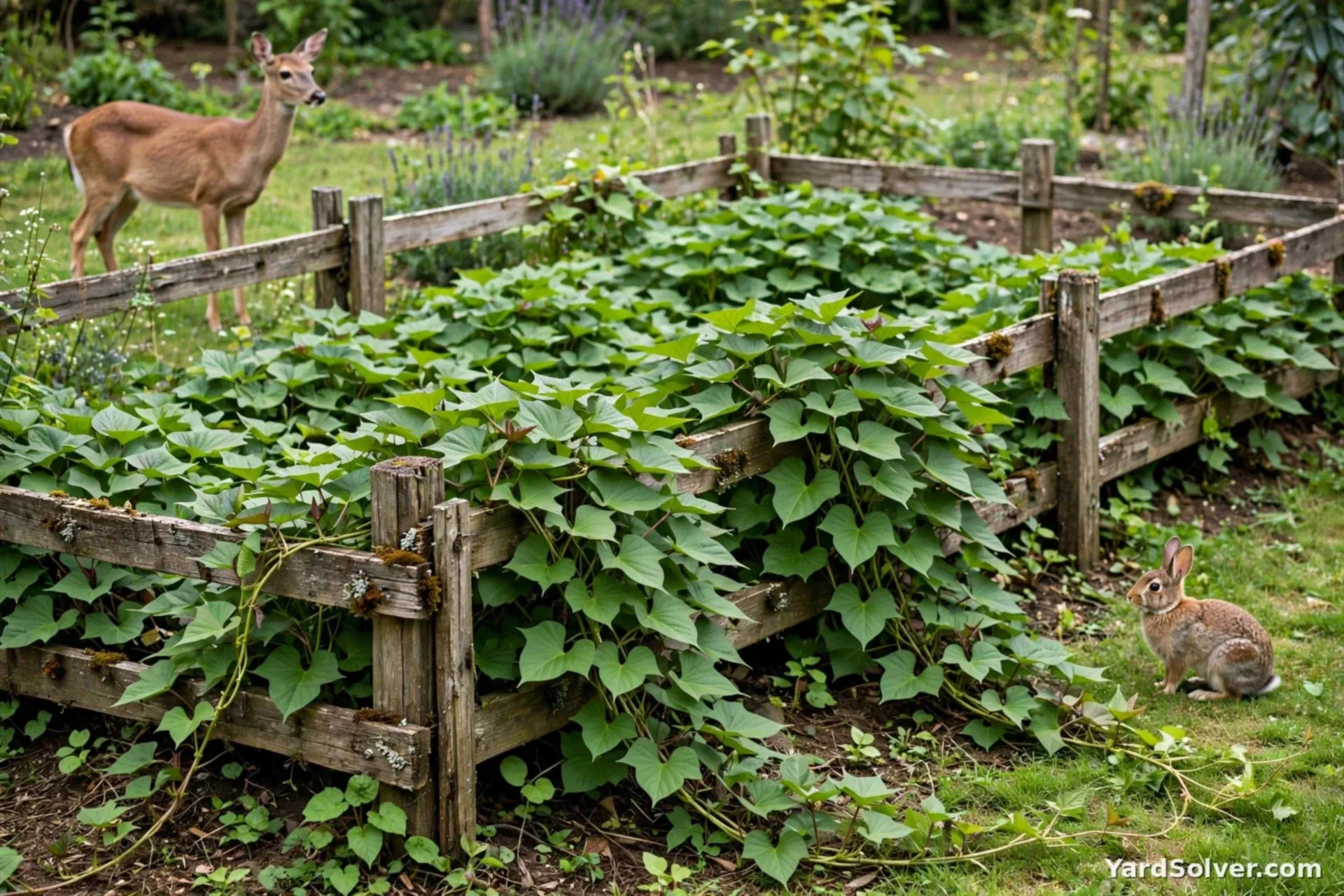
- Deer and rabbits love the leaves — fence where they visit.
- Cracked roots — from uneven watering late in the season.
- Black rot in storage — cure roots warm after harvest and handle gently.
Take care: Unlike ordinary potatoes, sweet potato leaves are safe to eat cooked and are a popular green in many countries — but it is the roots that are the main crop. Sweet potatoes contain oxalates, so people who are prone to kidney stones are often advised to eat them in moderation.
Step 6 — Harvest
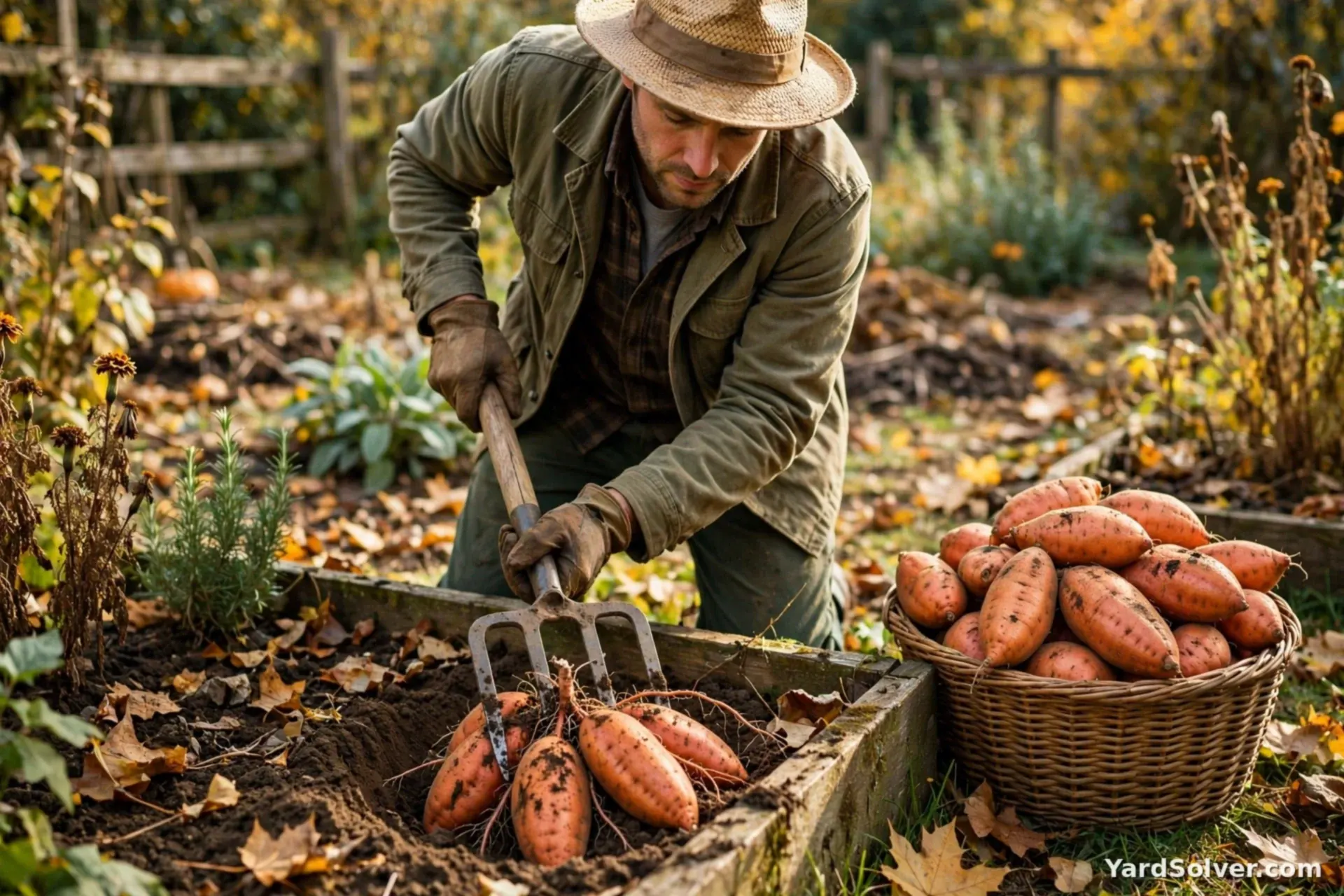
Ready in: 90–120 days after transplant. Harvest runs from about day 90 to 120 after transplant — dig one root to check, and get them all in before frost.
📅 Your personal Sweet Potato schedule
Counted from your planting day — not a generic calendar. Day 0 is the day the seed went in the ground or the young plant went out.
Varieties worth growing
| Variety | Colour | Why gardeners like it |
|---|---|---|
| Beauregard | Copper skin, orange flesh | The classic — heavy yields of sweet orange roots, widely adapted |
| Covington | Red skin, orange flesh | A dependable type bred for home gardens, with neat root shapes |
| Jewel | Rose skin, orange flesh | A long-time favourite — moist, sweet and a good keeper |
| Murasaki | White skin, purple flesh | A Japanese type — chestnut-sweet purple flesh, striking on the plate |
| Hannah | Tan skin, cream flesh | A white-fleshed type — drier and less sweet, more like a regular potato |
Good for you — and take care
Benefits
- Orange types are very rich in beta-carotene, which the body turns into vitamin A
- Provides vitamin C and vitamin B6
- Provides potassium and manganese
- Good source of fibre, especially with the skin on
- Naturally sweet and filling with a low fat content
Take care
- Unlike ordinary potatoes, sweet potato leaves are safe to eat cooked and are a popular green in many countries — but it is the roots that are the main crop
- Sweet potatoes contain oxalates, so people who are prone to kidney stones are often advised to eat them in moderation
A little history — and one good fact
Sweet potatoes come from Central and South America, where people have grown them for thousands of years. Long before Europeans crossed the Atlantic, the plant had already reached Polynesia across the Pacific — how it made that journey is still debated. Despite the similar name, it is no relation to the potato; the two just both store their food underground.
Fun fact: The sweet potato is not a potato at all — it belongs to the morning glory family, which is why its trailing vines make such pretty trumpet-shaped flowers.
Keep going
Guides: When to Start Seeds Indoors · How to Prepare Garden Soil in Spring · How to Harden Off Seedlings
Calculators: Plant Spacing Calculator · Seed Calculator · Garden Mix Calculator
More vegetables: Tomato · Pepper · Cucumber
← Back to the Plant Library · Get your personal planting dates
Questions people ask
When do I plant sweet potato?
Count from your average last spring frost: move outside 3 weeks after last frost. Sweet potatoes are grown from slips — rooted cuttings, not seed: plant them about 3 weeks after your last frost, only into warm soil with all frost danger past, and dig the roots 90 to 120 days later.
How far apart do I space sweet potato?
Space plants 12–18 in apart, with seed sown 3–4 (slips) in deep. Sun: full sun.
When is sweet potato ready to harvest?
90–120 days after transplant. Grown from slips (rooted cuttings), planted only after all frost danger and into warm soil.