
Plant Library · Vegetables
🌿 How to Grow Swiss Chard
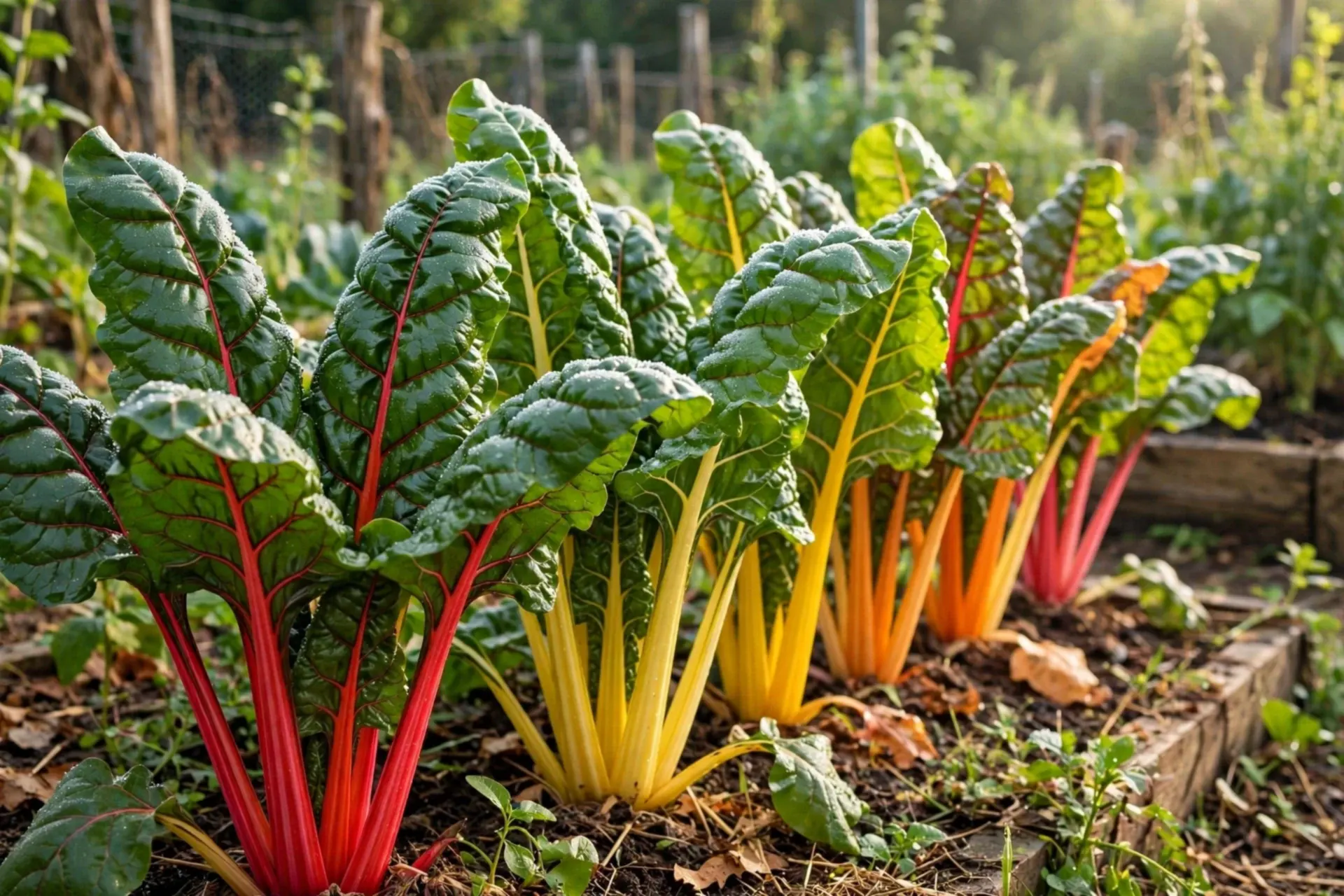
Pick outer leaves and it keeps producing all season. Swiss chard is a flexible cool-season green: start indoors about 5 weeks before your last frost or direct sow about 2 weeks before it, then pick the outer leaves and the plant keeps producing all season.
Grow Swiss Chard with us — step by step
Everything for this plant is written step by step below — what to do, and exactly when. Read it through first if you like: you can grow it entirely on your own with that guide. Or start with us here — tell us your planting day and we lay out your personal schedule on this page, every next step on its own day, counted from your planting date. No guessing, no forgetting.
Step 1 — today: Plant out your young Swiss Chard plants today (hardened off first), spaced 6–12 in apart, and water them in deeply. Starting from seed instead? Sow indoors now, 1/2 in deep, and this same schedule counts from transplant day.
Swiss Chard at a glance
Sow indoors: 5 weeks before last frost
Move outside: at last frost
Sow outdoors: 2 weeks before last frost
Spacing: 6–12 in · Seed depth: 1/2 in
Sun: Full sun to part shade
Water: Regular
Harvest: 50–60 days
Timing counts from your average last spring frost — get your own dates in the Planting Calendar. Guidance follows standard extension-service practice for Canada and the US.
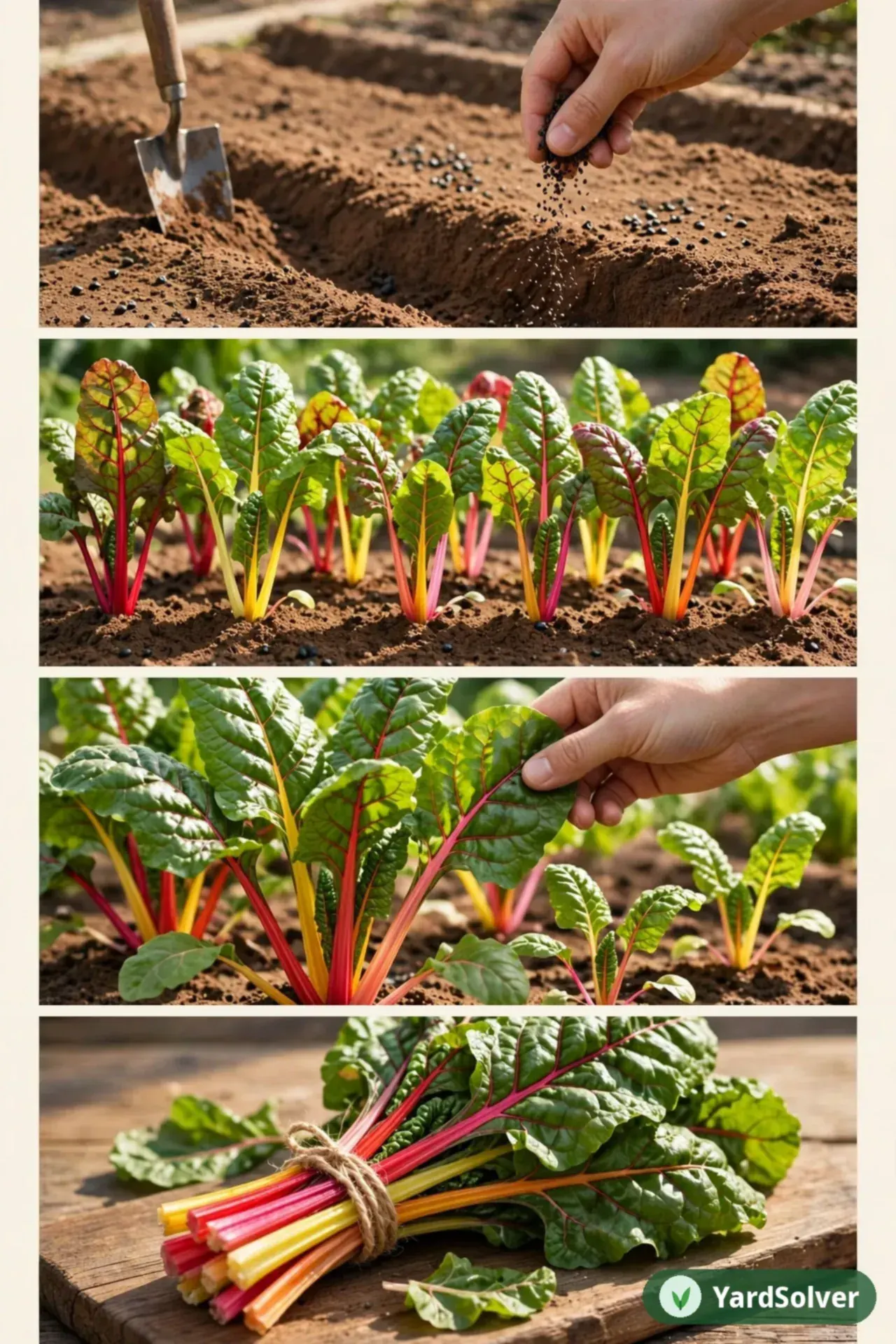
How to plant and grow swiss chard, step by step
Step 1 — Time it right
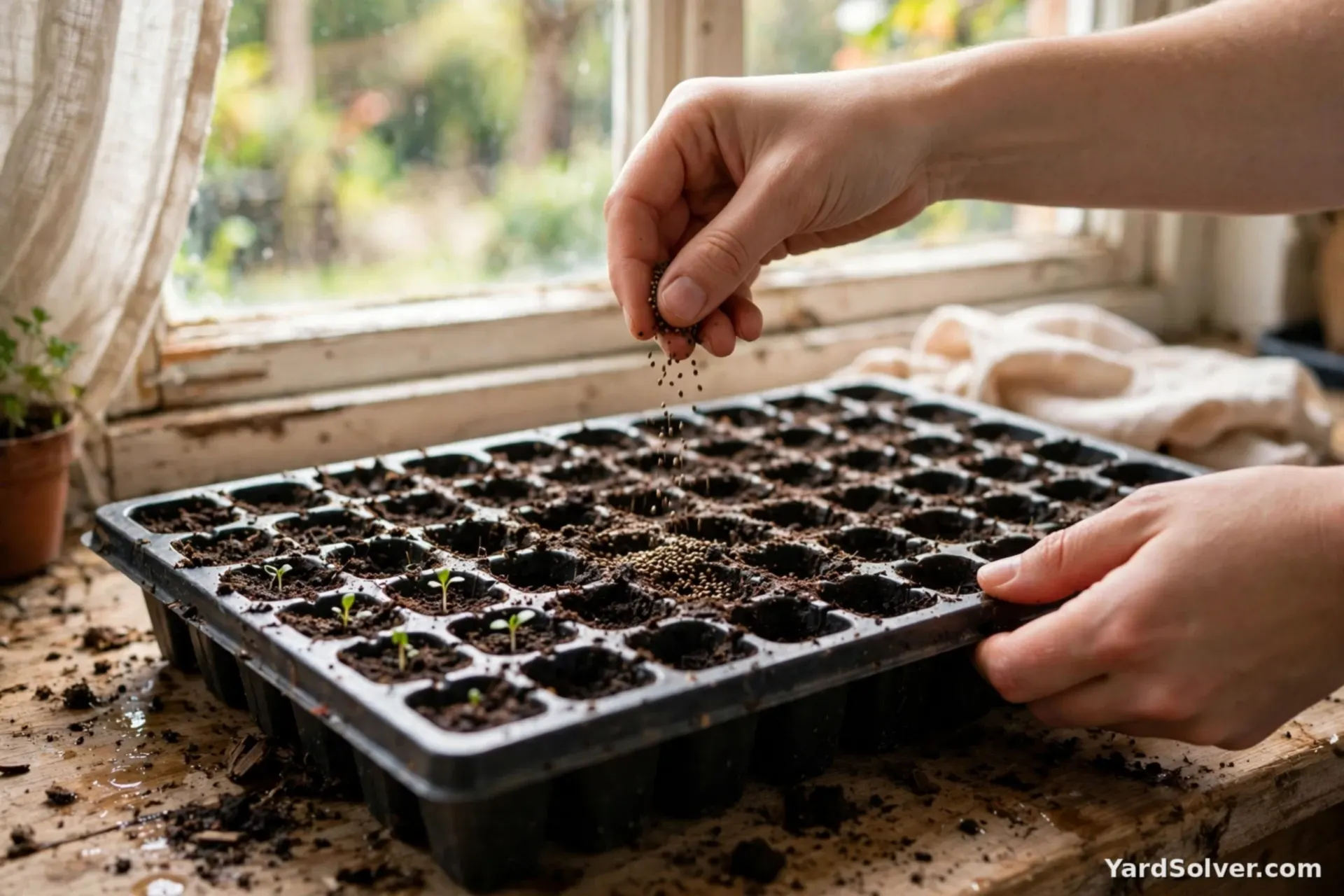
Sow indoors: 5 weeks before last frost; Move outside: at last frost; Sow outdoors: 2 weeks before last frost. All dates count from your average last spring frost — the Planting Calendar turns them into real dates for your garden. Swiss chard is a flexible cool-season green: start indoors about 5 weeks before your last frost or direct sow about 2 weeks before it, then pick the outer leaves and the plant keeps producing all season.
Step 2 — Prepare the spot
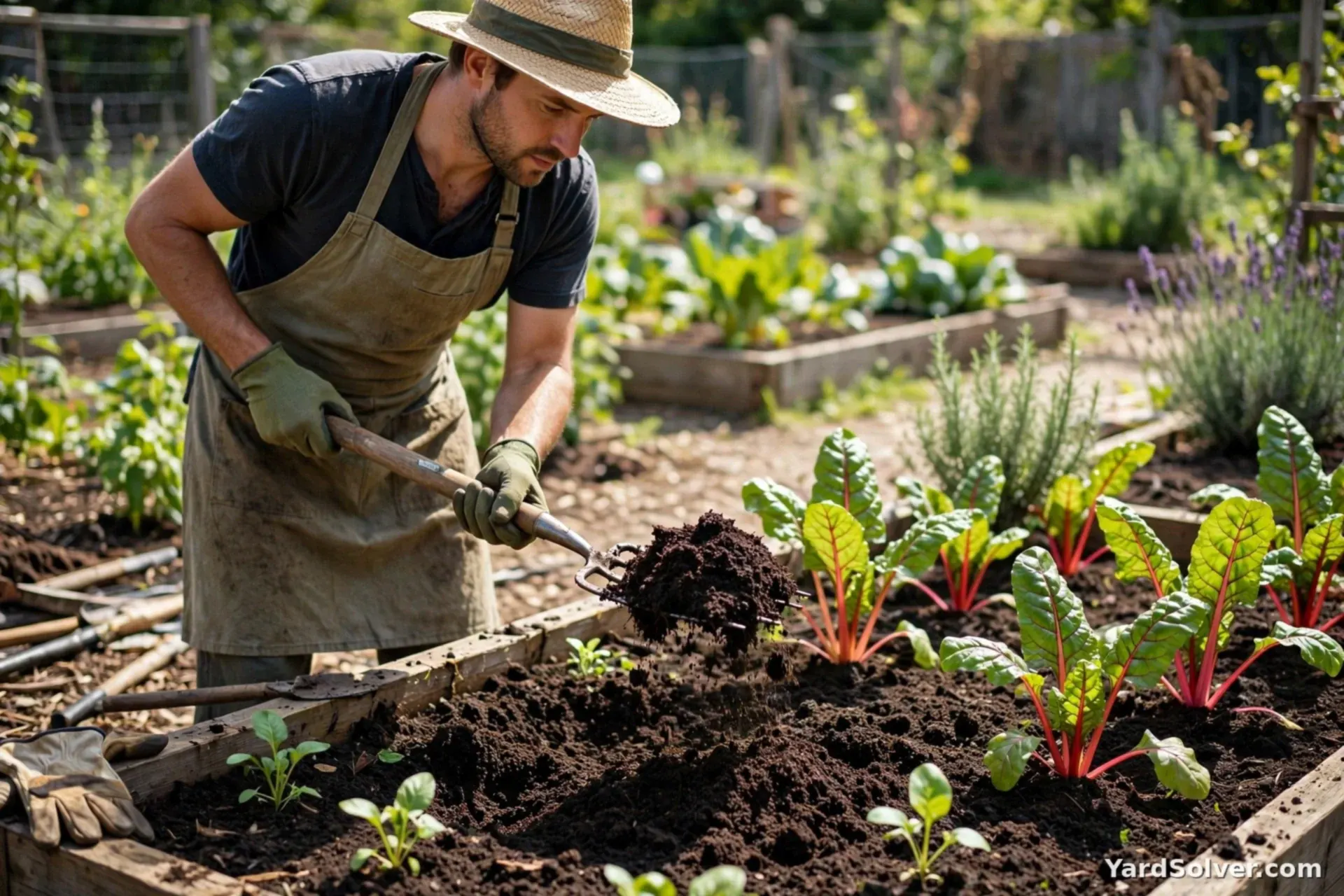
Sun: Full sun to part shade. Moist, compost-rich soil that never fully dries out. Leafy crops are fast and shallow-rooted, so little-and-often water beats occasional soaking. Work out how much you need with the Garden Mix Calculator or the Raised Bed Soil Calculator.
Step 3 — Sow and plant out
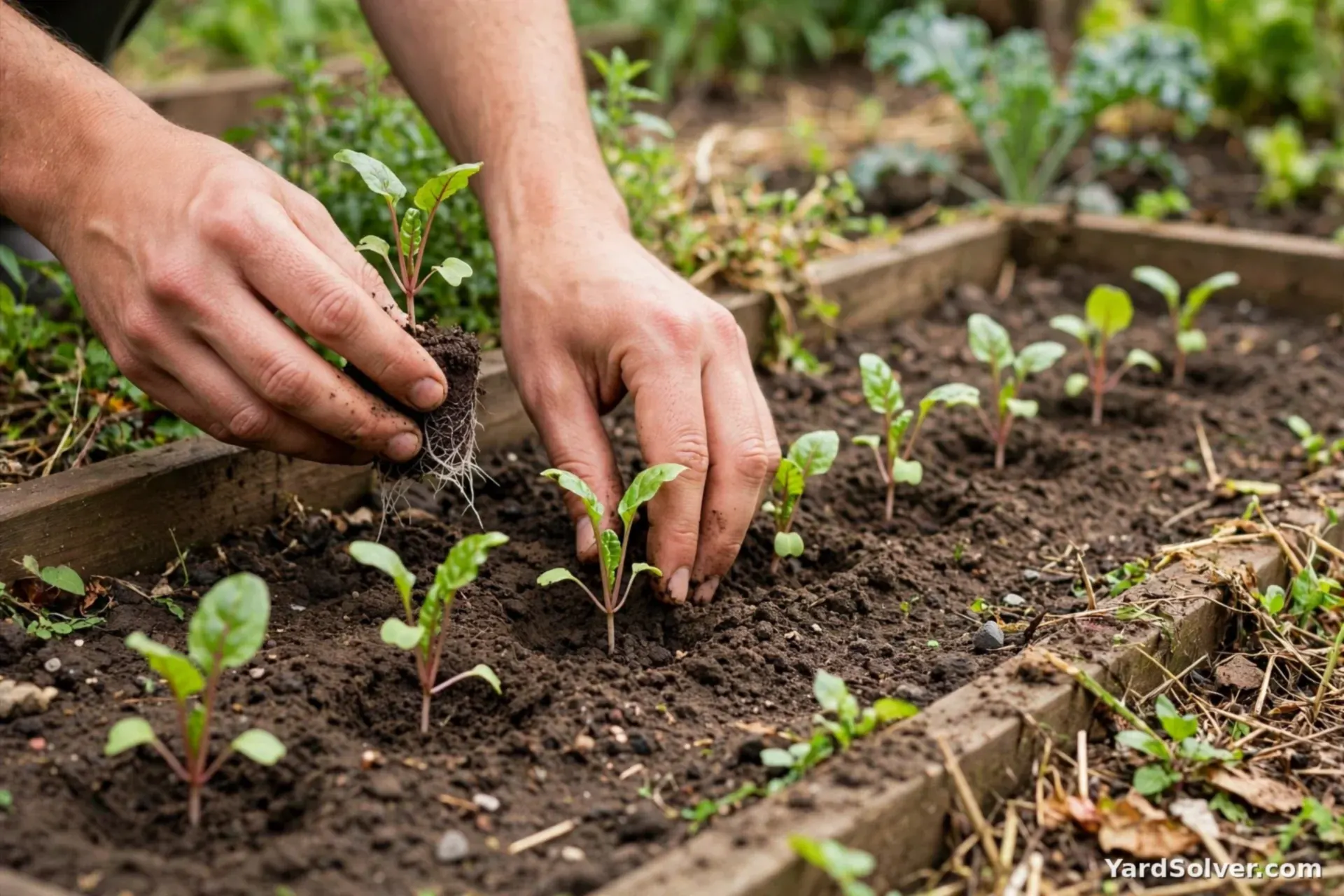
Start indoors 5 weeks before last frost at 1/2 in deep, or sow outdoors 2 weeks before last frost; plants finish spaced 6–12 in apart. Harden off indoor-started plants before they move out for good.
Step 4 — Water and feed
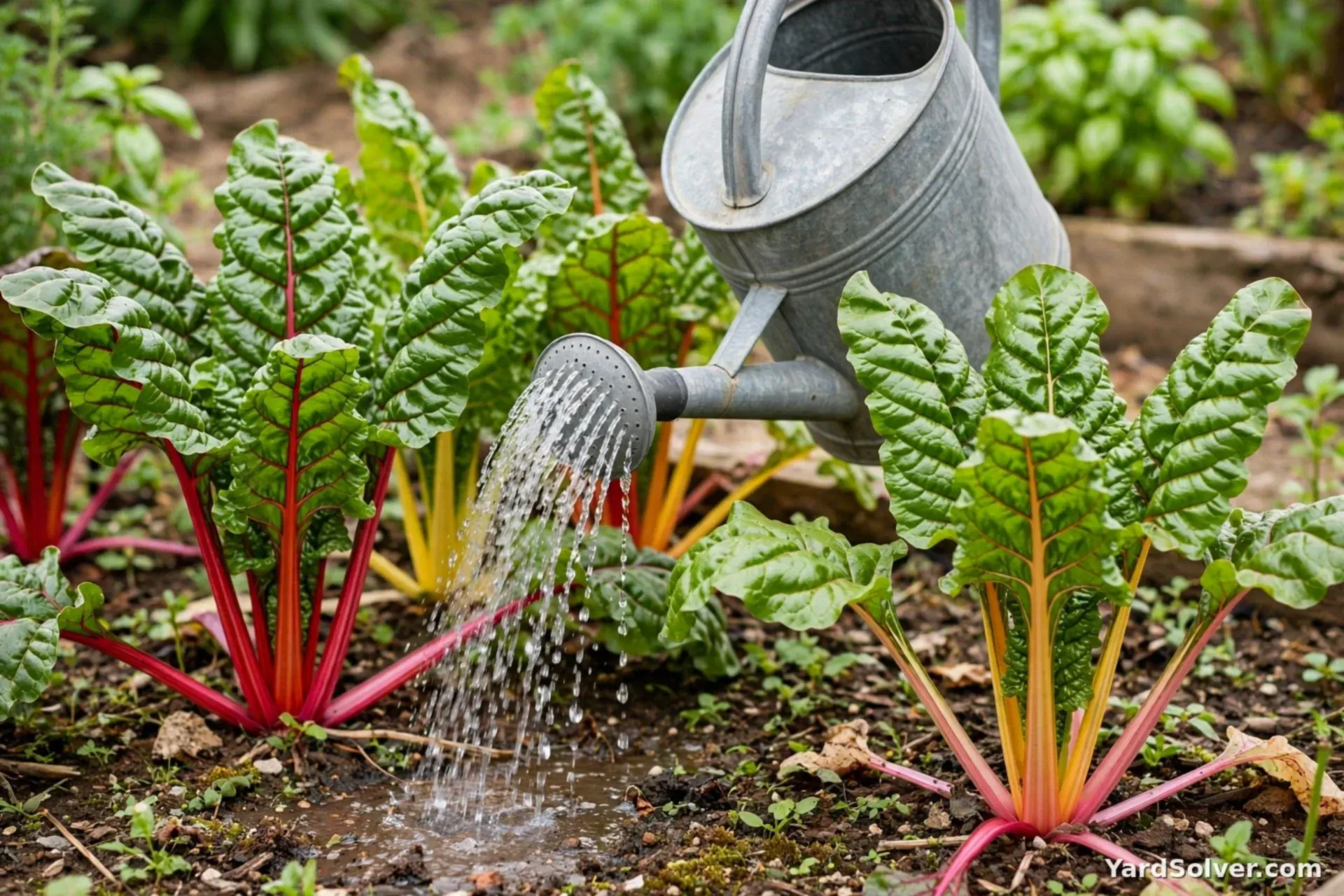
Water: Regular. The Fertilizer Calculator turns a bed size into the right amount.
Step 5 — Care and the problems to watch for
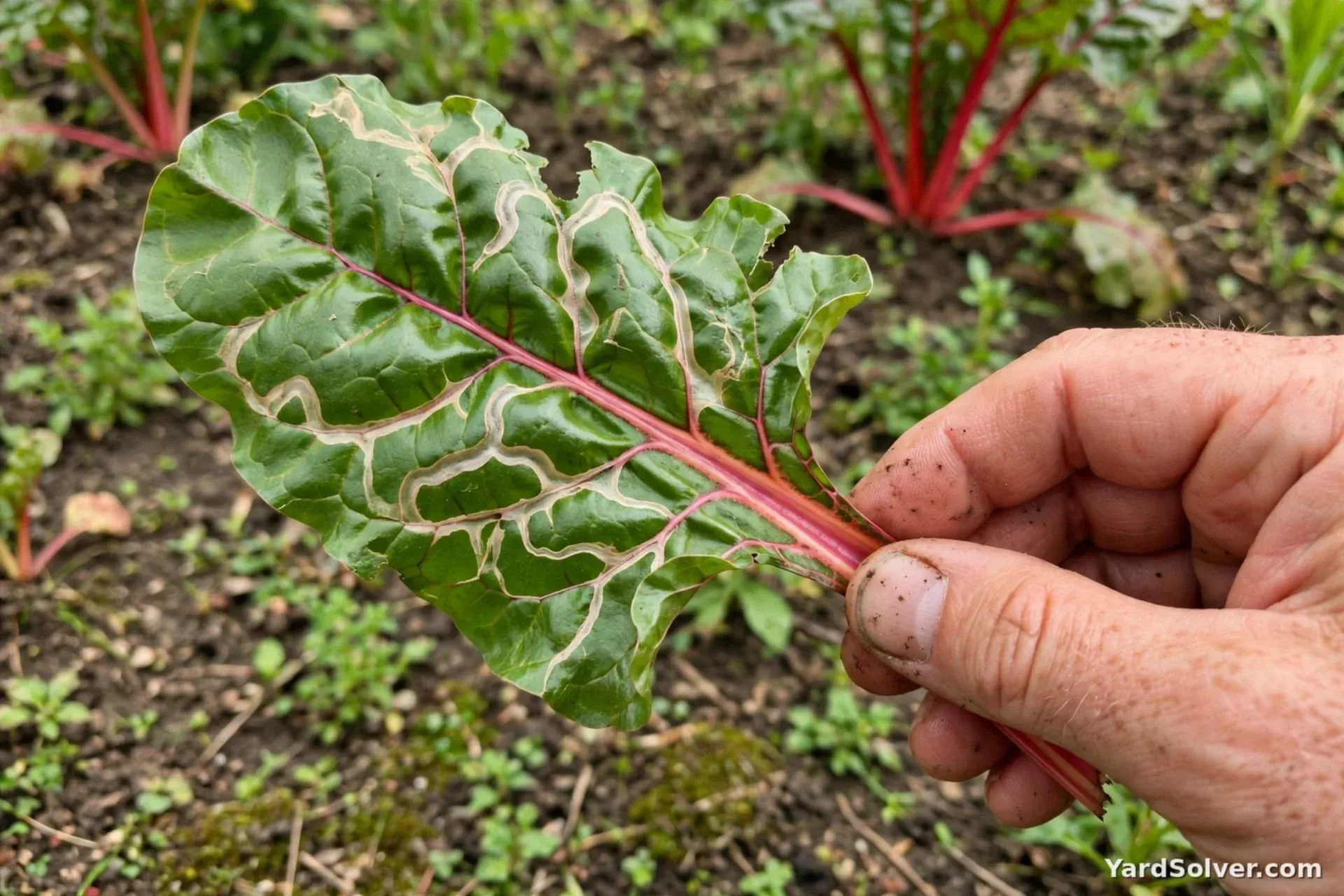
- Leaf miners — blotchy tunnels; remove marked leaves.
- Cercospora leaf spot — small spots with purple edges in wet weather; space plants and water at the base.
- Slugs on young plants — check in the evening.
Take care: Chard is high in oxalates, so people who are prone to kidney stones are often advised to limit it. Some people taking blood-thinning medicine are told to keep vitamin K foods steady in their diet.
Step 6 — Harvest
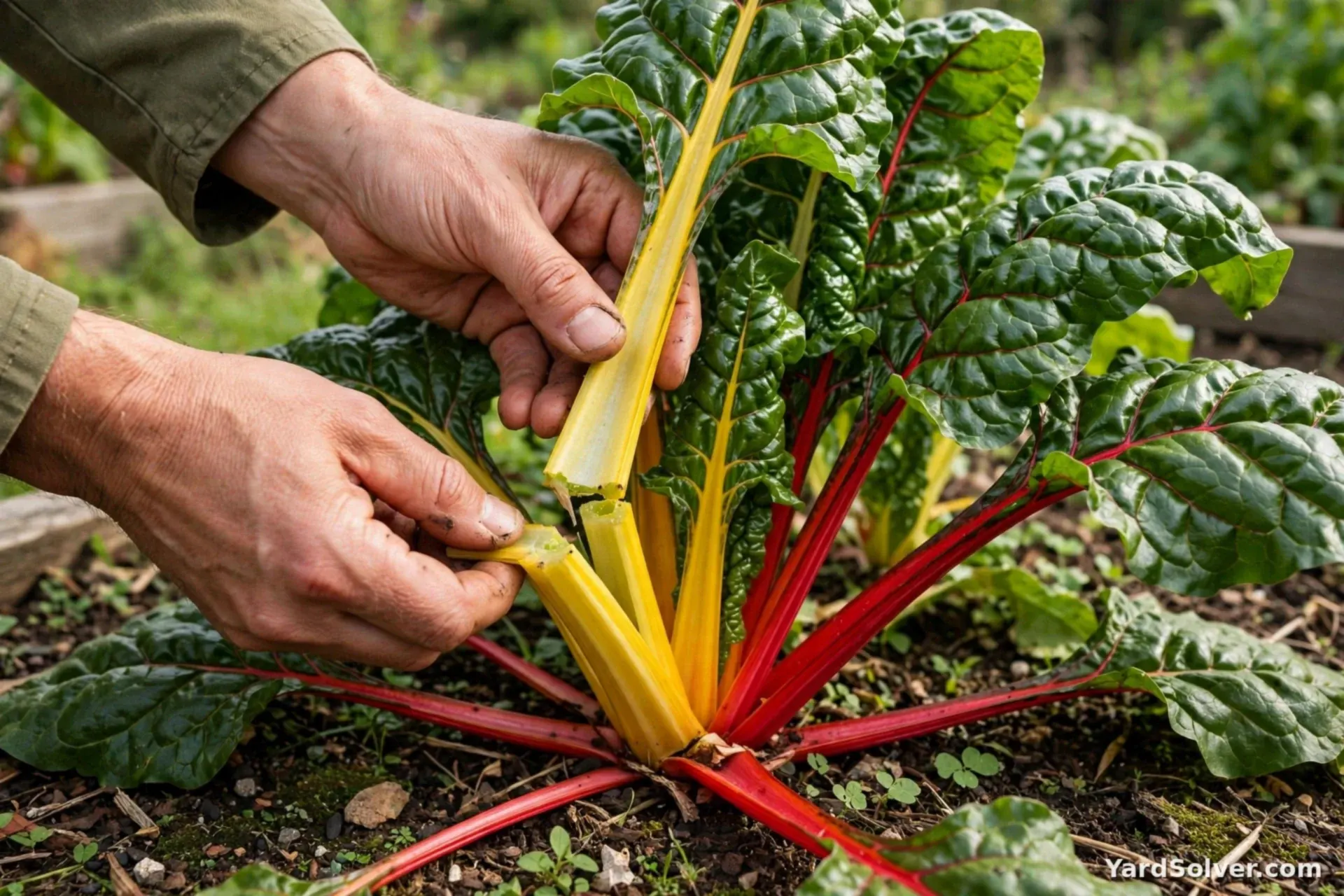
Ready in: 50–60 days. Harvest runs from about day 50 to 60 — snap off outer stems and the plant keeps making more all season.
📅 Your personal Swiss Chard schedule
Counted from your planting day — not a generic calendar. Day 0 is the day the seed went in the ground or the young plant went out.
Varieties worth growing
| Variety | Colour | Why gardeners like it |
|---|---|---|
| Bright Lights | Mixed red, gold, pink and white stems | A rainbow mix that looks as good in a flower bed as it tastes |
| Fordhook Giant | White stems | The classic — big crinkly leaves on thick white stalks, very reliable |
| Rhubarb | Deep red stems | Red stems and veins with a slightly stronger, earthier taste |
| Lucullus | Pale green stems | An old favourite with tender leaves and a mild flavour |
| Peppermint Stick | Pink and white striped stems | Candy-striped stalks that keep their colour in the garden |
Good for you — and take care
Benefits
- Very high in vitamin K for healthy blood and bones
- Provides vitamin A and vitamin C
- Provides magnesium and potassium
- Good source of fibre for digestion
- The colourful stems add natural plant antioxidants
Take care
- Chard is high in oxalates, so people who are prone to kidney stones are often advised to limit it
- Some people taking blood-thinning medicine are told to keep vitamin K foods steady in their diet
A little history — and one good fact
Swiss chard comes from the Mediterranean region, where its wild ancestor, the sea beet, grows along the coasts. People there have grown it since ancient times, eating the broad leaves and thick stems while its close cousin, the beet, was bred for the root instead. Chard stayed a staple of Mediterranean cooking for centuries before spreading to gardens everywhere.
Fun fact: Despite its name, Swiss chard is not from Switzerland — it comes from the Mediterranean, and the 'Swiss' part was added by a seed seller in the 1800s to set it apart from French spinach.
Keep going
Guides: When to Start Seeds Indoors · How to Prepare Garden Soil in Spring · How to Harden Off Seedlings
Calculators: Plant Spacing Calculator · Seed Calculator · Garden Mix Calculator
More vegetables: Tomato · Pepper · Cucumber
← Back to the Plant Library · Get your personal planting dates
Questions people ask
When do I plant swiss chard?
Count from your average last spring frost: sow indoors 5 weeks before last frost; move outside at last frost; sow outdoors 2 weeks before last frost. Swiss chard is a flexible cool-season green: start indoors about 5 weeks before your last frost or direct sow about 2 weeks before it, then pick the outer leaves and the plant keeps producing all season.
How far apart do I space swiss chard?
Space plants 6–12 in apart, with seed sown 1/2 in deep. Sun: full sun to part shade.
When is swiss chard ready to harvest?
50–60 days. Pick outer leaves and it keeps producing all season.