
Plant Library · Vegetables
How to Grow Turnip
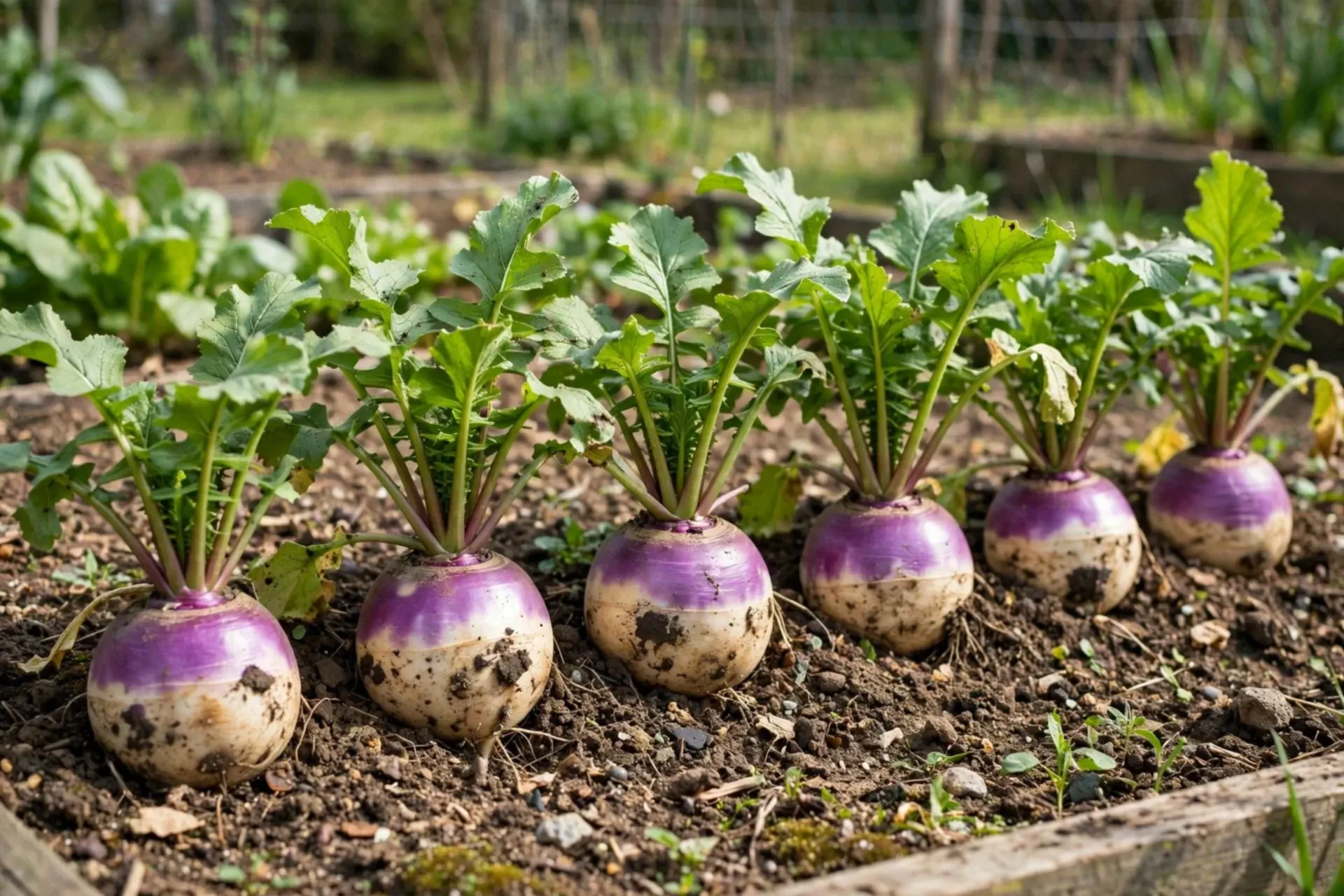
Grow for roots in spring, or sow in late summer for a fall crop. Turnips are a cool-season crop: direct sow about 3 weeks before your last frost for a spring root crop, or sow again in late summer for a fall crop touched by cool weather.
Grow Turnip with us — step by step
Everything for this plant is written step by step below — what to do, and exactly when. Read it through first if you like: you can grow it entirely on your own with that guide. Or start with us here — tell us your planting day and we lay out your personal schedule on this page, every next step on its own day, counted from your planting date. No guessing, no forgetting.
Step 1 — today: Sow your Turnip seeds today: 1/2 in deep, spaced 2–4 in apart, in full sun. Water the row in well and keep it moist while seeds sprout.
Turnip at a glance
Sow outdoors: 3 weeks before last frost
Spacing: 2–4 in · Seed depth: 1/2 in
Sun: Full sun
Water: Regular
Harvest: 45–60 days
Timing counts from your average last spring frost — get your own dates in the Planting Calendar. Guidance follows standard extension-service practice for Canada and the US.
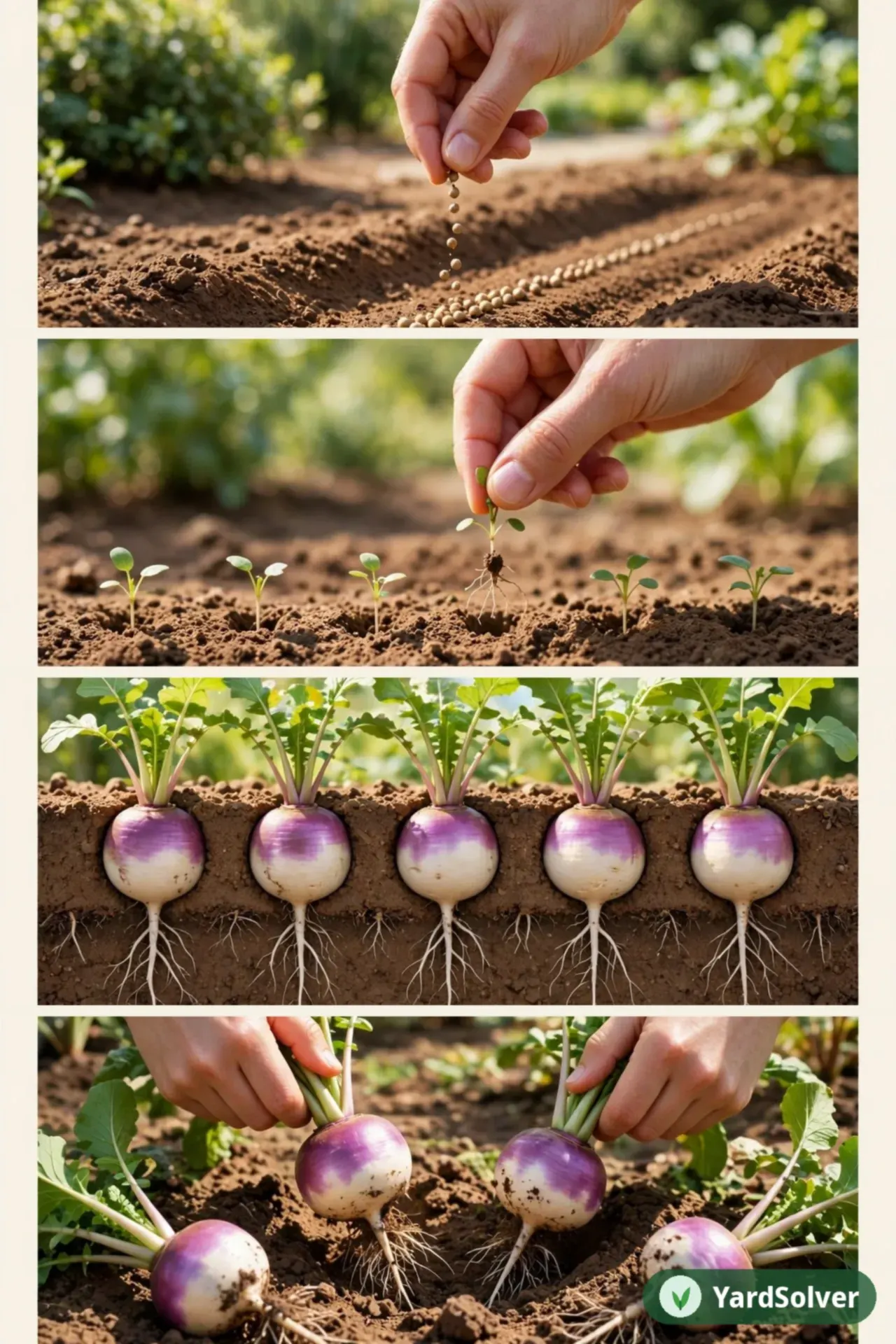
How to plant and grow turnip, step by step
Step 1 — Time it right
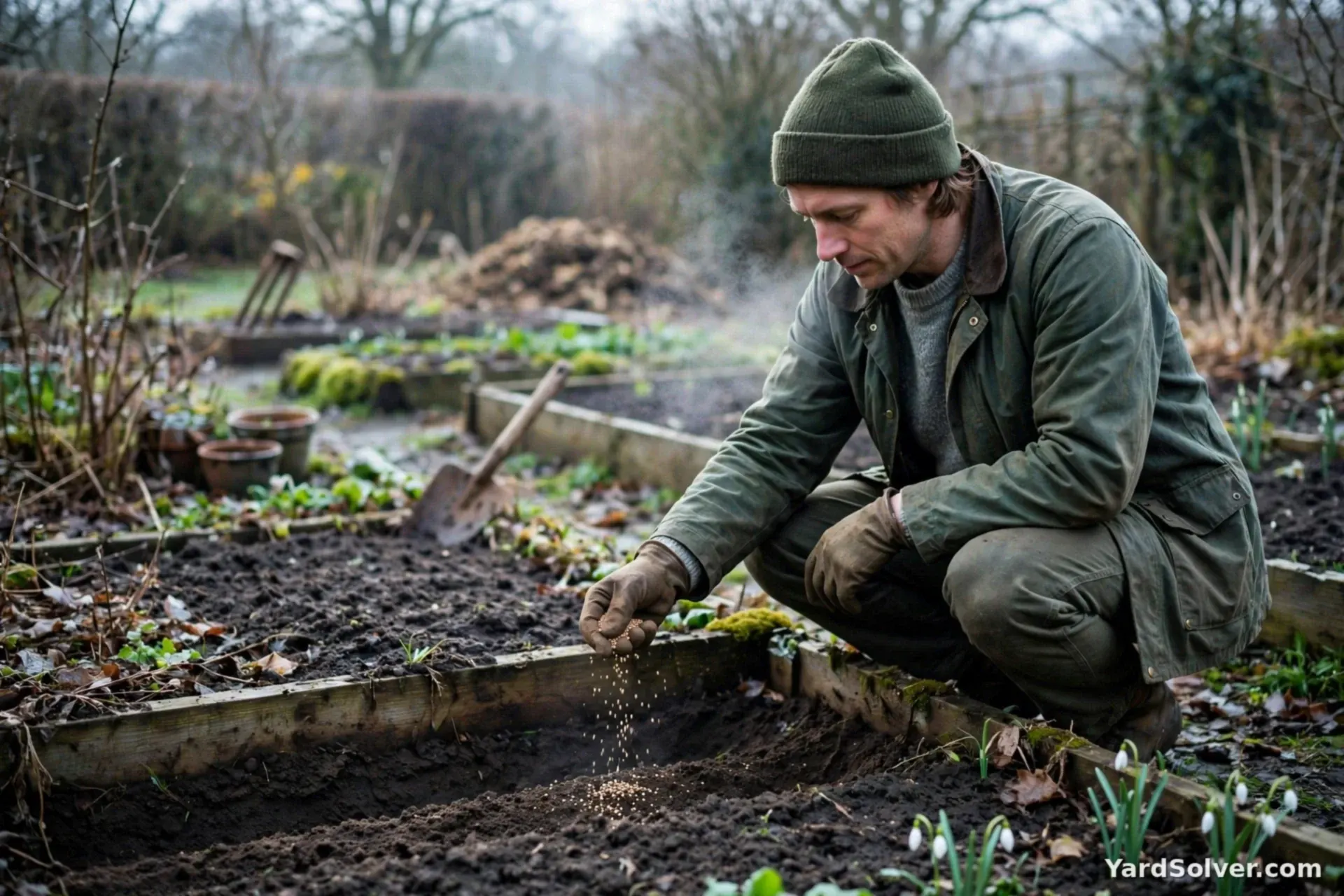
Sow outdoors: 3 weeks before last frost. All dates count from your average last spring frost — the Planting Calendar turns them into real dates for your garden. Turnips are a cool-season crop: direct sow about 3 weeks before your last frost for a spring root crop, or sow again in late summer for a fall crop touched by cool weather.
Step 2 — Prepare the spot
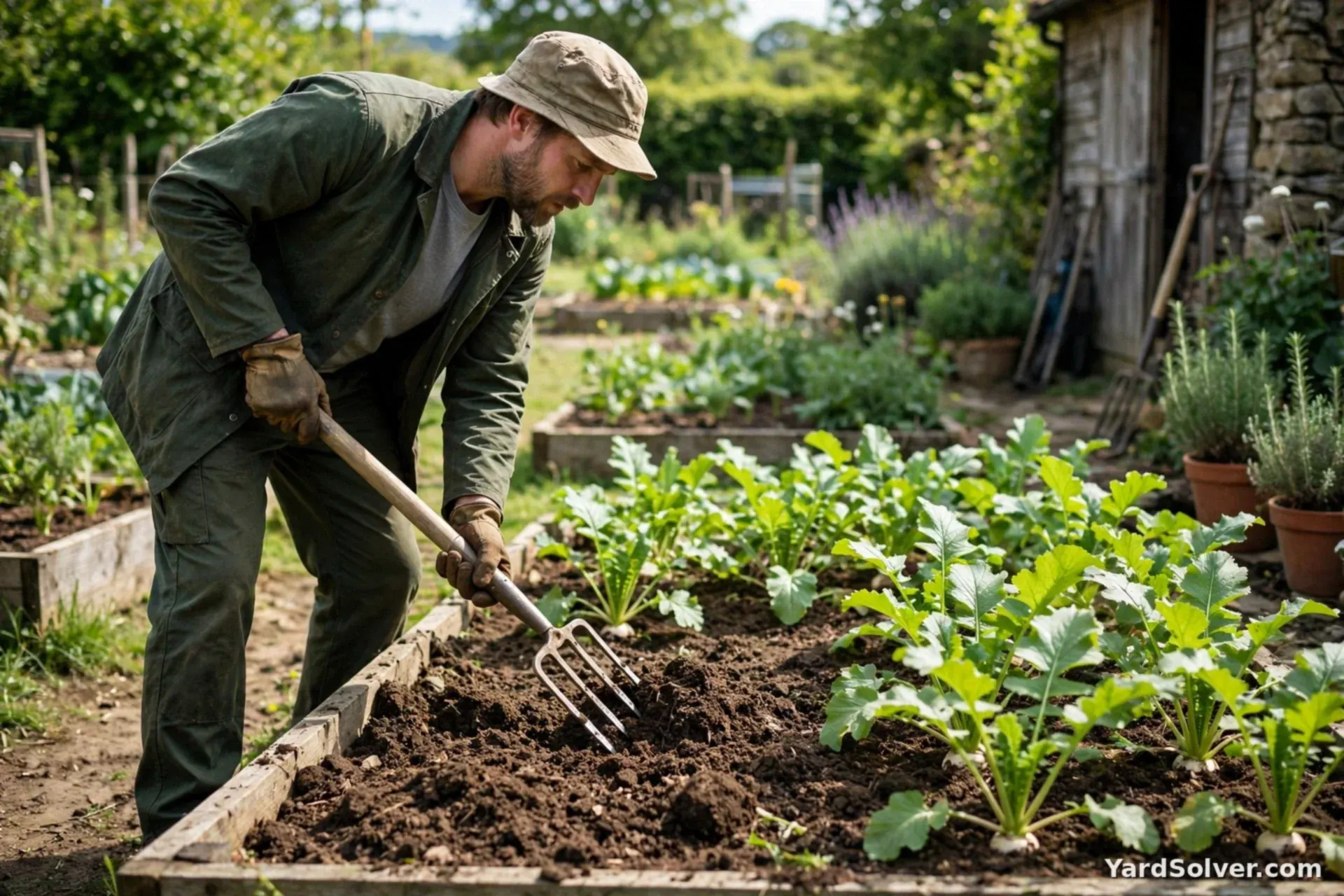
Sun: Full sun. Loose, stone-free soil is the whole secret for root crops — dig it over, pick out stones, and work in compost (never fresh manure, which forks roots). Depth and drainage matter more than feeding. Work out how much you need with the Garden Mix Calculator or the Raised Bed Soil Calculator.
Step 3 — Sow and plant out
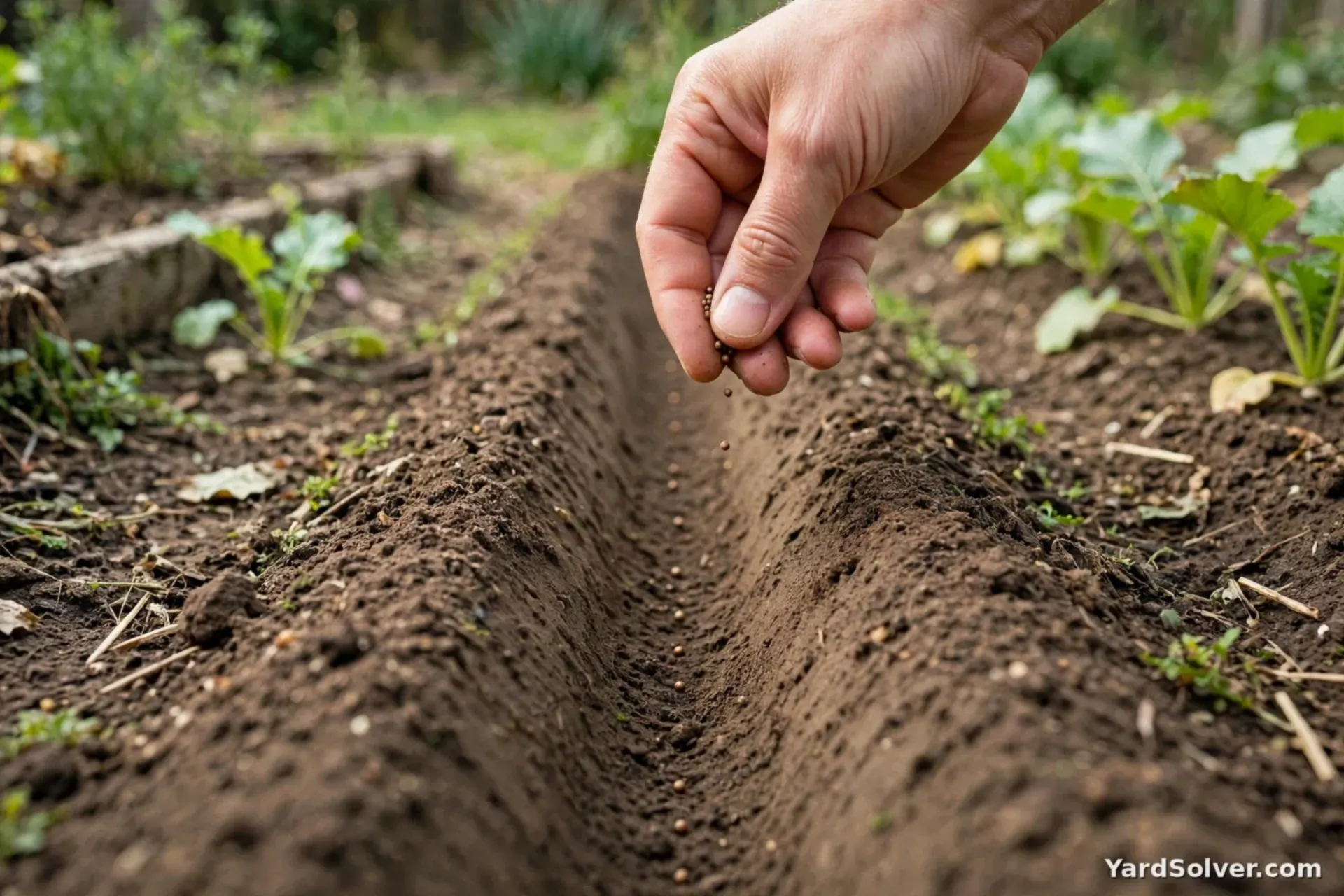
Sow directly where they will grow, 3 weeks before last frost, 1/2 in deep and 2–4 in apart (thin seedlings to that spacing once they are up). The Seed Calculator works out how much seed a bed needs.
Step 4 — Water and feed
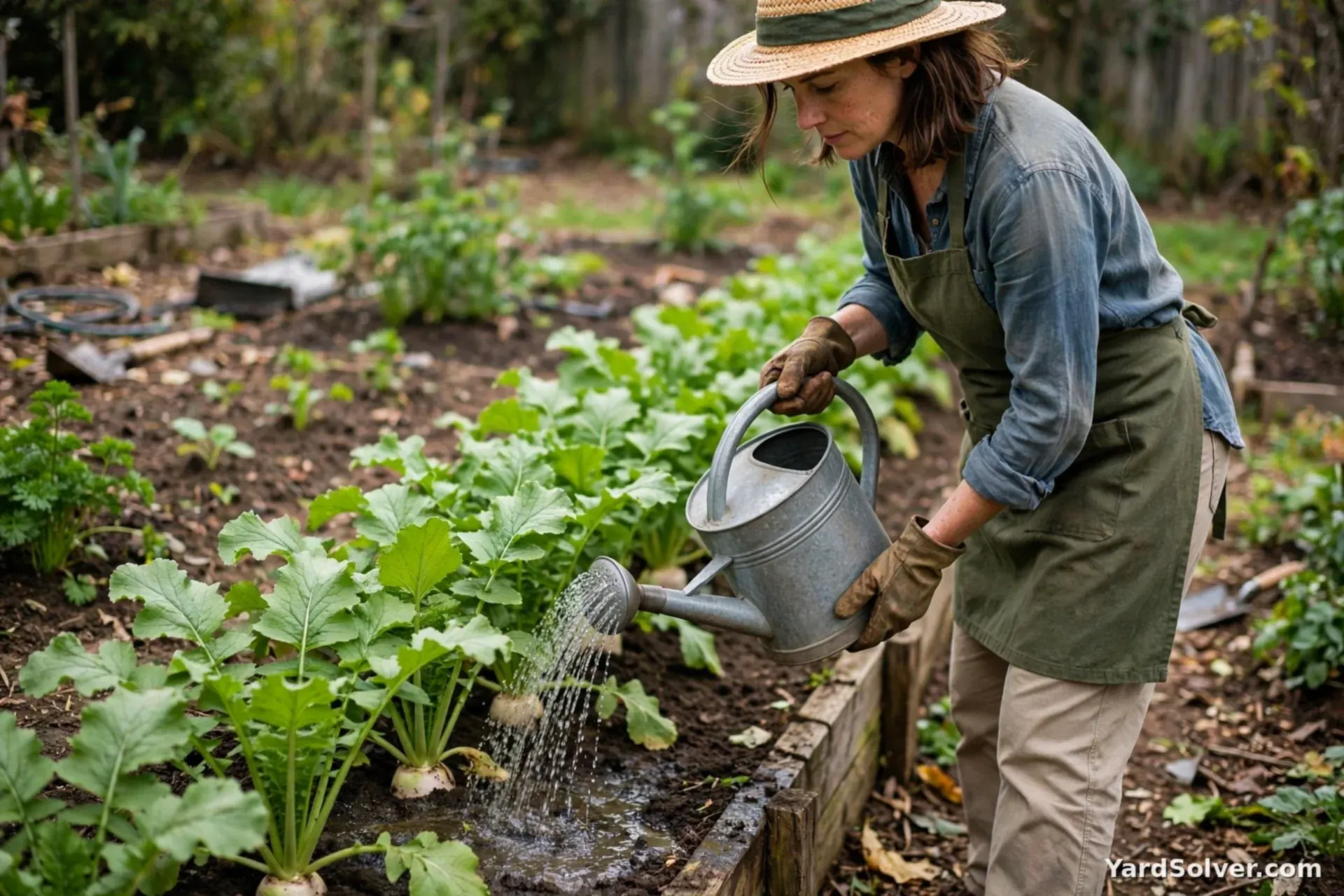
Water: Regular. The Fertilizer Calculator turns a bed size into the right amount.
Step 5 — Care and the problems to watch for
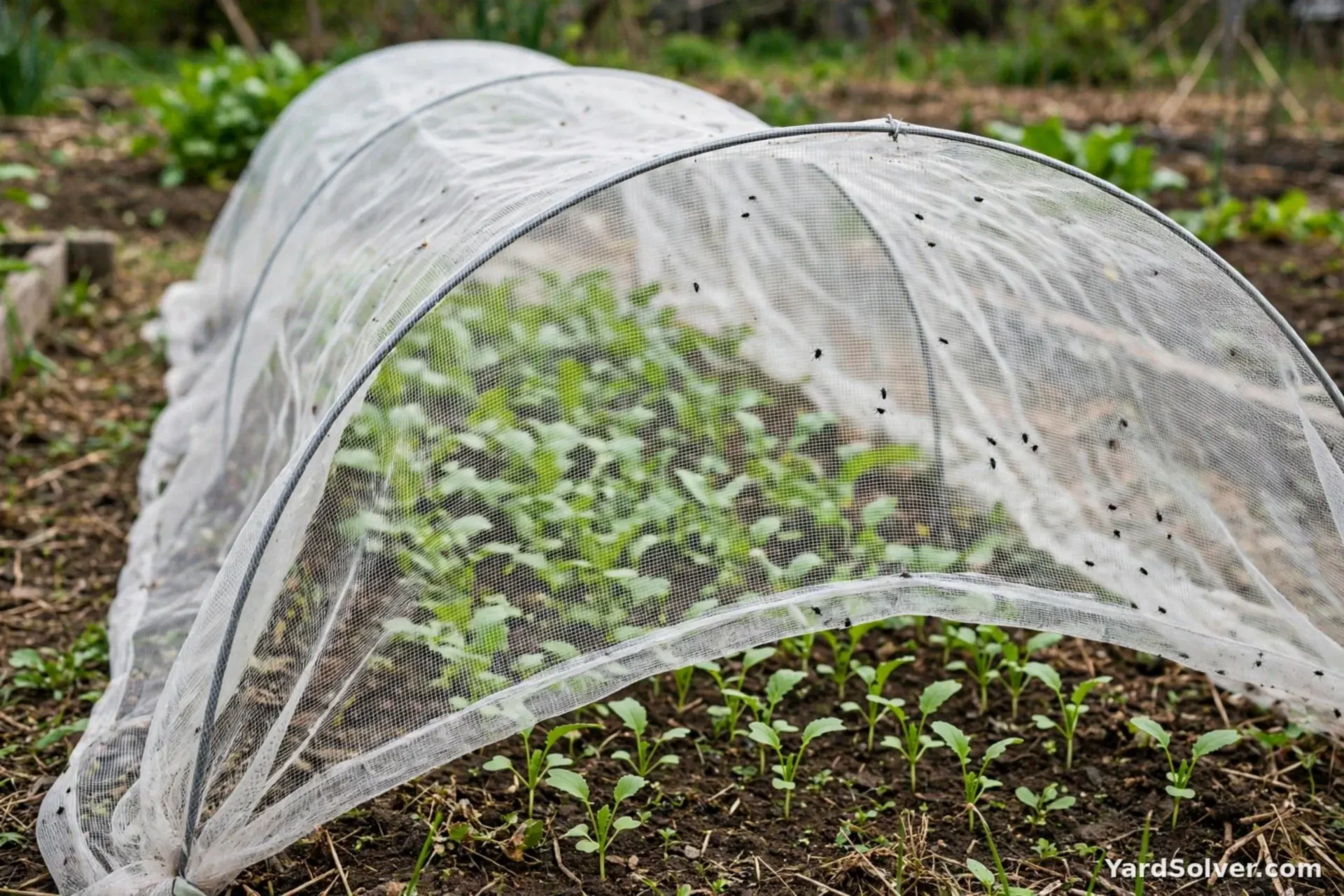
- Flea beetles on seedlings — cover with mesh until established.
- Clubroot in sour soil — lime the bed for brassica-family crops.
- Woolly roots from dry soil — keep moisture even.
Take care: Turnips can cause gas or bloating in some people. Some people with thyroid concerns are advised not to eat very large amounts of raw turnip and its cabbage-family cousins — normal cooked servings are the usual pattern.
Step 6 — Harvest
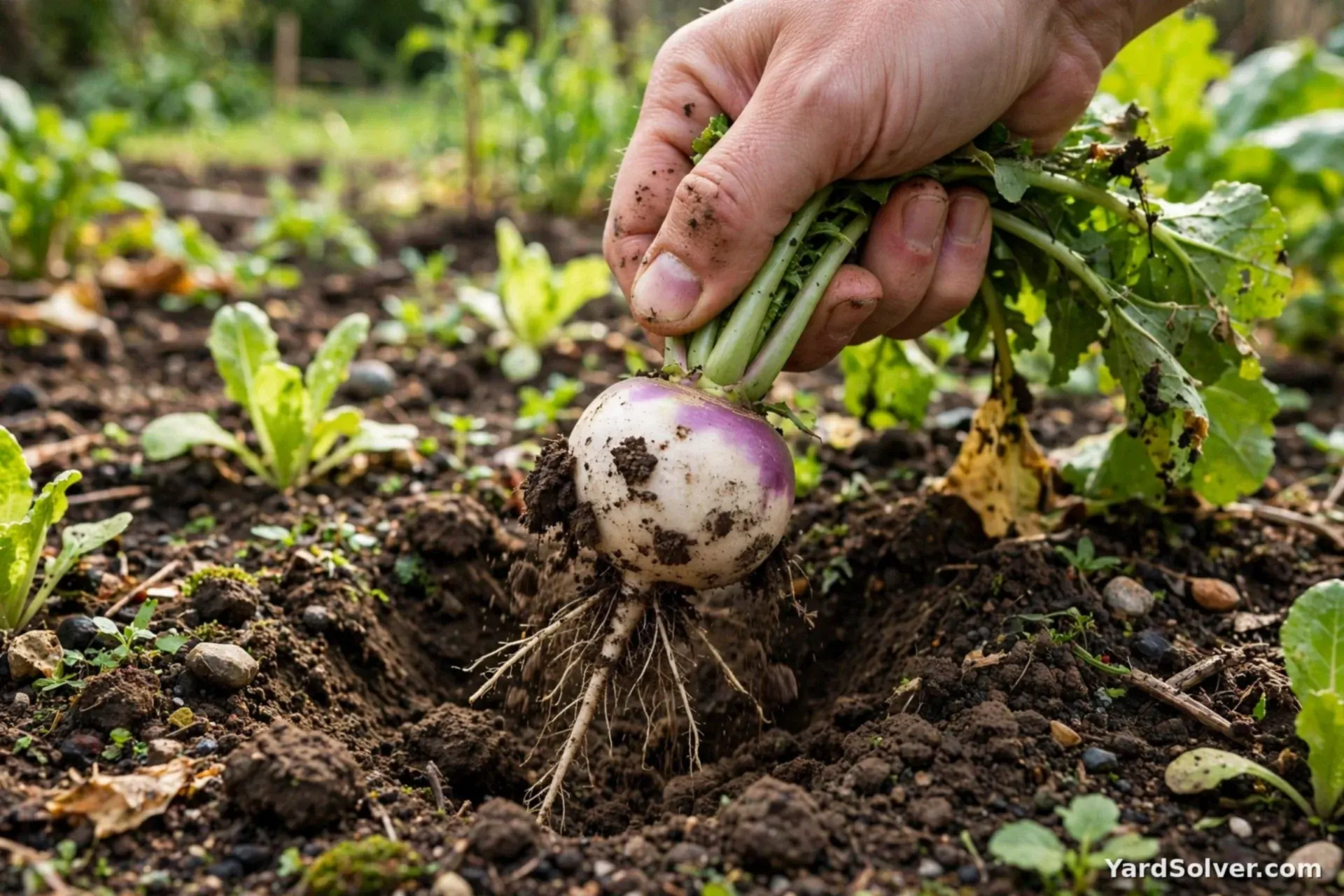
Ready in: 45–60 days. Harvest runs from about day 45 to 60 — pull roots while they are still small and mild.
📅 Your personal Turnip schedule
Counted from your planting day — not a generic calendar. Day 0 is the day the seed went in the ground or the young plant went out.
Varieties worth growing
| Variety | Colour | Why gardeners like it |
|---|---|---|
| Purple Top White Globe | White with purple tops | The classic — big, reliable roots for cooking and mashing |
| Hakurei | Pure white | A Japanese salad turnip — sweet, crisp and eaten raw, no peeling needed |
| Golden Ball | Yellow | A mild, sweet yellow-fleshed heirloom |
| Purple Top Milan | White with purple tops | An early, flatter type that matures quickly |
| Tokyo Cross | White | A fast, uniform hybrid that resists going woody |
Good for you — and take care
Benefits
- A good source of vitamin C for the immune system
- Provides fibre for good digestion
- Provides potassium and folate
- Low in calories and filling
- The leafy tops are edible too and provide calcium and vitamin K
Take care
- Turnips can cause gas or bloating in some people
- Some people with thyroid concerns are advised not to eat very large amounts of raw turnip and its cabbage-family cousins — normal cooked servings are the usual pattern
A little history — and one good fact
The turnip is one of Europe's oldest root vegetables, grown since the times of the ancient Greeks and Romans. For centuries it was everyday food for people and farm animals alike, long before potatoes arrived from the Americas and pushed it aside. In Japan, gardeners bred small, sweet salad turnips that can be eaten raw like an apple.
Fun fact: Before pumpkins took over, people in parts of Britain and Ireland carved turnips into lanterns for Halloween — a much tougher job than carving a pumpkin.
Keep going
Guides: When to Start Seeds Indoors · How to Prepare Garden Soil in Spring · How to Harden Off Seedlings
Calculators: Plant Spacing Calculator · Seed Calculator · Garden Mix Calculator
More vegetables: Rutabaga · Pepper · Cucumber
← Back to the Plant Library · Get your personal planting dates
Questions people ask
When do I plant turnip?
Count from your average last spring frost: sow outdoors 3 weeks before last frost. Turnips are a cool-season crop: direct sow about 3 weeks before your last frost for a spring root crop, or sow again in late summer for a fall crop touched by cool weather.
How far apart do I space turnip?
Space plants 2–4 in apart, with seed sown 1/2 in deep. Sun: full sun.
When is turnip ready to harvest?
45–60 days. Grow for roots in spring, or sow in late summer for a fall crop.