
Guides · Small spaces · Published November 3, 2026
Vertical Gardening Ideas
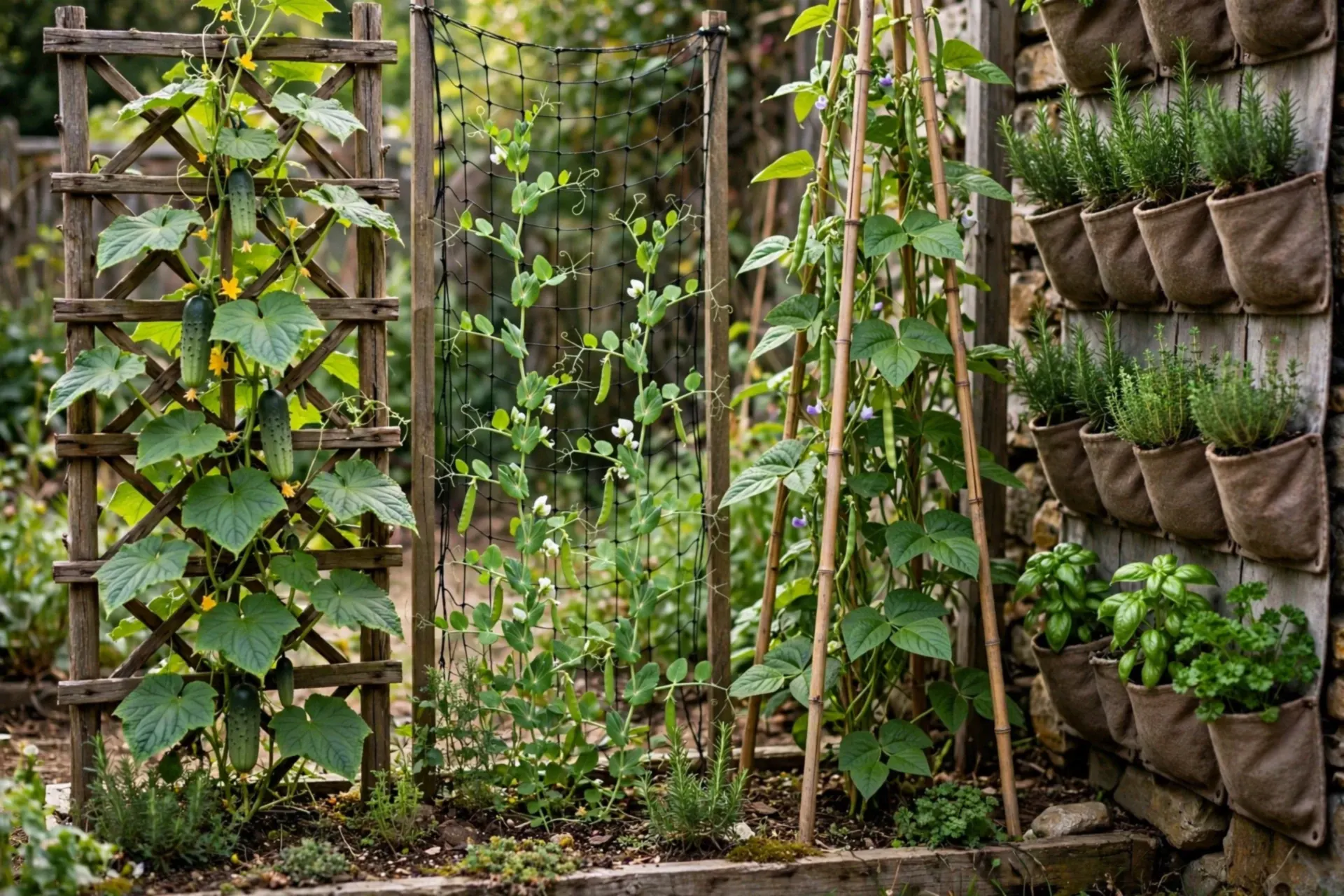
Every small garden hits the same wall: the ground runs out long before the wish list does. Vertical gardening is the way through — the strip of soil along a fence can hold a wall of cucumbers, the end of a bed can carry beans to head height, and a bare wall can grow the herbs. But vertical only works when matched to how plants actually grow: some climb on their own, some need tying every week, and some never leave the ground. This guide sorts the ideas by the plants, then covers the supports, the shade math, and the safety that keeps a wall of leaves standing in August wind.
The vertical toolkit
- Trellis and panels: the workhorse — cucumbers, squash on a strong frame, anything with tendrils
- Poles and teepees: the bean classic — cheap, sturdy, and stored flat in winter
- Netting: strung between posts for peas, whose tendrils need fine mesh to grip
- Obelisks and cages: a feature and a support in one — tomatoes, and flowers among the vegetables
- Wall pockets, hanging and railing planters: for herbs, strawberries and trailing crops — the wall itself becomes a shelf
Step 1 — Know what climbs, and what only leans
Start with the honest list. True climbers do the work themselves: peas grip netting with tendrils, pole beans twine themselves around anything vertical, and cucumbers climb a trellis with tendrils plus a little weekly guidance. Leaners grow tall but hold nothing: tomatoes — the indeterminate kinds especially — reach head height only because you tie them to a stake or cage as they grow. Ground crops never climb: lettuce, carrots, onions, and peppers, though a pepper under a heavy crop of fruit appreciates a short stake. Matching the structure to this list is the whole game — a bean teepee given to bush beans is garden furniture, not a system.
Step 2 — Match the structure to the crop
Netting on posts for peas — fine mesh, because tendrils cannot grip a thick rail. Poles or a teepee for beans: one pole per plant, rough bark or bamboo that twining stems can hold. A trellis or A-frame for cucumbers, strong enough for a season of fruit — the full method is in How to Grow Cucumbers Vertically. A stake or a sturdy cage, in the ground at planting time, for every tomato. An obelisk where you want the garden to look deliberate: sweet peas or a climbing bean in the middle of a bed reads as design, not improvisation. Buy or build once, at the strength the mature plant needs — a cucumber trellis is tested in August, not May.
Step 3 — Pockets, hangers and railing planters for the small stuff
Not everything vertical climbs. Wall pockets and fabric planters turn a fence into herb and strawberry shelves; hanging baskets suit strawberries and trailing herbs; railing planters lift salad leaves to the best light on a balcony. Two honest warnings travel with all of them: they dry out faster than anything else in the garden — small soil volume, wind on all sides — so they need daily checks in summer; and wet, they are heavy, so hang them from fixings rated for more than you think. These planters follow container rules — Container Gardening for Beginners covers sizes and mix.
Step 4 — Mind the sun and the shade you create
A wall of leaves is also a wall of shade. In the northern hemisphere, put tall crops on the north side of the bed so their shadow falls away from their neighbours; reverse it in the southern hemisphere. Placed with that one decision, a cucumber trellis shades almost nothing and the bed behind keeps its six hours. The same physics is a tool, too: a trellis deliberately placed on the sunny side gives lettuce and spinach the afternoon shade that stops them bolting in July. Before building anything permanent, run your plan through the Sun & Shadow Calculator — it shows the shade a trellis casts across the day and season, before a single post goes in.
Step 5 — Build it safe, and keep it tied
Supports go in at planting time — pushing a stake beside a grown tomato spears the roots you are trying to help. Anchor like you mean it: a mature bean teepee in a thunderstorm is a sail, and it will test every knot. Push poles and posts deep, lash the joints, and on exposed sites set trellises slightly angled into the prevailing wind. Through the season, the maintenance is small and weekly: guide cucumber stems onto the trellis before they grab the wrong thing, add a tie every foot or so of tomato growth, and keep harvest within reach — a climber you cannot pick from is a ladder chore, not a space saving. Done right, taking it all down in fall is the work of one dry afternoon.
Keep going
The deep dive on the best vertical crop: How to Grow Cucumbers Vertically. Test the shade before you build: the Sun & Shadow Calculator.
More for tight spaces: Best Vegetables to Grow in a Small Garden · Balcony Vegetable Gardening · Container Gardening for Beginners.
Questions people ask
Which vegetables grow vertically?
True climbers do the work themselves: peas grip with tendrils, pole beans twine around poles, and cucumbers climb trellis with tendrils and a little guidance. Tomatoes are not climbers — they lean, and grow tall only because gardeners tie them to stakes and cages. Peppers, lettuce and root crops do not climb at all; peppers just appreciate a short stake against wind and heavy fruit.
Does vertical gardening really save space?
For vining crops, genuinely yes. A cucumber sprawling on the ground takes a patch of bed; the same plant on a trellis takes a strip a few inches wide, the fruit hangs clean, and air moves through the leaves, which discourages mildew. It does not create light or soil — the roots still need their share — but it multiplies the crops a small garden can hold.
Where should a trellis go so it does not shade the garden?
On the north edge of the bed in the northern hemisphere (the south edge in the southern), so the climbing wall of leaves does not shadow its neighbours. Put there deliberately, vertical crops shade almost nothing; put in the middle, they become the roof over everything behind them. In summer the same trick used in reverse — a trellis on the sunny side — gives lettuce welcome afternoon shade.
Comments & ratings
No comments yet.
Be the first to share your experience.