
Plant Library · Herbs
🌿 How to Grow Parsley
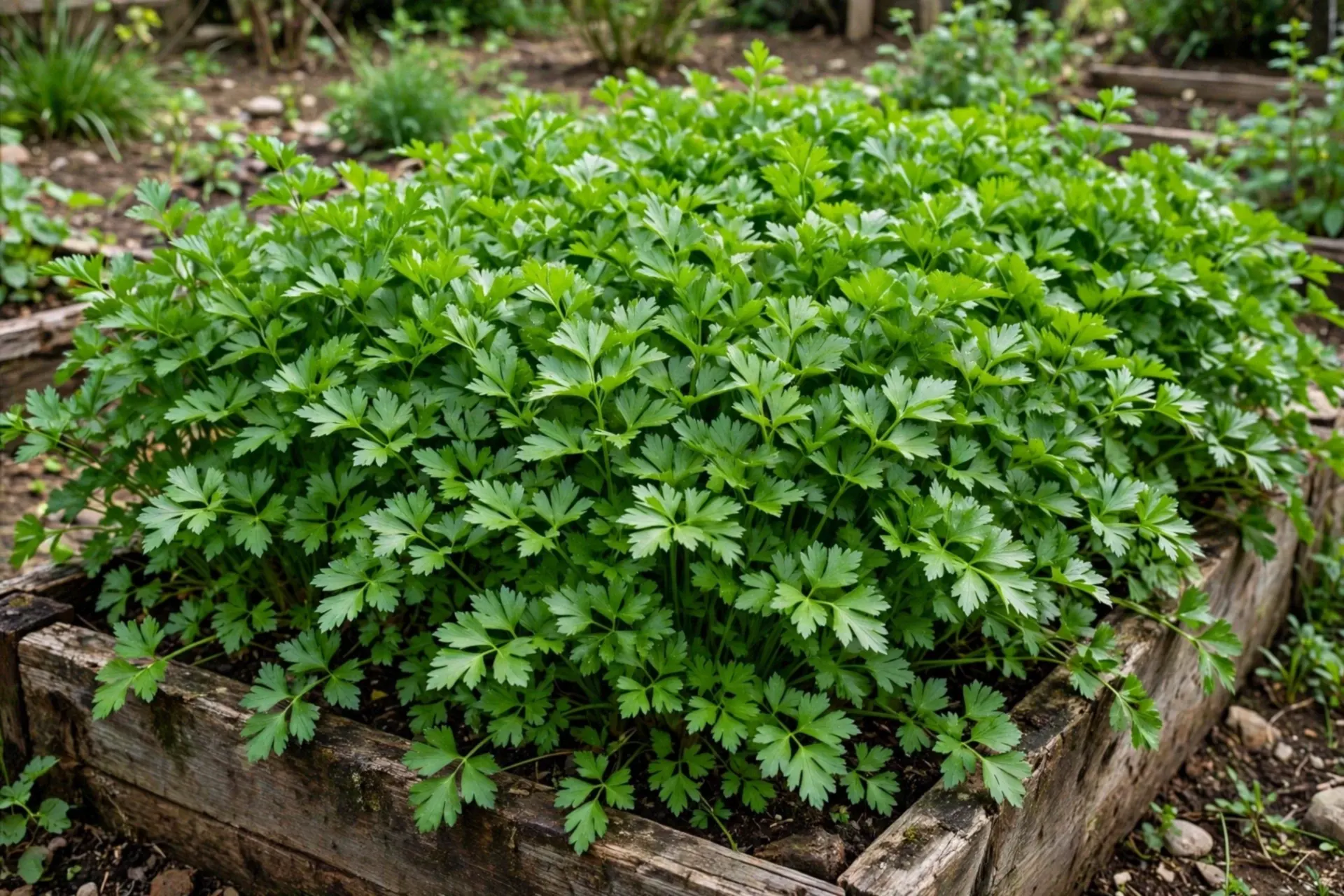
Very slow to sprout (2–4 weeks); a biennial — leaves in year one, seed in year two. Parsley is a slow, cool-season biennial: start indoors about 10 weeks before your last frost — it can take 2 to 4 weeks just to sprout — and it gives leaves in its first year.
Grow Parsley with us — step by step
Everything for this plant is written step by step below — what to do, and exactly when. Read it through first if you like: you can grow it entirely on your own with that guide. Or start with us here — tell us your planting day and we lay out your personal schedule on this page, every next step on its own day, counted from your planting date. No guessing, no forgetting.
Step 1 — today: Plant out your young Parsley plants today (hardened off first), spaced 8–10 in apart, and water them in deeply. Starting from seed instead? Sow indoors now, 1/4 in deep, and this same schedule counts from transplant day.
Parsley at a glance
Sow indoors: 10 weeks before last frost
Move outside: 1 week before last frost
Spacing: 8–10 in · Seed depth: 1/4 in
Sun: Full sun to part shade
Water: Regular
Harvest: 70–90 days
Timing counts from your average last spring frost — get your own dates in the Planting Calendar. Guidance follows standard extension-service practice for Canada and the US.
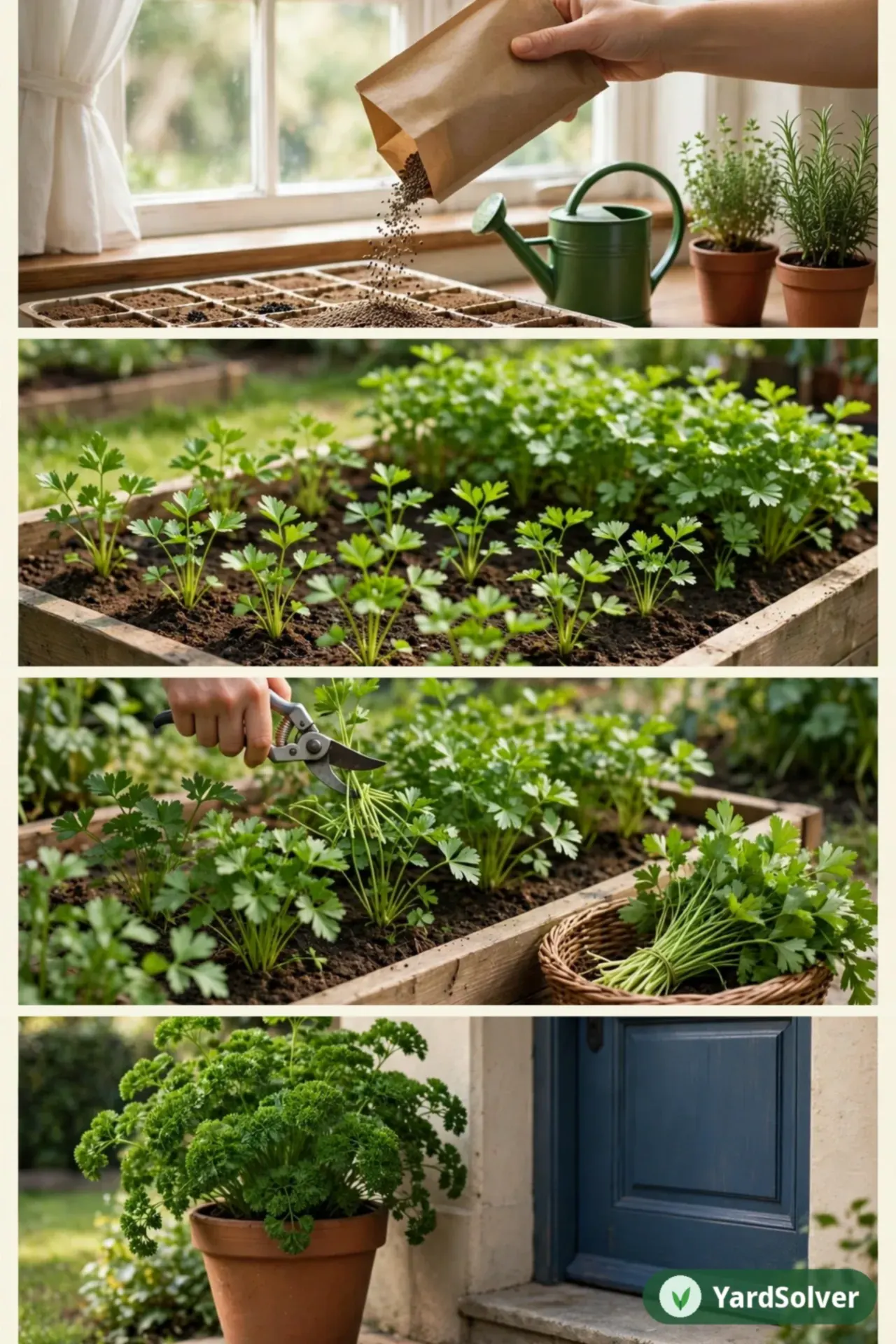
How to plant and grow parsley, step by step
Step 1 — Time it right
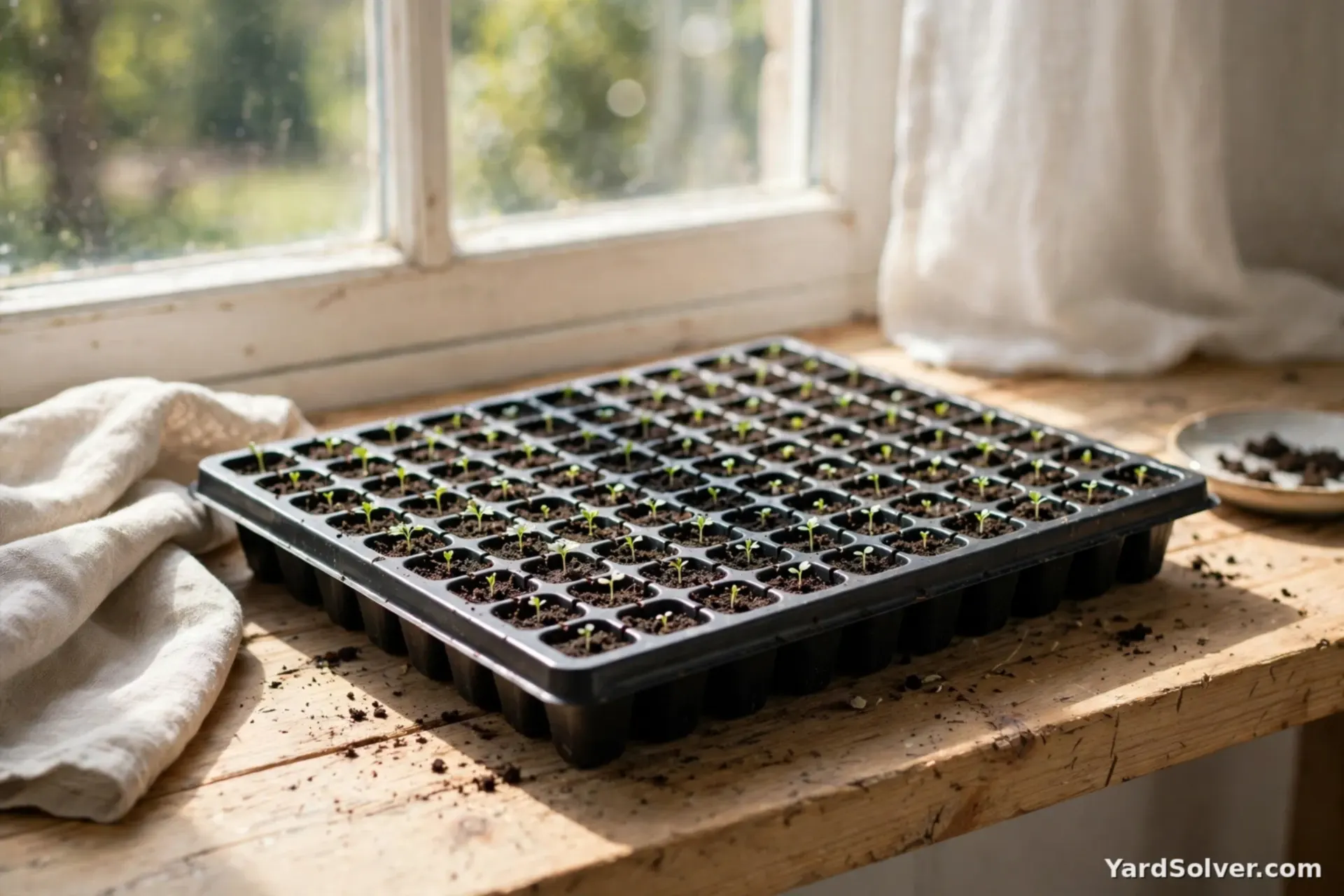
Sow indoors: 10 weeks before last frost; Move outside: 1 week before last frost. All dates count from your average last spring frost — the Planting Calendar turns them into real dates for your garden. Parsley is a slow, cool-season biennial: start indoors about 10 weeks before your last frost — it can take 2 to 4 weeks just to sprout — and it gives leaves in its first year.
Step 2 — Prepare the spot
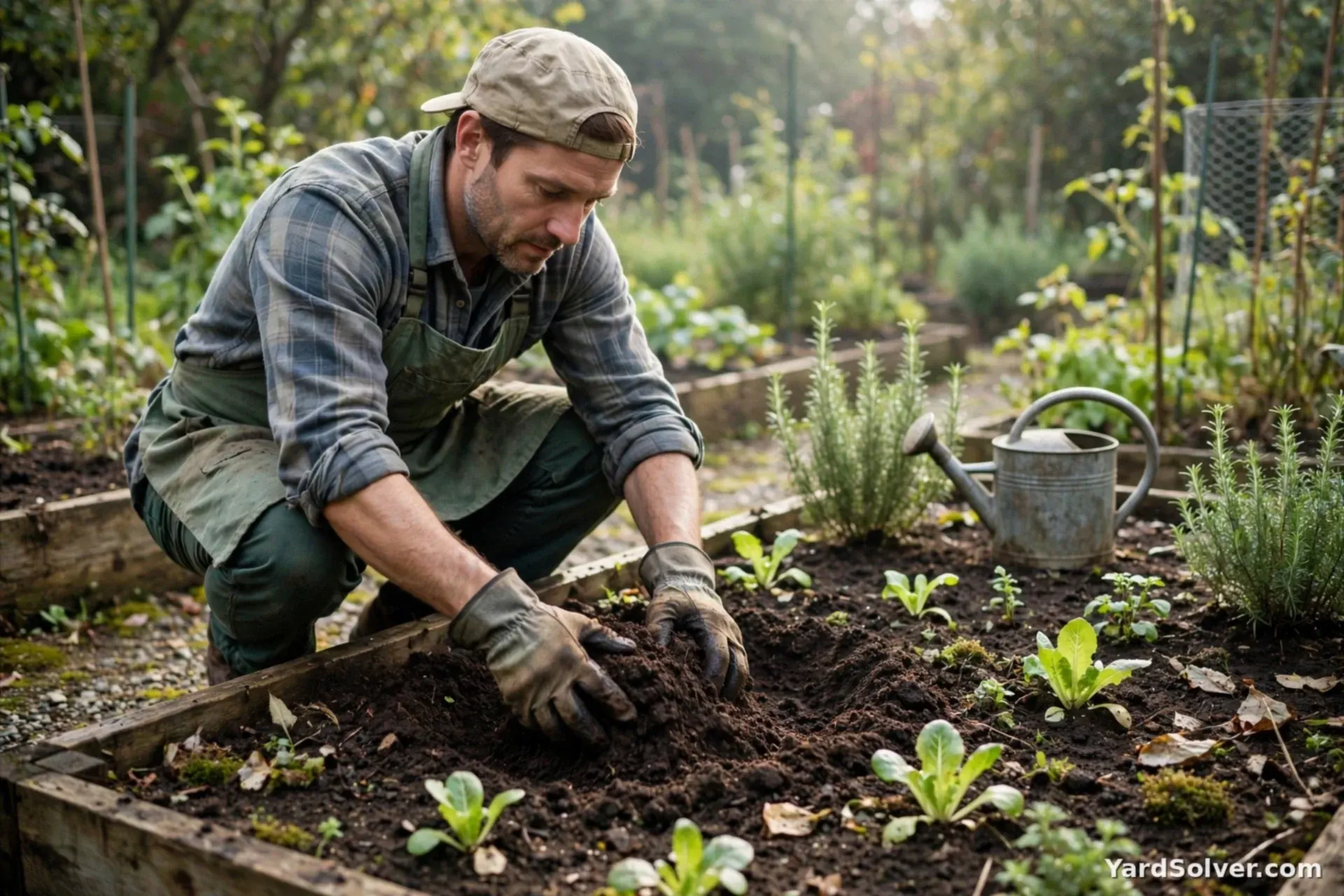
Sun: Full sun to part shade. Moist, compost-rich soil in a spot with morning sun. Soft herbs grow fast and are picked often, so keep the water coming. Work out how much you need with the Garden Mix Calculator or the Raised Bed Soil Calculator.
Step 3 — Sow and plant out
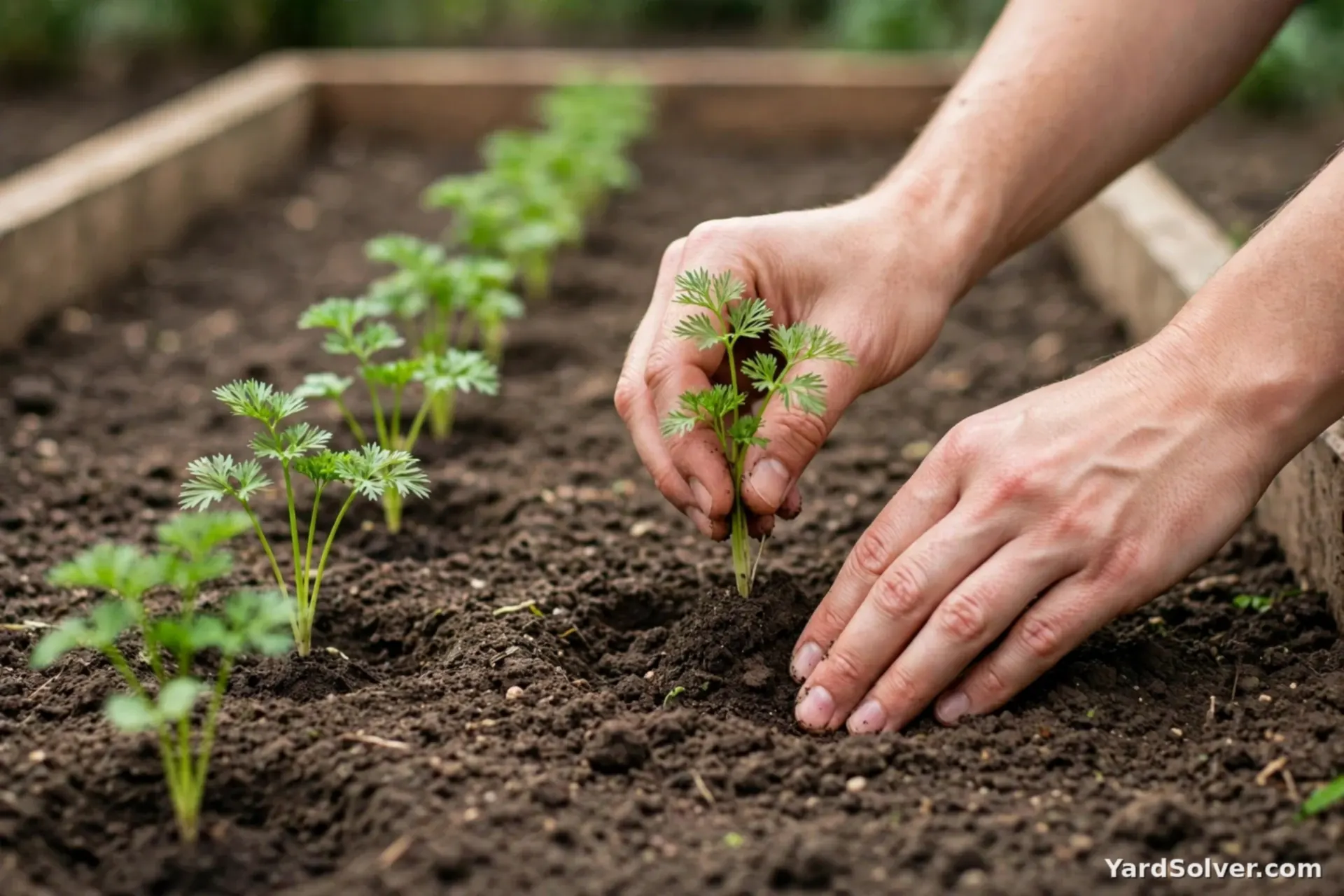
Start seed indoors 10 weeks before last frost, sowing 1/4 in deep. Grow seedlings on in strong light, then harden them off over 7–10 days (see How to Harden Off Seedlings) and move them outside 1 week before last frost, spaced 8–10 in apart. The Plant Spacing Calculator turns that spacing into plants-per-bed.
Step 4 — Water and feed
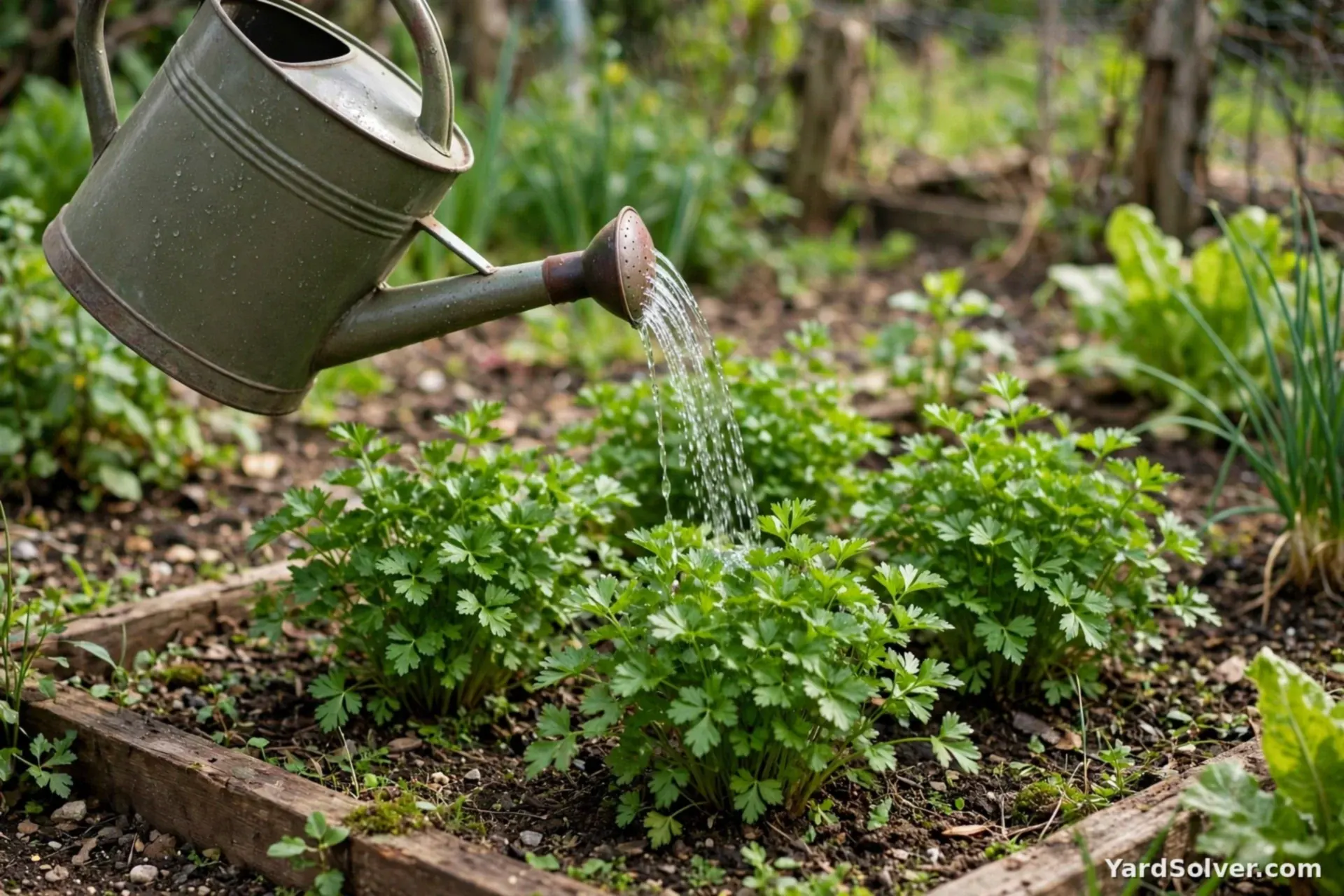
Water: Regular. First feed: around day 30 — A gentle feed about a month after transplanting keeps the leaves coming — do not overdo it. The Fertilizer Calculator turns a bed size into the right amount.
Step 5 — Care and the problems to watch for
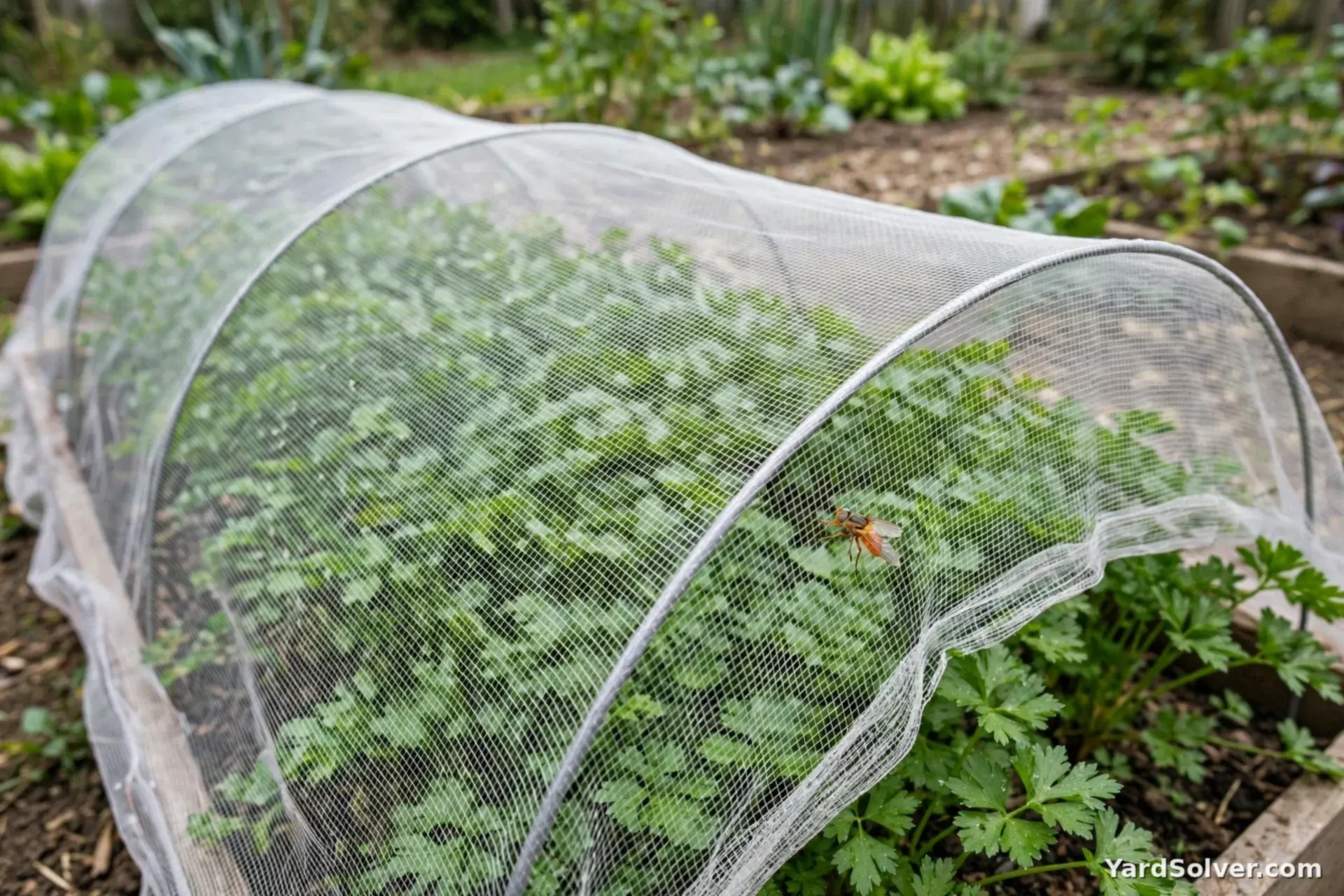
- Carrot fly can find parsley too — mesh in problem gardens.
- Aphids — rinse off.
- Yellowing old leaves — pick regularly to keep new growth coming.
Take care: Parsley is very high in vitamin K, so people taking blood-thinning medicine are often told to keep amounts steady rather than suddenly eating lots. Parsley is in the carrot family, so people who react to carrots or celery sometimes react to it too.
Step 6 — Harvest
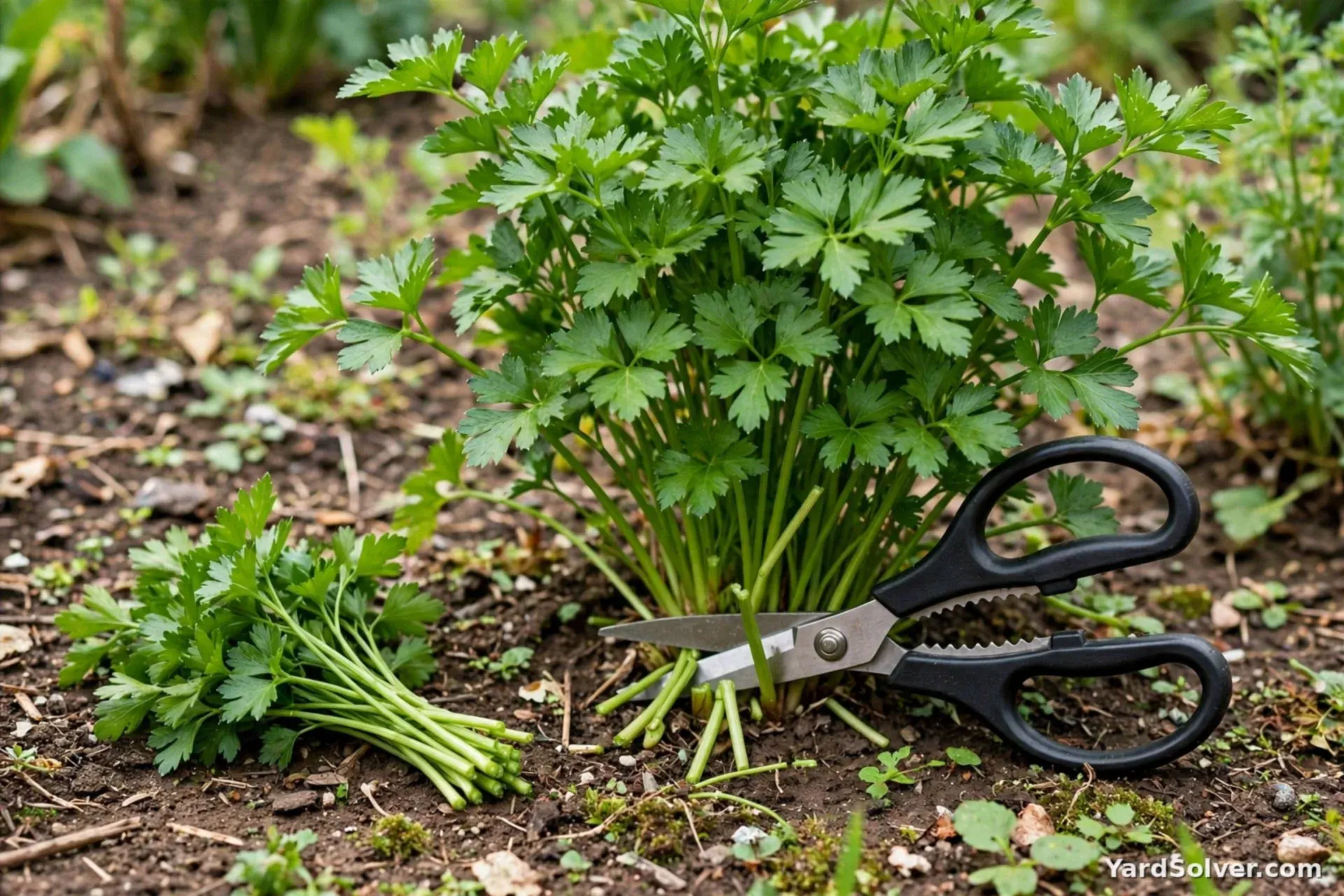
Ready in: 70–90 days. Harvest runs from about day 70 to 90 — cut the outer stems at the base and the centre keeps growing.
📅 Your personal Parsley schedule
Counted from your planting day — not a generic calendar. Day 0 is the day the seed went in the ground or the young plant went out.
Varieties worth growing
| Variety | Colour | Why gardeners like it |
|---|---|---|
| Italian Flat Leaf (Giant of Italy) | Dark green, flat leaves | The strongest flavour of all — the cook's choice for sauces and tabbouleh |
| Moss Curled | Bright green, tightly curled | The classic garnish parsley, pretty in pots and borders |
| Triple Curled | Green, curled | Very frilly and ornamental, mild in flavour |
| Hamburg | Green | Grown for its white, parsnip-like root as well as its leaves |
Good for you — and take care
Benefits
- Very high in vitamin K — one of the richest herbs for it
- Provides vitamin C for the immune system
- Provides vitamin A for healthy eyes
- Provides folate for growing bodies
- Fresh leaves provide small amounts of iron
Take care
- Parsley is very high in vitamin K, so people taking blood-thinning medicine are often told to keep amounts steady rather than suddenly eating lots
- Parsley is in the carrot family, so people who react to carrots or celery sometimes react to it too
A little history — and one good fact
Parsley comes from the Mediterranean, where the ancient Greeks used it in ceremonies and garlands long before cooks put it on plates. The Romans spread it through their empire as a seasoning and a breath freshener after meals. It is now one of the most-used herbs in the world, from Italian salsa verde to Middle Eastern tabbouleh.
Fun fact: Parsley saves its flowers for its second year — that is why a first-year plant can give you leaves all season long without running to seed.
Keep going
Guides: Grow Herbs Indoors in Winter · When to Start Seeds Indoors · Companion Planting Basics
Calculators: Plant Spacing Calculator · Seed Calculator · Garden Mix Calculator
More herbs: Basil · Cilantro · Dill · Lovage
← Back to the Plant Library · Get your personal planting dates
Questions people ask
When do I plant parsley?
Count from your average last spring frost: sow indoors 10 weeks before last frost; move outside 1 week before last frost. Parsley is a slow, cool-season biennial: start indoors about 10 weeks before your last frost — it can take 2 to 4 weeks just to sprout — and it gives leaves in its first year.
How far apart do I space parsley?
Space plants 8–10 in apart, with seed sown 1/4 in deep. Sun: full sun to part shade.
When is parsley ready to harvest?
70–90 days. Very slow to sprout (2–4 weeks); a biennial — leaves in year one, seed in year two.