
Plant Library · Houseplants
🪴 How to Grow Calathea
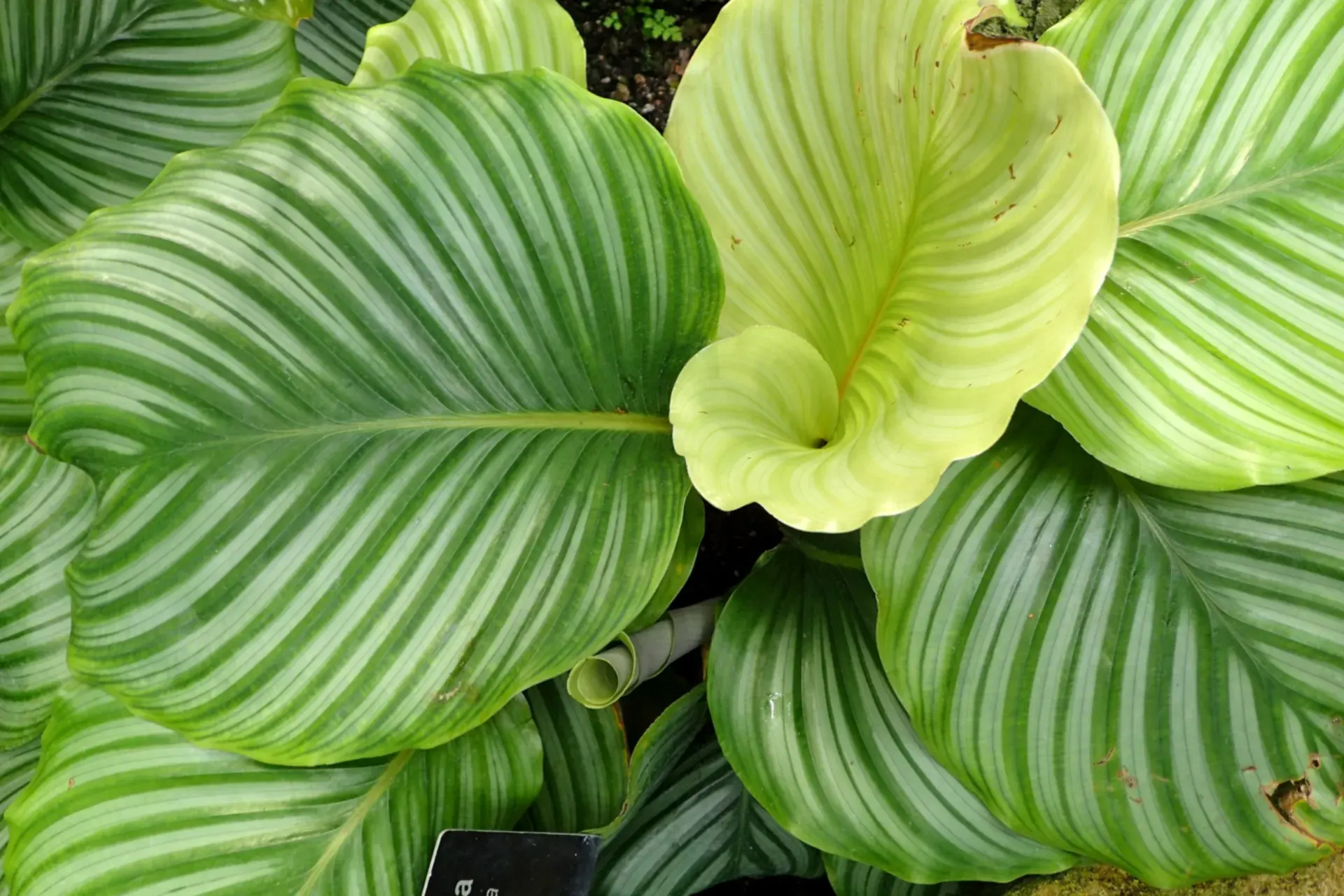
Calathea are the patterned aristocrats of the houseplant shelf — leaves painted with stripes, medallions and feathers that no flower in a dim room could match. They have one honest demand in return: consistency. Soft light, mix that never fully dries, humid air, and water without the chemicals that tap water carries. Meet those four and the famous crispy edges simply do not happen; miss them and the plant tells you, politely but immediately, in the leaf margins.
Grow Calathea with us — step by step
Everything for this plant is written step by step below — what to do, and exactly when. Read it through first if you like: you can grow it entirely on your own with that guide. Or start with us here — tell us your planting day and we lay out your personal schedule on this page, every next step on its own day, counted from your planting date. No guessing, no forgetting.
Step 1 — today: Settle your Calathea into its spot today: indirect light away from vents and cold glass, grouped with other plants if you can, and water the mix through once so it starts evenly moist.
Calathea at a glance
Spacing: — (pot) · Propagation: Division at repotting, not seed
Sun: Medium to bright indirect light — never direct sun
Water: Keep evenly moist; rain, distilled or rested water suits it best
Harvest: Grown for foliage — no harvest
Timing counts from your average last spring frost — get your own dates in the Planting Calendar. Guidance follows standard extension-service practice for Canada and the US.
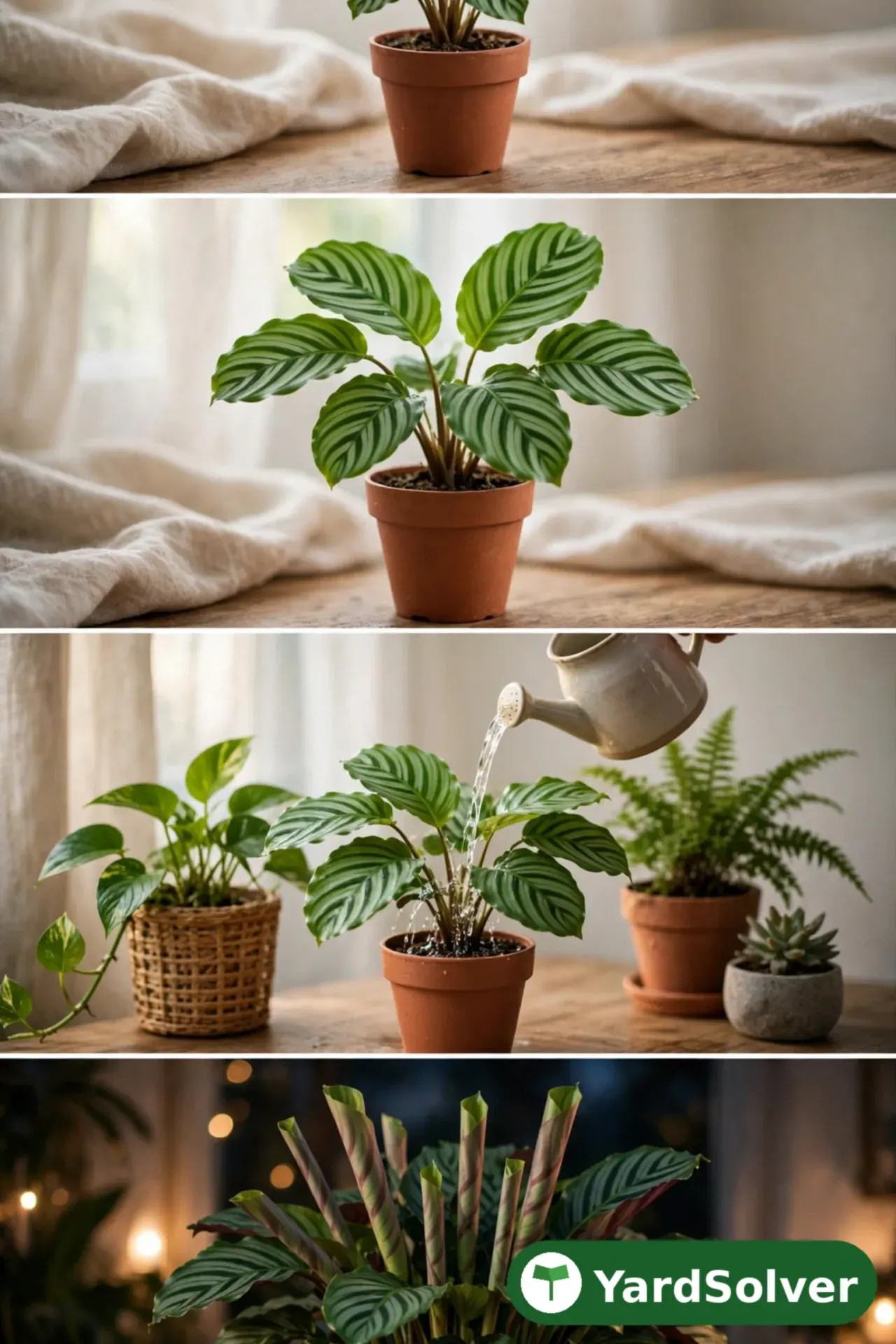
How to plant and grow calathea, step by step
Step 1 — Choose soft light
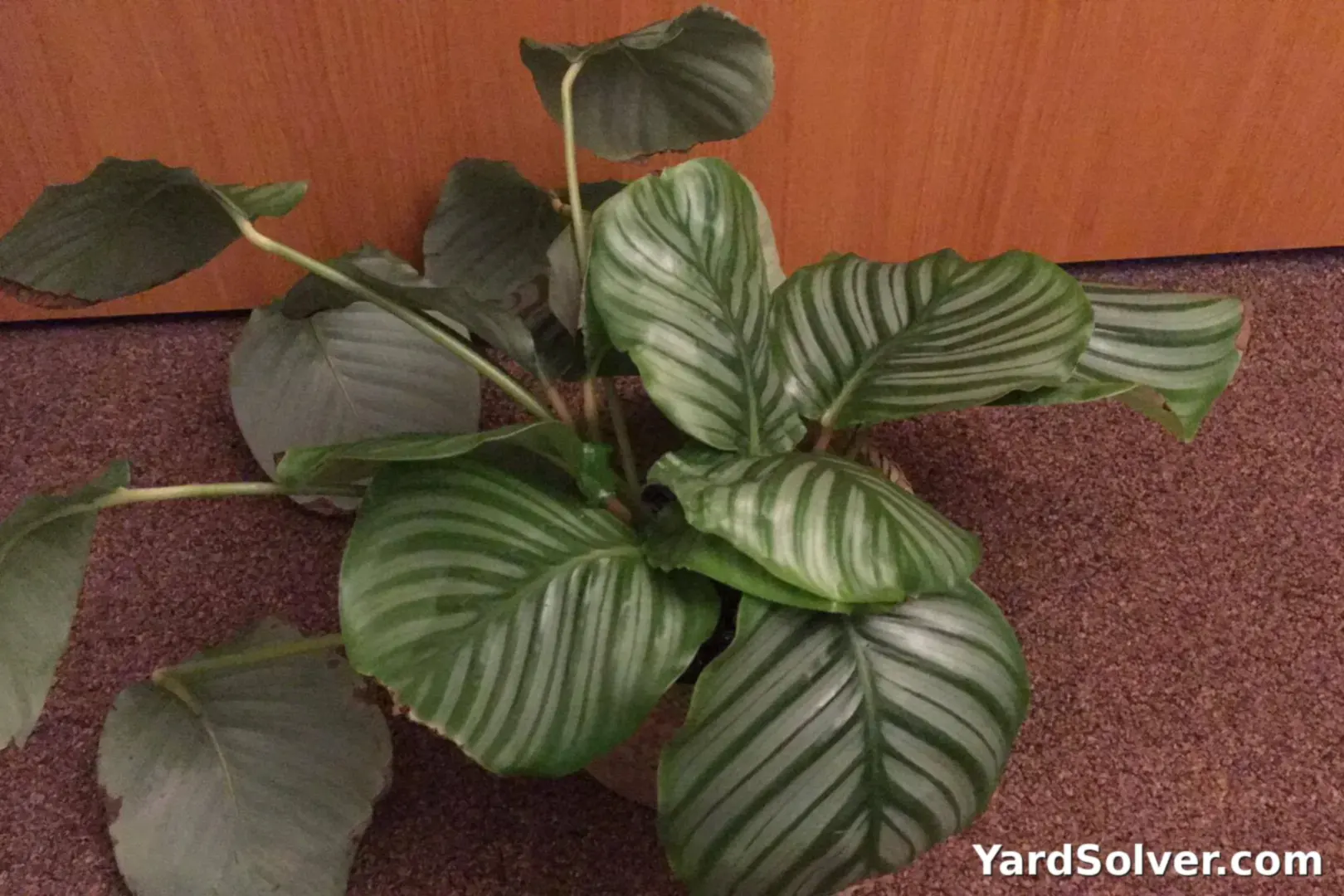
Calathea evolved on shaded forest floors, and its light needs still say so: medium to bright indirect light, and never direct sun. A spot a few feet from a bright window, or behind a sheer curtain, is ideal. Direct sun through glass bleaches the patterns and scorches pale, papery patches into the leaves within days — damage that never reverses on that leaf.
Too little light fails more quietly: the markings fade, new leaves come out plainer and smaller, and growth slows to nothing. If you can read comfortably in the spot at midday without a lamp, a calathea can usually live there. Keep the pot away from cold glass in winter and away from heating vents at all times — the dry blast from a vent undoes more calatheas than any watering mistake. For leaf marks you cannot place, the Plant Doctor is a good second opinion.
Step 2 — Pot it in a moisture-holding but draining mix
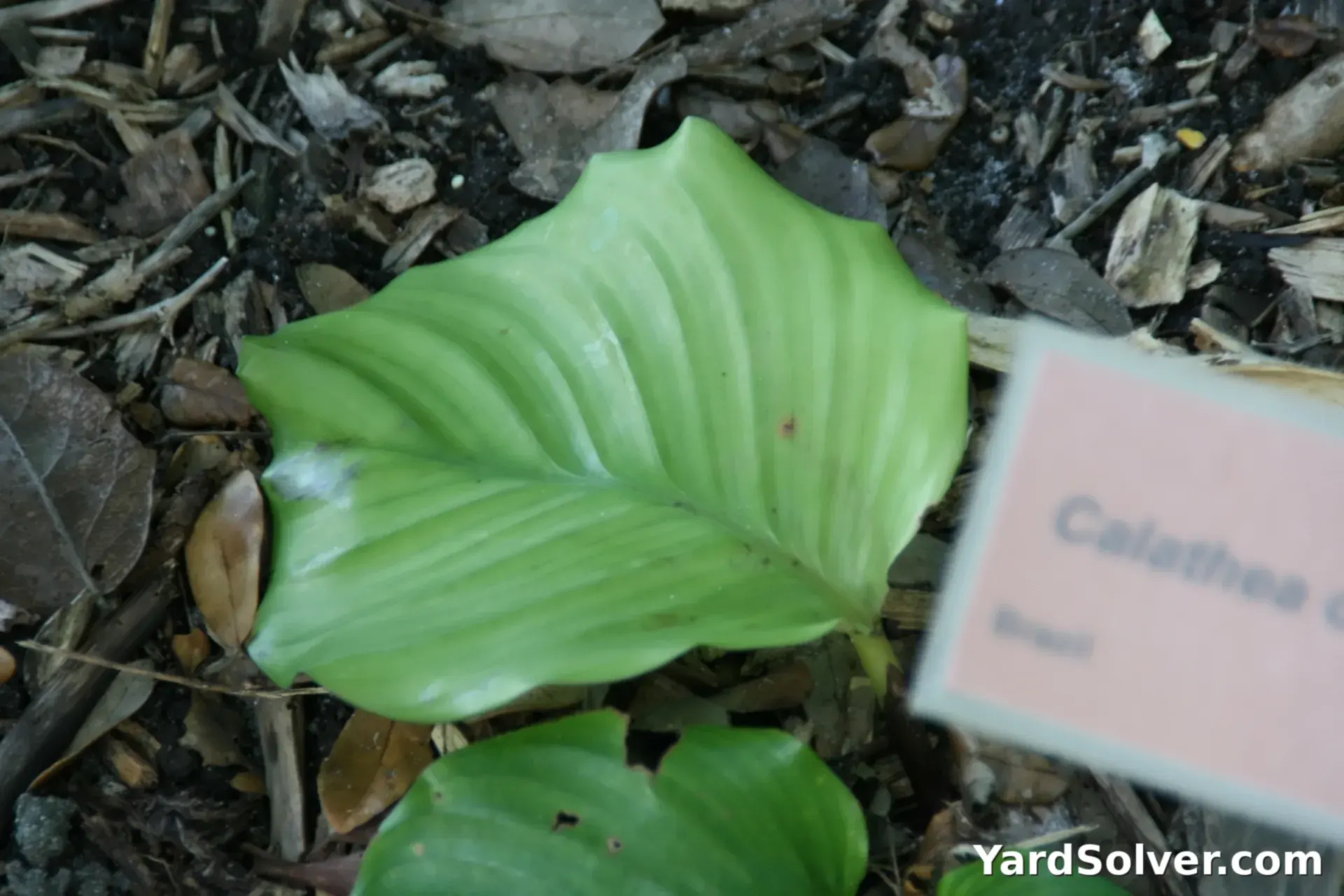
Calathea roots want the contradiction most houseplants avoid: mix that stays evenly moist yet never sits waterlogged. A peat- or coir-based indoor mix with a good share of perlite stirred through does exactly that — the coir holds water like a sponge while the perlite keeps air channels open. The pot still needs a drainage hole, without exception: moist and soggy are different things, and only drainage keeps them different.
Repot in spring, one size up, when roots fill the pot or the mix starts drying out within a day or two of watering. Water the day before so the root ball comes out whole, handle the fine roots gently, and water the fresh mix through once so the plant starts its even-moisture rhythm from day one. A pot that is far too big holds more wet mix than the roots can drink, and that is how a moisture-lover still manages to rot.
Step 3 — Water like you mean it — quality matters
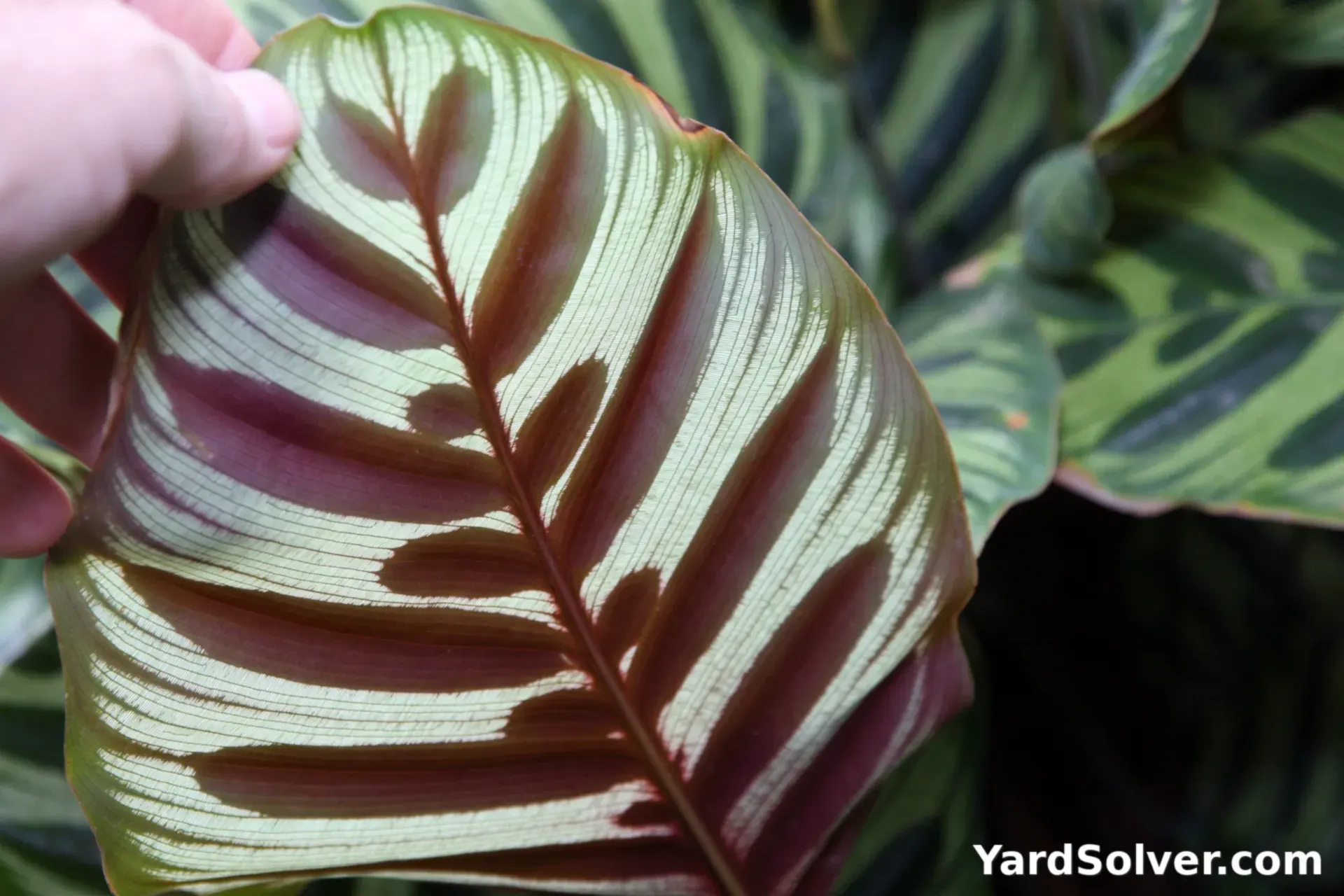
Keep the mix evenly moist: water when the very top begins to feel dry, and never let the pot dry out completely or sit in a full saucer. But with calathea, what you water with matters as much as how often. The chlorine, fluoride and dissolved salts in much tap water are the usual cause of the brown, crispy leaf edges this plant is famous for — they accumulate in the leaf margins and burn them, week by week.
The fix is simple and cheap: use rain water or distilled water if you can, or tap water left standing uncovered for 24 hours so some chlorine escapes, with an occasional thorough flush to wash out salts. Owners who swear their calathea crisped 'for no reason' in perfect light and humidity are almost always looking at a water problem. Make that one change and give it a month of new growth before judging — the old edges will not heal, but the new leaves come out clean.
Step 4 — Raise the humidity around it
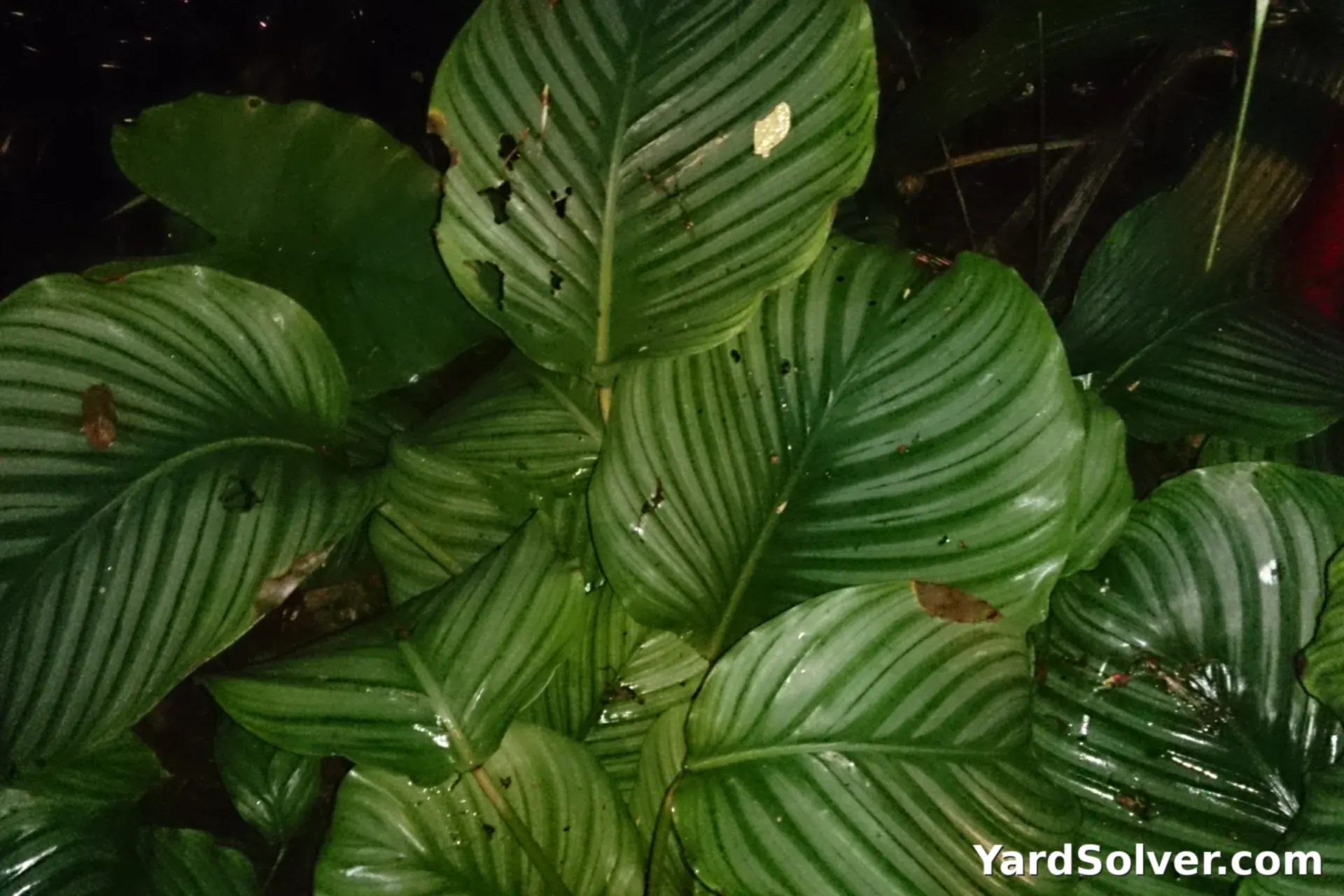
Calathea asks for humidity of 50% or more around its leaves, and the average heated home in winter sits nearer 30%. The plant pays for the gap with curling leaves and crisping edges. The gentlest fix is company: group your houseplants together and each plant's leaves humidify its neighbours. A pebble tray — the pot standing on pebbles in a shallow tray of water, the water level below the pot's base — adds a steady local boost.
For a whole shelf of thirsty plants, a small humidifier run nearby is the reliable route, and the full set of options is compared in How to Increase Humidity for Houseplants. A bright bathroom is calathea heaven — warm, steamy air after every shower, and soft light. Misting, by contrast, raises humidity for minutes and spots the leaves; it is the one popular trick not worth relying on.
Step 5 — Feed lightly
Calathea is a light feeder with sensitive leaf edges, and fertiliser salts burn those edges exactly the way tap-water salts do. Feed at half the label strength, once a month in spring and summer, and not at all in winter. If you are also using rain or distilled water, flush the pot through with plain water every couple of months so nothing builds up silently in the mix.
Pale, washed-out new leaves in the growing season can mean the plant is hungry — but check the light first, because faded patterns from a dim corner look deceptively similar. The Fertilizer Calculator helps you measure a genuinely diluted dose instead of a hopeful splash. With this plant, whenever feed and water quality are both suspects, suspect excess before deficiency: calathea suffers far more from too much kindness than too little.
Step 6 — Watch for the usual problems
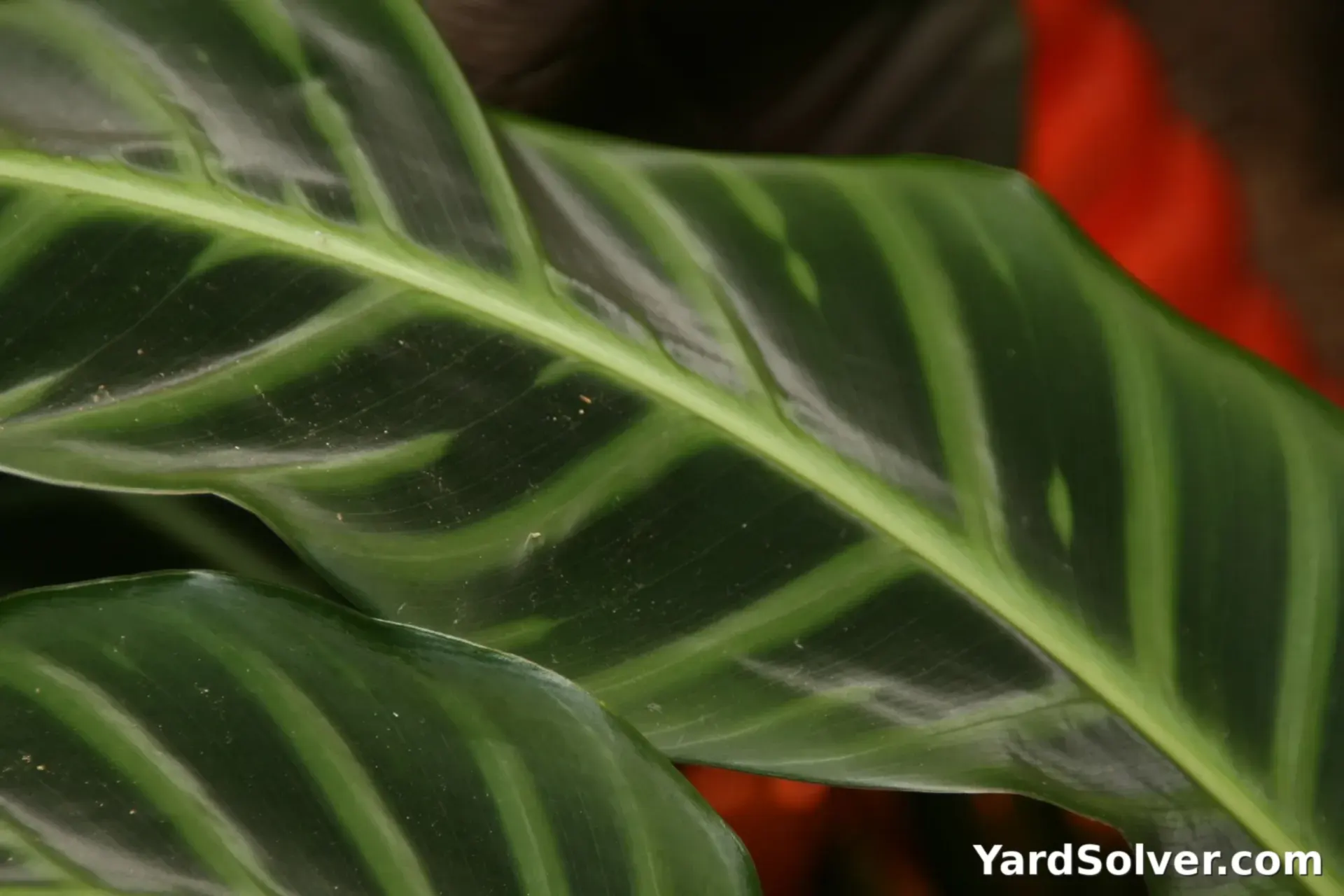
Read the leaves like a noticeboard. Curling leaves are the plant conserving water — check the mix and the humidity before anything else. Faded patterns mean the light is wrong: too dim, usually, or bleached by direct sun. And spider mites love a dry calathea: look for fine webbing and pale speckling on leaf undersides, especially in winter's heated air, and raise humidity and wash the leaves at the first sign. White cottony clusters in the leaf joints are mealybugs — the removal routine is in How to Get Rid of Mealybugs.
In spring, a crowded plant can be divided at repotting: tease the root ball into two or three clumps, each with leaves and roots, pot them separately, and keep them humid and shaded while they settle. Finish the routine with the winter checks in Winter Houseplant Pests, because dry winter air is when this plant's problems all arrive at once.
📅 Your personal Calathea schedule
Stay with us — we'll remind you. The procedure is the button above: press "🌱 Start Calathea with me", set your start date and, if you like, add your email. Your plant and its start date are saved on this device straight away, the schedule below is yours to keep in front of you, and email reminders switch on with the new YardSolver accounts — the email you save today is first in line, and from your start date the reminders follow your plant's own schedule. Free, no account needed today; your email is for your plant reminders only, with an easy stop in every message.
This plant runs on rhythm and season rather than a day count — here is the honest version of its schedule.
Varieties worth growing
| Variety | Pattern | Why gardeners like it |
|---|---|---|
| Orbifolia | Wide silver-green stripes | The big calm statement leaf |
| Medallion (roseopicta) | Painted medallion leaves, purple beneath | The classic |
| Rattlesnake (lancifolia) | Long wavy leaves with dark dashes | Forgiving for a calathea |
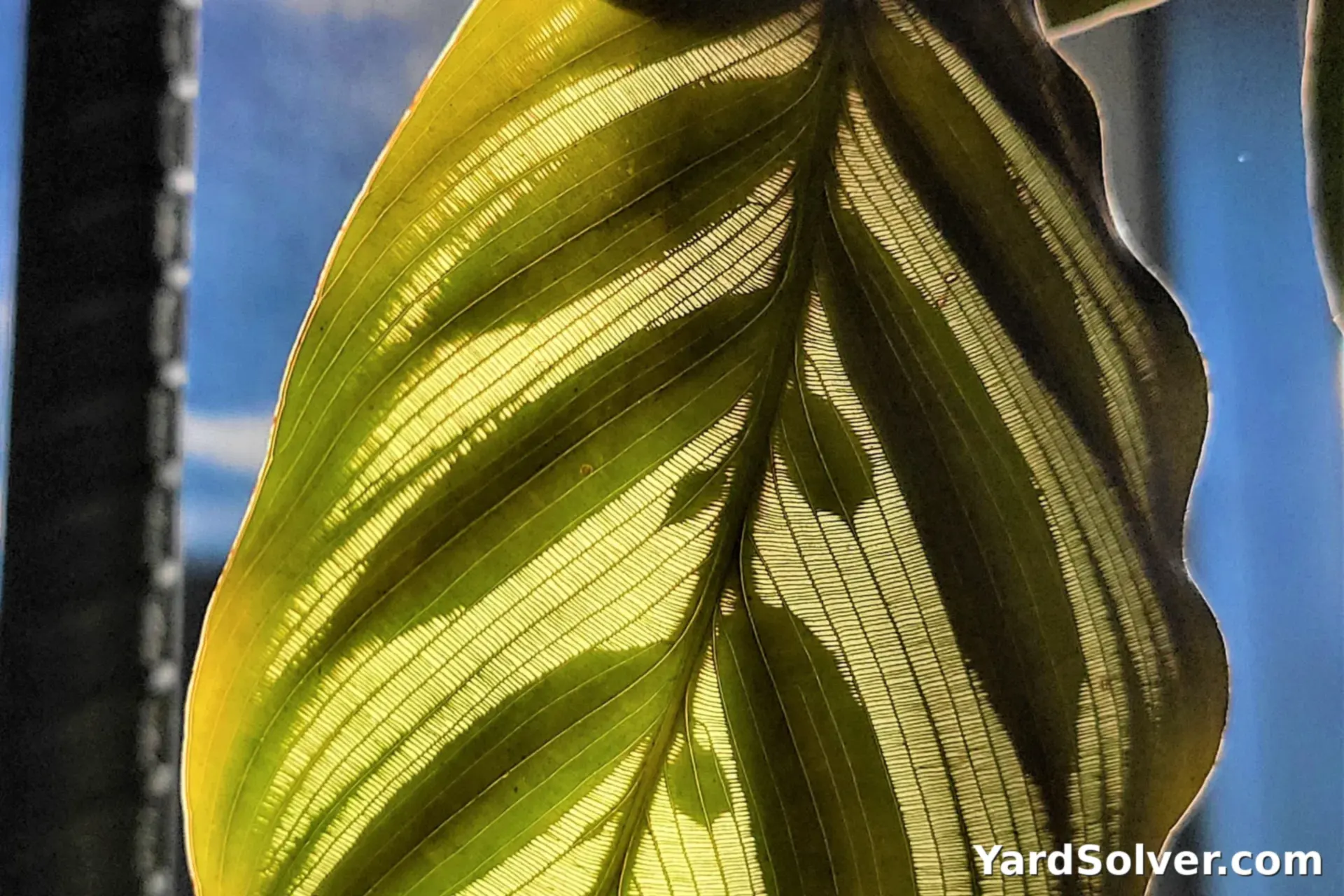
| Peacock (makoyana) | Feather-patterned, translucent against light | Stained-glass effect |
| White Fusion | White-striped, purple beneath | The diva: stunning, least forgiving |
Good for you — and take care
Benefits
- Completely pet-safe — one of the best patterned plants for cat and dog homes
- The leaves fold up at night and open in the morning, classic prayer-plant family behaviour, so the plant visibly moves every day
- Patterns that rival flowers, in rooms too shady for anything to bloom
Take care
- Tap water is its most common enemy — chlorine, fluoride and salts crisp the leaf edges
- It sulks in dry heated air, and winter is the test: keep humidity up when the heating runs
- Never direct sun: it bleaches and scorches the patterns the plant is grown for
A little history — and one good fact
Calathea come from the shaded forest floors of tropical Central and South America, in the prayer-plant family, Marantaceae. Their bold leaf patterns evolved for life under a canopy — part camouflage among dappled shadows, part light-gathering surface in deep shade. Growers in the Victorian era prized them as stove-house plants, and the modern houseplant revival brought them back for exactly the rooms Victorians used them in: warm, humid and out of the sun.
Fun fact: The leaves genuinely move. Through a process called nyctinasty, a calathea raises its leaves upright at night and lowers them in the morning — and in a quiet room, a large plant can actually be heard rustling as it settles for the night.
Keep going
Guides: How to Increase Humidity for Houseplants · How to Get Rid of Mealybugs · Winter Houseplant Pests
Tools: Plant Doctor · Garden Planner · Fertilizer Calculator
More houseplants: Peace Lily · Monstera · Spider Plant
← Back to the Plant Library · Get your personal planting dates
Questions people ask
Why are my calathea's leaves getting brown crispy edges?
Most often, the water. Chlorine, fluoride and salts in tap water build up in the leaf margins and burn them. Switch to rain water, distilled water, or tap water rested uncovered for 24 hours, flush the pot occasionally, and keep humidity above 50% — dry heated air causes the same crisping. Old edges will not heal; judge the fix by the new leaves.
Why is my calathea curling its leaves?
Curling is the plant conserving water. Check the mix first — if it has dried beyond the surface, water thoroughly. If the mix is moist, suspect dry air: move the plant away from heating vents, group it with other plants, or add a pebble tray or humidifier. Leaves usually uncurl within a day or two once moisture and humidity are back.
Is calathea safe for cats and dogs?
Yes. Calathea is non-toxic to cats and dogs, which is why it is one of the most recommended patterned houseplants for pet homes. A curious cat may still bat the leaves, but chewing them will not poison the animal — the damage risk runs the other way, to the plant.