
Plant Library · Houseplants
🪴 How to Grow Fiddle Leaf Fig
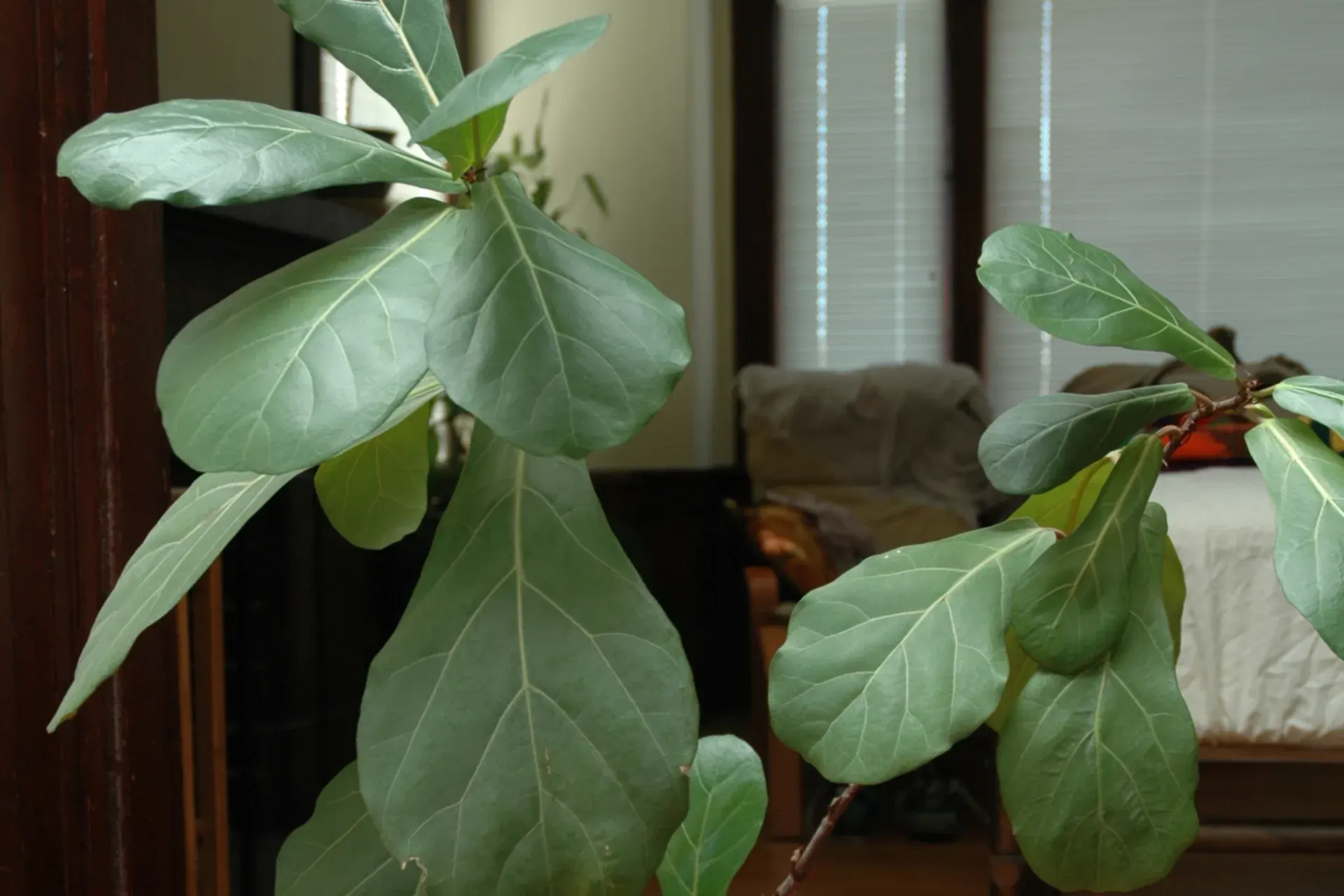
The fiddle leaf fig has a reputation for drama, and most of it is unfair. This is a rainforest tree that wants three things — bright light, a settled spot, and watering decided by the soil rather than the calendar — and sulks mainly when one of those keeps changing. Give it the brightest window you have, commit to leaving it there, and read its leaves honestly when they speak, and a fiddle leaf fig is a long-lived, generous indoor tree rather than a diva.
Grow Fiddle Leaf Fig with us — step by step
Everything for this plant is written step by step below — what to do, and exactly when. Read it through first if you like: you can grow it entirely on your own with that guide. Or start with us here — tell us your planting day and we lay out your personal schedule on this page, every next step on its own day, counted from your planting date. No guessing, no forgetting.
Step 1 — today: Settle your Fiddle Leaf Fig into its spot today: the brightest window you have, a pot with drainage, and one good watering to settle the mix — then leave it there; this plant hates being moved.
Fiddle Leaf Fig at a glance
Spacing: — (pot) · Propagation: Stem cuttings, not seed
Sun: Bright light, with some gentle morning sun
Water: When the top 2 in of mix are dry, then water thoroughly
Harvest: Grown for foliage — no harvest
Timing counts from your average last spring frost — get your own dates in the Planting Calendar. Guidance follows standard extension-service practice for Canada and the US.
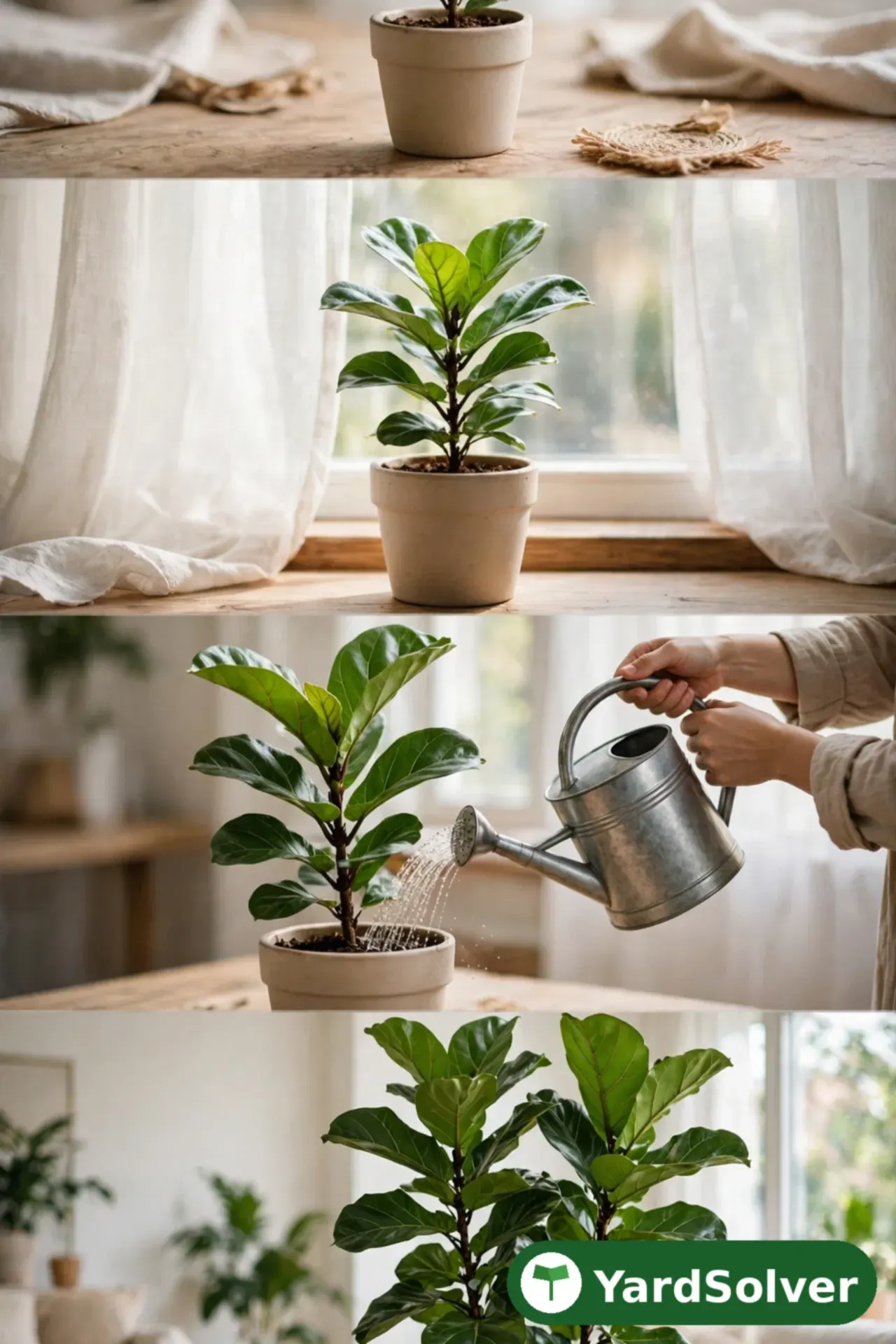
How to plant and grow fiddle leaf fig, step by step
Step 1 — Choose its spot — and commit
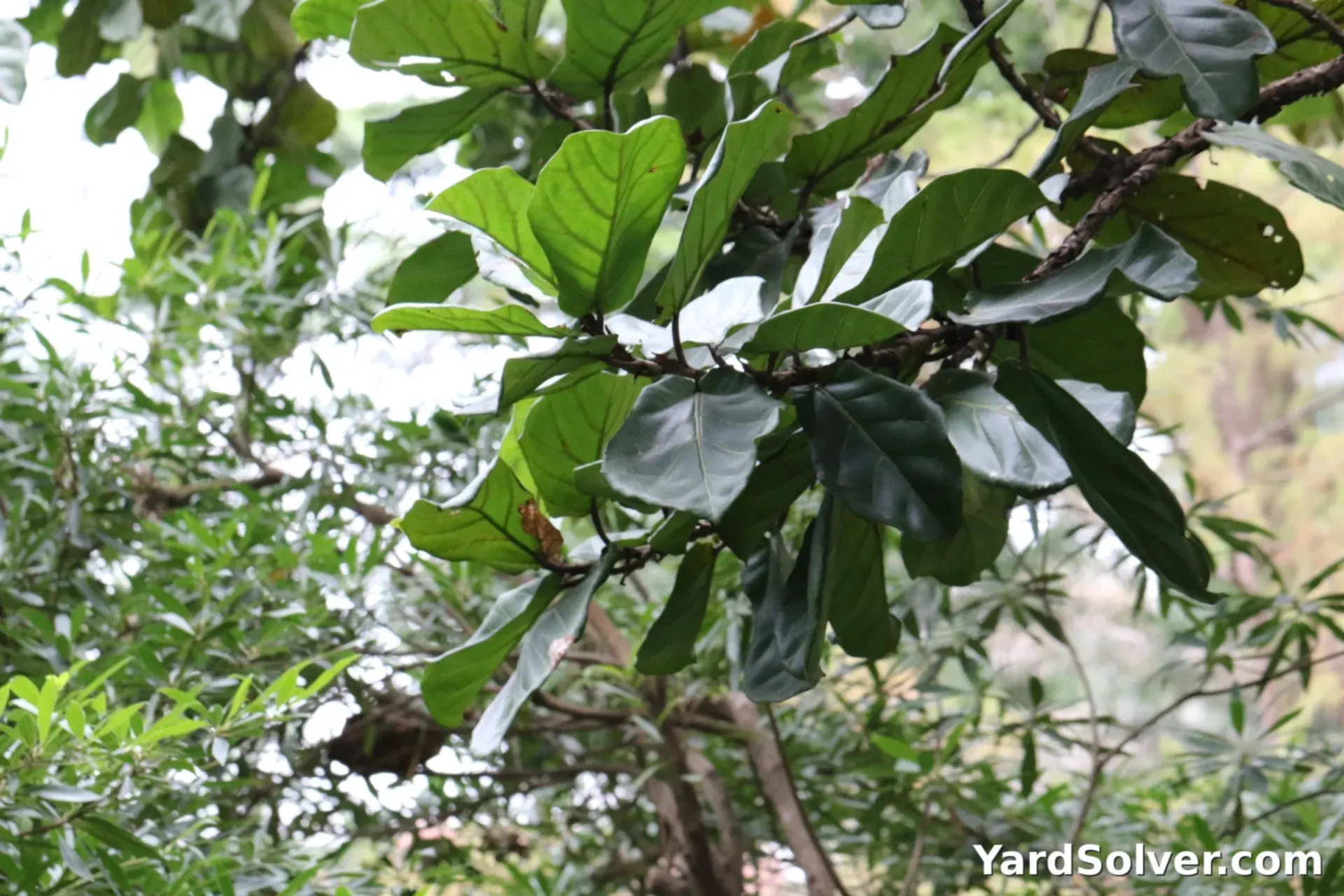
Bright light for most of the day is the whole foundation: a few feet back from a south or east window is the classic fiddle leaf fig spot, close enough that the leaves get real light but not so close that midday sun bakes them against hot glass. Keep the pot away from heat vents, radiators and cold drafts from doors and air conditioning — moving air and sudden temperature swings are read by this plant as change, and change is what it protests against.
That is the honest secret behind the 'fussy' reputation: most difficult behaviour is a plant reacting to being moved, rotated between rooms, or shifted for the holidays and shifted back. Pick the spot as if it were furniture, water it in once to settle the mix, and then leave it there. If leaves drop in the first fortnight after it arrives home, that is the plant adjusting to new light, not dying — hold your nerve, keep care steady, and judge it by the new growth, not the protest. Not sure whether a mark is light, water or something else? The Plant Doctor walks through leaf symptoms step by step.
Step 2 — Pot it in a fast-draining mix
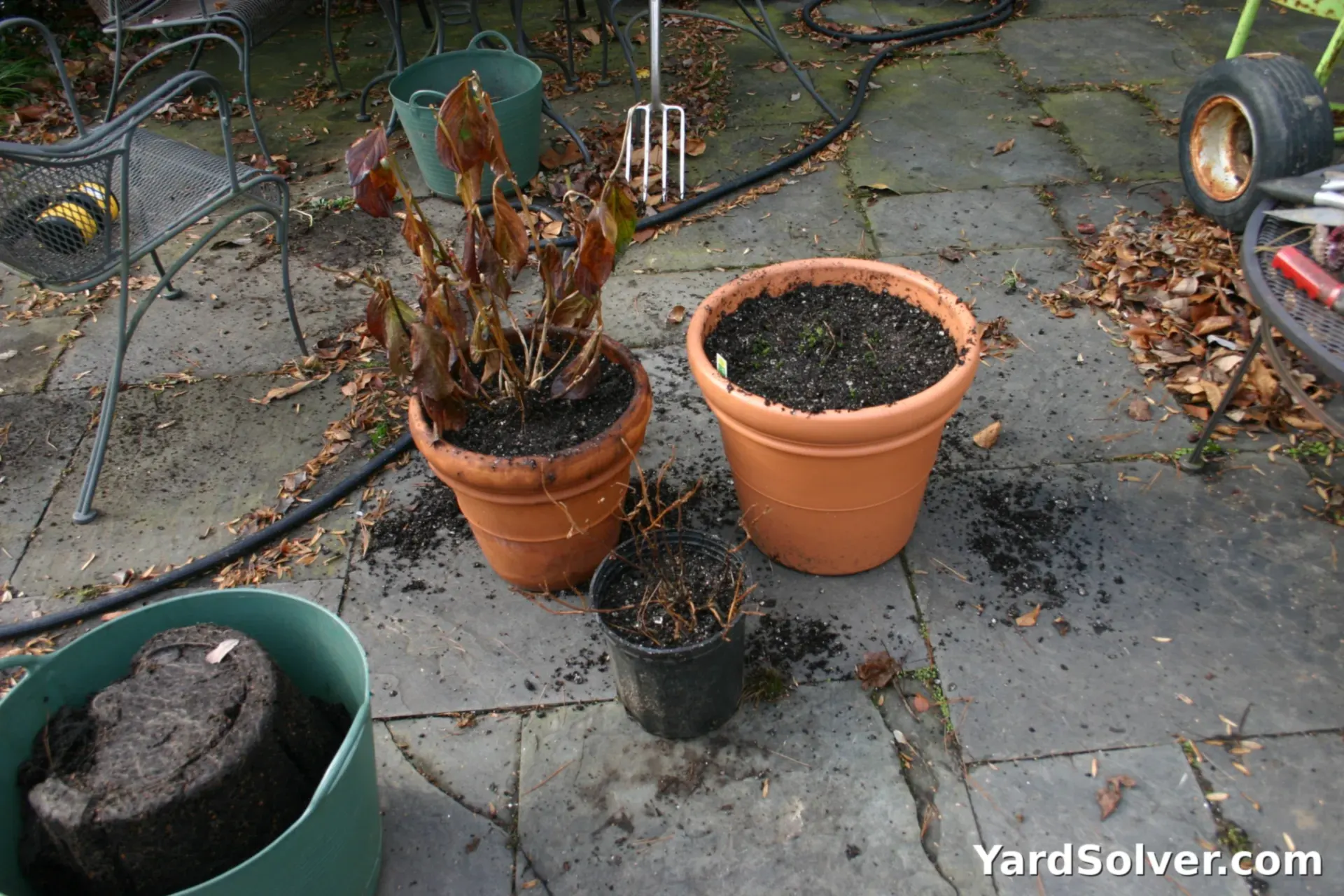
In a pot, a fiddle leaf fig's roots want the rainforest floor in miniature: rich but open. Use a chunky indoor mix — ordinary houseplant compost with bark pieces and perlite stirred through — so water runs through freely and air reaches the roots between waterings. The pot must have a drainage hole; that point is non-negotiable, because roots sitting in a sealed pot of wet mix are where this plant's troubles begin.
Repot every 18–24 months, or when roots circle the drainage holes, going only one pot size up each time. A much bigger pot holds a large volume of wet mix around a small root ball, and that spare wet mix is an invitation to rot. Spring is the kindest moment to repot, just as growth restarts; water the plant a day beforehand so the root ball slides out in one piece, tease a few circling roots loose, and settle it at exactly the same depth it grew at before.
Step 3 — Water by the soil, not the calendar
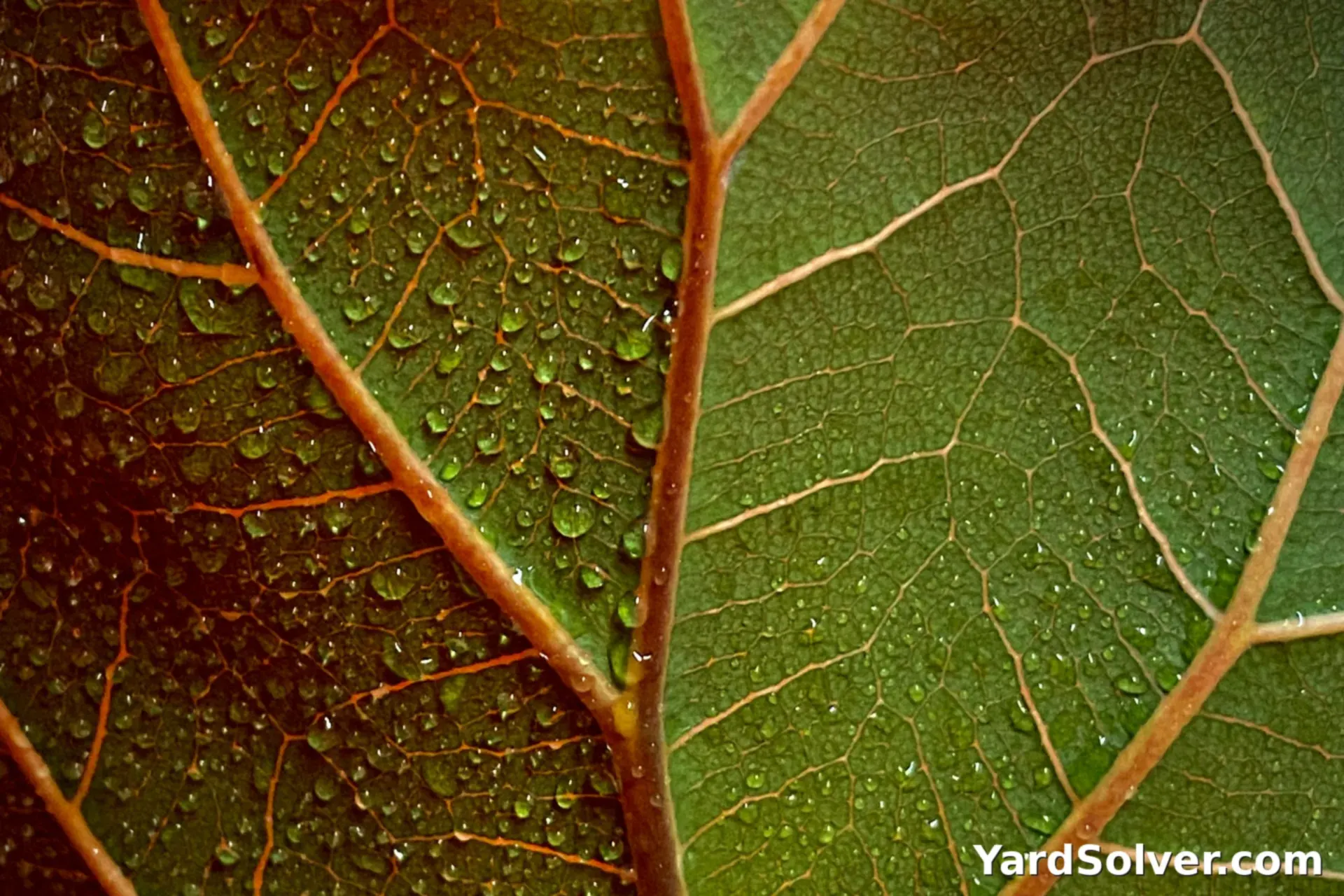
Push a finger into the mix. When the top 2 in (5 cm) are dry, water thoroughly — carry the pot to a sink or shower if you can, pour slowly until water runs freely from the drainage hole, let it finish draining, and empty the saucer so the pot never stands in water. That soak-and-drain rhythm wets the whole root ball evenly, which a light splash from a can never does.
In practice this lands at roughly every 7–10 days in summer and every 10–14 days or longer in winter, but the soil test outranks those numbers every time: a bright, warm room dries a pot far faster than a cool, dim one. Consistently wet mix is this plant's number-one killer, and the rescue routine for a plant that has been loved to death with water is in the Overwatered Plant Rescue guide.
Step 4 — Feed in the growing season
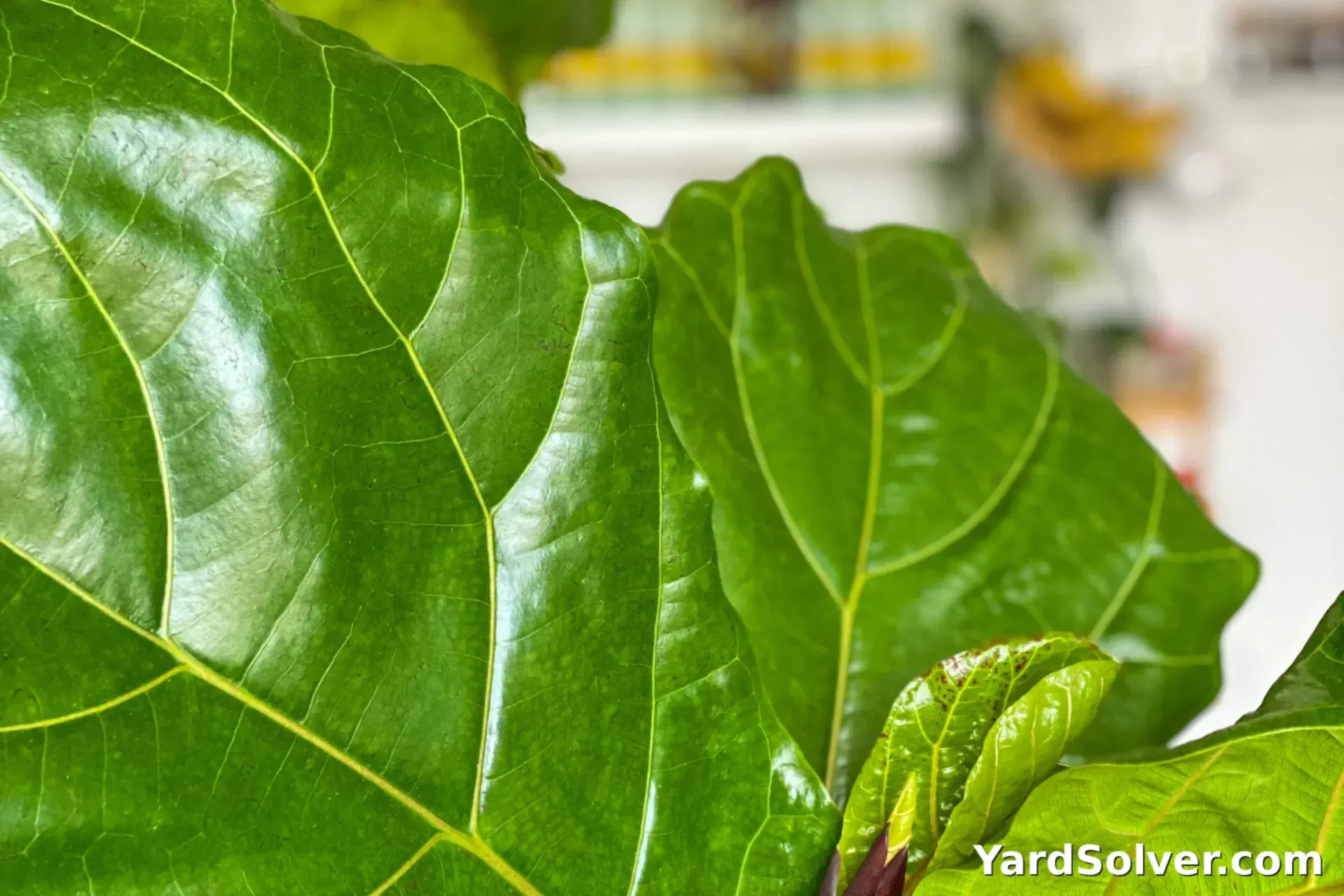
A tree growing leaves the size of dinner plates is spending real resources, so feed it while it is actually growing: a balanced houseplant feed once a month through spring and summer, at the strength the label gives for houseplants. Stop in winter, when growth rests and unused feed only builds up salts in the mix.
Dilute honestly rather than guessing — the Fertilizer Calculator works out amounts properly, and with any indoor plant the weaker end of the label range is the safer habit. If white crusts appear on the mix surface, flush the pot through with plain water at the next watering to wash the salts out before they start burning root tips and leaf edges.
Step 5 — Read the brown spots
Brown spots panic new owners, but on a fiddle leaf fig the pattern of the spot is a diagnosis, and each pattern has a different fix. Dark spots starting in the middle of the leaf or along the veins, especially on lower leaves, point to too much water and the early stages of root rot — check the mix, let it dry properly, and cut back on watering before anything else. Dry, crispy brown edges and tips point the other way: thirst, or air too dry around the leaves.
Pale, bleached patches on the side facing the window are sun scorch — the leaf was sunburned, usually after a sudden move into direct sun, and the answer is a step back from the glass rather than more water. Work through the three patterns in that order — wet, dry, scorched — and change one thing at a time, then watch the new leaves: damaged spots never heal, but clean new growth means you found the cause. Drier indoor air in winter makes edge-crisping worse, which is why the humidity habits in How to Increase Humidity for Houseplants help this plant too.
Step 6 — Prune and shape
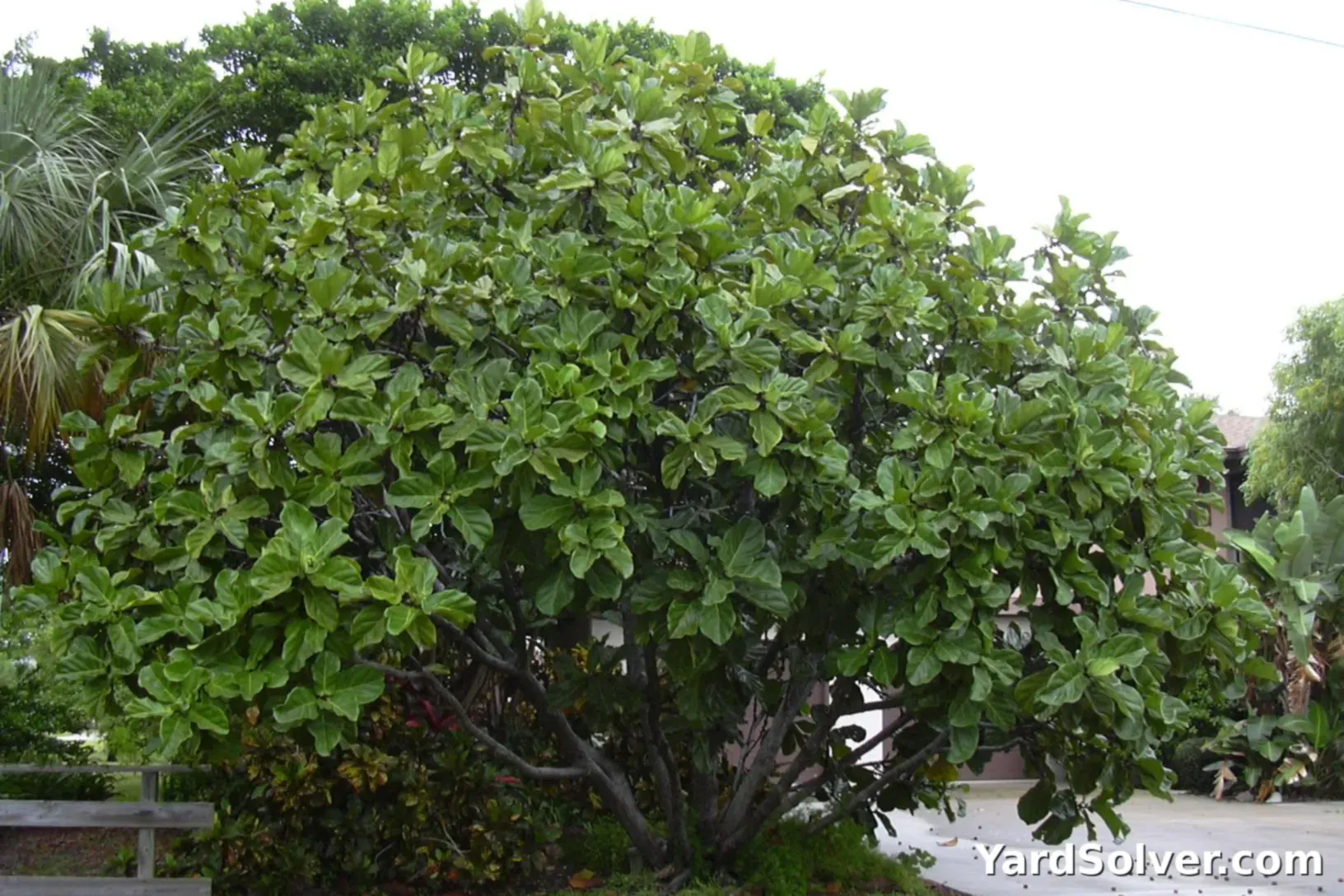
Left alone, a fiddle leaf fig grows one tall, straight stem. To make a tree, pinch out the growing tip or cut the stem back in spring, and the plant responds by pushing out side branches below the cut; a small notch in the bark just above a node can also persuade a branch to start there. Rotate the pot a quarter turn every week or two so all sides take turns facing the light and the crown grows evenly instead of leaning.
While you are up close, wipe the big leaves with a soft, damp cloth. Those huge leaves are dust magnets, and a dusty leaf is quite literally shaded by its own dirt — cleaning them is light, delivered by hand. Cuttings with a node root readily in a jar of water on a bright sill, which is how one plant becomes next year's gifts. Sap is an irritant, so wash your hands after pruning and wear gloves if your skin is sensitive. For the seasonal move indoors and the pests that ride along, see How to Bring Plants Indoors for Winter and Winter Houseplant Pests.
📅 Your personal Fiddle Leaf Fig schedule
Stay with us — we'll remind you. The procedure is the button above: press "🌱 Start Fiddle Leaf Fig with me", set your start date and, if you like, add your email. Your plant and its start date are saved on this device straight away, the schedule below is yours to keep in front of you, and email reminders switch on with the new YardSolver accounts — the email you save today is first in line, and from your start date the reminders follow your plant's own schedule. Free, no account needed today; your email is for your plant reminders only, with an easy stop in every message.
This plant runs on rhythm and season rather than a day count — here is the honest version of its schedule.
Varieties worth growing
| Variety | Habit | Why gardeners like it |
|---|---|---|
| Fiddle Leaf Fig (standard) | A 6–10 ft indoor tree | The full statement plant |
| 'Bambino' | Dwarf, 2–3 ft | Same leaves, desk-and-shelf size |
| 'Compacta' | Shorter spaces between leaves | A fuller, bushier silhouette |
Good for you — and take care
Benefits
- A genuine indoor tree with huge architectural leaves — few houseplants change a room the way this one does
- Long-lived when its spot suits it: a settled plant in bright light can grow with you for decades
- Cuttings root readily in water, so one plant becomes gifts for friends and family
Take care
- Poisonous to cats and dogs if eaten, and the sap irritates skin — place it out of chewing reach and wash your hands after pruning
- Overwatering is its number-one killer: when in doubt, wait a day and check the mix again
- Leaf drop after a move is protest, not death — hold your nerve and keep care steady while it adjusts
A little history — and one good fact
Fiddle leaf fig is Ficus lyrata, from the lowland rainforests of western Africa, from Sierra Leone to Cameroon, where in the wild it grows into a real tree. It is named for its leaves, shaped like a fiddle or violin. Victorian growers carried it indoors as a conservatory plant, and in the 2010s it became a design staple — the tree in the corner of a thousand magazine rooms — which sent a rainforest plant into a great many dim apartments it was never going to enjoy.
Fun fact: In the wild, a fiddle leaf fig often starts life high in another tree's branches, like many figs, germinating in a fork and sending roots down to the ground — which is why its roots are so good at finding every centimetre of a pot.
Keep going
Guides: How to Increase Humidity for Houseplants · Overwatered Plant Rescue · How to Bring Plants Indoors for Winter · Winter Houseplant Pests
Tools: Plant Doctor · Garden Planner · Fertilizer Calculator
More houseplants: Monstera · Rubber Plant · Snake Plant
← Back to the Plant Library · Get your personal planting dates
Questions people ask
Why does my fiddle leaf fig have brown spots?
Read the pattern. Dark spots starting mid-leaf or along the veins usually mean the mix is staying too wet and roots are starting to rot. Dry, crispy edges and tips mean thirst or dry air. Pale, bleached patches on the window side are sun scorch. Each cause has a different fix, so match the pattern before you change anything — and judge your fix by the new leaves, because old spots never heal.
How often should I water a fiddle leaf fig?
By the soil, not the calendar: water thoroughly when the top 2 in (5 cm) of mix are dry, soak until it drains, and empty the saucer. That works out to roughly every 7–10 days in summer and every 10–14 days or more in winter, but a bright warm room dries a pot much faster than a cool dim one, so the finger test always wins.
Why is my fiddle leaf fig dropping leaves?
Usually protest, not death. A move to a new spot, a draft, a change in light or a few weeks of overwatering all trigger leaf drop in a plant that dislikes change. Put it in bright light away from vents, return to the soak-when-dry rhythm, and hold steady — a plant that is still making firm new growth at the tips is adjusting, not dying.