
Plant Library · Flowers
🌸 How to Grow Morning Glory
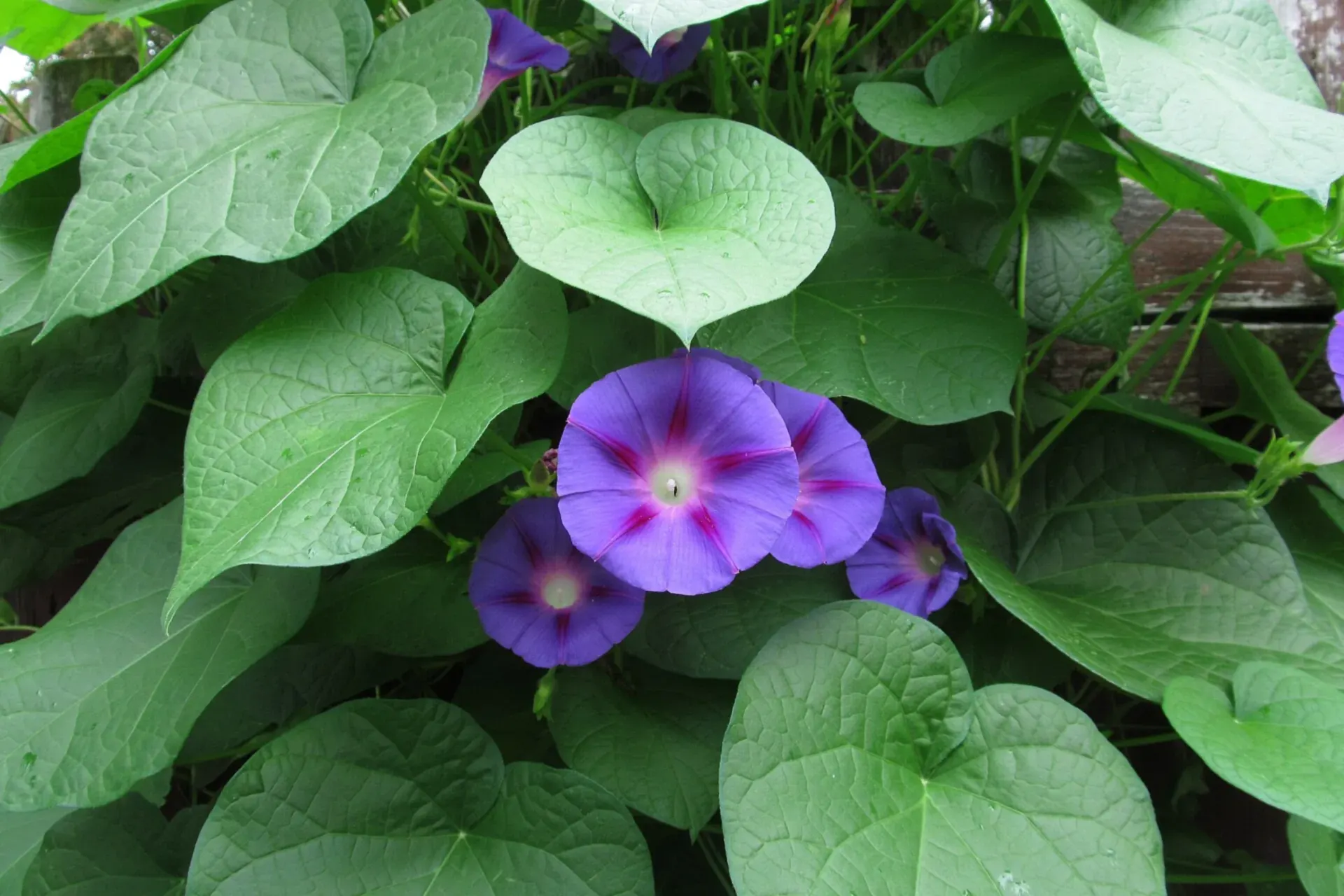
Trumpets that open with the dawn — a fence covered in blue by breakfast, from a packet of seed. Morning glory (Ipomoea purpurea and I. tricolor) is a tender annual vine that grows 8–10 ft in a season. Nick and soak the hard seed, plant it warm at the foot of anything climbable, and stand back. Two honest warnings: it self-sows vigorously in warm climates, and the seeds are toxic — admire them, don't eat them.
Grow Morning Glory with us — step by step
Everything for this plant is written step by step below — what to do, and exactly when. Read it through first if you like: you can grow it entirely on your own with that guide. Or start with us here — tell us your planting day and we lay out your personal schedule on this page, every next step on its own day, counted from your planting date. No guessing, no forgetting.
Step 1 — today: Nick each seed with a file and soak overnight, then sow in individual pots — the soaked seed wakes within days instead of weeks.
Morning Glory at a glance
Sow indoors: 4 weeks before last frost, in pots — nick and soak the seed first
Move outside: 2 weeks after last frost, into warm soil
Sow outdoors: 1 week after last frost, in warm soil
Spacing · Seed depth: 9 in apart at the foot of a support · 1/2 in deep
Sun: Full sun
Water: Moderate — lean soil flowers best
Bloom: July to frost; each flower lasts one morning
Timing counts from your average last spring frost — get your own dates in the Planting Calendar. Guidance follows standard extension-service practice for Canada and the US.

How to plant and grow morning glory, step by step
Step 1 — Time it right
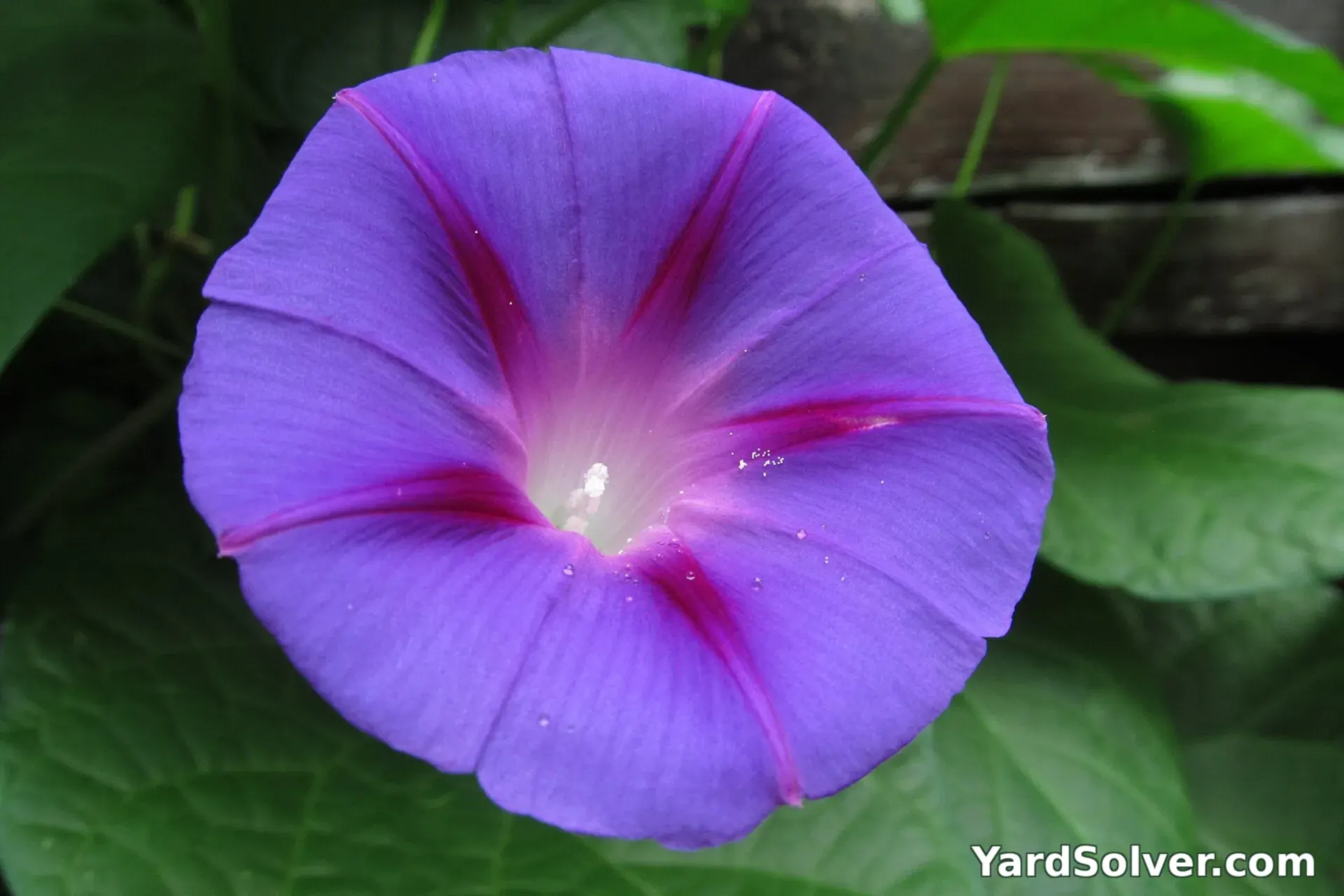
Sow indoors: 4 weeks before last frost, in pots; Move outside: 2 weeks after last frost, into warm soil; Sow outdoors: 1 week after last frost. All dates count from your average last spring frost — the Planting Calendar turns them into real dates for your garden. Morning glory seed has a waterproof coat: file a nick in it or soak it overnight and germination drops from three weeks to three days (7–10 to be safe). It is thoroughly tender — cold soil rots the seed and a breath of frost kills the vine — so everything waits for genuine warmth. Sow in individual pots to avoid root disturbance.
Step 2 — Prepare the spot
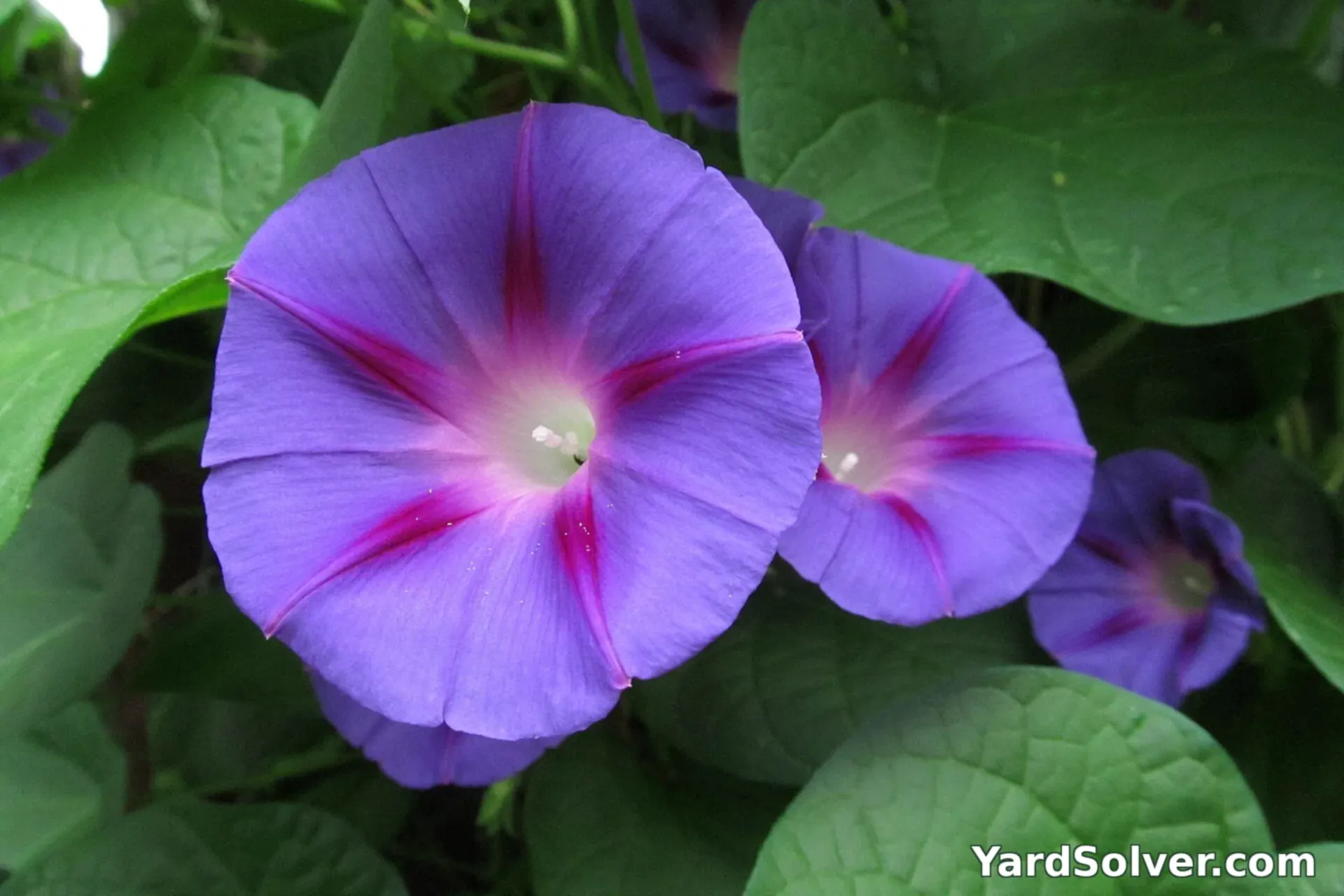
Choose the support first: a sunny fence, trellis, wigwam or arch that can take 10 ft of vine. The soil wants to be ordinary-to-lean and well-drained — rich, fed soil produces a magnificent leafy vine with hardly a flower (the classic morning glory failure). Rake a small planting pocket at the support's foot. For a raised bed, the Raised Bed Soil Calculator counts the bags for you; mixing your own? The Garden Soil Calculator gives the compost-rich split to aim for.
Step 3 — Sow and plant out
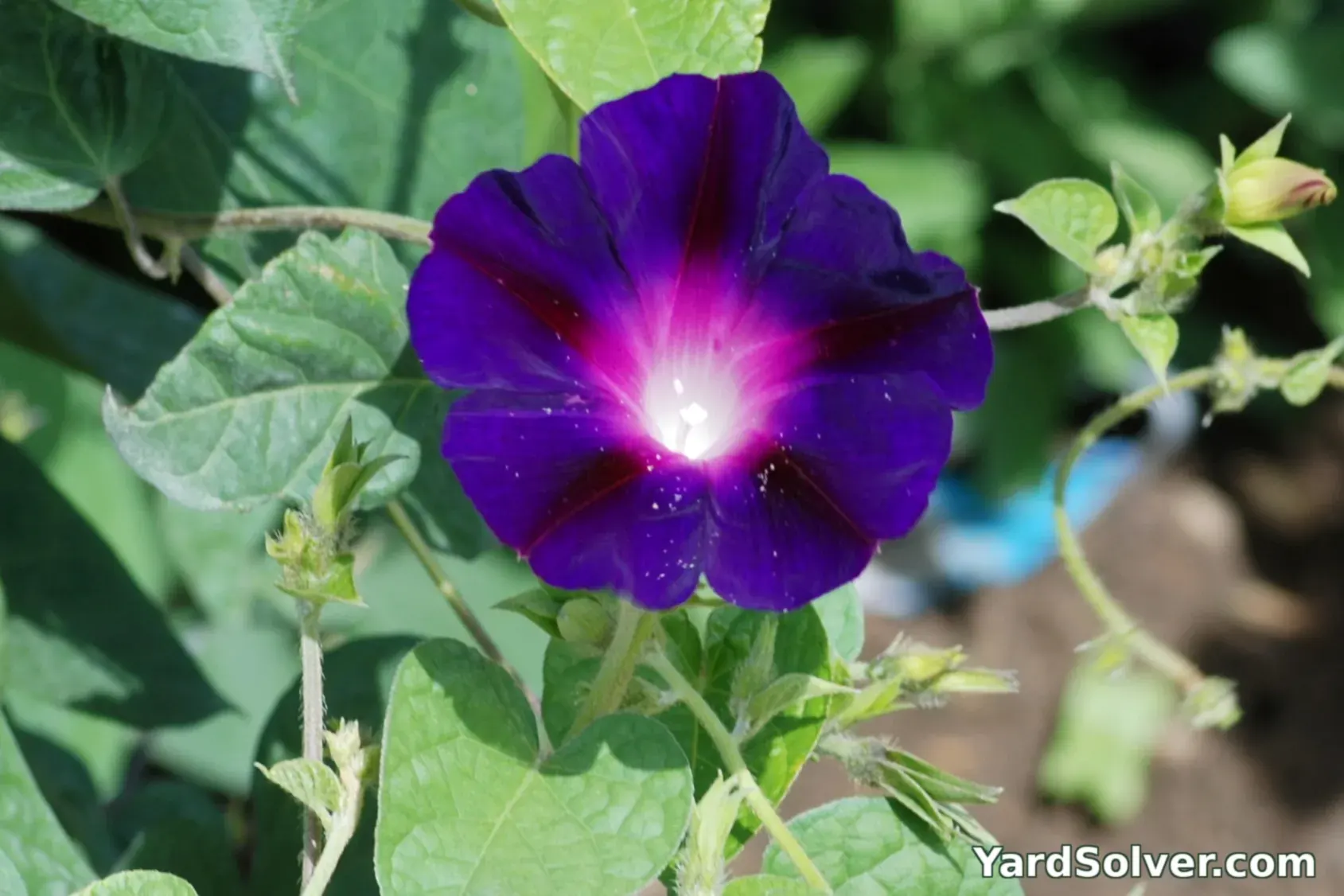
Set plants 9 in apart at the support's base, roots undisturbed, and water in. The Plant Spacing Calculator turns your bed size into an exact plant count. Tie the first stems loosely to the support; after that the vine twines unaided. Good neighbours: morning glory shares a trellis politely with sweet peas (which finish as it starts) — a relay team for a whole season of flower.
Step 4 — Water and feed
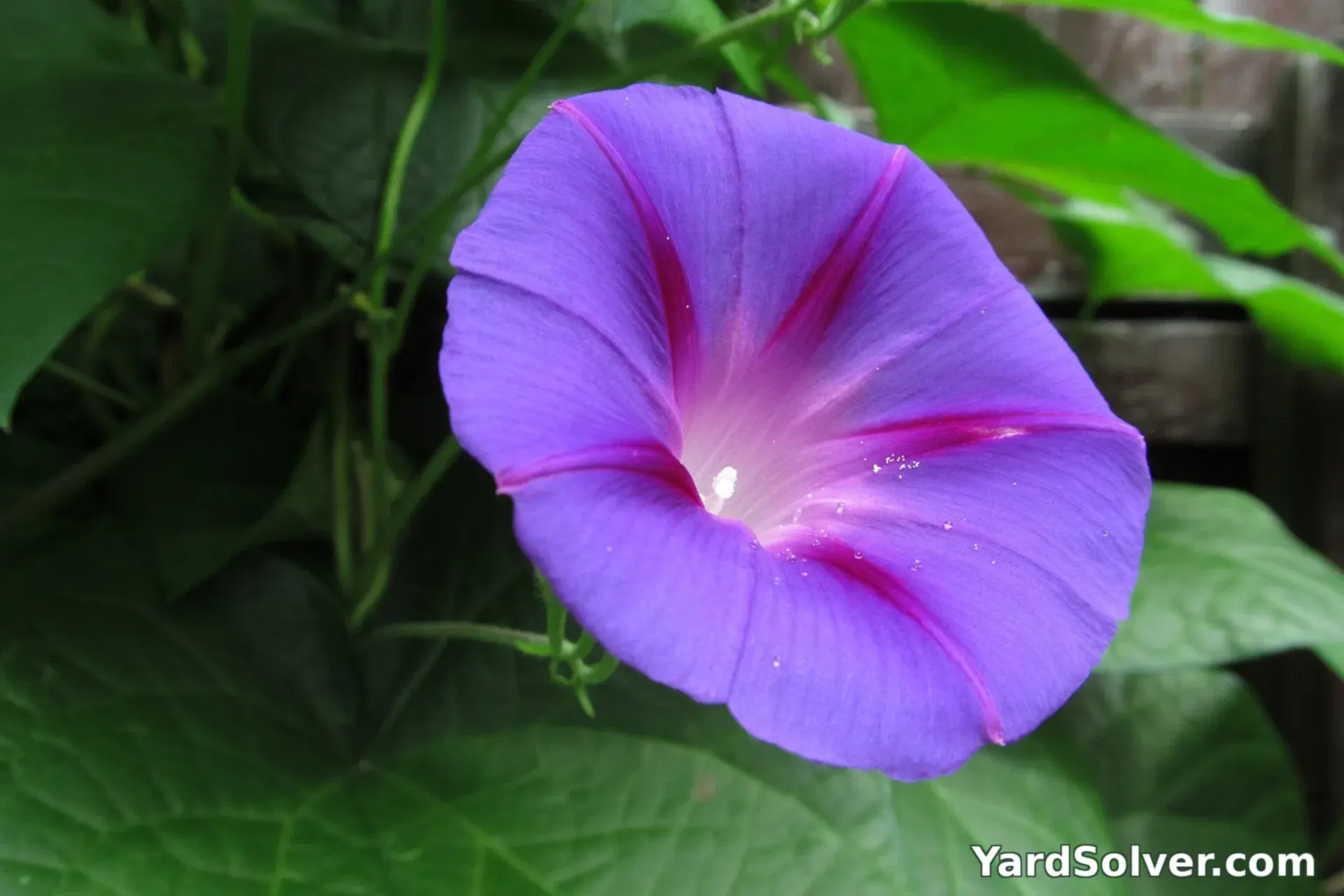
Water until the vine is climbing strongly, then only in serious drought. Do not feed: nitrogen is leaves, not trumpets. If the vine is all leaf by midsummer, the soil is too rich — water less, feed never, and enjoy the foliage while flowers come late. On starved sand, a single weak feed at planting is the limit — the Fertilizer Calculator turns your bed size into exact amounts.
Step 5 — Care and the problems to watch for
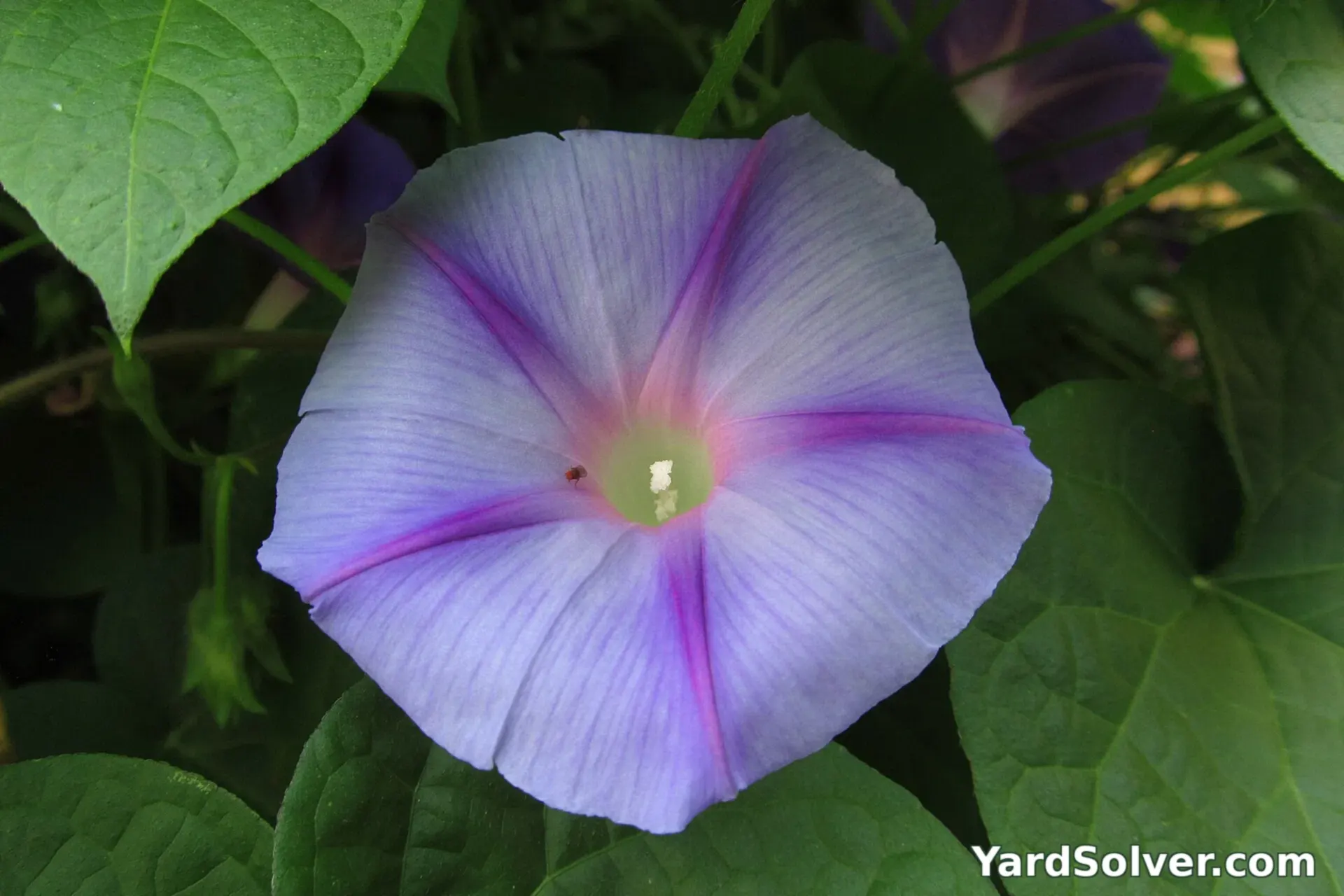
Care is mostly crowd control: guide wandering tips back to the support, and in warm climates deadhead if you don't want a hundred seedlings next year (in cold climates self-sown seed is the free renewal).
- All leaves, no flowers — soil too rich or too much shade; it flowers when slightly hungry in full sun.
- Flowers only at the top — the vine outgrew your view; train stems sideways along wires to spread the show.
- Aphids on the tips — water jet; the vine outgrows them in days.
Step 6 — Harvest
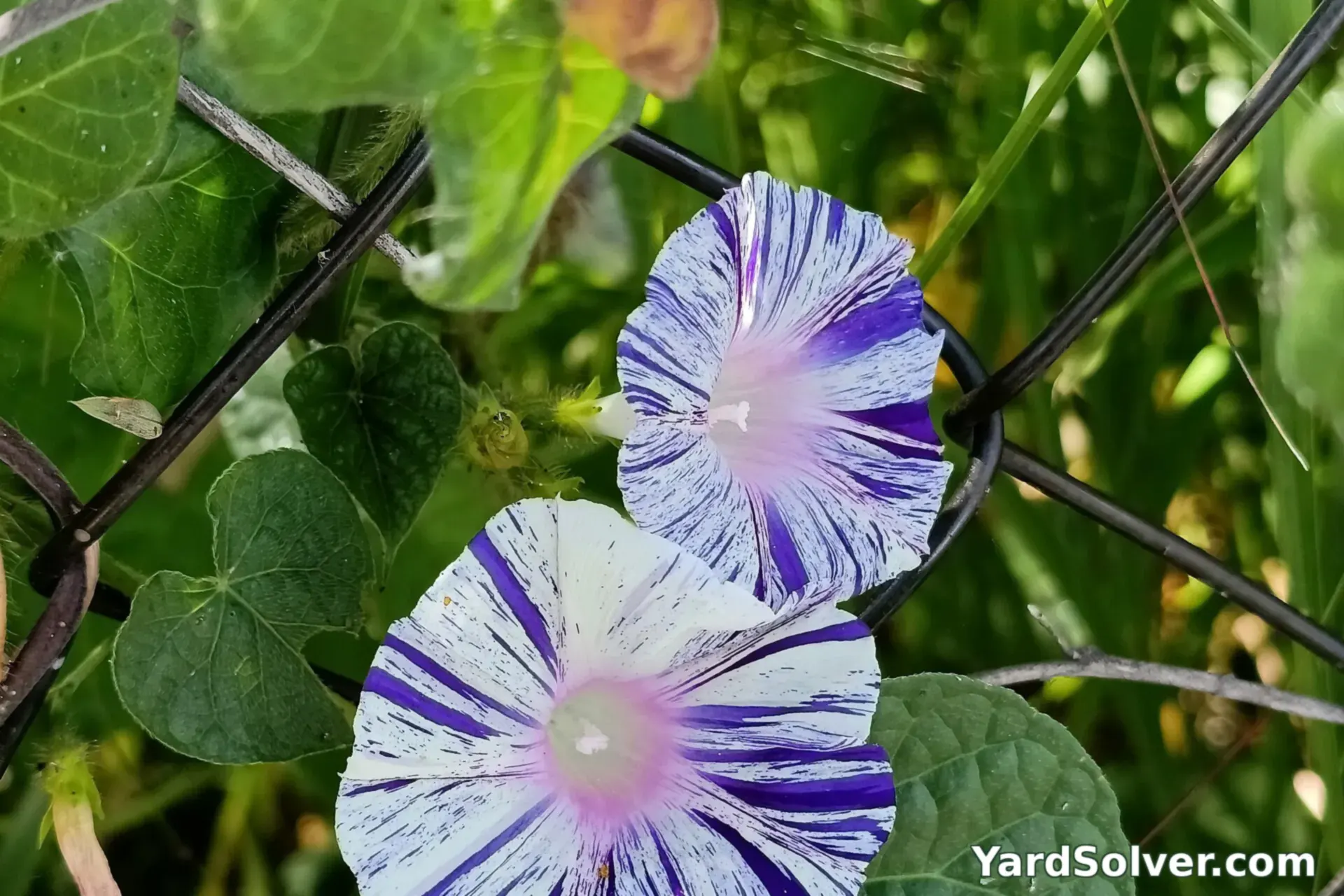
As a cut flower, morning glory lasts hours — it is a garden spectacle, best enjoyed at breakfast with coffee in hand. The seed harvest is simple: let pods dry brown on the vine, collect them before they split, and store the seed dry. In mild climates the vine self-sows so freely it can become a weed of fences and waste ground — plant it with that respect everywhere.
📅 Your personal Morning Glory schedule
Counted from your planting day — not a generic calendar. Day 0 is the day the seed went in the ground or the young plant went out.
Varieties worth growing
| Variety | Colour | Why gardeners like it |
|---|---|---|
| Heavenly Blue | Sky blue with white throat | The definitive morning glory — huge trumpets, the colour of a summer morning. |
| Grandpa Ott | Deep purple with pink star | A heirloom from Bavarian settlers in Iowa — the seed-saver's classic. |
| Scarlett O'Hara | Wine red | Rich red trumpets that glow against the green. |
Good for you — and take care
Benefits
- A whole fence of flowers from one packet, in one season.
- The bluest blue in the summer garden — refreshed every morning.
- Fast cover for ugly fences, sheds and dead trees.
Take care
- Seeds are toxic — keep away from children and pets; never eat them.
- Self-sows aggressively in warm climates; deadhead where that's a problem.
- Rich soil = leaves without flowers; grow it lean.
A little history — and one good fact
Morning glories came from Mexico and tropical America, where Ipomoea species were sacred plants of Aztec ritual. The garden forms reached Europe in the 1600s and 'Heavenly Blue' — selected in the early 20th century — remains the bluest flower most gardens ever grow.
Fun fact: Each trumpet lasts a single morning: the flower that opens at dawn is finished by afternoon, and the vine survives the extravagance by making buds by the hundred.
Keep going
Guides: Succession planting · Companion planting basics · Pollinator garden guide
Calculators: Plant Spacing Calculator · Garden Mix Calculator · Fertilizer Calculator
More flowers: Sweet Peas · Clematis · Tithonia
← Back to the Plant Library · Get your personal planting dates
Questions people ask
Why is my morning glory all leaves and no flowers?
The soil is too rich or the spot too shady — morning glory flowers when it is slightly hungry and fully sunlit. Stop feeding entirely, water less, and flowers usually follow within weeks.
Is morning glory invasive?
In warm climates it self-sows freely and can naturalise along fences and waste ground; in cold-winter gardens frost keeps it in check and self-sown seedlings are the renewal. Deadhead spent flowers where you don't want volunteers.
Are morning glory seeds poisonous?
Yes — the seeds are toxic and have psychoactive compounds, and should never be eaten. Keep seed packets and drying pods away from children and pets.