
Plant Library · Flowers
🌸 How to Grow Sweet Pea
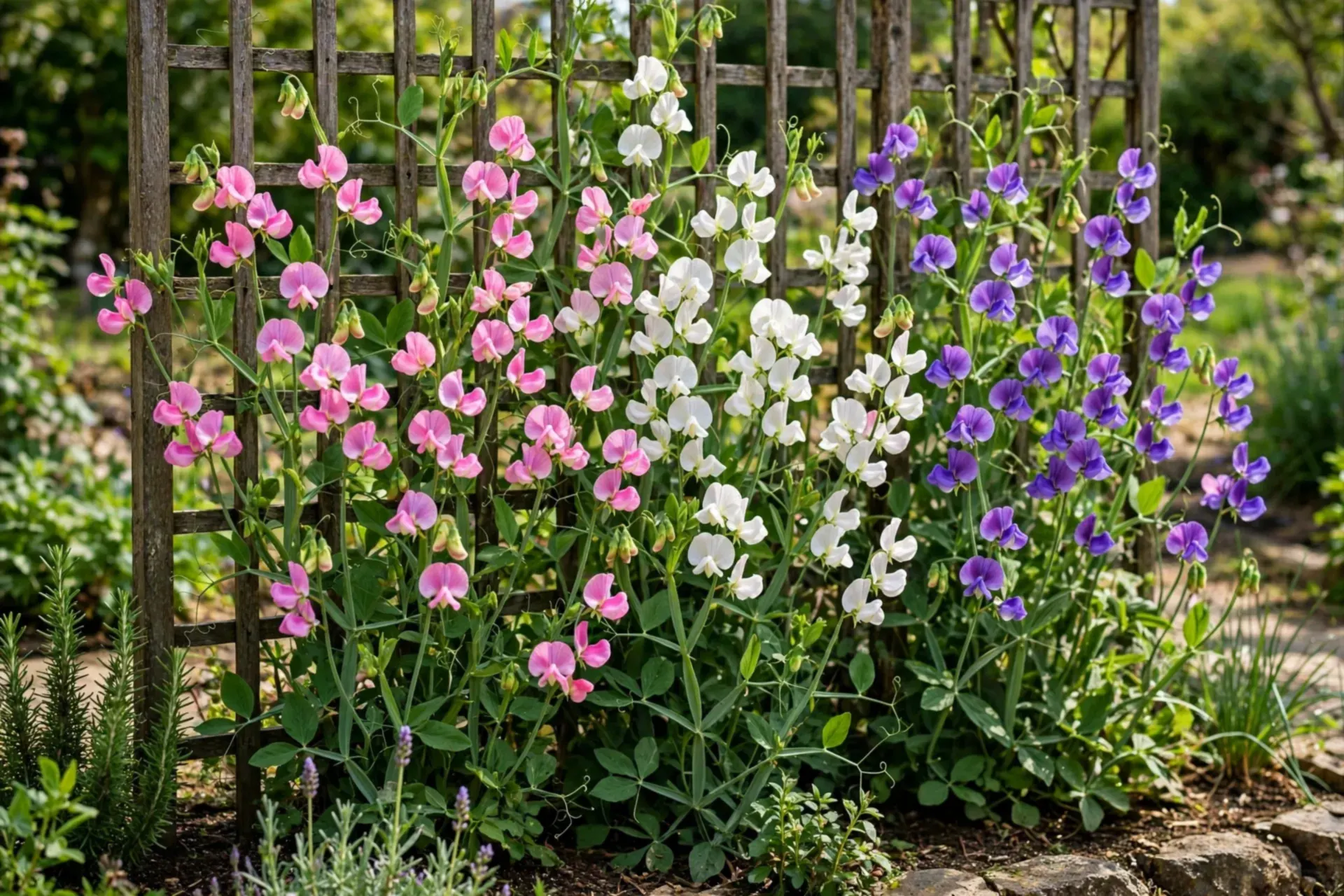
A cool-season flower — it sulks in real heat. Sweet peas are climbing annuals grown for the most fragrant blooms in the garden: sow them in early spring, or in fall where winters are mild, give them deep rich soil and a trellis to climb, and cut the flowers every day or two so the plant keeps making more instead of setting seed. Where summers get hot, expect the best show in spring and early summer.
Grow Sweet Pea with us — step by step
Everything for this plant is written step by step below — what to do, and exactly when. Read it through first if you like: you can grow it entirely on your own with that guide. Or start with us here — tell us your planting day and we lay out your personal schedule on this page, every next step on its own day, counted from your planting date. No guessing, no forgetting.
Step 1 — today: Plant out your young Sweet Pea plants today (hardened off first), spaced 6 in apart along their trellis, and water them in deeply. Starting from seed instead? Sow now, 1 in deep, and this same schedule counts from planting day.
Sweet Pea at a glance
Sow indoors: 6 weeks before last frost
Move outside: 1 week before last frost
Sow outdoors: 3 weeks before last frost
Spacing: 6 in · Seed depth: 1 in
Sun: Full sun
Water: Deep and regular — thirsty climbers
Harvest: Cut flowers from about 60–75 days; pick daily to keep them coming
Timing counts from your average last spring frost — get your own dates in the Planting Calendar. Guidance follows standard extension-service practice for Canada and the US.
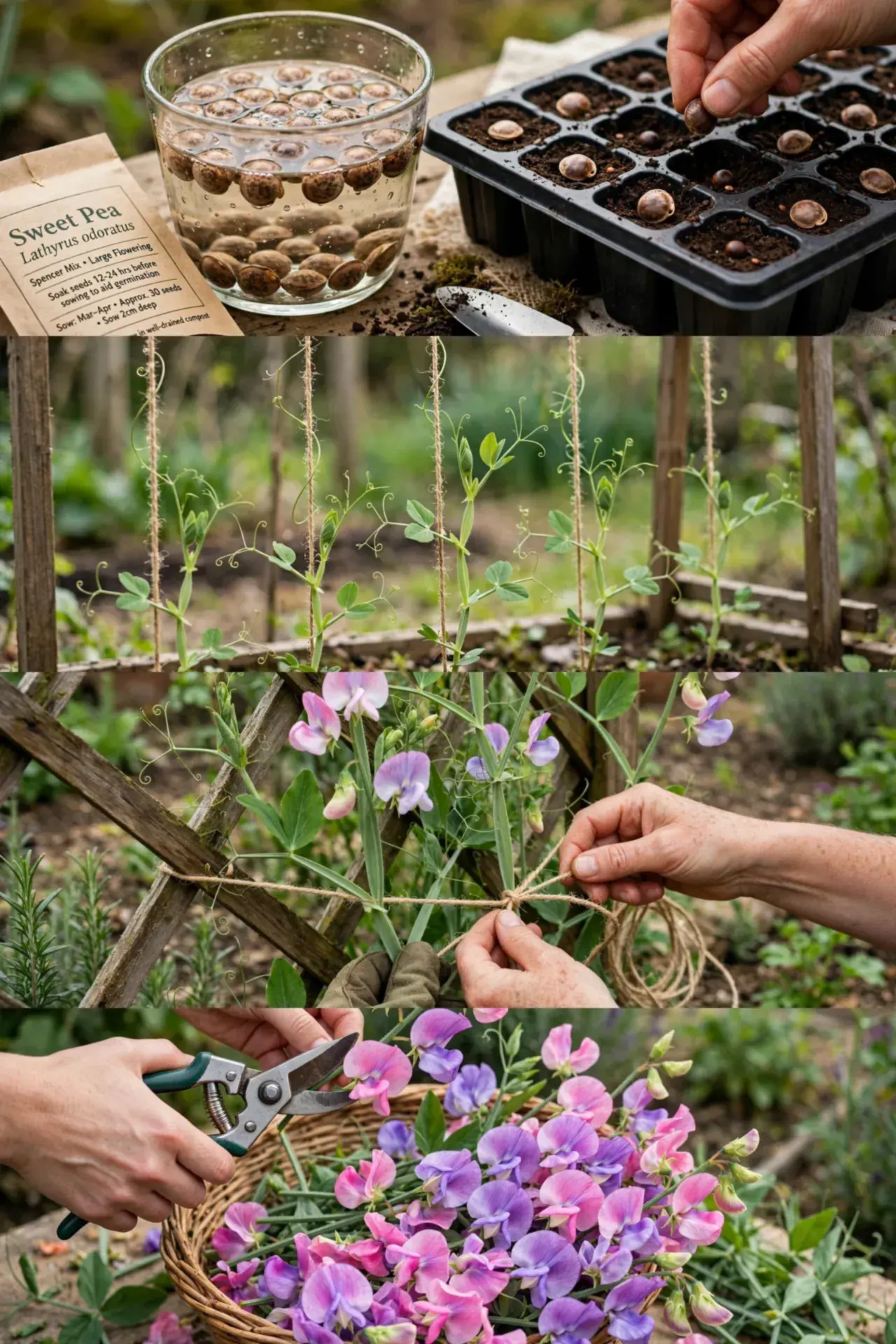
How to plant and grow sweet pea, step by step
Step 1 — Time it right
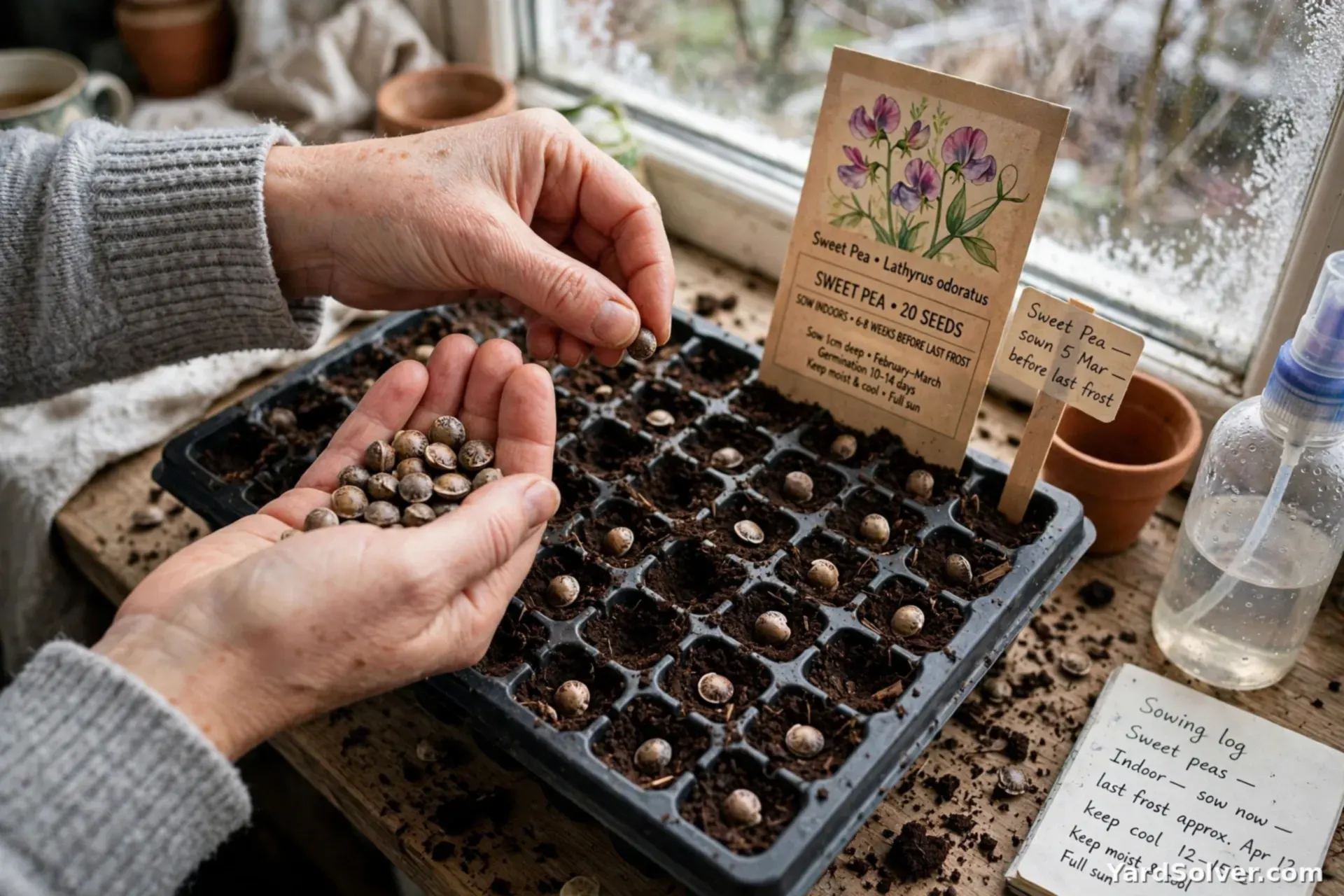
Sow indoors: 6 weeks before last frost; Move outside: 1 week before last frost; Sow outdoors: 3 weeks before last frost. All dates count from your average last spring frost — the Planting Calendar turns them into real dates for your garden. Sweet peas want a cool start and a long, cool spring: sow indoors and plant out while light frost is still possible, because hardy seedlings shrug it off. In mild-winter areas (about zone 8 and warmer), an autumn sowing overwinters quietly and flowers earliest of all. Hot weather is the deadline — once nights turn warm, flowering fades fast.
Step 2 — Prepare the spot
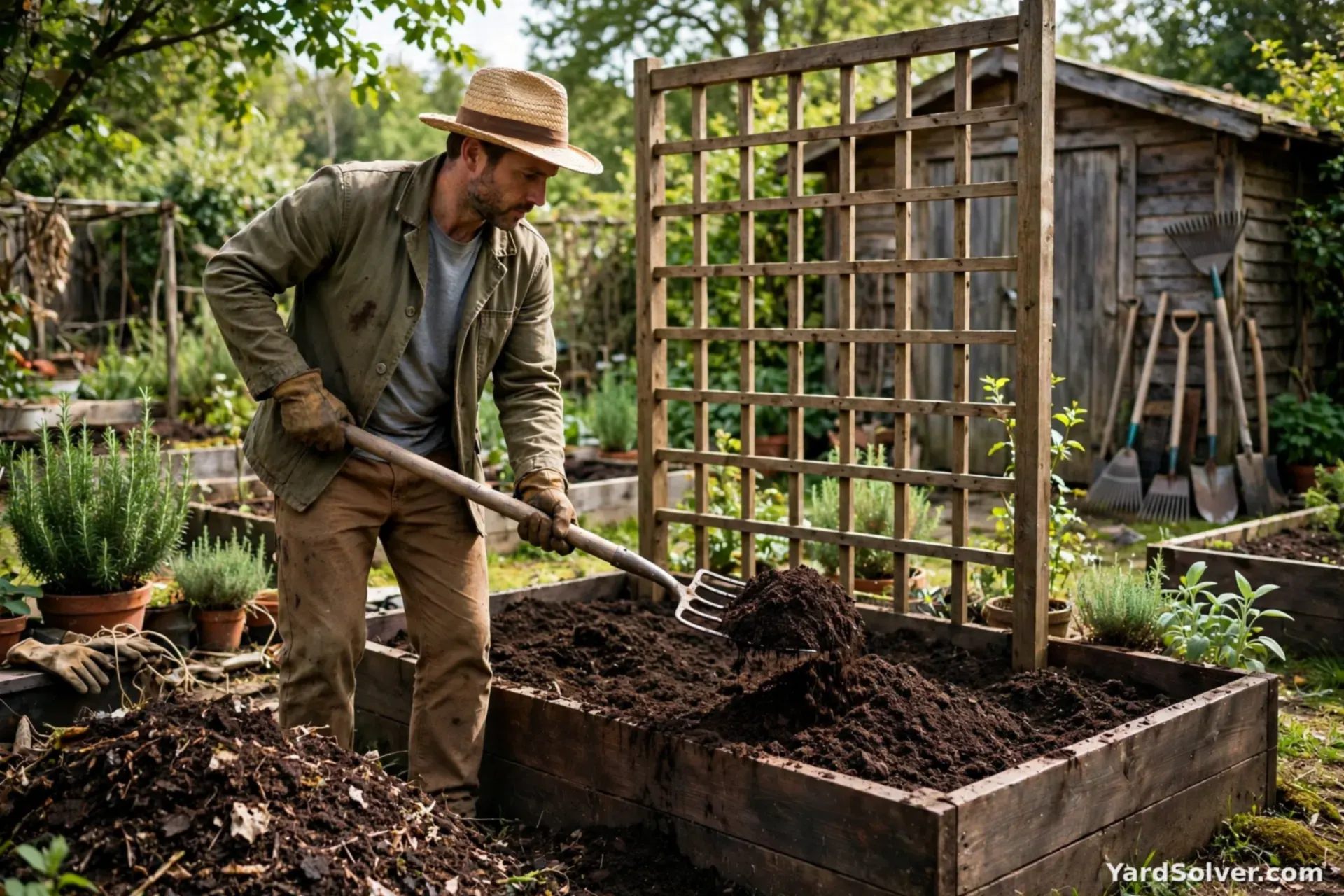
Sun: Full sun. Sweet peas are hungry climbers with deep roots: dig in plenty of compost or well-rotted manure, and put the trellis, netting or pea sticks in place before planting, so tender roots are never disturbed later. Work out how much you need with the Garden Mix Calculator or the Raised Bed Soil Calculator.
Step 3 — Sow and plant out
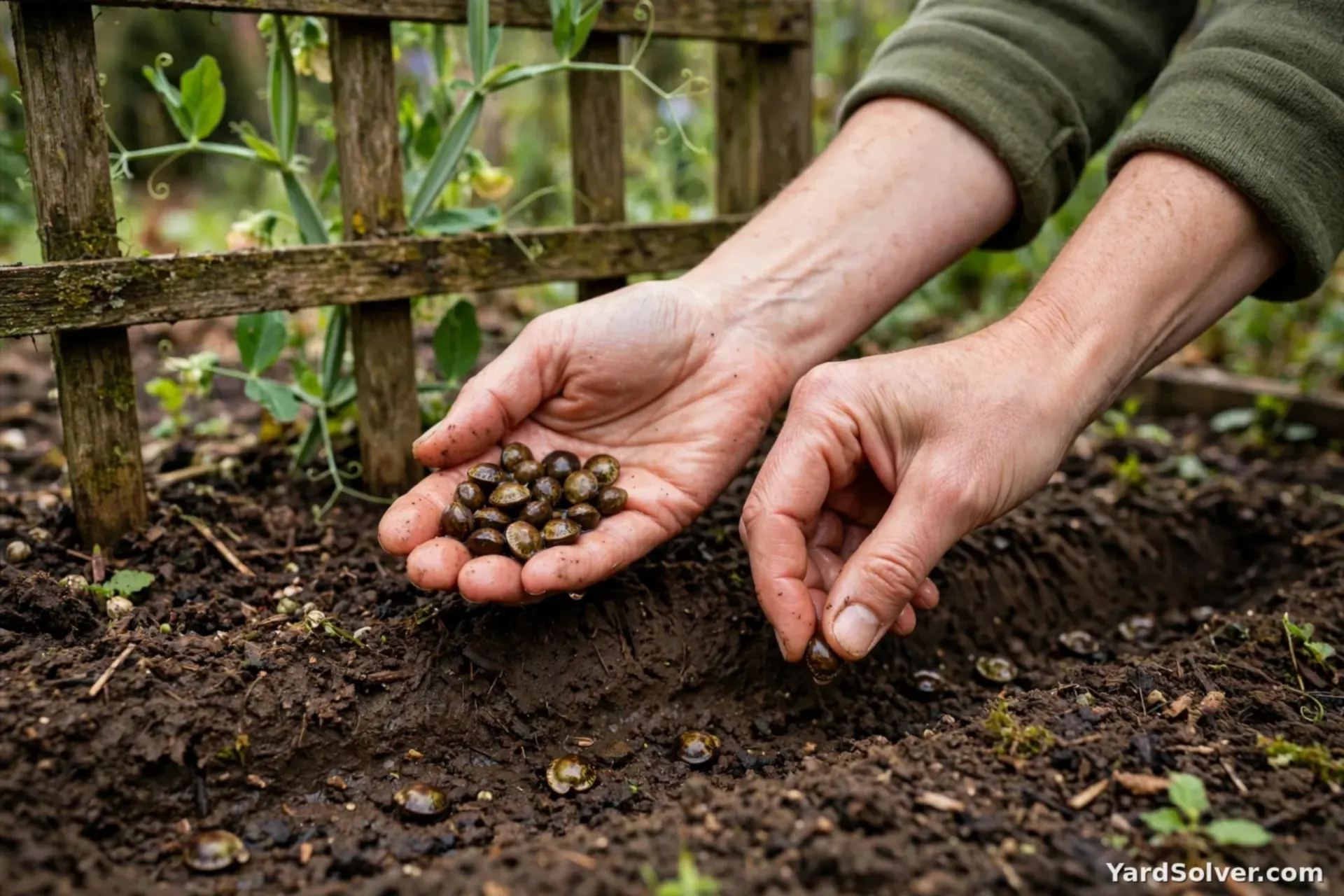
The seed coat is hard, so soak seed overnight (or nick the coat with a small file) before sowing, then sow 1 in deep. Start indoors 6 weeks before last frost, or sow outdoors 3 weeks before last frost where the soil can be worked; harden off indoor plants (see How to Harden Off Seedlings) and set them out about 1 week before last frost, spaced 6 in apart along the support — sweet pea seedlings shrug off light frost. The Plant Spacing Calculator turns that spacing into plants-per-bed.
Step 4 — Water and feed
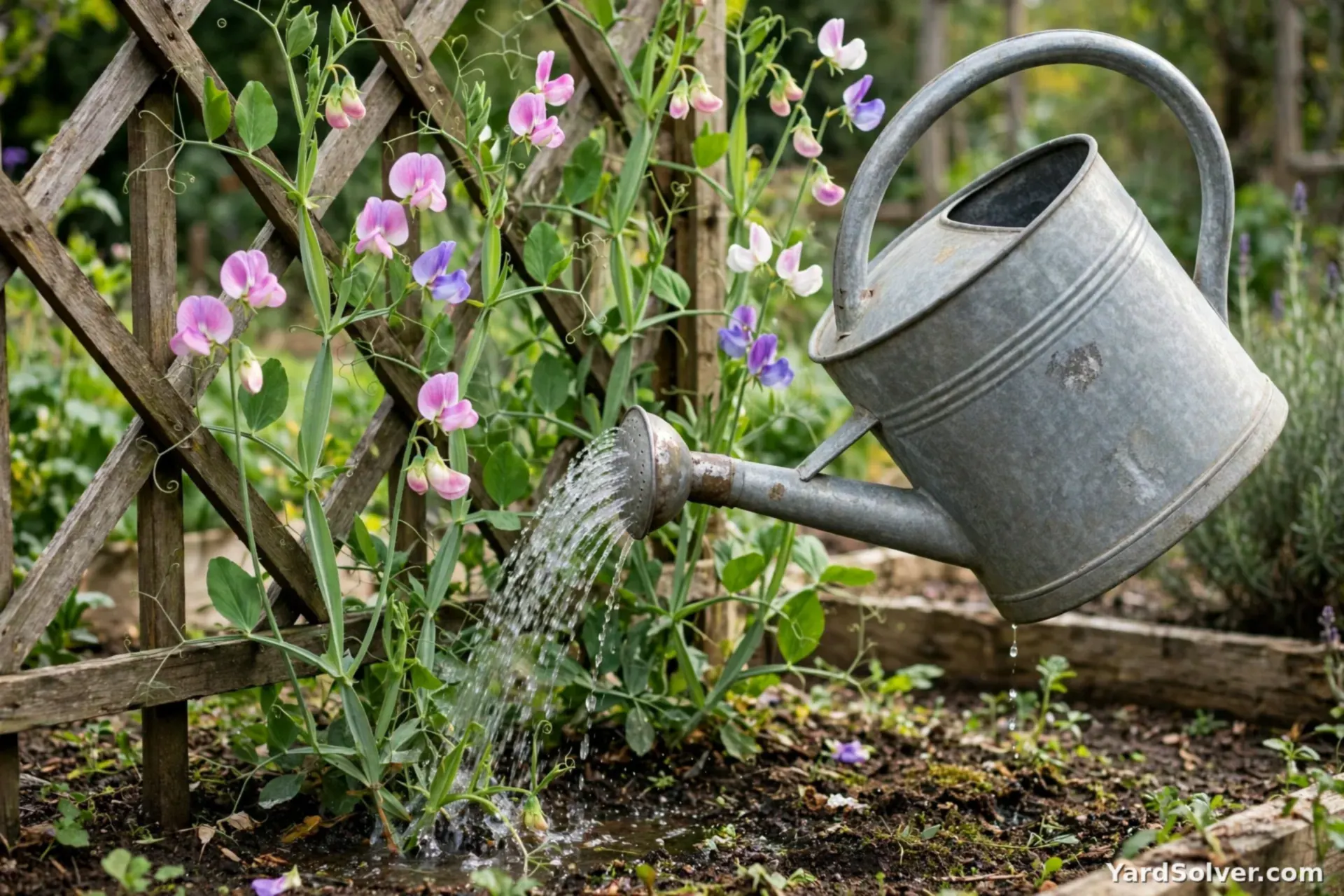
Water: Deep and regular — thirsty climbers. Water at the base and mulch well to keep the roots cool and moist; once buds appear, a weekly feed with a balanced or tomato fertilizer keeps the flowers coming. The Fertilizer Calculator turns a bed size into the right amount.
Step 5 — Care and the problems to watch for
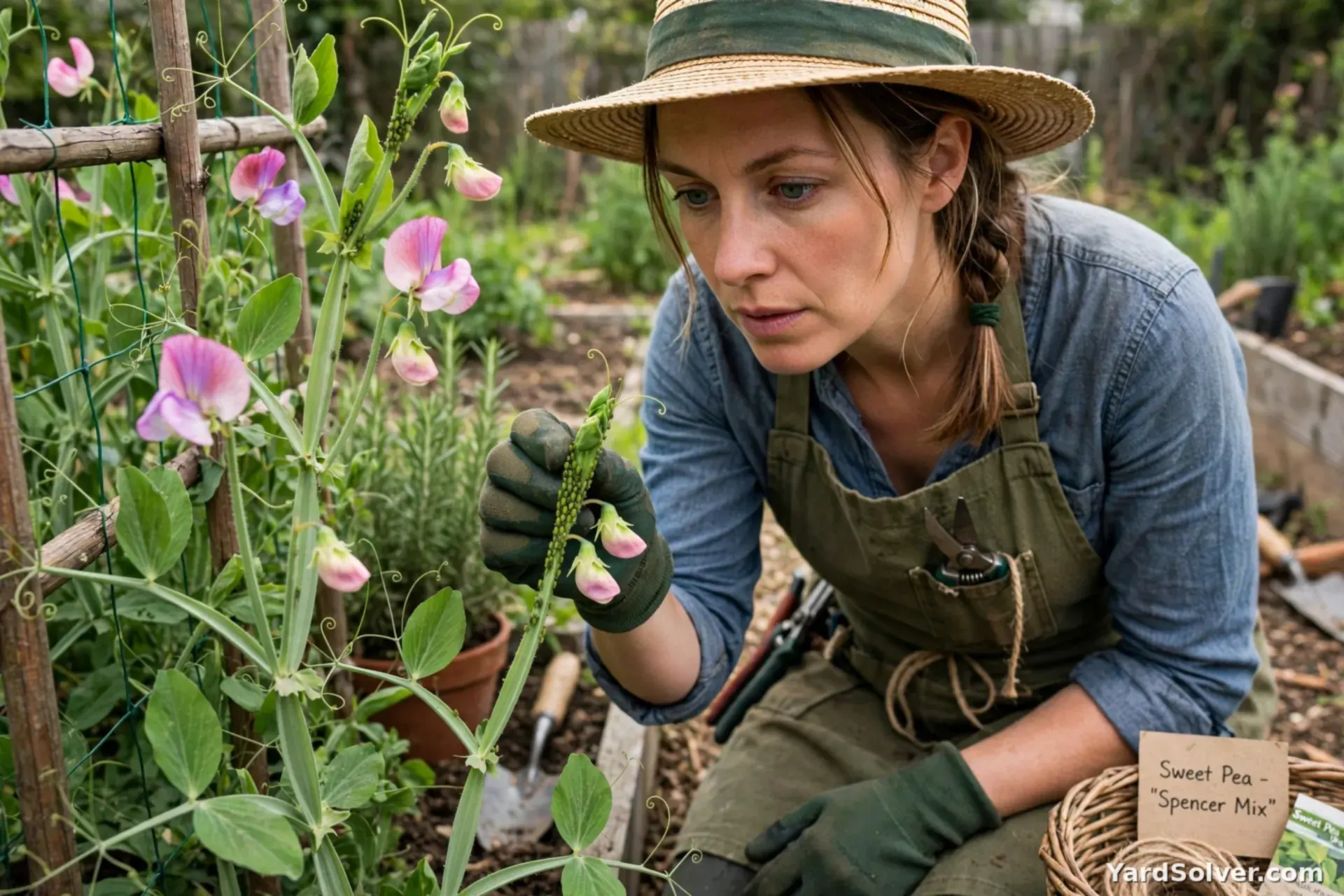
- Powdery mildew — white dusty leaves, worst late in the season; space plants for air and water at the base, never overhead.
- Aphids — clusters on the soft tips and buds; blast them off with water or pinch out badly infested tips.
- Bud drop in heat — buds fall unopened when hot nights arrive; it is the weather, not a pest, and it marks the end of the show in hot areas.
Take care: Sweet pea seeds are poisonous — do not eat them, and keep seed and pods away from children and livestock. Sweet peas are not edible peas, despite the name.
Step 6 — Harvest
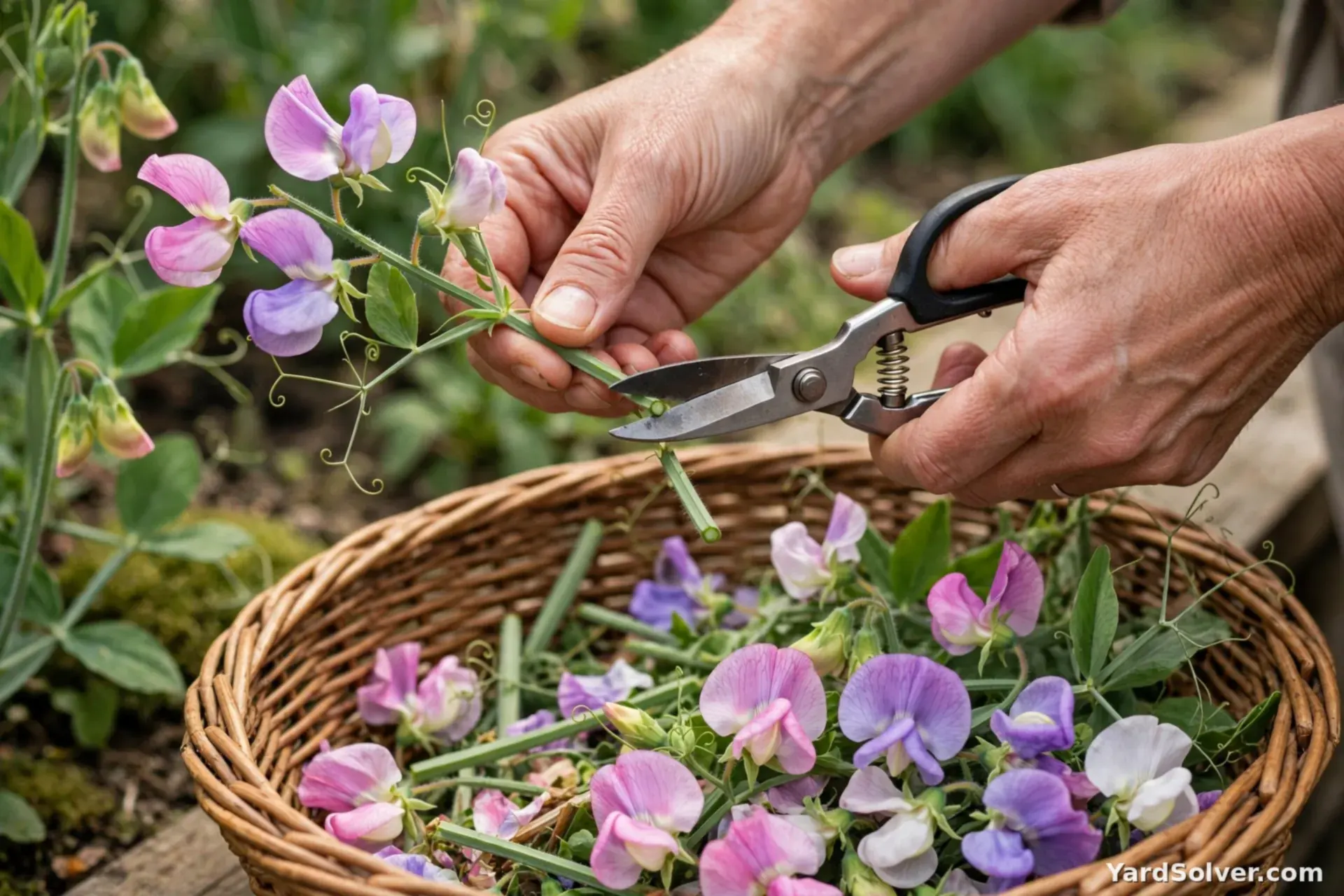
Ready in: Cut flowers from about 60–75 days; pick daily to keep them coming. Cut stems in the morning, when the top flower on each stem is just open, and check the plants every day or two — the moment pods are allowed to form, the plant reads the job as done and stops flowering.
Problems, pests & diseases — diagnosis and fixes
- White powdery coating spreading over leaves and stems, worst late in the season: powdery mildew, encouraged by dry roots and still, humid air. Fix: water at the base, thin growth for airflow, and pick off the worst leaves — the full routine is in How to Get Rid of Powdery Mildew.
- Clusters of greenfly on the soft tips and buds, leaves sticky underneath: aphids. Fix: blast them off with a jet of water, pinch out badly infested tips, and let ladybirds finish the job — see How to Get Rid of Aphids.
- Buds form, then drop without opening during a hot spell: heat stress — sweet peas stop in real heat, and no spray fixes weather. Fix: mulch the roots cool, water deeply, and next year sow earlier, or in autumn where winters are mild.
- Seedlings chewed off at soil level overnight: slugs and snails. Fix: pick them off by torchlight, use barriers or traps, and keep mulch pulled back from the young stems.
- Leaves mottled yellow-green, growth twisted and stunted: mosaic virus, spread by aphids. Fix: there is no cure — pull and bin (do not compost) affected plants, and wash hands and tools before touching healthy ones.
- Plants yellow and wilt even though the soil is wet: root rot in waterlogged ground. Fix: lift a plant and check for brown, mushy roots; improve drainage and grow in a raised bed or a large pot next time.
📅 Your personal Sweet Pea schedule
Counted from your planting day — not a generic calendar. Day 0 is the day the seed went in the ground or the young plant went out.
Varieties worth growing
| Variety | Colour | Why gardeners like it |
|---|---|---|
| 'Spencer' mix | Mixed pinks, purples and whites | The classic tall type — huge ruffled blooms on long stems, bred for cutting |
| 'Cupani' | Deep purple and maroon | The original form sent from Sicily — smaller flowers, but the strongest scent of all |
| 'Royal Family' | Mixed colours | A Spencer type bred to tolerate heat a little longer into summer |
| 'Old Spice' mix | Mixed colours | Old-fashioned types chosen for powerful fragrance rather than flower size |
| Dwarf 'Bijou' | Mixed colours | A short bush type, about knee-high, for pots and edges — no trellis needed |
Good for you — and take care
Benefits
- Unbeatable scent — a small jar of stems perfumes a whole room
- Cut-and-come-again: daily cutting means weeks of blooms from the same plants
- The open flowers feed bumblebees through spring and early summer
- A living screen — covers a trellis, netting or fence in a single season
- Like other legumes, the roots leave a little extra nitrogen in the soil
Take care
- Seeds are poisonous — never eat them, and keep seed packets and pods away from children and livestock
- Not an edible pea — label the plants clearly if you also grow garden peas nearby
- The vines need real support — a collapsed, tangled patch mildews fast, so tie in as they climb
A little history — and one good fact
Sweet peas come from Sicily and the dry coasts around the southern Mediterranean, where the wild plant scrambles over sunny banks. In 1699 the Franciscan monk Francisco Cupani sent seed to England, and the flower became a Victorian obsession; around 1900 the tall, ruffled Spencer types appeared, named for the Earl Spencer's estate where the first one was found.
Fun fact: The sweet pea is the birth flower for April, and in the language of flowers it stands for blissful pleasure — fitting for the most fragrant flower in the garden.
Keep going
Guides: How to Harden Off Seedlings · Earliest Seeds to Start Indoors · How to Get Rid of Powdery Mildew
Calculators: Plant Spacing Calculator · Seed Calculator · Fertilizer Calculator
More flowers: Marigold · Zinnia · Cosmos
← Back to the Plant Library · Get your personal planting dates
Questions people ask
When do I plant sweet pea?
Count from your average last spring frost: sow indoors 6 weeks before last frost; move outside 1 week before last frost; sow outdoors 3 weeks before last frost. Sweet peas are a cool-season flower: start them early — in fall for a mild-winter garden, or from late winter indoors — because they sulk and stop flowering in real heat.
How far apart do I space sweet pea?
Space plants 6 in apart, with seed sown 1 in deep. Sun: full sun.
When does sweet pea flower?
Cut flowers from about 60–75 days; pick daily to keep them coming. A cool-season flower — it sulks in real heat.