
Plant Library · Houseplants
🪴 How to Grow Orchid
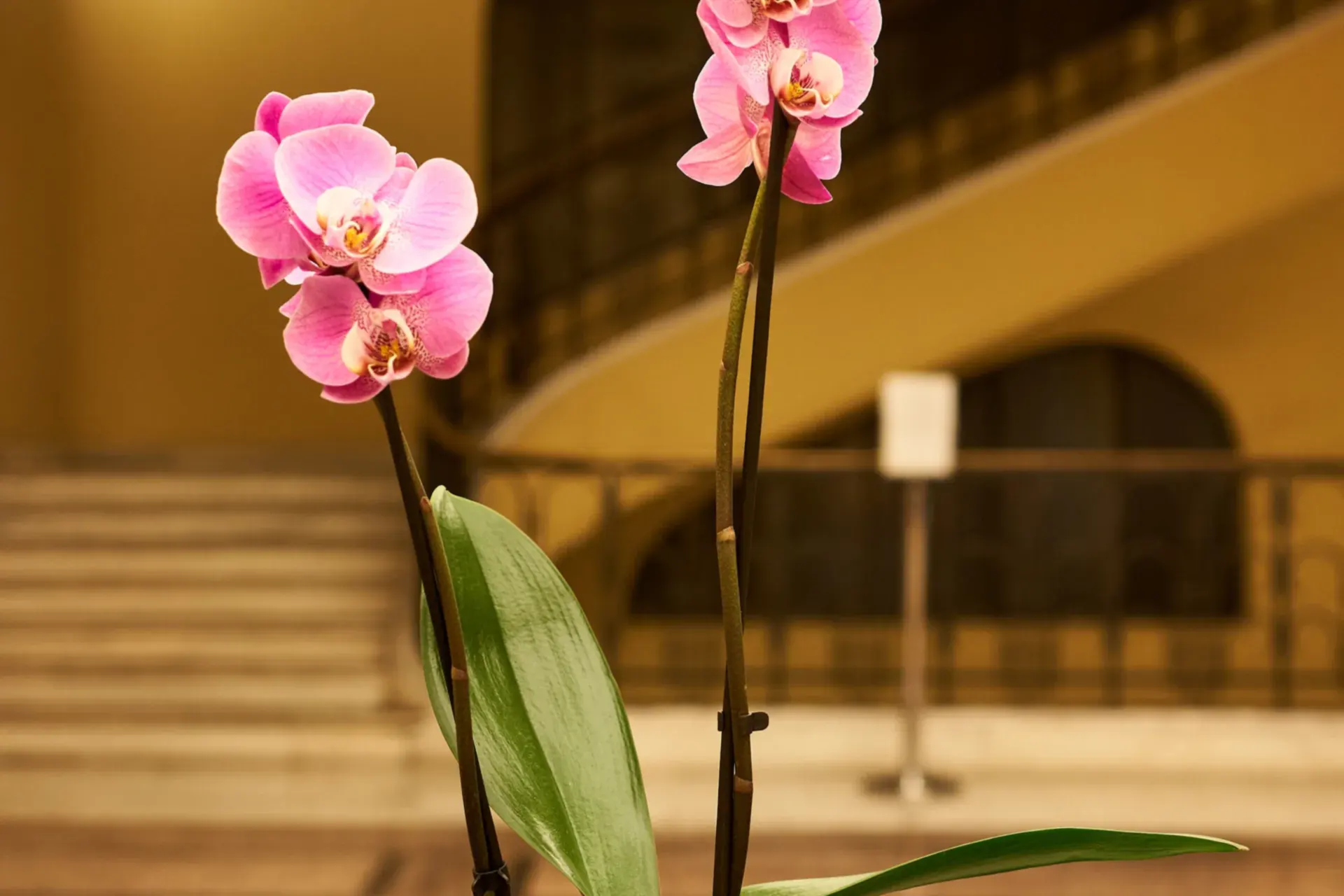
The orchid most of us own — the phalaenopsis, or moth orchid — is also the easiest orchid in the world, once you stop treating it like a soil plant. In the wild it grows on trees, roots in the air, rained on and dried between showers. Copy that at home — bark instead of soil, a weekly soak instead of little sips, bright light without scorching sun — and the plant that arrived in flower will flower again, for months at a time.
Grow Orchid with us — step by step
Everything for this plant is written step by step below — what to do, and exactly when. Read it through first if you like: you can grow it entirely on your own with that guide. Or start with us here — tell us your planting day and we lay out your personal schedule on this page, every next step on its own day, counted from your planting date. No guessing, no forgetting.
Step 1 — today: Settle your Orchid into its spot today: bright indirect light, its clear pot inside a cover pot if you like, and a first soak-and-drain so the bark starts evenly damp.
Orchid at a glance
Spacing: — (pot) · Propagation: Bought in flower, not seed
Sun: Bright indirect light; an east window is ideal
Water: Soak the bark about weekly for 10–15 minutes, then drain completely
Harvest: Grown for flowers — a spike blooms for 2–3 months
Timing counts from your average last spring frost — get your own dates in the Planting Calendar. Guidance follows standard extension-service practice for Canada and the US.
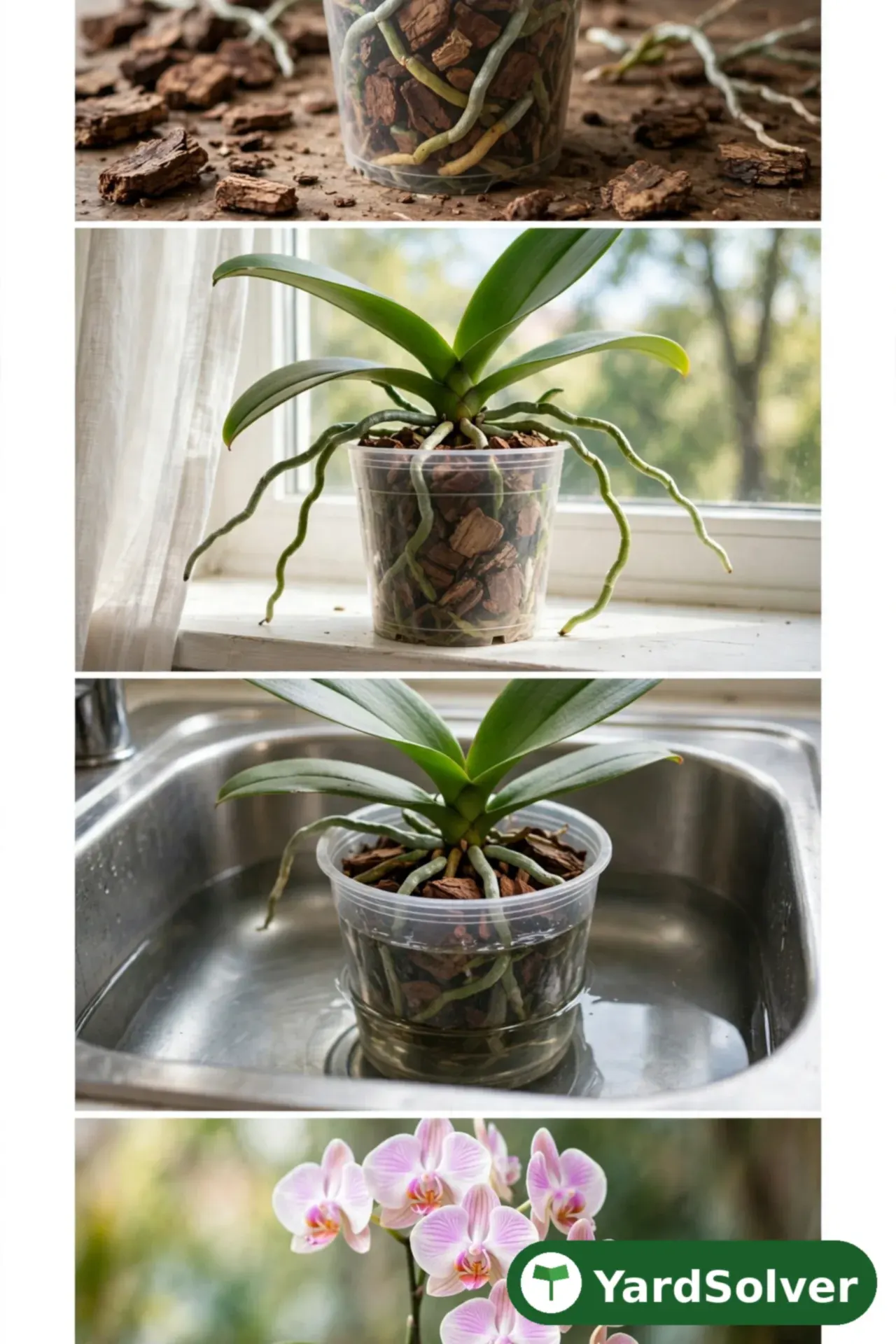
How to plant and grow orchid, step by step
Step 1 — Choose bright shade
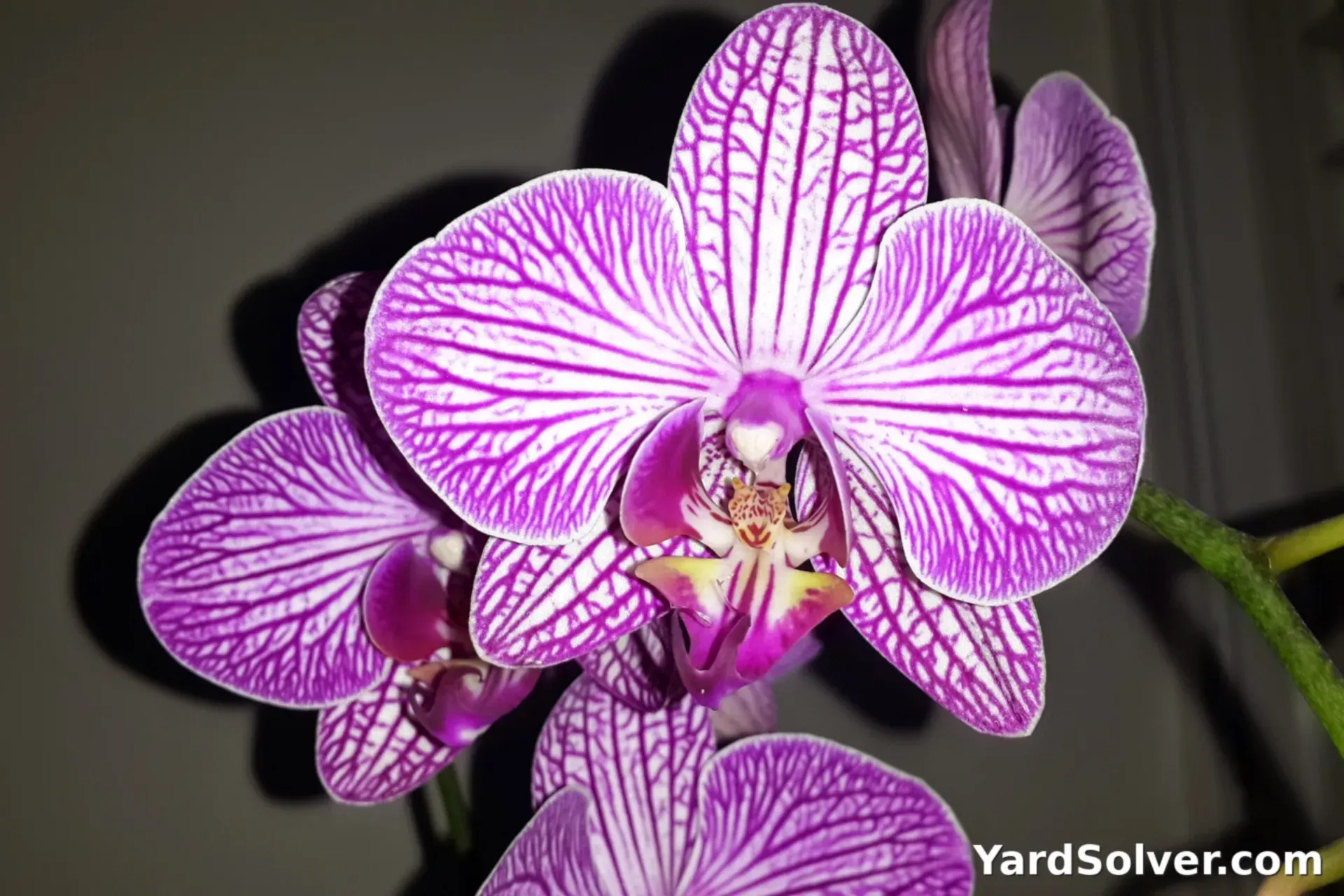
Light decides whether an orchid flowers or merely survives. Give it bright indirect light — an east window, with its gentle morning sun, is the ideal home, and a spot a little back from a south or west window works too. Leaves should be a bright, grassy green: dark, floppy green leaves are a plant asking for more light, however healthy it looks.
Direct midday sun through glass scorches leaves into pale, papery patches, and a plant in a dim corner will grow leaves for years without ever producing a spike. Move a plant toward brighter light gradually over a week or two so the leaves adjust. If a leaf ever feels hot to the touch at midday, the plant is in too much direct sun — sheer curtain, or a step back, fixes it.
Step 2 — Pot it in bark, never soil
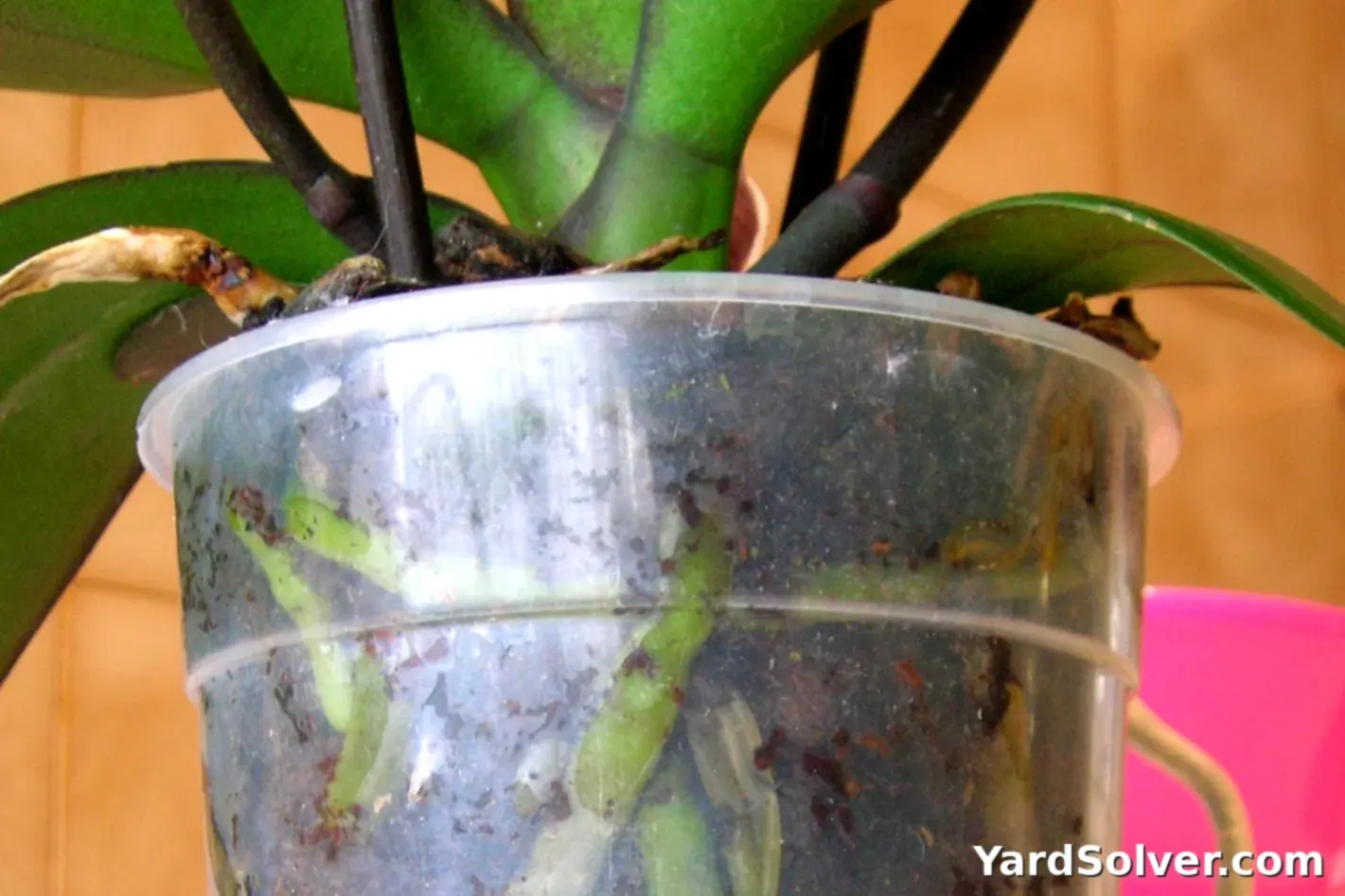
A phalaenopsis is an epiphyte — in Southeast Asian forests it anchors to tree bark and takes water from rain and humid air. Its thick roots need air as much as moisture, which is why orchids are potted in coarse bark, never in ordinary soil, which suffocates and rots them. The clear plastic pot is not packaging to throw away: it is your inspection window.
Read the roots through it before every watering. Silver-grey roots are thirsty; green roots have drunk. That one glance replaces all guesswork. Repot into fresh bark every year or two, when the bark starts breaking down into crumbs, going one size up and keeping the base of the plant level with the bark surface. A cover pot over the clear pot is fine for looks — just lift the plant out for its soak. Spots or symptoms you cannot read are worth a pass through the Plant Doctor.
Step 3 — Water by soaking
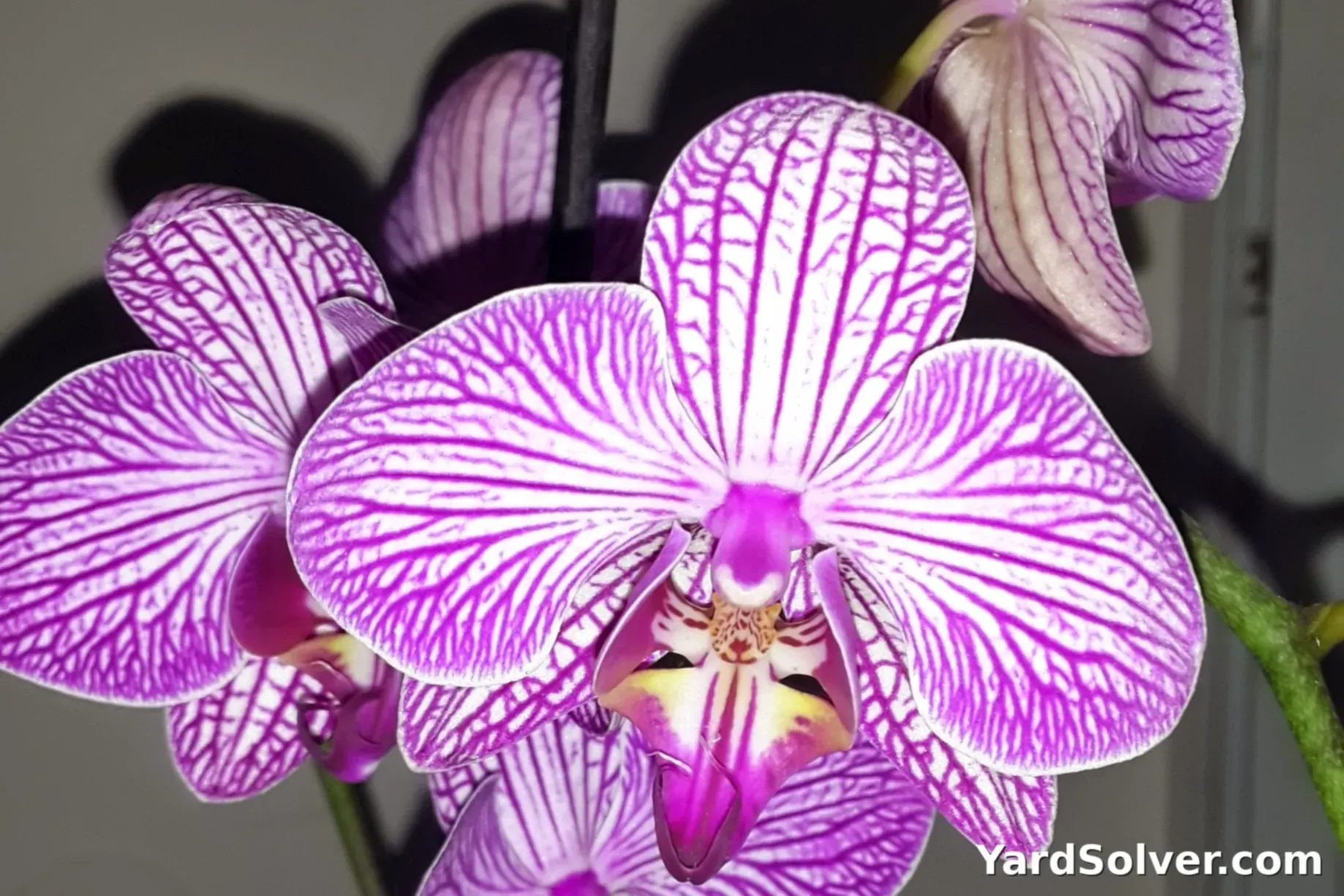
Water the way rain reaches a tree orchid: all at once, then gone. Set the clear pot in a basin of room-temperature water for 10–15 minutes so the bark and roots drink, then lift it out and let it drain completely before it goes back in its cover pot. About weekly is typical, but the roots rule — soak when they have turned silver-grey again, which may be five days in a warm bright room or ten in a cool one.
Keep water out of the crown, the cup where the leaves meet: water sitting there rots the plant from the centre, silently. If the crown does get wet, tip the plant and blot with the corner of a paper towel. Ignore the ice-cube tip printed on gift tags — tropical roots in the wild are never rained on at freezing point, and room-temperature soaking is the grower's standard for a reason.
Step 4 — Feed weakly, weekly-ish
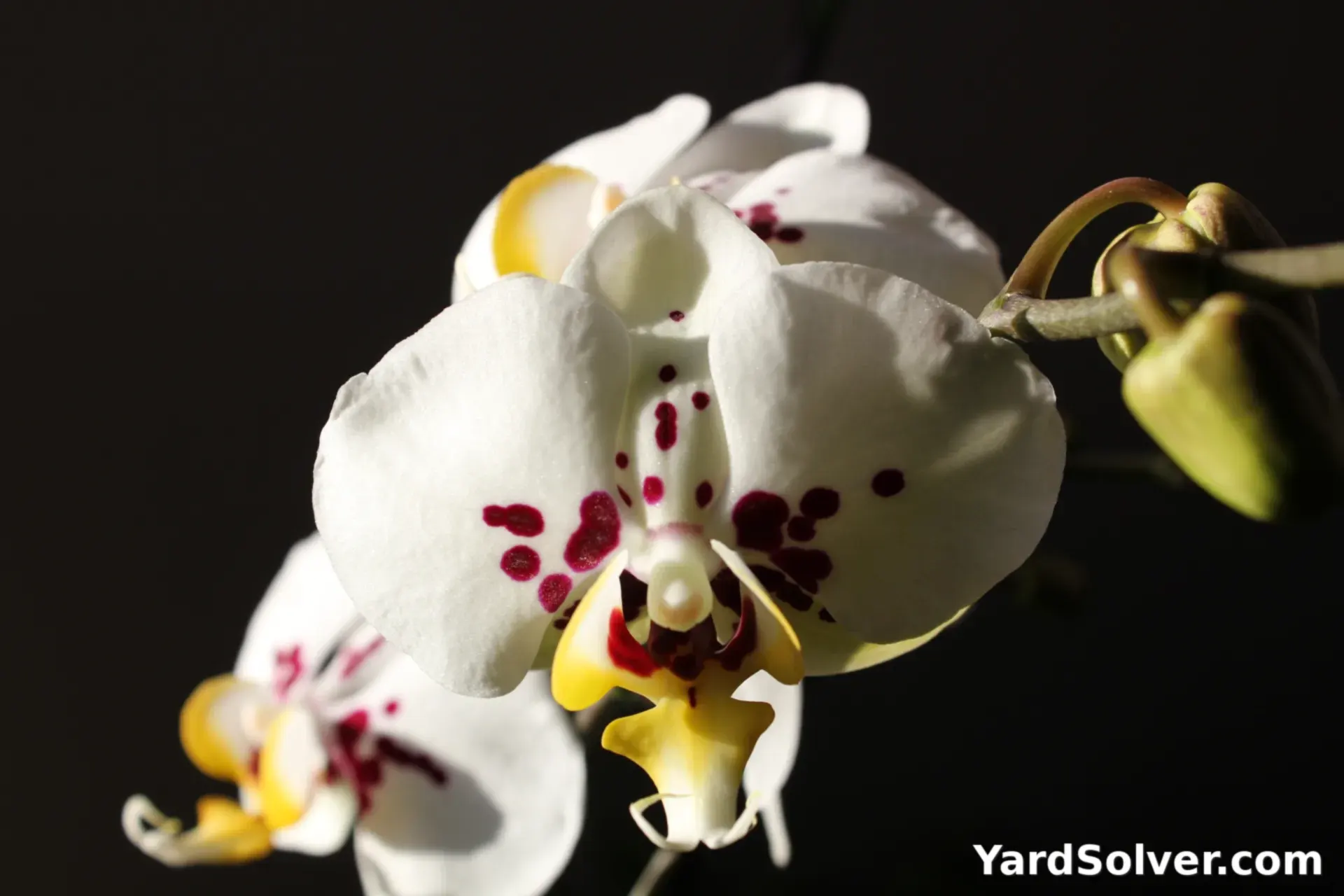
Growers summarise orchid feeding as 'weakly, weekly': a dilute orchid feed, mixed at a quarter to half the label strength, given at watering time through the growing season while leaves and roots are active. Orchid roots burn easily, and a weak feed given often suits this slow, airy root system far better than a strong dose given rarely.
Once a month, skip the feed and soak in plain water instead, flushing the bark through so fertiliser salts never build up. The Fertilizer Calculator helps you keep dilutions honest rather than hopeful. In the weeks when a new spike is forming, keep the rhythm steady — a plant building flowers is spending, and consistency, not richness, is what it is spending it on.
Step 5 — Care and the usual problems
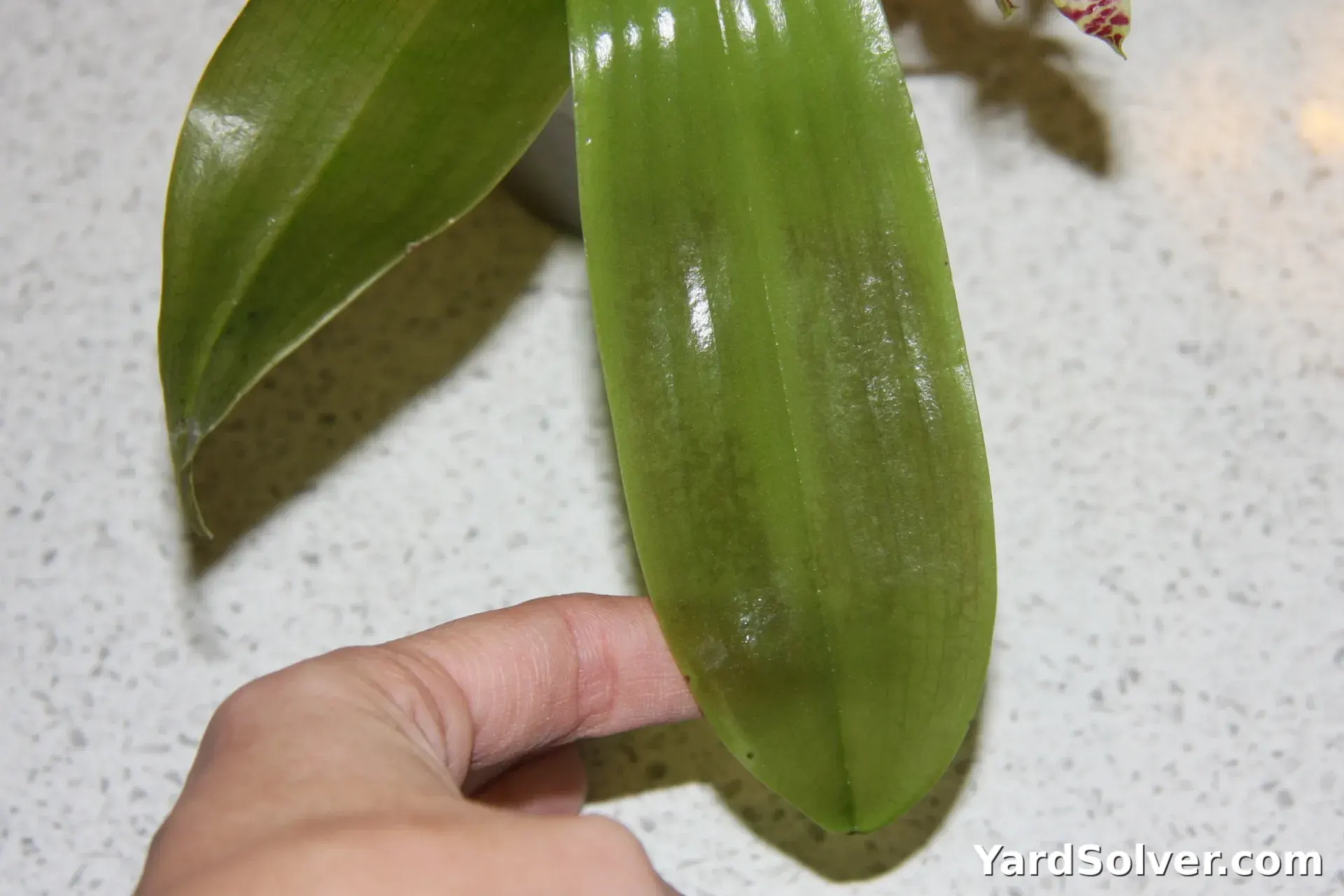
Three problems account for nearly every sick phalaenopsis. Crown rot comes first: water left sitting in the centre of the plant rots it from the heart outward, and by the time leaves yellow it is usually too late — prevention, dry crowns and good air movement, is the entire cure. Mealybugs come second: white cottony clusters hiding in the leaf joints and under leaves, removed following How to Get Rid of Mealybugs.
Third is bud blast — buds that yellow and drop before opening. The causes are almost always environmental shocks: a cold draft, a heating vent blowing on the spike, a sudden move, or very dry air. A plant in bud wants to be left exactly where it is. Keep humidity up around flowering plants using the methods in How to Increase Humidity for Houseplants, and check leaf joints whenever you soak — two minutes of looking beats any treatment.
Step 6 — Bring it back into flower
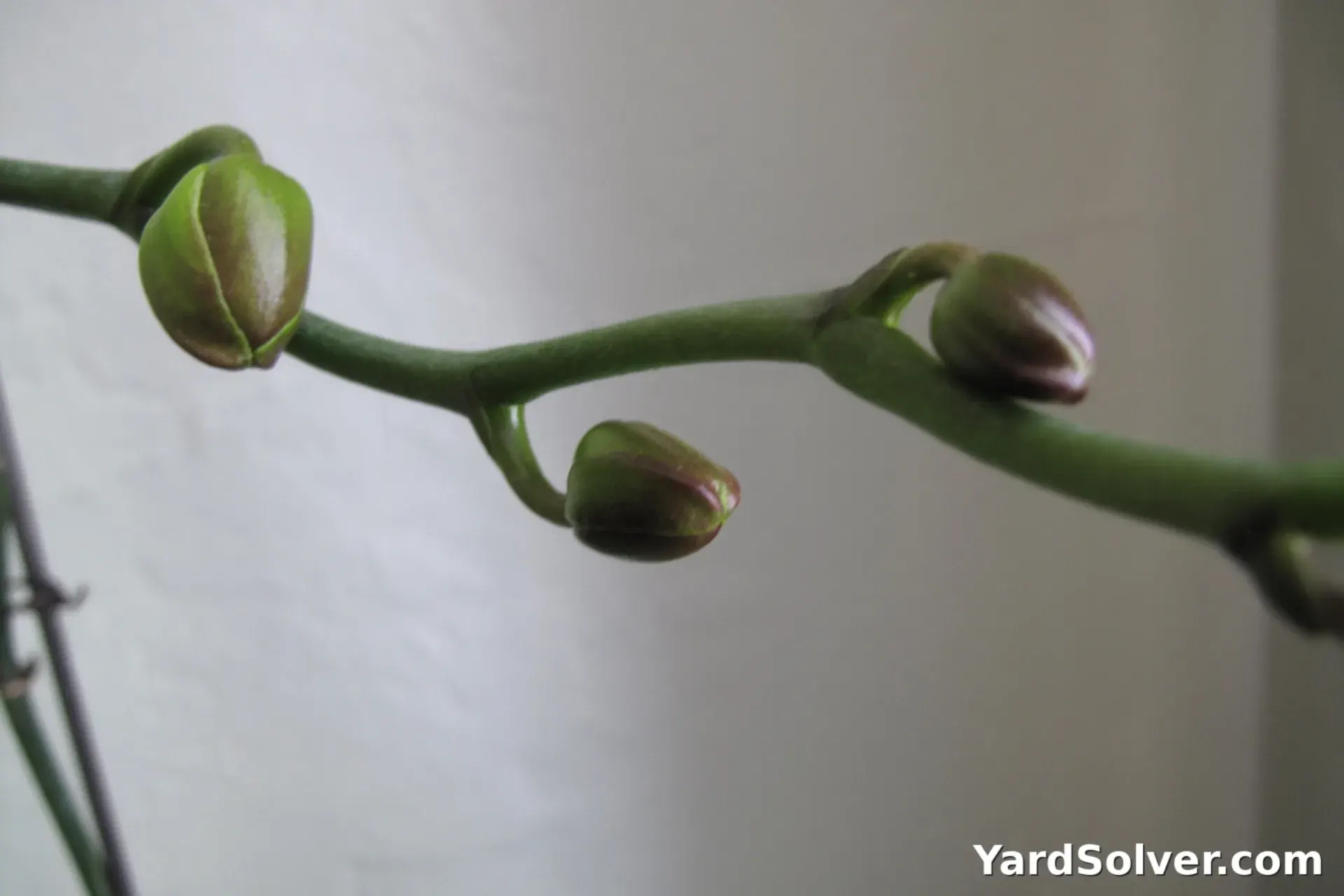
When the last flower falls, the plant is not finished — it is resting and refuelling. Keep watering and feeding the leaves exactly as before. Then use the trigger the plant uses in the wild: a few weeks of cooler nights, around 55–60 °F (13–16 °C) — a cool spare room or a spot near a cracked-open window in fall — while days stay warm. That day-night difference is what persuades many phalaenopsis to push out a new spike.
Alternatively, if the old spike is still green, cut it just above a node (one of the bumps along the stem) and it may branch into a side spike with a smaller second show. A brown, dried spike will not — cut that one at the base. Then be patient: from spike to first flower takes two to three months, and the show that follows lasts another two to three. The seasonal pest check in Winter Houseplant Pests is worth doing while the plant is in its cool spot.
📅 Your personal Orchid schedule
Stay with us — we'll remind you. The procedure is the button above: press "🌱 Start Orchid with me", set your start date and, if you like, add your email. Your plant and its start date are saved on this device straight away, the schedule below is yours to keep in front of you, and email reminders switch on with the new YardSolver accounts — the email you save today is first in line, and from your start date the reminders follow your plant's own schedule. Free, no account needed today; your email is for your plant reminders only, with an easy stop in every message.
This plant runs on rhythm and season rather than a day count — here is the honest version of its schedule.
Varieties worth growing
| Type | Flowers | Why gardeners like it |
|---|---|---|
| Phalaenopsis | Moth-shaped blooms for months | The beginner's orchid, and the one this page is about |
| Dendrobium | Canes of smaller blooms | Bright light, forgiving of a dry week |
| Oncidium | Sprays of tiny dancing flowers | Cheerful, some are scented |
| Cattleya | Big, fragrant show blooms | For growers who want the classic corsage orchid |
| Paphiopedilum | Slipper-shaped, long-lasting | Tolerates lower light than most |
Good for you — and take care
Benefits
- Phalaenopsis orchids are non-toxic to cats and dogs — a flowering plant pet homes can keep without worry
- A single spike flowers for 2–3 months, the longest show of any houseplant
- Grown in bark rather than soil, so there are no soil gnats around the pot
Take care
- Never pot in ordinary soil — the roots need bark and air, and soil rots them
- Never let water sit in the crown — crown rot kills from the centre and rarely announces itself in time
- The ice-cube shortcut is marketing, not horticulture: cold can shock tropical roots, and room-temperature soaking is the grower's standard
A little history — and one good fact
Phalaenopsis grow wild on trees in Southeast Asia and the Philippines, roots in the air, catching rain as it falls through the canopy. The name is Greek for 'moth-like', for the way the flowers flutter on their arching stems. Victorian collectors paid fortunes for orchids shipped from the tropics; the phalaenopsis in a supermarket today is the product of a century of breeding those collectors began — selected precisely for tolerating an ordinary living room.
Fun fact: Vanilla is an orchid — the pods of Vanilla planifolia, a climbing orchid, are the vanilla pods of the kitchen. Orchids are one of the largest plant families on earth, with tens of thousands of species.
Keep going
Guides: How to Get Rid of Mealybugs · How to Increase Humidity for Houseplants · Winter Houseplant Pests
Tools: Plant Doctor · Garden Planner · Fertilizer Calculator
More houseplants: Peace Lily · Calathea · Spider Plant
← Back to the Plant Library · Get your personal planting dates
Questions people ask
How often should I water a phalaenopsis orchid?
About weekly — but let the roots decide. Look through the clear pot: when the roots have turned silver-grey, soak the pot in room-temperature water for 10–15 minutes, then drain it completely. Green roots mean the plant is still drinking from the last soak. Never let water sit in the crown, and never follow a fixed calendar over what the roots are telling you.
Why won't my orchid bloom again?
Usually light or temperature. A plant in too dim a spot grows leaves without spikes, and a plant kept at one even temperature day and night may never get its flowering cue. Move it gradually into brighter indirect light, keep feeding weakly, and give it a few weeks of cooler nights around 55–60 °F (13–16 °C) with warm days — that difference is the trigger most phalaenopsis are waiting for.
Should I cut the flower spike after blooming?
It depends on the spike. If it is still green and firm, you can cut just above a node and it may branch into a side spike with a second, smaller show. If it has turned brown and dry, it will not flower again — cut it off at the base so the plant puts its energy into leaves, roots and the next new spike.