
Plant Library · Fruit & Melons
🍒 How to Grow Raspberry
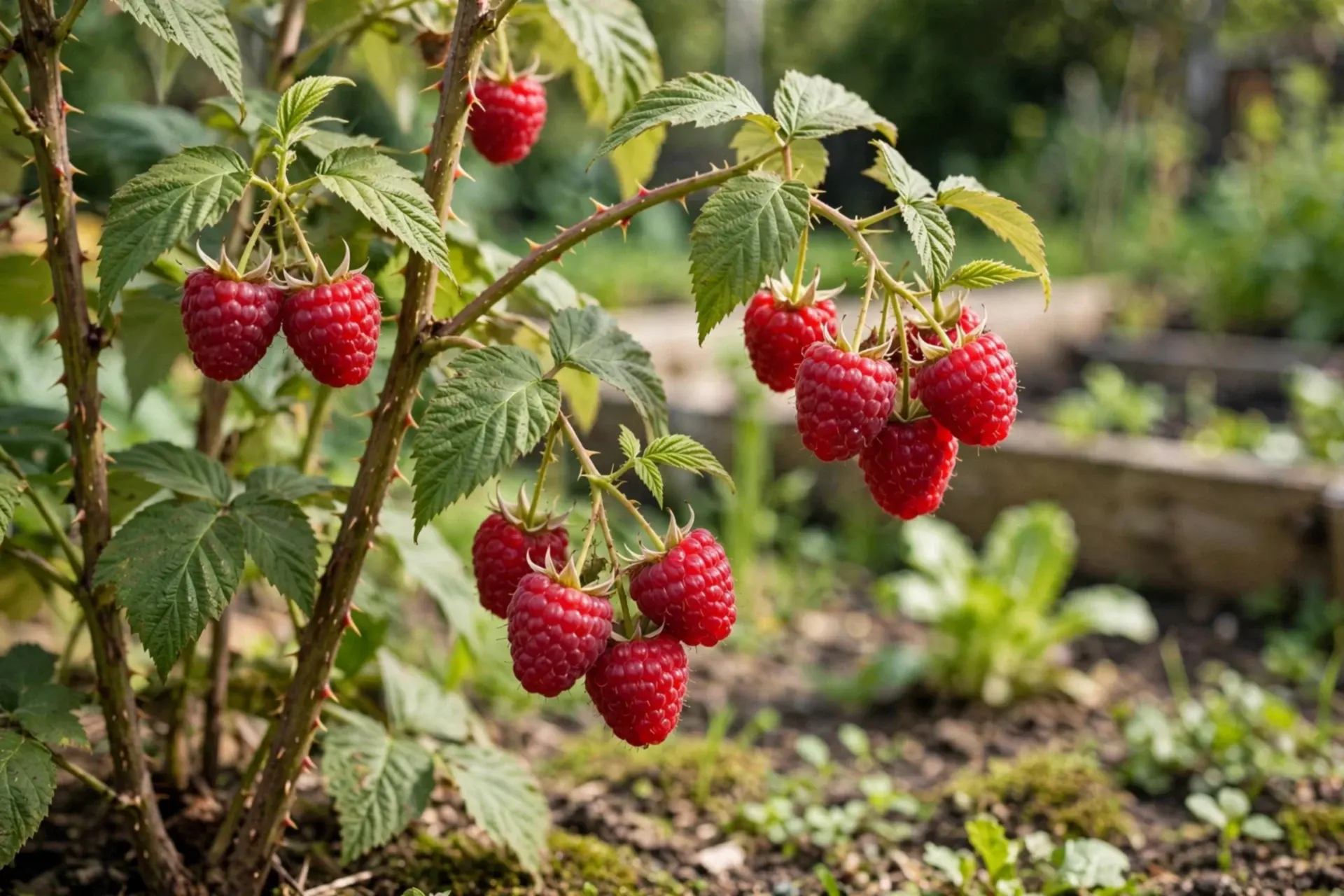
A perennial cane fruit: plant dormant canes in early spring; canes fruit in their second year, then are pruned out. Raspberries are a perennial cane fruit: plant dormant canes in early spring, and expect the main harvests from the second summer onward.
Grow Raspberry with us — step by step
Everything for this plant is written step by step below — what to do, and exactly when. Read it through first if you like: you can grow it entirely on your own with that guide. Or start with us here — tell us your planting day and we lay out your personal schedule on this page, every next step on its own day, counted from your planting date. No guessing, no forgetting.
Step 1 — today: Start your Raspberry today — sow 1–2 (canes) in deep, spaced 18–24 in apart — and water in well.
Raspberry at a glance
Spacing: 18–24 in · Seed depth: 1–2 (canes) in
Sun: Full sun
Water: Regular in dry spells
Harvest: From the second summer onward
Timing counts from your average last spring frost — get your own dates in the Planting Calendar. Guidance follows standard extension-service practice for Canada and the US.
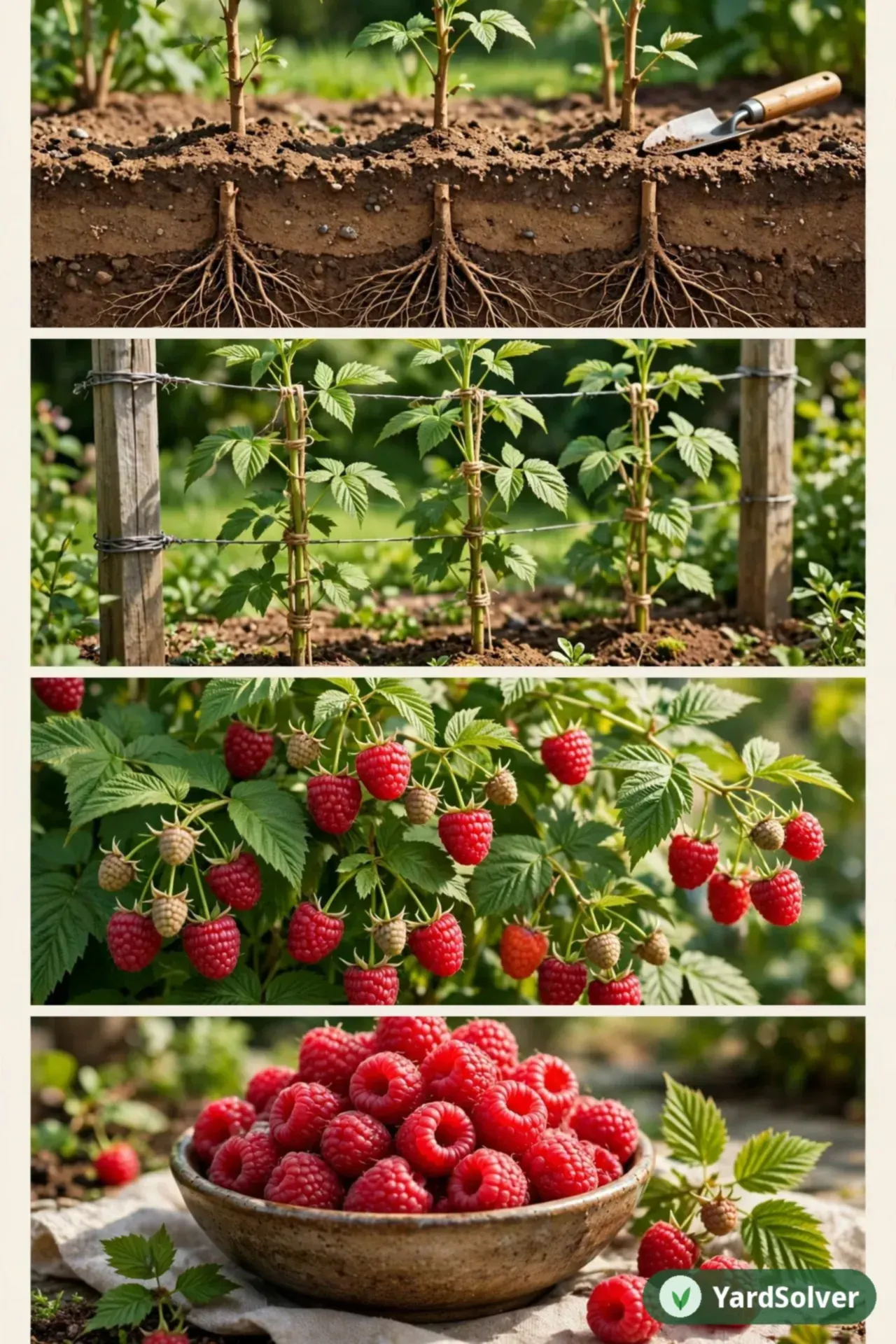
How to plant and grow raspberry, step by step
Step 1 — Time it right
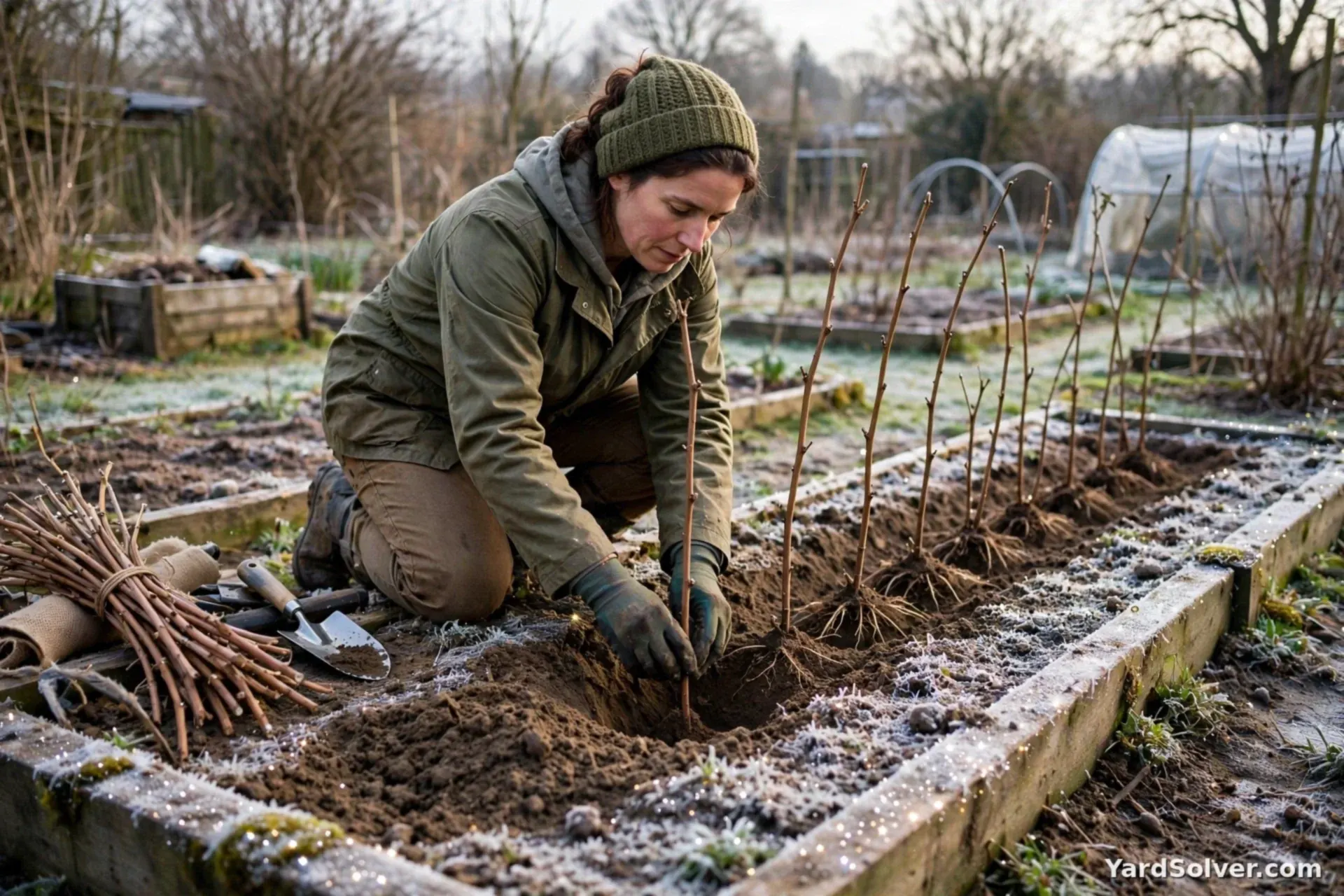
. All dates count from your average last spring frost — the Planting Calendar turns them into real dates for your garden. Raspberries are a perennial cane fruit: plant dormant canes in early spring, and expect the main harvests from the second summer onward.
Step 2 — Prepare the spot
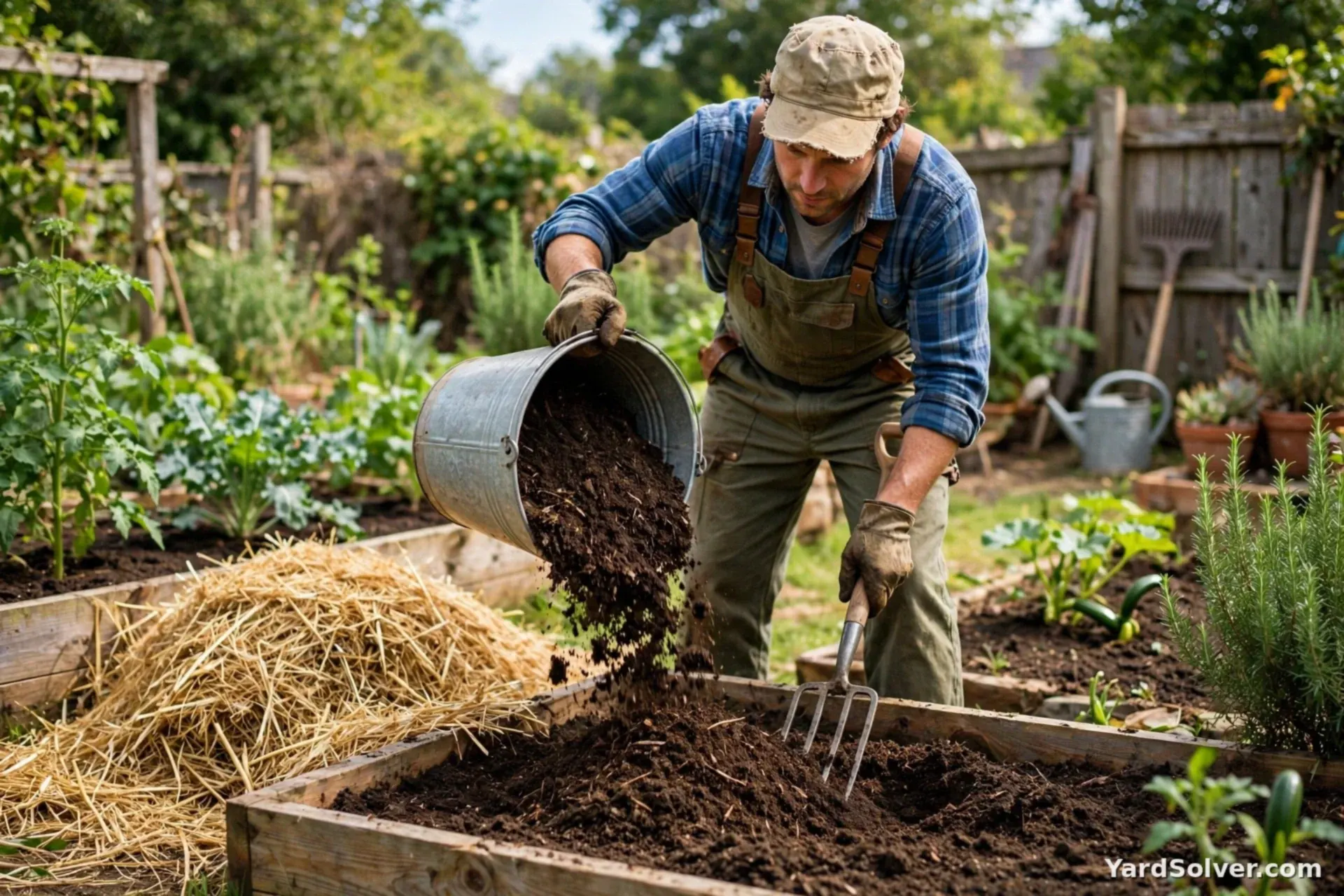
Sun: Full sun. Rich, well-drained soil with compost, and a mulch to hold moisture. Blueberries are the exception: they need acidic soil (about pH 4.5–5.5) — test before planting. Work out how much you need with the Garden Mix Calculator or the Raised Bed Soil Calculator.
Step 3 — Plant out
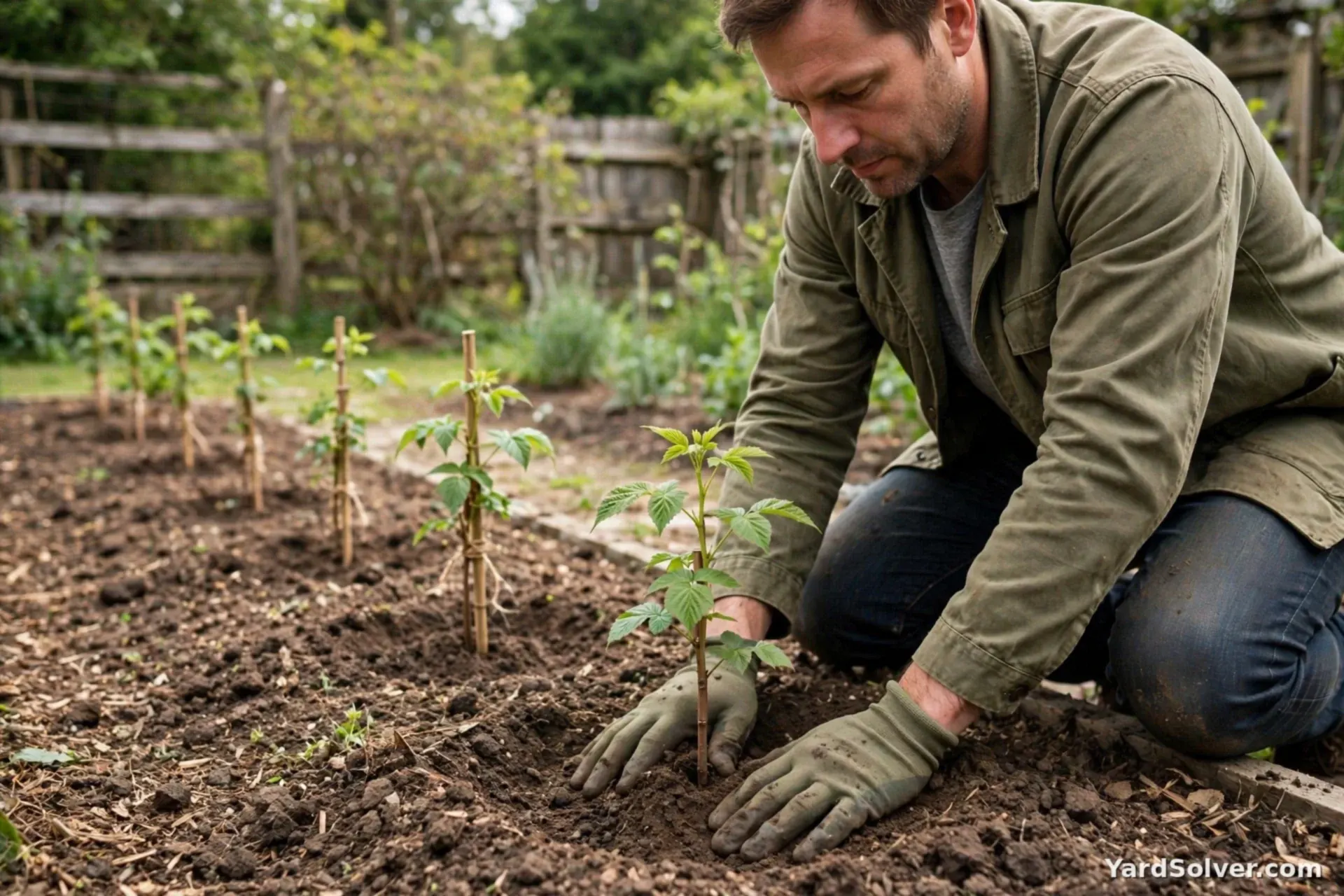
Start indoors None at 1–2 (canes) in deep, or sow outdoors None; plants finish spaced 18–24 in apart. Harden off indoor-started plants before they move out for good.
Step 4 — Water and feed
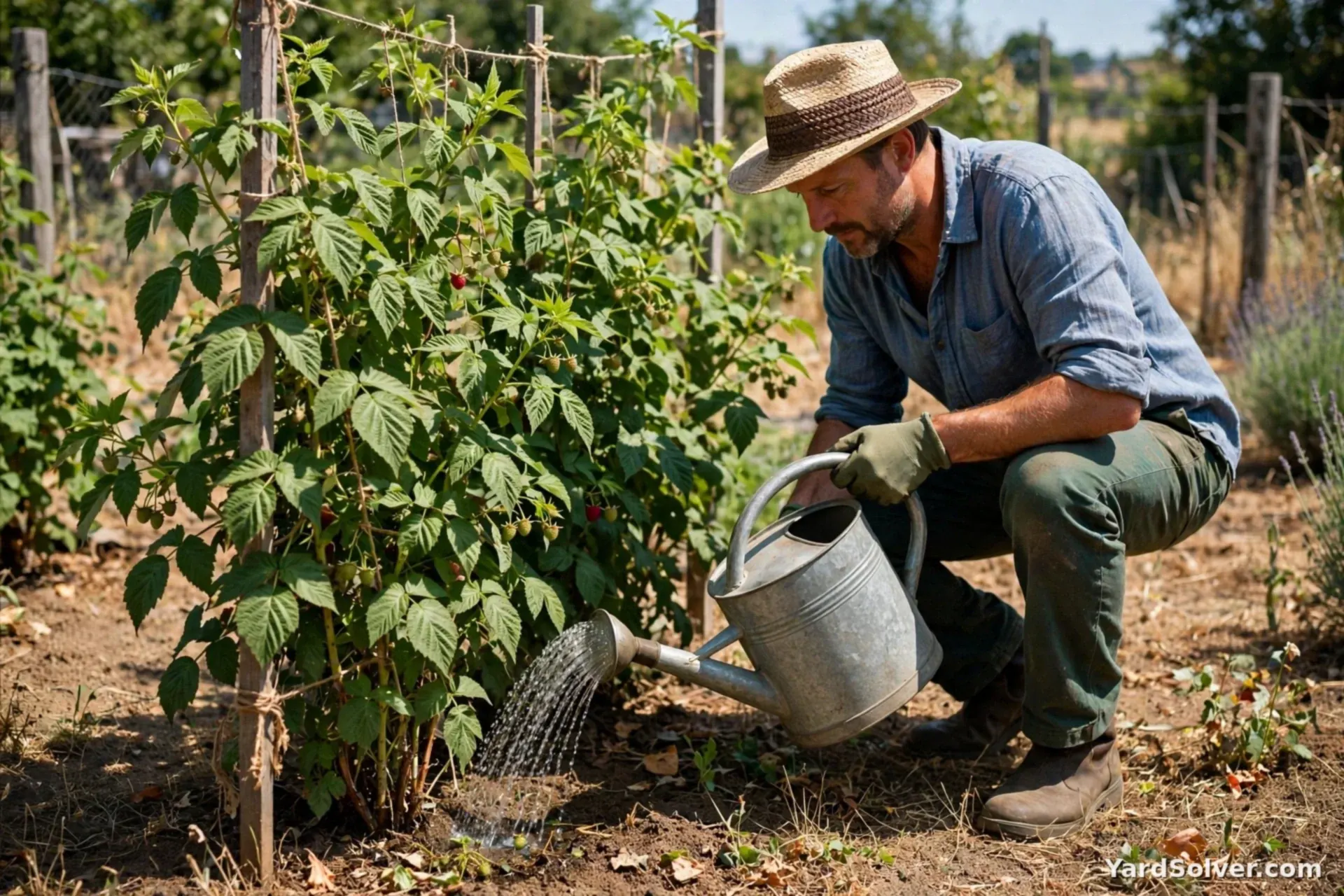
Water: Regular in dry spells. The Fertilizer Calculator turns a bed size into the right amount.
Step 5 — Care and the problems to watch for
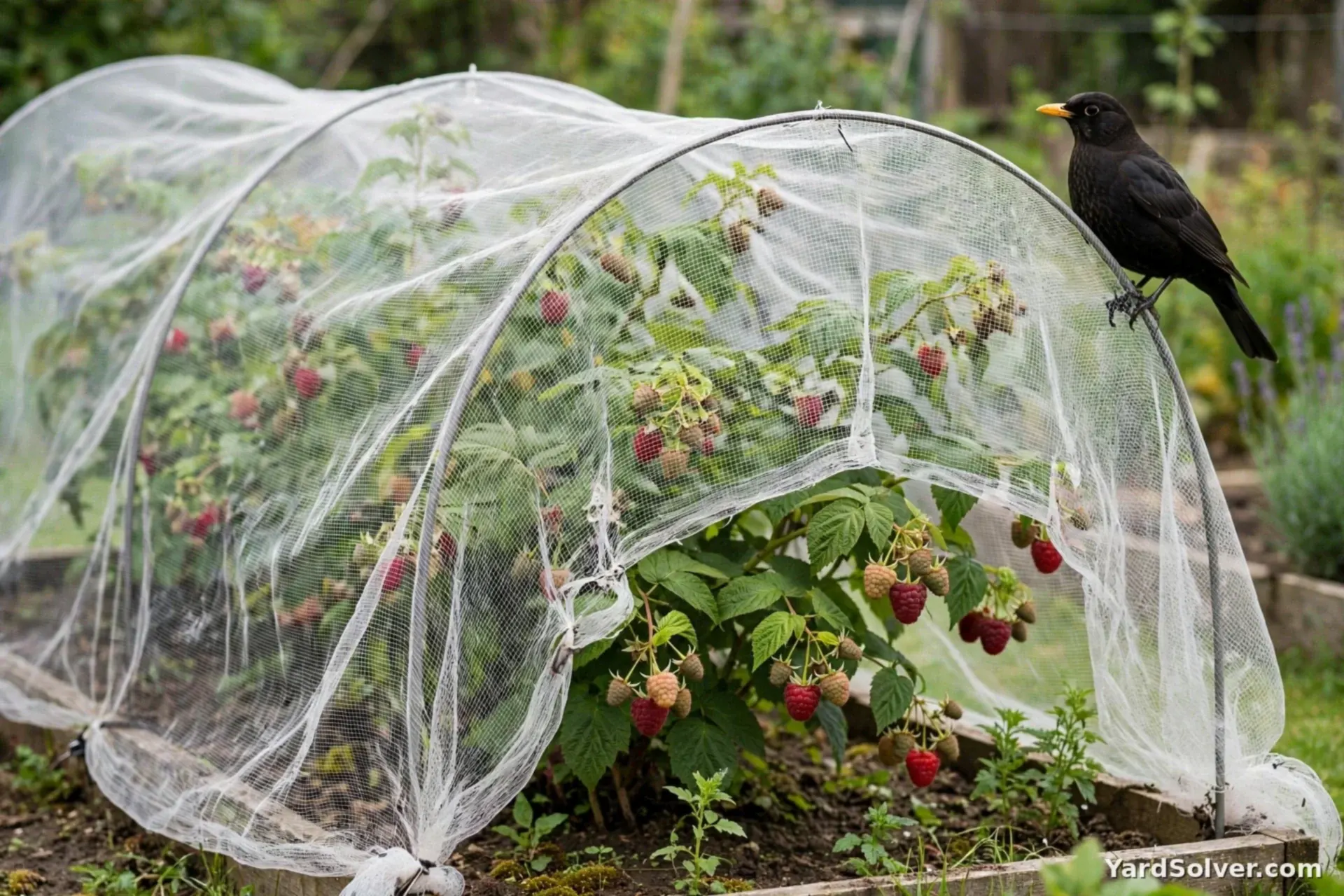
- Raspberry beetle — maggots in fruit; pick promptly and remove damaged berries.
- Cane blight / spur blight — prune out dead and diseased canes cleanly.
- Birds — netting over the row at ripening time.
Take care: Fresh raspberries mould very quickly — pick often, keep them dry, and eat or freeze them within a day or two. For planting, choose certified virus-free canes — cheap, sickly canes can bring diseases that stay in the patch for years.
Step 6 — Harvest
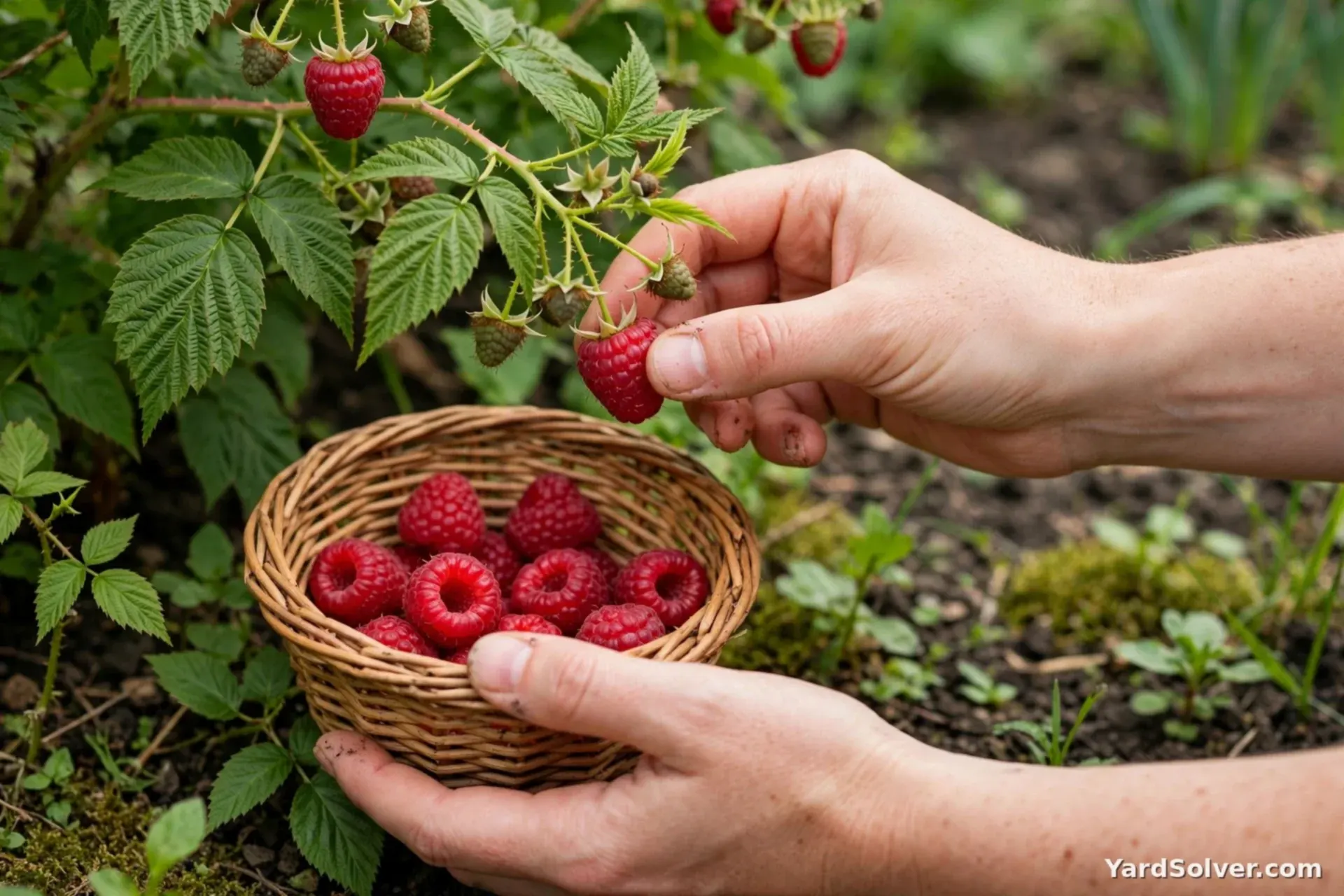
Ready in: From the second summer onward.
📅 Your personal Raspberry schedule
Counted from your planting day — not a generic calendar. Day 0 is the day the seed went in the ground or the young plant went out.
Varieties worth growing
| Variety | Colour | Why gardeners like it |
|---|---|---|
| Heritage | Red | The most planted everbearing type — fruits from late summer into fall |
| Boyne | Red | A summer-bearing Canadian-bred type, extremely cold-hardy |
| Nova | Red | A hardy summer bearer bred in Nova Scotia for cold climates |
| Anne | Yellow | An everbearing type with sweet, pale yellow fruit |
| Jewel | Black | The classic black raspberry for pies and jam |
Good for you — and take care
Benefits
- One of the highest-fibre fruits — a cup provides a large share of the day's fibre
- Provides vitamin C for the immune system
- Provides manganese and vitamin K
- The deep colour comes from natural plant antioxidants
- Less sweet than many fruits, for the amount of fibre you get
Take care
- Fresh raspberries mould very quickly — pick often, keep them dry, and eat or freeze them within a day or two
- For planting, choose certified virus-free canes — cheap, sickly canes can bring diseases that stay in the patch for years
A little history — and one good fact
Raspberries grow wild across Europe and northern Asia, and people have gathered them since prehistoric times. Roman writers mentioned them, and gardeners in England and France were growing named garden types a few hundred years ago. The red, yellow, purple and black kinds all come from crossing wild species — black raspberries are a North American native.
Fun fact: A raspberry is not one fruit but dozens of tiny fruits clustered together — and unlike a blackberry, it slips off its core when picked, which is why it is hollow inside.
Keep going
Guides: How to Protect Plants from Frost · Putting Your Garden to Bed · Companion Planting Basics
Calculators: Plant Spacing Calculator · Seed Calculator · Fertilizer Calculator · Garden Mix Calculator
More fruit & melons: Grapes · Watermelon · Strawberry · Currants
← Back to the Plant Library · Get your personal planting dates
Questions people ask
When do I plant raspberry?
Count from your average last spring frost: see the season guide on this page. Raspberries are a perennial cane fruit: plant dormant canes in early spring, and expect the main harvests from the second summer onward.
How far apart do I space raspberry?
Space plants 18–24 in apart, with seed sown 1–2 (canes) in deep. Sun: full sun.
When is raspberry ready to harvest?
From the second summer onward. A perennial cane fruit: plant dormant canes in early spring; canes fruit in their second year, then are pruned out.