
Plant Library · Houseplants
🌵 How to Grow Jade Plant
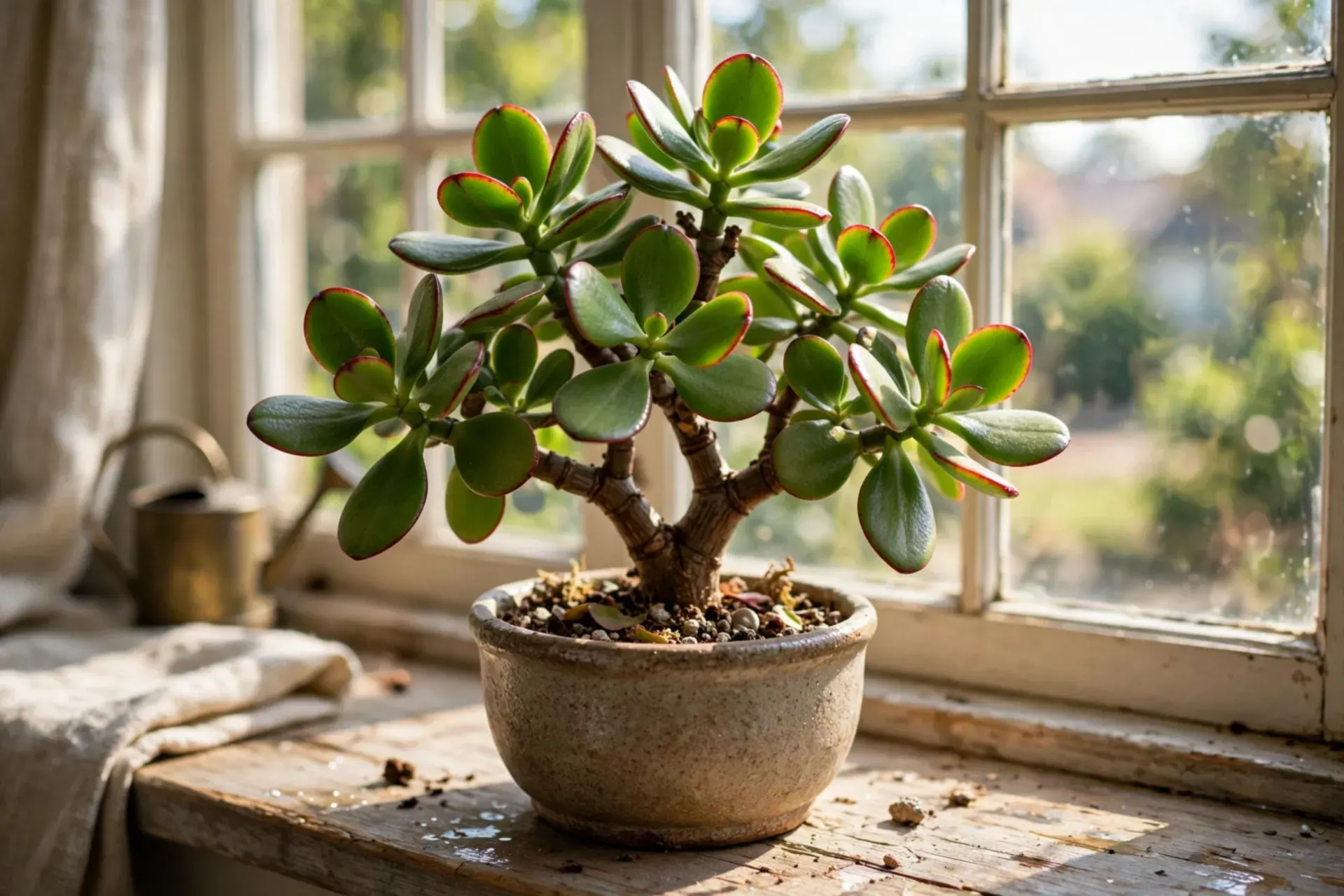
A jade plant is a succulent tree in miniature — a woody little trunk, branches of plump water-storing leaves, and a lifespan measured in decades, not seasons. Its care inverts most houseplant instincts: the sunniest sill you have, and water given deeply but rarely. Dry is safe; wet is fatal.
Grow Jade Plant with us — step by step
Everything for this plant is written step by step below — what to do, and exactly when. Read it through first if you like: you can grow it entirely on your own with that guide. Or start with us here — tell us your planting day and we lay out your personal schedule on this page, every next step on its own day, counted from your planting date. No guessing, no forgetting.
Step 1 — today: Settle your Jade Plant into its spot today: a heavy pot with drainage, your sunniest sill, and one good watering to settle the gritty mix around the roots.
Jade Plant at a glance
Spacing: — (pot) · Propagation: Leaf or stem cuttings, not seed
Sun: Bright light with some direct sun; colours up at the edges
Water: Sparingly — every 2–3 weeks, only when fully dry
Harvest: Grown for foliage — no harvest
Timing counts from your average last spring frost — get your own dates in the Planting Calendar. Guidance follows standard extension-service practice for Canada and the US.
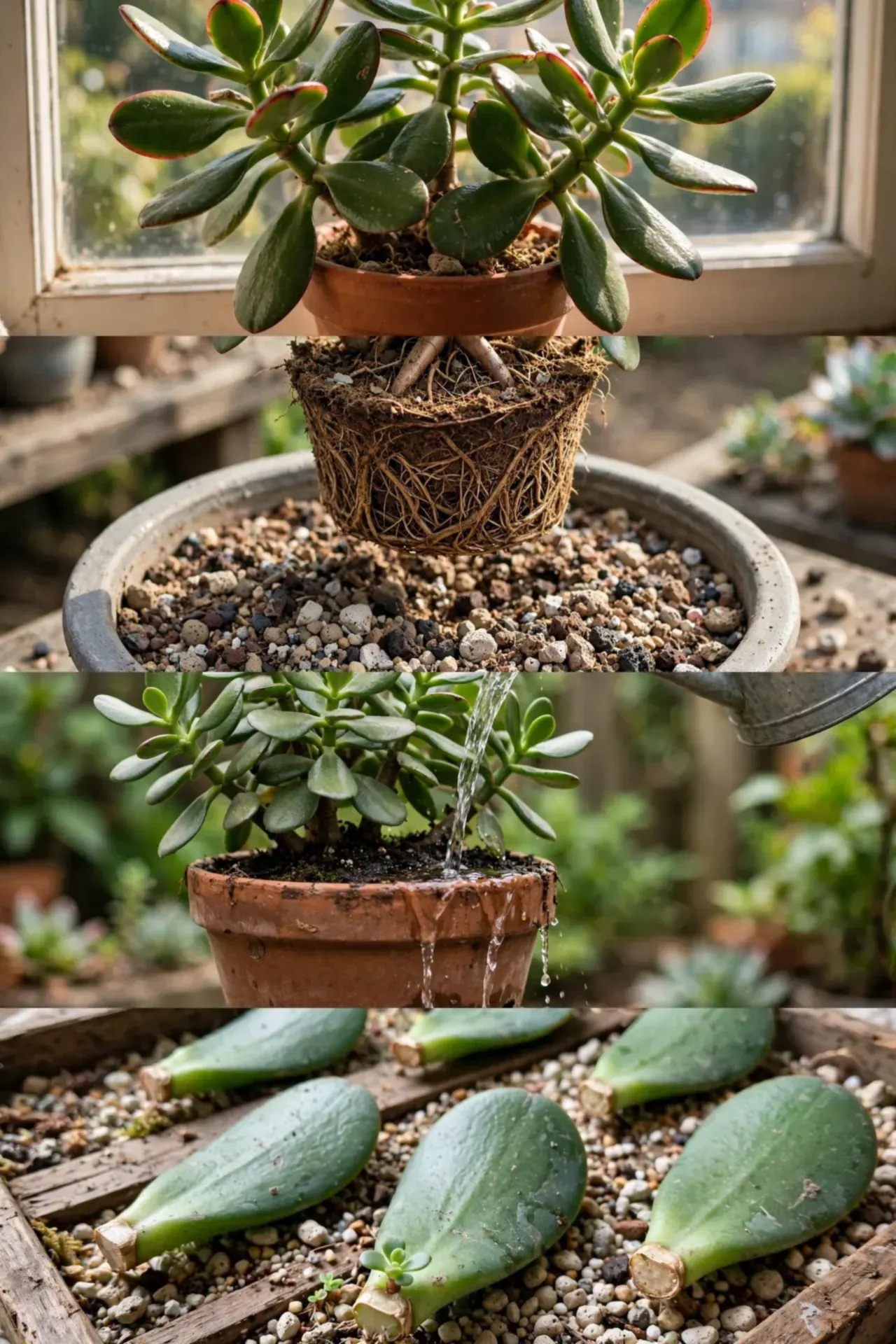
How to plant and grow jade plant, step by step
Step 1 — Choose its spot — the sunniest sill
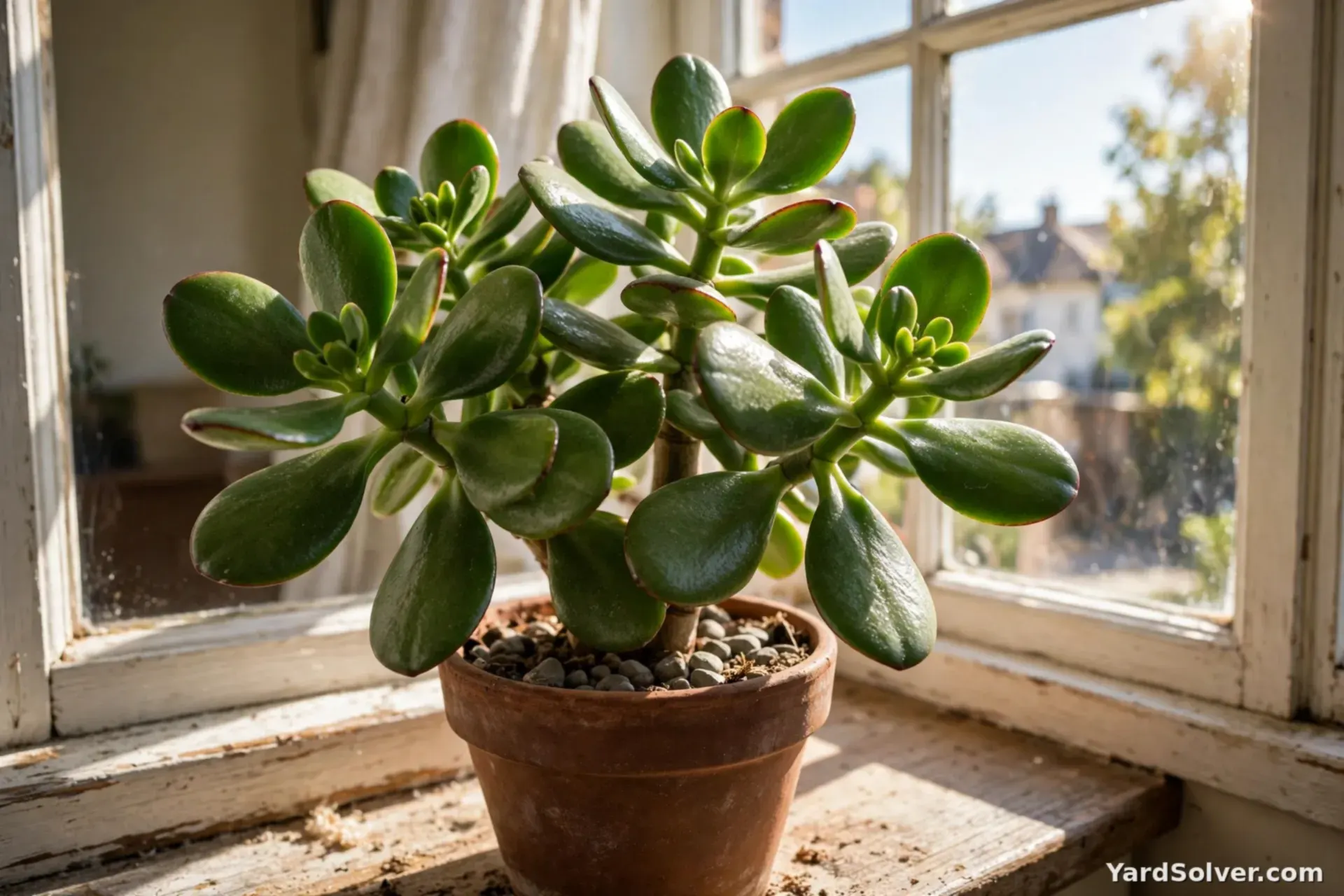
A jade plant wants bright light with some direct sun — the sunniest sill you have, ideally several hours of direct light a day. In good light the leaves grow plump and close together, and their edges colour up red in the sun; in dim light the plant stretches into a leggy, floppy shadow of itself and no amount of later sun will shorten the stretched stems. Move a plant that has lived in shade into full sun gradually over a week or two, so the leaves acclimatise instead of scorching.
Step 2 — Pot it in gritty succulent mix
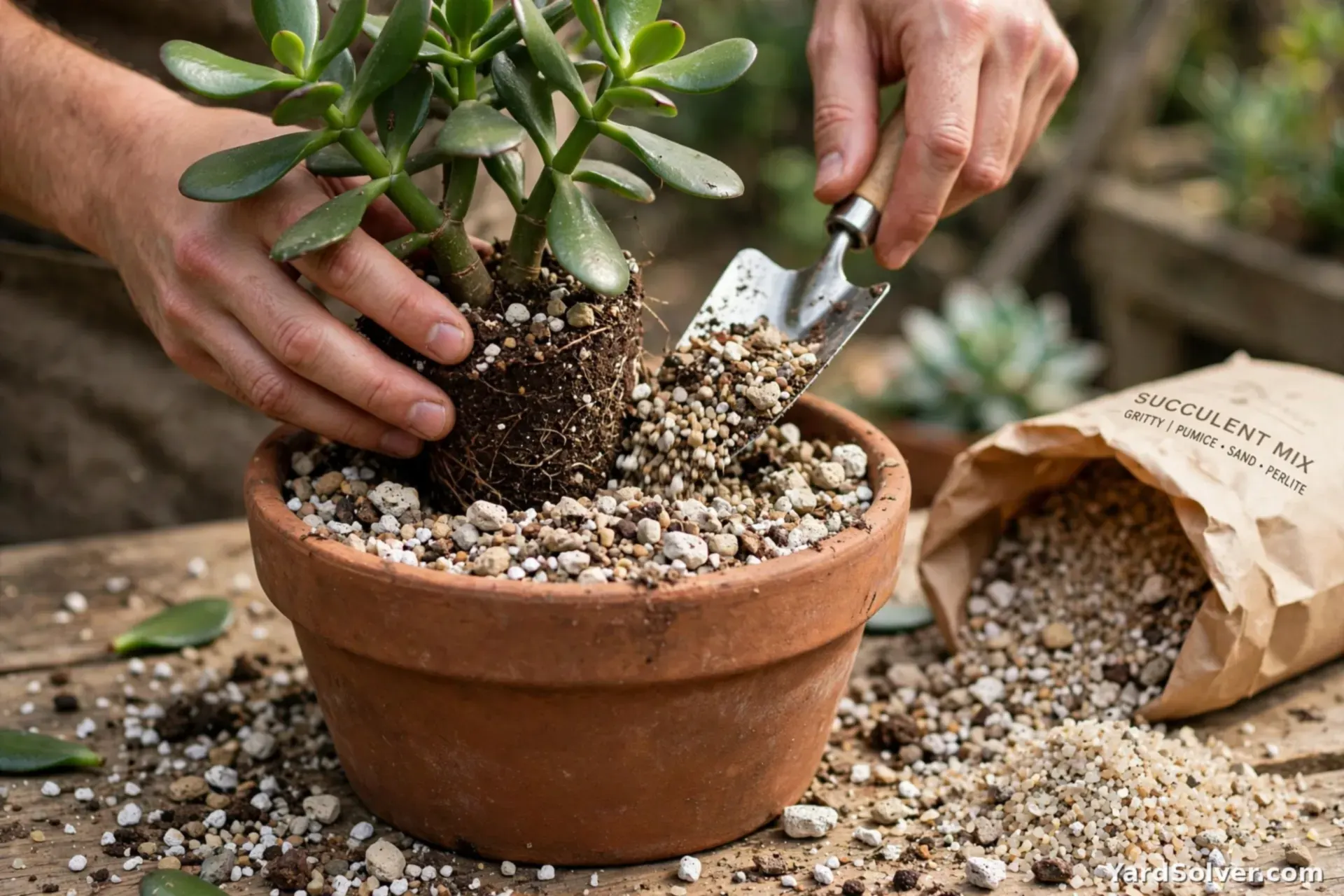
Pot into a gritty succulent mix — cactus and succulent mix, or potting mix cut with a third coarse grit or perlite — in a pot with drainage holes. Choose a heavy pot (terracotta earns its keep here): a jade grows top-heavy as its trunk thickens and its branches spread, and a featherweight plastic pot tips over at exactly the wrong moment. Repot every few years in spring, one size up; a jade is in no hurry and neither is its pot.
Step 3 — Water deeply but rarely
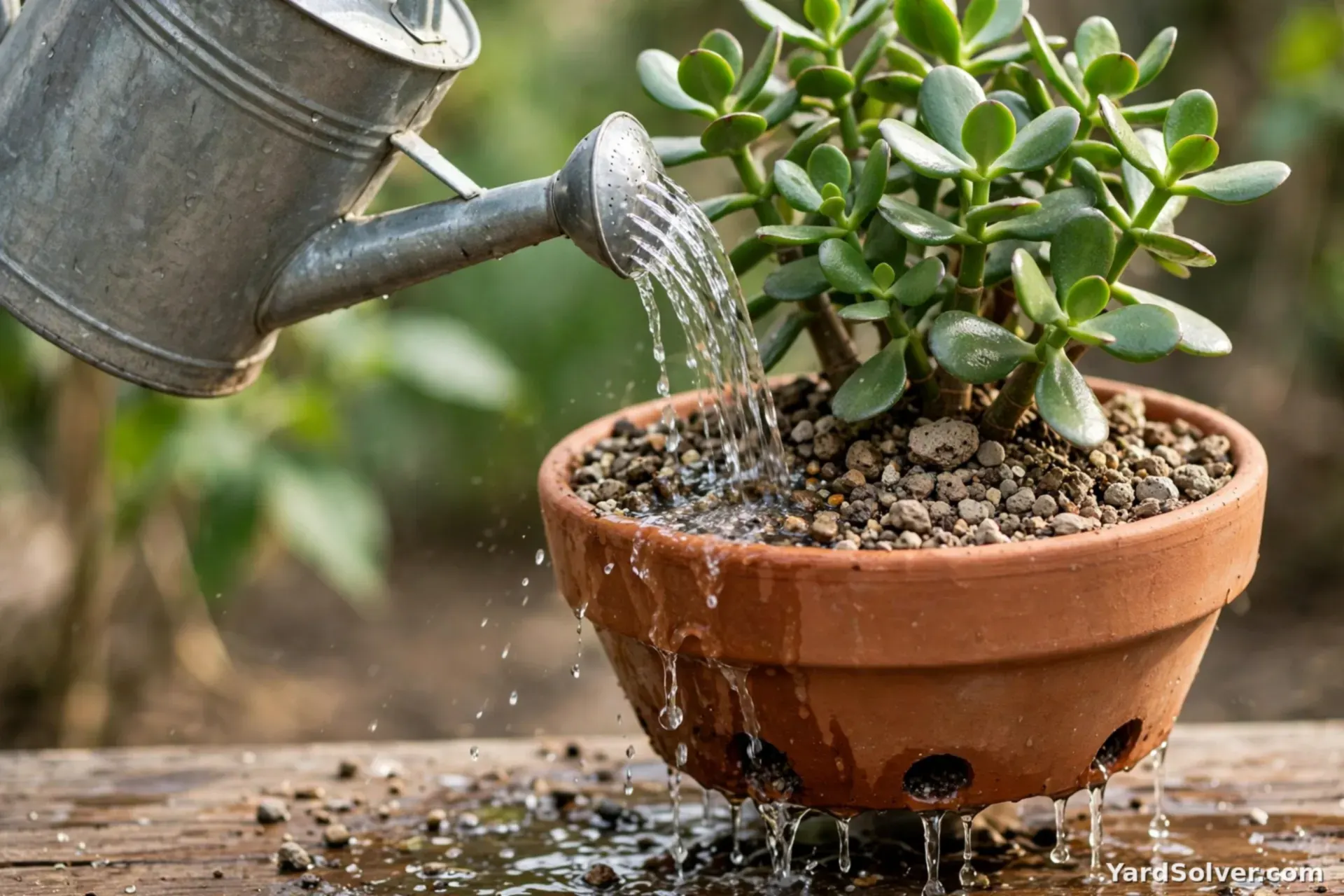
Water: sparingly — every 2–3 weeks, only when fully dry. The leaves and trunk are the plant’s water tanks, so the routine is the succulent one: wait until the mix is dry all the way down, then water deeply until it drains, empty the saucer, and walk away for weeks. In winter, once a month may be plenty. A jade that looks slightly thirsty recovers in a day; a jade sitting in wet mix rots from the roots up — the rescue steps are in Overwatered Plant Rescue.
Step 4 — Feed lightly in spring and summer
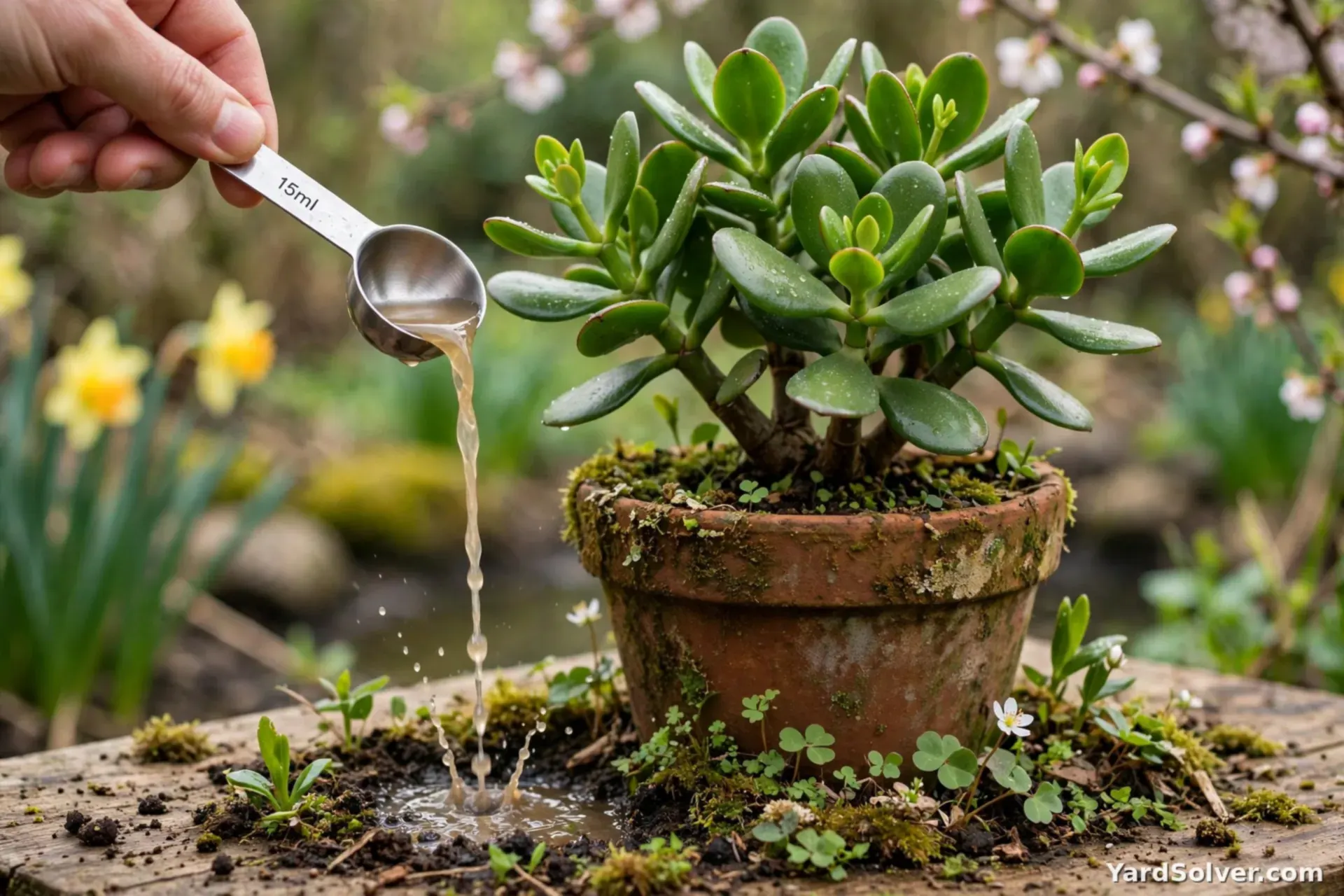
A jade in gritty mix and bright light grows steadily without much help: a light feed in spring and summer — a balanced houseplant feed at half strength every month or two — is the whole menu. More feed does not mean more plant; it means soft, sappy growth and salt building up in the pot. Measure instead of guessing with the Fertilizer Calculator, feed nothing in winter, and flush the pot with plain water once a season to clear salts.
Step 5 — Propagate from a single leaf
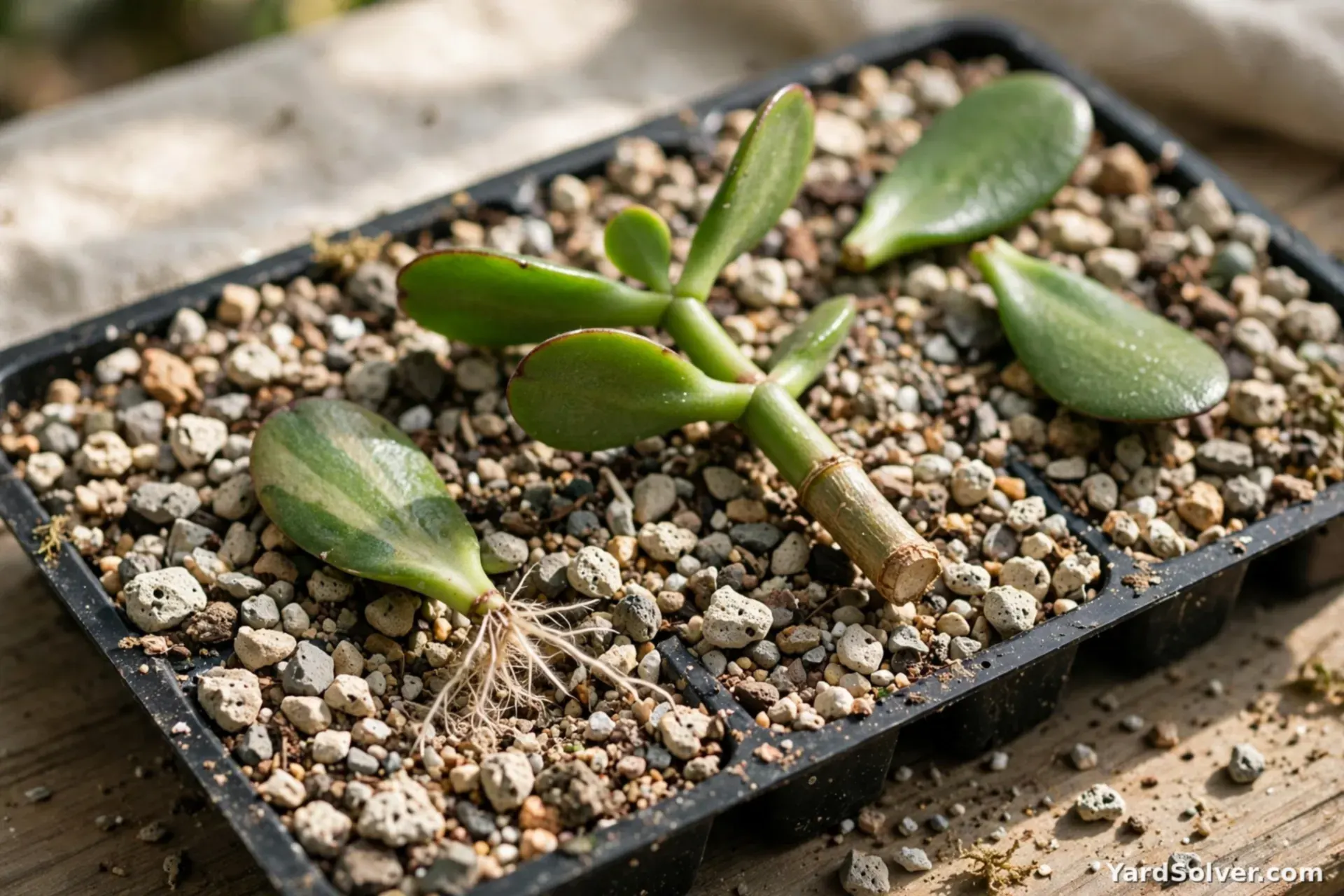
A jade plant multiplies almost by accident: a single leaf, twisted off cleanly and left a few days for the end to callus, then laid on gritty mix, will root and sprout a tiny new rosette at its base. Stem cuttings are faster — cut a 3–4 in piece, callus it the same way, set it in mix, and water lightly once roots form. Leaves that drop while you are wiping the plant are propagation material, not rubbish: give them a tray and a month. It is the same callus-first logic that succulent growers share with the cuttings in How to Propagate Pothos, at succulent speed.
Step 6 — Watch for problems
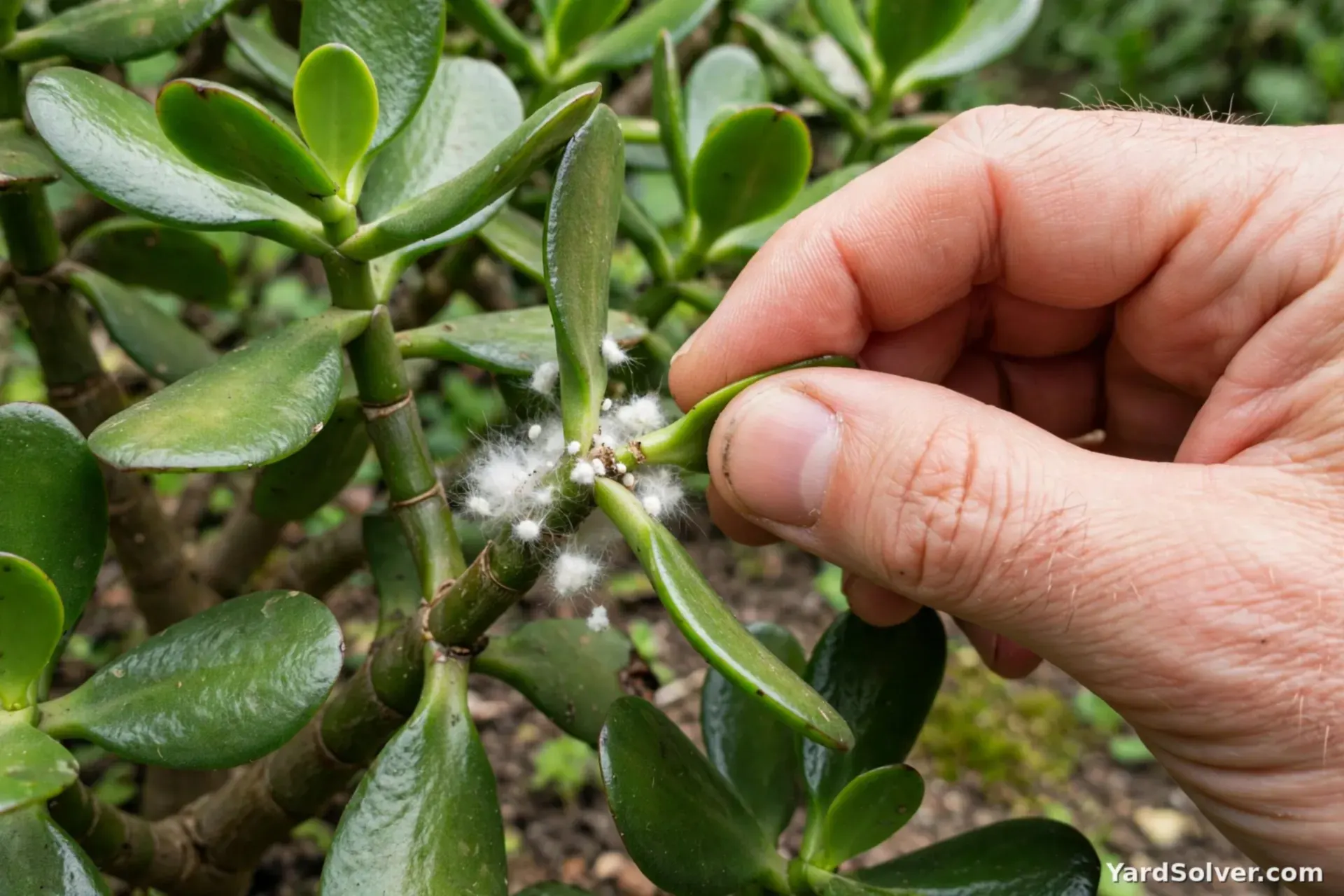
- Mushy leaves or a softening stem — overwatering and rot until proven otherwise; check the mix first.
- Leaf drop — water stress in one direction or the other; the soil tells you which.
- White fluff in the branch joints — mealybugs, this plant’s regular tenant; sorted below.
Problems, pests & diseases — diagnosis and fixes
- Leaves mushy and translucent, stem soft or blackening at the base: stem and root rot from overwatering — the fatal jade problem. Fix: stop watering, unpot, cut back to firm green tissue, callus the cuts for a few days and re-root the healthy pieces as cuttings in fresh gritty mix; the general protocol is in the Overwatered Plant Rescue guide.
- Leaves dropping, some plump and some shrivelled: water stress — in one direction or the other. Fix: check the soil before anything else: wet mix with dropping plump leaves means too much water (dry it out, see rot above); bone-dry mix with shrivelled leaves means thirst (water deeply once). Cold draughts and sudden moves shed leaves too.
- White cottony fluff in branch joints and under leaves: mealybugs, this plant’s most faithful pest. Fix: alcohol-dab every cluster you can find, wipe the joints clean, and repeat weekly — mealybugs hide in exactly the joints you skip.
- Leaves puckered and shrivelled, plant light and dry: straightforward thirst — the tanks are empty. Fix: water deeply once, let it drain, and the leaves plump back over a few days; then return to the 2–3 week rhythm rather than little-and-often sips.
- Stretched stems, wide gaps between small pale leaves: light starvation. Fix: move gradually to your brightest sill (stretched growth will not shrink — prune it back in spring and let compact growth replace it, using the prunings as cuttings).
- White powdery patches on leaves in a still, damp room: powdery mildew — rare on jade, and a sign the air is too damp and still. Fix: remove badly affected leaves, move the plant to brighter, airier conditions, and ease off the watering; see How to Get Rid of Fungus Gnats for the damp-room conditions that invite this whole family of problems.
📅 Your personal Jade Plant schedule
Stay with us — we'll remind you. The procedure is the button above: press "🌱 Start Jade Plant with me", set your start date and, if you like, add your email. Your plant and its start date are saved on this device straight away, the schedule below is yours to print or download as calendar reminders (.ics), and email reminders switch on with the new YardSolver accounts — the email you save today is first in line, and from your start date the reminders follow your plant's own schedule. Free, no account needed today; your email is for your plant reminders only, with an easy stop in every message.
This plant runs on rhythm and season rather than a day count — here is the honest version of its schedule.
Varieties worth growing
| Variety | Colour | Why gardeners like it |
|---|---|---|
| Common Jade (Crassula ovata) | Green | The classic — a miniature tree of plump oval leaves on a woody, branching trunk |
| Hobbit | Green | Leaves curl back into green tubes with spoon-like tips — a quirky, compact form |
| Gollum | Green | Finger-like tubular leaves with suction-cup ends, like Hobbit but more trumpet-shaped |
| Minima | Green | A compact, small-leaved form that stays neat on a crowded sill |
| Tricolor | Green, cream and pink | Variegated leaves that blush pink in bright light — slower, and wants the most sun of all |
Good for you — and take care
Benefits
- Genuinely long-lived — a cared-for jade is measured in decades and is often handed down
- A living sculpture: trunk, branches and plump leaves like a bonsai without the bonsai workload
- Stores its own water, so it forgives holidays and busy spells
- Propagates from a single fallen leaf — free plants for every windowsill and friend
- Colours up at the leaf edges in good sun, so the plant tells you it is happy
Take care
- Toxic to dogs and cats if eaten — keep it and its fallen leaves out of pet reach
- Old plants grow top-heavy: a heavy pot is safety equipment, not decoration
- Wet mix is fatal and fast — drainage holes, gritty mix and an emptied saucer, every time
A little history — and one good fact
The jade plant, Crassula ovata, grows wild on the rocky hillsides of South Africa’s Eastern Cape and KwaZulu-Natal and into Mozambique, where it shrugs off drought in poor, stony soil. It reached Europe as a curiosity in the 1800s and spread through the 1900s as a houseplant, picking up names as it travelled — in some traditions it is kept by doors and tills as a ‘money plant’, a symbol of prosperity, which is one reason so many old jades are family fixtures.
Fun fact: A truly old, happy jade can flower in winter — clusters of tiny pink-white stars — but only after years of growth plus cool, dry autumn nights and short days. Most indoor jades never get that autumn signal, which is why a flowering jade is still worth a photograph.
Keep going
Guides: Overwatered Plant Rescue · How Often to Water a Snake Plant · How to Get Rid of Fungus Gnats
Calculators: Fertilizer Calculator · All calculators
More houseplants: ZZ Plant · Rubber Plant · String of Pearls
← Back to the Plant Library · Get your personal planting dates
Questions people ask
How often do I water a jade plant?
Sparingly — every 2–3 weeks, only when fully dry. Water deeply until it drains, empty the saucer, then leave it alone: a jade stores water in its leaves and trunk, so dry is safe and wet is fatal.
Why is my jade plant dropping leaves?
Leaf drop means water stress in one direction or the other — check the soil first. Mushy leaves with drop point to overwatering and rot; shrivelled leaves with drop point to thirst. Cold draughts and sudden moves can also shed leaves.
How do I propagate a jade plant from a leaf?
Twist a plump leaf off cleanly, let the end callus for a few days, then lay it on gritty mix and mist occasionally. In a few weeks it roots and sprouts a tiny new rosette at its base — stem cuttings are faster and root the same way.