
Plant Library · Vegetables
🥦 How to Grow Cauliflower
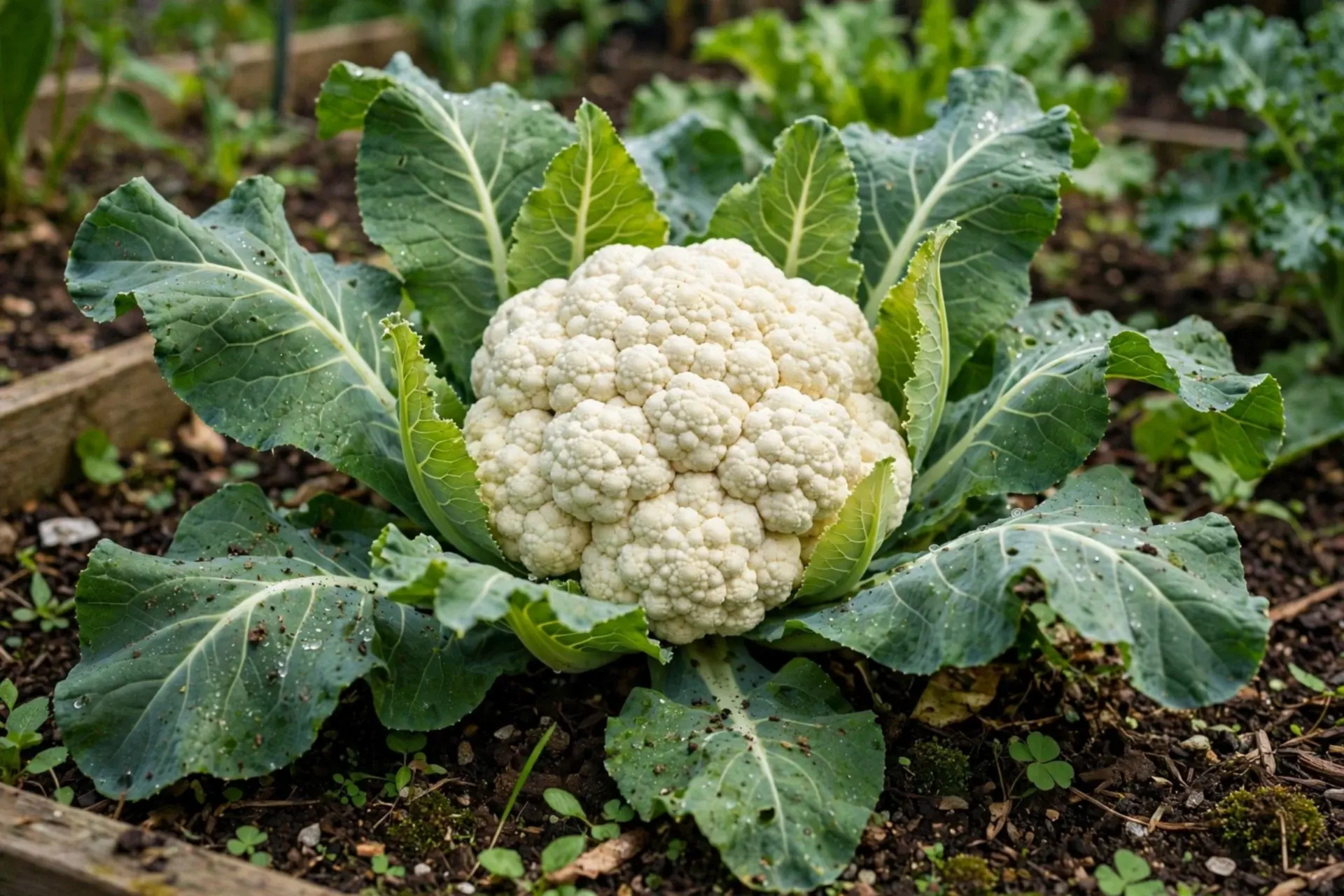
Needs steady, cool weather — heat makes heads turn loose, small or ricey instead of tight and white. Cauliflower is a cool-season crop that hates surprises: start seeds indoors about 6 weeks before your last frost and transplant about 2 weeks before it, so the heads form while the weather is still cool — any check in growth now shows up later as a loose head.
Grow Cauliflower with us — step by step
Everything for this plant is written step by step below — what to do, and exactly when. Read it through first if you like: you can grow it entirely on your own with that guide. Or start with us here — tell us your planting day and we lay out your personal schedule on this page, every next step on its own day, counted from your planting date. No guessing, no forgetting.
Step 1 — today: Plant out your young Cauliflower plants today (hardened off first), spaced 18–24 in apart, and water them in well. Starting from seed instead? Sow indoors now, 1/4 in deep, and this same schedule counts from transplant day.
Cauliflower at a glance
Sow indoors: 6 weeks before last frost
Move outside: 2 weeks before last frost
Spacing: 18–24 in · Seed depth: 1/4 in
Sun: Full sun
Water: Regular and even — dry spells spoil the heads
Harvest: 70–90 days after transplant
Timing counts from your average last spring frost — get your own dates in the Planting Calendar. Guidance follows standard extension-service practice for Canada and the US.
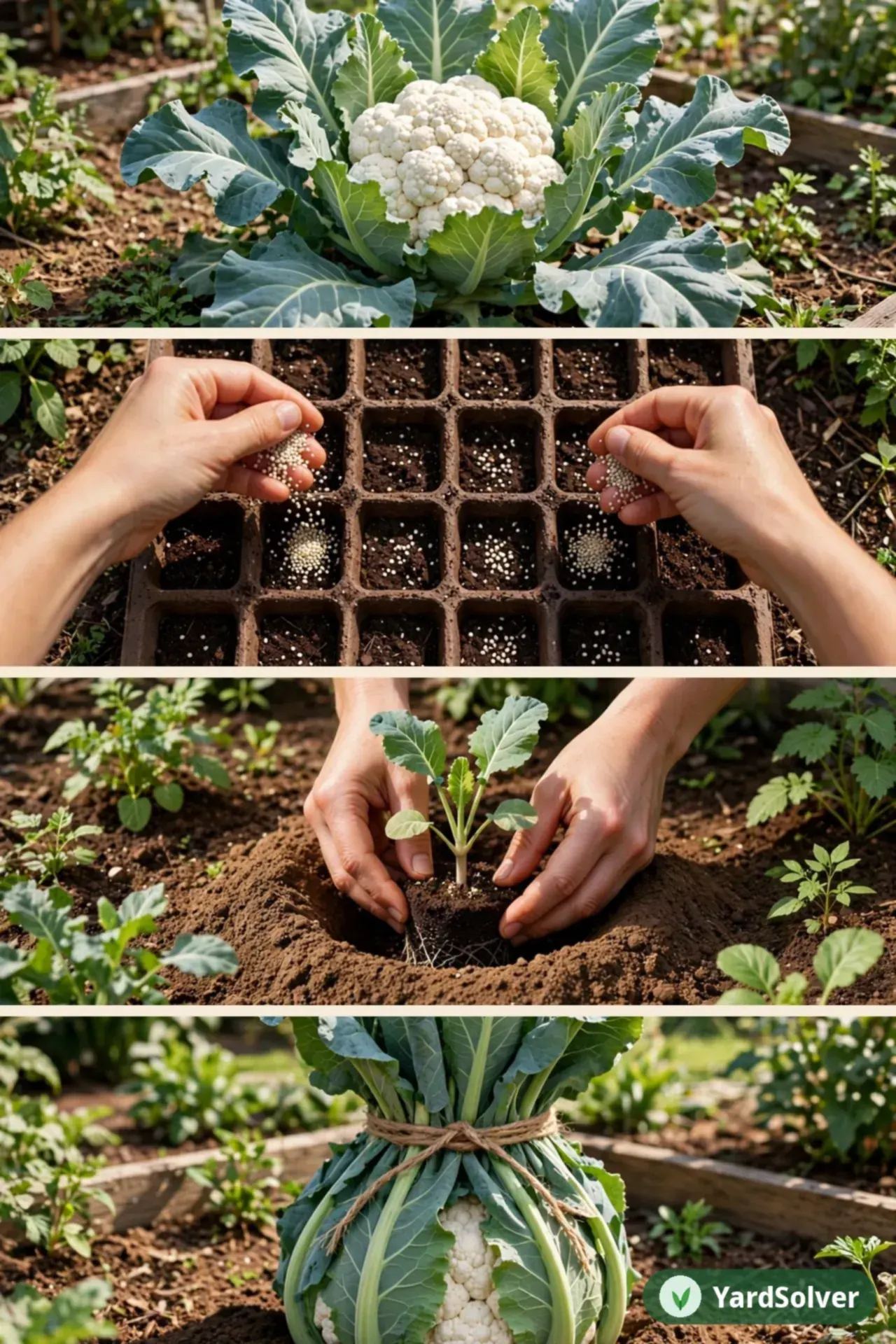
How to plant and grow cauliflower, step by step
Step 1 — Time it right
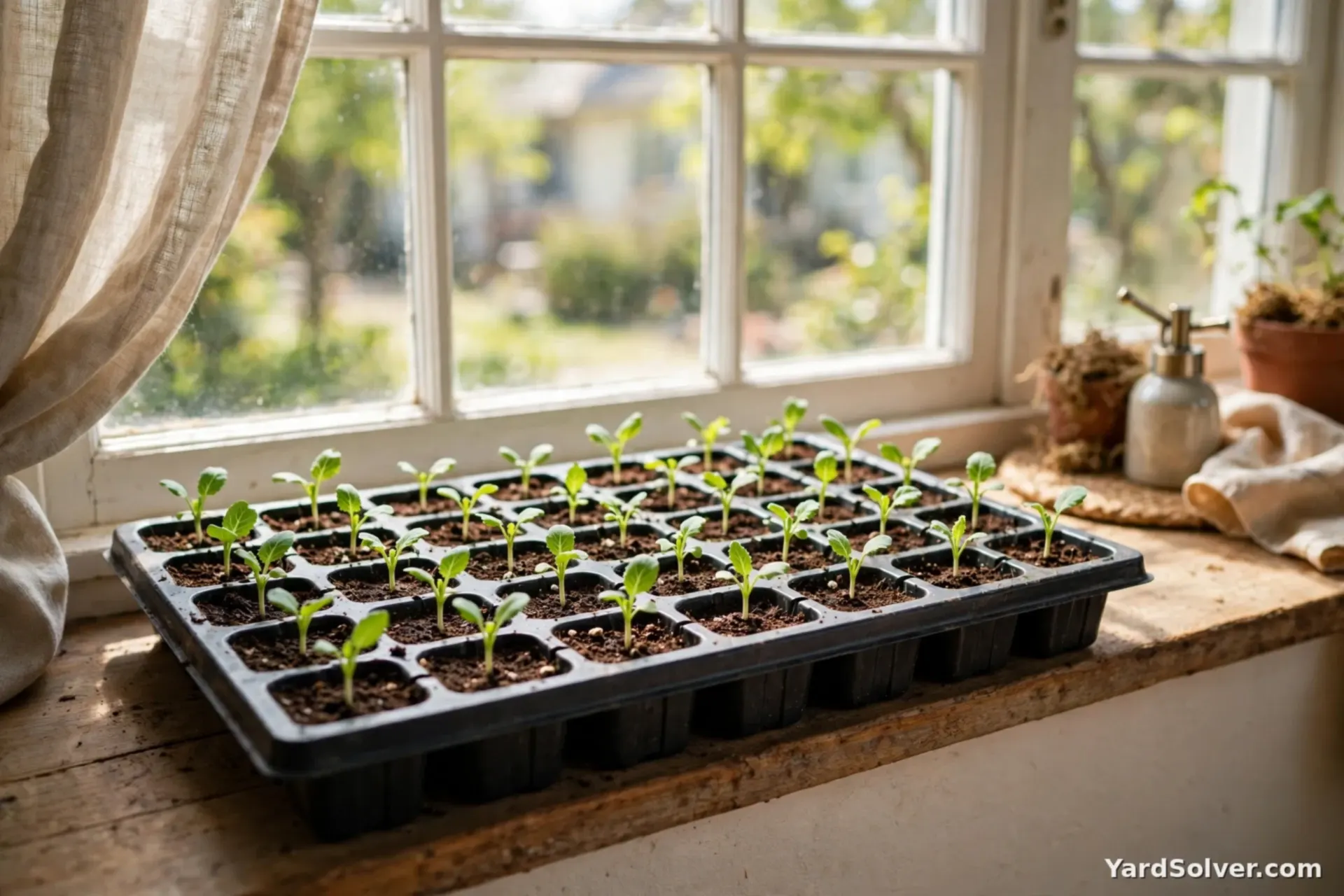
Sow indoors: 6 weeks before last frost; Move outside: 2 weeks before last frost. All dates count from your average last spring frost — the Planting Calendar turns them into real dates for your garden. Cauliflower is a cool-season crop that hates surprises: start seeds indoors about 6 weeks before your last frost and transplant about 2 weeks before it, so the heads form while the weather is still cool — any check in growth now shows up later as a loose head.
Step 2 — Prepare the spot
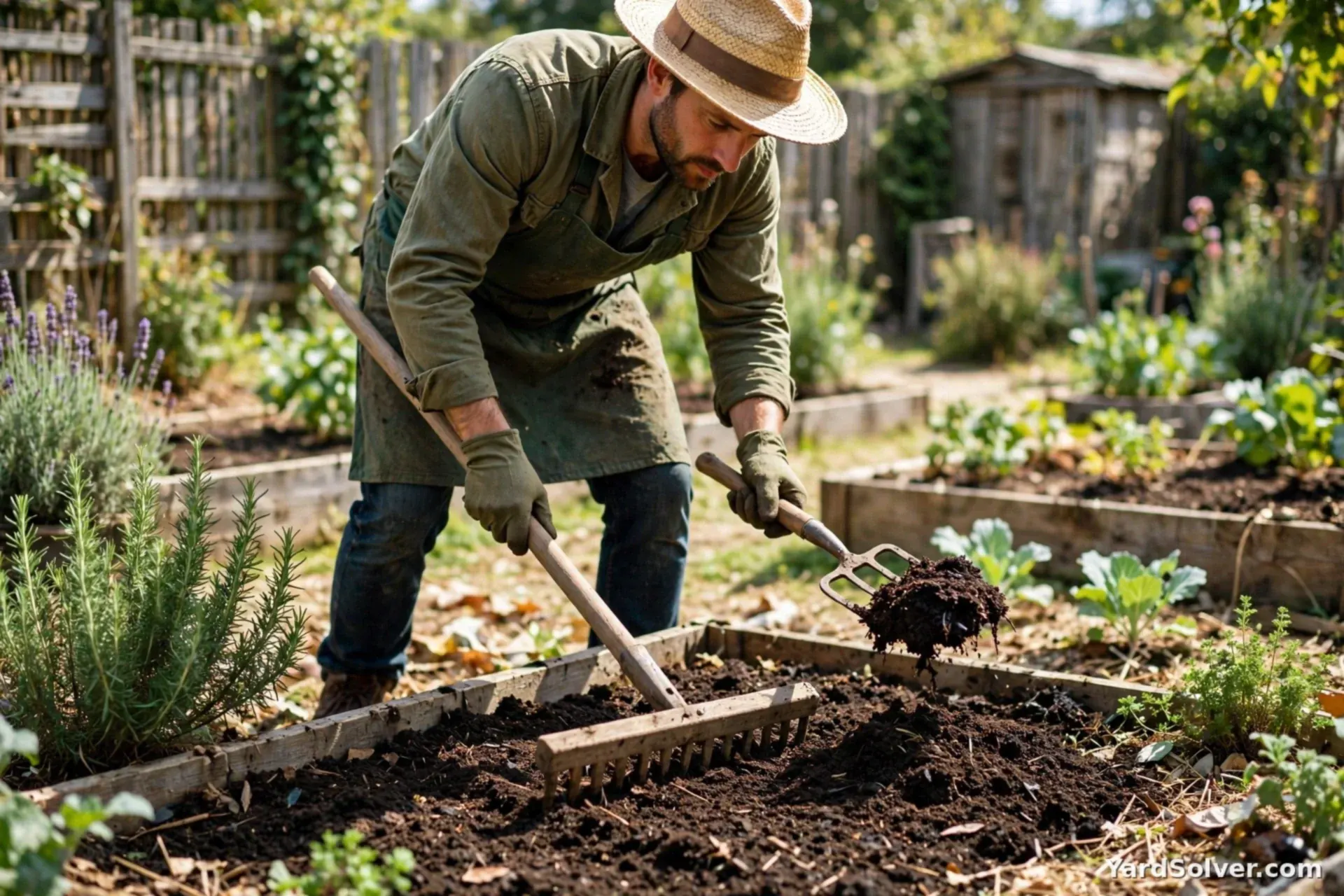
Sun: Full sun. Rich soil with plenty of compost worked in before planting, and the bed firmed down well — brassicas grow best in firm ground. Mulch once the plants are growing to hold moisture steady. Work out how much you need with the Garden Mix Calculator or the Raised Bed Soil Calculator.
Step 3 — Sow and plant out
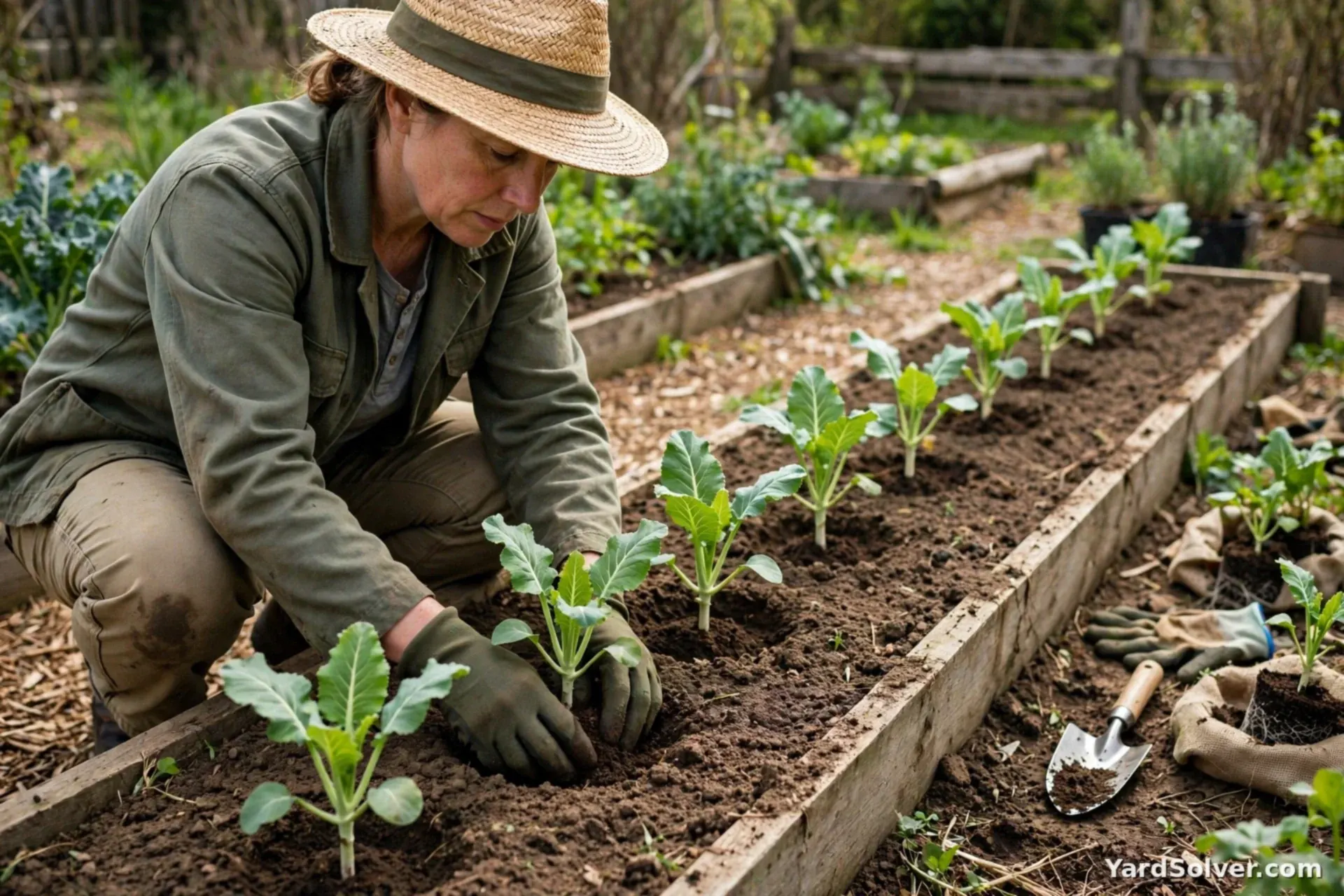
Start seed indoors 6 weeks before last frost, sowing 1/4 in deep. Grow seedlings on in strong light, then harden them off over 7–10 days (see How to Harden Off Seedlings) and move them outside 2 weeks before last frost, spaced 18–24 in apart. The Plant Spacing Calculator turns that spacing into plants-per-bed.
Step 4 — Water and feed
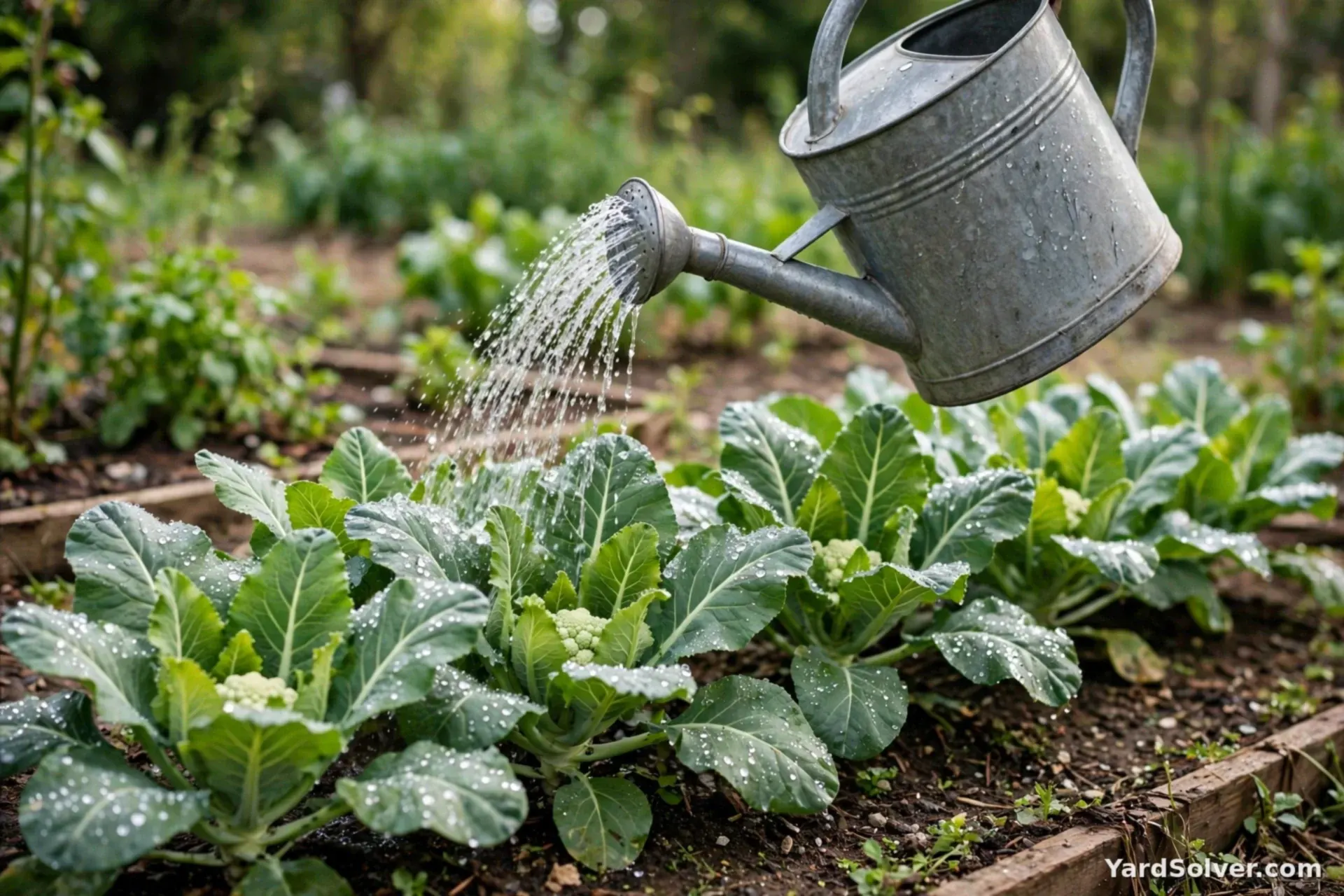
Water: Regular and even — dry spells spoil the heads. First feed: around day 30 — Cauliflower is hungry — feed about a month after transplanting, and keep the soil evenly moist from here on; checks in growth spoil the heads. The Fertilizer Calculator turns a bed size into the right amount.
Step 5 — Care and the problems to watch for
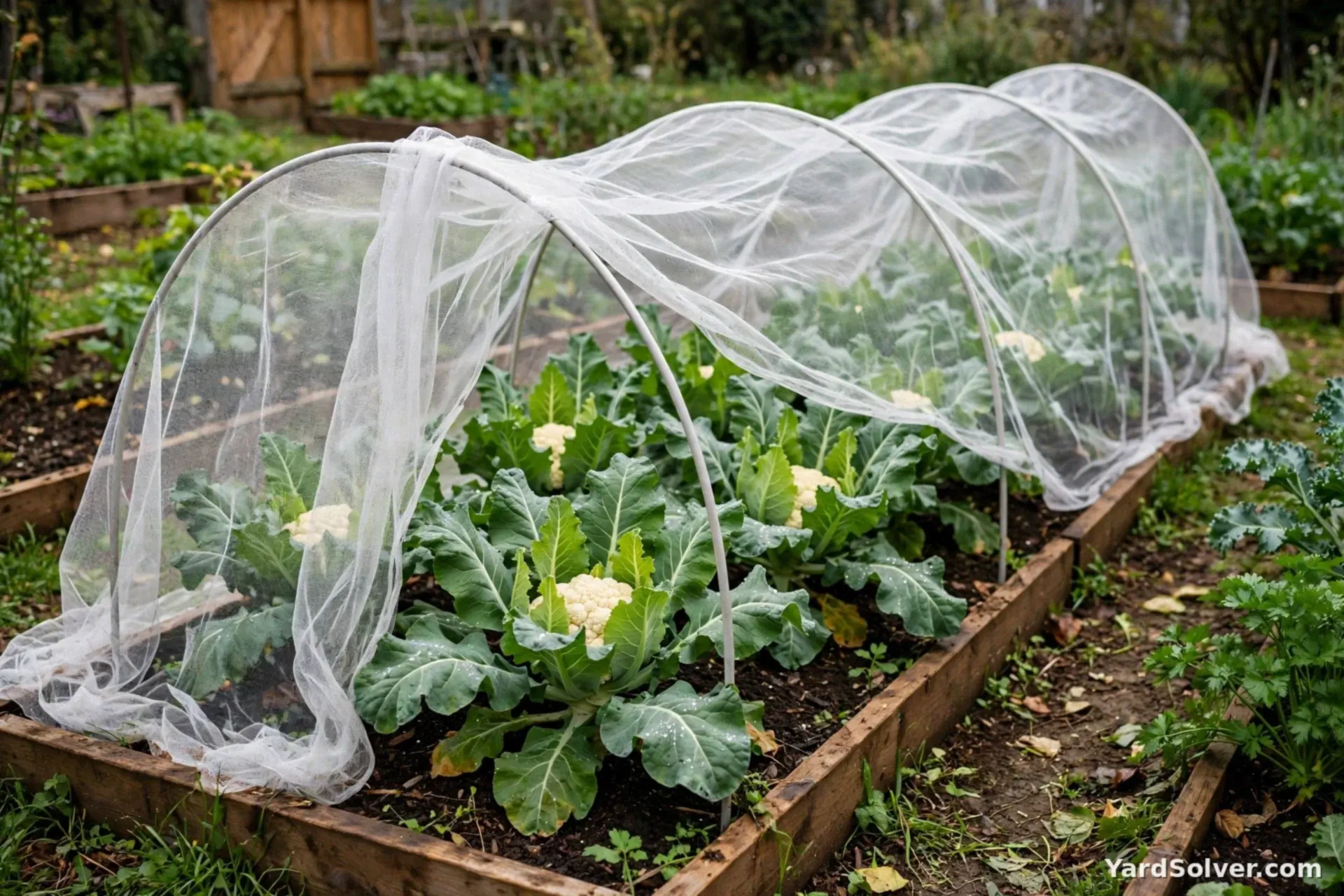
- Buttoning — tiny heads forming on small plants; caused by stress or a check in growth, so keep transplants growing steadily and never let them dry out.
- Club root — swollen, stunted roots in sour soil; lime the bed toward neutral and rotate brassicas around the garden.
- Cabbage white caterpillars — green caterpillars chewing the leaves; cover plants with insect mesh from day one.
Take care: Cauliflower is a brassica — a very large serving can cause gas and bloating in some people.
Step 6 — Harvest
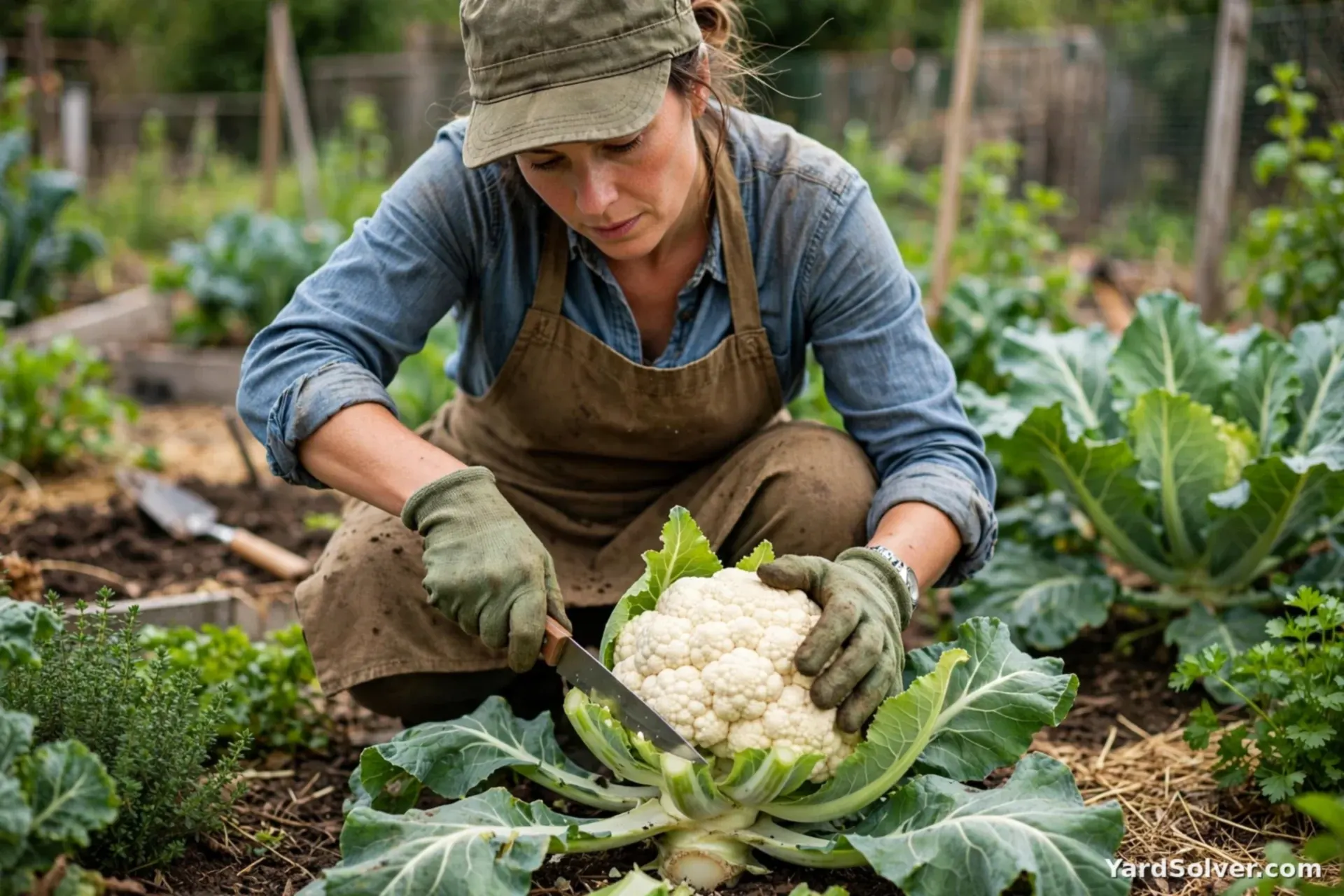
Ready in: 70–90 days after transplant. Harvest runs from about day 70 to 90 after transplant — cut heads while they are tight and firm, before the curds start to separate.
📅 Your personal Cauliflower schedule
Counted from your planting day — not a generic calendar. Day 0 is the day the seed went in the ground or the young plant went out.
Varieties worth growing
| Variety | Colour | Why gardeners like it |
|---|---|---|
| Snowball Y Improved | White | The classic cauliflower — smooth, tight heads that partly blanch themselves under their own leaves |
| Romanesco | Lime green | Stunning spiral heads that follow the Fibonacci pattern — part vegetable, part ornament |
| Graffiti | Purple | Vivid purple heads that keep much of their colour when cooked lightly |
| Cheddar | Orange | Orange heads with extra beta-carotene — the same pigment that colours carrots |
| Amazing | White | A tolerant variety that handles warmer weather better than most |
Good for you — and take care
Benefits
- Provides vitamin C, which supports the immune system
- A source of vitamin K and folate
- Provides fibre that supports good digestion
- Low in calories for its size
- One of the cruciferous vegetables, a family that nutrition researchers take a keen interest in
Take care
- Very large servings can cause gas and bloating
- People who take blood thinners: cauliflower contains vitamin K, so keep servings steady rather than suddenly large
- Cooked cauliflower smells strong because of its natural sulphur compounds — normal, and it fades fast
A little history — and one good fact
Cauliflower was bred from wild cabbage around the Mediterranean — growers in Cyprus and then Italy spent centuries selecting plants whose flower buds clustered into a single dense head. It was a luxury vegetable in the 1600s, served at the court of Louis XIV in France, before seed became cheap enough for every garden.
Fun fact: Botanically, the part you eat is a crowd of unopened flower buds — leave a head in the ground and it will try to bloom.
Keep going
Guides: When to Start Seeds Indoors · How to Harden Off Seedlings · How to Get Rid of Aphids
Calculators: Plant Spacing Calculator · Seed Calculator · Fertilizer Calculator · Garden Mix Calculator
More vegetables: Broccoli · Cabbage · Kohlrabi
← Back to the Plant Library · Get your personal planting dates
Questions people ask
When do I plant cauliflower?
Count from your average last spring frost: sow indoors 6 weeks before last frost; move outside 2 weeks before last frost. Cauliflower is a cool-season crop that hates surprises: start seeds indoors about 6 weeks before your last frost and transplant about 2 weeks before it, so the heads form while the weather is still cool — any check in growth now shows up later as a loose head.
How far apart do I space cauliflower?
Space plants 18–24 in apart, with seed sown 1/4 in deep. Sun: full sun.
When is cauliflower ready to harvest?
70–90 days after transplant. Needs steady, cool weather — heat makes heads turn loose, small or ricey instead of tight and white.