
Plant Library · Herbs
💜 How to Grow Comfrey
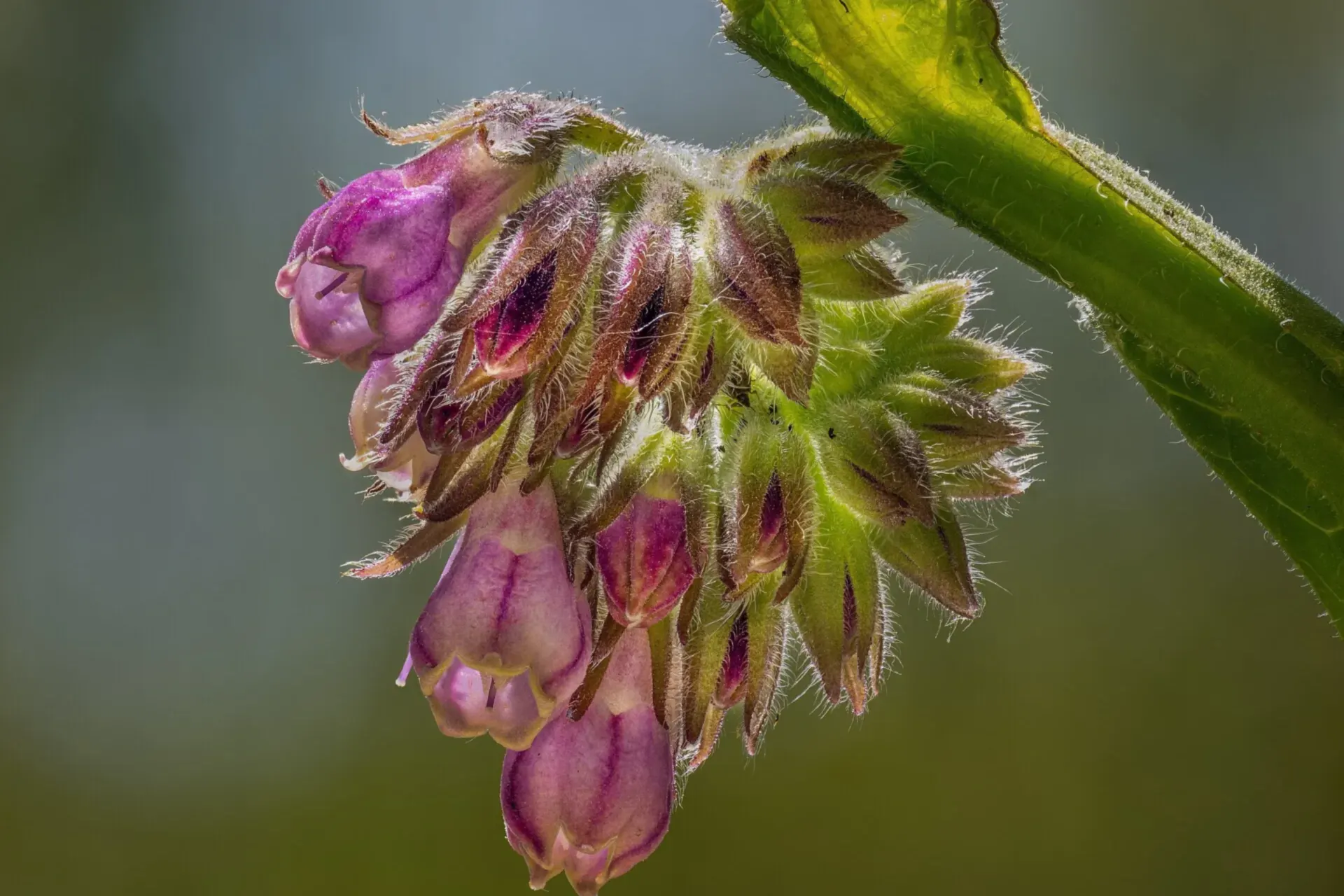
The gardener's fertilizer factory — plant it once, cut it four times a year, and feed everything else with the leaves. Comfrey (Symphytum officinale and the sterile Russian 'Bocking 14') drives roots metres deep, mines minerals nothing else can reach, and returns it all as lush, fast-growing leaves. Choose its home with permanent intent: comfrey is famously near-impossible to remove once settled.
Grow Comfrey with us — step by step
Everything for this plant is written step by step below — what to do, and exactly when. Read it through first if you like: you can grow it entirely on your own with that guide. Or start with us here — tell us your planting day and we lay out your personal schedule on this page, every next step on its own day, counted from your planting date. No guessing, no forgetting.
Step 1 — today: Buy root cuttings of sterile 'Bocking 14' in spring — one thumb-sized piece per plant — or beg a chunk of root from a friend's clump.
Comfrey at a glance
Plant out: Spring, from root cuttings or divisions — seed is slow and variable
Sow outdoors: Possible but slow; cuttings establish far faster
Spacing: 24–36 in apart — it becomes a very large plant
Sun: Full sun to part shade
Water: Regular — thrives with steady moisture
Harvest: Cut leaves from year 1; 4–5 cuts a season once established
Timing counts from your average last spring frost — get your own dates in the Planting Calendar. Guidance follows standard extension-service practice for Canada and the US.
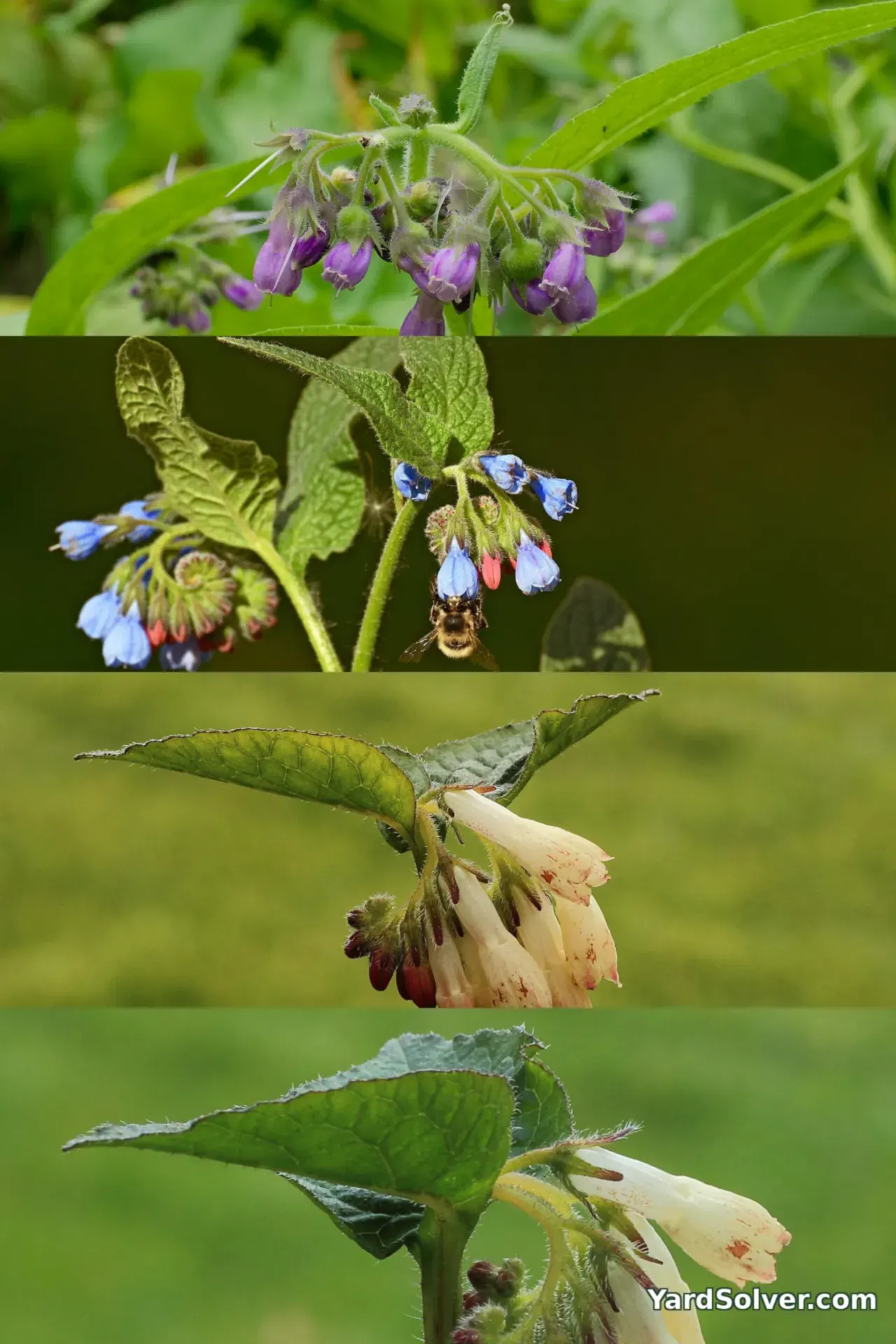
How to plant and grow comfrey, step by step
Step 1 — Time it right
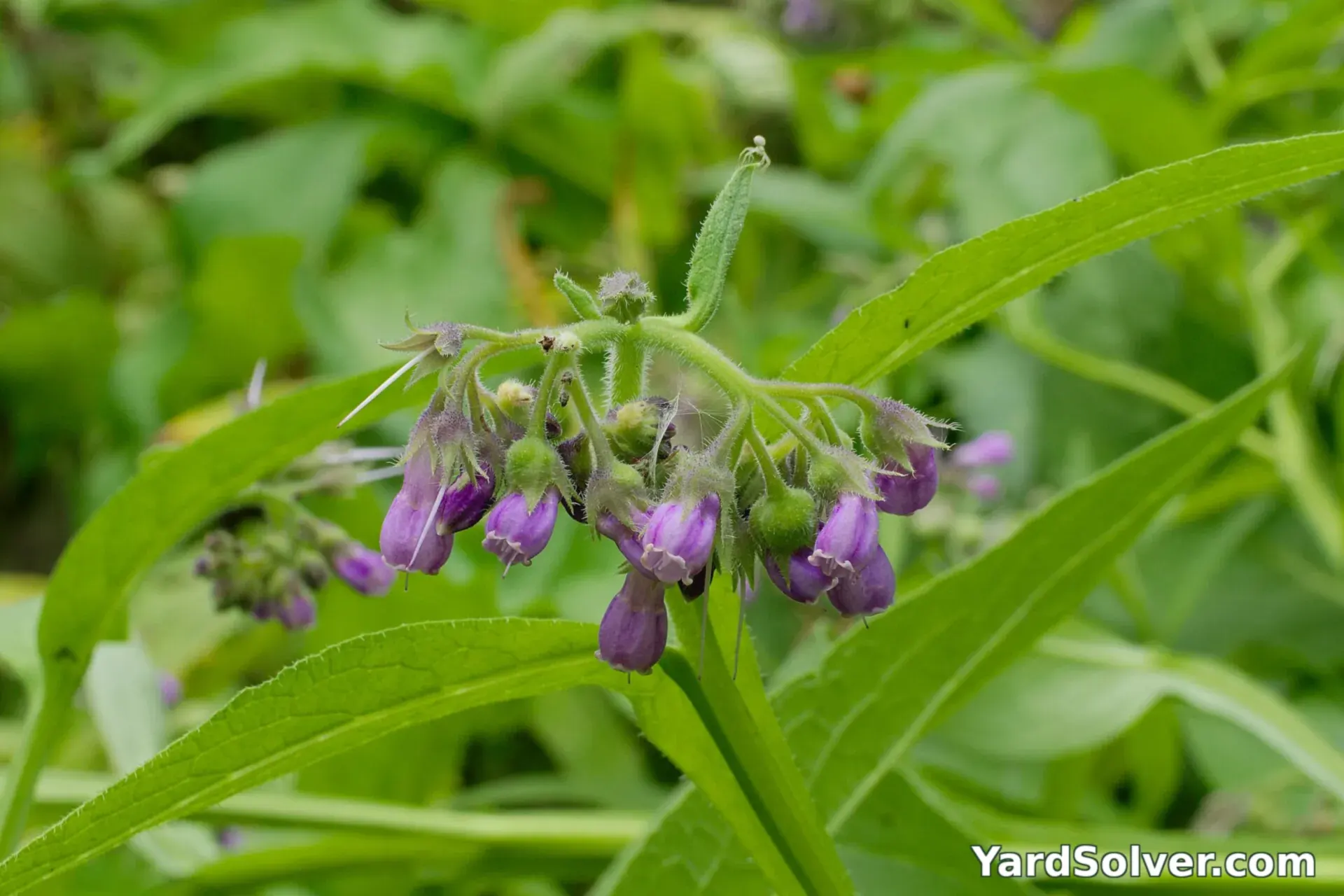
Plant out: in spring, from root cuttings or divisions; Sow: possible but slow and variable — cuttings win. All dates count from your average last spring frost — the Planting Calendar turns them into real dates for your garden. Comfrey from seed is slow, variable, and (for common comfrey) produces a plant that then seeds itself around. The gardener's standard is the sterile Russian hybrid 'Bocking 14': it never sets seed, grows the most leaf, and is started from root cuttings planted in spring or autumn. Any scrap of root left in soil will sprout — a fact that matters at planting time, and forever after.
Step 2 — Prepare the spot
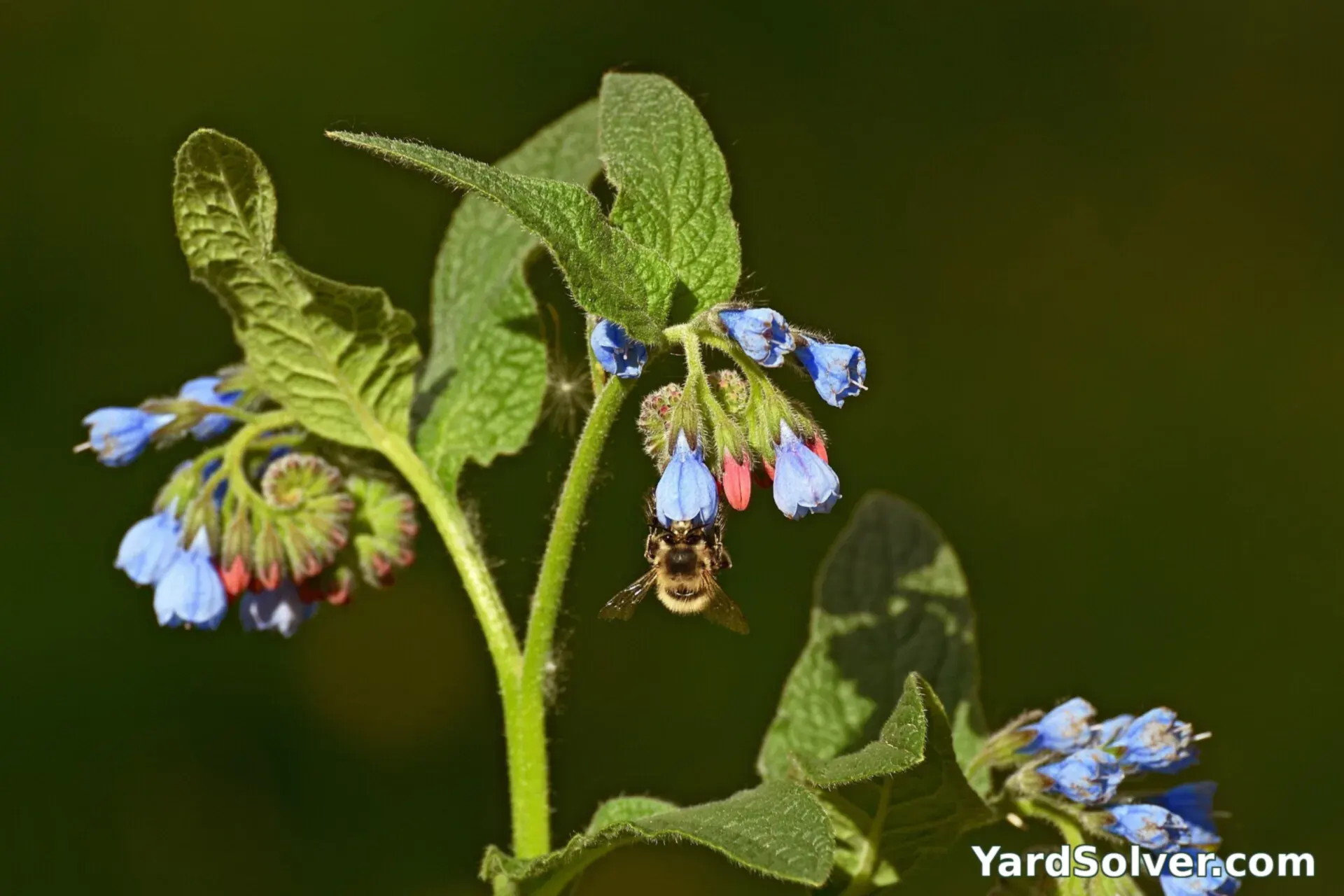
Comfrey becomes a big plant (3–4 ft across) with roots reported to 6 ft and beyond, and it resents moving — dug roots left behind simply regrow. Plant it beside the compost heap, along a fence, or under fruit trees where it will never need to move. Dig deep, remove perennial weeds completely, and work in plenty of compost or manure: comfrey is a hungry plant that repays feeding with mountains of leaf. For a raised bed, the Raised Bed Soil Calculator counts the bags for you; mixing your own? The Garden Soil Calculator gives the compost-rich split to aim for.
Step 3 — Sow and plant out
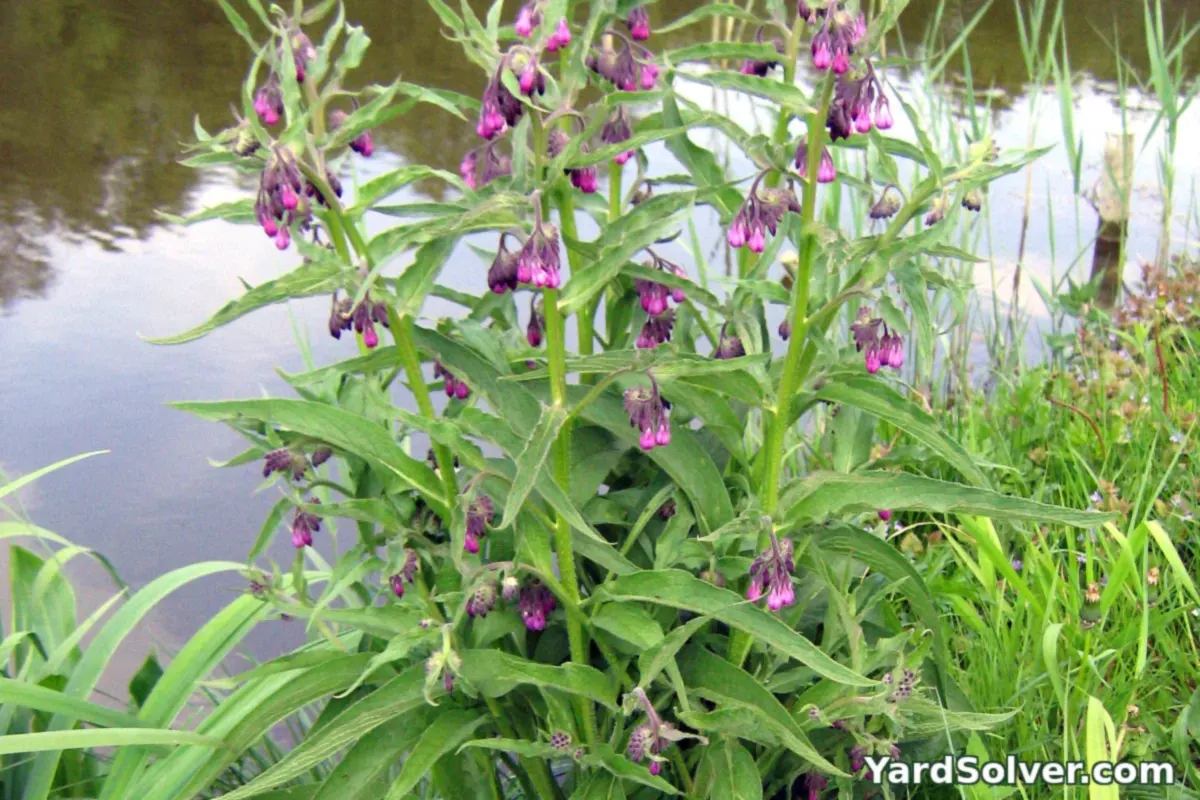
Lay each root cutting in a hole about 2 in deep, crown (the thicker, bud-bearing end) uppermost, and space plants 24–36 in apart — they fill out fast. The Plant Spacing Calculator turns your bed size into an exact plant count. Water in thoroughly and mulch heavily. Good neighbours: comfrey under apple trees is a classic orchard pairing — its deep roots cycle nutrients up where tree roots can share them, and the cut leaves mulch the tree circle.
Step 4 — Water and feed
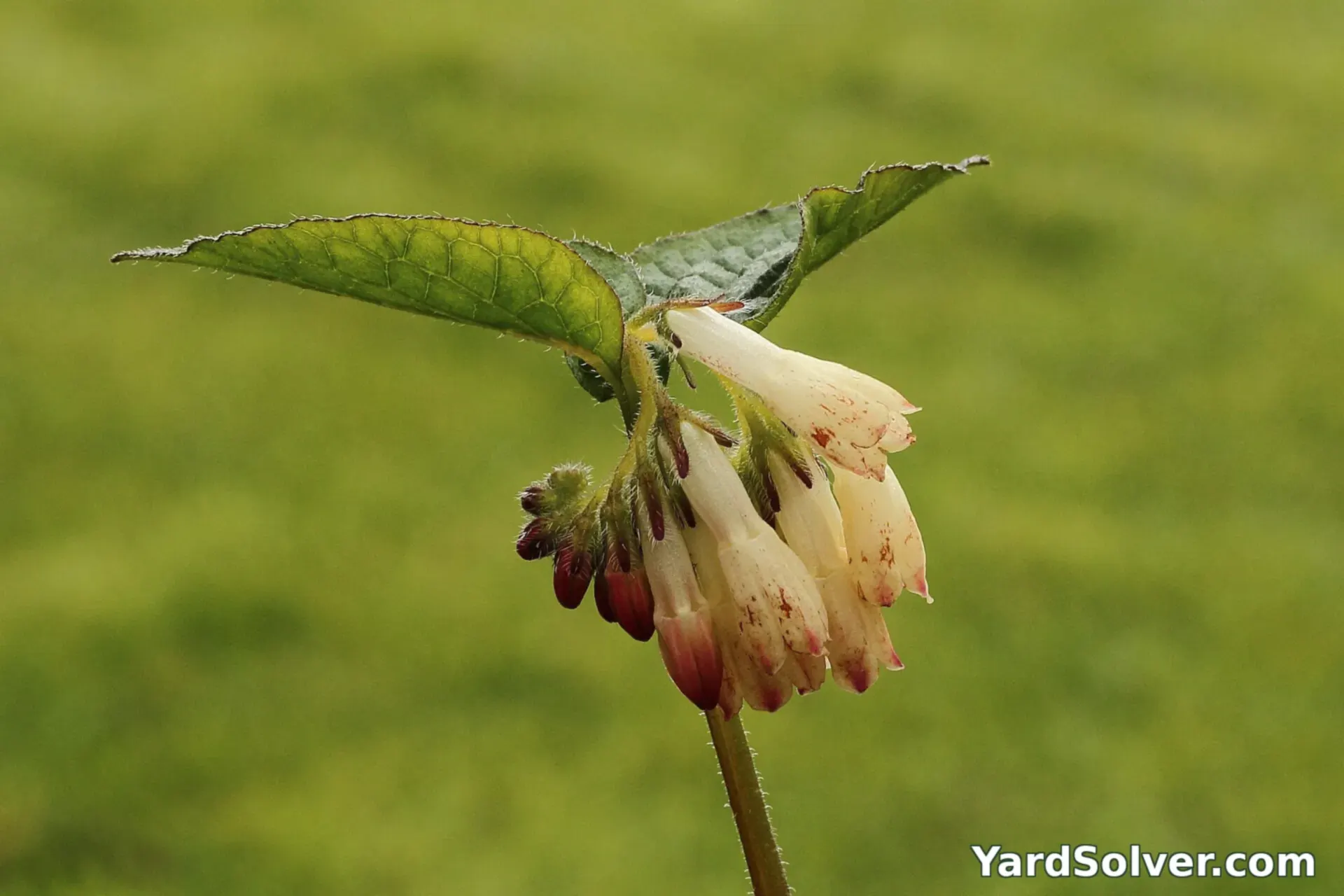
Keep young plants watered through their first season while the taproot dives. After that, comfrey largely feeds and waters itself — though a bucket of its own leaf tea (Step 6) poured back around the clump in spring speeds the first flush. It tolerates ordinary soil fertility happily once settled; the compost at planting does the heavy lifting — the Fertilizer Calculator turns your bed size into exact amounts.
Step 5 — Care and the problems to watch for
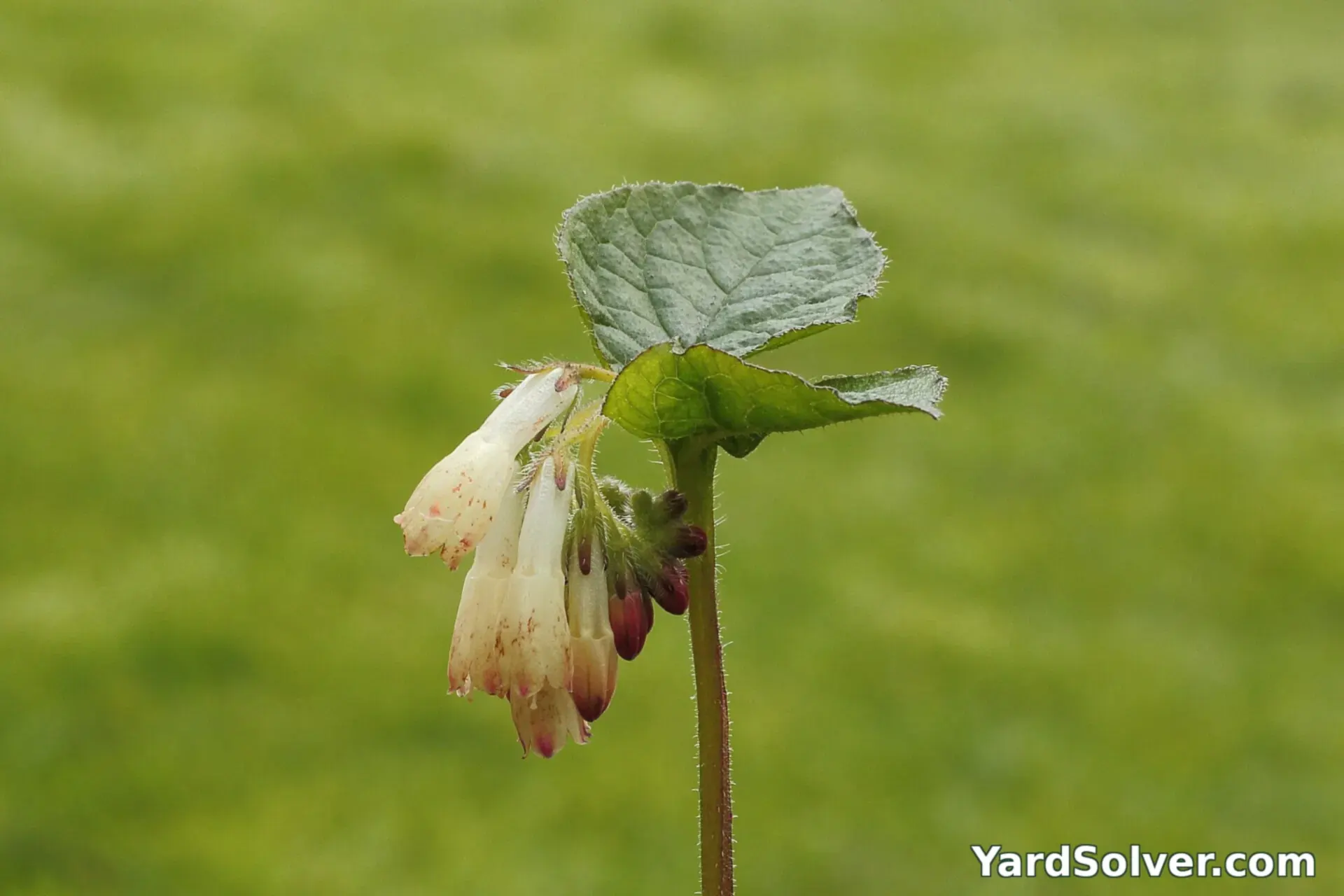
The core care skill is cutting: shear the whole plant to about 2 in whenever it reaches knee height or starts flowering, roughly every 6–8 weeks. Flowers left standing feed bees wonderfully — many gardeners let one cut's worth bloom.
- Regrowth from an old spot — every root scrap regrows; dig out volunteers while tiny, or accept the colony.
- Rust on leaves — orange spots late in the season; cut hard and clear the leaves away.
- Slugs sheltering underneath — the leafy canopy is slug housing; keep paths around the patch clear.
Step 6 — Harvest
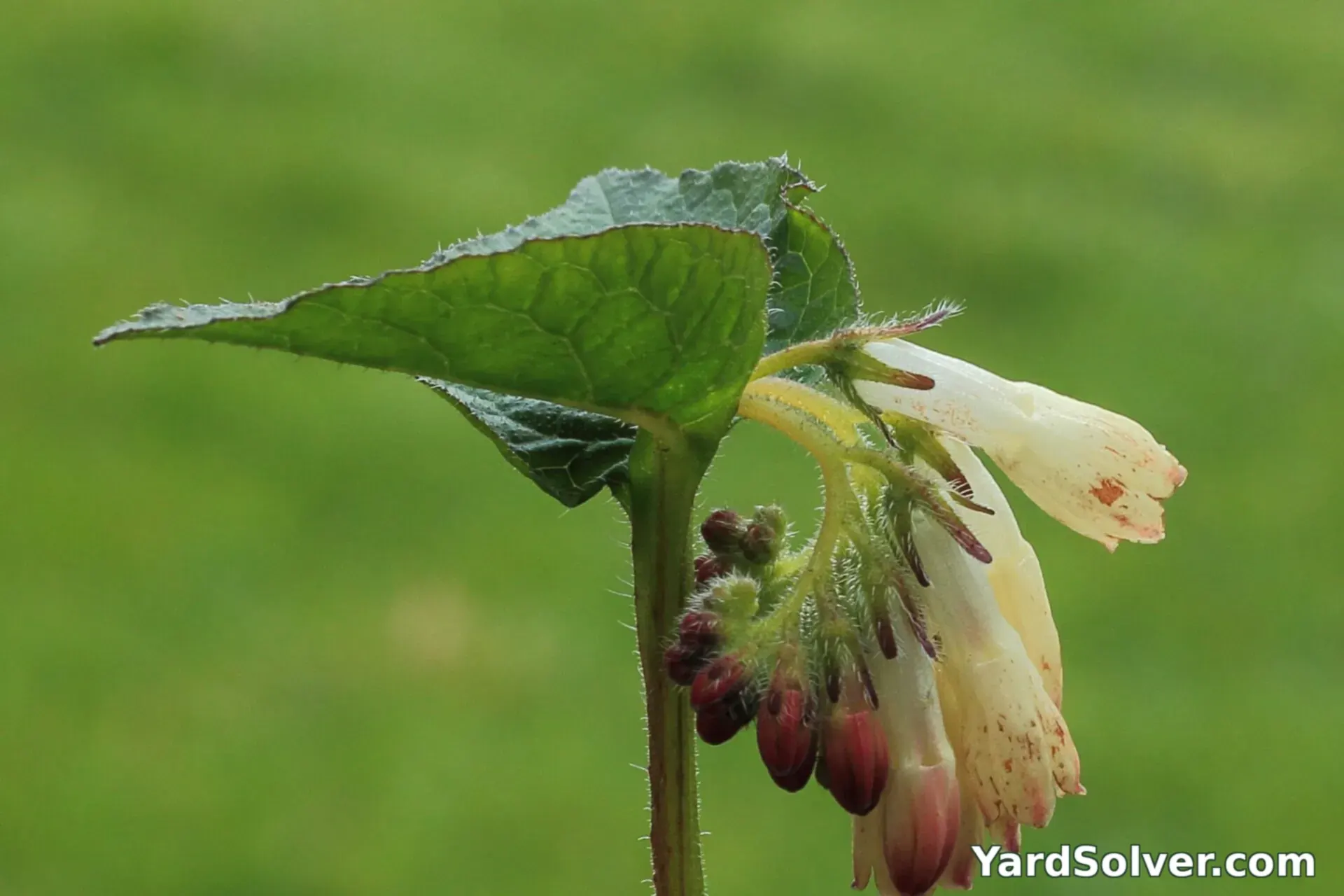
Wear gloves — the hairs can prickle sensitive skin. Cut the whole plant about 2 in above the crown. Use the leaves four ways: wilted as a mulch around hungry crops (tomatoes love it), steeped 4–6 weeks in a lidded bucket of water for a potent (and famously smelly) liquid feed, layered into the compost heap as an activator, or laid in planting trenches for potatoes. Expect 4–5 cuts a season from an established plant.
📅 Your personal Comfrey schedule
Counted from your planting day — not a generic calendar. Day 0 is the day the seed went in the ground or the young plant went out.
Varieties worth growing
| Variety | Colour | Why gardeners like it |
|---|---|---|
| Bocking 14 | Violet-blue flowers, sterile | The gardener's standard — a sterile Russian hybrid that never self-seeds and yields the most leaf. |
| Bocking 4 | Blue-pink flowers, sterile | Slightly deeper-rooted strain, also sterile; grown for fodder and soil-building. |
| Common comfrey | Purple or cream flowers | Symphytum officinale, the wild species — beautiful, but it self-seeds, so site it carefully. |
Good for you — and take care
Benefits
- Free fertilizer: leaves rich in potassium and nitrogen for mulch, tea and compost.
- Deep roots mine minerals from subsoil no other garden plant can reach.
- Bees work the bell flowers for weeks each time you let a flush bloom.
Take care
- Near-impossible to remove — root fragments regrow; plant it permanently or not at all.
- Not for internal use — contains pyrrolizidine alkaloids; garden use only.
- Wear gloves to cut — the leaf hairs prickle sensitive skin.
A little history — and one good fact
Comfrey's old country name was 'knitbone' — herbalists packed its leaves around fractures for centuries, and its Latin name Symphytum means 'to grow together'. The Russian hybrids arrived in the 1950s through researcher Lawrence Hills, whose Bocking trials gave us the sterile strains gardeners plant today.
Fun fact: Comfrey leaves rot down faster than almost any other garden material — their low carbon-to-nitrogen ratio makes them a compost activator that can heat a heap up within days.
Keep going
Guides: Crop rotation basics · Companion planting basics · How to make compost fast
Calculators: Fertilizer Calculator · Plant Spacing Calculator · Garden Mix Calculator
More herbs: Stinging Nettle · Borage · Yarrow · Marshmallow
← Back to the Plant Library · Get your personal planting dates
Questions people ask
Why do gardeners plant sterile 'Bocking 14' comfrey?
Because it never sets seed and yields the heaviest leaf harvests, so you get the fertilizer benefits without seedlings spreading through the garden. It can only spread from root pieces — which is still plenty of reason to site it carefully.
Can comfrey be removed once planted?
Realistically, almost never by digging alone — every root fragment left behind regrows. If you must clear it, repeated deep digging plus months of light-excluding cover is the slow route. Choose its spot as a permanent one.
Is comfrey safe to eat or drink as tea?
No. Comfrey contains pyrrolizidine alkaloids that can damage the liver, and health authorities advise against eating or drinking it. Its safe and valuable use is in the garden, as fertilizer.