
Plant Library · Flowers
🌺 How to Grow Dahlia
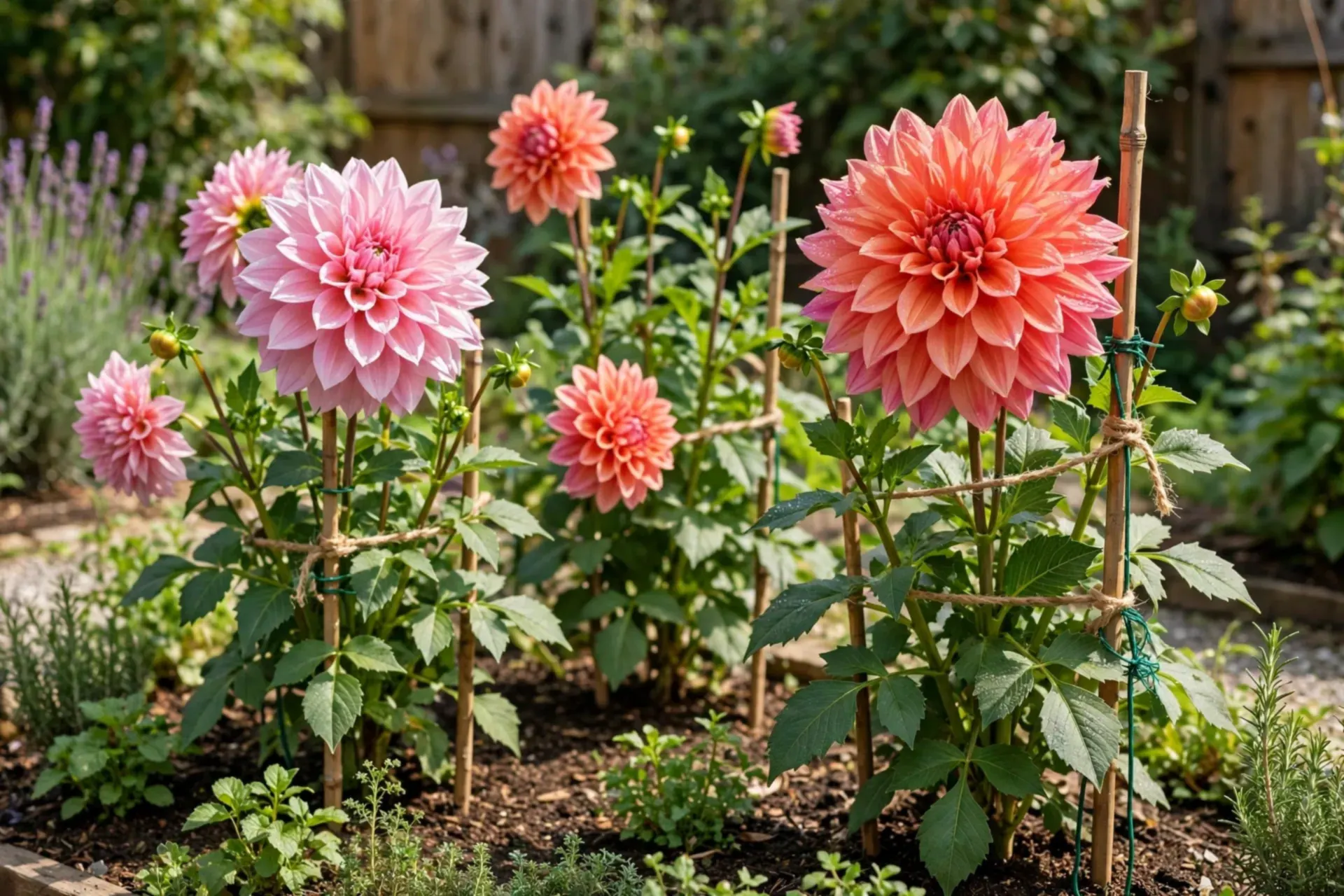
Plant the tuber, not seed — and lift it before winter in cold zones. Dahlias are tender perennials grown from tubers: plant them after frost in rich, drained soil with the stake already in, and from midsummer until frost they produce the biggest, most varied flowers in the garden. North of about zone 8 the tubers must be lifted and stored over winter — an hour's work for months of bloom.
Grow Dahlia with us — step by step
Everything for this plant is written step by step below — what to do, and exactly when. Read it through first if you like: you can grow it entirely on your own with that guide. Or start with us here — tell us your planting day and we lay out your personal schedule on this page, every next step on its own day, counted from your planting date. No guessing, no forgetting.
Step 1 — today: Plant your Dahlia tubers today, eye up, 4–6 in deep and spaced 18–24 in apart, with a sturdy stake pushed in beside each tuber now — and do not water until green shoots show above the soil.
Dahlia at a glance
Move outside: 2 weeks after last frost
Spacing: 18–24 in · Planting depth: 4–6 in (tuber, eye up)
Sun: Full sun
Water: None until shoots show, then deep and regular
Harvest: Flowers from mid-summer until frost — about 90–120 days from planting
Timing counts from your average last spring frost — get your own dates in the Planting Calendar. Guidance follows standard extension-service practice for Canada and the US.
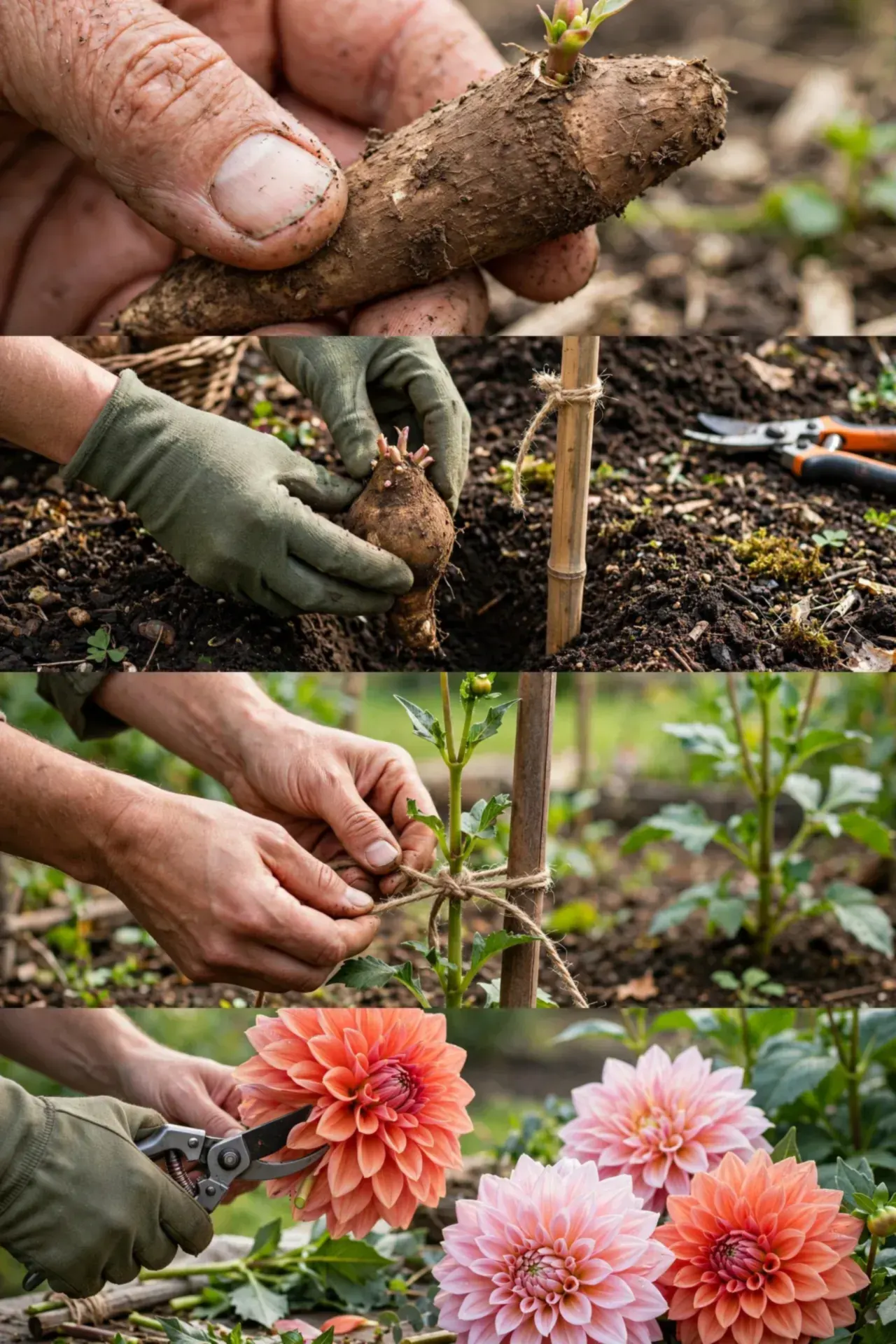
How to plant and grow dahlia, step by step
Step 1 — Start with tubers after frost
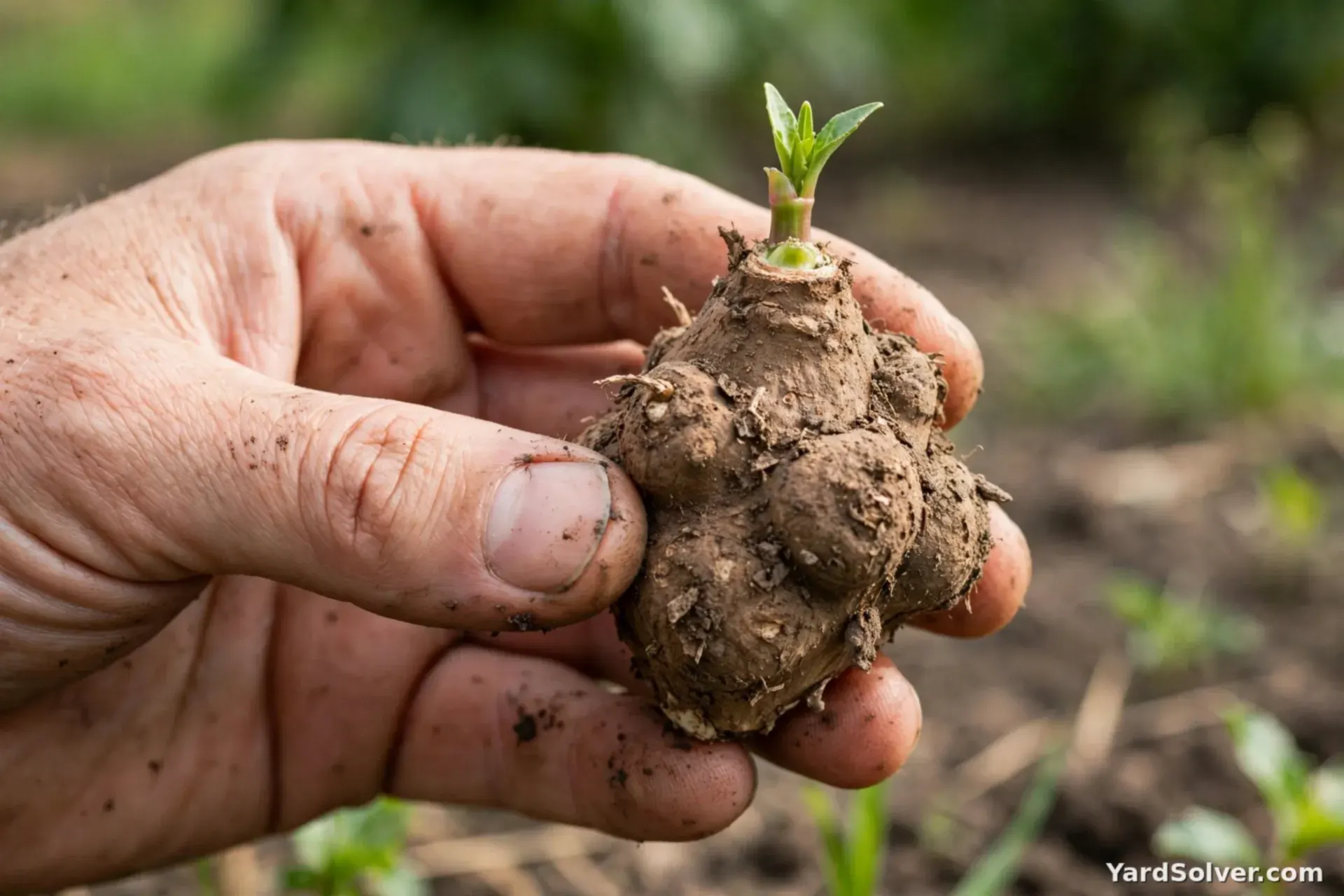
Move outside: 2 weeks after last frost. All dates count from your average last spring frost — the Planting Calendar turns them into real dates for your garden. A dahlia grows from a tuber — a swollen root with a growing eye at its neck — not from seed. Choose firm tubers with a visible eye, or pot them up indoors in barely moist mix a few weeks before last frost for a head start; planting outside waits for warm soil after frost, because cold, wet ground rots dormant tubers.
Step 2 — Prepare the spot
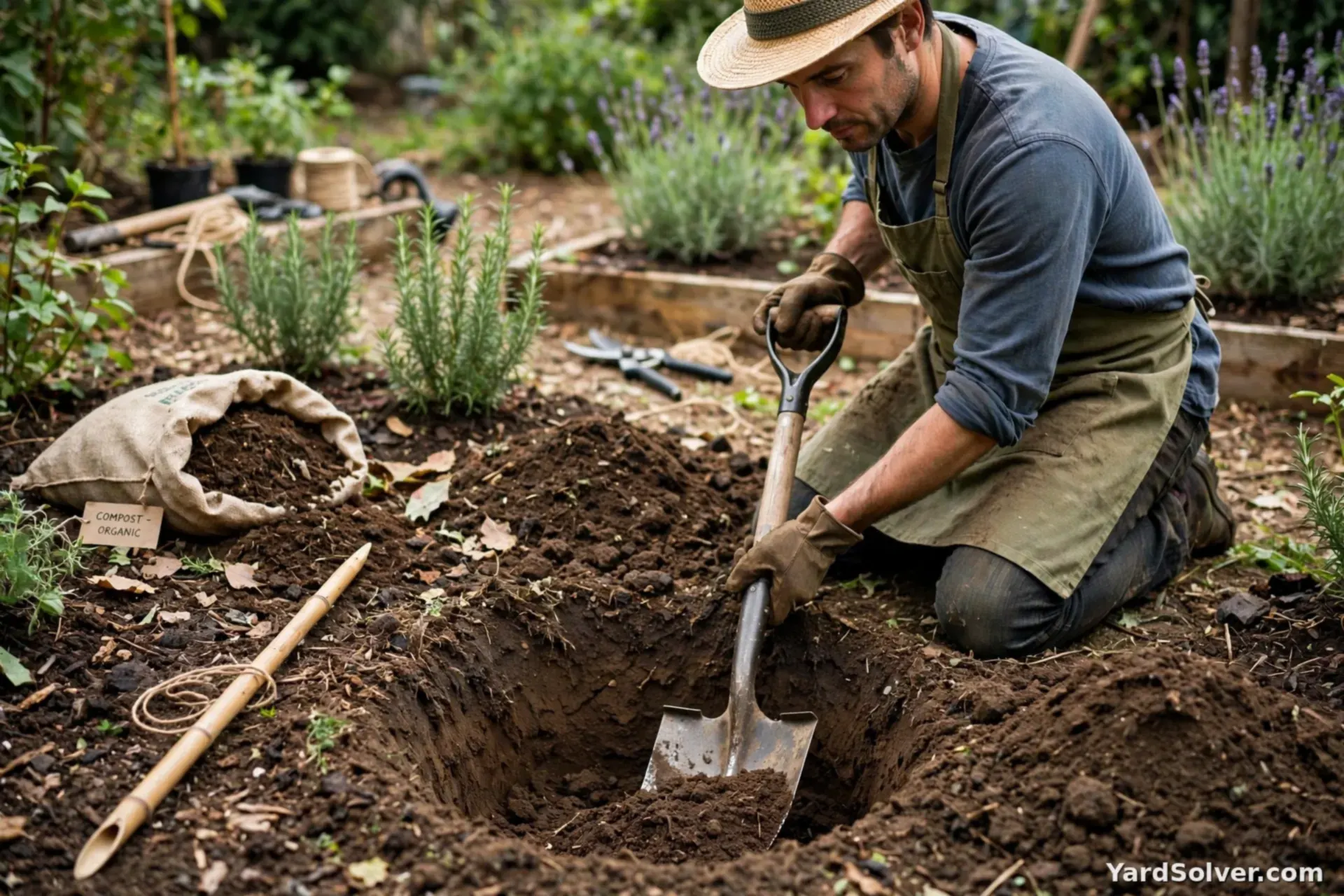
Sun: Full sun. Dahlias are heavy feeders in free-draining soil: fork in compost or well-rotted manure before planting, and choose a spot where water never sits — tubers rot in winter-wet ground. Work out how much you need with the Garden Mix Calculator or the Raised Bed Soil Calculator.
Step 3 — Plant the tubers
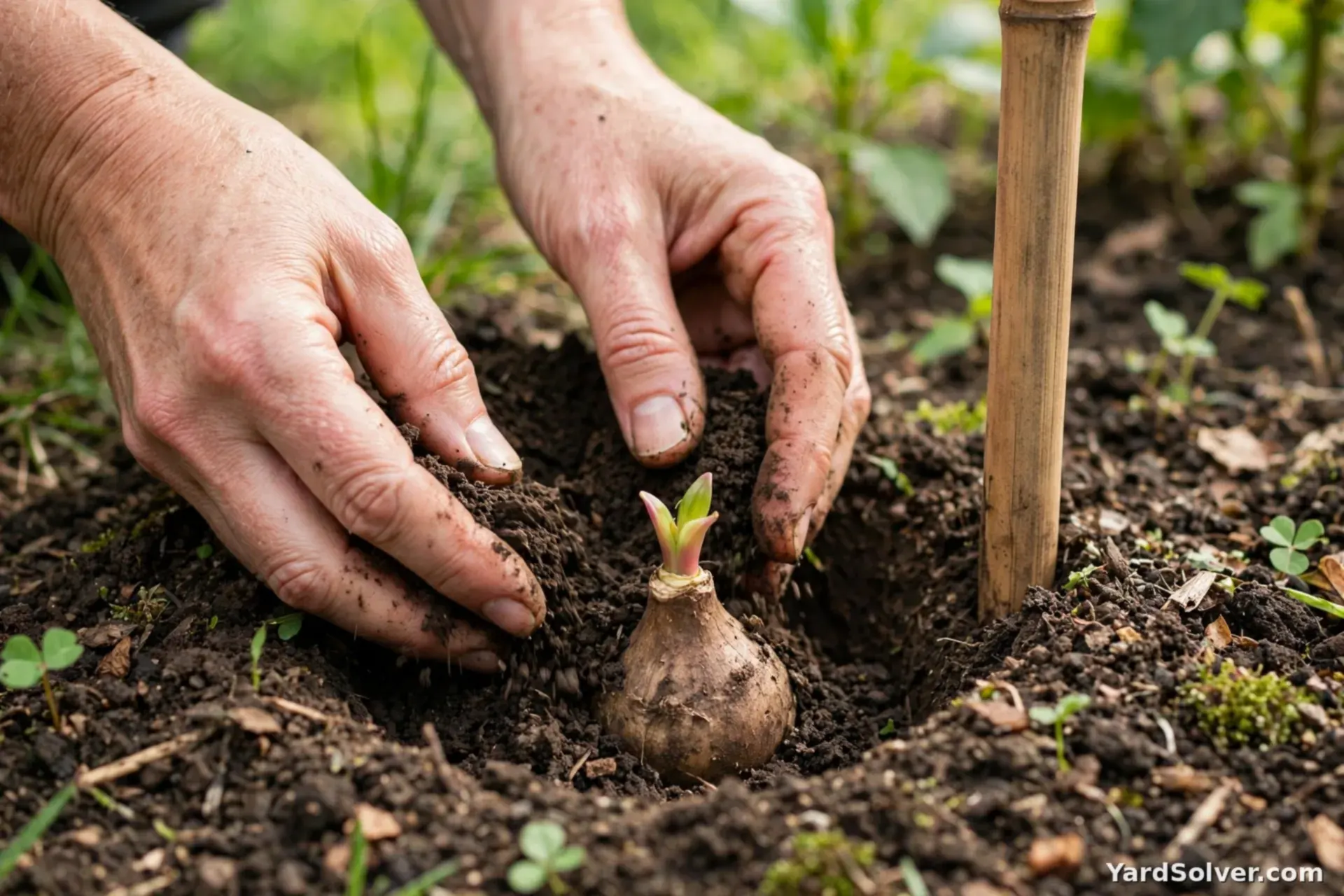
Dig a hole 4–6 in deep, lay the tuber with its eye pointing up, and push the stake in now — adding it later spears tubers. Cover with soil and leave it unwatered: the tuber carries enough moisture to start, and wet soil around a dormant tuber invites rot. Space tubers 18–24 in apart. The Plant Spacing Calculator turns that spacing into plants-per-bed.
Step 4 — Water and feed
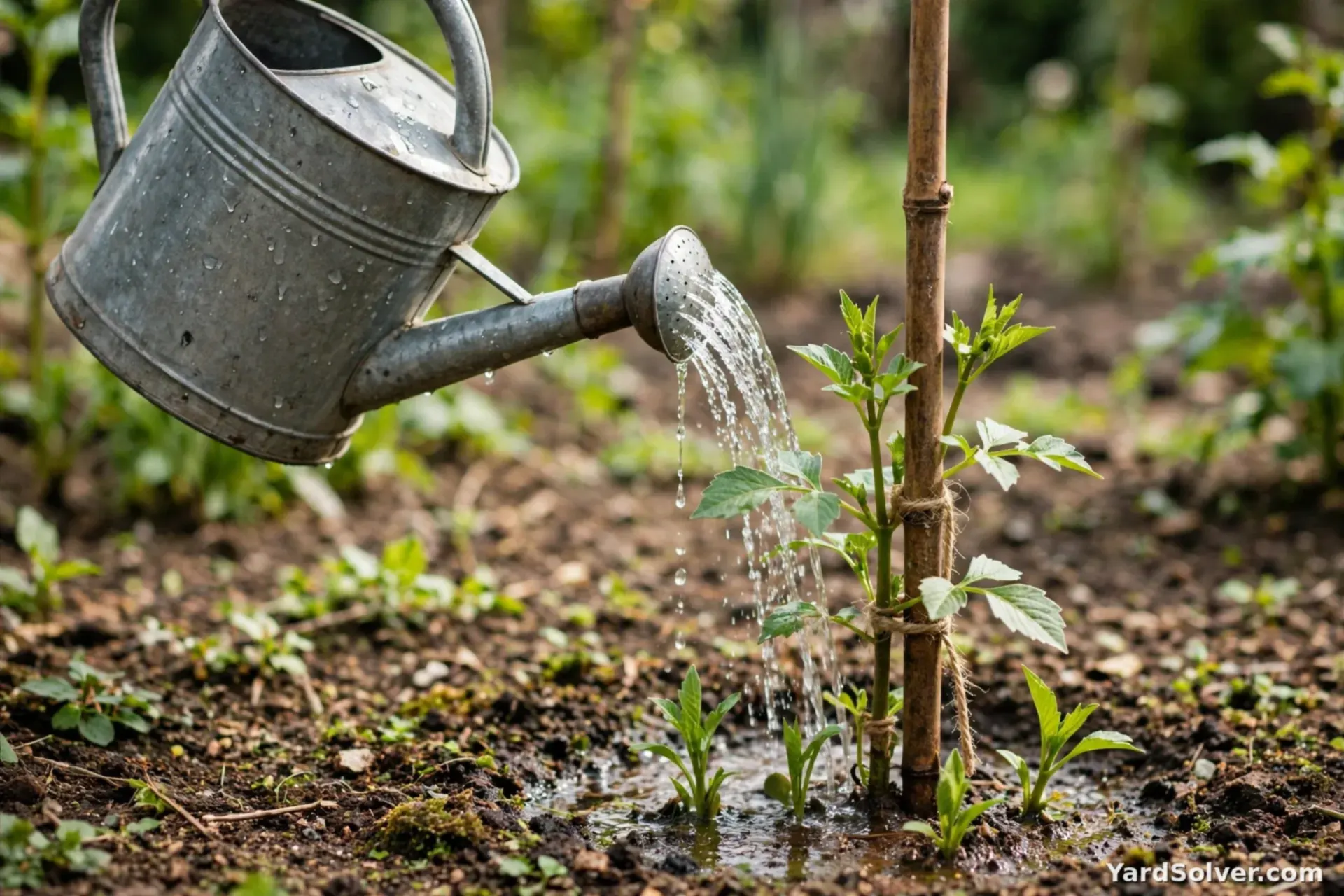
Water: None until shoots show, then deep and regular. Once the plants are growing strongly, feed every few weeks with a balanced fertilizer, and switch to a high-potash feed as buds form. The Fertilizer Calculator turns a bed size into the right amount.
Step 5 — Care and the problems to watch for
- Earwigs in the blooms — they hide in the petals by day and chew them at night; trap them with rolled newspaper or an upturned pot of straw and empty it each morning.
- Slugs on new shoots — spring shoots are a feast for slugs; protect them until the stems toughen up.
- Powdery mildew — late-season white dust on the leaves; space plants for air and water at the base.
Take care: Dahlia tubers are killed by hard frost in the ground — in cold zones, lifting and storing them after the first frost (Step 6) is not optional.
Step 6 — Harvest
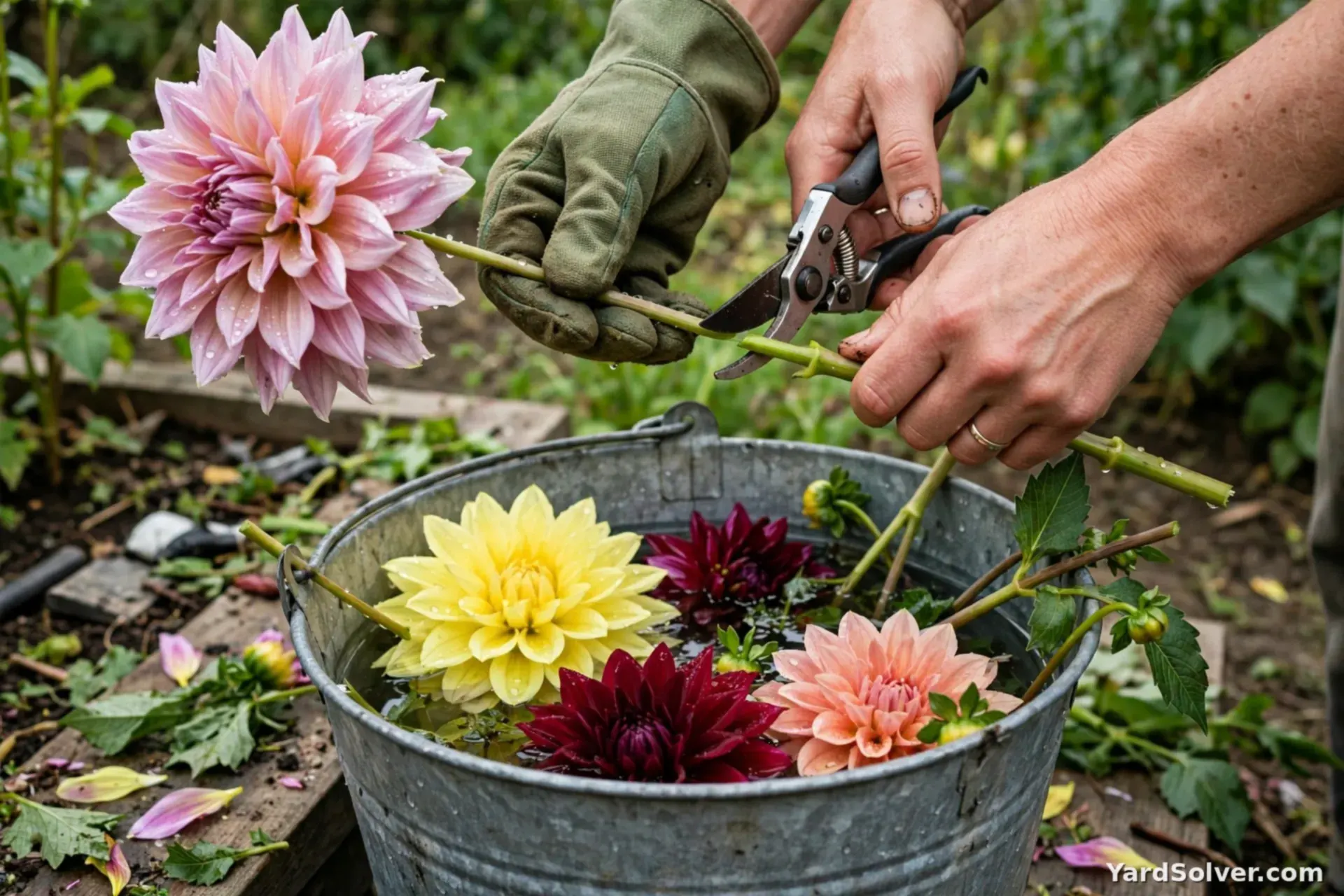
Ready in: Flowers from mid-summer until frost — about 90–120 days from planting. Cut flowers in the morning, taking a long stem down to a leaf joint; dahlias barely open further in the vase, so cut blooms nearly fully open. After the first frost blackens the tops, lift the tubers, let them dry, and store them cool and frost-free for next year.
Problems, pests & diseases — diagnosis and fixes
- No shoots at all, and the tuber is soft and smelly when checked: tuber rot, from sitting in cold, wet soil before growth started. Fix: there is no saving a rotted tuber — bin it, and next year plant shallower in better-drained soil and hold off watering until shoots show.
- New shoots nibbled to stubs in spring: slugs and snails. Fix: protect the crown with barriers or traps and pick slugs off at dusk until the stems toughen.
- Petals chewed and frilled, worse on pale blooms: earwigs feeding at night and hiding in the flower by day. Fix: set straw-filled pot traps on canes beside the plants and empty them each morning.
- White powdery leaves late in the season: powdery mildew, encouraged by crowding and dry roots with damp air. Fix: water at the base, thin for airflow, remove the worst leaves — see How to Get Rid of Powdery Mildew.
- Leaves mottled and distorted, growth stunted, flowers streaked: virus, spread by aphids and on dirty cutting tools. Fix: no cure — dig out and bin affected plants, disinfect tools, and buy tubers from a reputable source.
- Sticky blackfly clusters on buds and shoot tips: aphids. Fix: blast off with water and repeat — see How to Get Rid of Aphids.
- Warty, tumour-like growths at the neck of the tuber: crown gall, a bacterial disease that lives in the soil. Fix: bin the tuber (do not compost it) and do not plant dahlias in that spot for several years.
📅 Your personal Dahlia schedule
Counted from your planting day — not a generic calendar. Day 0 is the day the seed went in the ground or the young plant went out.
Varieties worth growing
| Variety | Colour | Why gardeners like it |
|---|---|---|
| 'Bishop of Llandaff' | Fiery red over bronze foliage | Single red blooms against near-black leaves — dramatic even between flushes of flower |
| 'Café au Lait' | Creamy blush | The wedding-flower dahlia — huge, soft dinner-plate blooms in coffee-cream shades |
| 'Karma' series | Mixed colours | Bred for cutting — strong stems, long vase life, flowers all season |
| Pompon types | Mixed colours | Perfect little honeycomb balls — tidy, weatherproof, and great in bunches |
| Dinner-plate types | Mixed colours | The giants — blooms as wide as a dinner plate; need the strongest stakes and a sheltered spot |
Good for you — and take care
Benefits
- The longest, biggest flower show of any summer plant — midsummer to frost
- Endless variety: singles, balls, cactus forms and dinner-plates in every colour except blue
- Superb cut flowers, and cutting them brings more blooms
- One tuber multiplies into a clump — free plants to divide and share each spring
- Bees love the open, single-flowered types
Take care
- Tubers die in frozen ground — lift and store them anywhere winters are hard, roughly colder than zone 8
- Modern garden dahlias are grown as ornamentals, not food — do not eat the tubers
- Virus spreads on cutting tools — clean secateurs between plants if one looks mottled or stunted
A little history — and one good fact
Dahlias come from the mountains of Mexico — the country's national flower — where Aztec gardeners grew them and used their hollow stems as water pipes. Tubers reached Madrid in 1789, the genus was named for the Swedish botanist Anders Dahl, and breeders turned a handful of wild species into today's tens of thousands of varieties.
Fun fact: There are more than 50,000 registered dahlia varieties — and breeders are still chasing the one colour nobody has managed: a true blue.
Keep going
Guides: Storing Dahlia Tubers Over Winter · How to Get Rid of Powdery Mildew · How to Harden Off Seedlings
Calculators: Plant Spacing Calculator · Fertilizer Calculator · Mulch Calculator
More flowers: Sunflower · Zinnia · Petunia
← Back to the Plant Library · Get your personal planting dates
Quick answers
How to grow dahlias
Dahlias grow from tubers, not seed: plant each tuber eye up, 4–6 in deep and 18–24 in apart, in rich, free-draining soil in full sun, with the stake pushed in at planting time. Do not water until green shoots show — a dormant tuber rots in wet soil. Flowers run from midsummer until frost, about 90 to 120 days from planting.
How to care for dahlias
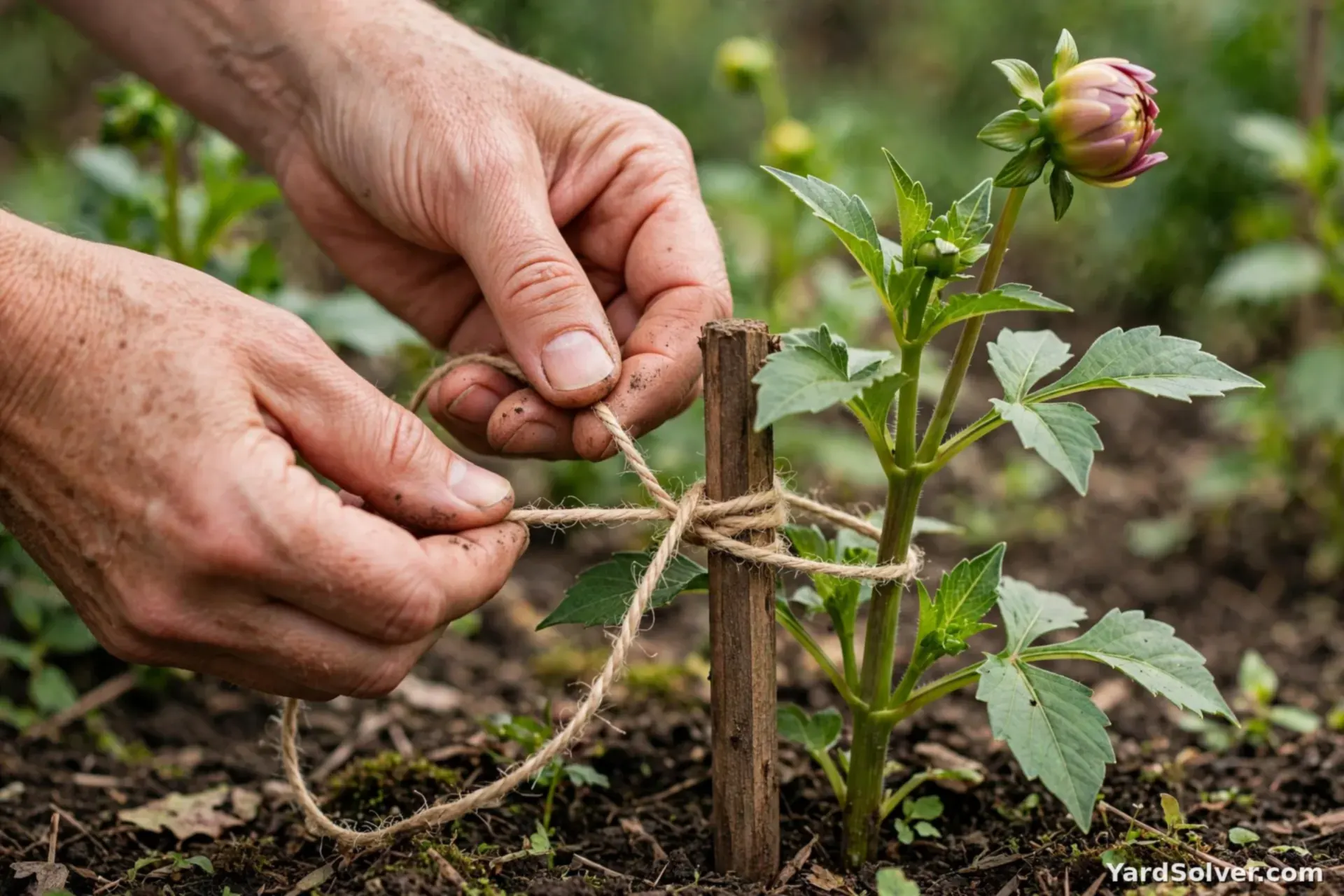
Once shoots are up, water deeply and regularly, feed every few weeks, and switch to a high-potash feed as buds form. Tie the stems loosely to their stakes as they grow, and deadhead spent blooms so the plant keeps answering with more flowers. After the first frost blackens the tops, lift the tubers and store them cool and frost-free anywhere winters are cold.
When do I plant dahlias?
Plant dahlia tubers after the last frost, into warm soil — cold, wet ground rots dormant tubers. For a head start, pot tubers up indoors in barely moist mix a few weeks before the last frost and move them outside about 2 weeks after it. Expect flowers from midsummer, roughly 90 to 120 days from planting.
Questions people ask
When do I plant dahlia?
Count from your average last spring frost: move outside 2 weeks after last frost. Dahlias are tender perennials grown from tubers, not seed: plant tubers after the last frost into warm soil — or pot them up indoors a few weeks early — and expect flowers from midsummer, about 90 to 120 days from planting, until frost.
How far apart do I space dahlia?
Space plants 18–24 in apart, with tubers planted 4–6 in deep, eye up. Sun: full sun.
When does dahlia flower?
Flowers from mid-summer until frost — about 90–120 days from planting. Plant the tuber, not seed — and lift it before winter in cold zones.