
Plant Library · Herbs
🌿 How to Grow Rosemary
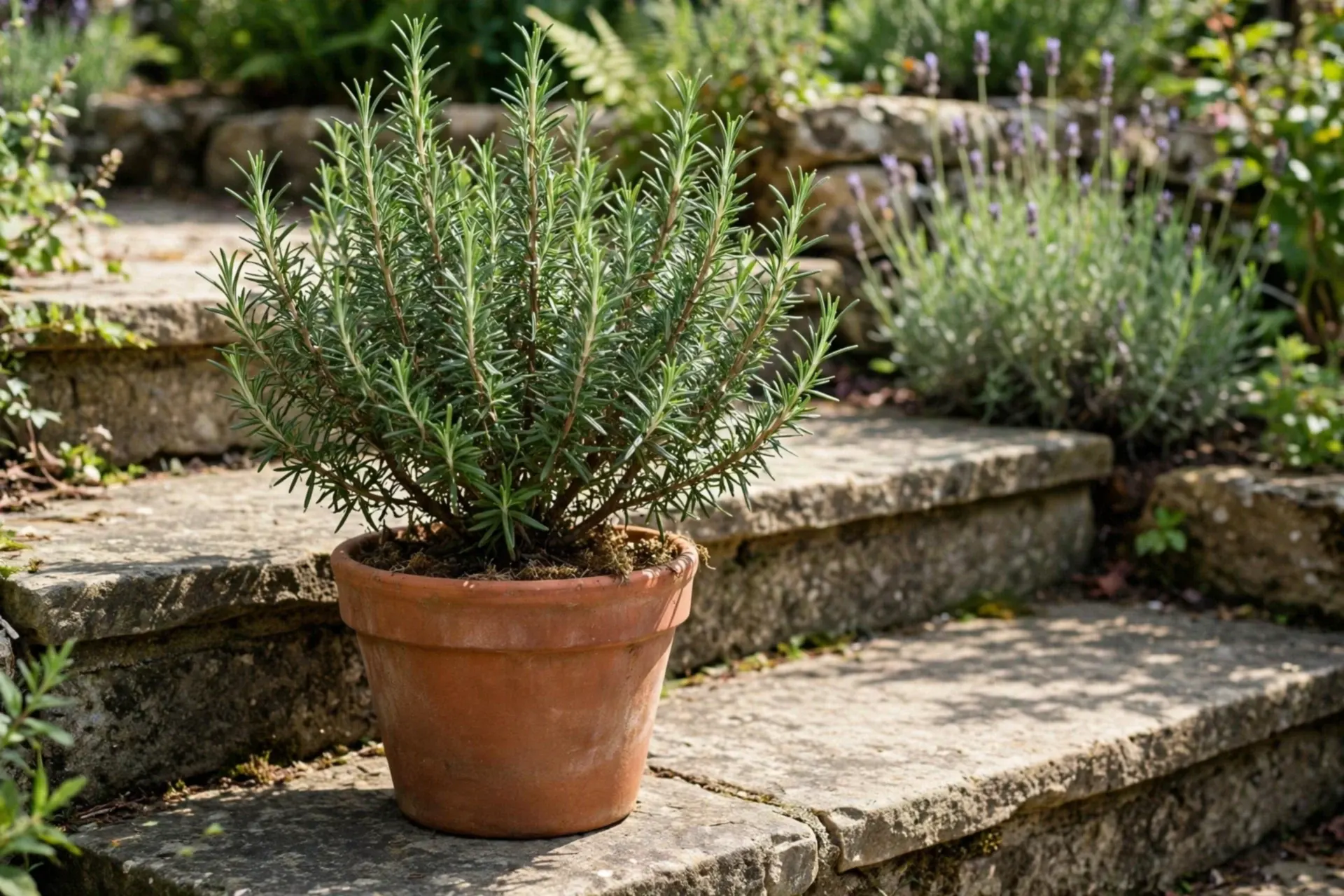
Seed is very slow and patchy, so most gardeners start from a bought plant or cutting; not winter-hardy in cold areas — grow in a pot there. Rosemary is a warm-season perennial herb: start about 10 weeks before your last frost if growing from seed (it is slow and patchy, so most gardeners buy a plant), and grow it in a pot where winters are cold.
Grow Rosemary with us — step by step
Everything for this plant is written step by step below — what to do, and exactly when. Read it through first if you like: you can grow it entirely on your own with that guide. Or start with us here — tell us your planting day and we lay out your personal schedule on this page, every next step on its own day, counted from your planting date. No guessing, no forgetting.
Step 1 — today: Plant out your young Rosemary plants today (hardened off first), spaced 18–24 in apart, and water them in deeply. Starting from seed instead? Sow indoors now, 1/4 in deep, and this same schedule counts from transplant day.
Rosemary at a glance
Sow indoors: 10 weeks before last frost
Move outside: 2 weeks after last frost
Spacing: 18–24 in · Seed depth: 1/4 in
Sun: Full sun
Water: Light — let soil dry between waterings
Harvest: Sprigs once plants are established, from about 80–90 days
Timing counts from your average last spring frost — get your own dates in the Planting Calendar. Guidance follows standard extension-service practice for Canada and the US.
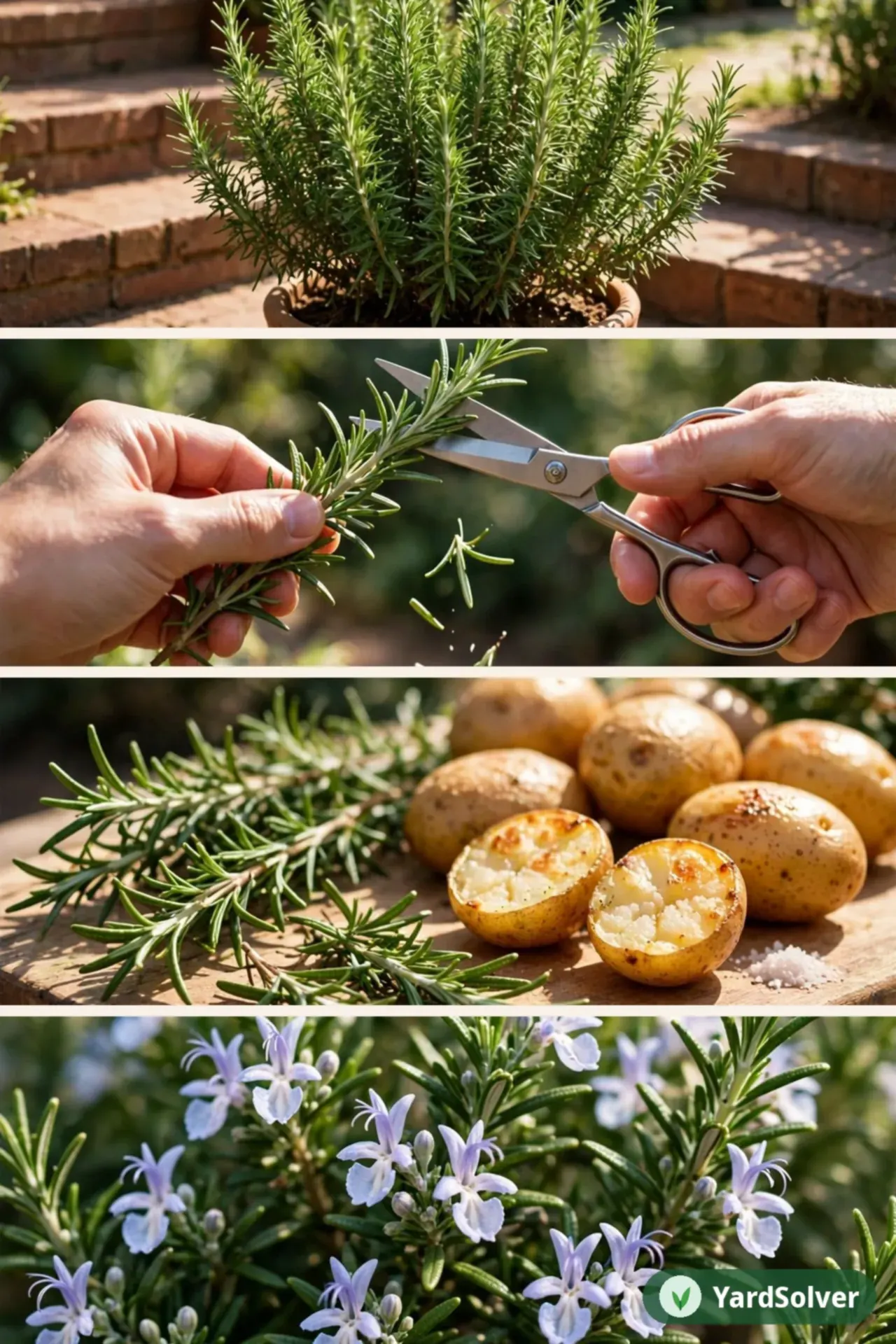
How to plant and grow rosemary, step by step
Step 1 — Time it right
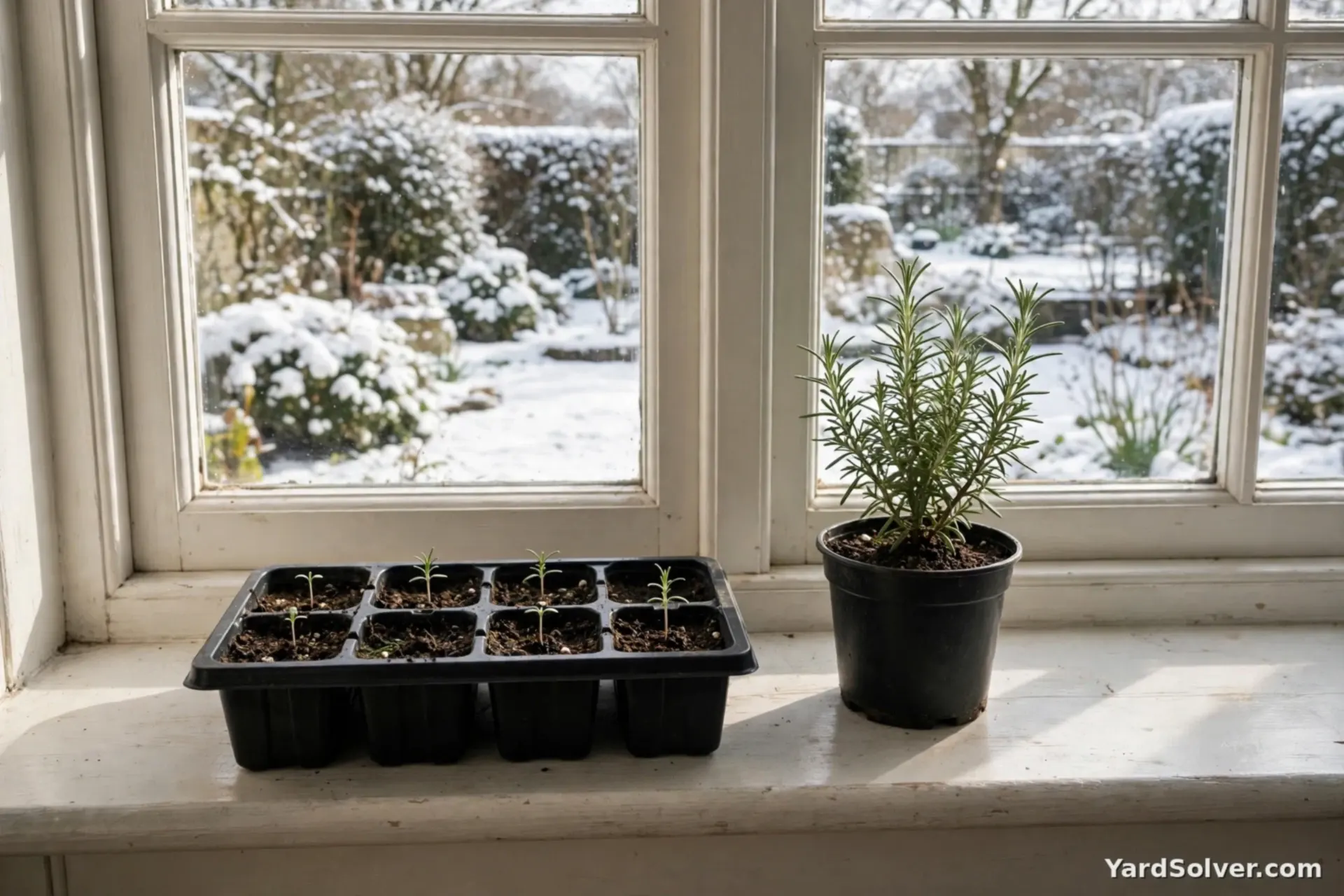
Sow indoors: 10 weeks before last frost; Move outside: 2 weeks after last frost. All dates count from your average last spring frost — the Planting Calendar turns them into real dates for your garden. Rosemary is a warm-season perennial herb: start about 10 weeks before your last frost if growing from seed (it is slow and patchy, so most gardeners buy a plant), and grow it in a pot where winters are cold.
Step 2 — Prepare the spot
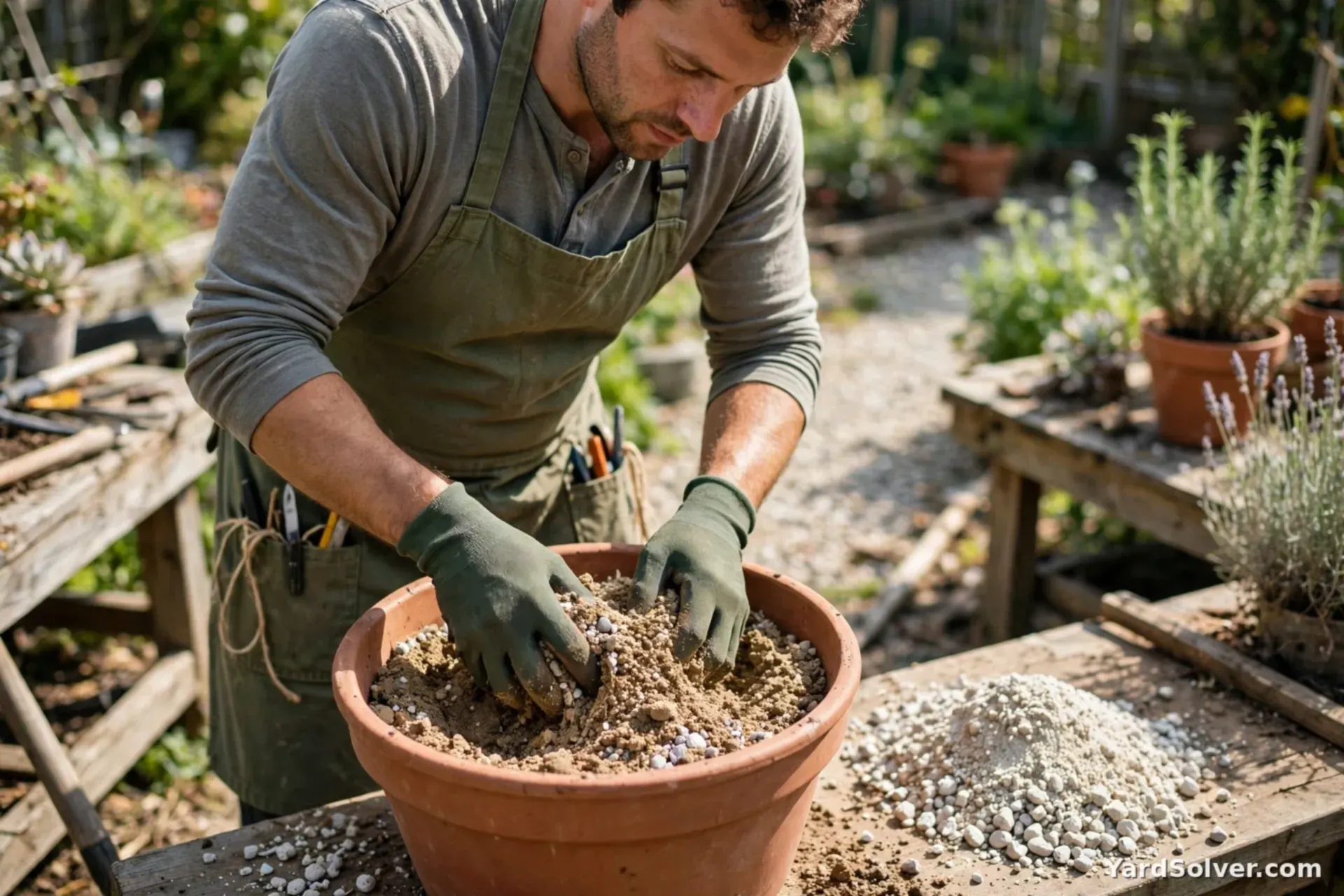
Sun: Full sun. Sharp drainage and lean soil — rosemary hates wet feet. A gritty spot, a raised bed, or a pot of free-draining mix suits it best. Work out how much you need with the Garden Mix Calculator or the Raised Bed Soil Calculator.
Step 3 — Sow and plant out
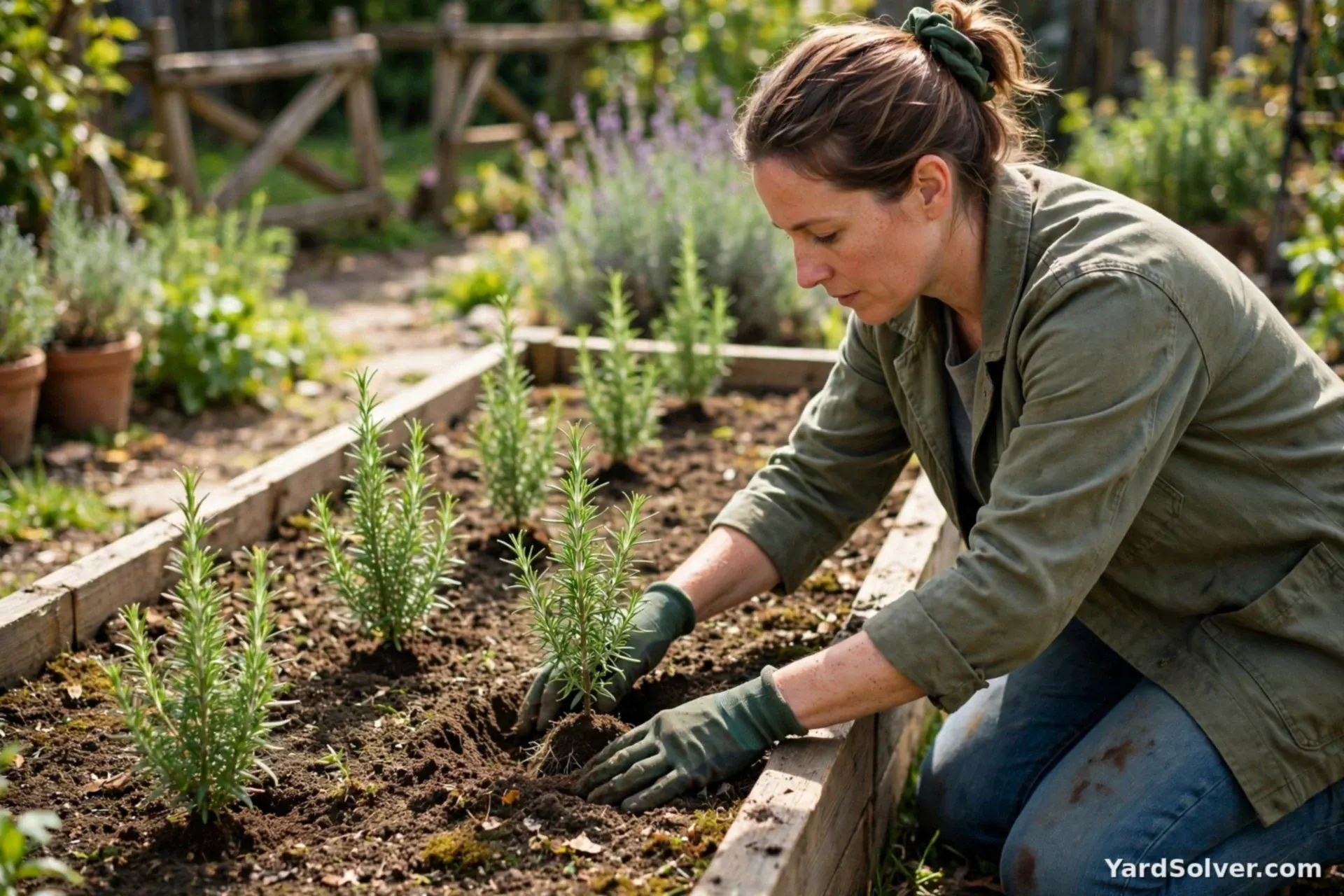
Start seed indoors 10 weeks before last frost, sowing 1/4 in deep. Grow seedlings on in strong light, then harden them off over 7–10 days (see How to Harden Off Seedlings) and move them outside 2 weeks after last frost, spaced 18–24 in apart. The Plant Spacing Calculator turns that spacing into plants-per-bed.
Step 4 — Water and feed
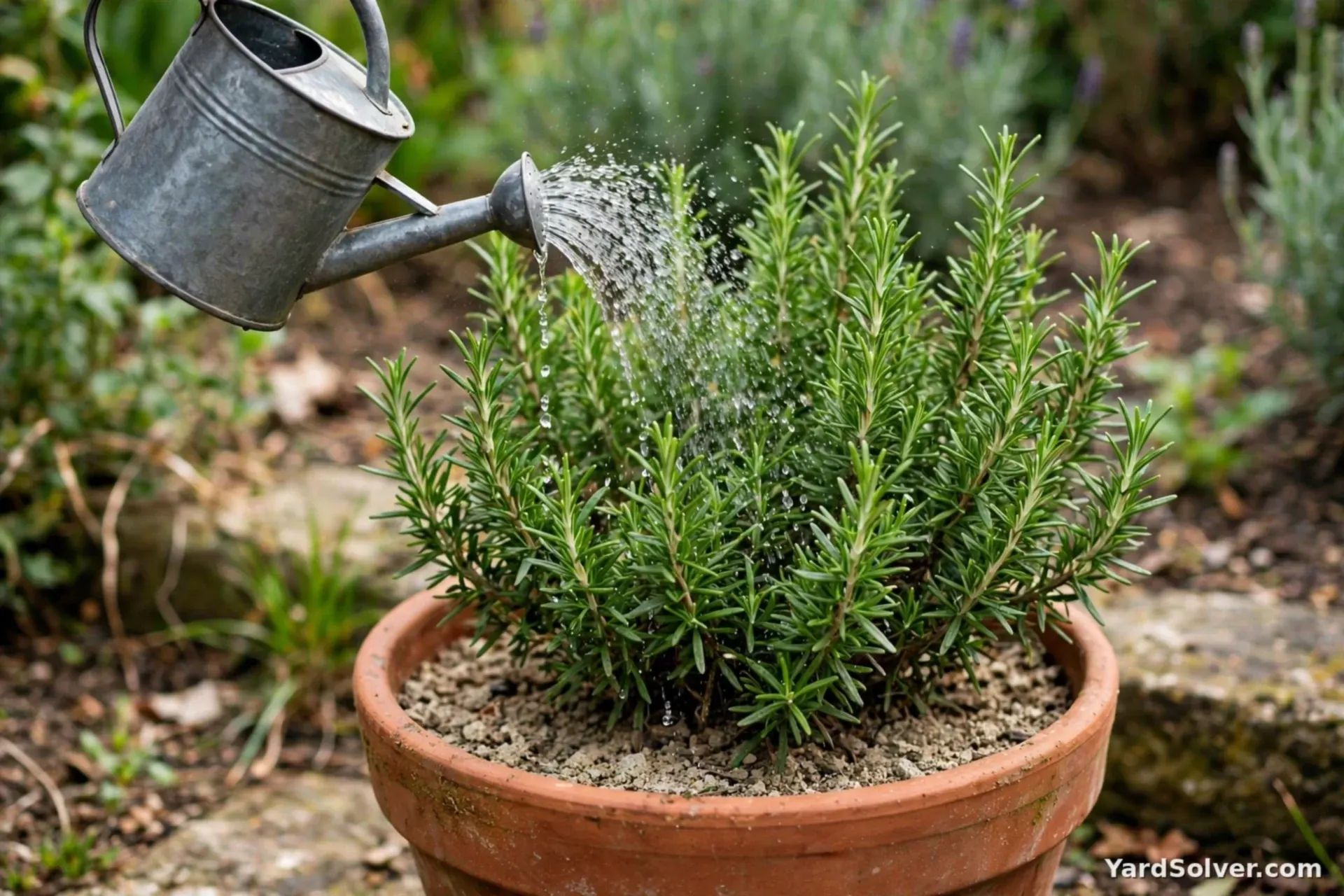
Water: Light — let soil dry between waterings. The Fertilizer Calculator turns a bed size into the right amount.
Step 5 — Care and the problems to watch for
- Root rot from wet soil — the number one killer; drainage matters more than feeding.
- Powdery mildew indoors — give air movement and do not crowd.
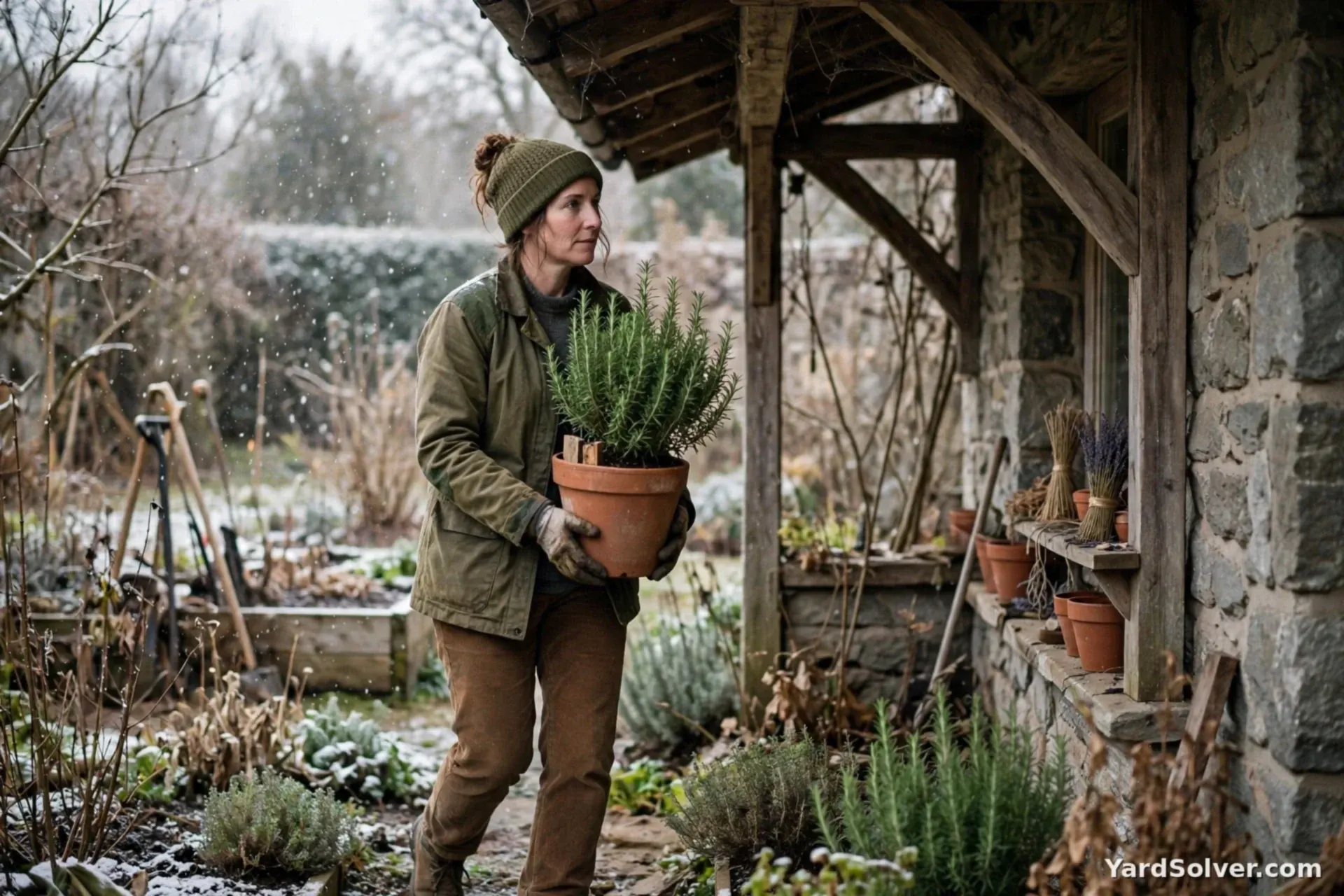
- Winter kill in cold areas — grow in a pot and shelter it, or mulch heavily.
Take care: Rosemary in normal cooking amounts is the usual pattern — the concentrated oil is much stronger and is not a food. Rosemary is not winter-hardy in cold areas — an unprotected plant left outside in a northern winter will usually die.
Step 6 — Harvest
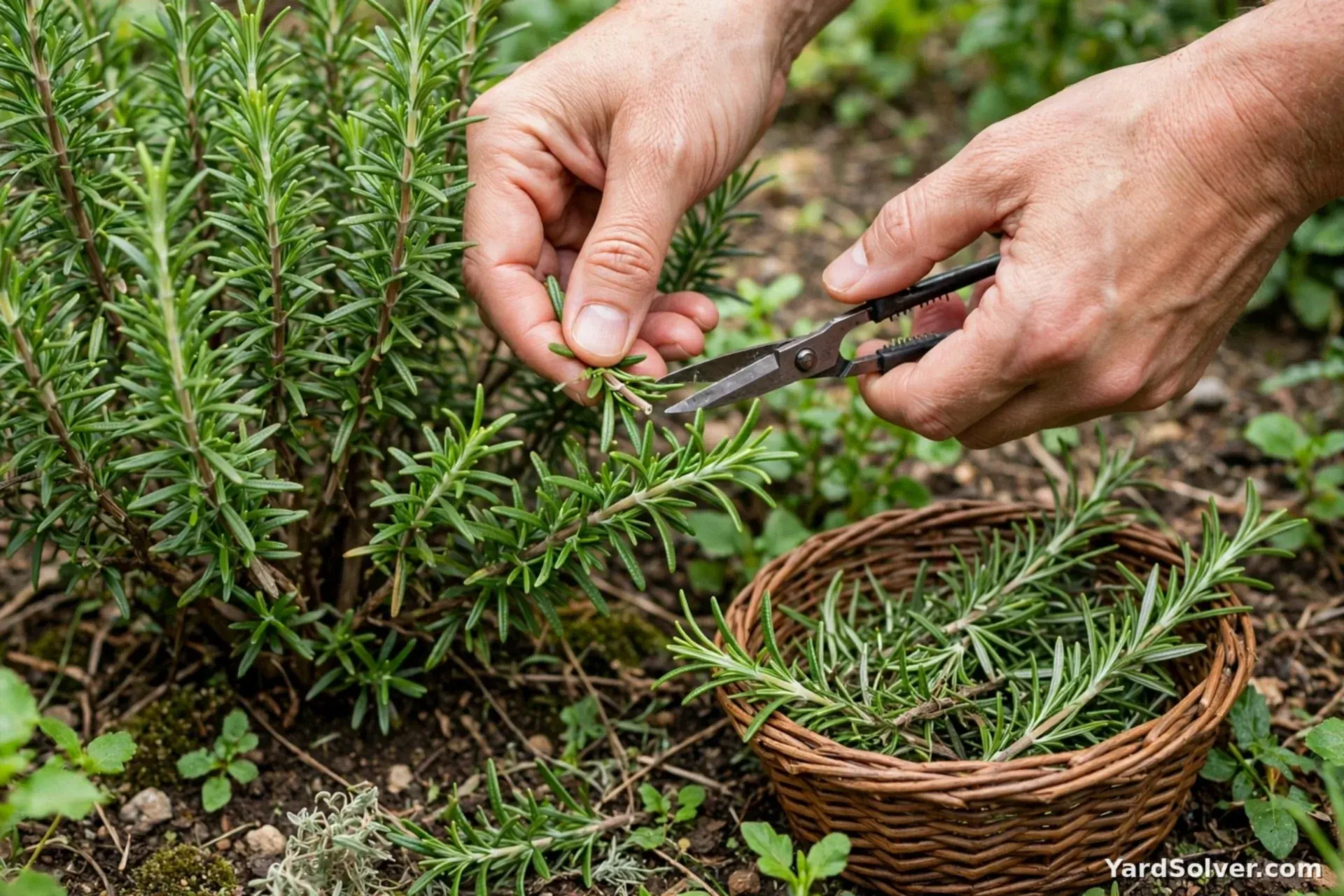
Ready in: Sprigs once plants are established, from about 80–90 days.
📅 Your personal Rosemary schedule
Counted from your planting day — not a generic calendar. Day 0 is the day the seed went in the ground or the young plant went out.
Varieties worth growing
| Variety | Colour | Why gardeners like it |
|---|---|---|
| Arp | Blue flowers | One of the hardiest types, bred to survive colder gardens than most |
| Tuscan Blue | Violet-blue flowers | Tall and upright — the classic hedge rosemary for warm areas |
| Barbeque | Blue flowers | Straight, stiff stems that can double as skewers on the grill |
| Prostratus (Creeping) | Blue flowers | A trailing type made for walls, banks and pots |
| Salem | Blue flowers | An upright, cold-tolerant type with a good flavour |
Good for you — and take care
Benefits
- Provides small amounts of iron and calcium for an herb
- Its natural aromatic oils give rosemary its pine-like flavour
- A single sprig flavours a whole dish — big taste, almost no calories
- Provides small amounts of vitamin B6 and folate
- Dried rosemary keeps its flavour well, unlike many herbs
Take care
- Rosemary in normal cooking amounts is the usual pattern — the concentrated oil is much stronger and is not a food
- Rosemary is not winter-hardy in cold areas — an unprotected plant left outside in a northern winter will usually die
A little history — and one good fact
Rosemary comes from the dry, rocky hills around the Mediterranean Sea, where it still grows wild as a woody shrub. The ancient Greeks and Romans valued it, and its name comes from Latin words meaning 'dew of the sea'. In cold northern gardens it lives a double life — outside in summer, and indoors in a pot all winter.
Fun fact: In the Mediterranean, old rosemary shrubs can live for decades and grow as tall as a person, with woody trunks like small trees.
Keep going
Guides: Grow Herbs Indoors in Winter · How to Protect Plants from Frost · When to Start Seeds Indoors
Calculators: Plant Spacing Calculator · Seed Calculator · Garden Mix Calculator
More herbs: Basil · Cilantro · Parsley
← Back to the Plant Library · Get your personal planting dates
Questions people ask
When do I plant rosemary?
Count from your average last spring frost: sow indoors 10 weeks before last frost; move outside 2 weeks after last frost. Rosemary is a warm-season perennial herb: start about 10 weeks before your last frost if growing from seed (it is slow and patchy, so most gardeners buy a plant), and grow it in a pot where winters are cold.
How far apart do I space rosemary?
Space plants 18–24 in apart, with seed sown 1/4 in deep. Sun: full sun.
When is rosemary ready to harvest?
Sprigs once plants are established, from about 80–90 days. Seed is very slow and patchy, so most gardeners start from a bought plant or cutting; not winter-hardy in cold areas — grow in a pot there.