
Plant Library · Flowers
🌸 How to Grow Cosmos
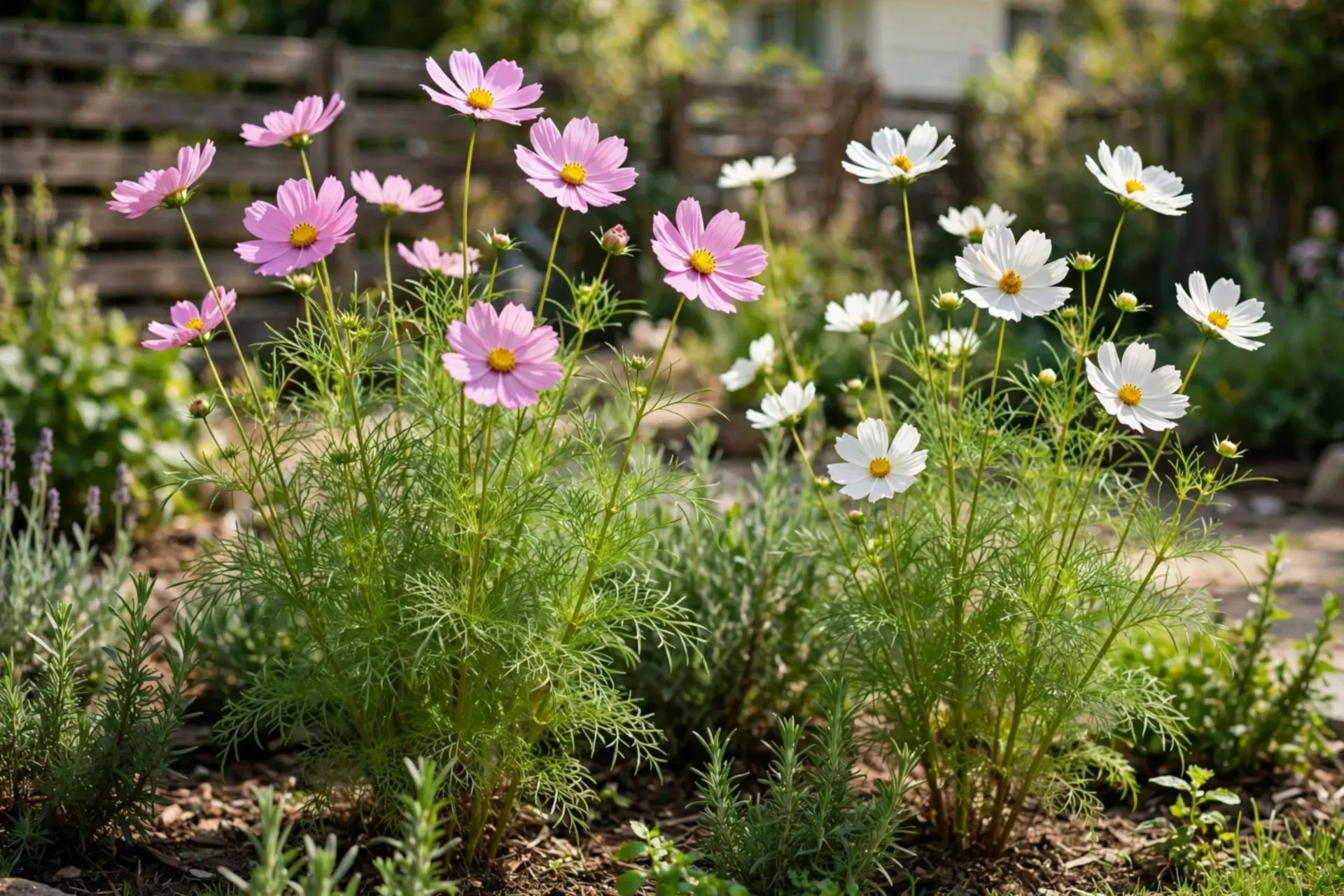
Thrives on neglect — poor soil gives more flowers. Cosmos is the big, breezy annual that asks for almost nothing: scatter seed in late spring on lean soil, pinch once, and from midsummer the ferny plants carry waves of pink and white saucers that bees love and vases welcome — the less you feed it, the better it flowers.
Grow Cosmos with us — step by step
Everything for this plant is written step by step below — what to do, and exactly when. Read it through first if you like: you can grow it entirely on your own with that guide. Or start with us here — tell us your planting day and we lay out your personal schedule on this page, every next step on its own day, counted from your planting date. No guessing, no forgetting.
Step 1 — today: Plant out your young Cosmos plants today (hardened off first), spaced 12–18 in apart, and water them in lightly. Starting from seed instead? Sow now, 1/4 in deep, where they will flower — cosmos resents rich soil and fuss, and this same schedule counts from sowing day.
Cosmos at a glance
Sow indoors: 4 weeks before last frost
Move outside: 1 week after last frost
Sow outdoors: 1 week after last frost
Spacing: 12–18 in · Seed depth: 1/4 in
Sun: Full sun
Water: Low to moderate — rich feeding makes leaves, not flowers
Harvest: Cut flowers from 70–90 days until frost
Timing counts from your average last spring frost — get your own dates in the Planting Calendar. Guidance follows standard extension-service practice for Canada and the US.
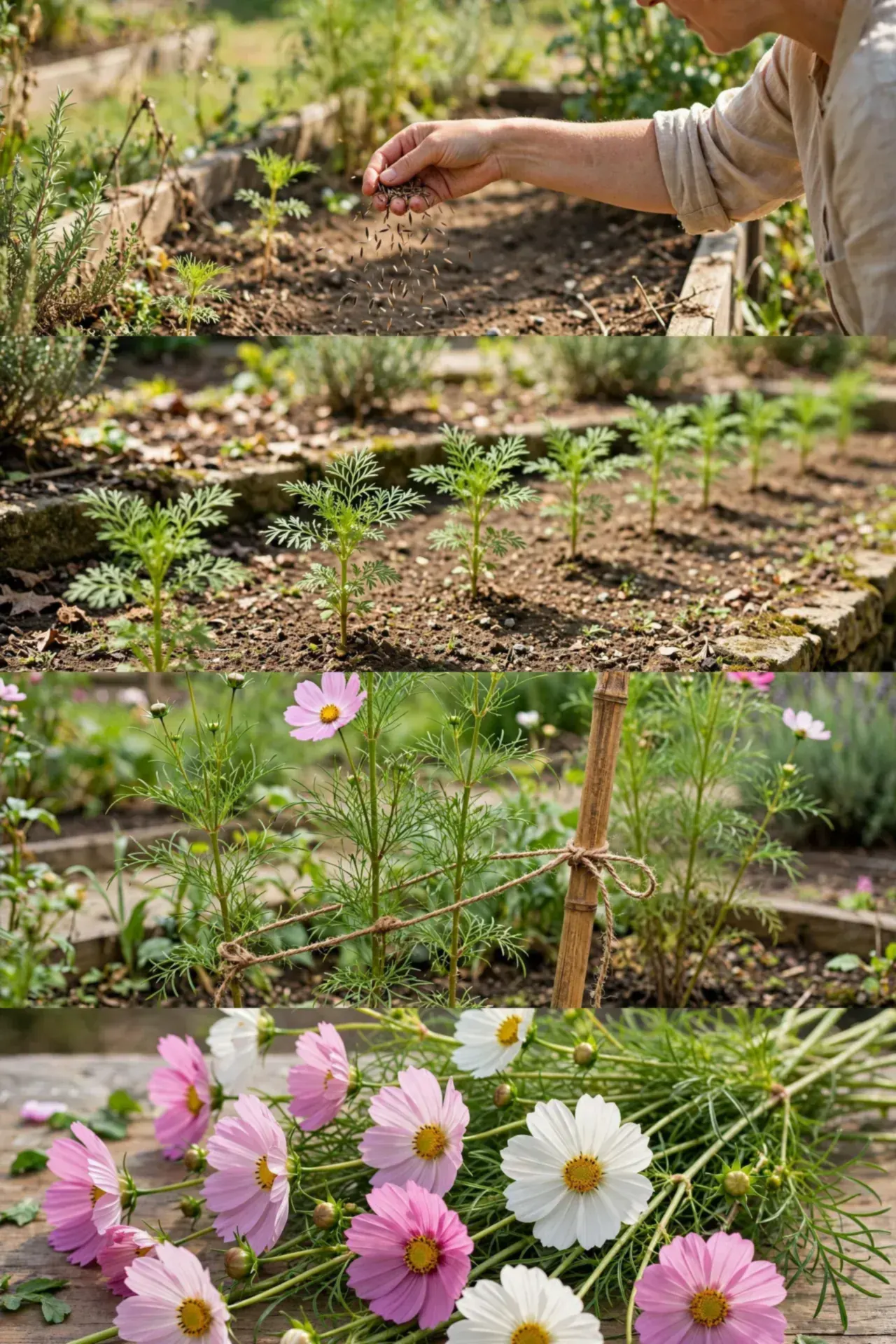
How to plant and grow cosmos, step by step
Step 1 — Time it right
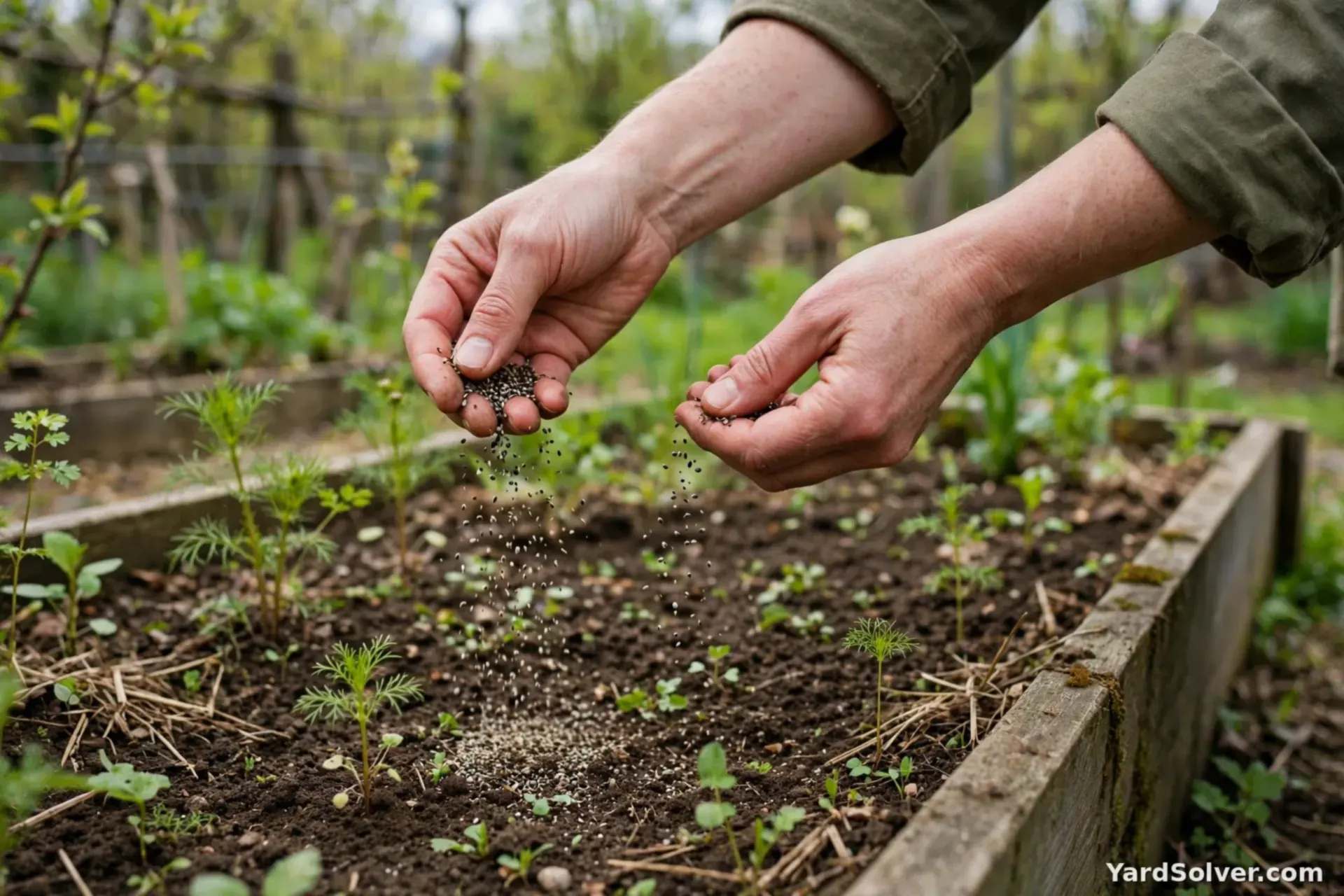
Sow indoors: 4 weeks before last frost; Move outside: 1 week after last frost; Sow outdoors: 1 week after last frost. All dates count from your average last spring frost — the Planting Calendar turns them into real dates for your garden. Cosmos wants warmth and lean living: start indoors only 4 weeks before last frost if you want an early plant or two, but direct sowing around the last frost, into soil that has begun to warm, gives the sturdiest plants with the least work.
Step 2 — Prepare the spot

Sun: Full sun. This is the one flower where you skip the enriching: cosmos flowers best in poor, free-draining soil, and a rich bed grows a green bush with few blooms. Just rake the spot level; if your soil is very heavy clay, the Garden Mix Calculator helps work out a gritty top-up — restraint is the recipe.
Step 3 — Sow and plant out
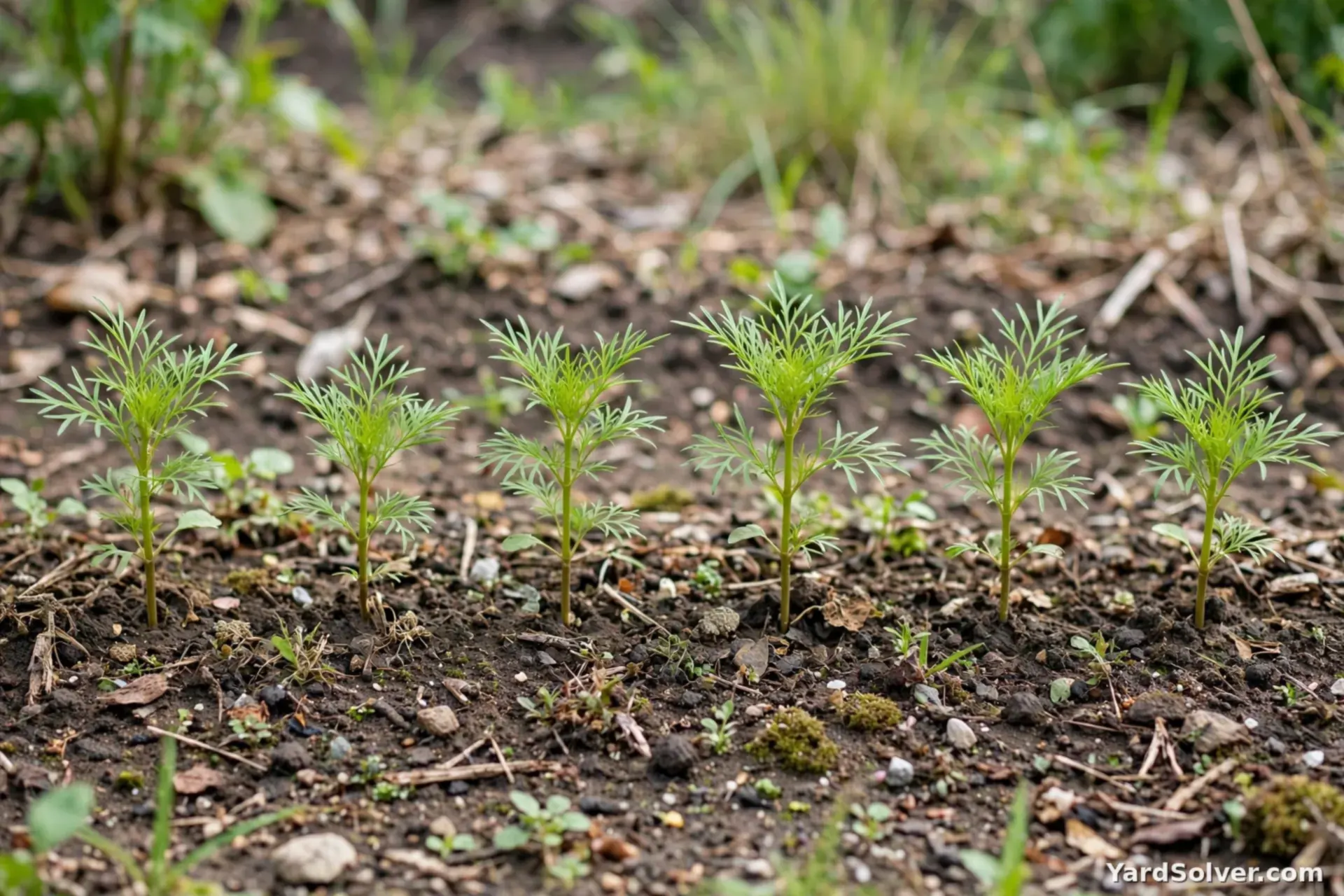
Sow 1/4 in deep where the plants will flower, from about 1 week after last frost, or plant out indoor starts (sown 4 weeks before last frost) at the same date, hardened off first (see How to Harden Off Seedlings). Thin or space plants to 12–18 in apart. The Plant Spacing Calculator turns that spacing into plants-per-bed.
Step 4 — Water and feed

Water: Low to moderate — rich feeding makes leaves, not flowers. Water seedlings until they are growing away, then only in real drought. Do not feed: nitrogen is spent on stems and leaves instead of blooms. If a starving pot plant truly needs help, a weak dose worked out with the Fertilizer Calculator is plenty.
Step 5 — Care and the problems to watch for
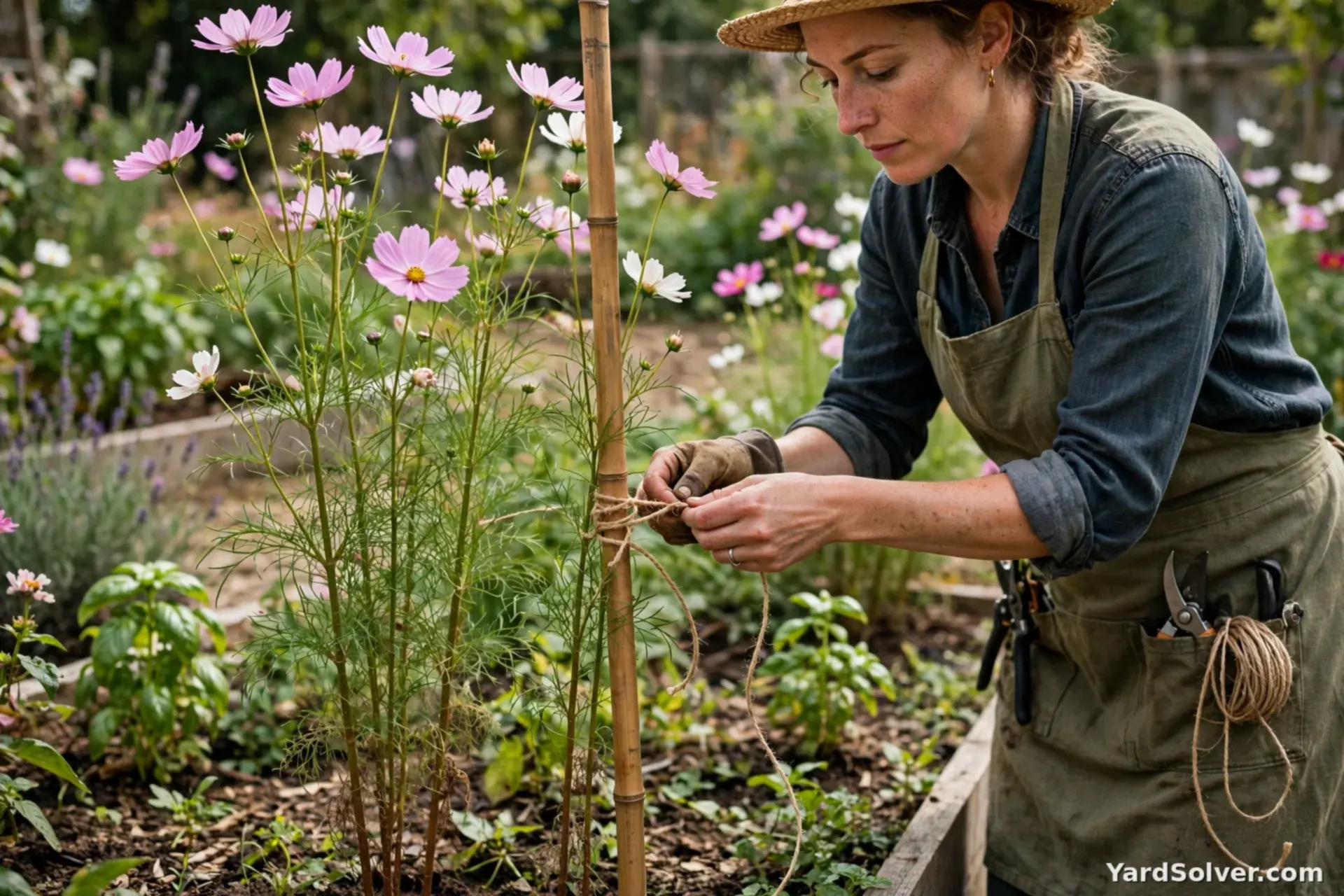
- Floppy stems — tall cosmos topples in wind and rain; push canes or a grow-through grid in early, while the plants are still short.
- All leaf, no flowers — the soil is too rich or has been fed; stop feeding and be patient, flowers come as growth slows.
- Aphids — blackfly clusters on the buds; blast them off with water.
Take care: Cosmos self-sows freely — deadhead if you do not want a drift of seedlings next year (most gardeners find they do want it).
Step 6 — Harvest

Ready in: Cut flowers from 70–90 days until frost. Cut stems just as the buds crack open for the longest vase life, and deadhead spent blooms to keep new buds coming. Leave the final heads of the season standing — cosmos self-sows for next year, and finches pick at the seed heads.
Problems, pests & diseases — diagnosis and fixes
- Clusters of blackfly packed on buds and shoot tips: aphids, drawn to the soft growth. Fix: blast them off with a jet of water and repeat weekly — see How to Get Rid of Aphids.
- Tall plants flopping flat after wind or heavy rain: support went in too late, or not at all. Fix: lift stems gently and tie them to canes; next year, put a grow-through grid over young plants in spring.
- Huge green bushes and barely a flower by midsummer: soil too rich or plants overfed — cosmos flowers on lean rations. Fix: stop all feeding, water sparingly, and wait: blooms arrive as growth slows in late summer.
- White dusty patches on leaves late in the season: powdery mildew, common once nights cool. Fix: it rarely stops the show — remove the worst leaves and keep air moving; see How to Get Rid of Powdery Mildew.
- Seedlings grazed or cut off at the base: slugs and snails on young plants. Fix: protect seedlings with barriers or traps until the stems toughen.
- Plants stunted, with distorted greenish-yellow flowers: aster yellows, a disease carried by leafhoppers. Fix: no cure — pull and bin affected plants so it does not spread to the rest of the patch.
📅 Your personal Cosmos schedule
Counted from your planting day — not a generic calendar. Day 0 is the day the seed went in the ground or the young plant went out.
Varieties worth growing
| Variety | Colour | Why gardeners like it |
|---|---|---|
| 'Sensation' mix | Pink, white and rose | The tall classic — big single saucers on 4-foot plants for the back of the border |
| 'Seashells' | Pink and white | Each petal rolled into a little tube, like a row of tiny conch shells |
| 'Cupcakes' | Blush pink and white | Petals fused into a single cup — a flower that looks like a cake case |
| 'Double Click' | Pink, white and crimson | Fully double, fluffy blooms that last well as cut flowers |
| 'Sonata' | Pink and white | The dwarf form, about knee-high, for pots and front edges |
Good for you — and take care
Benefits
- Flowers for months on almost no care and very little water
- Bees and butterflies work the open saucers all day
- Ferny foliage makes a light summer screen and a good filler for bouquets
- Self-sows — one packet can stock the garden for years
- The last seed heads feed finches into the fall
Take care
- Self-sows freely — deadhead through the season if seedlings everywhere would be a problem
- Tall types genuinely need support in exposed, windy gardens
- Grown as an ornamental — not an edible flower
A little history — and one good fact
Cosmos comes from the meadows and scrub of Mexico, where Spanish priests grew it in mission gardens and named it from the Greek kosmos — order — for the neat, even arrangement of its petals. Seed reached Madrid's botanical garden in the late 1700s, and the flower charmed its way around the world from there.
Fun fact: Cosmos is in the same family as sunflowers, lettuce and dahlias — the daisy family, the largest family of flowering plants on Earth.
Keep going
Guides: Drought-Tolerant Plants · How to Grow Sunflowers · How to Get Rid of Aphids
Calculators: Plant Spacing Calculator · Seed Calculator · Mulch Calculator
More flowers: Sunflower · Petunia · Sweet Pea
← Back to the Plant Library · Get your personal planting dates
Questions people ask
When do I plant cosmos?
Count from your average last spring frost: sow indoors 4 weeks before last frost; move outside 1 week after last frost; sow outdoors 1 week after last frost. Cosmos is a warm-season annual that thrives on neglect: sow after frost on lean, ordinary soil — rich feeding makes leaves, not flowers — and expect blooms from about 70 to 90 days until frost.
How far apart do I space cosmos?
Space plants 12–18 in apart, with seed sown 1/4 in deep. Sun: full sun.
When does cosmos flower?
Cut flowers from 70–90 days until frost. Thrives on neglect — poor soil gives more flowers.