
Guides · Garden design · Published November 3, 2026
Edible Landscaping Ideas
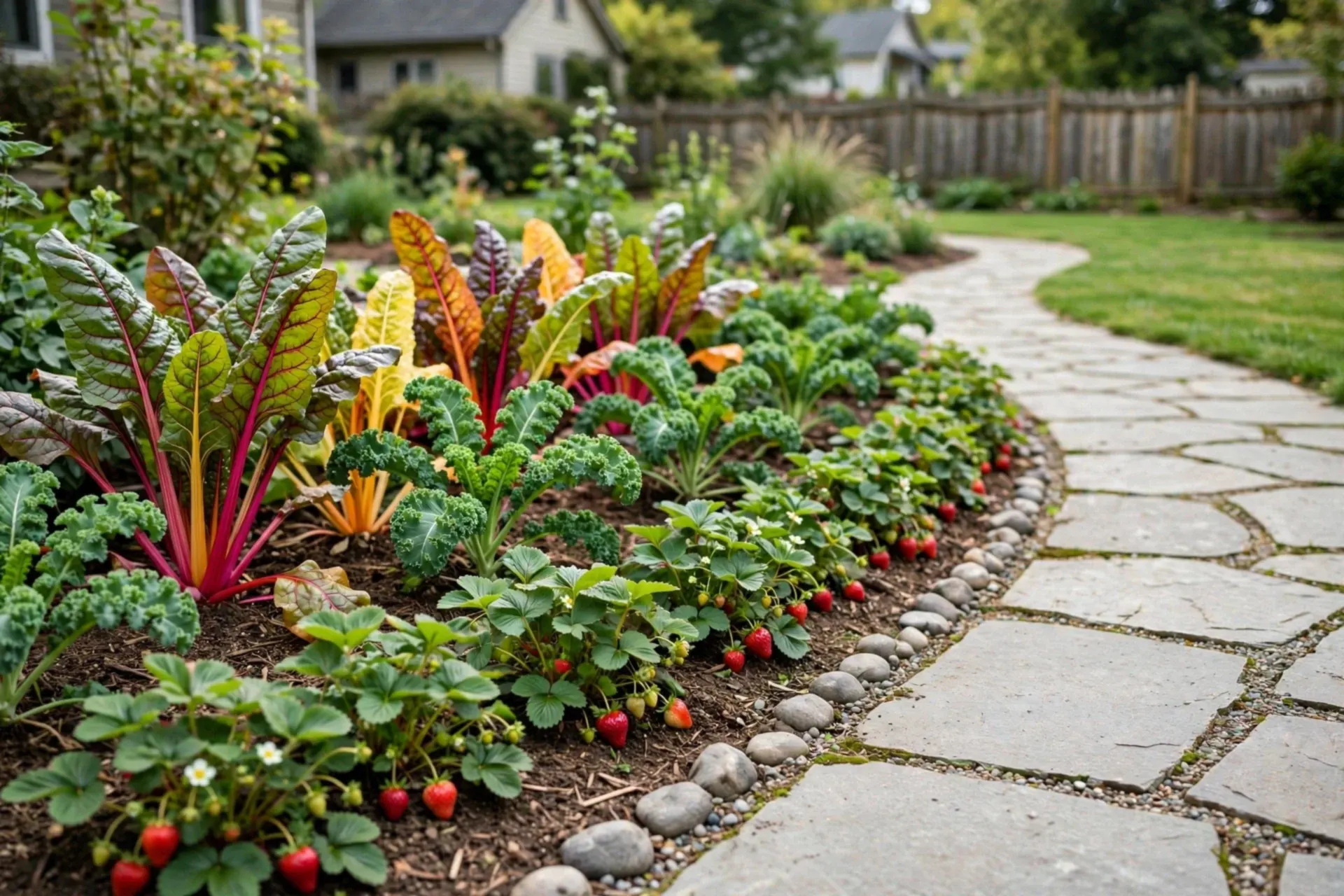
The front yard is usually a gardener's sunniest land — and the least productive, given to lawn and shrubs that feed nobody. Edible landscaping simply spends that sunshine on plants that look good and produce food. Done carelessly it reads as an allotment that escaped; done with ornamental grammar — structure, repetition, tidy edges — it reads as a cottage garden that quietly fills the kitchen.
The edibles that look like ornamentals
- Rainbow chard: stems in red, gold and pink — the stained-glass window of the vegetable world
- Curly kale: a ruffled rosette with the architecture of an ornamental cabbage, because it nearly is one
- Peppers: neat glossy bushes that stud themselves with coloured fruit
- Strawberries: white flowers, red fruit and a tidy green carpet — the edible edging plant
- Herbs: rosemary as a small evergreen shrub, parsley as a border, purple basil as bedding colour
Step 1 — Steal the ornamental playbook: structure first
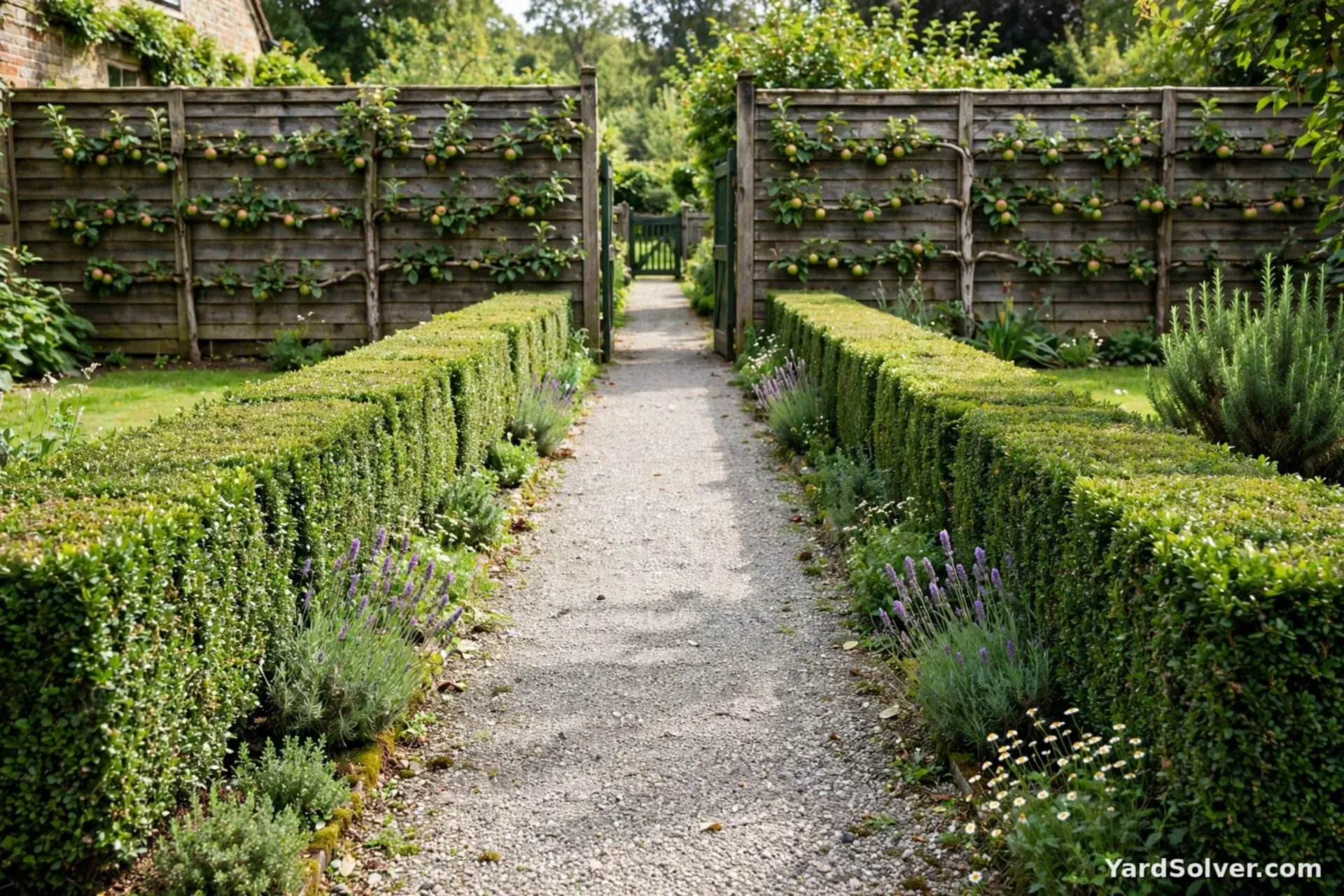
What separates a landscape from a plot is not the plants — it is the frame. Give edible beds the full ornamental treatment: crisp edges (brick, stone or a cleanly cut turf line), a path you can harvest from without stepping in the bed, and repetition — the same plant in a rhythm reads as design, while one of everything reads as a seed catalogue. Behind the rotating crops, keep a permanent backbone: a hedge, a few shrubs or small fruit bushes that stay when the annual beds change, so the yard never looks stripped in winter. A low raised bed frames just as well in timber — see How to Build a Raised Bed and Raised Bed Gardening for Beginners.
Step 2 — Pick edibles that dress well
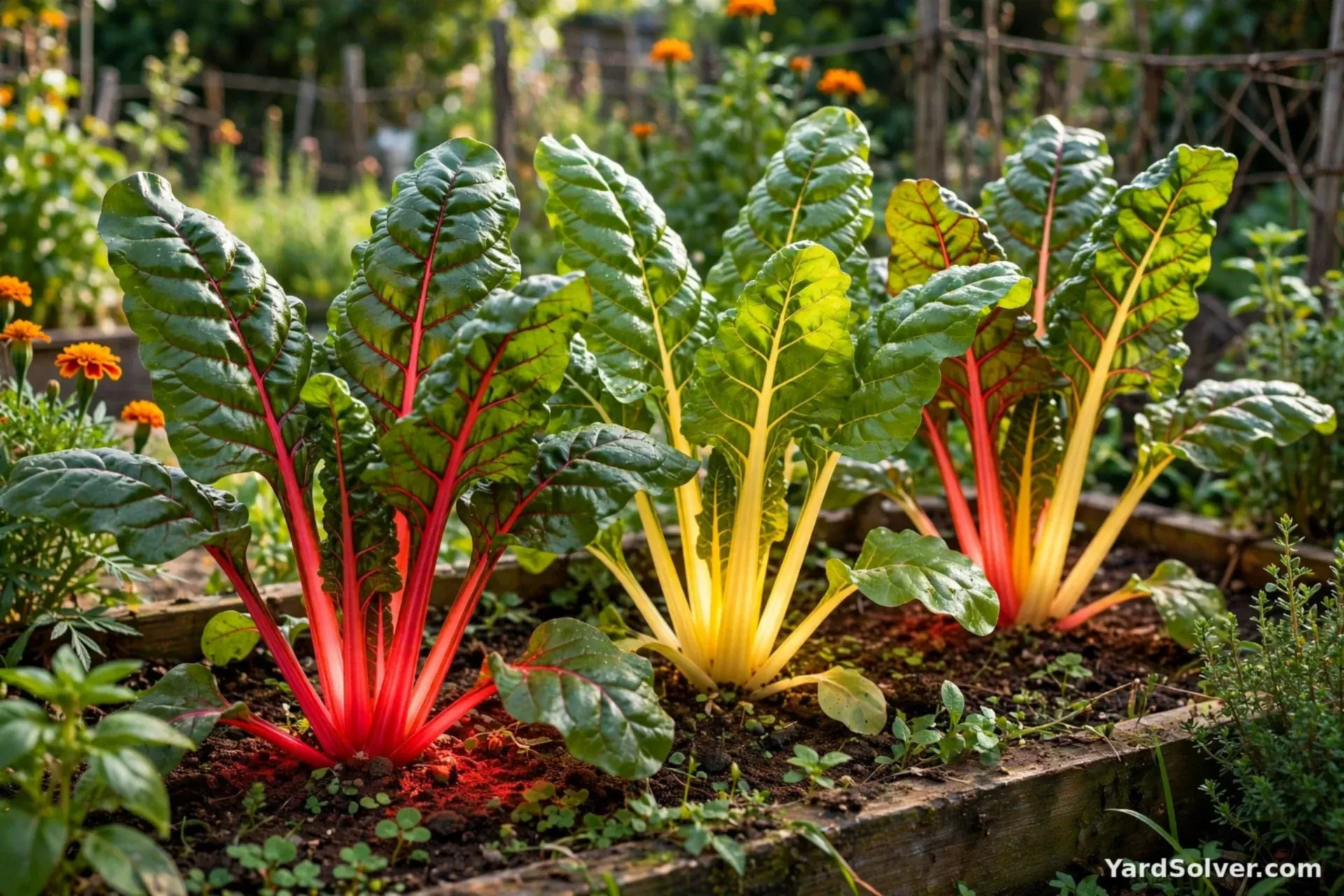
Apply the flower-gardener test: would this plant earn its place on looks if nobody ate it? Swiss chard passes on stem colour alone; kale on texture; peppers spend the summer as tidy green bushes and finish as ornaments hung with fruit. Strawberries edge a bed beautifully — pretty leaves, white flowers, red fruit — though runners need a firm hand to stay an edging, not an invasion. Herbs work hardest of all: rosemary stands in for a small evergreen shrub, parsley makes a lush border, purple basil does dark bedding foliage. Keep the rampant and scruffy — sprawling squash, tomatoes at their August shaggiest — in the back garden, where charm standards are lower.
Step 3 — Fill the whole season, not just June
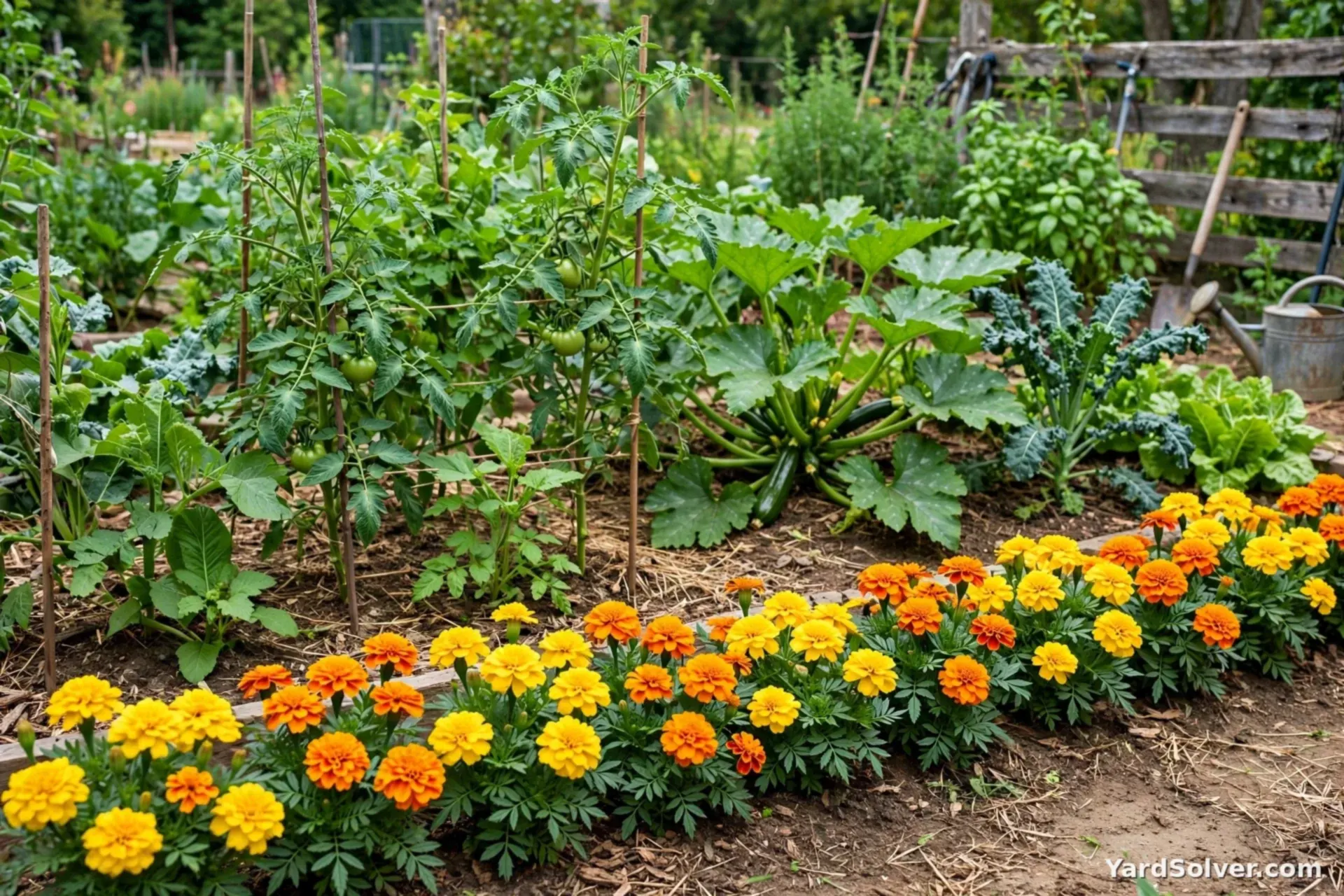
Ornamental gardeners plan in acts, and edible beds need the same script. Spring: peas on a small trellis, strawberries flowering, parsley and chard filling in. Summer: peppers, basil and chard at their glossy peak. Fall: kale and chard again — both shrug off light frost and look better for it — with the backbone carrying winter. The discipline underneath is succession, exactly as in Best Vegetables to Grow in a Small Garden: the day a crop finishes, its replacement goes in, and fresh mulch keeps the bed looking dressed, not dug. The Succession Sowing Calculator turns that habit into dates.
Step 4 — Keep the peace: neighbours, rules and the sidewalk test
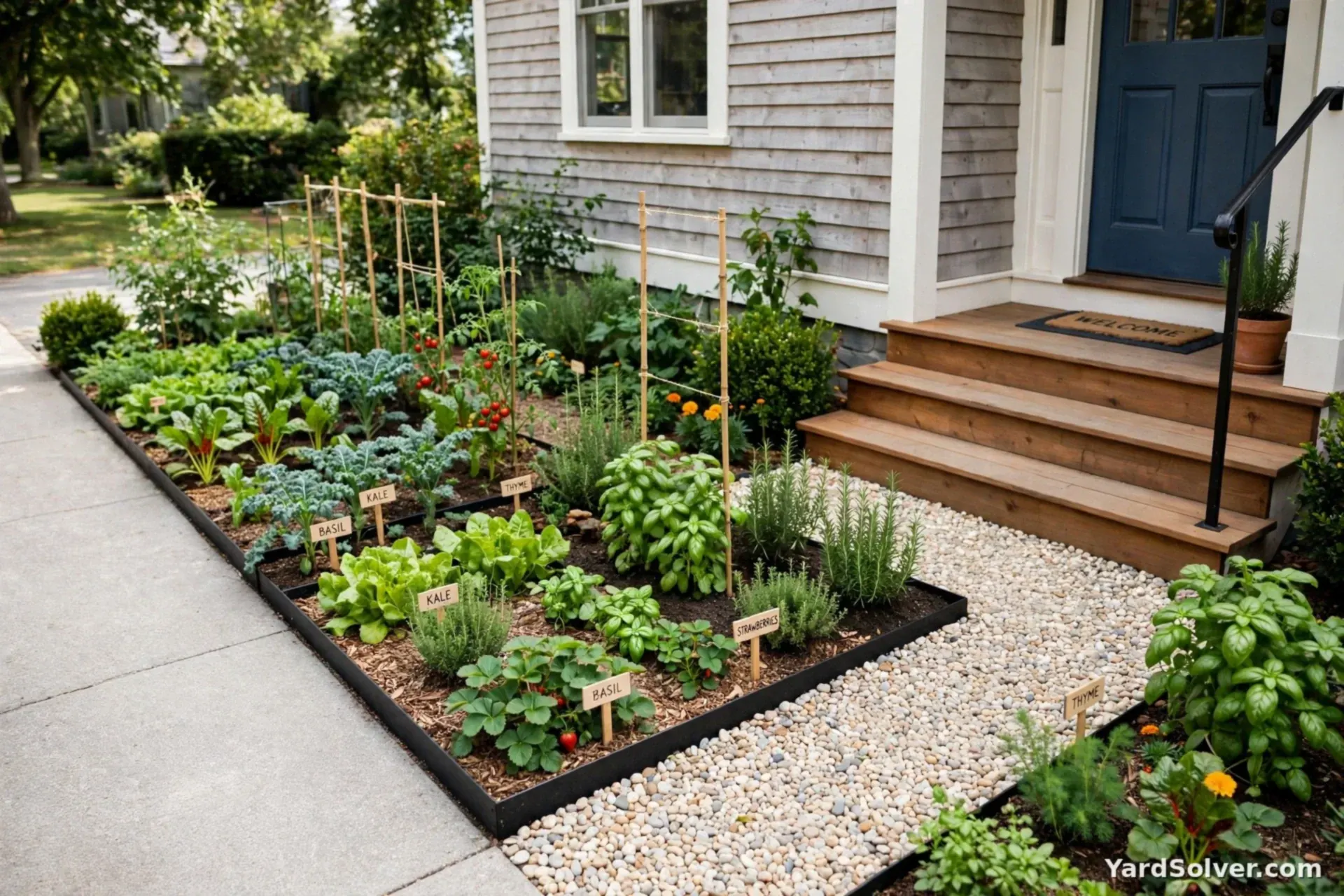
A front-yard garden has an audience, so garden like it. Check your rules first: HOA covenants and bylaws vary widely — some restrict front-yard vegetables, most say nothing — and five minutes reading them beats a dispute in July. Keep it visibly cared for: trimmed edges, crops harvested promptly (fallen fruit on a path is a mess and a wasp magnet), nothing sprawling over the sidewalk, and working clutter — compost, pots, netting — in the back garden. Put your tidiest crops in front and let the garden make its case; a deliberate-looking bed rarely draws a complaint — it draws conversation over the fence instead.
Step 5 — Be honest about the workload
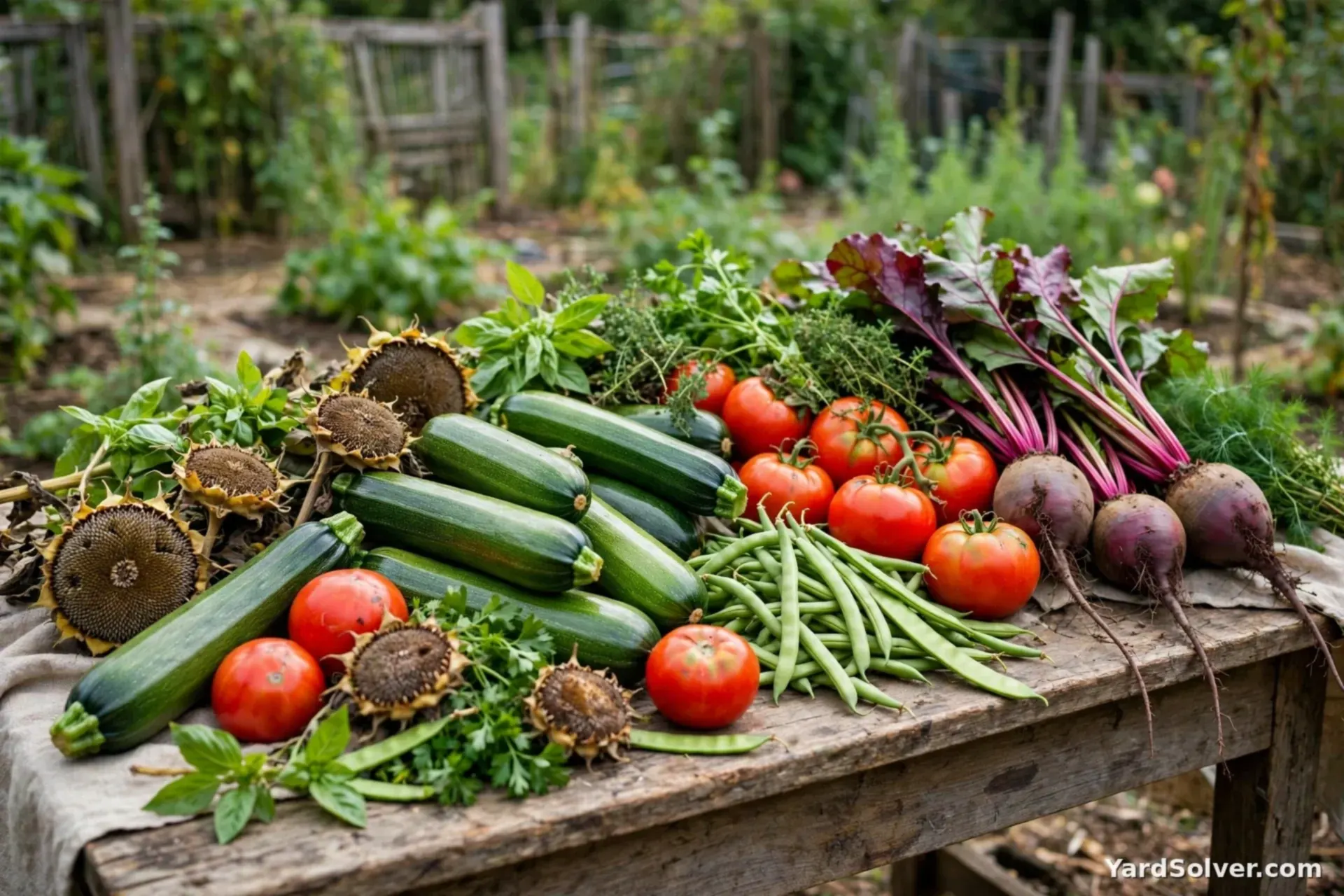
The honest trade: edible beds ask more than a shrub border — regular water, prompt picking, replanting through the season, where a hedge wants a trim twice a year. But the work is small and frequent: a short round with a basket most evenings, not a heroic monthly session. Two things shrink it. Start with one bed and expand only when its upkeep feels easy; a whole edible yard installed at once overwhelms more gardeners than any pest. And lean on perennials — strawberries, rhubarb, blueberries, hardy herbs — which return yearly for a fraction of the effort, becoming the backbone Step 1 asked for.
Keep going
The bed to start with: Raised Bed Gardening for Beginners.
Small-space crop discipline applies here too: Best Vegetables to Grow in a Small Garden.
Questions people ask
Will a vegetable front yard look messy?
It can, planted like a back-lot allotment — rows to the sidewalk, stakes and sprawl. Planted with edges, repetition and prompt harvesting, the same crops read as a cottage garden. Start with one bed and prove the look.
What are the best-looking vegetables for a front yard?
Rainbow chard for its coloured stems, curly kale for texture, peppers for glossy fruit on tidy bushes, strawberries as a green flowering edging, and herbs — rosemary, parsley, purple basil — anywhere a small shrub would go. All of them look ornamental first and edible second.
What about HOA or neighbourhood rules on front-yard vegetables?
Rules vary widely — some homeowners associations restrict front-yard food growing, most streets have no rule at all. Read yours before converting anything, start with the bed that reads most like a flower bed, and keep edges trimmed and harvests prompt so the garden argues its own case.
Comments & ratings
No comments yet.
Be the first to share your experience.