
Plant Library · Flowers
🦜 How to Grow Bird of Paradise
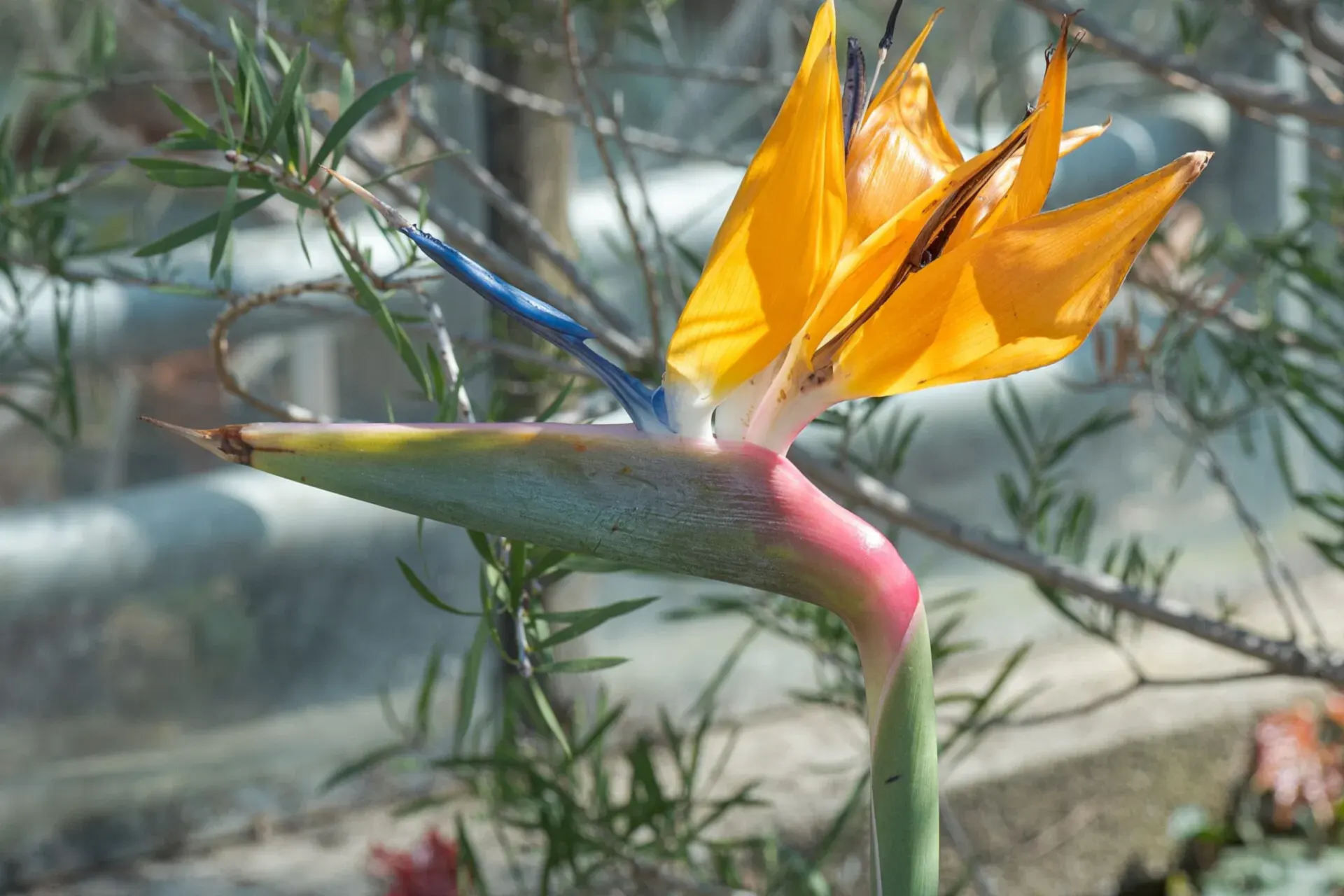
A crane taking flight in orange and blue — the most architectural flower you can grow, and a lesson in patience. Bird of paradise (Strelitzia reginae) is a South African perennial for frost-free gardens (zones 10–12) or a big pot anywhere else. From seed it takes years to flower; from a bought plant, a sunny corner and time do the rest. The leaves alone — grey-green paddles — earn the space.
Grow Bird of Paradise with us — step by step
Everything for this plant is written step by step below — what to do, and exactly when. Read it through first if you like: you can grow it entirely on your own with that guide. Or start with us here — tell us your planting day and we lay out your personal schedule on this page, every next step on its own day, counted from your planting date. No guessing, no forgetting.
Step 1 — today: Buy the biggest bird of paradise plant you can afford — with this slow grower, size bought is years saved.
Bird of Paradise at a glance
Plant out: Spring, as a bought plant — from seed takes 3–5 years to flower
Move indoors: Before frost below zone 10
Sow outdoors: In warm climates only, with fresh soaked seed
Spacing: One plant per large pot, or 36 in in frost-free ground
Sun: Full sun to bright part shade
Water: Regular — generous in summer growth
Bloom: Intermittently all year in warmth; plants flower from 3+ years old
Timing counts from your average last spring frost — get your own dates in the Planting Calendar. Guidance follows standard extension-service practice for Canada and the US.
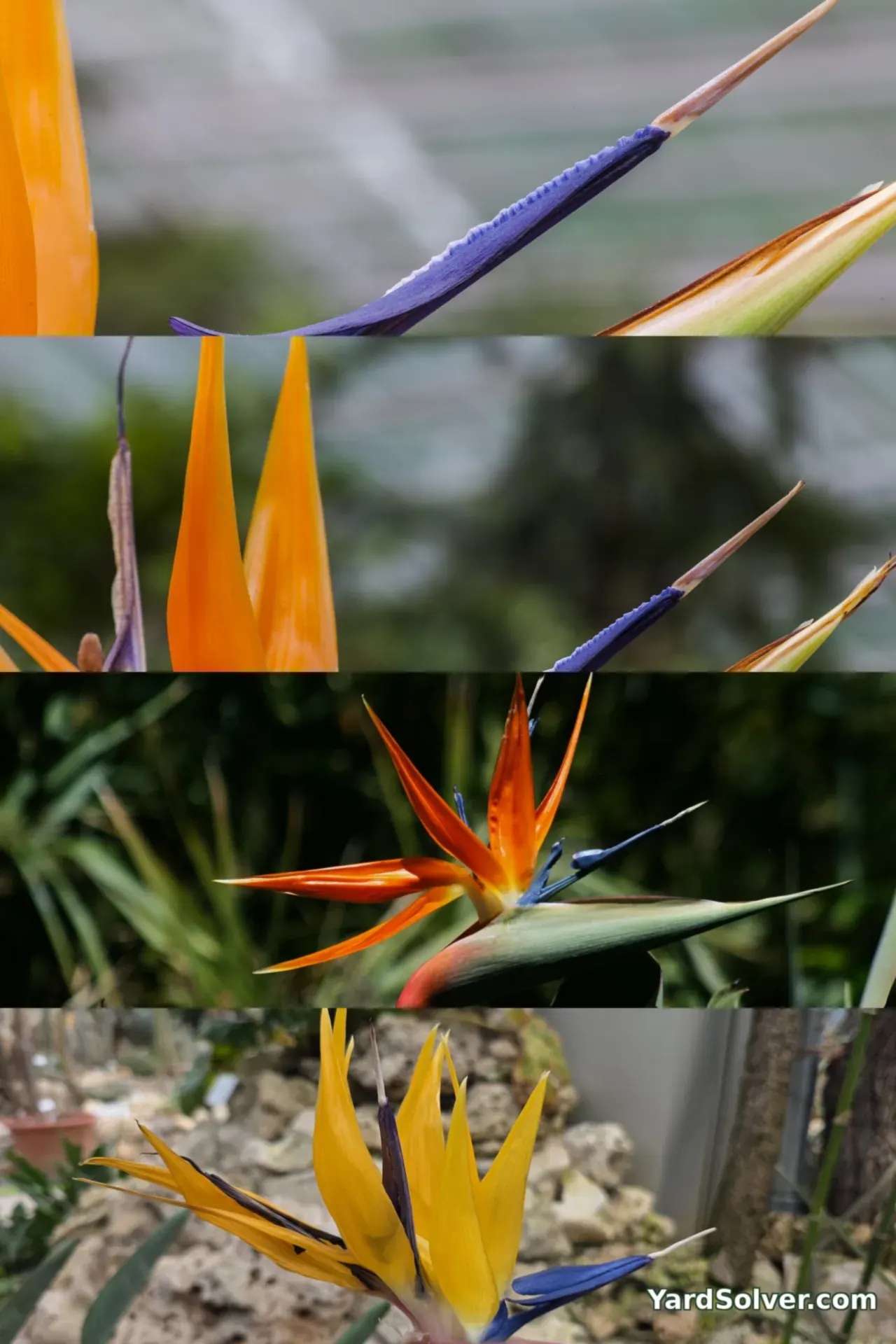
How to plant and grow bird of paradise, step by step
Step 1 — Time it right
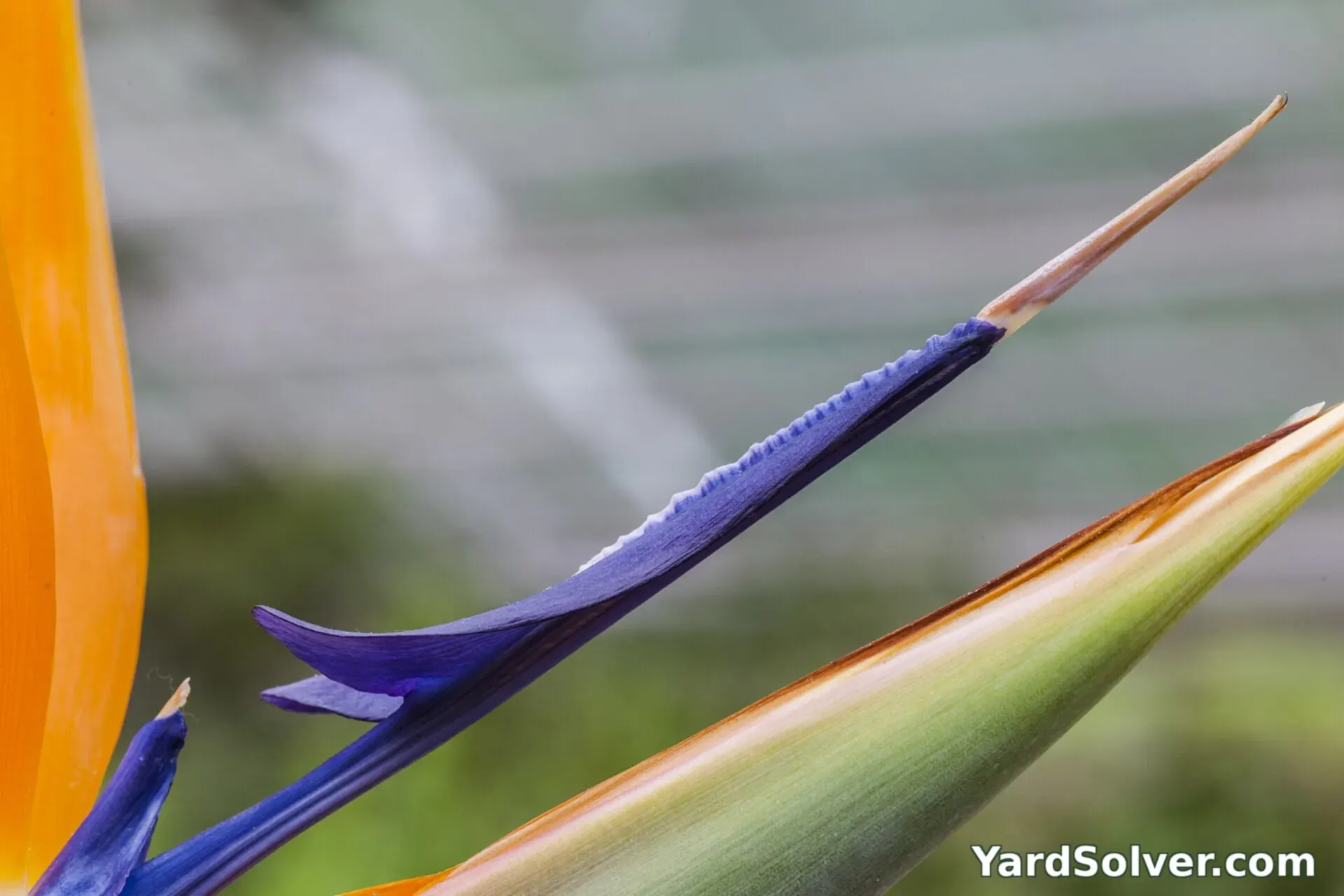
Plant out: in spring, as a bought plant; From seed: possible but slow — expect 3–5 years to first flower. All dates count from your average last spring frost — the Planting Calendar turns them into real dates for your garden. Strelitzia seed must be fresh, soaked, and germinates over 1–2 months; the plant then needs 3–5 years to reach flowering size. Almost everyone buys a plant, and the bigger the better. Outdoors it is a plant for zones 10–12; everywhere else it lives in a substantial pot, summering outside and wintering in the brightest room you have.
Step 2 — Prepare the spot
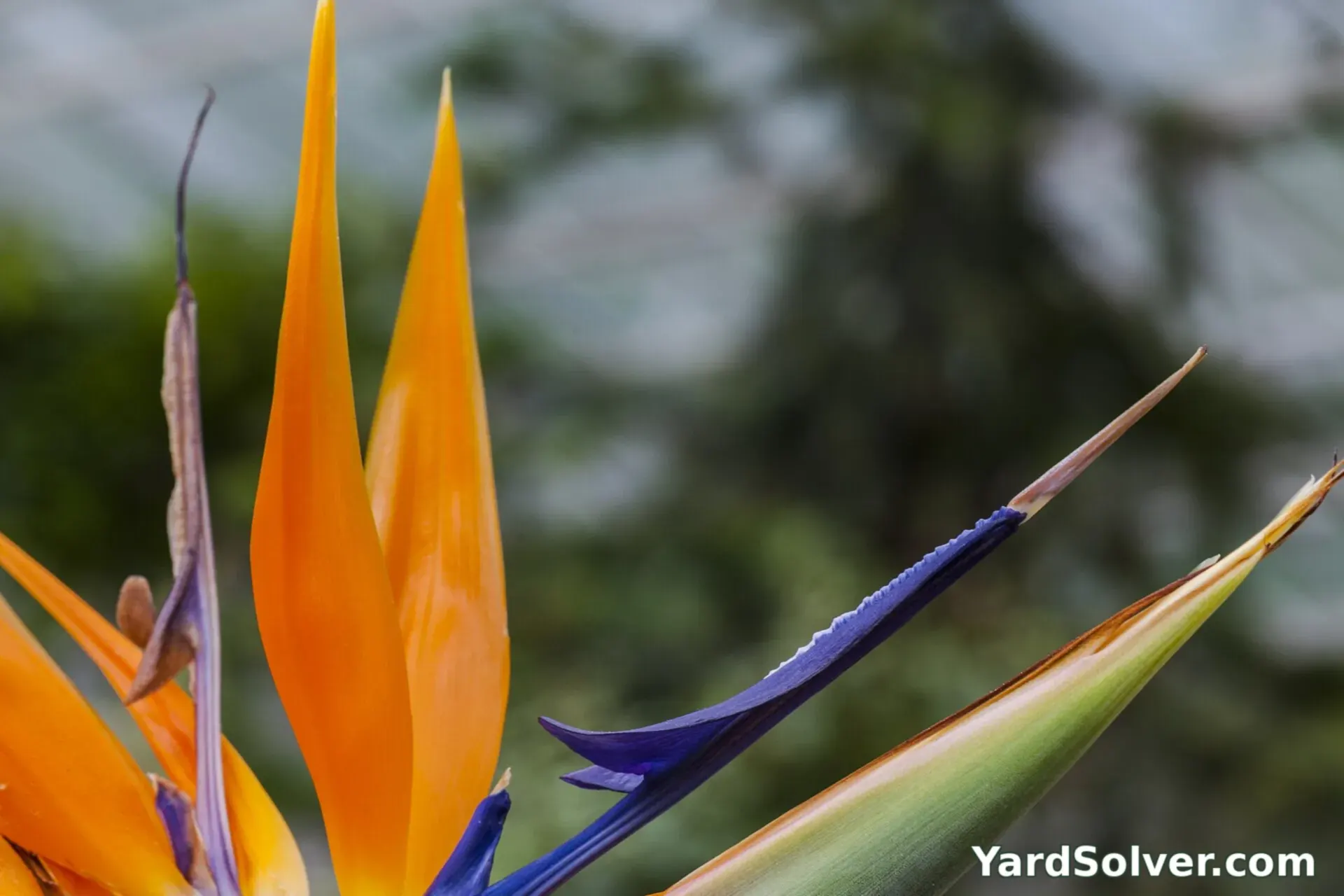
Give it a large, heavy pot — the paddle leaves catch wind and a mature plant is top-heavy. Use rich, loam-based compost with grit for drainage. In frost-free ground, plant it where it can stay for decades: a mature clump is 4–5 ft wide and resents moving with its whole fleshy root system. For a raised bed, the Raised Bed Soil Calculator counts the bags for you; mixing your own? The Garden Soil Calculator gives the compost-rich split to aim for.
Step 3 — Sow and plant out
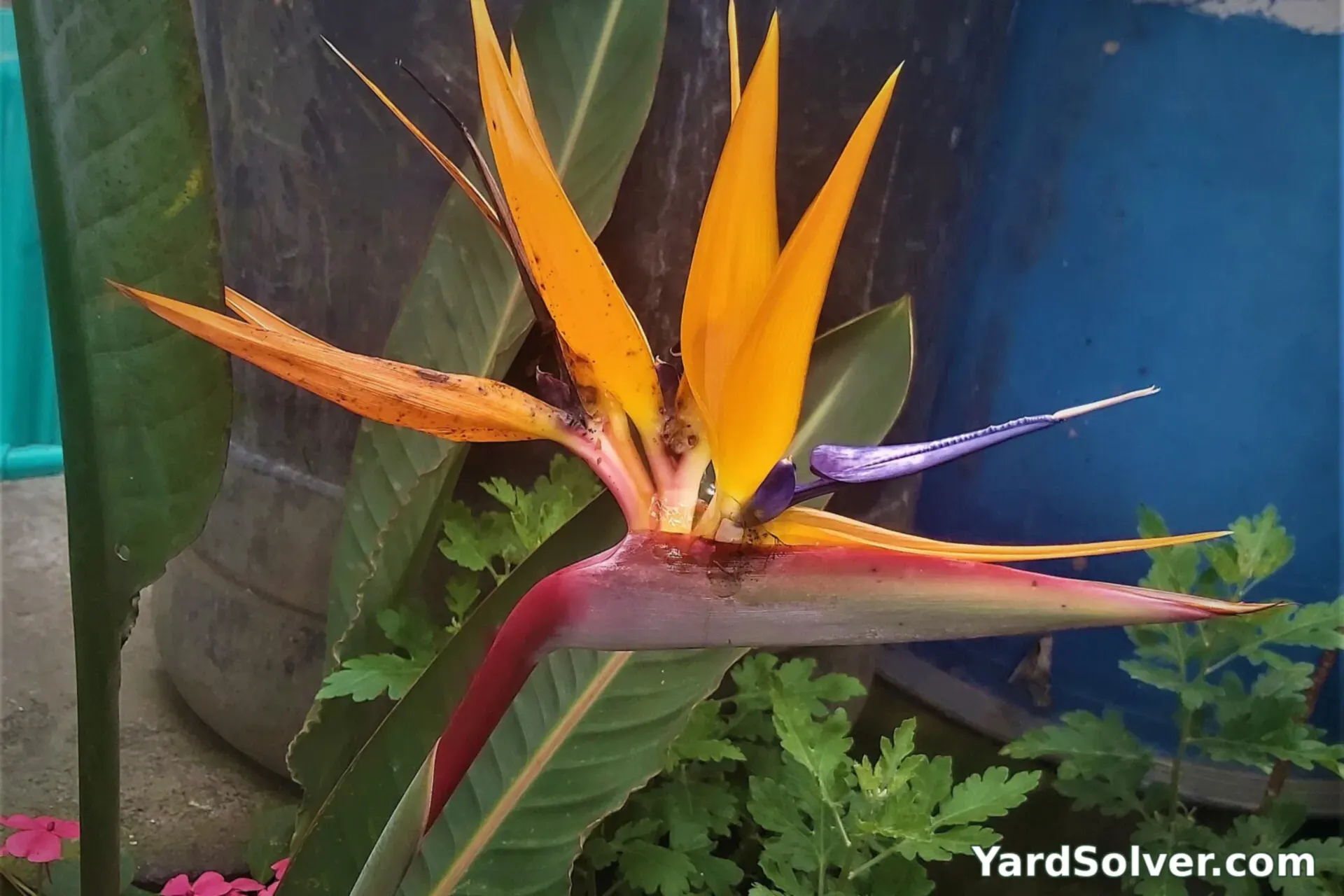
Set the plant at its nursery depth and water in well. The Plant Spacing Calculator turns your bed size into an exact plant count. Then observe the strelitzia rule: it flowers best slightly pot-bound and undisturbed, so resist repotting until the pot is genuinely bursting or roots lift the plant. Good neighbours: in the ground it anchors tropical-style plantings with hibiscus and bold foliage.
Step 4 — Water and feed
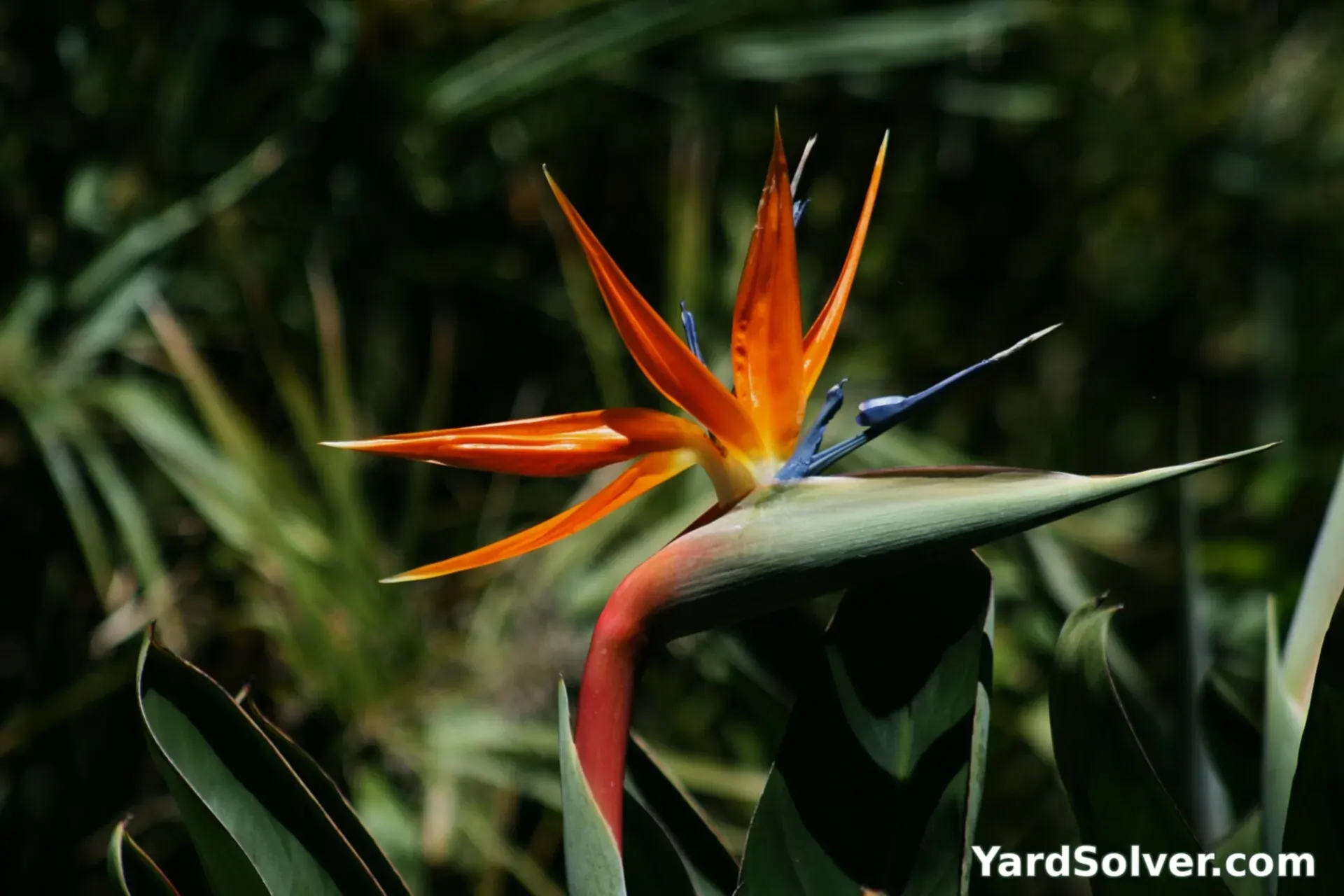
Water generously through the growing season, letting the surface dry slightly between soakings; winter water is a fraction of summer's. Feed every two weeks in spring and summer with a balanced liquid feed — a big, hungry plant — the Fertilizer Calculator turns your bed size into exact amounts.
Step 5 — Care and the problems to watch for
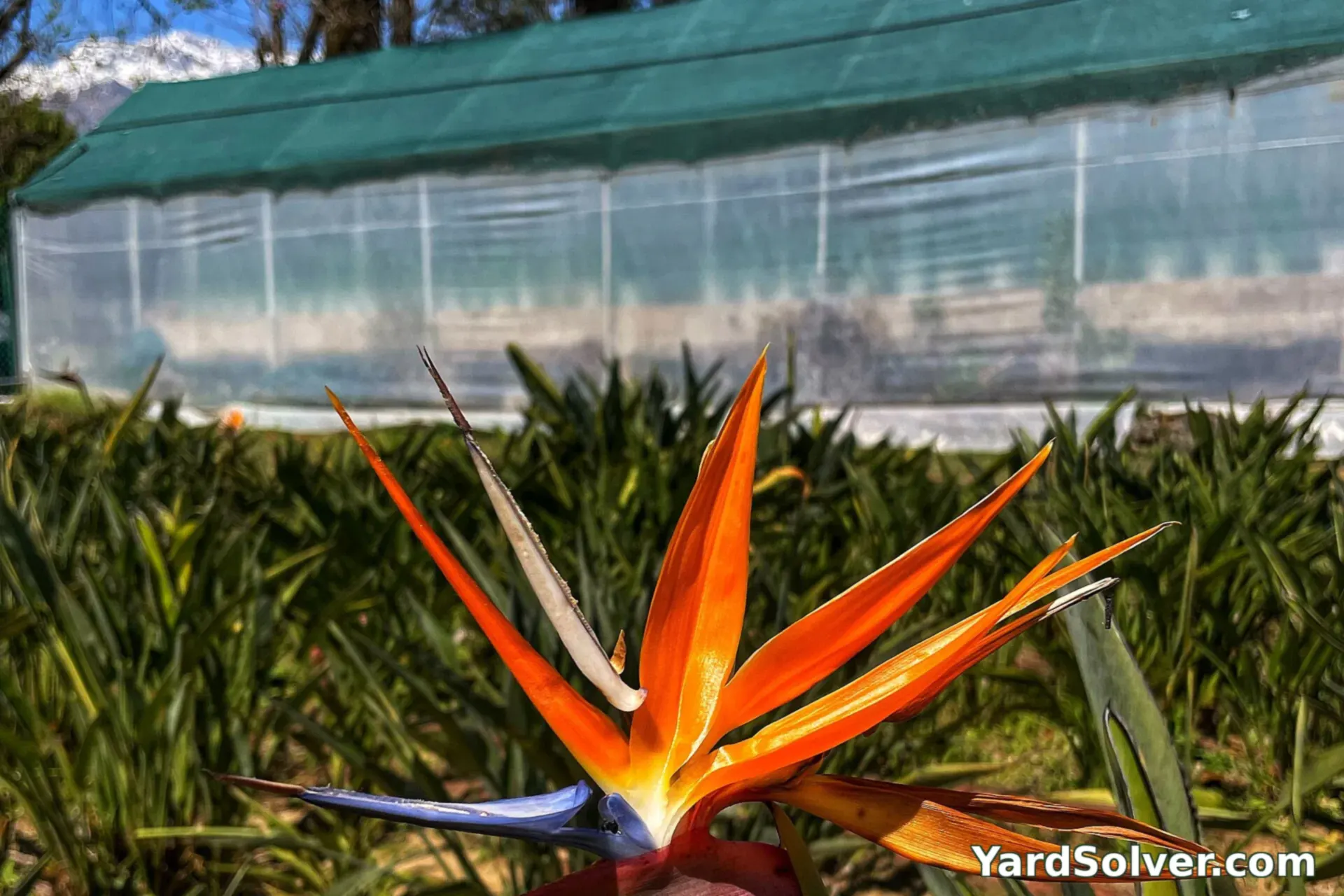
Leaf splitting is not damage: the leaves are built to tear neatly along the veins so storms pass through. Wipe the paddles clean occasionally so they photosynthesise well.
- No flowers on a mature plant — usually light or disturbance; give it your sunniest spot and stop repotting.
- Brown leaf edges — dry air, salts, or erratic watering; flush the pot with clean water monthly.
- Mealybugs in the leaf bases — the classic strelitzia pest; wipe out with a cloth and soapy water, patiently.
Step 6 — Harvest
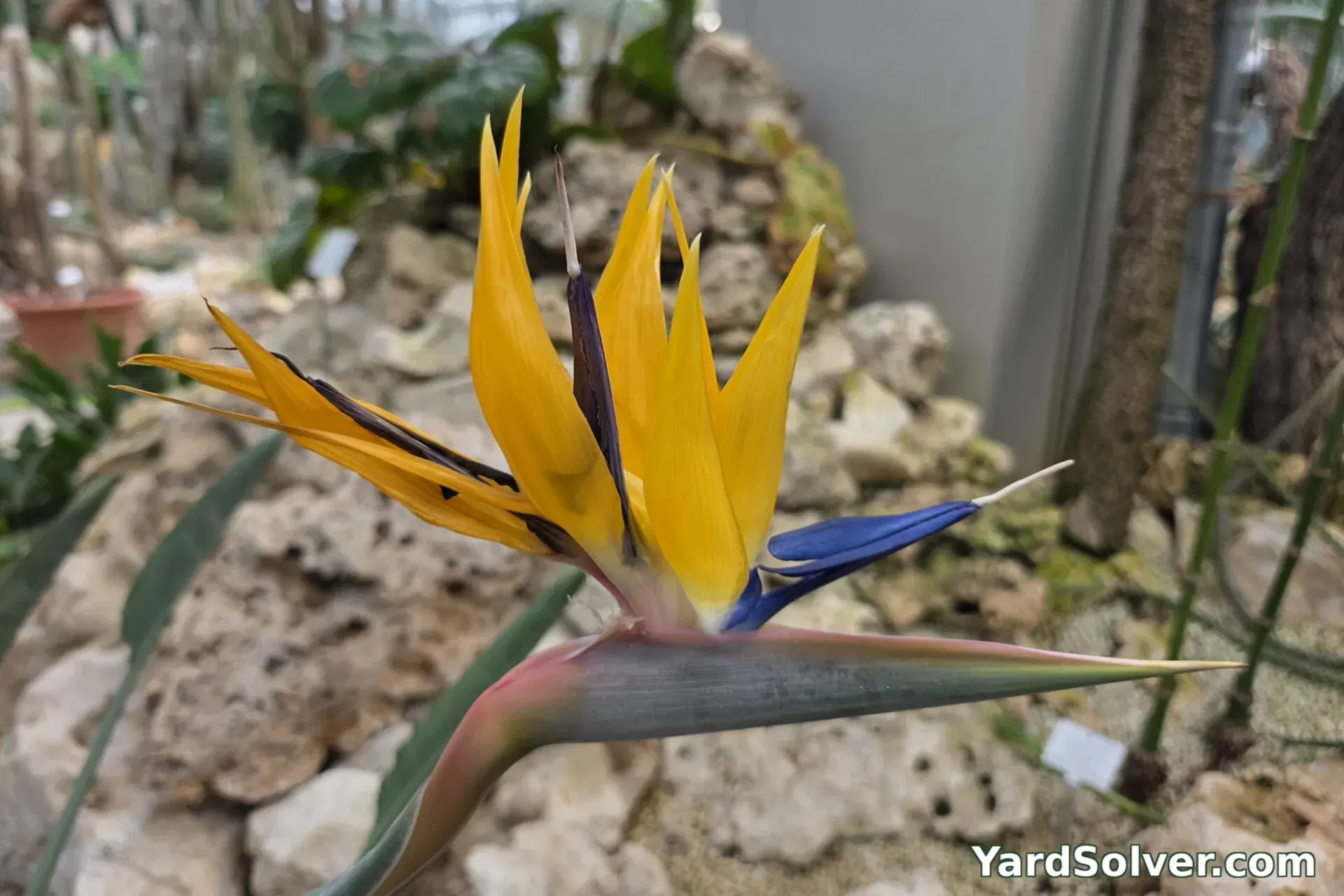
Cut flower spikes when the first crest has emerged from the beak — the remaining orange sepals and blue petals emerge in sequence indoors, so one spike performs for up to two weeks. You can coax a closed crest out gently with a finger, as florists do. In the garden, leave some spikes: in warm climates, sunbirds and bananaquits pollinate them as hummingbirds do in their homeland's absence.
📅 Your personal Bird of Paradise schedule
Counted from your planting day — not a generic calendar. Day 0 is the day the seed went in the ground or the young plant went out.
Varieties worth growing
| Variety | Colour | Why gardeners like it |
|---|---|---|
| Strelitzia reginae | Orange and blue, 4–5 ft | The classic species — the florist's crane flower. |
| Mandela's Gold | Yellow and blue | A rare golden form selected in South Africa — collectors' treasure. |
| Strelitzia nicolai | White and blue, 15 ft+ | The giant white bird — a small tree for frost-free gardens and huge rooms. |
Good for you — and take care
Benefits
- The most dramatic cut flower in the world, bar none.
- Handsome paddle foliage that looks good 365 days a year.
- A decades-long plant — one purchase, a lifetime of cranes.
Take care
- Slow — buy the biggest plant you can; seedlings take years.
- Flowers best pot-bound and undisturbed; don't repot on a whim.
- Frost kills it — pots come indoors below zone 10.
A little history — and one good fact
Strelitzia was named in 1773 for Queen Charlotte of Mecklenburg-Strelitz, wife of George III and a keen botanist. In its South African home it is pollinated by sunbirds that perch on the stem and prise the beak open — the flower is engineered as a bird perch with a nectar reward.
Fun fact: The 'beak' is a boat-shaped bract; the flowers emerge one at a time from it, each lasting days, so a single spike can perform for a fortnight.
Keep going
Guides: Companion planting basics · Pollinator garden guide · Crop rotation basics
Calculators: Plant Spacing Calculator · Garden Mix Calculator · Fertilizer Calculator
More flowers: Hibiscus · Gardenia · Jasmine · Lily
← Back to the Plant Library · Get your personal planting dates
Questions people ask
How long before a bird of paradise flowers?
From seed, three to five years. From a bought, well-grown plant, flowering can start within a year or two once the clump is mature and happily snug in its pot. Light and not being disturbed are the two triggers.
Why are my bird of paradise leaves splitting?
They are supposed to — the leaves tear neatly along their veins so wind passes through instead of toppling the plant. It is a design feature of the wild plant, not damage or disease.
Can bird of paradise grow outside year-round?
Only in frost-free climates (zones 10–12). Everywhere else, grow it in a large pot that summers outside and winters in your brightest room.