
Plant Library · Herbs
🌱 How to Grow Chives
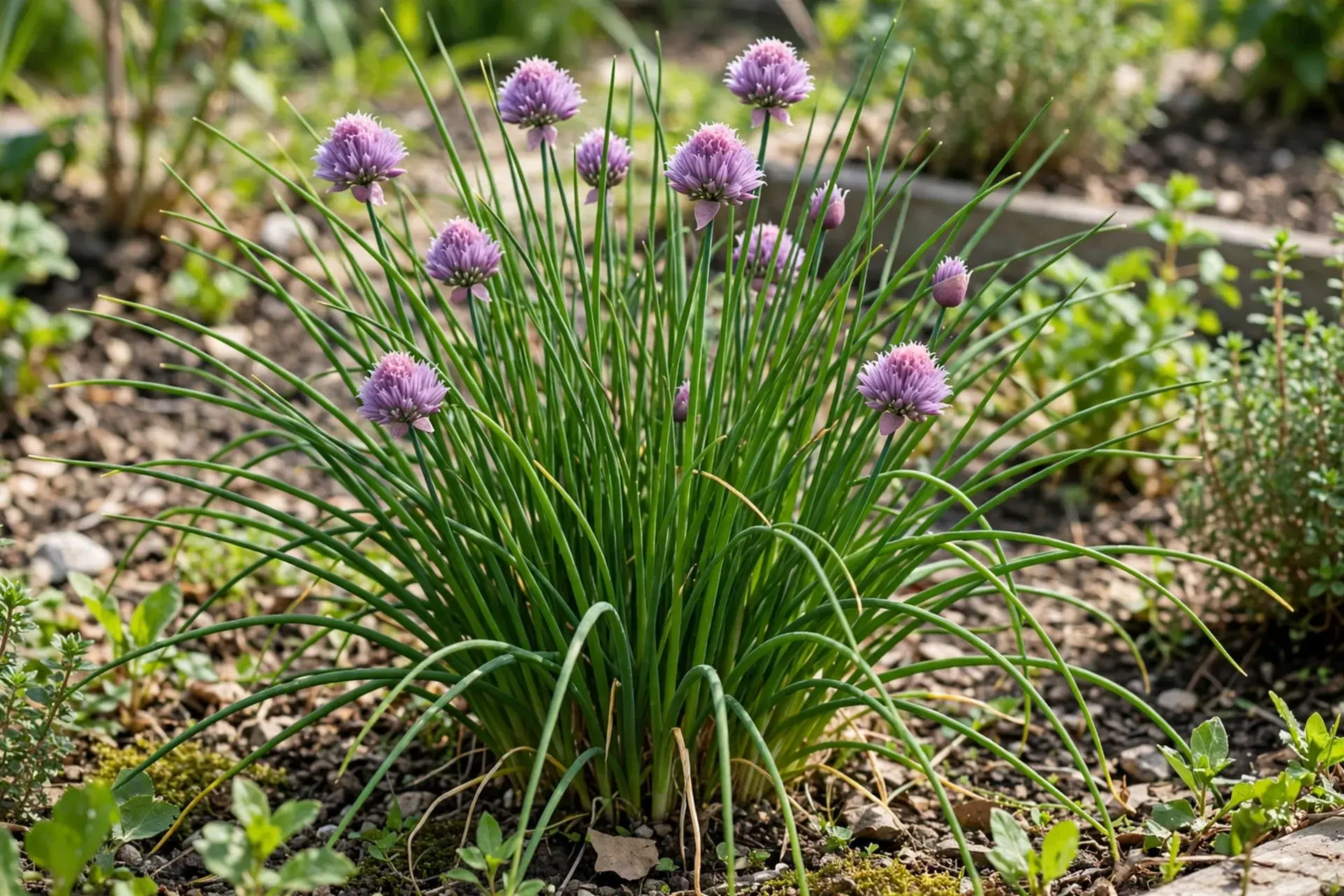
The easiest herb in this library — sow a clump and snip for years. Chives are a hardy perennial in zones 3–9 and honestly the easiest herb in this library: sow a clump, keep it watered, and snip fresh onion flavour from spring to fall for years. They suit beds, edges and pots equally, and their purple pom-pom flowers are as pretty as the leaves are useful.
Grow Chives with us — step by step
Everything for this plant is written step by step below — what to do, and exactly when. Read it through first if you like: you can grow it entirely on your own with that guide. Or start with us here — tell us your planting day and we lay out your personal schedule on this page, every next step on its own day, counted from your planting date. No guessing, no forgetting.
Step 1 — today: Plant out your young Chives today (hardened off first), spaced 8 in apart, and water them in well. Starting from seed instead? Sow indoors now in small clumps, 1/4 in deep, and this same schedule counts from transplant day.
Chives at a glance
Sow indoors: 6 weeks before last frost
Move outside: at last frost
Sow outdoors: 1 week before last frost
Spacing: 8 in · Seed depth: 1/4 in
Sun: Full sun to part shade
Water: Regular — keep evenly moist
Harvest: Snip leaves from 6 in tall, all season long
Timing counts from your average last spring frost — get your own dates in the Planting Calendar. Guidance follows standard extension-service practice for Canada and the US.
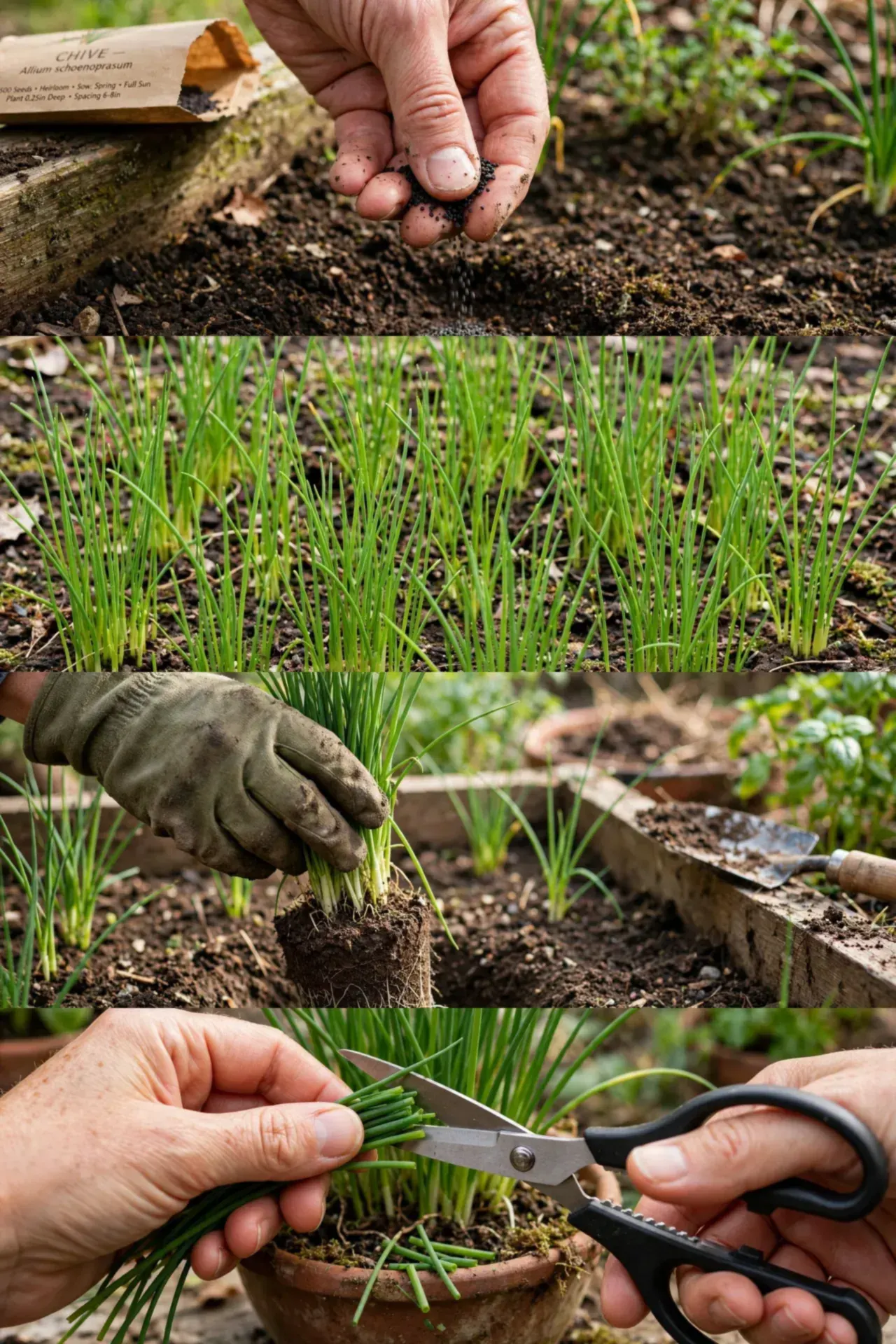
How to plant and grow chives, step by step
Step 1 — Time it right
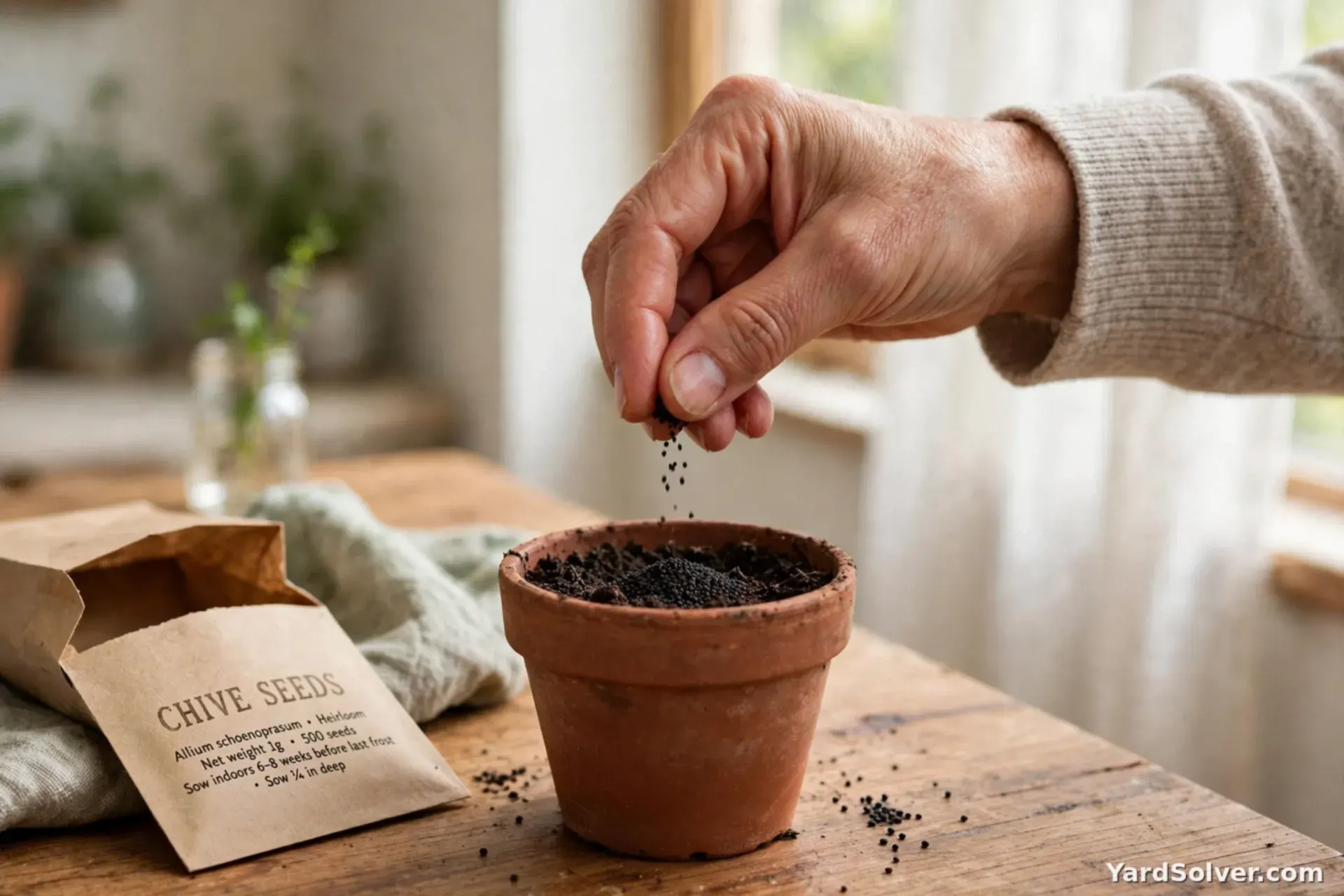
Sow indoors: 6 weeks before last frost; Move outside: at last frost; Sow outdoors: 1 week before last frost. All dates count from your average last spring frost — the Planting Calendar turns them into real dates for your garden. Chives are forgiving about timing: start them indoors for a head start, or sow straight outside — either way you will be snipping within a couple of months.
Step 2 — Prepare the spot
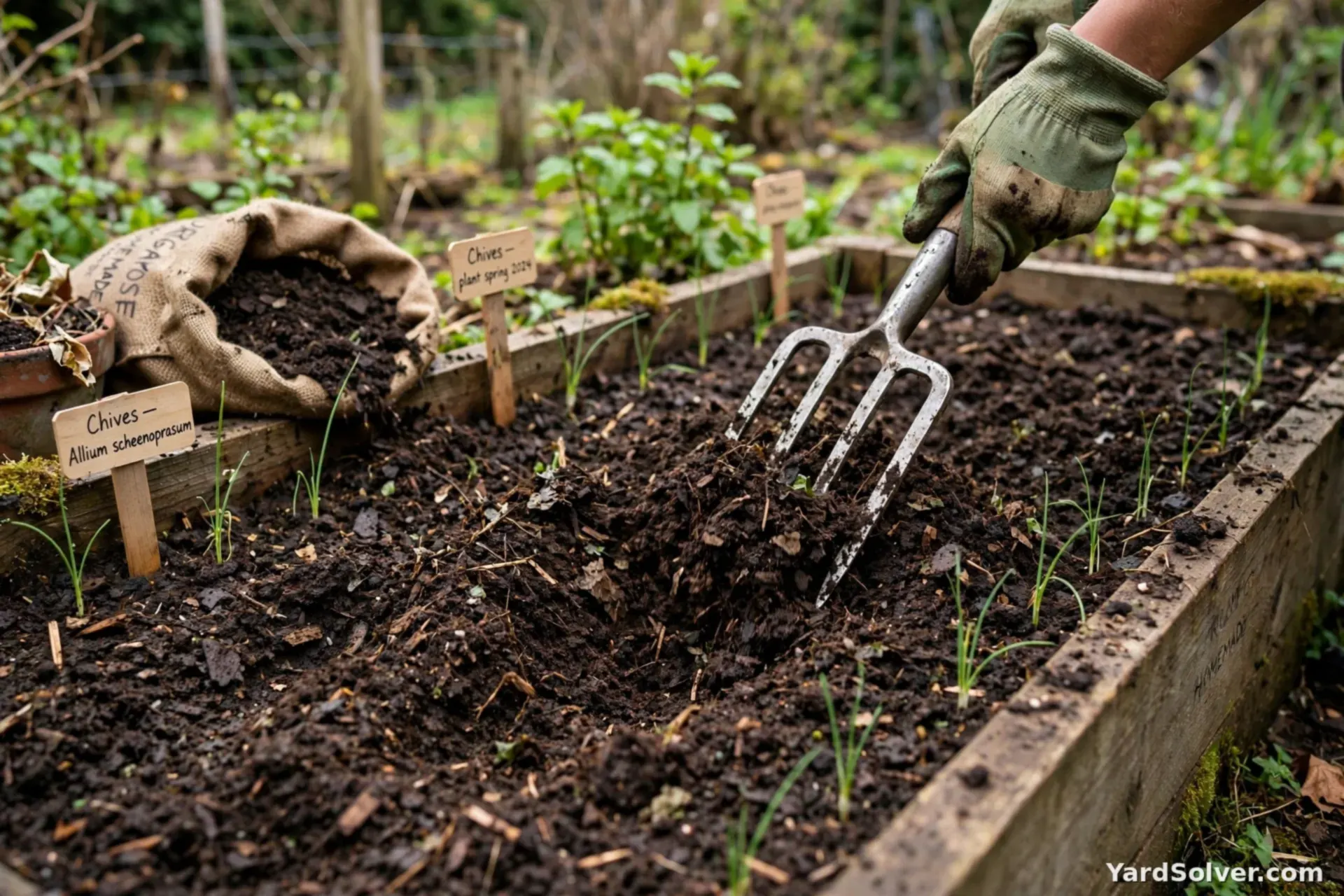
Sun: Full sun to part shade. Unlike the Mediterranean herbs, chives like ordinary, compost-enriched garden soil that holds moisture — they are a leaf crop, and leaves want feeding and water. A spot at the edge of the vegetable bed, or a decent-sized pot, suits them perfectly. Work out how much you need with the Garden Mix Calculator or the Raised Bed Soil Calculator.
Step 3 — Sow and plant out
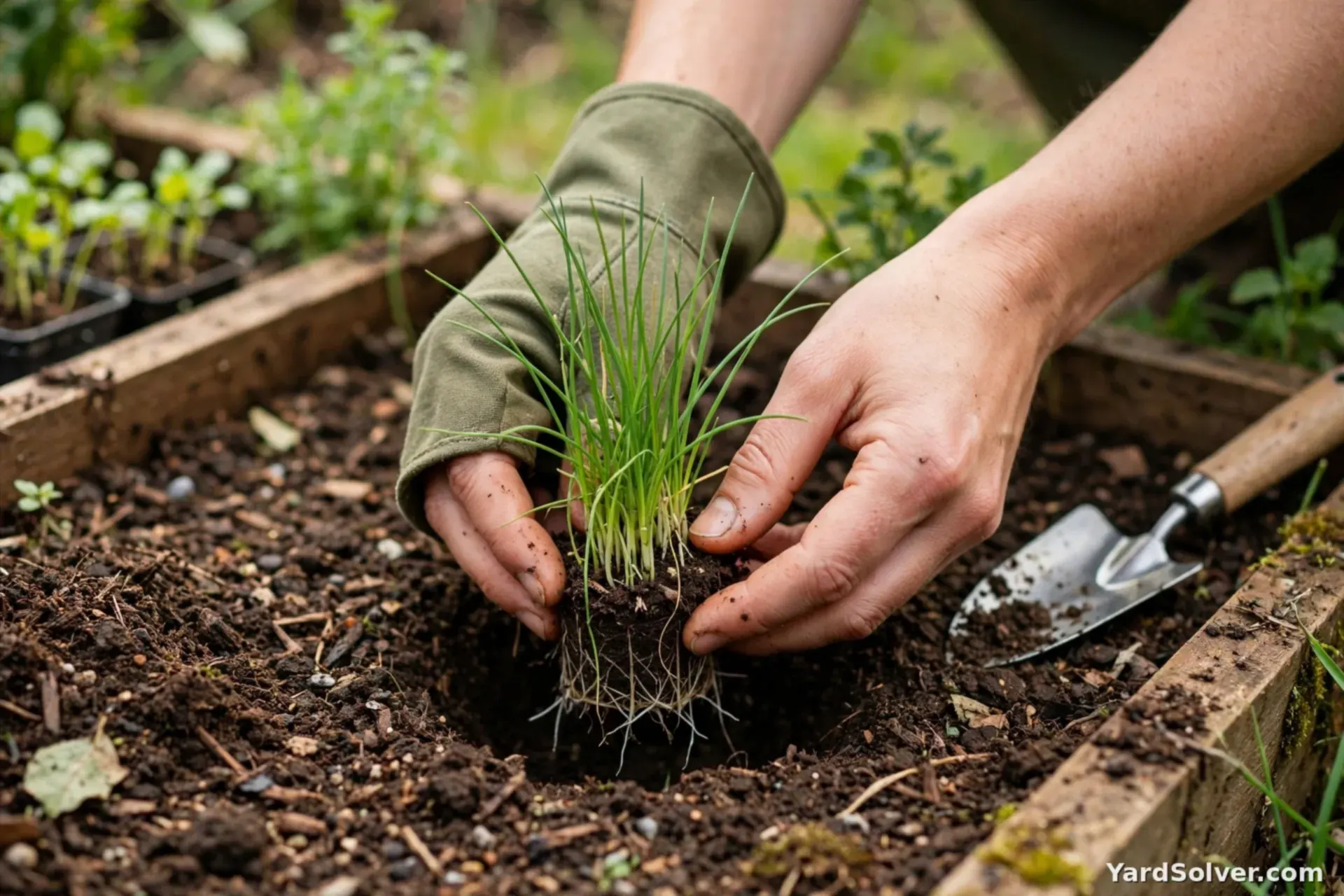
Sow seed in small pinches — a little clump per pot or station — at 1/4 in deep, indoors or out. Chives grow as a tuft, so there is no need to single out every seedling: plant each clump whole, spaced 8 in apart, and water in well. Harden indoor plants off first (see How to Harden Off Seedlings). The Plant Spacing Calculator turns that spacing into plants-per-bed.
Step 4 — Water and feed
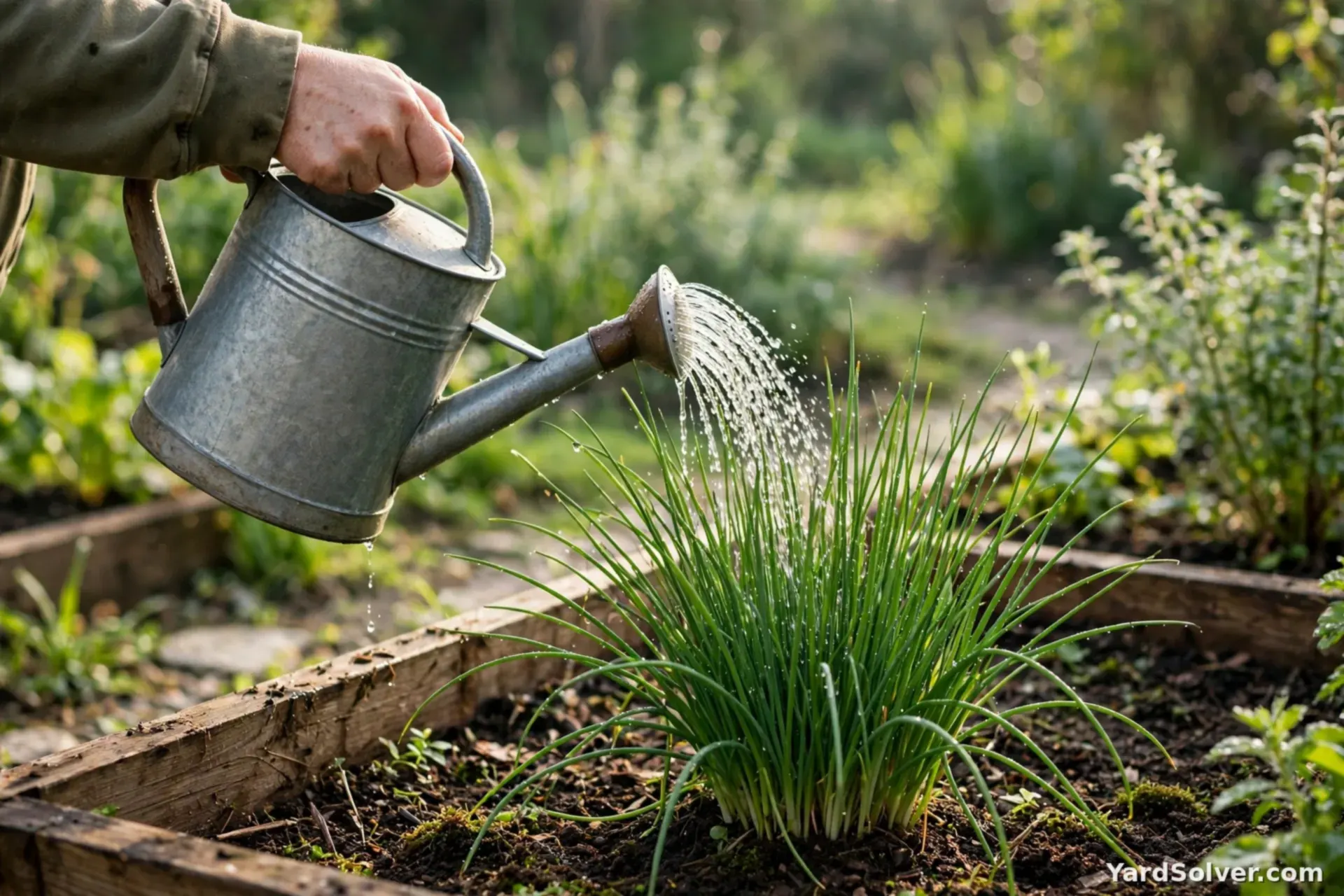
Water: Regular — keep evenly moist. Chives forgive most things except drought: dry clumps turn yellow-tipped and stop growing. A light liquid feed every few weeks through the season keeps the leaves lush and green. The Fertilizer Calculator turns a bed size into the right amount.
Step 5 — Care and the problems to watch for
- Rust — orange spots on leaves in damp summers; cut the clump hard back and let clean growth return.
- Aphids and blackfly on flower stems — rinse off or cut out the infested stems.
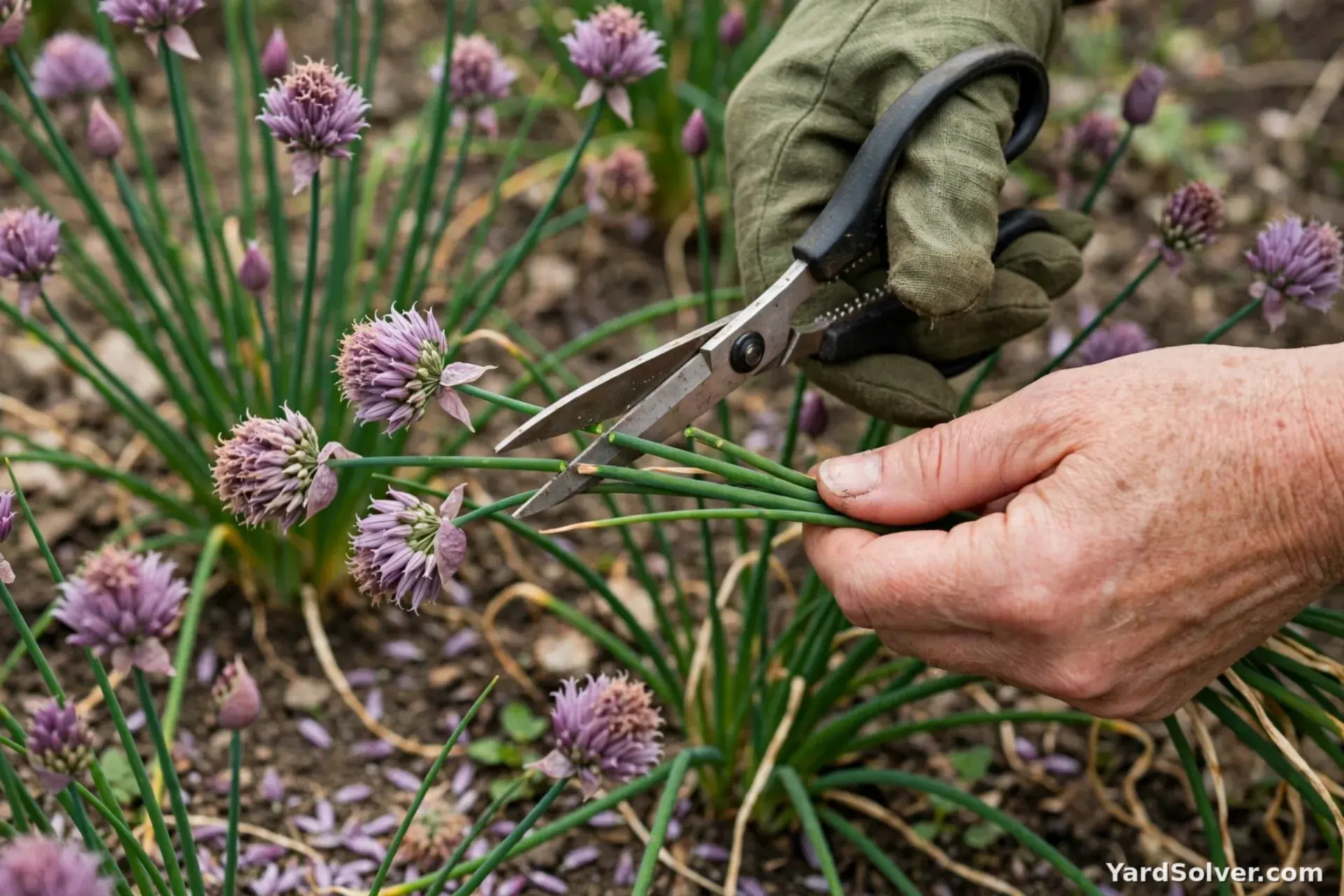
- Self-sown seedlings everywhere — charming until it is not; deadhead the flowers before they set seed.
Take care: Chive flowers are edible, but let only a few plants flower if you want to stop the self-sowing. Cats and dogs should not graze on chives or other onion-family plants in quantity — site pots out of snacking reach.
Step 6 — Harvest
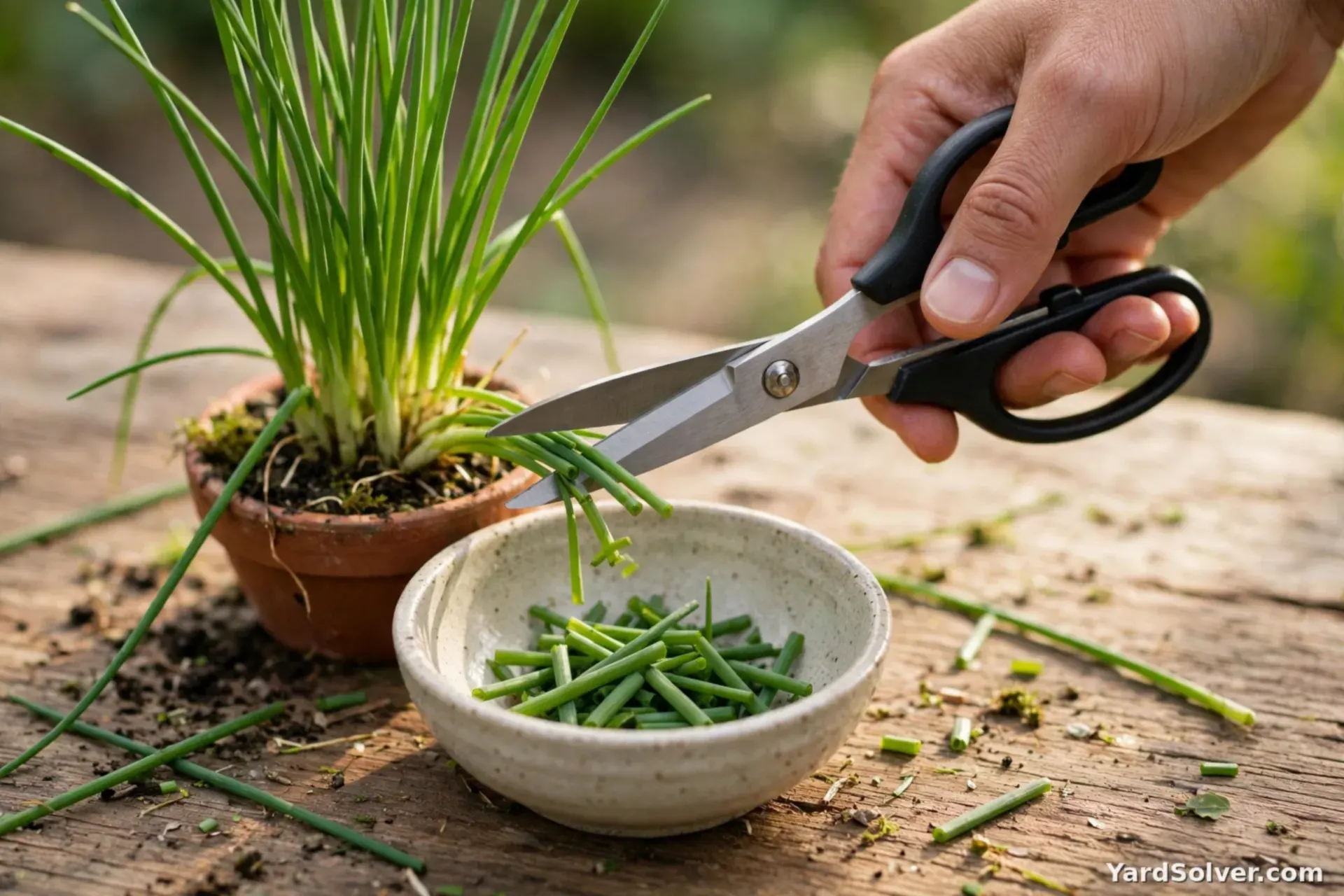
Ready in: Snip leaves from 6 in tall, all season long. Cut leaves with scissors 2 in above the base, taking a few from across the clump rather than scalping one spot — the clump regrows within days. The purple flowers are edible too: scatter the separated florets over salads and eggs for a mild onion bite.
Problems, pests & diseases — diagnosis and fixes
- Orange pustules and spots on the leaves: chive rust, a fungal disease that loves damp, crowded clumps. Fix: cut the whole clump to the ground, bin (do not compost) the leaves, and let fresh growth come back in better air.
- Black insects thick on flower stems and buds: blackfly (aphids). Fix: cut out and discard the worst stems, rinse the rest with a jet of water.
- Yellow tips and thin, weak leaves: drought or hunger — chives are thirstier than most herbs. Fix: water deeply, mulch, and give a light liquid feed.
- Tiny chive seedlings appearing all over the bed: self-sowing from un-deadheaded flowers. Fix: hoe or pull the extras while small — and deadhead next year's flowers earlier.
- Clump thick and congested, flower stems fewer each year: an old clump that needs dividing. Fix: lift in spring, split into fist-sized pieces, and replant the pieces in refreshed soil.
- Leaves lying flat and mushy after hard frost: normal winter dieback, not death. Fix: tidy the dead leaves away — the clump resprouts from its bulbs in spring.
📅 Your personal Chives schedule
Counted from your planting day — not a generic calendar. Day 0 is the day the seed went in the ground or the young plant went out.
Varieties worth growing
| Variety | Colour | Why gardeners like it |
|---|---|---|
| Common | Green | The standard chive — hollow leaves, purple pom-pom flowers, reliable everywhere |
| Garlic (Chinese) | Flat green leaves | Flat leaves with a mild garlic flavour and white flowers — essential for Asian dishes |
| Giant Siberian | Tall green | Bigger, coarser leaves on tall plants — generous harvests for cooking |
| Fine-leaved | Fine green | Delicate, thin leaves with a gentle flavour, made for garnishing |
| Staro | Green | A well-known, sturdy cultivar bred for thick, uniform leaves and heavy yields |
Good for you — and take care
Benefits
- Fresh mild onion flavour all season with almost no calories
- Provides vitamin K and vitamin C
- Provides small amounts of folate and vitamin A
- Perennial and hardy — one clump crops for years and divides for free
- Purple flowers feed bees and are edible in salads
Take care
- Deadhead unless you want seedlings everywhere — chives self-sow freely
- Onion-family plants, chives included, should not be grazed on in quantity by cats and dogs
- Leaves lose their flavour cooked long — add them at the end of cooking
A little history — and one good fact
Chives have been gathered and grown in Europe and Asia for centuries — their close wild relatives grow across the northern hemisphere, and garden chives were a cottage-garden staple long before supermarkets sold them in plastic pots. Garlic chives have an even longer history in Chinese cooking. Both earned their place the same way: reliable, hardy, and ready to cut whenever an onion flavour is wanted without opening an onion.
Fun fact: A chive clump is a small crowd — what looks like one plant is dozens of little bulbs packed together, which is why dividing a clump gives you new plants for free.
Keep going
Guides: Earliest Seeds to Start Indoors · Companion Planting Chart · How to Harden Off Seedlings
Calculators: Plant Spacing Calculator · Seed Calculator · Fertilizer Calculator
More herbs: Basil · Rosemary · Mint · Thyme · Stevia
← Back to the Plant Library · Get your personal planting dates
Questions people ask
When do I plant chives?
Count from your average last spring frost: sow indoors 6 weeks before last frost; move outside at last frost; sow outdoors 1 week before last frost. Chives are a hardy perennial in zones 3–9: sow in small clumps indoors or directly outside around your last frost.
How far apart do I space chives?
Space plants 8 in apart, with seed sown 1/4 in deep. Sun: full sun to part shade.
When is chives ready to harvest?
Snip leaves from 6 in tall, all season long. The easiest herb in this library — sow a clump and snip for years.