
Plant Library · Herbs
🌿 How to Grow Stevia
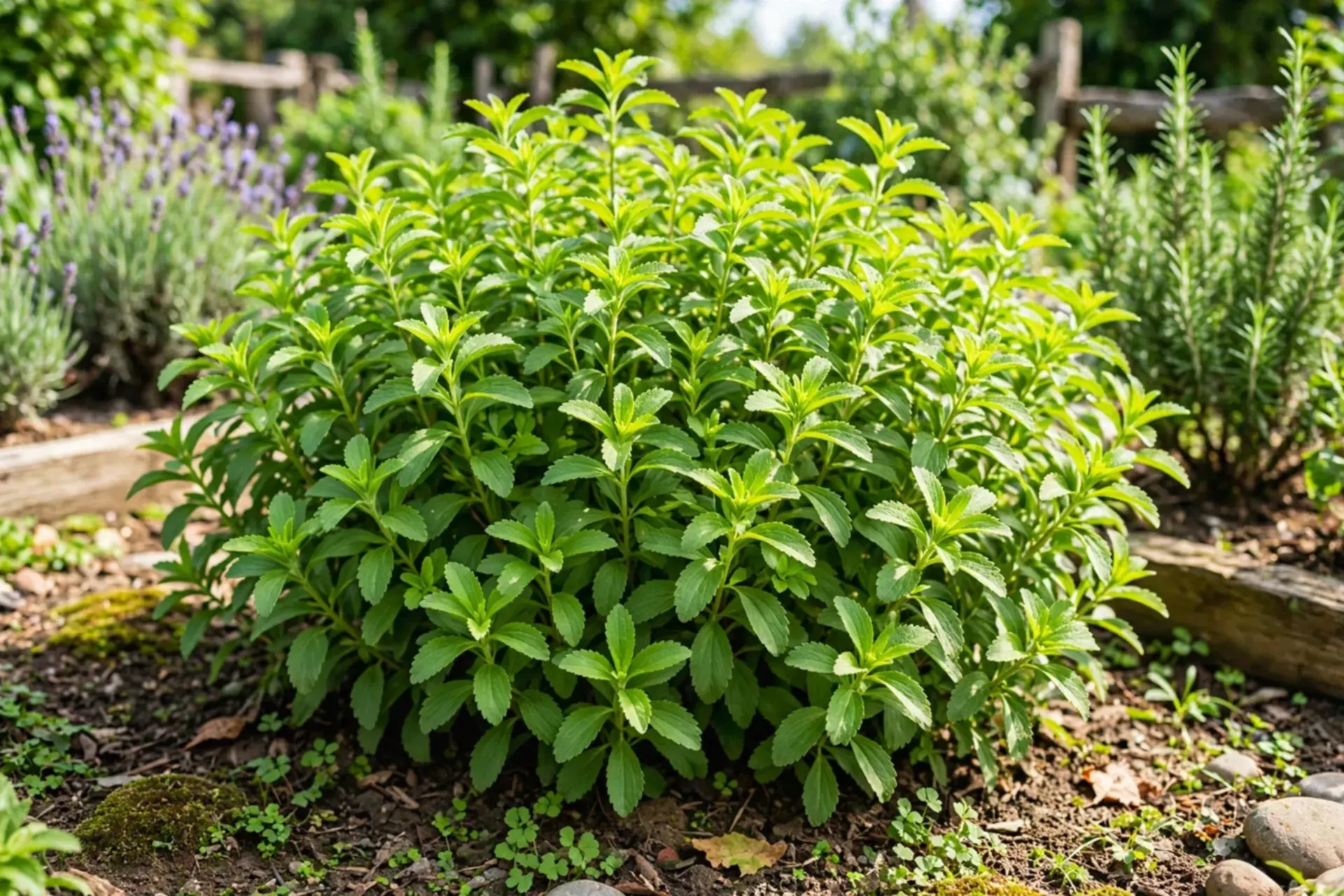
The sweet leaf — seeds are shy to sprout, so many gardeners start from plants. Stevia is a tender perennial from Paraguay, hardy only in zones 9–11 and grown as an annual everywhere colder — a sweet leaf you can pick and use in place of sugar. Its seed is shy to sprout and variable in sweetness, which is why many gardeners skip it and start from a bought plant.
Grow Stevia with us — step by step
Everything for this plant is written step by step below — what to do, and exactly when. Read it through first if you like: you can grow it entirely on your own with that guide. Or start with us here — tell us your planting day and we lay out your personal schedule on this page, every next step on its own day, counted from your planting date. No guessing, no forgetting.
Step 1 — today: Plant out your young Stevia plants today (hardened off first), spaced 12–18 in apart, and water them in well. Starting from seed instead? Sow indoors now on the surface — the seed needs light — and this same schedule counts from transplant day.
Stevia at a glance
Sow indoors: 10 weeks before last frost
Move outside: 2 weeks after last frost
Spacing: 12–18 in · Seed depth: 0 — surface (needs light)
Sun: Full sun
Water: Regular — keep evenly moist
Harvest: Pick leaves through summer; sweetest just before flowering
Timing counts from your average last spring frost — get your own dates in the Planting Calendar. Guidance follows standard extension-service practice for Canada and the US.
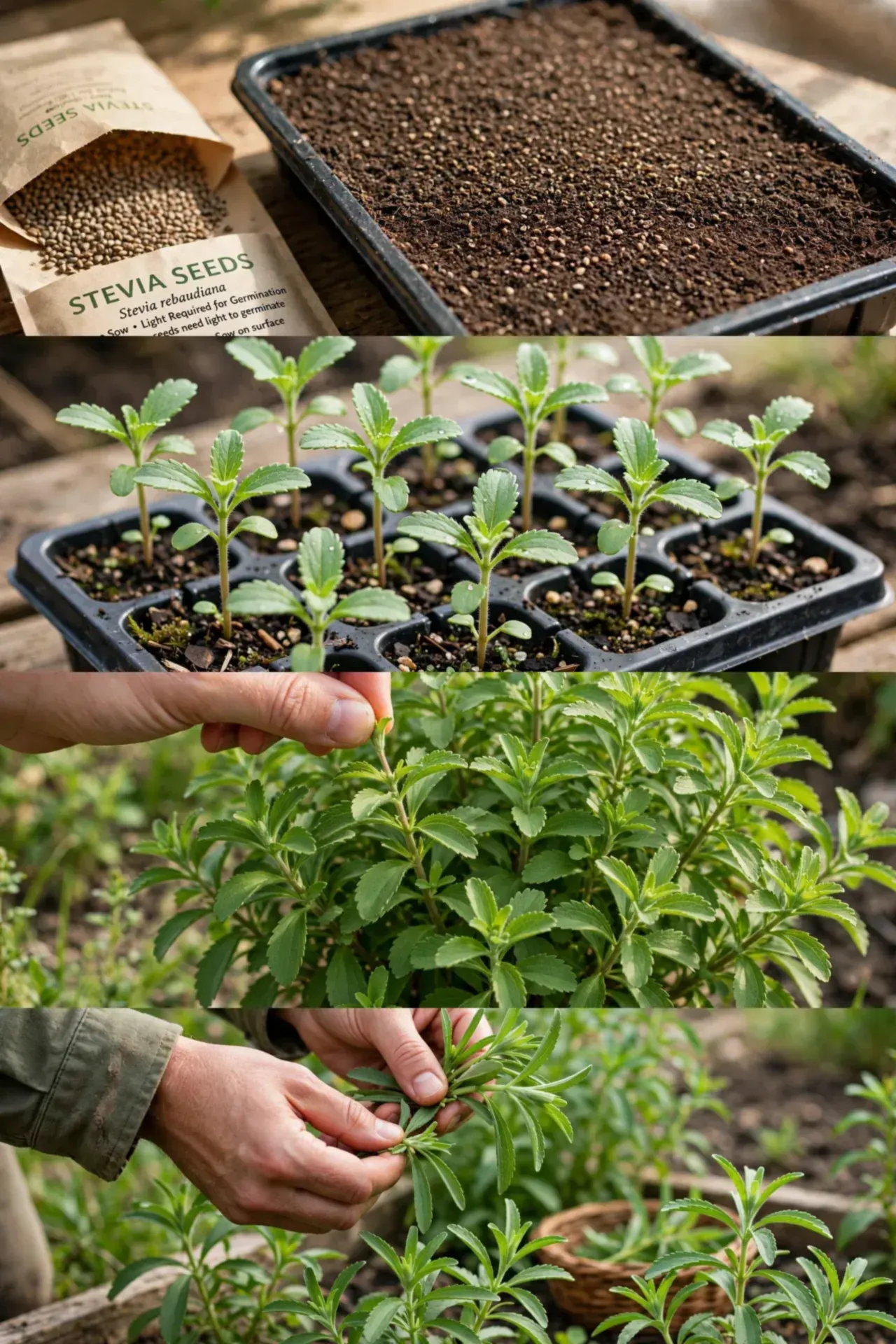
How to plant and grow stevia, step by step
Step 1 — Time it right
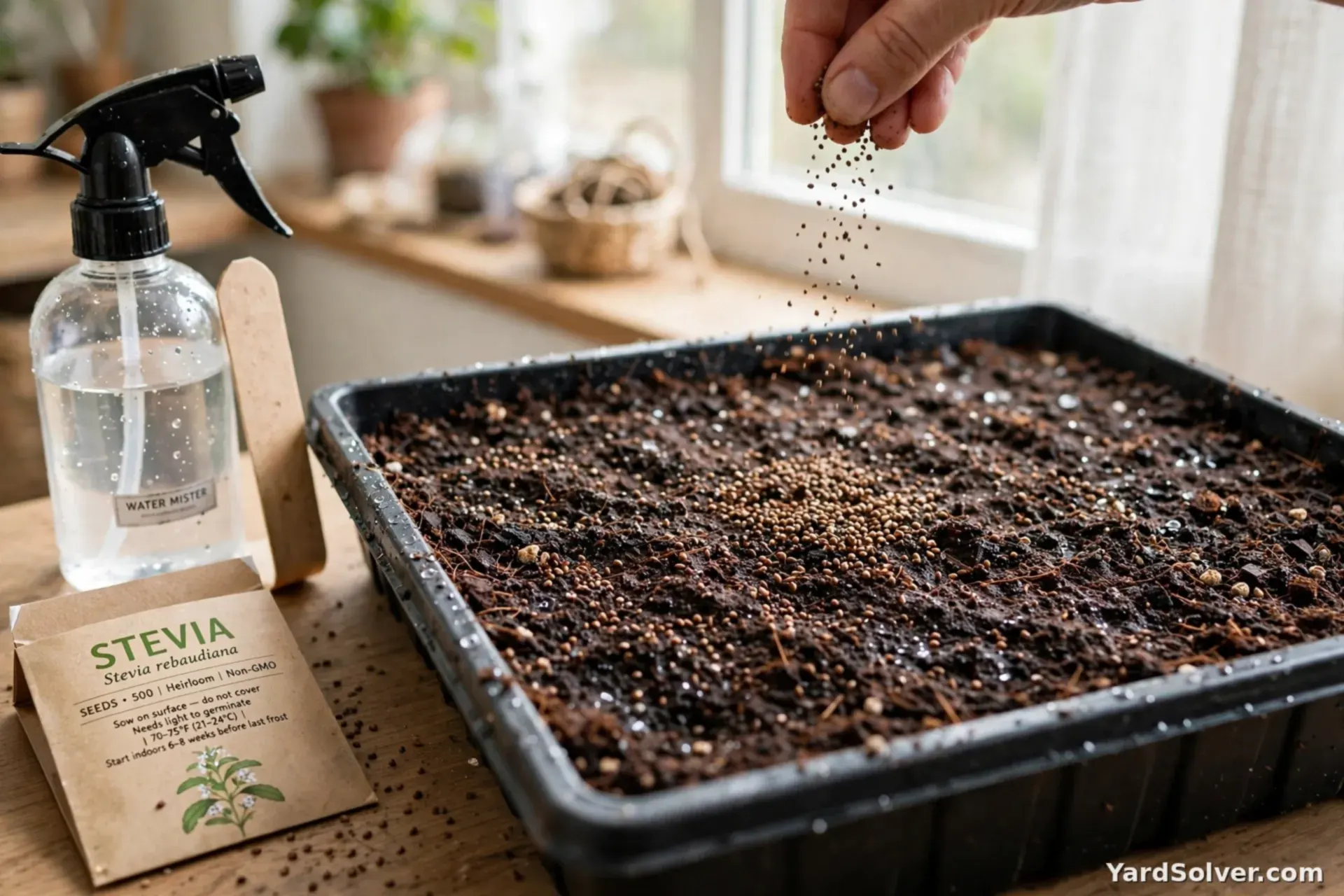
Sow indoors: 10 weeks before last frost; Move outside: 2 weeks after last frost. All dates count from your average last spring frost — the Planting Calendar turns them into real dates for your garden. Stevia seed must be fresh, warm and sown on the surface — even then it sprouts patchily, so many gardeners simply buy a plant.
Step 2 — Prepare the spot
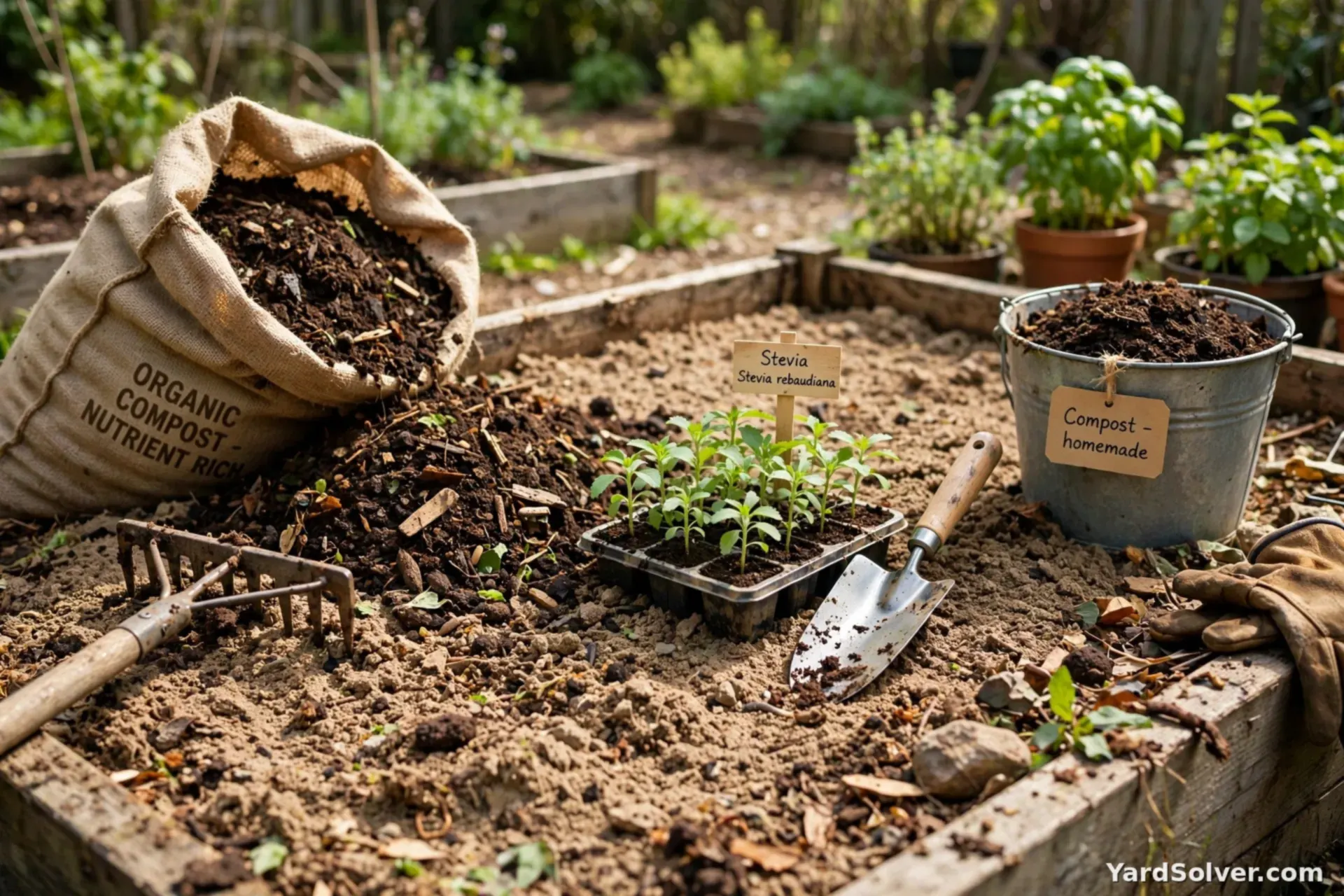
Sun: Full sun. Stevia wants fertile, well-drained but moisture-holding soil — work in compost, and choose a spot you can water easily, or a generous pot. It sulks in both drought and waterlogging. Work out how much you need with the Garden Mix Calculator or the Raised Bed Soil Calculator.
Step 3 — Sow and plant out
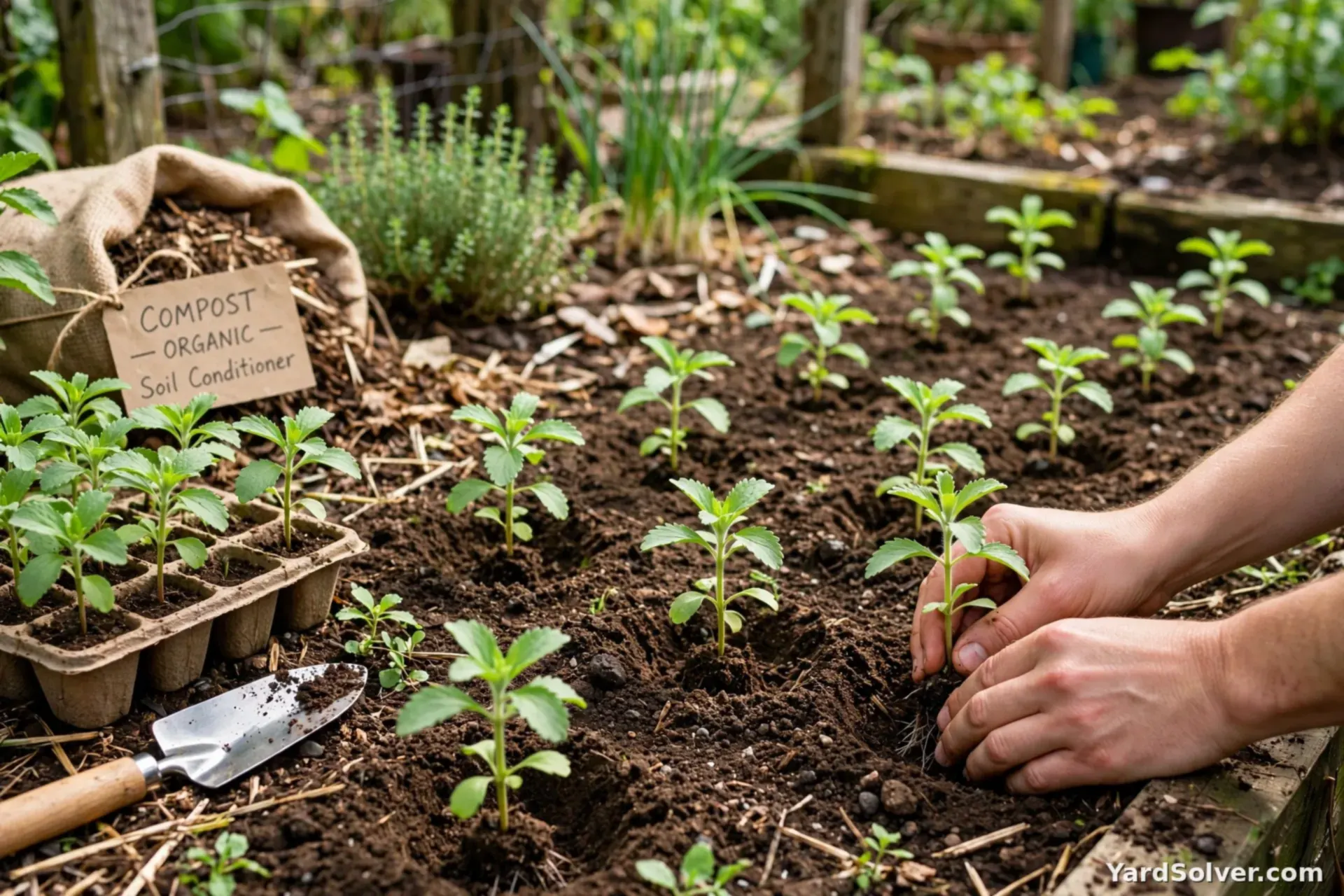
Sow seed on the surface of moist mix and do not cover it — stevia needs light to germinate — then keep it warm and bright. Harden plants off over 7–10 days (see How to Harden Off Seedlings) and move them outside 2 weeks after last frost, spaced 12–18 in apart. The Plant Spacing Calculator turns that spacing into plants-per-bed.
Step 4 — Water and feed
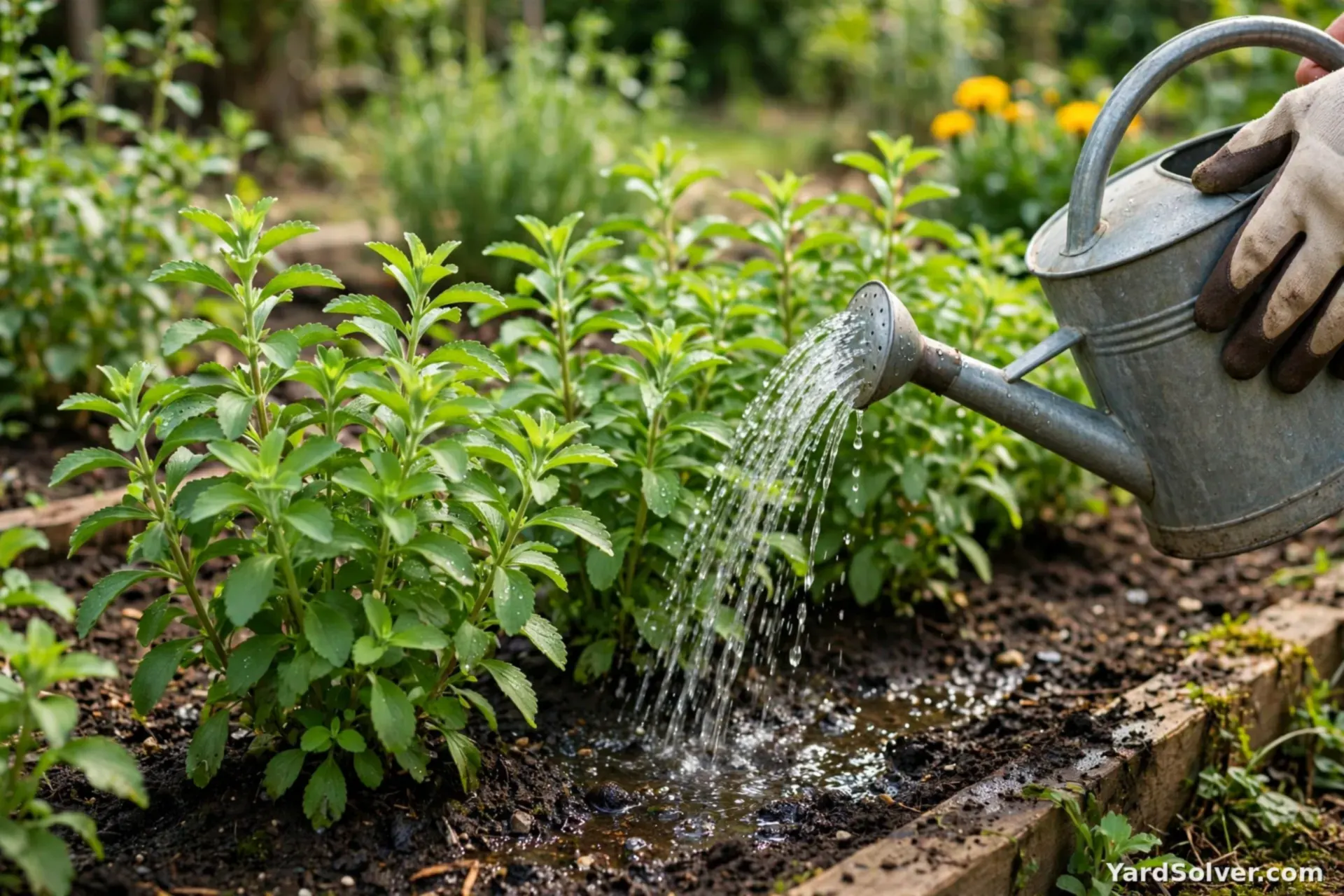
Water: Regular — keep evenly moist. Stevia in pots can dry out in a single hot day, and drought-stressed plants grow bitter and stop producing leaves. A light, regular feed through summer keeps the leafy growth coming. The Fertilizer Calculator turns a bed size into the right amount.
Step 5 — Care and the problems to watch for
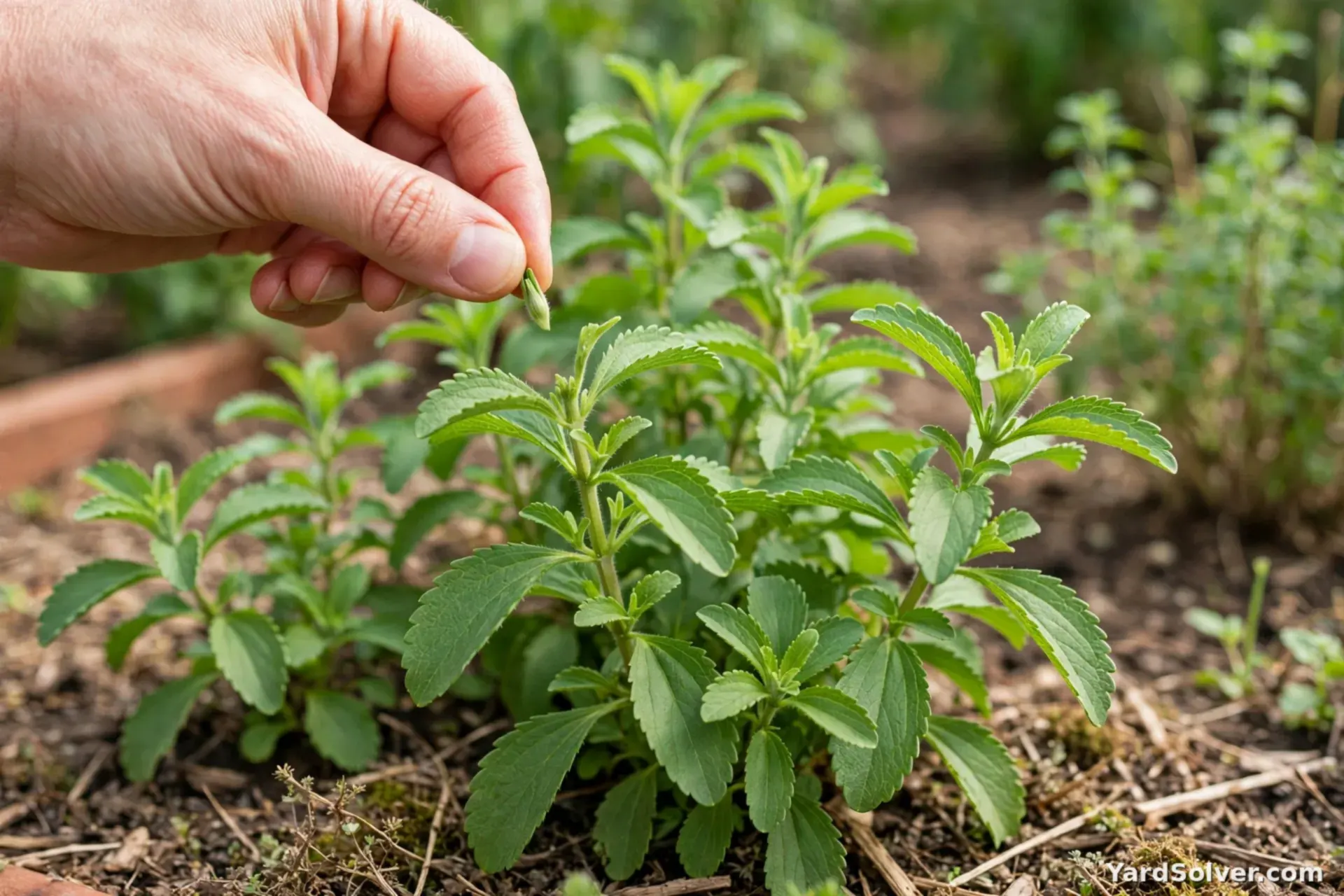
- Flowering turns leaves bitter — pinch out buds and harvest before bloom; shortening autumn days trigger flowering.
- Aphids on soft tips — rinse off with a jet of water or pinch out infested tips.
- Drying out in pots — the fastest way to lose a stevia plant in summer; water daily in heat.
Take care: Sweetness varies a lot in seed-grown plants — taste before you rely on a plant for sweetening. Stevia is a tender plant: first frost ends it outdoors in cold zones.
Step 6 — Harvest
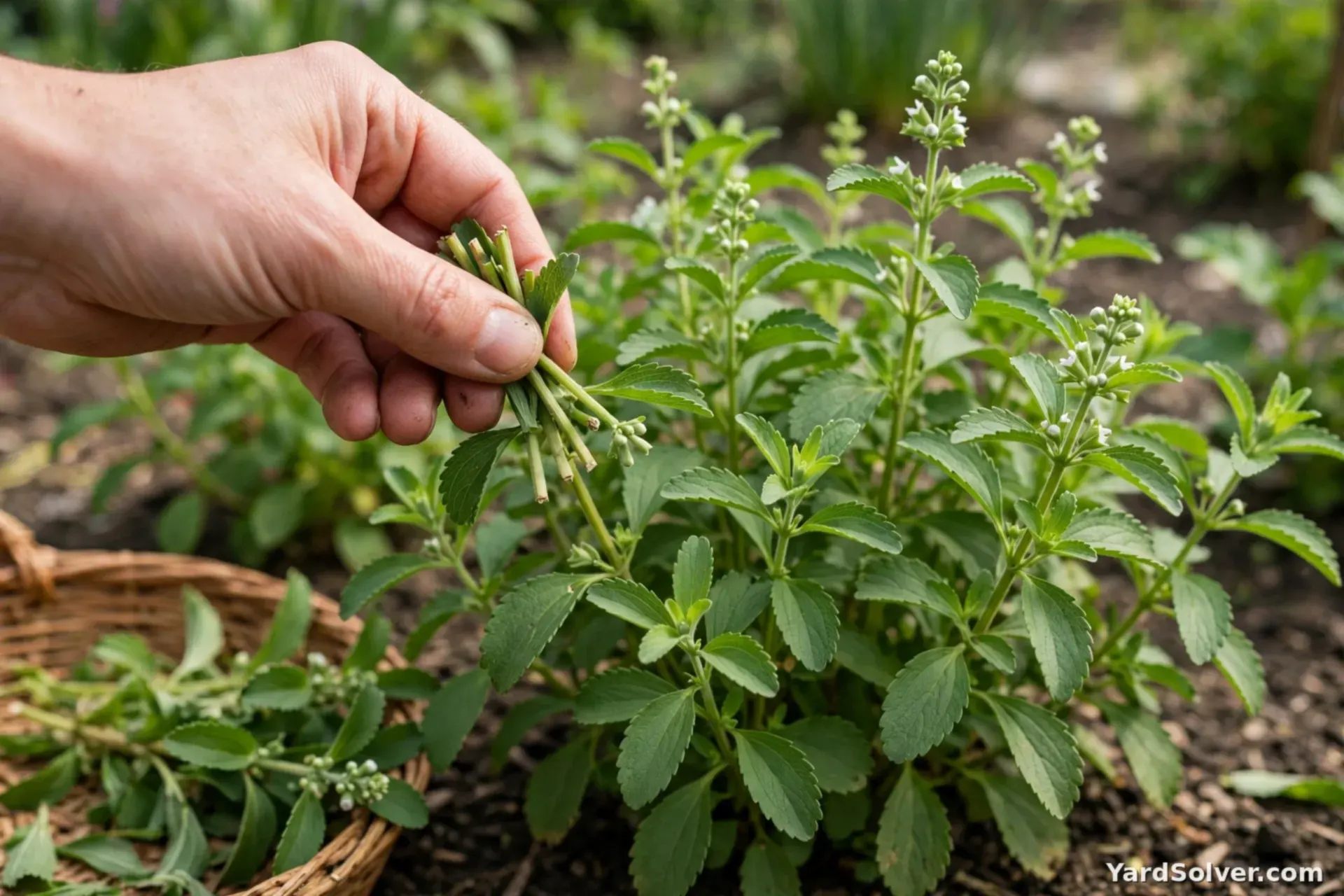
Ready in: Pick leaves through summer; sweetest just before flowering. Pick leaves and short stems through summer, then take the main harvest — whole stems cut at the base — just before the flower buds open. Dry the leaves on the stem in a warm, airy place, then crumble them off: dried stevia leaf is noticeably sweeter than fresh.
Problems, pests & diseases — diagnosis and fixes
- Leaves turn bitter and small white flowers appear: the plant is flowering — sweetness drops and bitterness rises once buds open. Fix: harvest the leafy stems immediately; for later plants, pinch buds out as soon as they form.
- Long, leggy stems with few leaves: too little light, or tips never pinched. Fix: move to full sun and pinch every growing tip — bushiness is leaves.
- Wilting every afternoon despite watering: pot too small and roots filling it, or roots rotting in soggy mix. Fix: check the roots — pot up if they circle solidly; if they are brown and soft, take cuttings from healthy tips instead.
- Sticky leaves with small green insects underneath: aphids. Fix: rinse off firmly with water every few days until clear.
- Seedlings damping off and collapsing at soil level: too wet and too cool at germination. Fix: sow fresh seed on the surface in warmth, keep moist but not soaked, and give strong light from day one.
- Whole plant blackened overnight in fall: first frost — stevia has no frost tolerance. Fix: harvest everything before forecast frost; overwinter a potted plant indoors on a bright windowsill if you want it next year.
📅 Your personal Stevia schedule
Counted from your planting day — not a generic calendar. Day 0 is the day the seed went in the ground or the young plant went out.
Varieties worth growing
| Variety | Colour | Why gardeners like it |
|---|---|---|
| Species (standard) | Green | Stevia rebaudiana as it comes — sweet leaves, natural variation between plants |
| Morita selections | Green | High-sweetness selections (the Morita line is bred for extra sweet compounds and less bitterness) |
| Seed-grown | Green | Cheapest start — but sweetness varies plant to plant, so taste-test your seedlings |
| Plant-grown clones | Green | Cutting-grown plants from a proven sweet parent — consistent sweetness, the reliable route |
| For drying at home | Green | Any healthy plant dried whole-stem before flowering — home-dried leaf is sweeter than fresh |
Good for you — and take care
Benefits
- A natural sweet leaf that can replace some sugar in drinks and baking
- No calories in the leaf itself
- Dried leaves keep their sweetness for months in a jar
- A compact, easy summer plant for beds and pots
- Fresh leaves sweeten herbal teas as they brew
Take care
- Seed-grown sweetness is variable — clones of a proven plant are consistent
- Flowering makes leaves bitter — harvest before the buds open
- Tender — frost kills it, so it is an annual outside zones 9–11
A little history — and one good fact
Stevia comes from the highlands of Paraguay, where the Guaraní people have sweetened drinks with its leaves — ka'a he'e, 'sweet herb' — for centuries. Botanists described it in the late nineteenth century, and it was farmed commercially in Japan from the 1970s long before it reached Western gardens, where it is still grown mostly as a home-garden curiosity and a windowsill sweetener.
Fun fact: Pure stevia leaf compounds can taste up to a few hundred times sweeter than sugar — which is why one small plant sweetens a lot of tea.
Keep going
Guides: Earliest Seeds to Start Indoors · Grow Herbs Indoors in Winter · How to Harden Off Seedlings
Calculators: Plant Spacing Calculator · Seed Calculator · Fertilizer Calculator
More herbs: Basil · Rosemary · Mint · Chives · Lemongrass
← Back to the Plant Library · Get your personal planting dates
Questions people ask
When do I plant stevia?
Count from your average last spring frost: sow indoors 10 weeks before last frost; move outside 2 weeks after last frost. Stevia is a tender perennial for zones 9–11, grown as an annual elsewhere: start seed indoors early on the surface in warmth, or buy a plant.
How far apart do I space stevia?
Space plants 12–18 in apart, with seed sown on the surface — 0 in deep, because it needs light to sprout. Sun: full sun.
When is stevia ready to harvest?
Pick leaves through summer; sweetest just before flowering. The sweet leaf — seeds are shy to sprout, so many gardeners start from plants.