
Plant Library · Herbs
🍃 How to Grow Sage
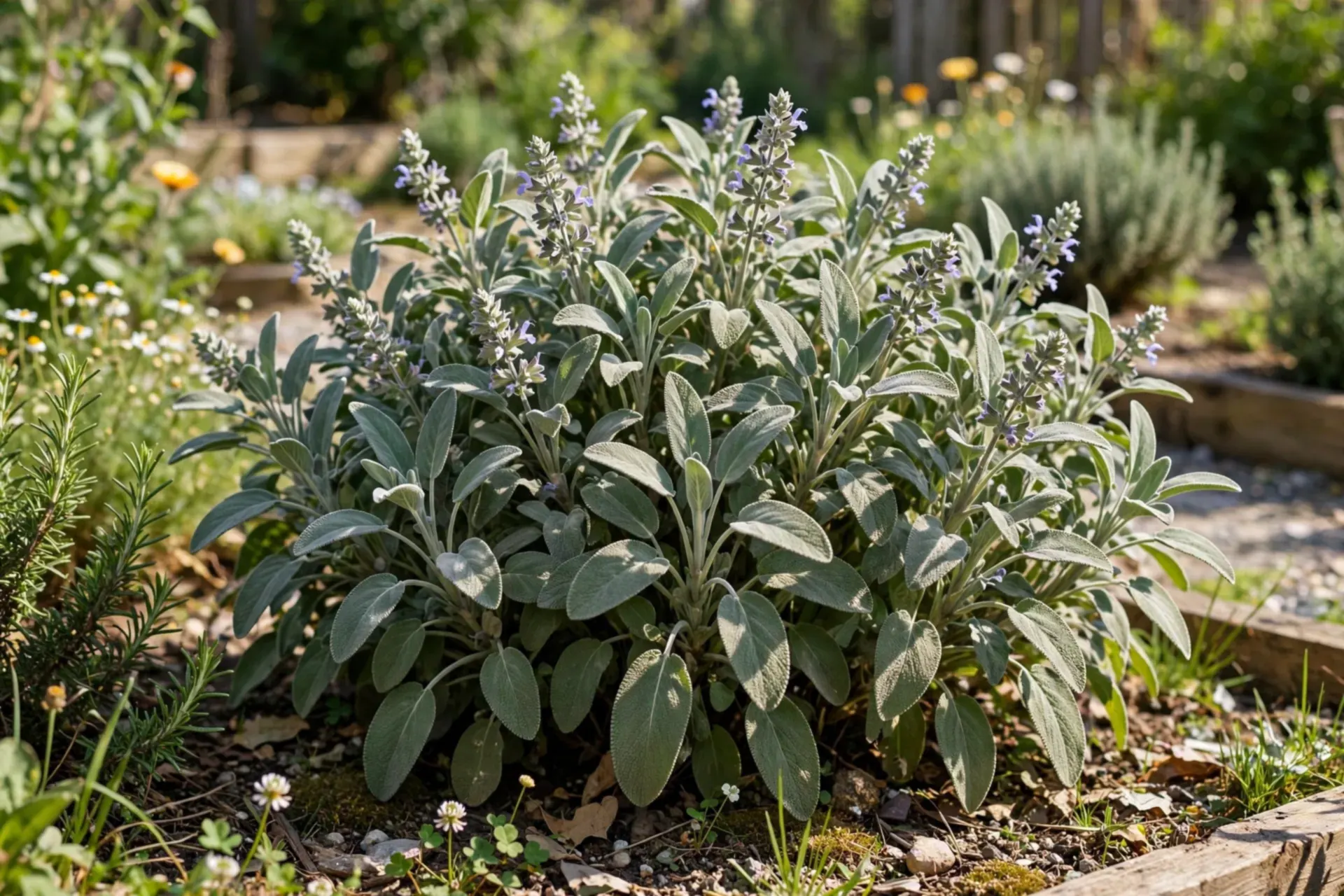
A woody little shrub — one plant seasons a lot of roasts. Sage is a hardy perennial in zones 4–8 that grows into a woody little shrub — one plant really does season a lot of roasts. It asks for full sun and, above all, drainage: more sage dies of wet winter feet than of cold.
Grow Sage with us — step by step
Everything for this plant is written step by step below — what to do, and exactly when. Read it through first if you like: you can grow it entirely on your own with that guide. Or start with us here — tell us your planting day and we lay out your personal schedule on this page, every next step on its own day, counted from your planting date. No guessing, no forgetting.
Step 1 — today: Plant out your young Sage plants today (hardened off first), spaced 18–24 in apart, and water them in well. Starting from seed instead? Sow indoors now, 1/4 in deep, and this same schedule counts from transplant day.
Sage at a glance
Sow indoors: 8 weeks before last frost
Move outside: 2 weeks after last frost
Spacing: 18–24 in · Seed depth: 1/4 in
Sun: Full sun
Water: Low — water deeply but infrequently once established
Harvest: Pick leaves lightly in year 1; regular picking from year 2
Timing counts from your average last spring frost — get your own dates in the Planting Calendar. Guidance follows standard extension-service practice for Canada and the US.
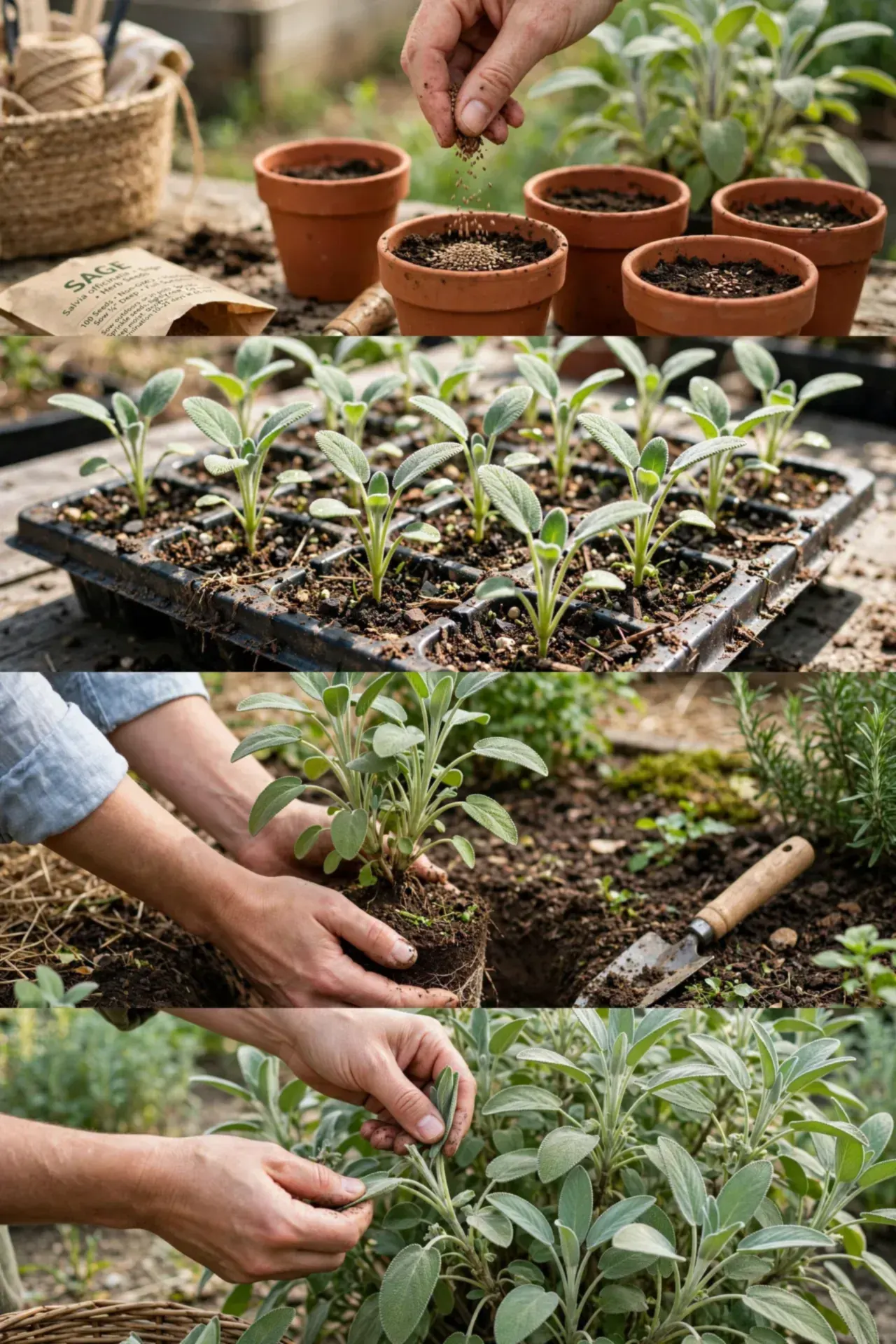
How to plant and grow sage, step by step
Step 1 — Time it right
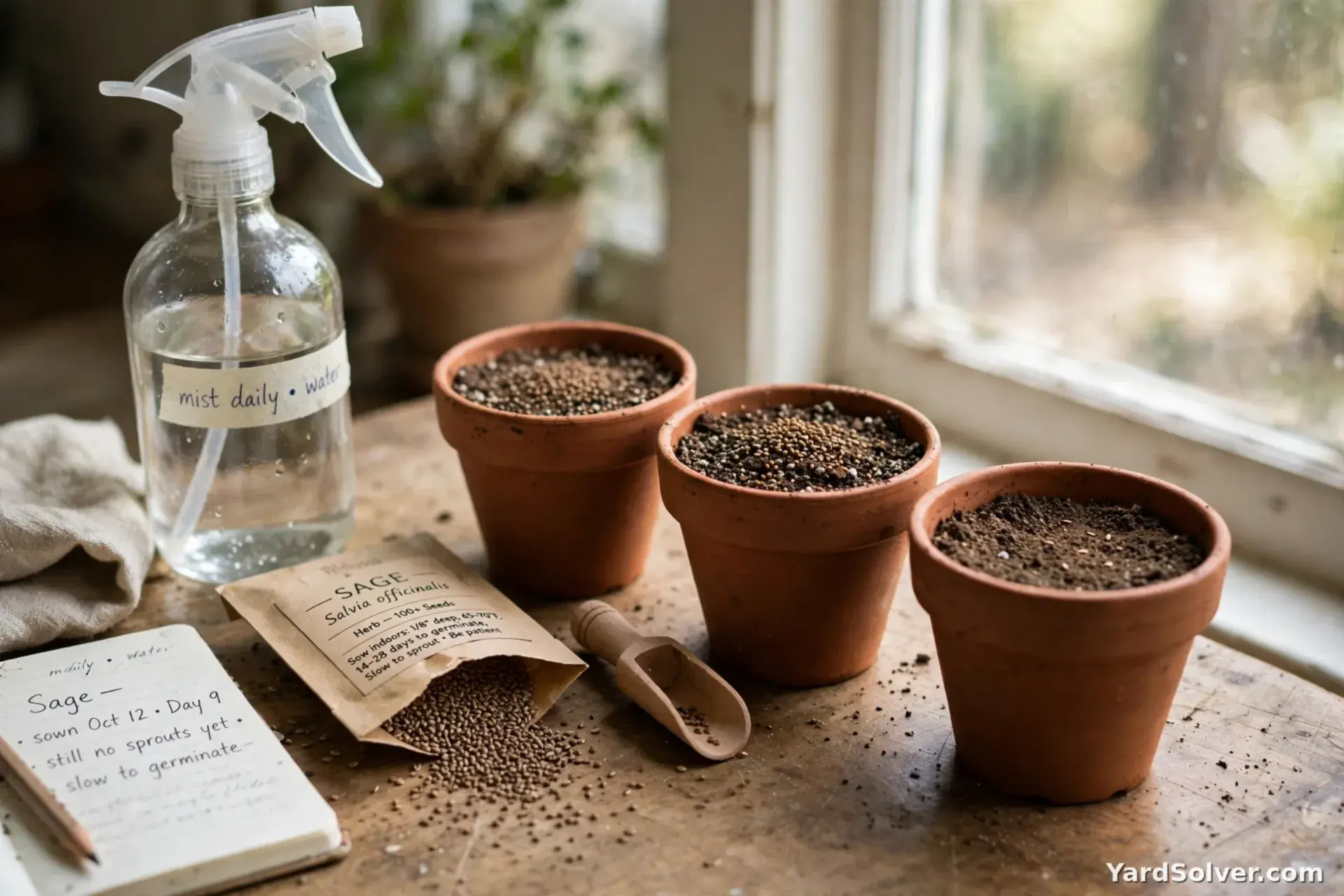
Sow indoors: 8 weeks before last frost; Move outside: 2 weeks after last frost. All dates count from your average last spring frost — the Planting Calendar turns them into real dates for your garden. Sage germination is slow and uneven — 2–3 weeks is normal — so sow a few extra seeds and be patient.
Step 2 — Prepare the spot
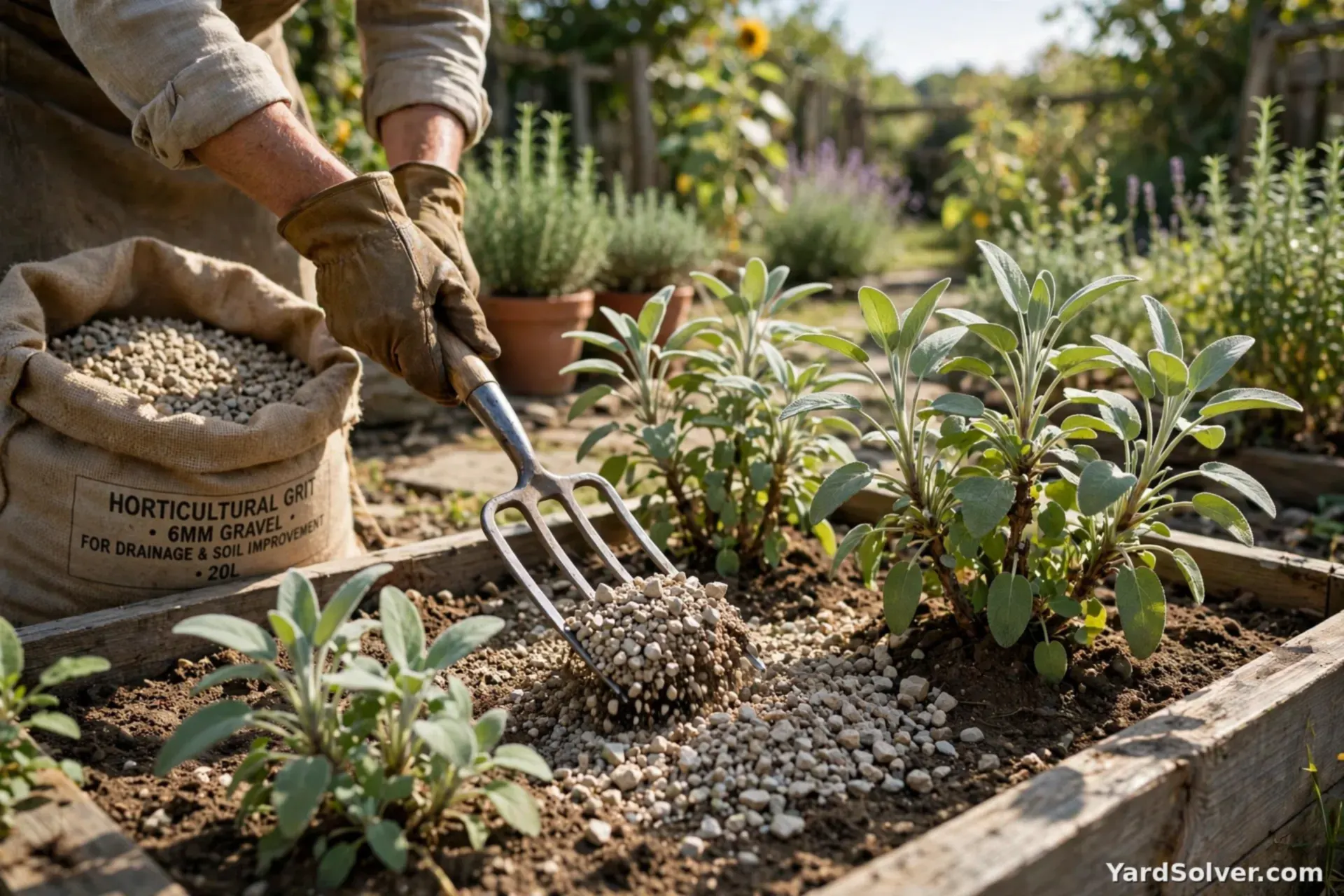
Sun: Full sun. Sage wants a sunny spot with soil that never sits wet — work grit into heavy ground, choose a raised bed or a slope, or grow it in a big pot of free-draining mix. A handful of compost at planting is feeding enough for the year. Work out how much you need with the Garden Mix Calculator or the Raised Bed Soil Calculator.
Step 3 — Sow and plant out
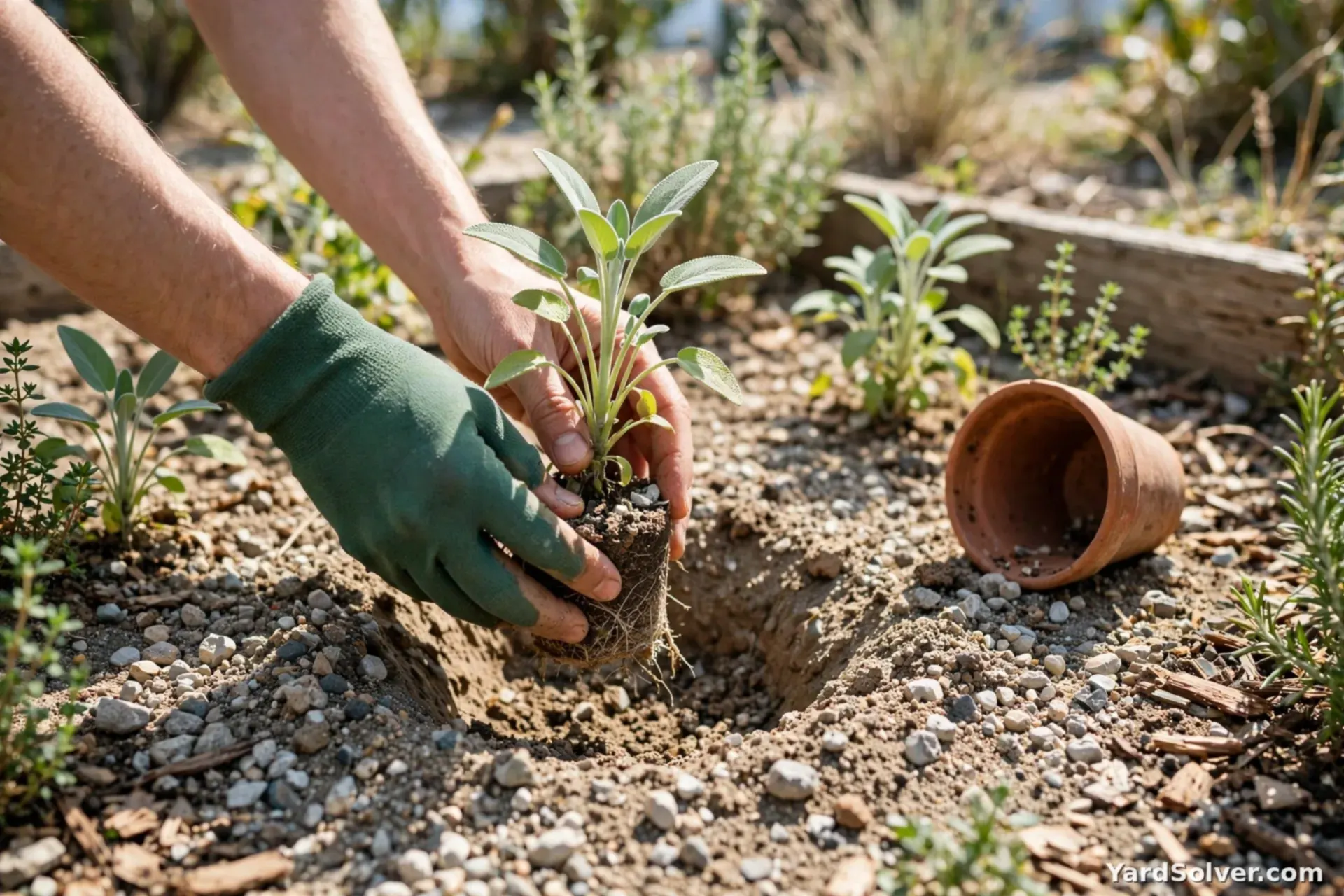
Start seed indoors 8 weeks before last frost, sowing 1/4 in deep. Grow seedlings on in strong light, harden them off over 7–10 days (see How to Harden Off Seedlings) and move them outside 2 weeks after last frost, spaced 18–24 in apart — a mature sage is a small shrub, not a sprig. The Plant Spacing Calculator turns that spacing into plants-per-bed.
Step 4 — Water and feed
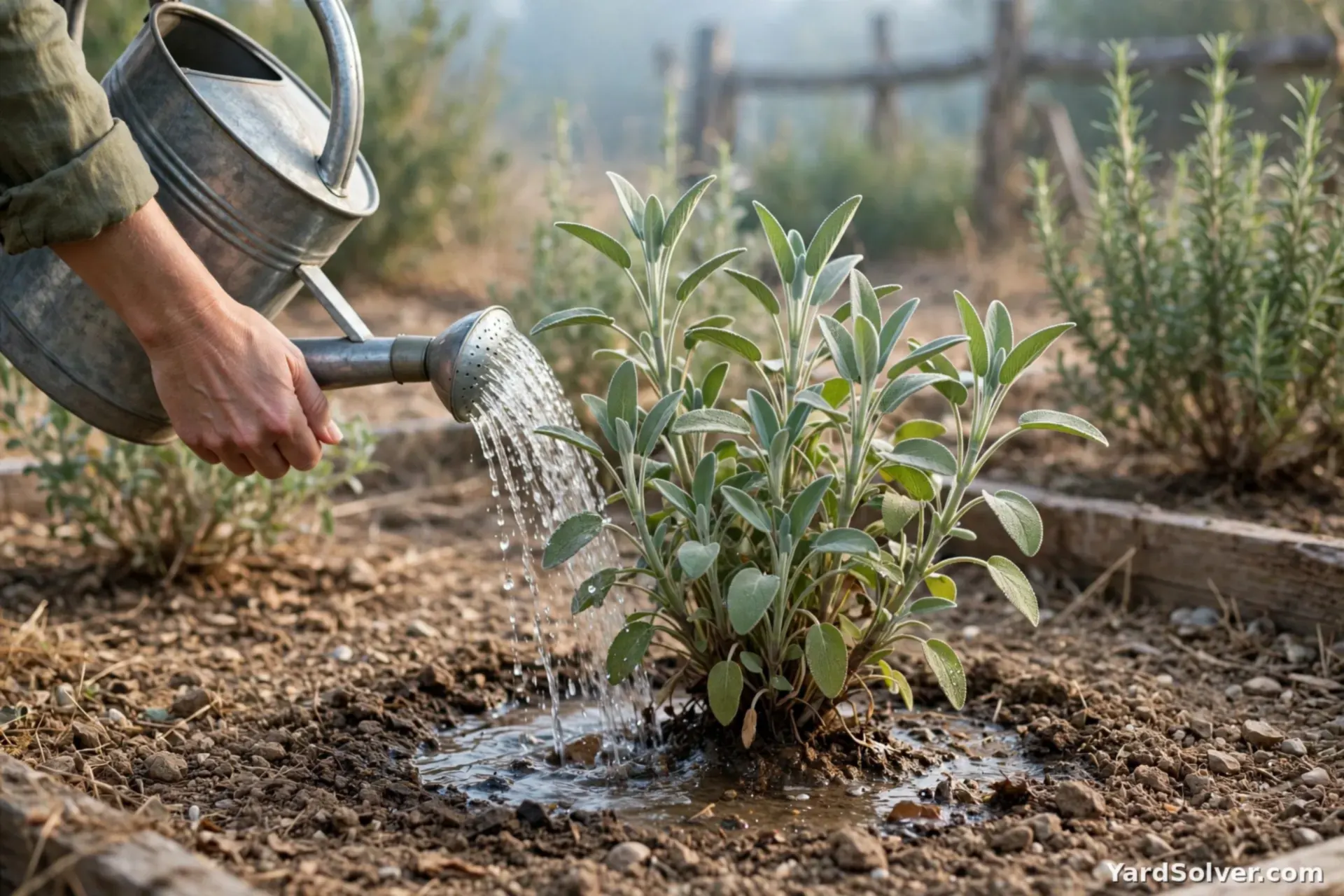
Water: Low — water deeply but infrequently once established. Soak the roots well, then leave the plant alone until the soil is properly dry again; constant light watering and soggy soil are what kill sage. Feeding is minimal — it is a lean-soil plant, and a thin compost mulch in spring is enough. The Fertilizer Calculator turns a bed size into the right amount if you do feed.
Step 5 — Care and the problems to watch for
- Powdery mildew — white dusting on leaves in humid, still air; space plants out and water at the base.
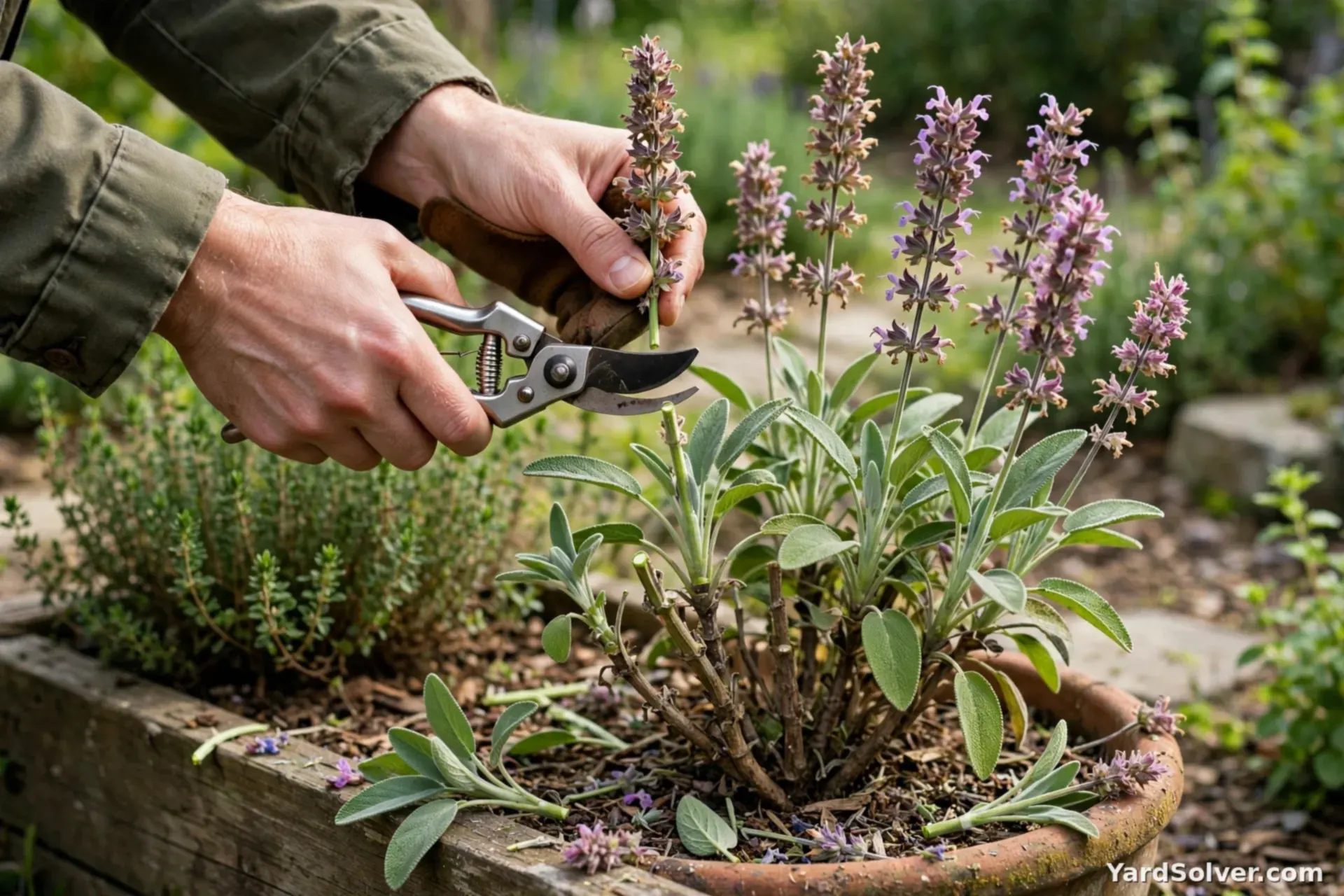
- Woody legginess — an old, unpruned sage turns into bare sticks with leafy tips; prune lightly after flowering each year to delay it.
- Wet-winter death — the classic sage killer; if your soil sits wet, grow it in a pot or raised bed instead.
Take care: Only the culinary sages are for the kitchen — many ornamental salvias are grown for flowers, not food, so check the plant's name before eating it.
Step 6 — Harvest
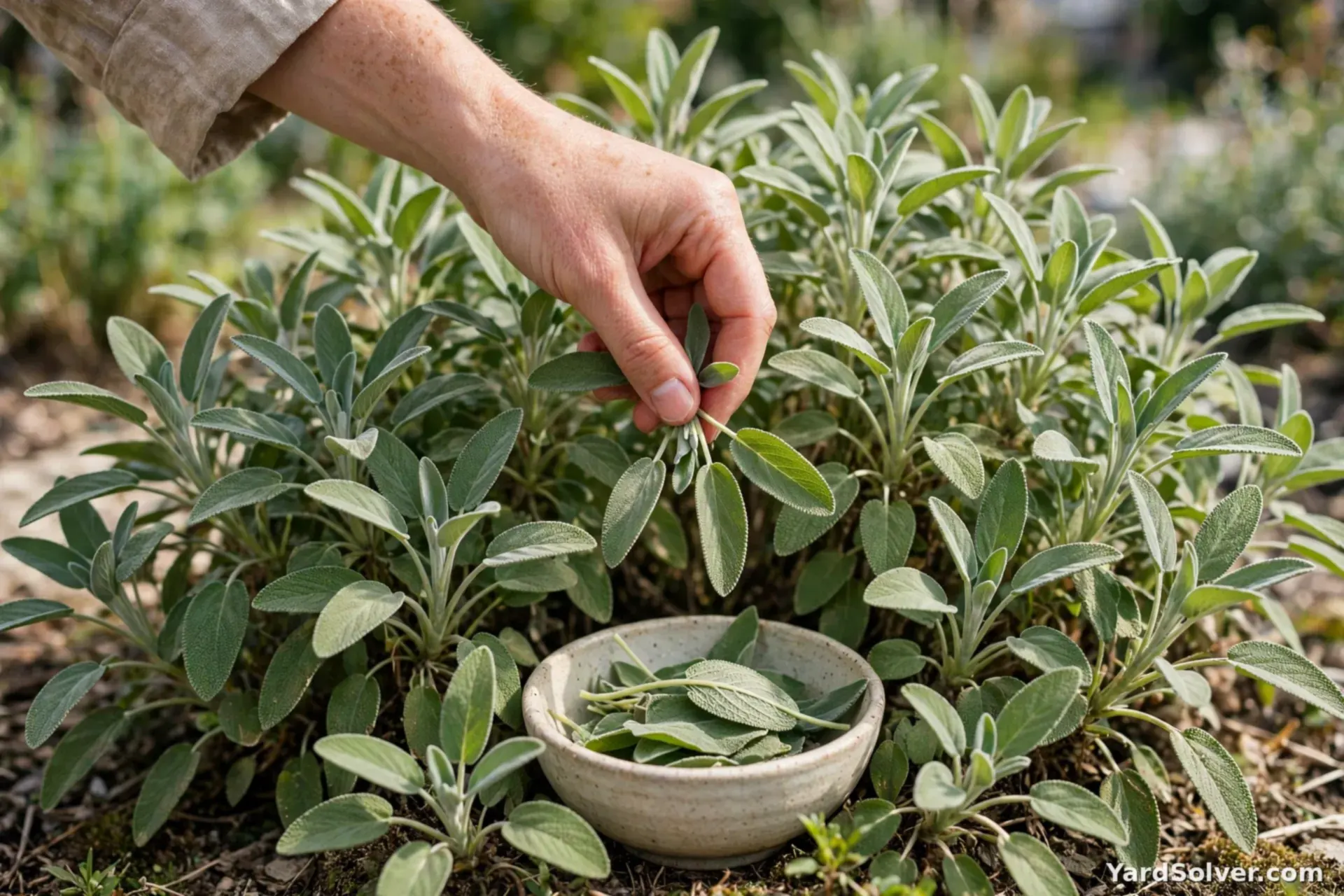
Ready in: Pick leaves lightly in year 1; regular picking from year 2. Pick individual leaves or short sprigs as needed, taking no more than a third of the plant in year one. Prune after flowering to keep the shrub compact — and never cut into bare old wood in fall, because it rarely regrows and the open cuts invite winter damage.
Problems, pests & diseases — diagnosis and fixes
- White powdery coating on leaves: powdery mildew, encouraged by crowding and wet leaves. Fix: thin for airflow, water at the base in the morning, and strip the worst leaves.
- Plant dies over winter though it survived frosts before: wet roots, not cold — sage rots in waterlogged winter soil. Fix: replant in grittier ground, a raised bed or a pot, and mulch with grit rather than soggy compost.
- Long bare woody stems with leaves only at the tips: age and missed pruning. Fix: prune lightly after flowering — but never into bare wood; if the plant is mostly sticks, take cuttings and start a fresh one.
- Leaves yellowing and wilting despite regular watering: overwatering — the roots are suffocating. Fix: let the soil dry well between waterings and check the drainage before watering again.
- Small insects and sticky leaves under new growth: aphids or whitefly on soft growth. Fix: rinse off with a jet of water; sage's rough leaves shrug off light attacks once the plant is growing strongly.
- Holes chewed in leaves, slime trails nearby: slugs and snails on young plants. Fix: hand-pick at dusk and keep mulch pulled back from the crown until plants are sturdy.
📅 Your personal Sage schedule
Counted from your planting day — not a generic calendar. Day 0 is the day the seed went in the ground or the young plant went out.
Varieties worth growing
| Variety | Colour | Why gardeners like it |
|---|---|---|
| Common (Garden) | Grey-green | The standard culinary sage — strong, clean flavour for roasts, stuffing and butter |
| Berggarten | Blue-grey-green | Broad, rounded leaves and a compact habit — a favourite for the kitchen garden |
| Purple | Purple-tinged leaves | Milder flavour, grown as much for its coloured foliage in beds and pots |
| Golden (Icterina) | Green and gold variegated | A showy variegated sage for pots and borders, with a gentle culinary flavour |
| Pineapple | Bright green, pineapple-scented | Tender and not winter-hardy — a summer pot plant with fruity-scented leaves for drinks and desserts |
Good for you — and take care
Benefits
- Classic flavour for roasts, stuffing and sage butter, from one long-lived plant
- Provides vitamin K and small amounts of calcium and iron
- Strong flavour means a few leaves season a whole dish
- A handsome, drought-tolerant shrub that earns its place ornamentally too
- Blue summer flowers are excellent for bees
Take care
- Only culinary sage types are for eating — check ornamental salvias before using them in food
- Wet winter soil kills more sage than frost does — drainage is non-negotiable
- Plants tire after 4–5 years — root cuttings or sow fresh plants to keep the supply going
A little history — and one good fact
Sage's Latin name, Salvia, comes from a word meaning 'to save' or 'to heal', and few herbs were held in higher regard — medieval herbals treated it as close to a cure-all, and it was grown in monastery gardens across Europe. It travelled to North America with early settlers as an essential kitchen and medicine-chest plant, and its partnership with roast meats and stuffing has never really been broken since.
Fun fact: An old country saying asked why anyone should die while sage grows in their garden — flattering for the plant, if optimistic for the gardener.
Keep going
Guides: Earliest Seeds to Start Indoors · Grow Herbs Indoors in Winter · How to Harden Off Seedlings
Calculators: Plant Spacing Calculator · Seed Calculator · Fertilizer Calculator
More herbs: Basil · Rosemary · Mint · Thyme · Lemongrass
← Back to the Plant Library · Get your personal planting dates
Questions people ask
When do I plant sage?
Count from your average last spring frost: sow indoors 8 weeks before last frost; move outside 2 weeks after last frost. Sage is a hardy perennial in zones 4–8: start the slow seed indoors early and plant out into full sun and sharply drained soil.
How far apart do I space sage?
Space plants 18–24 in apart, with seed sown 1/4 in deep. Sun: full sun.
When is sage ready to harvest?
Pick leaves lightly in year 1; regular picking from year 2. A woody little shrub — one plant seasons a lot of roasts.