
Plant Library · Flowers
🌸 How to Grow Statice
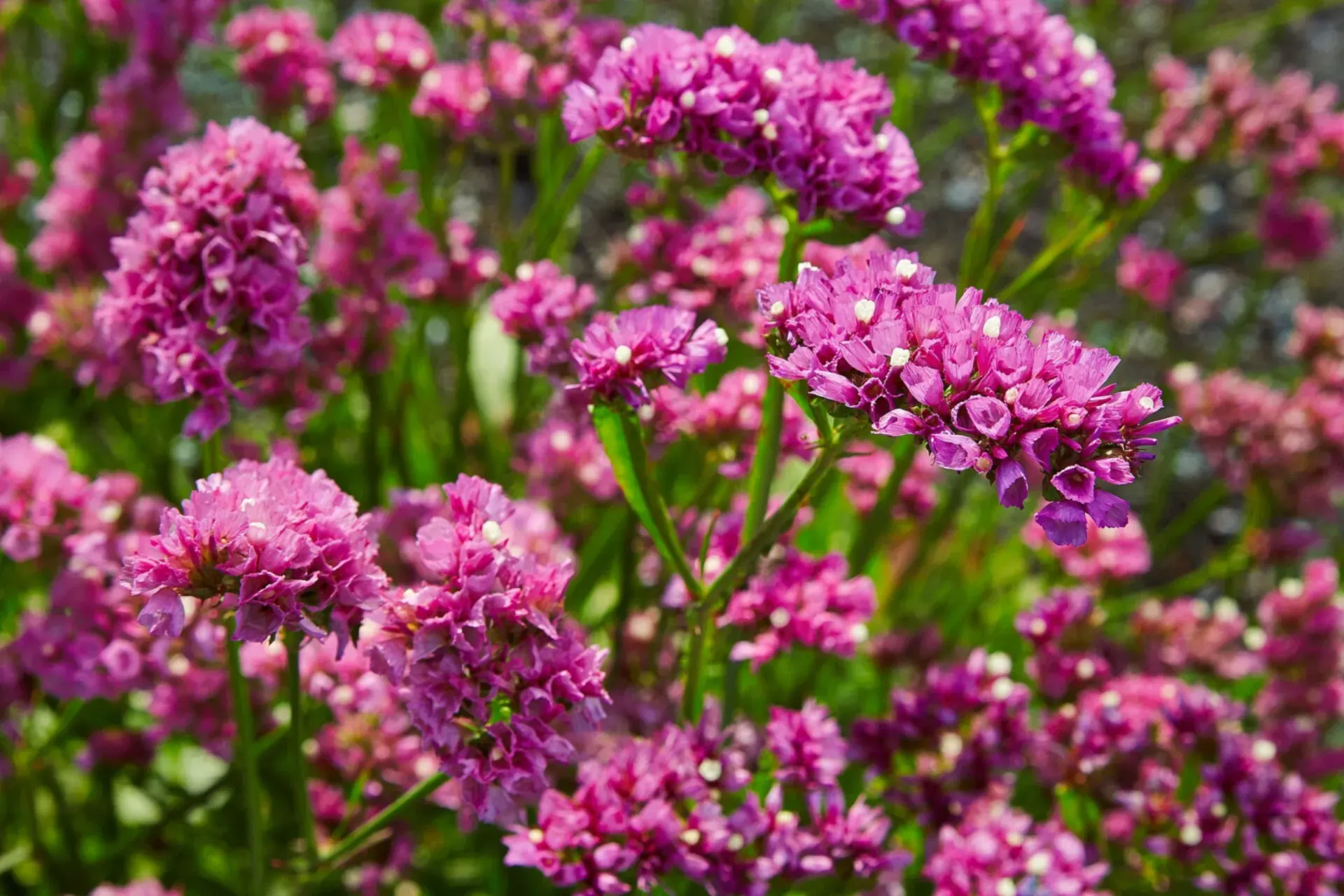
The everlasting flower — papery sprays that dry on the plant and keep for years in a vase. Statice (Limonium sinuatum) is a Mediterranean biennial grown as an annual: sow it indoors in spring, plant it in your driest sunny bed, and harvest sprays from July that need no water in the vase, ever. It even tolerates salt spray — the seaside garden's dried flower.
Grow Statice with us — step by step
Everything for this plant is written step by step below — what to do, and exactly when. Read it through first if you like: you can grow it entirely on your own with that guide. Or start with us here — tell us your planting day and we lay out your personal schedule on this page, every next step on its own day, counted from your planting date. No guessing, no forgetting.
Step 1 — today: Sow statice seed in pots indoors in early spring — clustered seed needs rubbing apart, and seedlings grow slowly at first.
Statice at a glance
Sow indoors: 8 weeks before last frost
Move outside: At last frost
Sow outdoors: Not recommended — start indoors
Spacing · Seed depth: 12 in apart · 1/8 in deep
Sun: Full sun
Water: Low — drought and salt tolerant
Bloom: July to September; cut when fully coloured
Timing counts from your average last spring frost — get your own dates in the Planting Calendar. Guidance follows standard extension-service practice for Canada and the US.
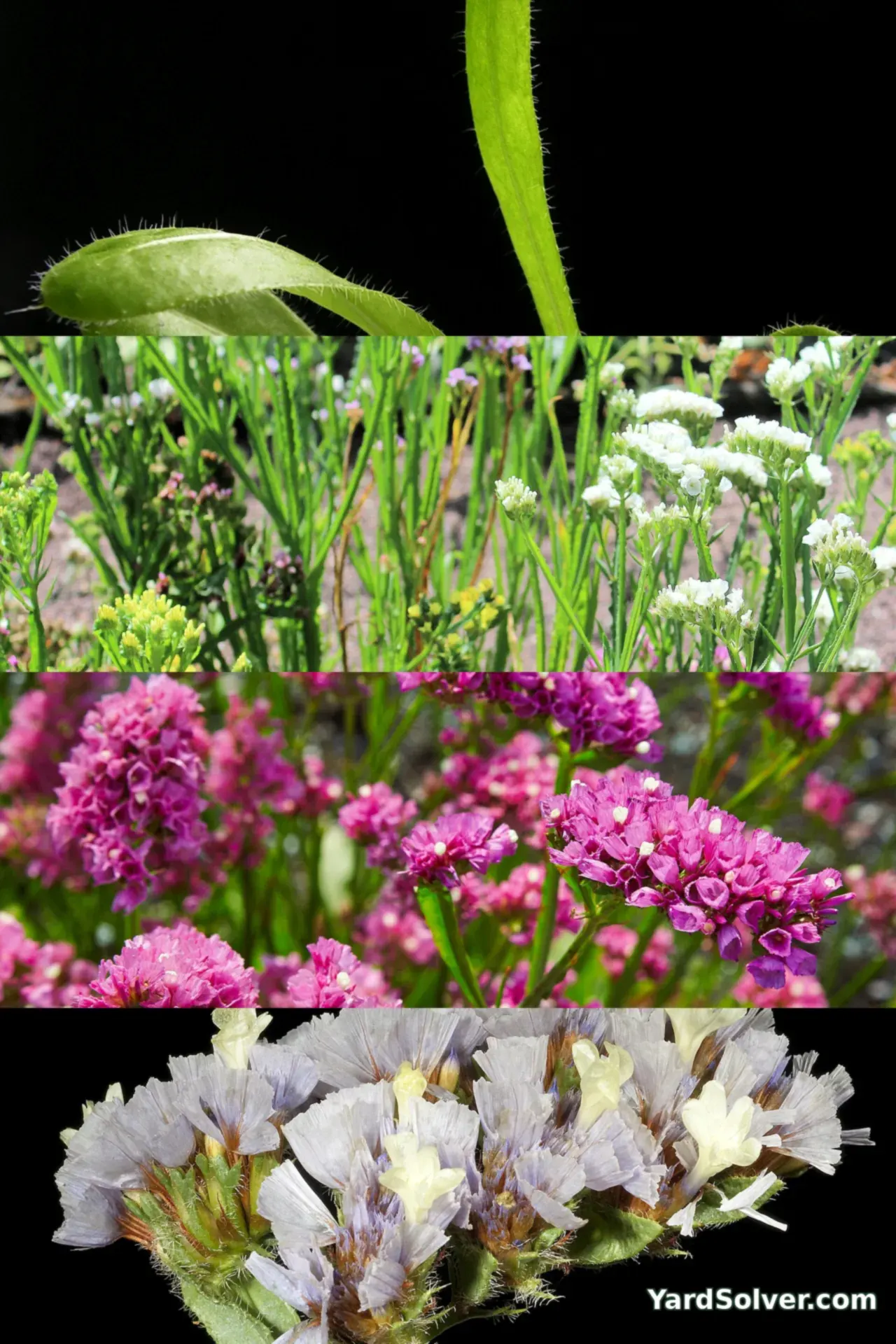
How to plant and grow statice, step by step
Step 1 — Time it right
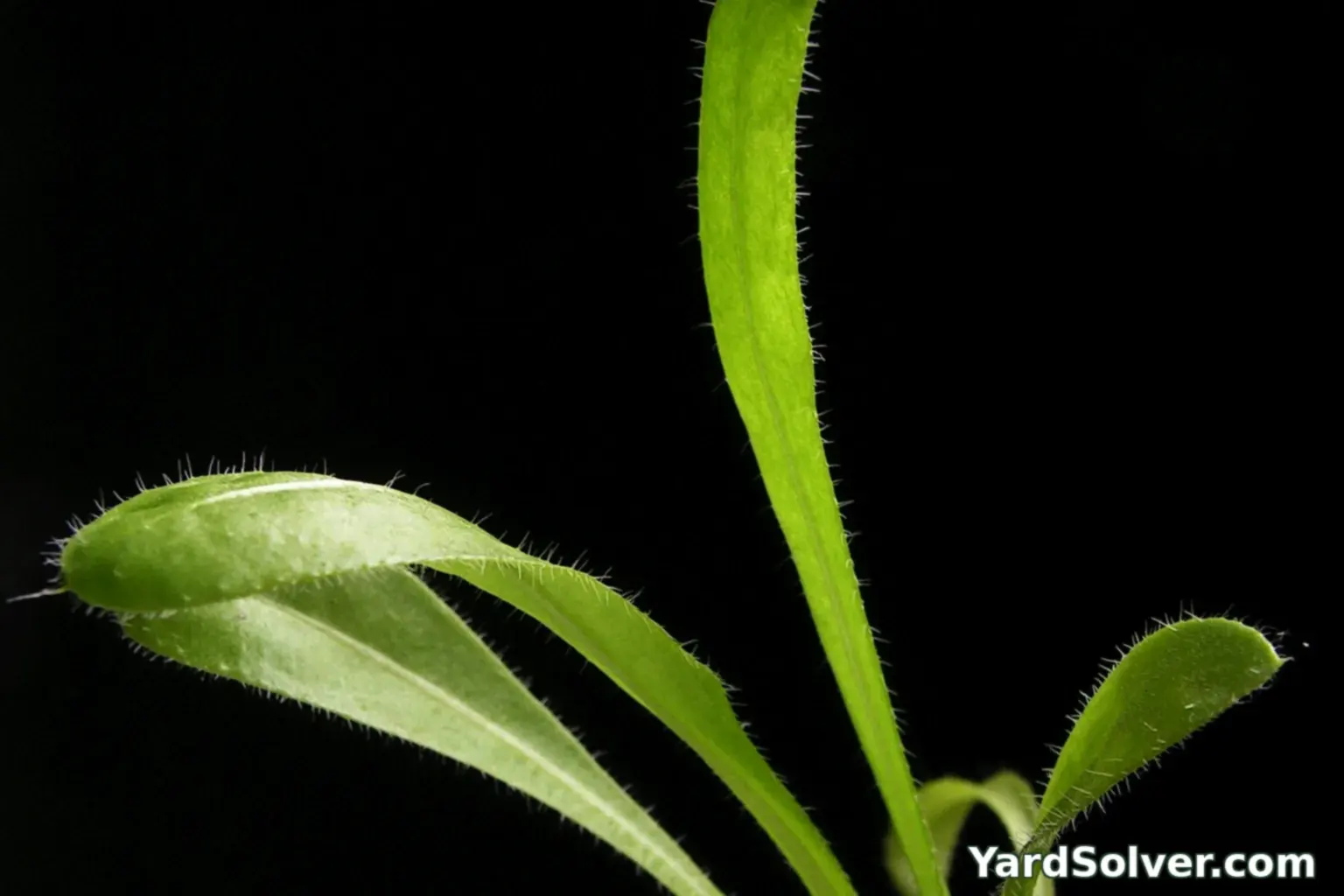
Sow indoors: 8 weeks before last frost; Move outside: at last frost; Sow outdoors: not recommended — a biennial by nature, it needs the indoor head start to flower in one season. All dates count from your average last spring frost — the Planting Calendar turns them into real dates for your garden. Statice germinates in 14–21 days at 18–21 °C / 65–70 °F (the 'seed' is really a dried flower cluster — rub it gently to separate). Seedlings form ground-hugging rosettes and grow slowly until warmth arrives, then bolt into branched, papery sprays. The early start is what makes an annual crop out of a biennial.
Step 2 — Prepare the spot
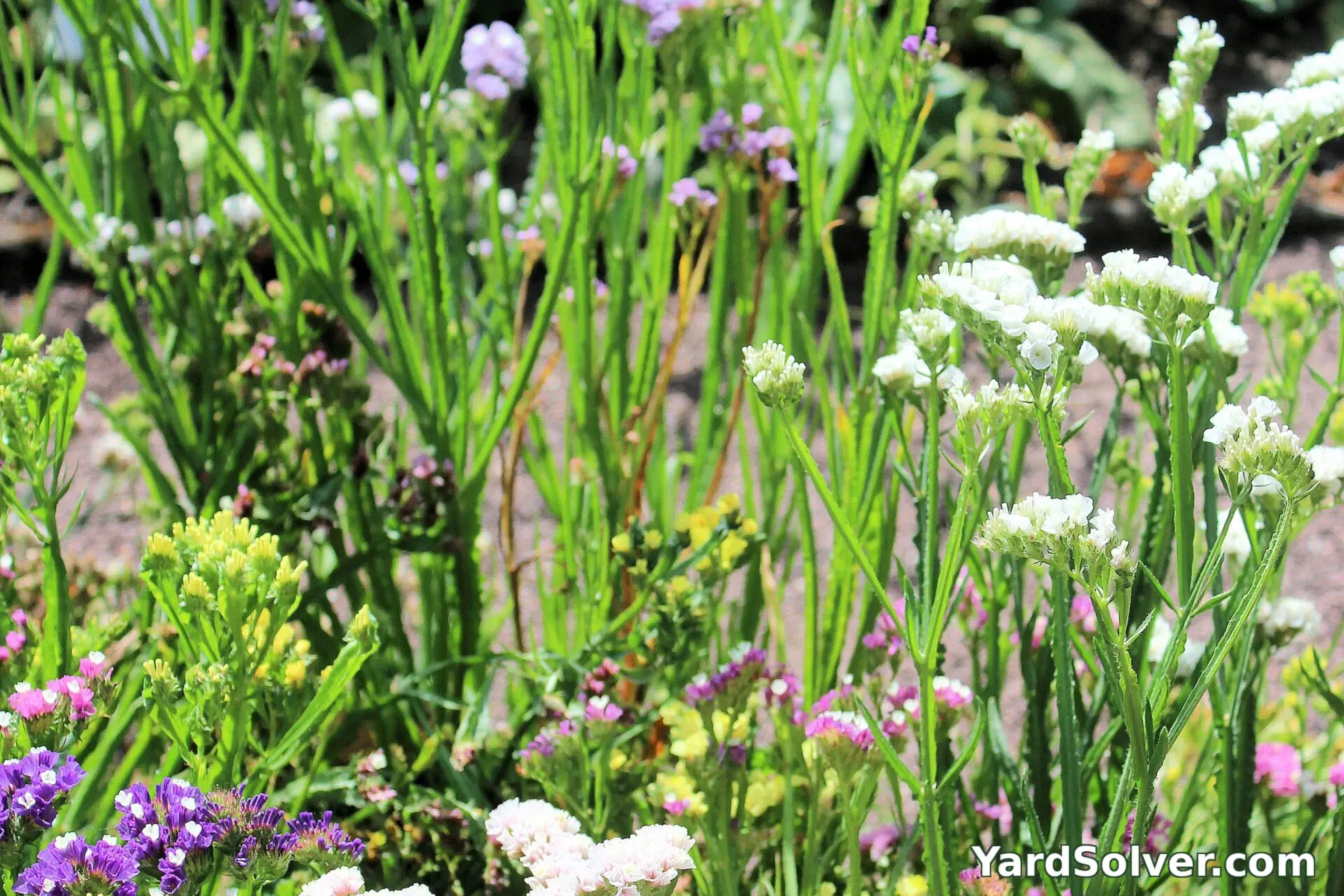
Statice wants the driest, sunniest, best-drained soil you have — sandy is ideal, and it thrives in coastal gardens where salt spray kills other flowers. Heavy wet soil rots the crown. Ordinary-to-poor fertility is right; rich beds make soft sprays that dry badly. For a raised bed, the Raised Bed Soil Calculator counts the bags for you; mixing your own? The Garden Soil Calculator gives the compost-rich split to aim for.
Step 3 — Sow and plant out
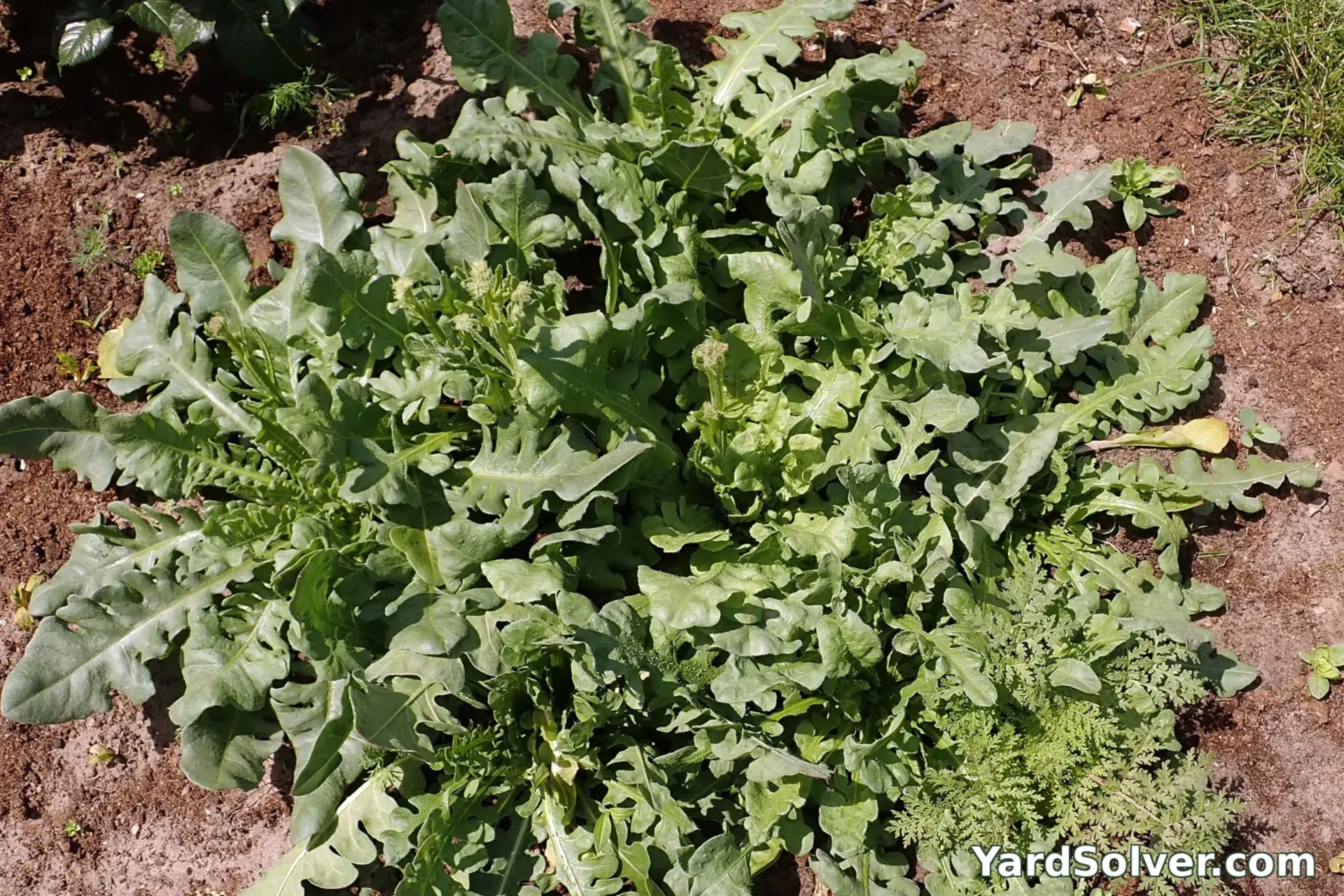
Set rosettes 12 in apart, crown at soil level, and water in once. The Plant Spacing Calculator turns your bed size into an exact plant count. Good neighbours: statice anchors the dried-flower bed with strawflowers and globe amaranth — plant the trio and your winter vases are solved.
Step 4 — Water and feed
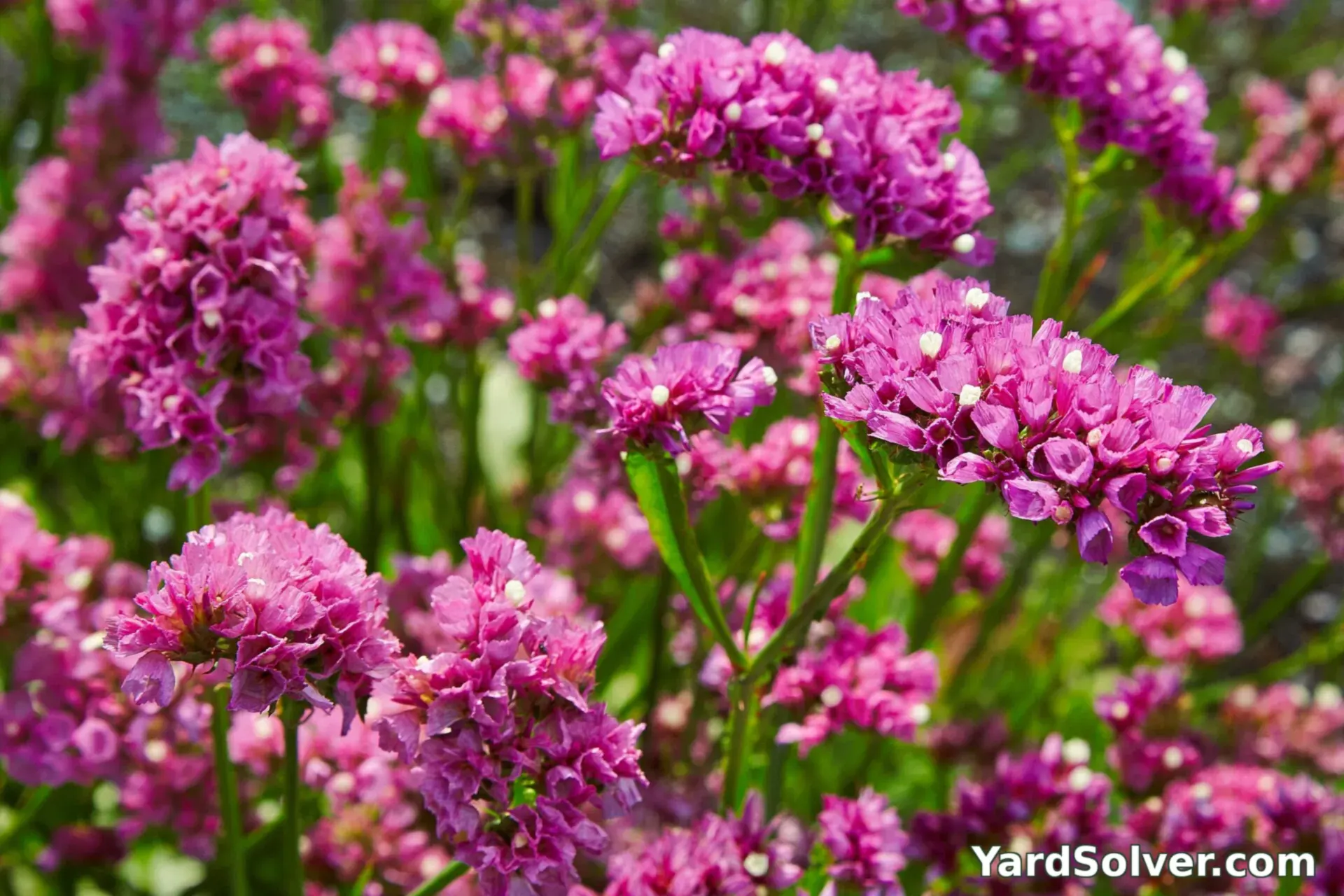
Water until plants are established, then almost never — statice is built for drought. Feeding is minimal: one light feed at planting on the poorest sand is the ceiling — the Fertilizer Calculator turns your bed size into exact amounts. Overfed statice makes lush leaves and floppy sprays.
Step 5 — Care and the problems to watch for
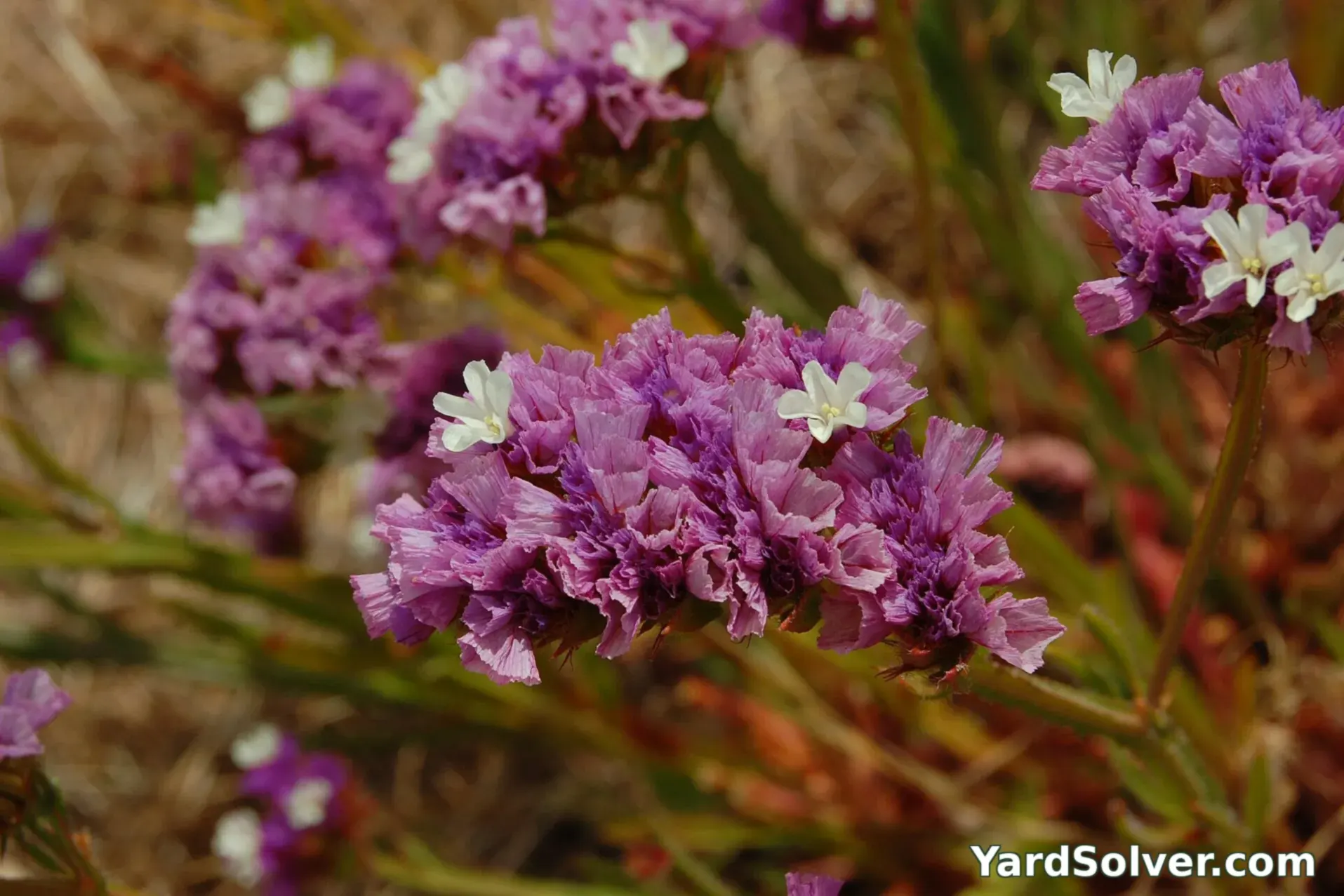
Statice care is mostly waiting for colour: the tiny true flowers sit inside papery coloured calyxes, and it is the calyx you harvest.
- Crown rot — wet soil; move the crop to sandier ground.
- Downy mildew in humid summers — space for air; the sprays already cut are unaffected.
- Short sprays — plants were checked when young; keep seedlings growing steadily.
Step 6 — Harvest
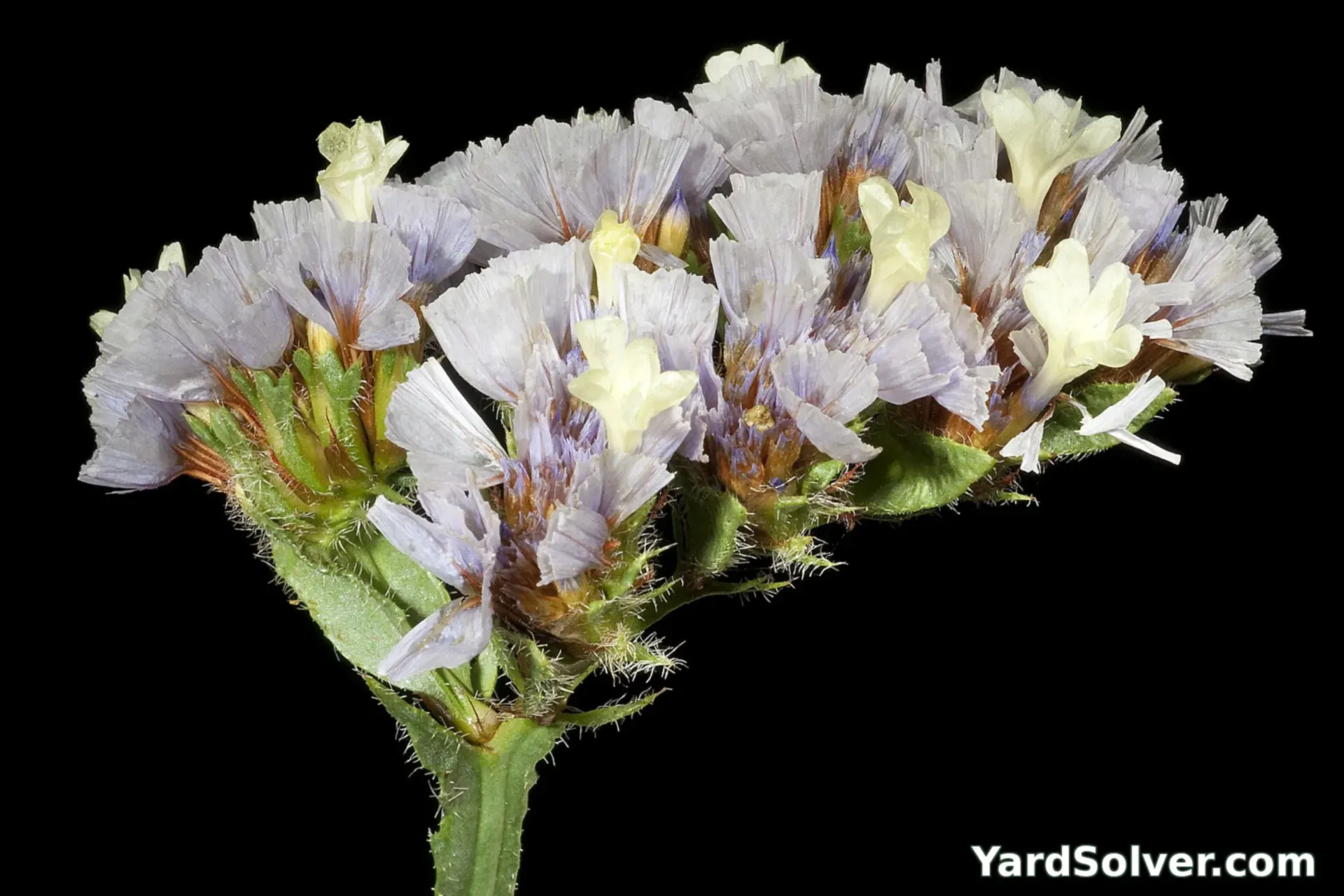
Cut stems when the sprays reach full colour (the tiny flowers inside mostly open) on a dry day. Fresh, they last a week in water; dried, they are immortal — hang bunches for a fortnight or simply stand fresh-cut stems in an empty vase and let them dry in place. Statice keeps its colour for years, which is why no dried arrangement is without it.
📅 Your personal Statice schedule
Counted from your planting day — not a generic calendar. Day 0 is the day the seed went in the ground or the young plant went out.
Varieties worth growing
| Variety | Colour | Why gardeners like it |
|---|---|---|
| Pacific Mix | Mixed colours, tall | The classic tall mix for cutting — purple, pink, white, yellow, blue. |
| QIS series | Uniform colours, professional | Single-colour strains ('Quality In Seed') for designed arrangements. |
| Seeker series | Pastels, sturdy | Softer colours on strong stems that dry beautifully. |
Good for you — and take care
Benefits
- The definitive dried flower — years of colour with no water.
- Tolerates drought and salt wind — the seaside garden's friend.
- A whole rainbow from one packet, fresh or dried.
Take care
- Crown rots in wet soil — plant in your driest bed.
- Slow rosettes at first — the indoor start matters.
- Cut fully coloured; pale sprays never colour up indoors.
A little history — and one good fact
Limonium species ring the Mediterranean's salt marshes and cliffs — the name comes from the Greek leimon, a meadow, and the plants are built for salt and drought. Statice became the backbone of the Victorian dried-flower trade ('everlastings') and has never left it.
Fun fact: The coloured part of statice is not the petal but the calyx — a papery cup that holds its colour after the tiny true flower inside has finished, which is exactly why it dries so well.
Keep going
Guides: Succession planting · Companion planting basics · Pollinator garden guide
Calculators: Plant Spacing Calculator · Garden Mix Calculator · Fertilizer Calculator
More flowers: Strawflower · Bunny Tail Grass · Craspedia · Bells of Ireland
← Back to the Plant Library · Get your personal planting dates
Questions people ask
How do you dry statice?
Cut the sprays at full colour on a dry day, bunch them loosely, and hang them upside down for about two weeks — or simply stand them in an empty vase to dry in place. The colour keeps for years.
Why did my statice rot at the base?
Crown rot from wet soil — statice is a plant of cliffs and salt marshes and needs sharp drainage. Plant it in your driest, sandiest bed and keep the crown at soil level.
Is statice a perennial?
It is a short-lived perennial or biennial in warm, dry climates (zones 9–10), but it is grown as an annual from an early indoor sowing almost everywhere else.