
Plant Library · Flowers
🌼 How to Grow Strawflower

Flowers that feel like paper and last like it too — the everlasting that crunches when you touch it. Strawflowers (Xerochrysum bracteatum) are Australian annuals (short-lived perennials in warm zones) whose 'petals' are dry bracts from the start — the flower is born dried. Sow indoors in spring, plant out after frost, and cut armfuls from July to frost for arrangements that outlive the decade.
Grow Strawflower with us — step by step
Everything for this plant is written step by step below — what to do, and exactly when. Read it through first if you like: you can grow it entirely on your own with that guide. Or start with us here — tell us your planting day and we lay out your personal schedule on this page, every next step on its own day, counted from your planting date. No guessing, no forgetting.
Step 1 — today: Surface-sow strawflower seed under lights indoors — it needs warmth and light, and seedlings grow steadily once up.
Strawflower at a glance
Sow indoors: 6 weeks before last frost — surface-sow
Move outside: 1 week after last frost
Sow outdoors: Only in warm climates — start indoors elsewhere
Spacing · Seed depth: 11 in apart · barely cover — seed needs light
Sun: Full sun
Water: Moderate — drought-tolerant once settled
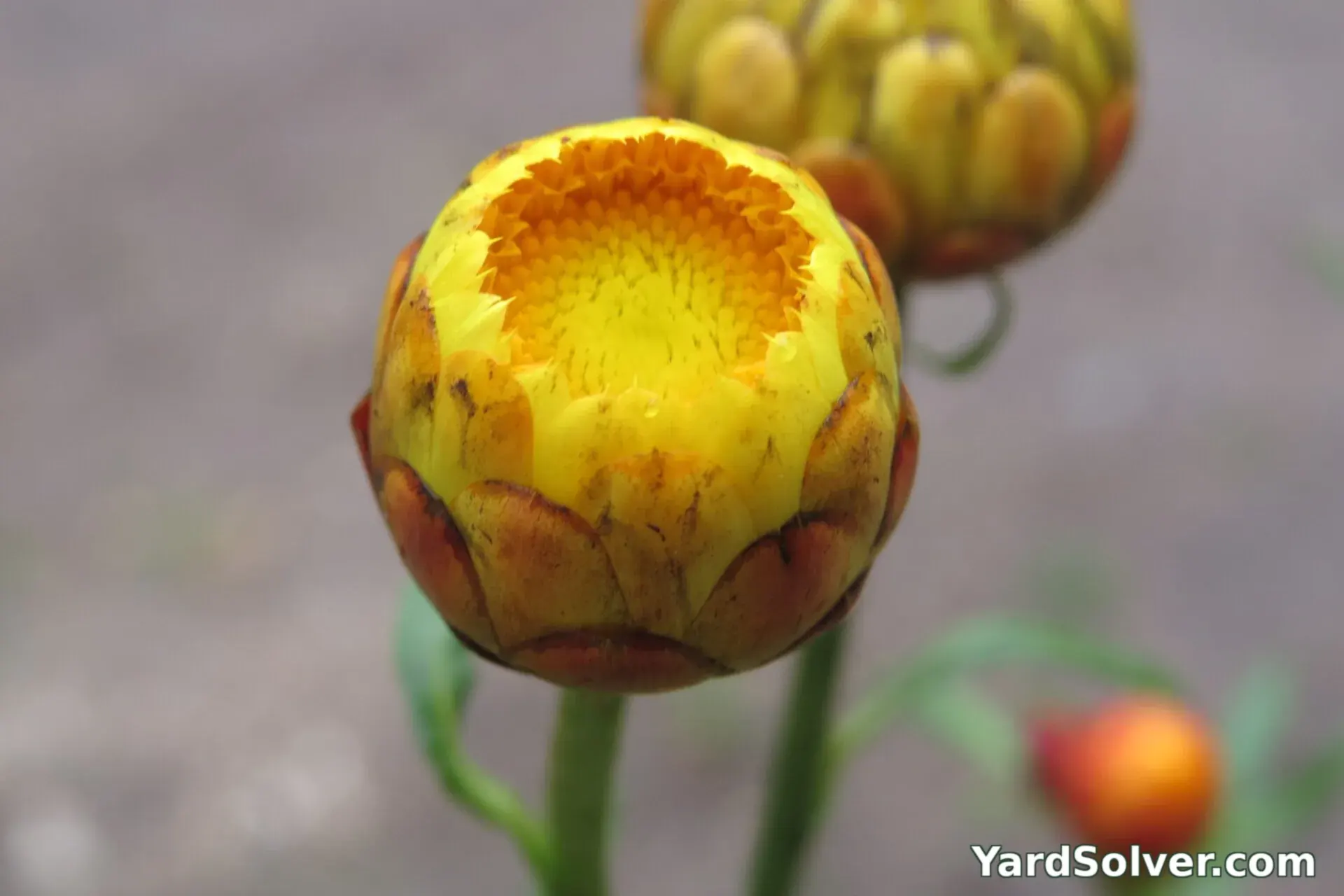
Bloom: July to frost; cut before centres open fully
Timing counts from your average last spring frost — get your own dates in the Planting Calendar. Guidance follows standard extension-service practice for Canada and the US.
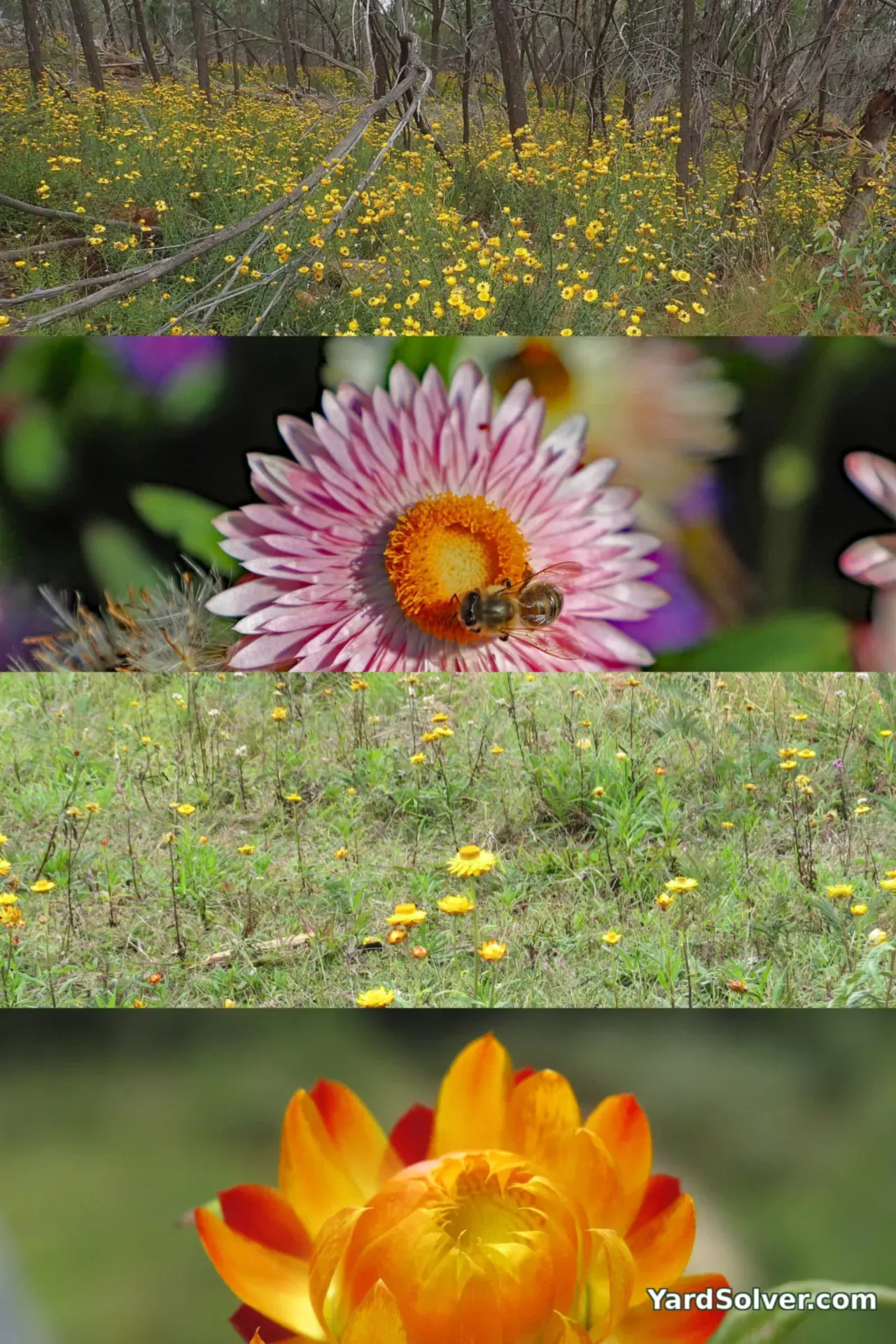
How to plant and grow strawflower, step by step
Step 1 — Time it right

Sow indoors: 6 weeks before last frost, on the surface under light; Move outside: 1 week after last frost; Sow outdoors: only where summers are long and hot. All dates count from your average last spring frost — the Planting Calendar turns them into real dates for your garden. Strawflower germinates in 7–14 days at 21–24 °C / 70–75 °F when the seed sits in the light. Grow seedlings on brightly — leggy strawflowers never quite recover their posture. They are tender: the move outside waits for settled warmth, and a cold night in May can end the crop before it starts.
Step 2 — Prepare the spot
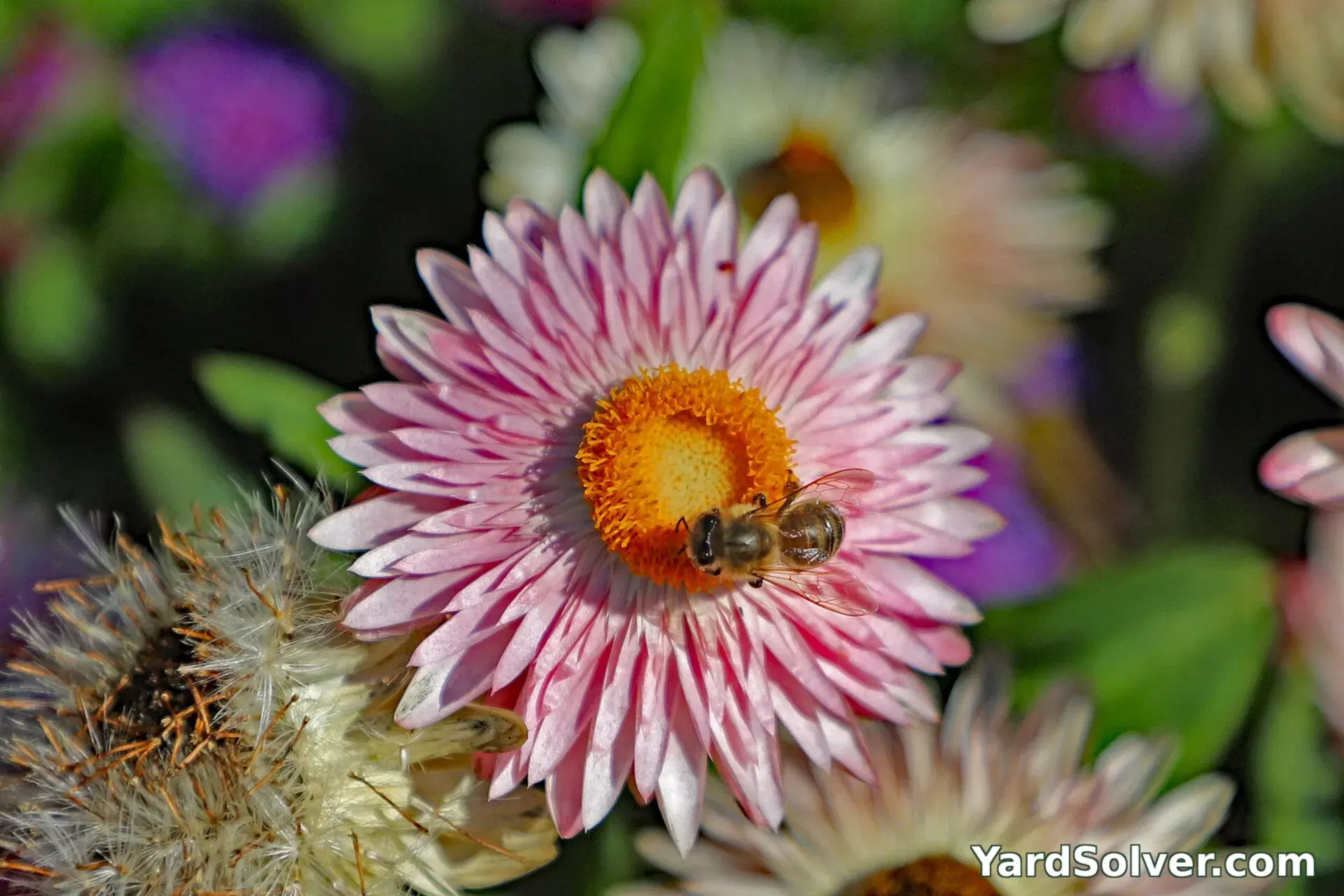
Strawflowers want full sun and well-drained, average soil. They tolerate poor ground well but rot in wet clay — lighten heavy beds or grow in big pots. Tall cutting strains benefit from a sheltered slot; their stems are strong but the dry flowers catch wind. For a raised bed, the Raised Bed Soil Calculator counts the bags for you; mixing your own? The Garden Soil Calculator gives the compost-rich split to aim for.
Step 3 — Sow and plant out
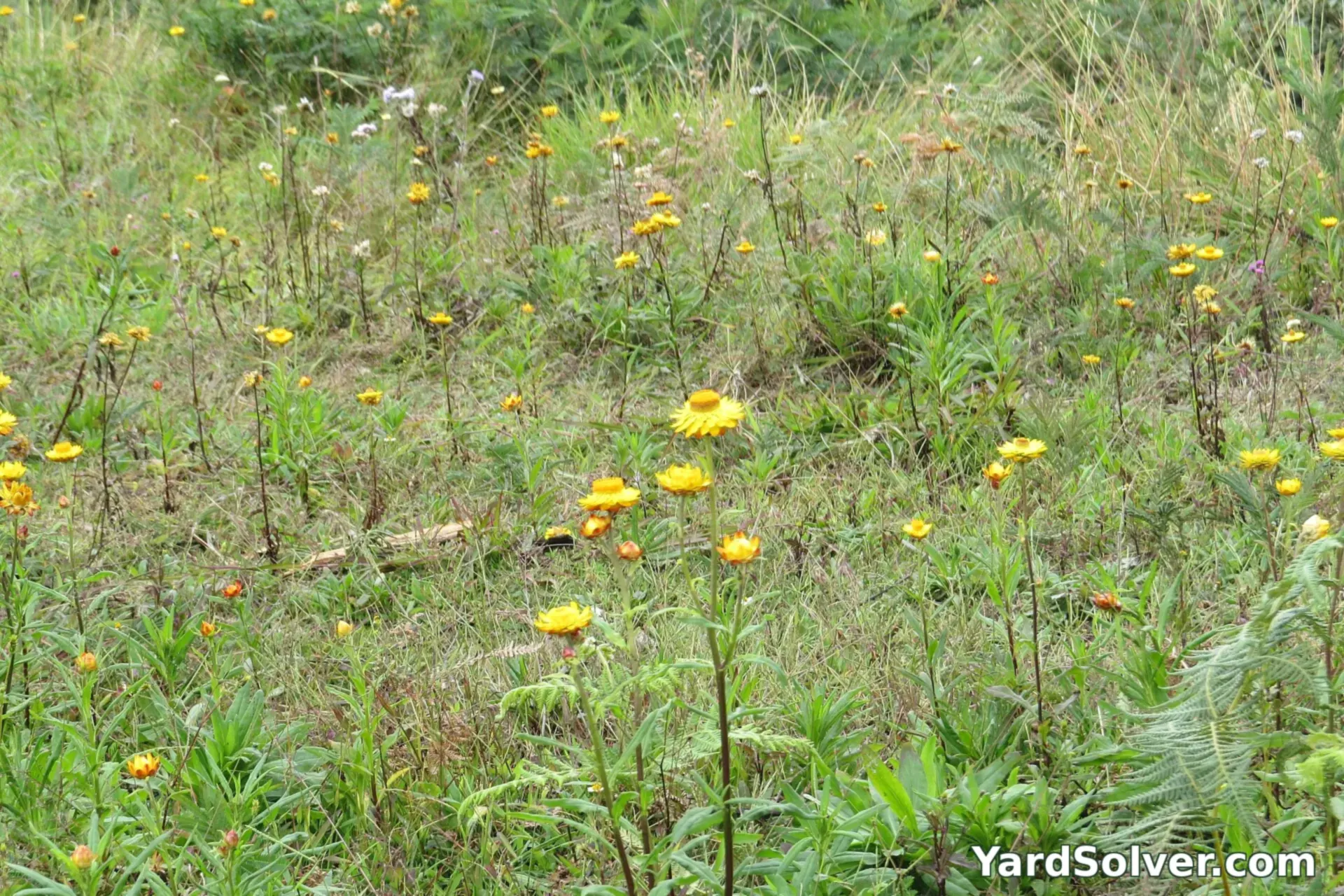
Set plants 11 in apart at their pot depth. The Plant Spacing Calculator turns your bed size into an exact plant count. Pinch the tip of tall strains for branching (more, slightly shorter stems). Good neighbours: strawflowers anchor the everlasting bed with statice and globe amaranth — a border that dries itself by September.
Step 4 — Water and feed
Water through establishment and in long dry spells. Feed lightly — one balanced feed at bud stage is enough for the cutting strains — the Fertilizer Calculator turns your bed size into exact amounts. Rich feeding makes lush, mildew-prone growth with fewer flowers.
Step 5 — Care and the problems to watch for
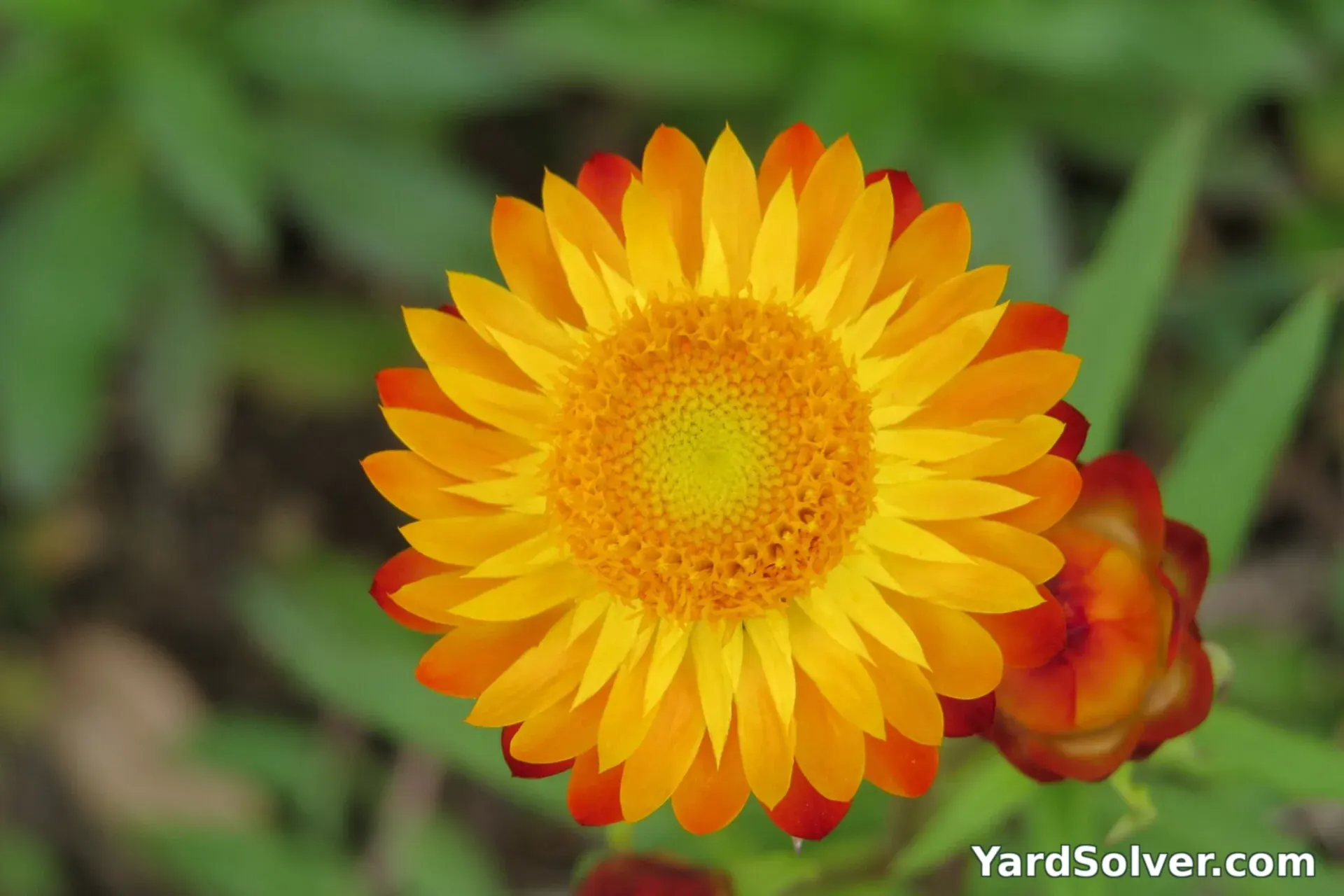
Cut or deadhead constantly — strawflowers flower to frost when picked. Tall strains may need a discreet stake in exposed gardens.
- Powdery mildew — space for air and water at the base; pick off tired foliage.
- Flowers opening flat and shedding — cut too late for drying; take them with centres closed.
- Downy, distorted growth — aphid colonies in the tips; water jet or pinch out.
Step 6 — Harvest
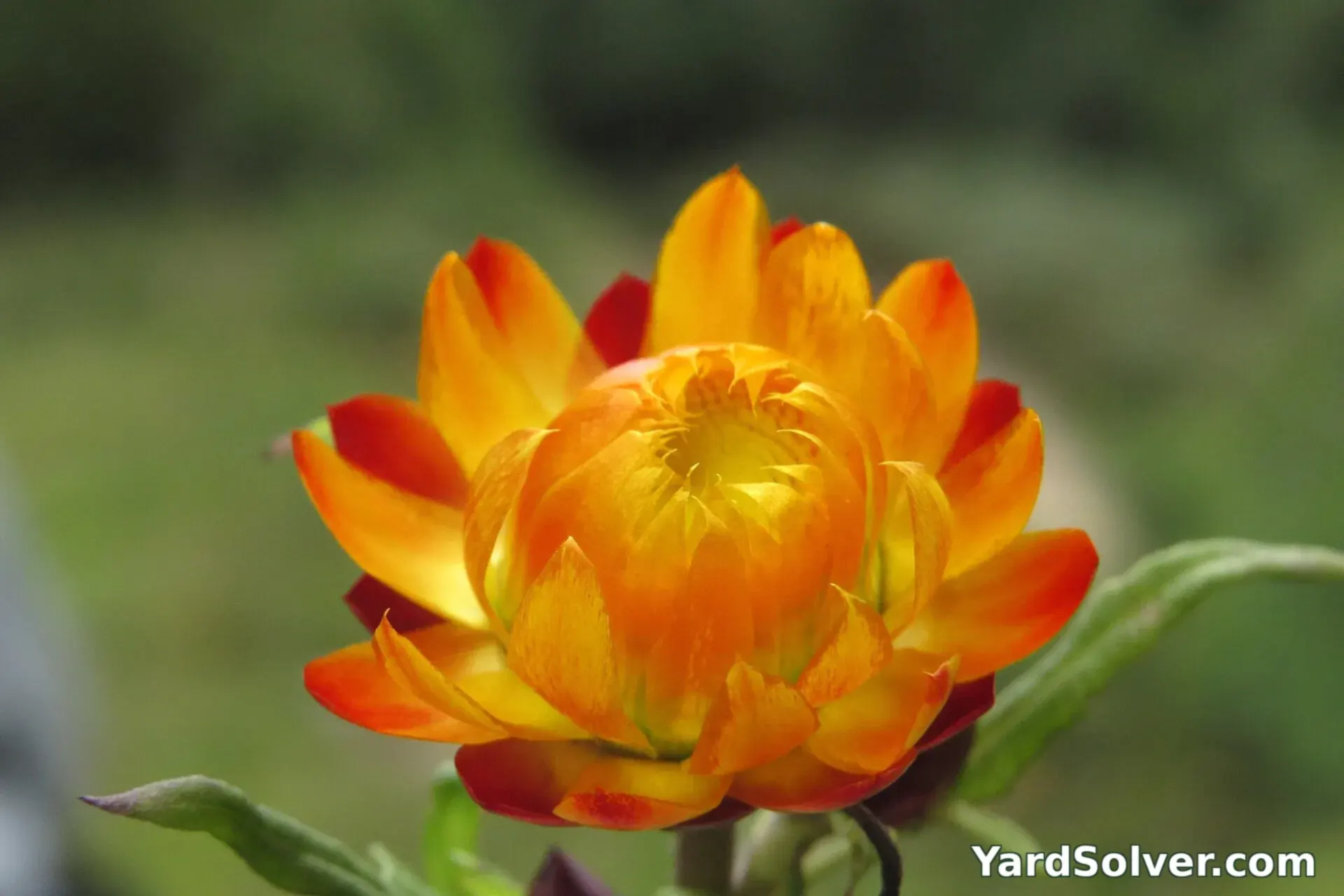
For drying, cut when the outer bracts have opened but the centre disc is still closed and tight — the flower opens a fraction more as it dries, finishing perfectly. Strip the leaves, bunch loosely, and hang in a dark, airy place. Fresh-cut flowers also work in water for a week. Dried strawflowers hold colour for years — wire them into wreaths and winter arrangements.
📅 Your personal Strawflower schedule
Counted from your planting day — not a generic calendar. Day 0 is the day the seed went in the ground or the young plant went out.
Varieties worth growing
| Variety | Colour | Why gardeners like it |
|---|---|---|
| Monster Mix | Huge heads, hot colours | Giant-flowered cutting strain — the florist's choice. |
| Bright Bikinis | Compact, mixed colours | Shorter plants bred for pots and front borders. |
| Swiss Giant | Large, double-looking heads | Extra-full heads that dry to impressive size. |
Good for you — and take care
Benefits
- The everlasting par excellence — dried heads keep colour for years.
- Flowers from July to frost with constant picking.
- Papery texture fascinates children and florists alike.
Take care
- Cut for drying with the centre still closed, or heads open flat and shed.
- Tender — never plant out before settled warmth.
- Mildew in humid, crowded plantings — space and air.
A little history — and one good fact
Strawflowers evolved in Australia, where papery bracts protect the flower from desiccating sun and wind — a flower pre-adapted to the dried arrangement. European florists imported it in the 1800s and it has anchored 'everlasting' bouquets ever since; modern breeders doubled its size and colour range.
Fun fact: The strawflower's petals are not petals at all but stiff, dry bracts — the real flowers are the tiny tubes in the centre, which is why the 'flower' never wilts.
Keep going
Guides: Succession planting · Companion planting basics · Pollinator garden guide
Calculators: Plant Spacing Calculator · Garden Mix Calculator · Fertilizer Calculator
More flowers: Statice · Celosia · Craspedia · Jewels of Opar
← Back to the Plant Library · Get your personal planting dates
Questions people ask
When should I cut strawflowers for drying?
When the outer papery bracts have opened but the centre disc is still closed and tight. The flower opens slightly as it dries — cut at that stage and it finishes perfectly; cut fully open and it sheds.
Do strawflowers really last for years?
Yes — because the coloured parts are dry bracts, not true petals, they keep their colour and shape for years out of water. Keep them out of direct sun in the vase and they fade very slowly.
Why did my strawflower seedlings get leggy?
They wanted more light. Strawflower seedlings stretch fast in dim conditions — give them the brightest sill or lights close above, and grow them on at cool room temperature once they're up.