
Plant Library · Herbs
🌿 How to Grow Tarragon
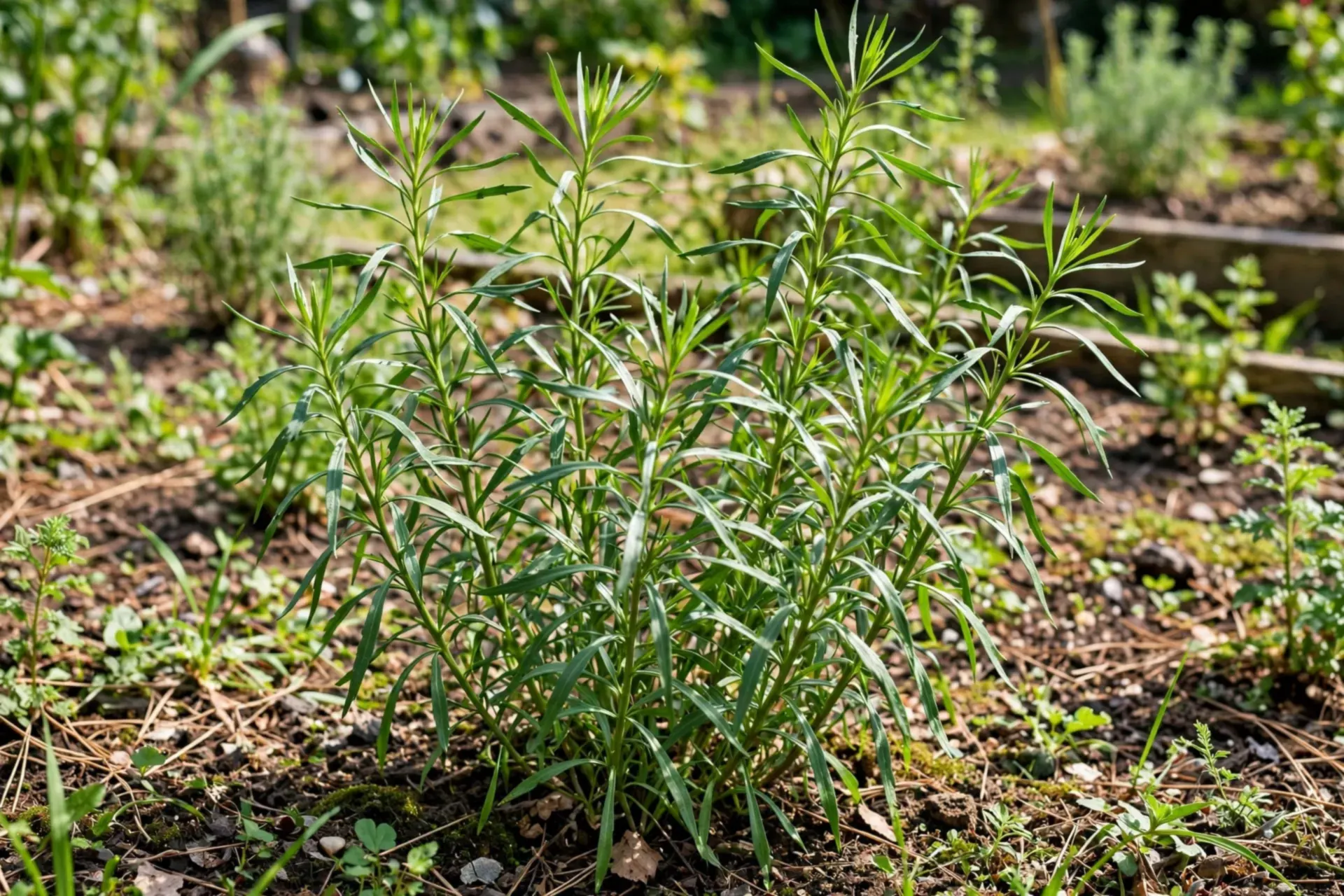
True French tarragon never comes from seed — buy a plant, or take cuttings. True French tarragon is sterile — it sets no viable seed, so it can only be grown from a bought plant, a rooted cutting, or a division. That single fact explains most tarragon disappointment: anything grown from a packet labelled tarragon seed is Russian tarragon, a weedy relative with very little flavour. Buy the plant once, in zones 4–8 keep its roots dry in winter, and you will pick anise-sweet sprigs for years.
Grow Tarragon with us — step by step
Everything for this plant is written step by step below — what to do, and exactly when. Read it through first if you like: you can grow it entirely on your own with that guide. Or start with us here — tell us your planting day and we lay out your personal schedule on this page, every next step on its own day, counted from your planting date. No guessing, no forgetting.
Step 1 — today: Settle your Tarragon plant in today: plant it at the same depth as its pot, spaced 18–24 in apart, and water it in well. French tarragon is sterile and never comes true from seed — this schedule counts from planting day.
Tarragon at a glance
Move outside: 2 weeks after last frost
Spacing: 18–24 in · Planting depth: Same depth as its pot
Sun: Full sun
Water: Moderate — hates sitting wet, especially in winter
Harvest: Pick sprigs once stems are 8–10 in tall, through summer
Timing counts from your average last spring frost — get your own dates in the Planting Calendar. Guidance follows standard extension-service practice for Canada and the US.
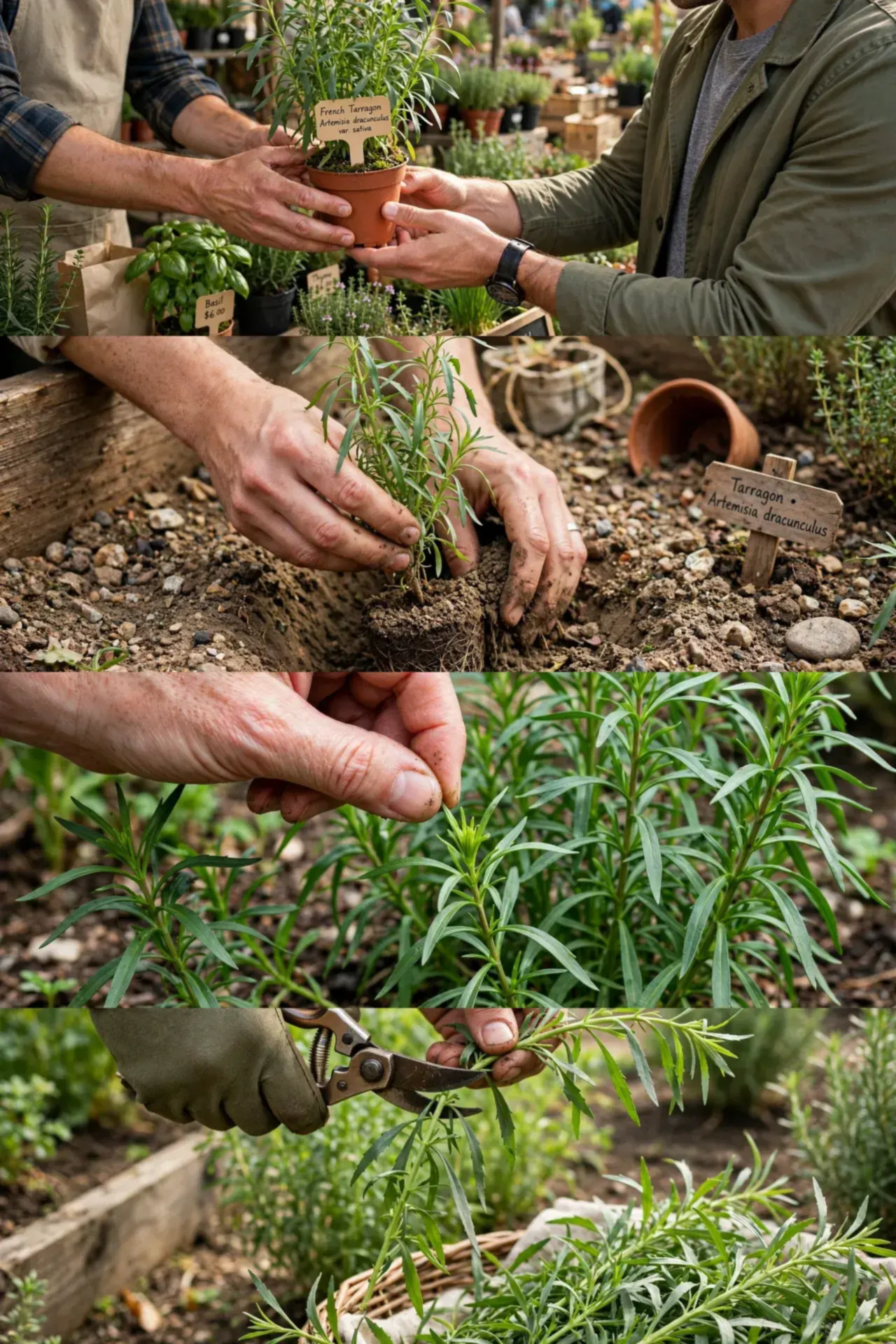
How to plant and grow tarragon, step by step
Step 1 — Start with a plant, not seed
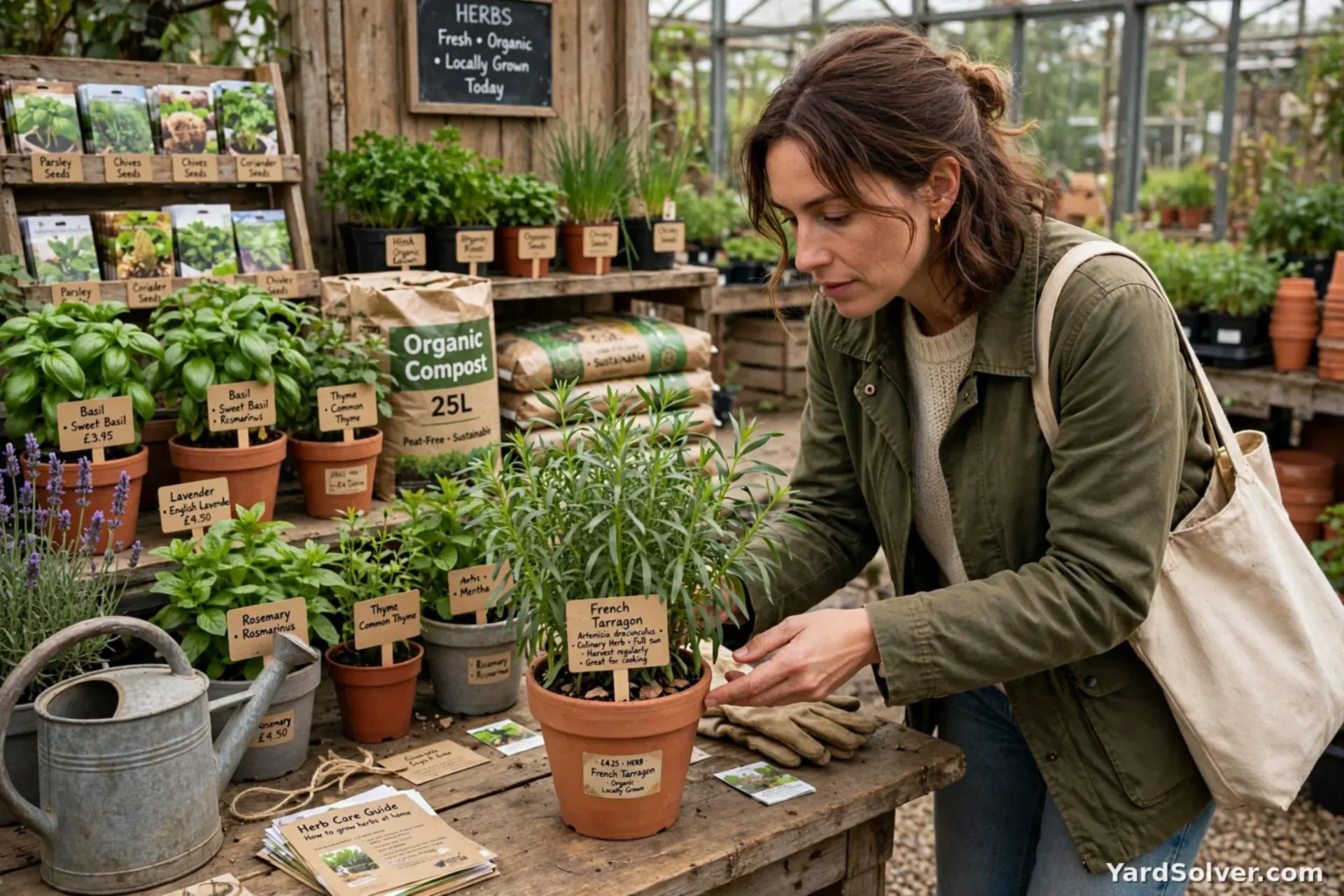
Move outside: 2 weeks after last frost. All dates count from your average last spring frost — the Planting Calendar turns them into real dates for your garden. French tarragon is sterile and is only ever sold as a plant — if a packet says tarragon seed, it is Russian tarragon, which tastes of very little. Rub a leaf before you buy: the real thing smells sweetly of anise.
Step 2 — Prepare the spot
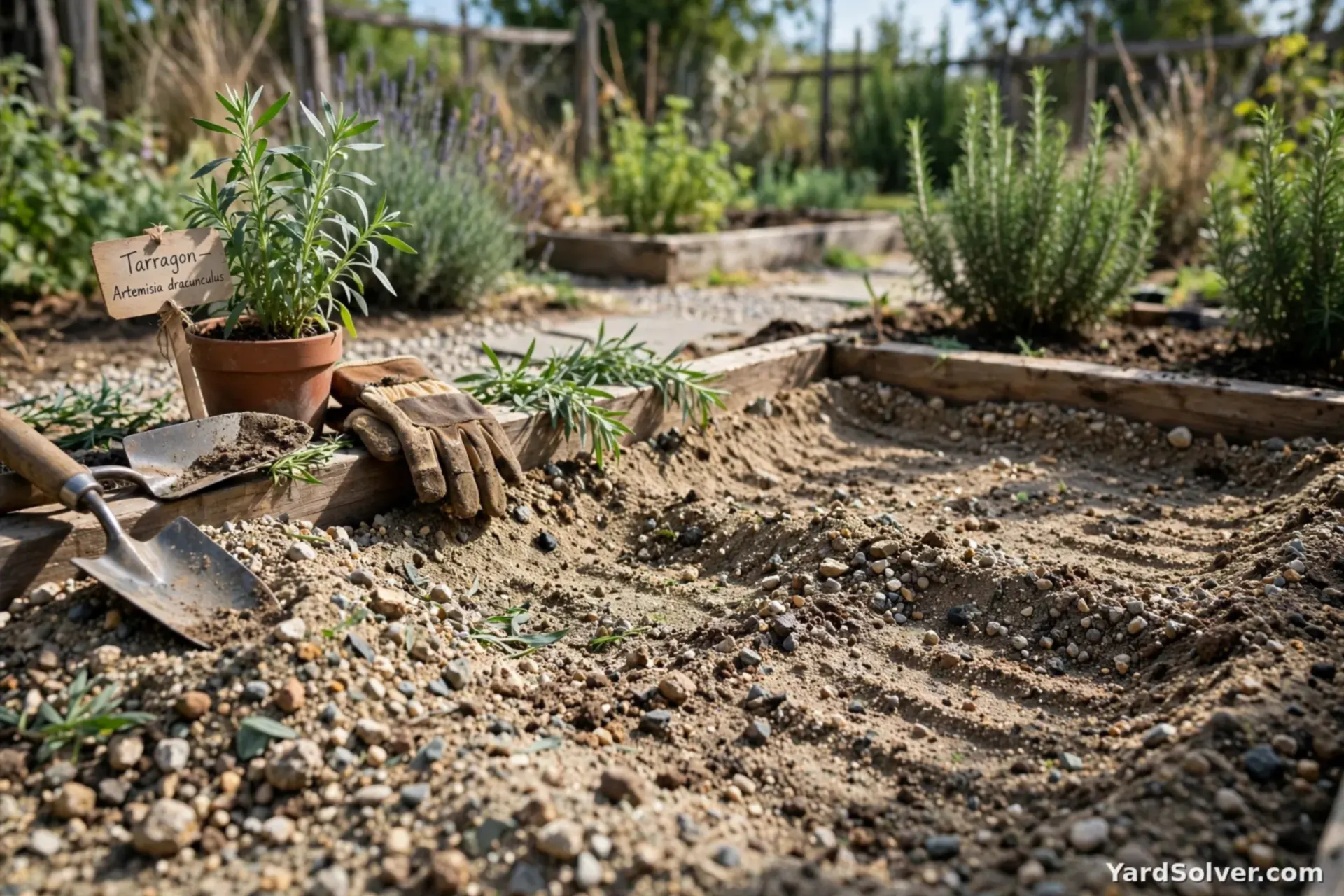
Sun: Full sun. Tarragon wants a sunny spot with soil that drains sharply — it tolerates cold far better than it tolerates wet winter roots. Fork grit into heavy soil, use a raised bed, or grow it in a large pot you can shelter in winter. Work out how much you need with the Garden Mix Calculator or the Raised Bed Soil Calculator.
Step 3 — Plant out
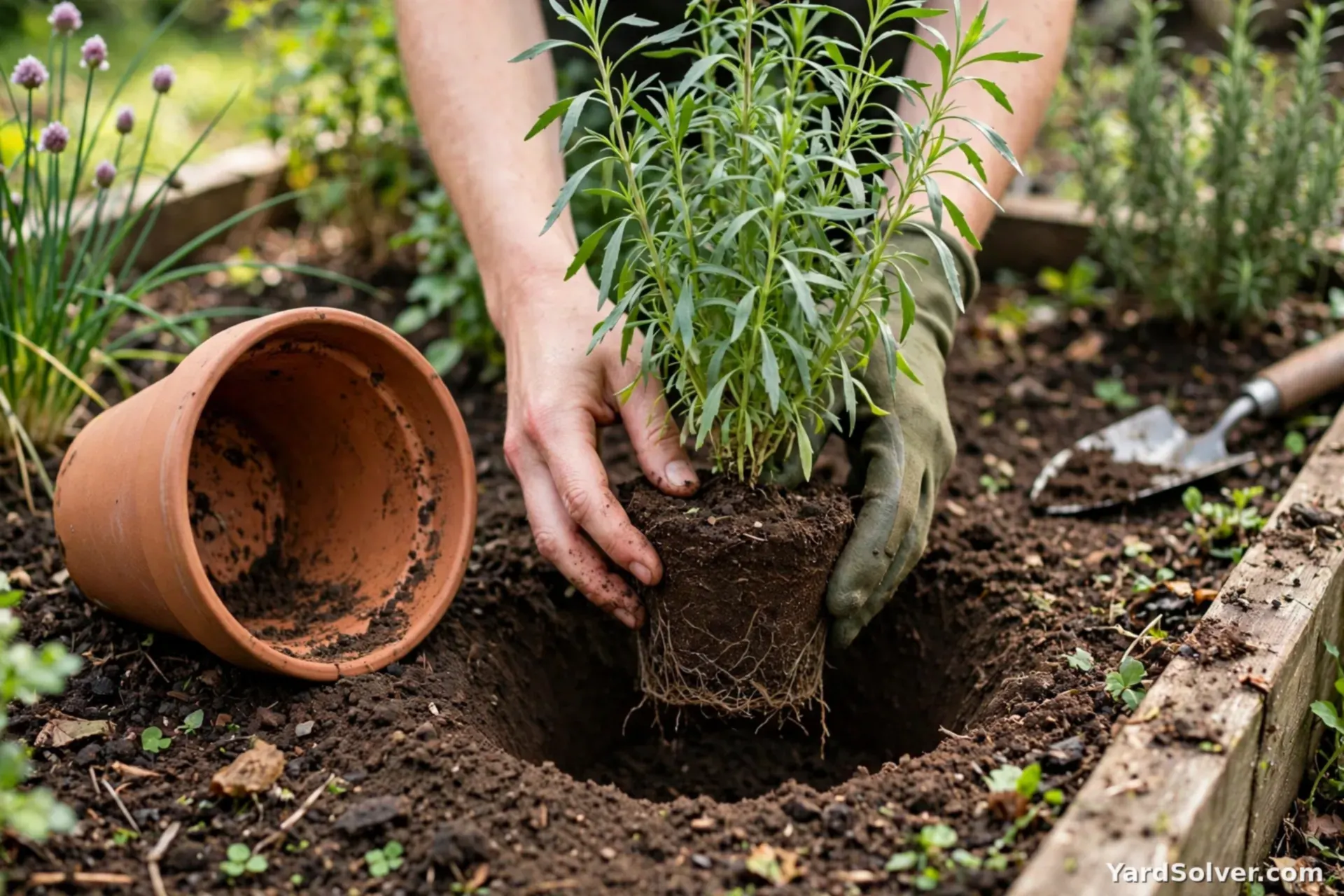
Harden the bought plant off over a few days if it has been kept indoors (see How to Harden Off Seedlings), then plant it out 2 weeks after last frost at exactly the same depth it sat in its pot, spaced 18–24 in apart. Water in once, well. The Plant Spacing Calculator turns that spacing into plants-per-bed.
Step 4 — Water and feed
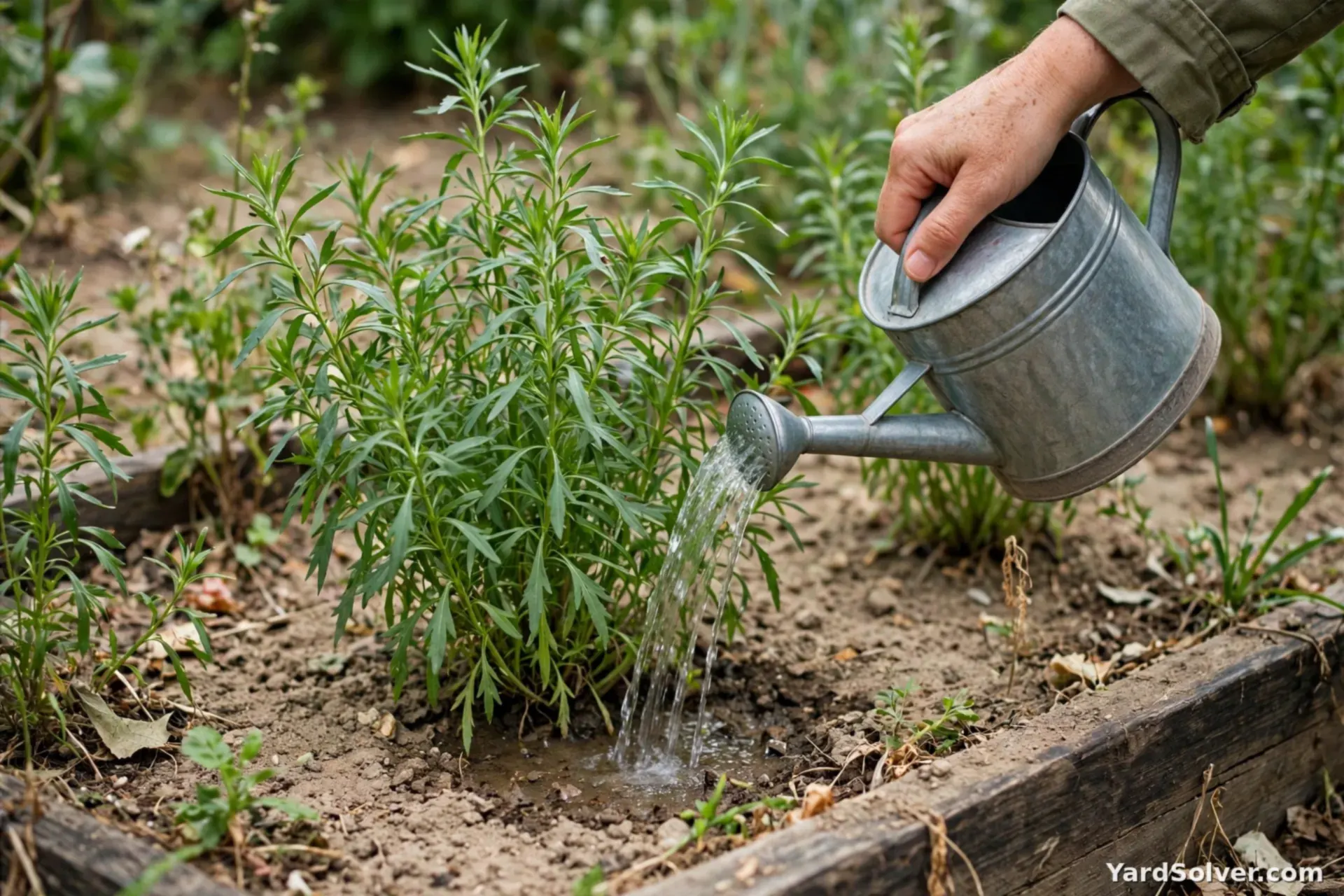
Water: Moderate — hates sitting wet, especially in winter. Water during dry spells once plants are growing, then let the soil dry between waterings. Feed very lightly if at all: rich feeding makes soft growth with noticeably weaker flavour. The Fertilizer Calculator turns a bed size into the right amount if you do feed.
Step 5 — Care and the problems to watch for
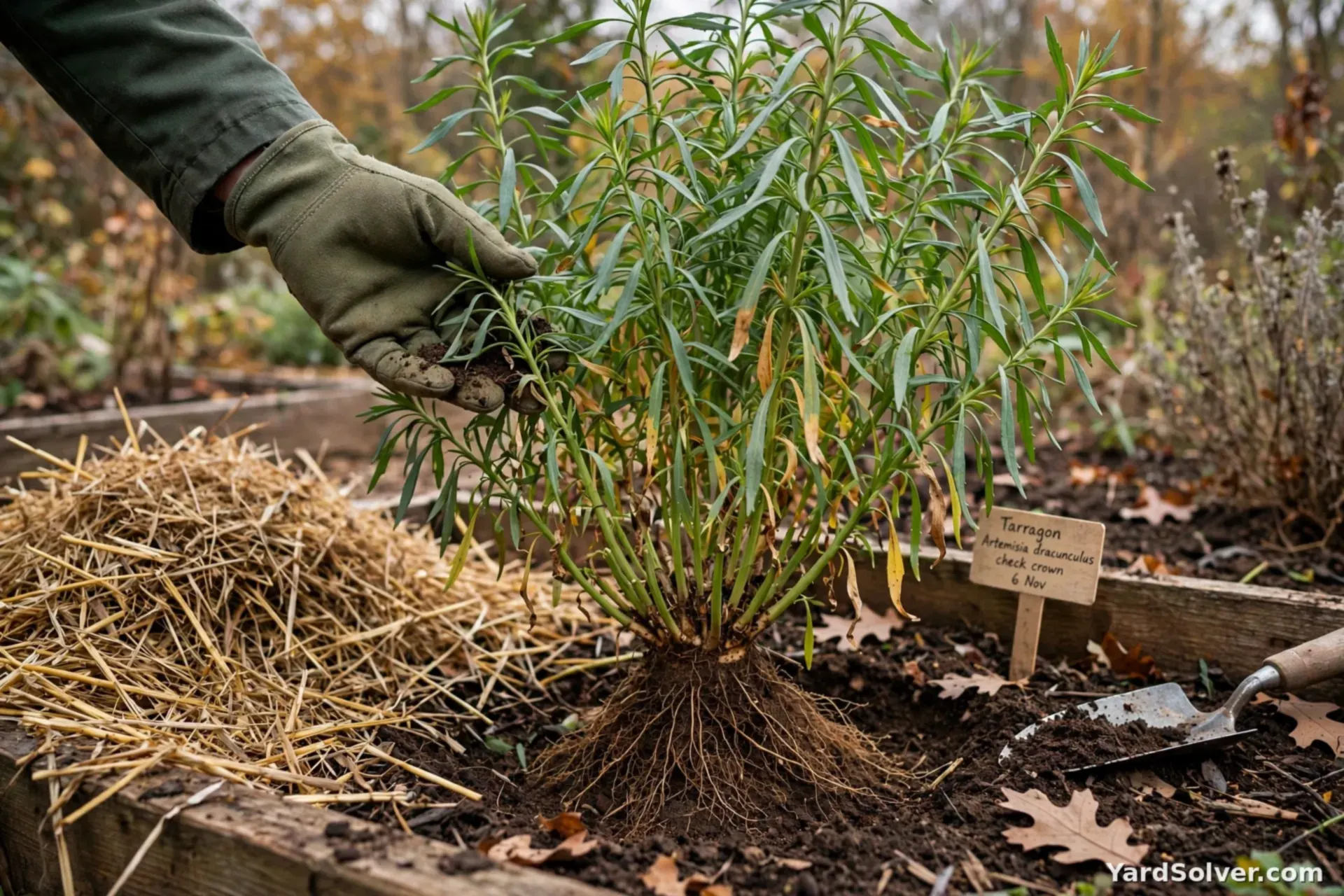
- Winter wet rot — crowns rot in soggy winter soil; sharp drainage and a gritty mulch are the whole defence.
- Rust — orange spots under leaves in damp weather; pick off bad leaves and space plants for air.
- Weak flavour — usually overfeeding, too much water, or the plant was Russian tarragon all along.
Take care: If your 'French tarragon' came from seed, it is Russian tarragon — replace it with a cutting-grown plant for real flavour. Never let the crown sit in winter water.
Step 6 — Harvest
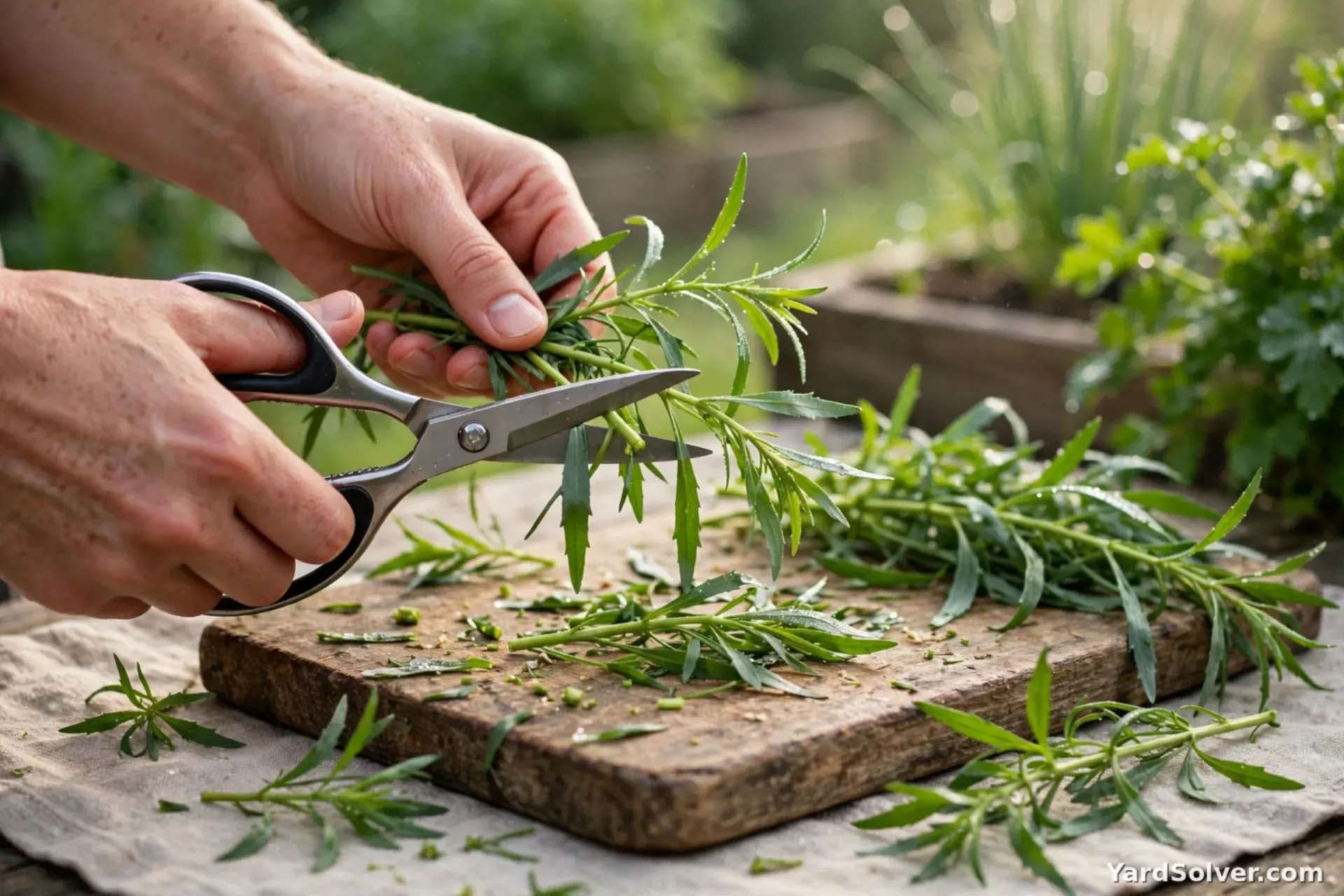
Ready in: Pick sprigs once stems are 8–10 in tall, through summer. Cut sprigs as needed, always leaving plenty of growth on the plant, and stop cutting by early fall so the plant hardens for winter. Tarragon dries poorly — its flavour fades — so preserve the surplus the French way: packed into white wine vinegar or frozen in oil.
Problems, pests & diseases — diagnosis and fixes
- Leaves with almost no flavour, plant tall and weedy: almost certainly Russian tarragon grown from seed. Fix: there is no feeding fix — replace it with a cutting-grown French tarragon plant and rub a leaf before buying.
- Crown black and mushy in spring, plant fails to sprout: winter wet rot. Fix: too late for that plant — replant in grittier soil or a pot, and keep winter mulch off the crown.
- Orange pustules under the leaves: tarragon rust. Fix: strip affected leaves, improve airflow, water at the base, and cut the plant back to clean growth if it spreads.
- Soft, lush growth that tastes weak: overfeeding and overwatering. Fix: stop feeding, water less often, and let the plant grow harder in full sun.
- Sticky tips with small green insects: aphids on soft growth. Fix: rinse off with a jet of water or pinch out the infested tips.
- Plant dies back in fall and looks dead all winter: normal behaviour in cold zones — tarragon dies to the ground and resprouts late in spring. Fix: patience — mark the spot, keep it dry-ish, and wait until late spring before giving up on it.
📅 Your personal Tarragon schedule
Counted from your planting day — not a generic calendar. Day 0 is the day the seed went in the ground or the young plant went out.
Varieties worth growing
| Variety | Colour | Why gardeners like it |
|---|---|---|
| French | Slender green | The real thing — sterile, cutting-grown only, with the classic sweet anise flavour for béarnaise and chicken |
| Russian | Coarse green | Seed-grown and easy, but with very little flavour — hard to recommend for the kitchen |
| Mexican | Green with orange flowers | A different plant entirely (a marigold relative, Tagetes lucida) with a tarragon-like flavour for warm zones |
| 'French' from seed (buyer beware) | Green | Packets sold as French tarragon seed are Russian tarragon in disguise — French tarragon sets no seed |
| Cutting-grown French | Slender green | Plants propagated from cuttings or divisions of a true French parent — the label to look for when buying |
Good for you — and take care
Benefits
- The defining herb of béarnaise sauce and classic French chicken dishes
- Sweet anise flavour from a perennial plant that crops for years
- Provides small amounts of vitamin A and vitamin C
- A little goes a long way — one plant supplies a household
- Preserves beautifully in vinegar, which is itself a kitchen staple
Take care
- French tarragon never comes from seed — seed-grown plants are the weak-flavoured Russian type
- Winter wet kills it — drainage and a dry crown matter more than frost protection
- Stop cutting by early fall so the plant can harden before winter
A little history — and one good fact
Tarragon reached Europe from Central Asia and Siberia, likely in the Middle Ages, and its name is linked to the French 'estragon' — little dragon — from the shape of its roots or its old reputation against snakebite. It became a cornerstone of French cooking, one of the four fines herbes, while its sterility kept it a connoisseur's plant: every French tarragon plant in the world is a cutting or division of its ancestors.
Fun fact: Every true French tarragon plant is a clone — because it never sets seed, all of them trace back by cuttings to the original plants, like one very widely travelled family.
Keep going
Guides: Grow Herbs Indoors in Winter · Companion Planting Chart · How to Harden Off Seedlings
Calculators: Plant Spacing Calculator · Seed Calculator · Fertilizer Calculator
More herbs: Basil · Rosemary · Mint · Sage · Lavender
← Back to the Plant Library · Get your personal planting dates
Questions people ask
When do I plant tarragon?
Count from your average last spring frost: move outside 2 weeks after last frost. Tarragon is a perennial in zones 4–8 grown from plants, not seed: buy a cutting-grown French tarragon plant and set it out after your last frost.
How far apart do I space tarragon?
Space plants 18–24 in apart, planted at the same depth as the pot it came in. Sun: full sun.
When is tarragon ready to harvest?
Pick sprigs once stems are 8–10 in tall, through summer. True French tarragon never comes from seed — buy a plant, or take cuttings.